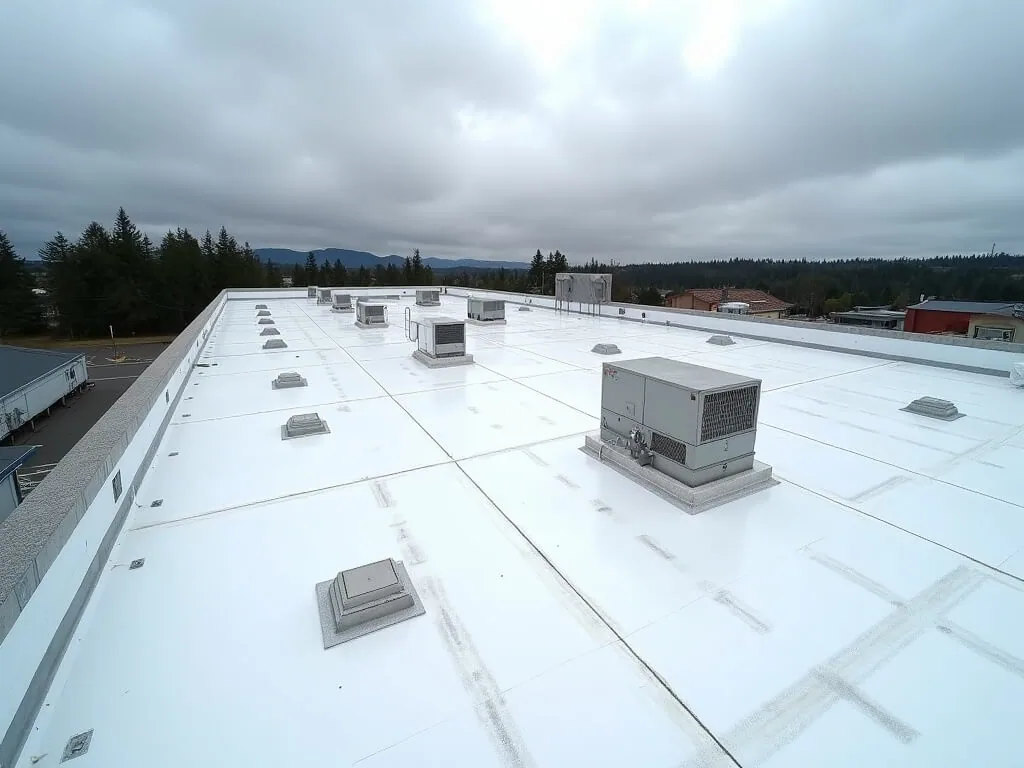
A plant manager calls at five in the morning because a drift has built behind the tall wall of a production hall and a line supervisor has seen water on the floor. A plant roof in Yakima, WA carries winter drifts and summer heat over a floor that cannot stop for long. Dispatch wants the roof's design load and a list of the lines below the drift. Keep people off the roof and do not shovel.
The plant address, the design snow load on the permit, the place where snow or damage sits and the lines that cannot stop are what we need to plan the first visit.
Read What the Plant Puts on the Roof
The valley's manufacturing is a mix. Fruit packing, cold storage and processing buildings dominate, with Zirkle Fruit, Washington Fruit and Produce, and Borton Fruit each employing over 1,000. Tree Top and Sun-Rype run juice and apple processing in Selah. A bottle plant operates in Union Gap, and Cub Crafters builds aircraft at the Yakima Air Terminal.
We do not assume what any one plant has. Each building has exhaust, steam, wash-down residue or heat of its own, and each of those hits the membrane differently. On a first walk we look at what vents onto the roof, what drains from it and what sits under it.
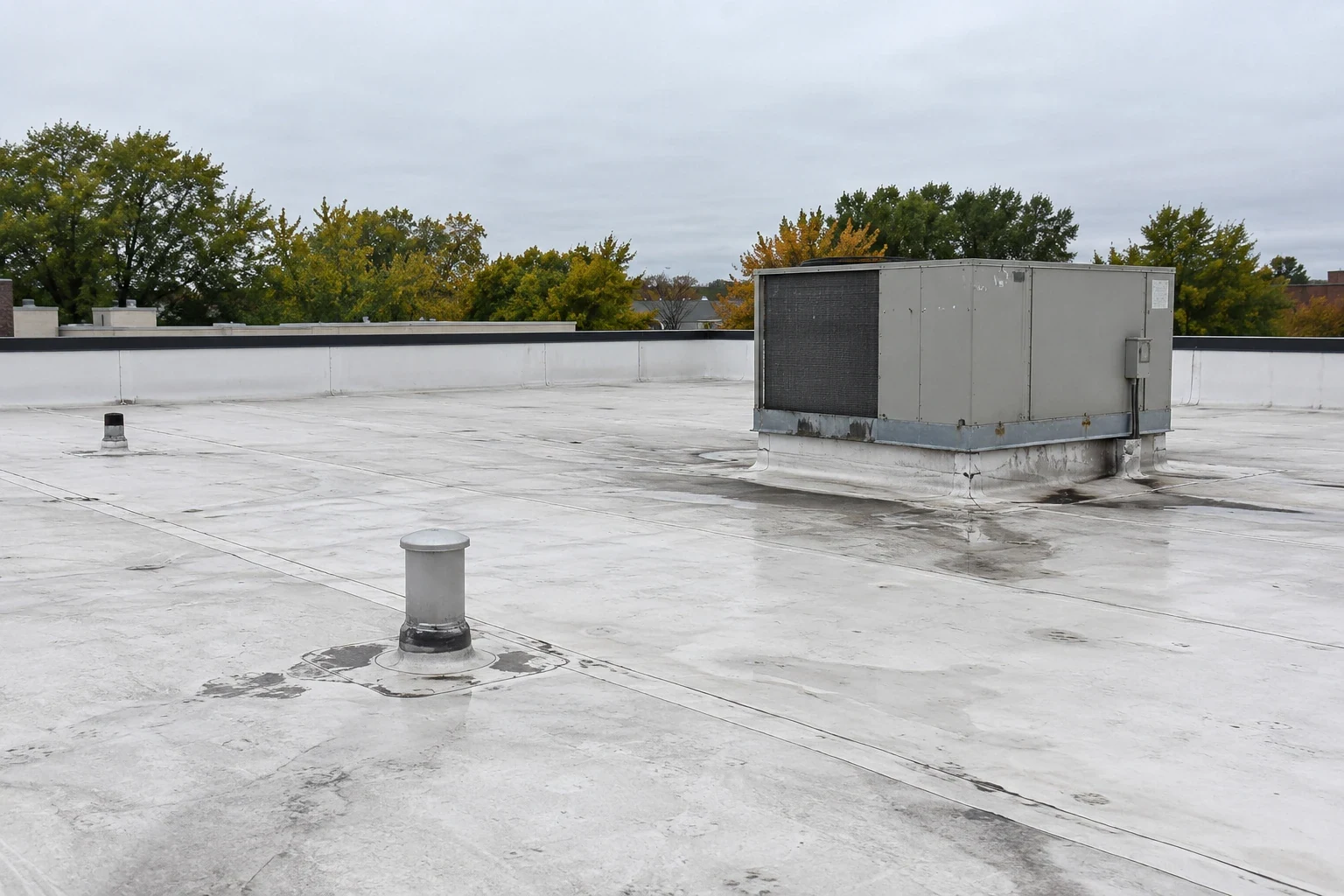
Staining near an exhaust, softened membrane and swollen seams are the signs we look for. Grease and oils shorten the life of some sheets. Where exposure is heavy, PVC or KEE resists better than rubber or standard thermoplastic.
Aircraft work and clean production need different care. Debris from a roofing job must not fall into the building or the air system. We seal ceiling gaps where reachable, protect intakes and sweep at the end of each shift. A plant near the Air Terminal also shares its approach paths, so crane height and lift placement are cleared with the airport before booking.
Check the Drift Behind the Production Hall
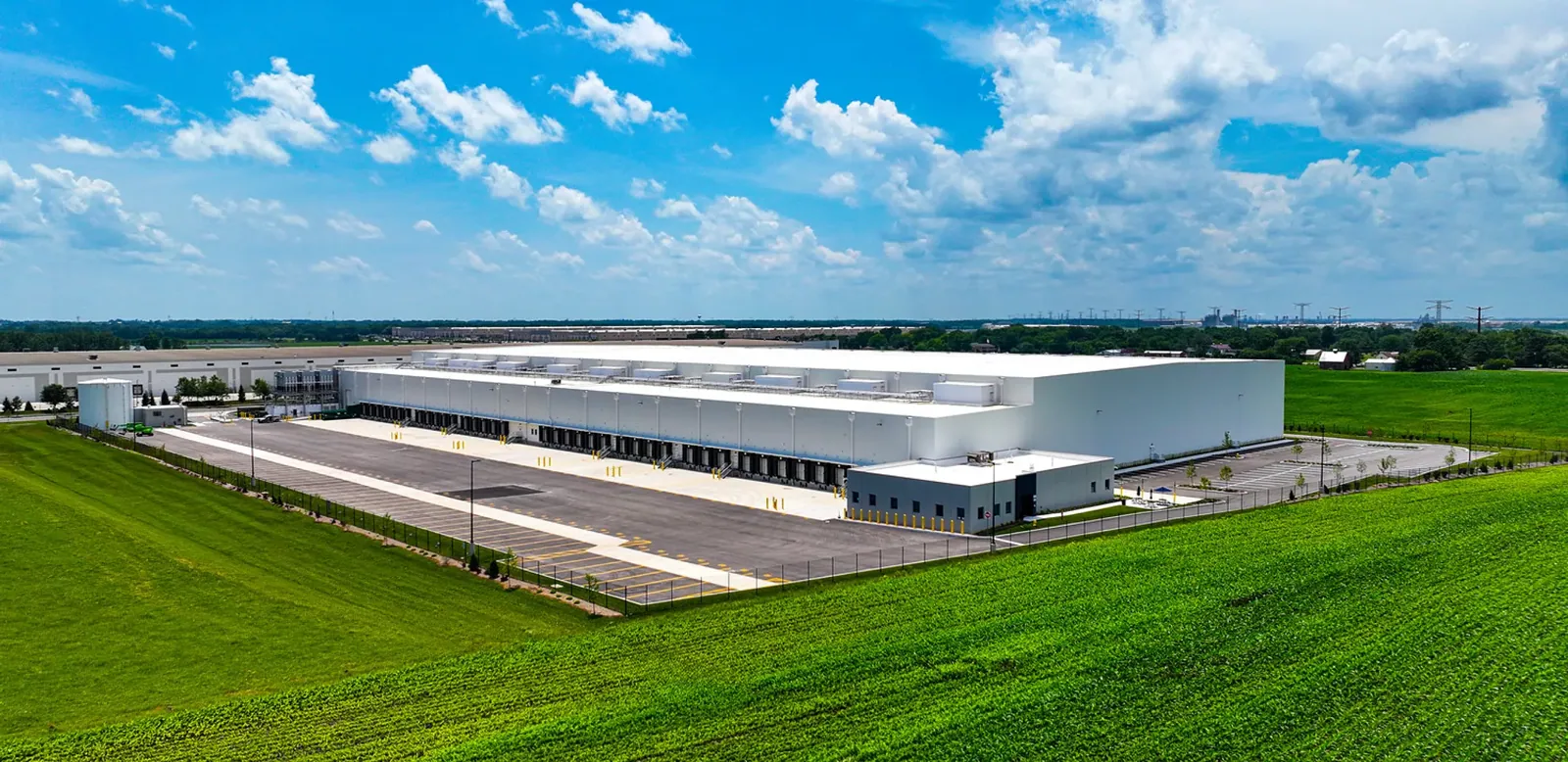
Wide-span roofs carry large areas of snow, and drifts build against parapets, penthouses and step-downs where a low shed meets a tall hall. A plant that grew in stages can carry several different design loads on one site, and the county wants an engineer above 70 psf.
Heavy snow in February 2019 left a South Third Avenue commercial building red-tagged over a bulging wall, which is why a plant should treat a loaded roof as a structure question first. Our crews clear with plastic tools and leave a protective layer.
Doors that stick, new cracks in a block wall and a sagging ceiling tile are signs of deflection. Report them when you call, and tell us which lines sit below.
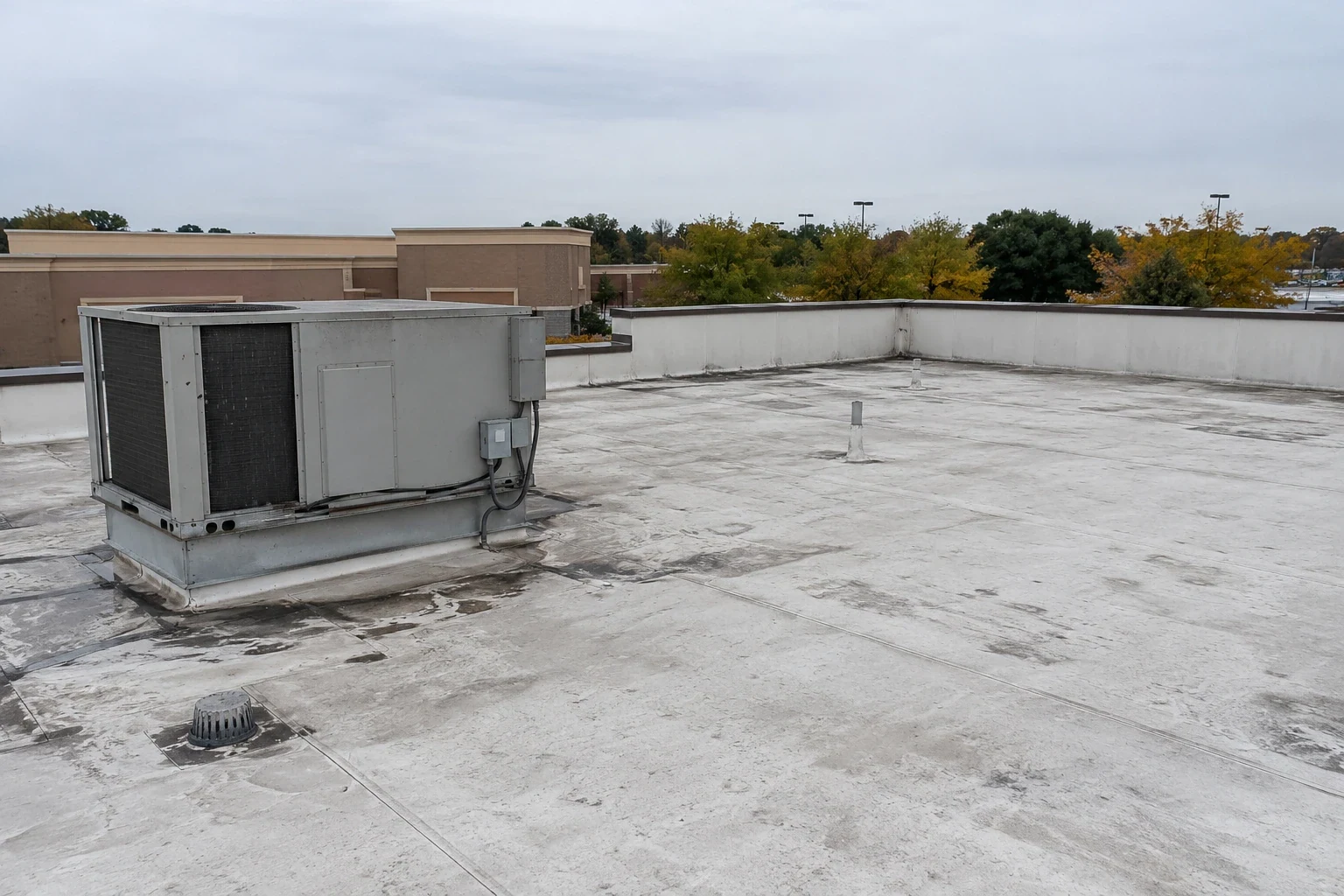
Plants add roof-mounted equipment over time. A new unit or a vent stack changes the load and creates a new drift behind it. We map each addition on the roof plan and compare it with the original design. A drift behind a unit placed in a later year is the one that surprises a facility team.
Sequence the Work Around Packing-Line Shutdowns
A line shutdown is scarce. Harvest and packing seasons set the calendar, and the quiet weeks between them are the roof window. We ask for the shutdown dates first and size the work to fit inside them.
Work over a live line follows strict steps. We open only what we can close the same day, protect equipment from falling debris and keep the floor crew informed. Loud work moves to shifts the plant allows. Air intakes within reach are sealed, because odor and dust matter in a food plant.
For cold rooms, the roof insulation affects the refrigeration load. A cold storage roof needs its insulation plan reviewed with the energy code, which took effect statewide on March 15, 2024.
The same sequence serves a multi-location brand or any operator who prices downtime before roofing. Material lead times govern the plan. A shutdown window in March needs orders placed in January, and we tie each order to a date the plant can see.
Pre-job walks save time. The plant supervisor, the mechanical lead and our crew leader walk the roof together and mark protected areas, lift locations and exhaust points. Fifteen minutes on the roof removes an afternoon of questions later.
Separate Process Heat From Weather Heat
Summer is the other half. Afternoons pass 90 F about 40 times a year, a handful pass 100 F and June 2021 hit 113 F. Plants add their own heat from process equipment, and a dark roof over a hot floor sees a hard day-night swing.
That movement works curbs, boots and wall terminations. We look for flashing that has pulled away and sealant that has cracked. A fix in June costs less than a leak in the first January thaw.
A reflective coating over a sound roof can reduce surface temperature, if the insulation is dry. We scan first. A coating over wet insulation seals the problem in.
Condensation causes confusion. Warm, humid air inside a plant meets a cold deck in winter, and the moisture drips from the underside like a leak. Dry-weather drips point to condensation, and drips after snowmelt point to a leak. The underside gets a look before any seam is blamed, because the fixes differ.
Hold the Long Plant Edges Down
Long plant roofs have long edges, and the late-November 2019 windstorm tested every one of them in the valley. A loose coping cap on a long run lets wind under the membrane.
Edge metal gets tested by hand and fasteners get pull-checked. Loose
Rooftop equipment catches wind as well. Vent stacks, small units and conduit pull at their bases. We check hold-downs and reseal bases, and we tell the mechanical trade which pieces need attention. A unit that rocks in a gust will rock its flashing loose.
File What Changed on the Roof
At closeout the plant gets its photos, the seam tests, a list of materials and a maintenance interval, with the warranty terms filed next to them. If a plant adds a line or a vent, the record shows what changed on the roof and when.
Plants in Selah, Union Gap and Moxee can share a route, and a logistics operator next door can join the same schedule.
Commercial Roofing Questions
Which membrane suits a roof under a process exhaust?
PVC or KEE, in most cases, because they resist fats, oils and many chemicals better than rubber. Tell us what vents onto the roof and how often. We choose the sheet from that list and put walk pads under the fans.
Can roof work happen while the line runs?
Often, with limits. We open only what we can close the same day, protect equipment below and move loud work to allowed shifts. Work directly over open product waits for a shutdown.
How do we handle snow over a production hall?
Before anyone goes up, call dispatch and name the lines below the drift. We look for deflection from inside, clear with plastic tools and leave a layer of snow on the membrane.
What does a rooftop exhaust do to the roof over time?
It stains, softens and swells the membrane under the plume. Heat and wash-down residue add to it. A walk pad, a splash guard or a patch of resistant sheet under the fan slows the damage.
When should a plant roof be replaced rather than repaired?
When insulation is wet across a meaningful area, seams fail in many places or repairs begin to stack. A moisture survey draws the line on the plan, and we price both options.