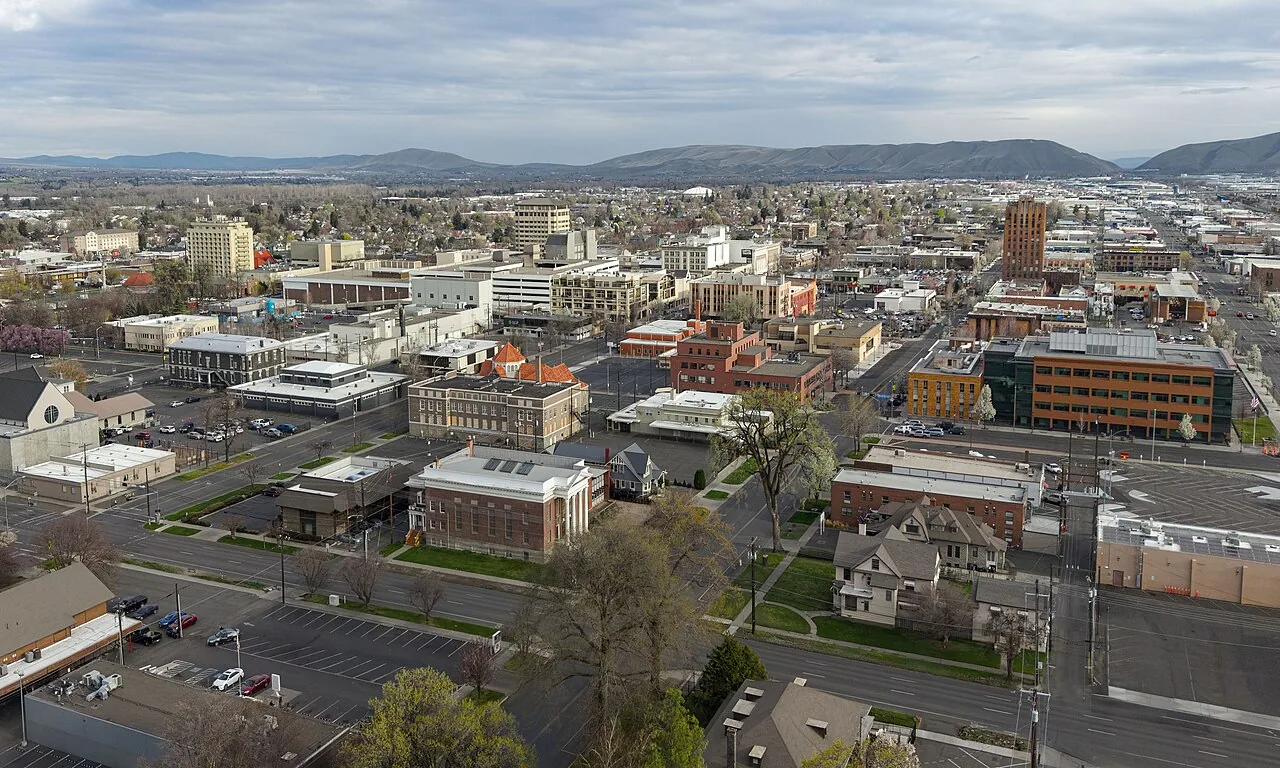

Heat cycling is the roof problem in West Valley, and a call from a building owner here can begin on a July afternoon when the surface is too hot to touch and a seam that held in May has lifted. Dispatch asks what time the roof was last cool. West Valley is an unincorporated suburb that is considered part of greater Yakima, WA, and Yakima's climate, which reaches it, brings dozens of afternoons past 90 F and a few past 100 F, so membrane roofs here see strong heat cycling.
West Valley's low-slope commercial roofs are repaired, recovered, coated and replaced by our crews. Tell us the building address, how old the roof is, what the permit says about snow load and where seams or flashings have moved, and the first visit becomes a walk, a seam probe and a written priority list.
Follow the Roof Through One Hot Day
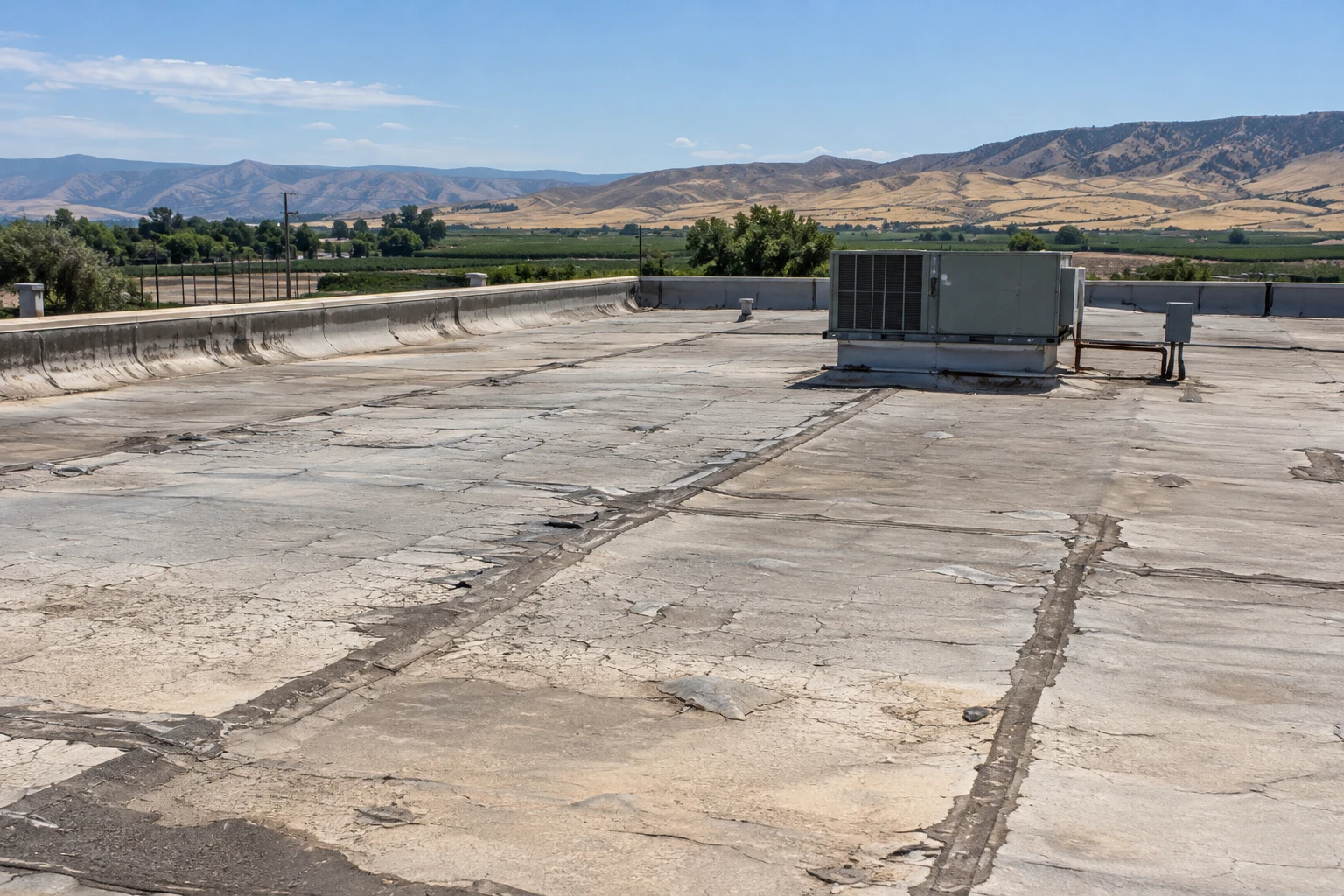
On a summer morning a membrane sits cool and flat. By mid-afternoon the surface has climbed far above the air temperature, the sheet has expanded and every seam, flashing and fastener is carrying load. By night the sheet shrinks back. The cycle repeats on every hot day, and the stress accumulates at the places where the roof is held fast: corners, curbs, walls and penetrations.
Between 113 F on June 29, 2021 and a record low of minus 25 F, the same roof also cycles through winter. A flashing that was glued tight in October can split in January. We look for the signs of cycling damage: lifted laps, wrinkled corners, cracked sealant and flashings pulled away from walls. These are classic heat and UV damage patterns, and the repair begins by releasing tension and rebuilding the detail. We also measure the surface temperature at mid-afternoon with an infrared thermometer at a few spots, the field, a dark patch, the area near an exhaust, and note the readings. The difference between the coolest and hottest spot tells us where the sheet is working hardest, and it guides where the extra fasteners and relief strips go.
Lower the Surface Temperature
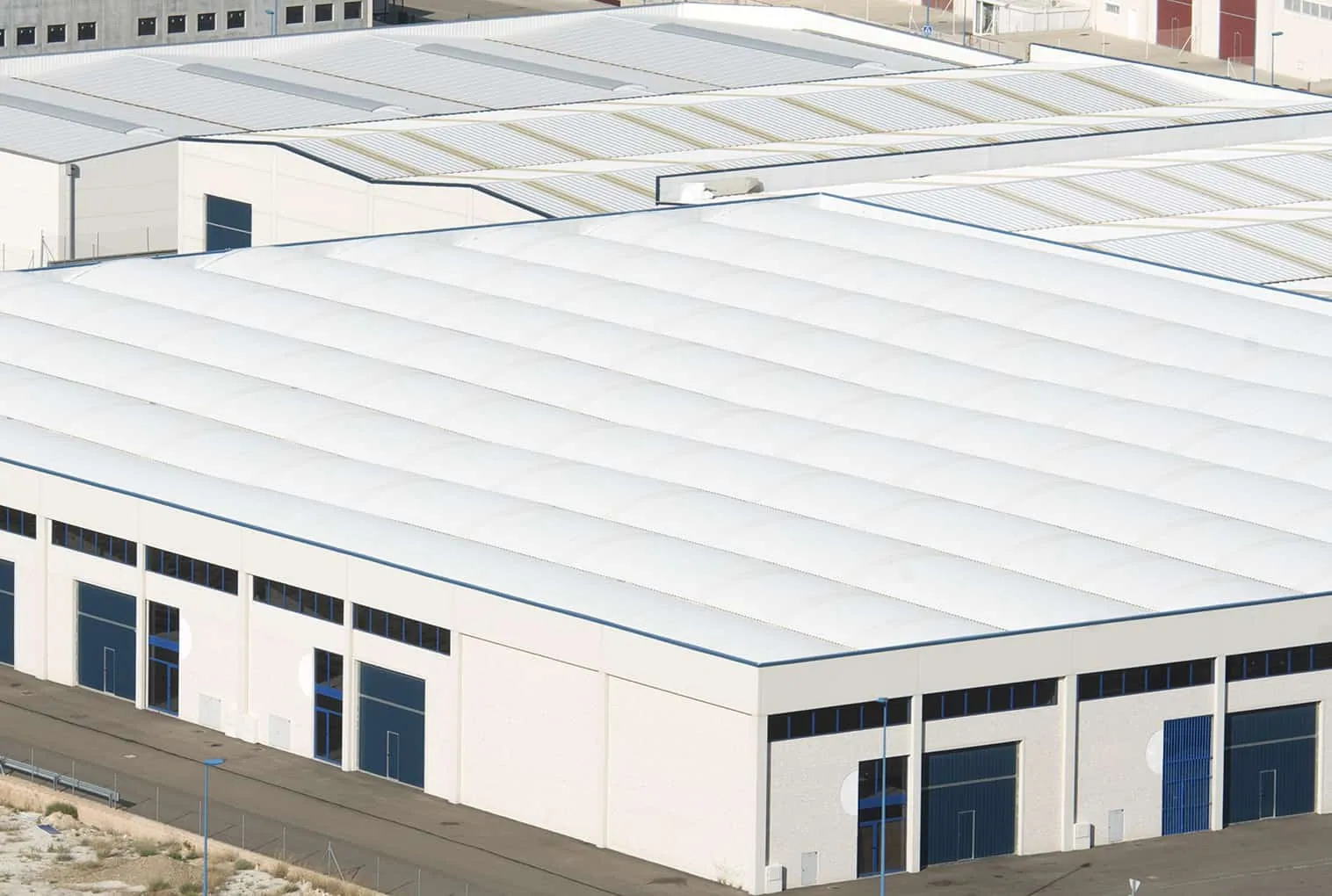
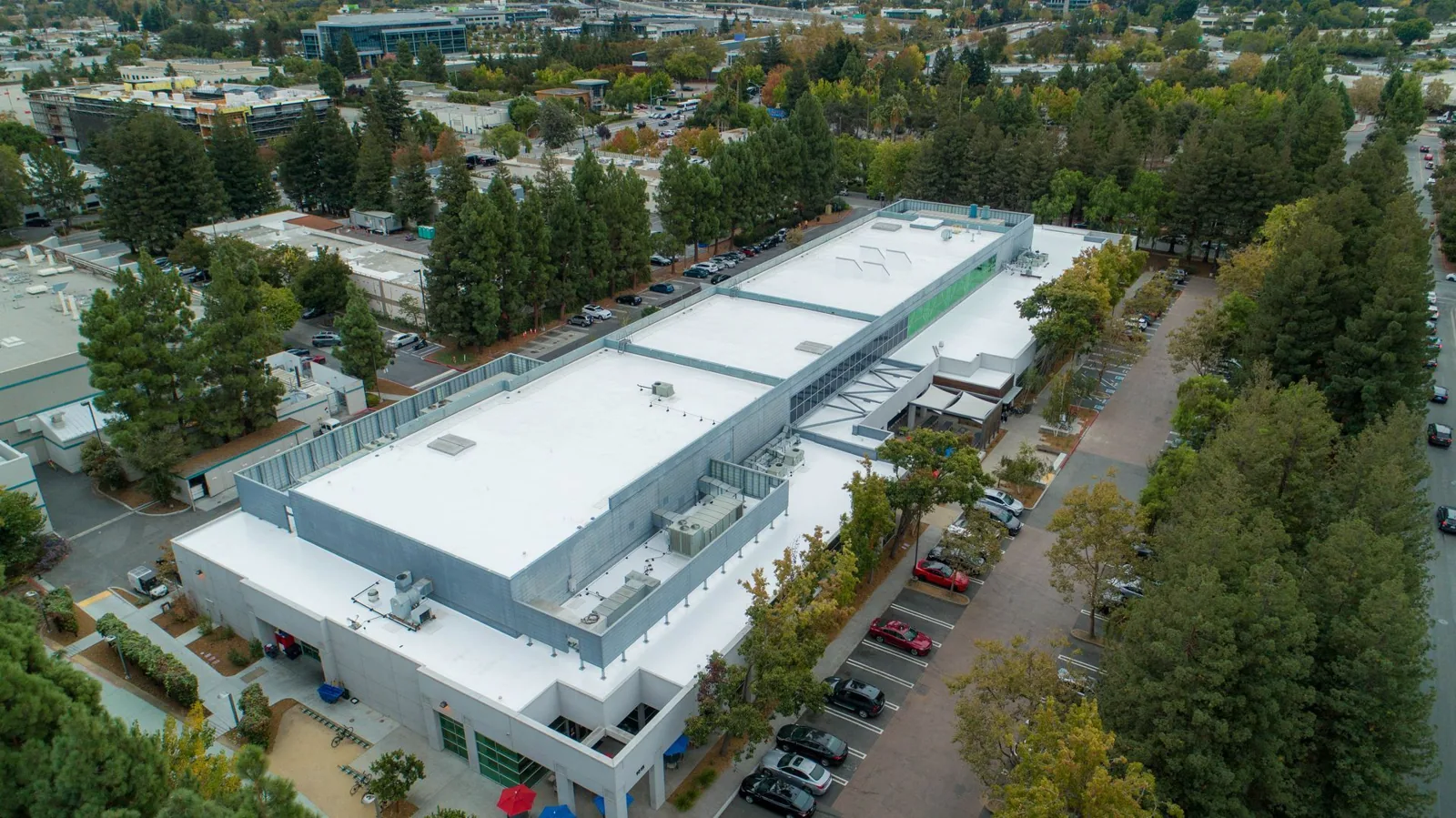
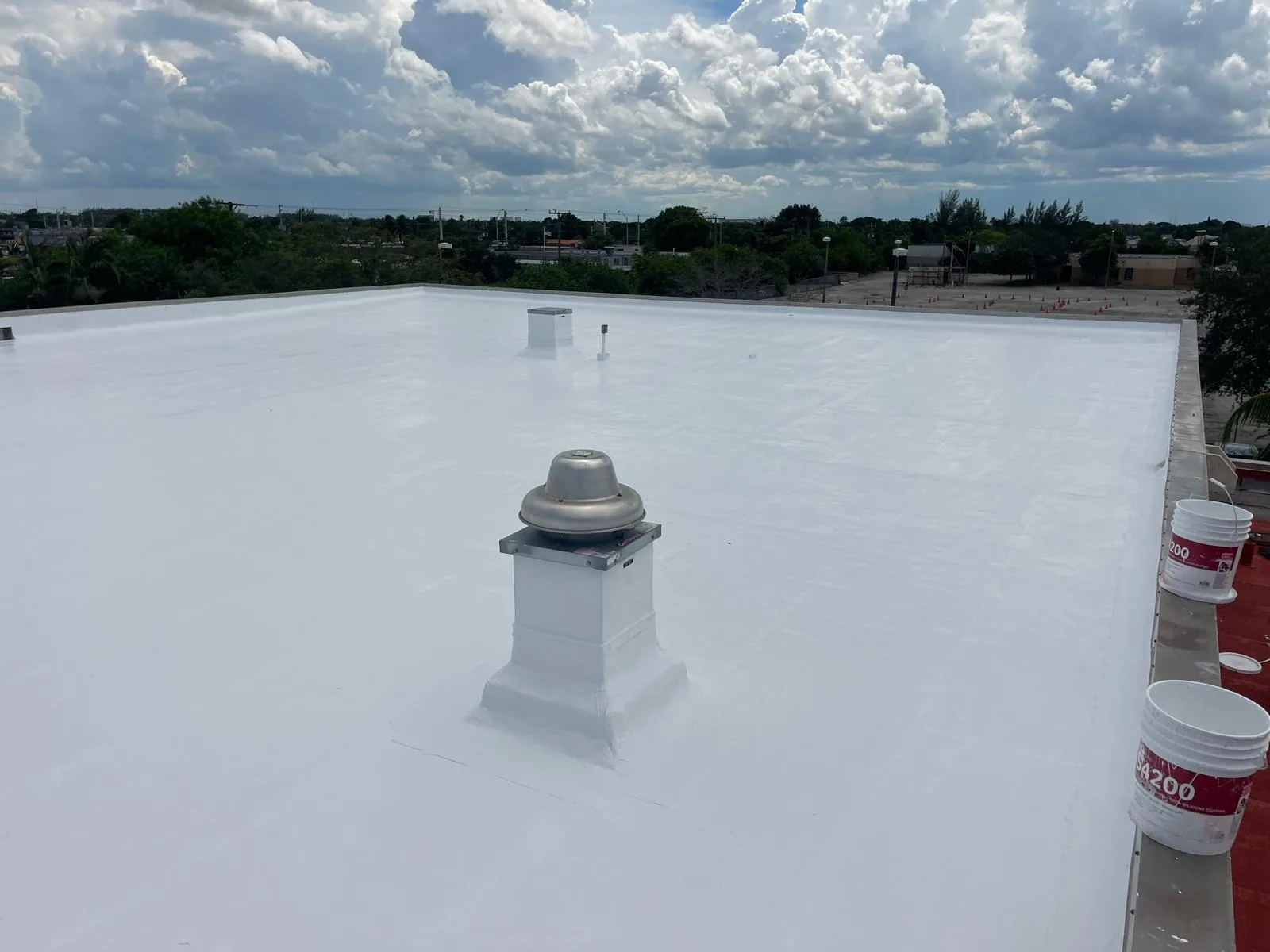
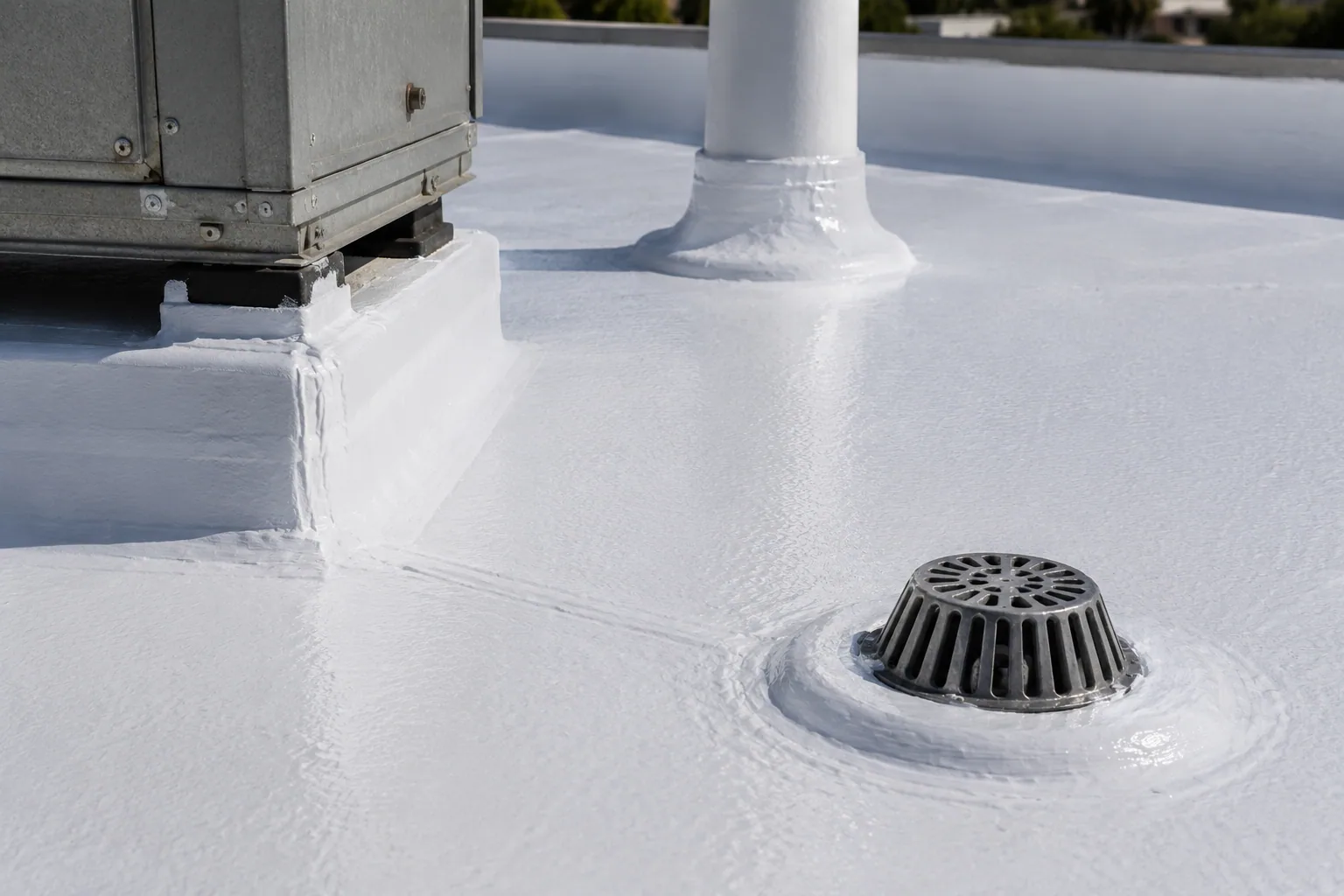
A reflective surface reduces the temperature rise and the size of the daily swing. A white TPO membrane does this from the start. On an existing roof that is sound and dry, a reflective coating can do much of the same work. Acrylic suits roofs that drain well, and silicone suits roofs where water lingers.
Coating is not a rescue for a failing roof. We test adhesion, scan for moisture and repair seams and flashings first. A coat over wet insulation traps water, and a coat over a moving seam cracks. When the roof passes the tests, the coating adds reflectivity and seals small defects. When it fails them, we recommend a recover or replacement and show the findings. A roof coated twice already, for instance, may have a film too thick to bond a third, and the right move is to remove it. We say so before the quote, with photos of the existing layers, so the owner is deciding on what the roof is and not on what the last contractor wrote.
Rebuild the Details That Move the Most
Flashings at curbs, walls and pipes take the heat swing hardest. Over the years, sealant dries and cracks, and boots lose their grip on pipes. We replace them with reinforced corners and leave slack at wall transitions so the sheet is not pulled tight as it cools. Rooftop units add to the load, since their exhaust warms the sheet around them and their curbs concentrate movement.
We walk the roof with the maintenance lead and mark each unit, each curb and each pipe. A curb that does not match its unit is rebuilt before the next hot season. Walk pads go along service routes, because soft, hot membrane scuffs under boots. Condensate lines get supports so they do not rest on seams, and any refrigerant line that crosses a lap is lifted and re-routed. Heat also bakes the sealant around metal flashings, so counterflashings get a fresh bead and a check of every fastener, which takes little time on a dry morning. These small jobs cost little and keep the larger repair away. Our commercial roof repair lists each as a patch or a fix.
Do Not Forget the Winter Side of the Swing
Winter brings snow mostly in December and January, onto whatever design load its parcel carries, with an engineer needed above 70 psf. The red tag on a South Third Avenue building after a wall bulged in February 2019 is the local warning against treating snow lightly.
Plastic tools and a protective layer of snow keep the membrane intact. Drifts form at parapets and beside taller walls and rooftop units, and after any gale, the late-November 2019 windstorm included, the perimeter gets checked. For West Valley owners, the roof plan covers both seasons: reflective and flexible in summer, clear and sound in winter.
Plan Across Several Properties
Owners with buildings in West Valley and elsewhere in greater Yakima benefit from a single condition report. Each roof is scored for age, seam condition, moisture and remaining life, and the report ranks them by risk. A roof that is near the end of its life moves to the front of the budget. A roof with years left stays on a maintenance calendar.
The same report format works for a building in Downtown Yakima or a retail box in Union Gap, so the portfolio can be compared in one table. The commercial roof inspection that feeds the report includes photos tied to a sketch, moisture findings from infrared and cores, and cost ranges for each choice.
Commercial Roofing Questions
Why do seams open during hot weather even when the roof is not old?
Heat expands the sheet, and a seam or flashing that is tight or poorly adhered carries the stress. Newer roofs can show it if the install left no slack or the weld was cold. We probe the seams, find the cause and re-weld or rebuild the detail with relief at the corner.
Does a reflective coating really lower the temperature of the roof?
A reflective surface runs cooler than a dark one in direct sun, and we can measure the surface temperature before and after. The effect on the building's cooling load depends on insulation and equipment. We do not promise a savings figure, but the cooler surface does reduce thermal movement at the seams.
What is the first sign that heat is damaging my roof?
Wrinkles at corners, laps that lift in the afternoon and flat down at night, and cracked sealant around pipes. Brittle, chalky membrane near exhausts is another. Photograph them on a hot afternoon and send them with the address. We can plan a probe walk for the next cool morning.
Can a roof be coated if it has been patched many times?
Often, if the patches are sound and the insulation is dry. We test adhesion over the patched areas and scan for moisture. Weak patches are redone before the coat. A coat over failing patches would crack and peel.
How should we schedule roof work in the heat of summer?
Start early, finish by midafternoon and avoid the hottest days. Hot membrane is soft and slippery, and adhesives cure unevenly in extreme heat. We plan the heavy work for mild weeks in spring and fall and keep summer for repairs and inspections.