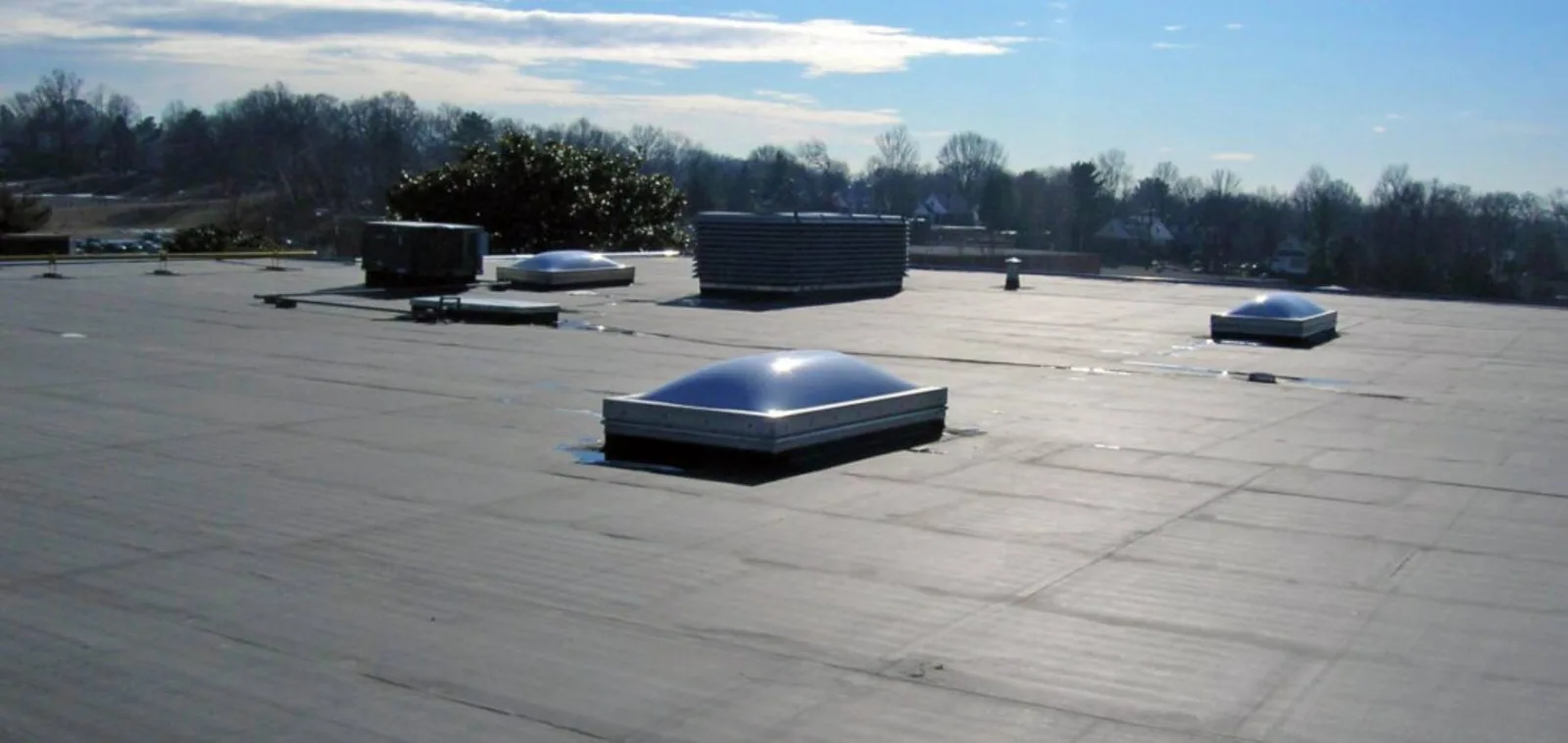
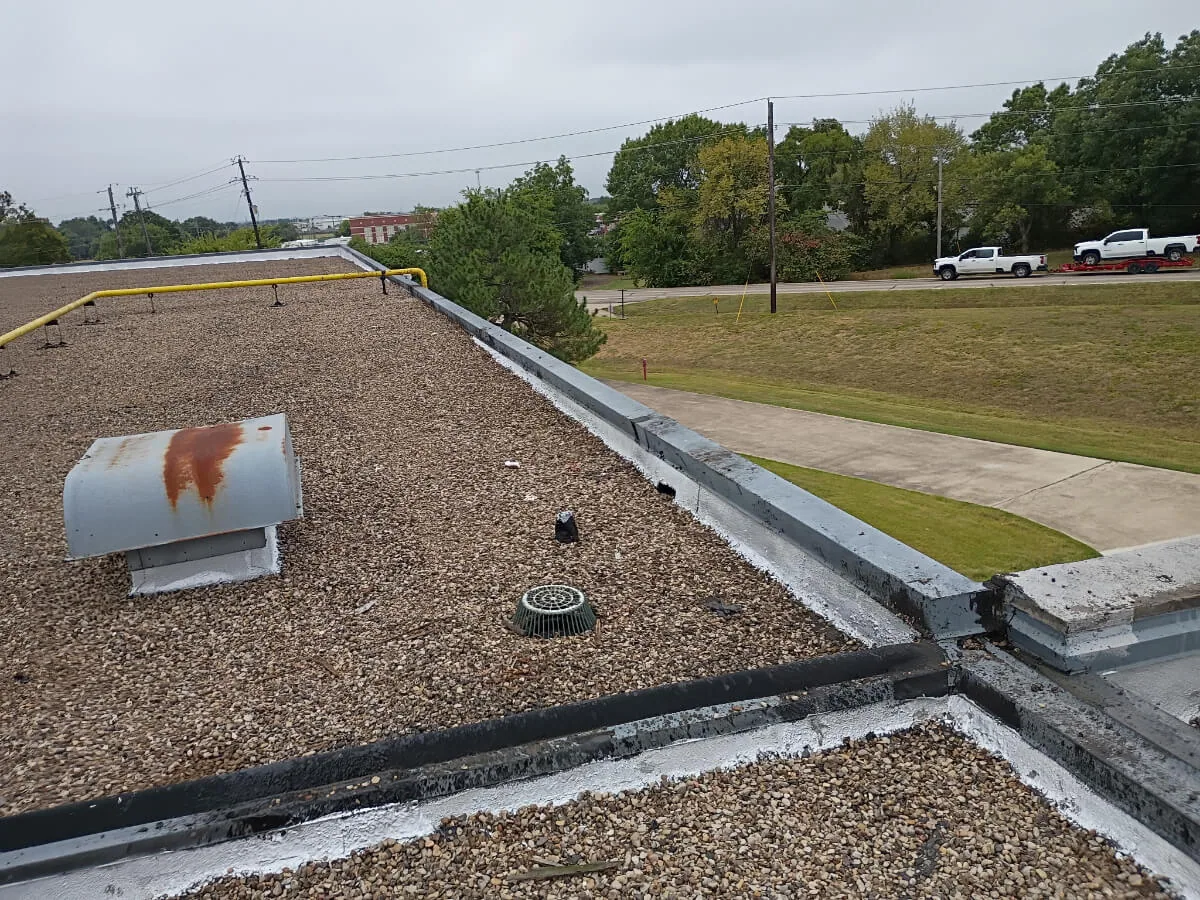
The morning after a November gust, a facility director stands at the edge of a gravel roof and sees a bald patch near the parapet where the stone has blown clear, and the first question dispatch asks is what lies under that bare spot. A built-up roof, or BUR, is a stack of reinforcing plies bonded with layers of hot asphalt and finished with a flood coat of gravel or a mineral-surfaced cap sheet. The plies make it redundant, so one failure rarely lets water straight to the deck. The gravel is its sunscreen, and without it the asphalt wears quickly.
In Yakima, WA, owners of a gravel roof often ask whether to keep it or replace it. We repair it, recover it and replace it. Bring the roof age, the drawings if you have them, whether the roof covers a warehouse or an office, and a note of where the stone has moved, and we can tell you which road makes sense.
Read the Roof in Its Layers
From the top down, a BUR roof usually has gravel or a cap sheet, a flood coat of asphalt, three or four plies of felt or fabric laid in staggered overlaps, and then insulation over the deck. Each ply is mopped to the one below, so the whole assembly behaves like one thick sheet. The staggered overlaps keep a seam in one ply from lining up with a seam in the next, which is why a small crack at the surface seldom leaks at once.
We read the layers by cutting a small test core at a few locations. The core shows the ply count, whether the bond is solid, and whether the felts are wet or rotted. Cores also tell us what the moisture scan cannot: whether the insulation underneath is crushed or soaked. A roof that looks sound from above can be failing in its middle layers, and the core is how we find out without opening the whole surface.
Replace the Gravel Where the Wind Took It
After a gale the first thing missing is stone. Wind scours it first at corners and along edges, where uplift is strongest, and it exposes the asphalt to sun and cold. Bare asphalt cracks and crazes within a few seasons. The repair is to clean the area, apply fresh flood coat and embed new stone while the asphalt is still tacky. Stone laid on cold, dusty asphalt rolls off in the next storm.
We also check the stone for size, because small rounded gravel blows more easily than angular crushed rock, and we pay attention to loose stone near drains and scuppers. Gravel that slides into a drain blocks it, and a blocked drain on a flat roof is how ponding water gets started. Where wind exposure is high, we recommend a mineral cap sheet instead of loose stone.
Spot Blisters, Ridges and Splits Early
BUR fails in recognizable ways. Blisters are pockets of trapped moisture or air between plies, and they swell on hot afternoons. Ridges form over insulation joints, where the felts lift along a straight line. Splits run across the roof in long cracks, often over deck joints, as the roof expands and contracts. Alligatoring is a cracked pattern in the asphalt surface that comes with age and sun.
Yakima records about 40 afternoons at or above 90 F, a 113 F record on June 29, 2021, and nights that cool fast. That daily swing opens splits and lifts blisters. A small split is sealed with reinforced mastic or a patch of fabric and hot asphalt. A blister is cut, dried and patched with new plies. If blisters are everywhere, we stop patching and bring in a moisture scan to see how much of the roof is wet.
Weigh the Roof Before You Add to It
BUR with gravel is heavy, and design snow load changes from parcel to parcel. The dead weight of stone and plies sits under whatever snow arrives. Before any recover, we ask for the design load on the permit and check what the structure can carry. Piling a new layer over a heavy roof without that check is how a deck ends up deflected under a February drift.
After the February 2019 snowfall, when a South Third Avenue building was red-tagged, officials warned that shoveling flat roofs causes leaks. Gravel makes it worse, because a shovel digs stone into the asphalt. Clear drifts with plastic tools and leave a protective layer. If you see a ceiling bulge or doors that stick, stay off the roof and call us first.
Choose Between Recover, Conversion and Tear-Off
When a BUR roof reaches the end of its surface, the options are a recover, a conversion to a single-ply system or a tear-off. A dry BUR with a sound deck can take a cover board and a new membrane, such as modified bitumen, over it. A roof with wet felts and crushed insulation needs to come off, and tearing off BUR is dusty, heavy work that needs a plan for the debris chute and the traffic around it.
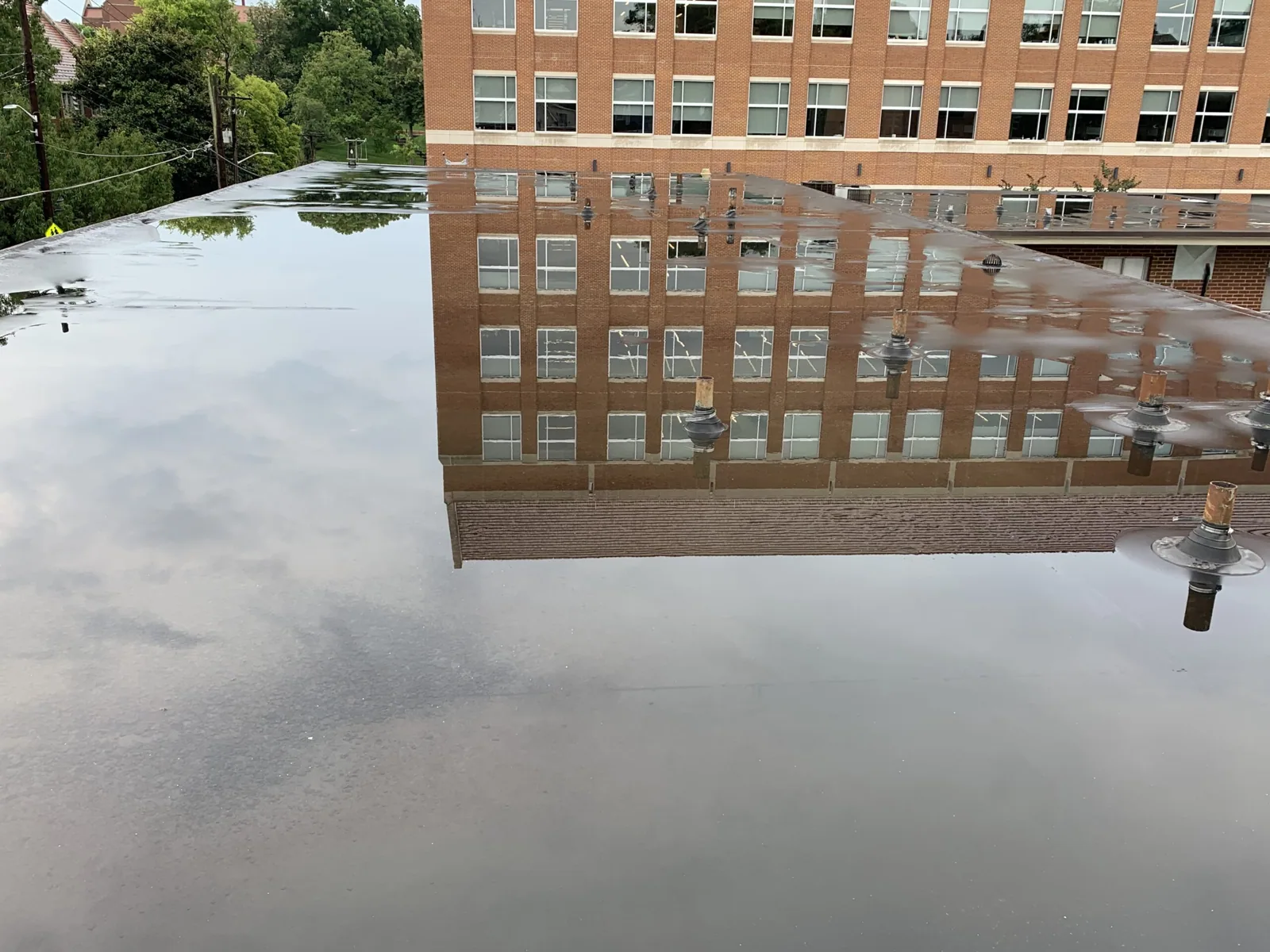
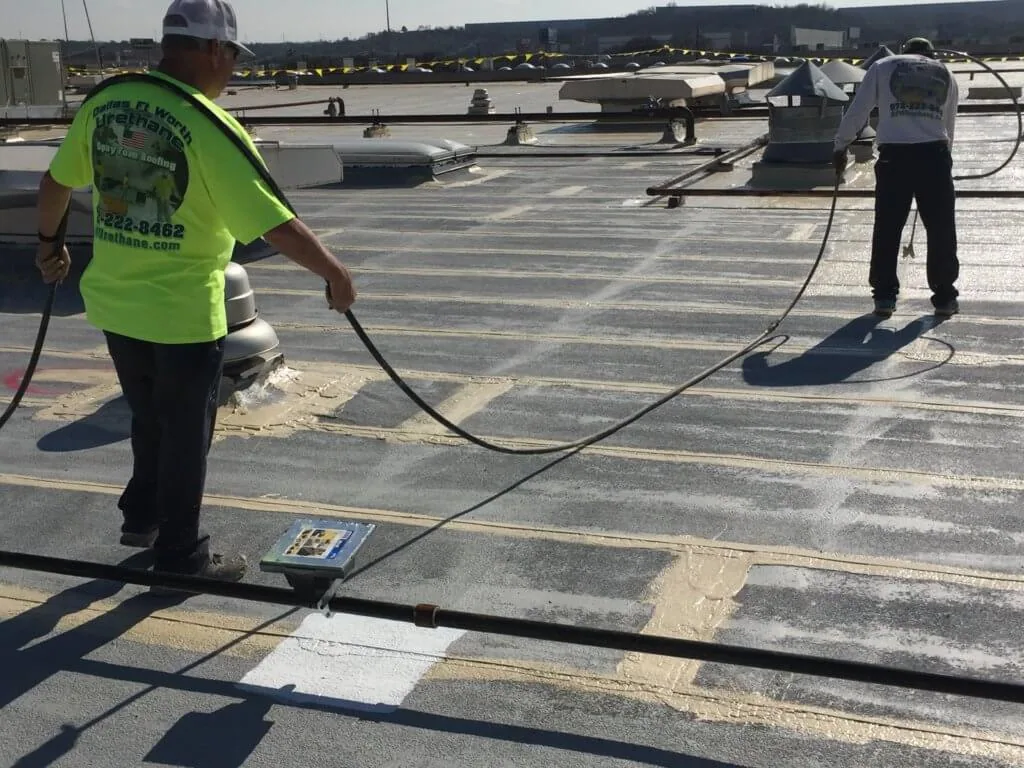
A warehouse near West Valley or a retail building in Union Gap may be a good recover candidate, and a food-processing plant with steam and condensate may not. We price all three choices side by side, with the weight, the downtime and the moisture findings listed, so you can pick on the facts. A spray foam system is a fourth option on some low-slope BUR roofs when the surface is dry and clean.
Commercial Roofing Questions
Why is there a bald patch at the corner of my gravel roof?
Wind lifts stone from corners first because uplift is highest there. Once the stone is gone, sun and cold attack the asphalt and cracks follow. A fresh flood coat with new stone restores the cover, and we also check the edge metal because a loose edge is how wind gets in. A bald patch left alone through a summer can turn into a leak by the next thaw.
Can a BUR roof be walked on by service technicians?
It handles routine service traffic better than most single-ply sheets, because the stone or cap sheet protects the plies. Heavy traffic still wears the surface, so we add walk pads along equipment routes. Technicians should avoid dragging tools and carrying ice melt across the roof.
Is a hot kettle safe next to my building's air intakes?
It requires care. We locate every intake and exhaust before work starts, ask your facility team to close dampers on the days we are mopping and keep the kettle downwind of the building. For a medical office or school, we may switch to cold-applied or self-adhered products to remove the fumes altogether.
How do I know whether my old BUR roof has trapped water?
A moisture survey shows it. Infrared scanning at dusk, when saturated insulation releases heat more slowly, maps the wet zones. We confirm with cores at a few points and mark the survey on a roof sketch. A dry result means a recover may be possible. A wet result means the wet sections have to be removed.
What should I expect when the crew tears off a BUR roof at a plant that runs daily?
Expect noise and some dust, a debris chute and a staged work area. We work in sections, dry in each section the same day and keep a temporary seal on site. We plan around the shutdown windows on your line, and we keep the debris away from loading docks and entrances.