A plant engineer phones on a Thursday in March, after a thaw, because a line of drips has appeared over a machine bay that cannot take water, and dispatch asks what the exhaust stacks above that bay were running overnight. Manufacturing roofs are working surfaces. Process exhaust, heat, vibration and the occasional chemical drift all land on the membrane, on top of the weather. Yakima, WA adds December and January snow, a run of 90 F afternoons and the November 2019 windstorm.
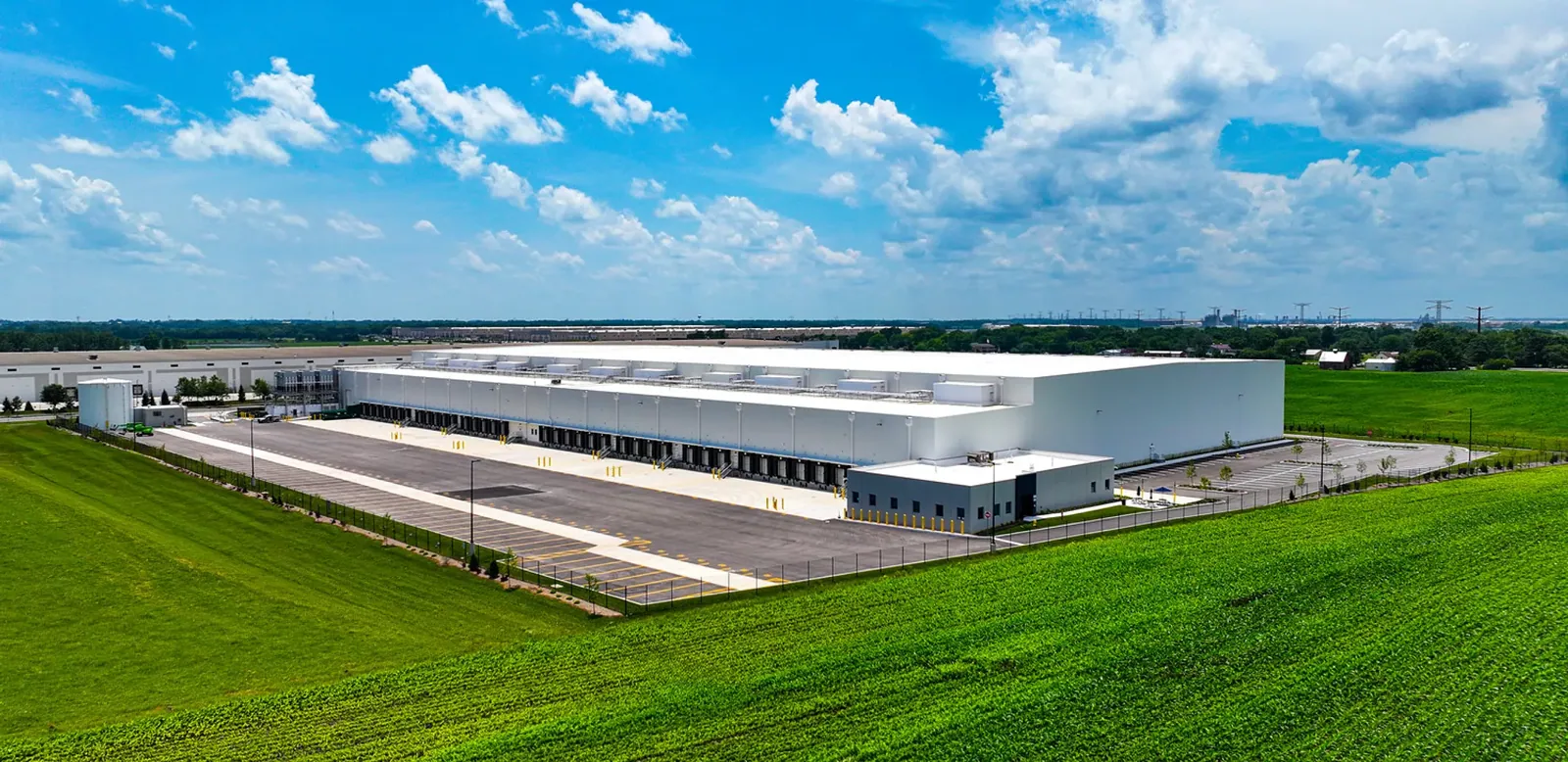
Plants in the valley range from juice processing in Selah to aircraft manufacturing at the Yakima Air Terminal to bottle production in Union Gap. We do not assume what any one of them has overhead. We repair, recover and replace manufacturing roofs, and we begin every job by asking what vents onto the surface and when the line can stop. Bring the permit drawings, the roof age and the shutdown calendar.
Catalogue What Lands on the Membrane
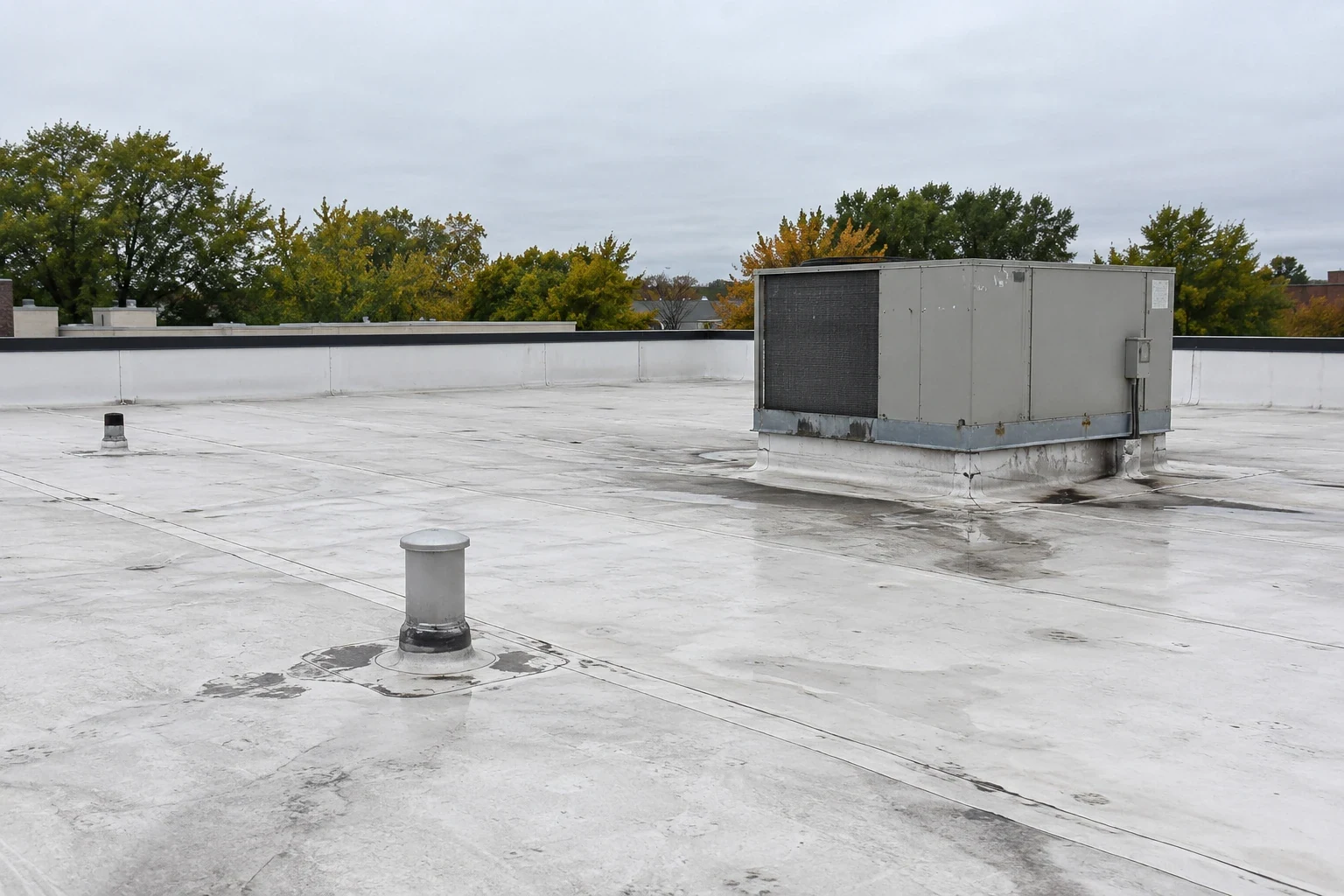
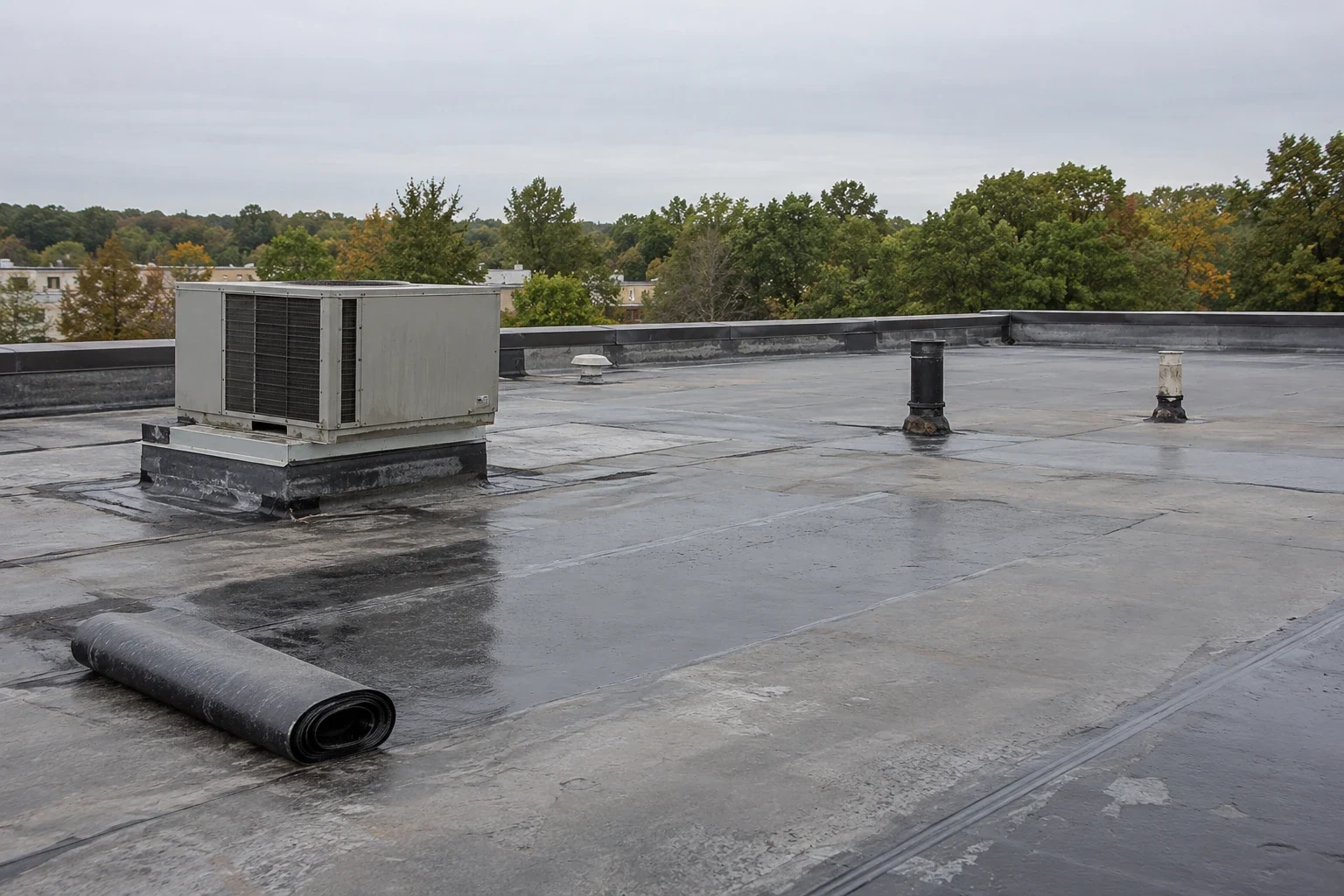
On a plant roof the exposure list is long. Exhaust fans may carry oil mist, steam, cleaning vapors or fine dust. Cooling towers drop mineral crust. Heat from furnaces, dryers and compressors pushes plasticizer out of some sheets and bakes the surface of others. A roof that looks fine from the ground may have a ring of brittle membrane around each stack.
We walk the roof with the maintenance lead and map every stack, fan and discharge. For each one we ask what it carries and how often. Then we match the membrane to the exposure. Where grease or heat is regular, a KEE membrane or a chemical-resistant PVC resists better than a basic sheet. Where only weather matters, a lower-cost system does the job. We would rather spend the cost where the exposure is than across the whole roof.
Plan the Tear-Off Around Shutdown Windows
A plant has a calendar: scheduled maintenance weeks, changeovers, inventory builds, seasonal peaks. Roofing noise and dust cannot fall on a changeover, and a crane lift over a loading yard cannot happen during shipping. We build the roof sequence from that calendar. The noisiest and dustiest steps, such as tear-off, go to the shutdown window. Quieter work, such as flashing and seam welding, can run during production.
Inside the building, we protect equipment. Sheeting goes under the work zone, and we ask for lockout or covers on machines under the area. Hot work needs a permit, and we get your safety lead's signature before any torch or welder is lit. The planning for occupied building reroofing follows the same pattern: we agree on the quiet hours first and write them into the schedule.
Check the Structure Under Heavy Equipment and Snow
Design snow load is set parcel by parcel, and an engineer is required above 70 psf. A plant roof often carries more than snow: rooftop air handlers, ducts, cable trays and sometimes crane rails or conveyors hung from the steel. When drifts build against a mechanical penthouse or a taller process bay, the combined load deserves a look at the permit and the structural drawings.
A commercial building on South Third Avenue was red-tagged over a bulging wall in February 2019, and a flat roof is no place for a steel shovel. We clear with plastic tools, leave a protective layer and look from below for signs of deflection: sprinkler pipes out of level, cracked masonry, doors that stick. A deflection that shows up under a snow drift is a reason to bring in the structural engineer before the roofing crew.
Repair Around Penetrations First
Most plant leaks start at a penetration. Process piping, exhaust stacks, fan curbs and electrical conduits all pass through the membrane, and each has a flashing that moves with heat and vibration. Over time, boots crack and sealant dries out. We inspect each one and rebuild with flashings suited to the pipe's temperature and movement. A hot stack needs a flashing with a heat shield. A vibrating fan needs a curb with a flexible connection.
When a penetration is replaced during an equipment upgrade, the curb often does not match the new unit. We measure and rebuild before the unit is set. Our commercial roof repair work puts each fix in order of risk: leaks over sensitive equipment first, then loose edges, then worn surface. The roof near a cold storage wing or a warehouse bay on the same site gets its own line.
Account for Where the Plant Sits in the Valley
Juice processing, as at the Tree Top and Sun-Rype plants in Selah, generally means steam and wash-down water near the roof, so we ask about both. A bottle plant in Union Gap, where Liberty Bottleworks runs, sits on a corridor with U.S. 97, I-82 and the BNSF Railway, so truck and rail schedules shape access. Aircraft manufacturing at McAllister Field, where Cub Crafters is a tenant, raises its own questions about debris and access, since anything that drops from a roof near an airfield is a hazard. Each setting asks for different protections, and we plan around the one at hand, with a debris plan, a staging plan and a daily sweep before the crew leaves.
Yakima records a wide range, from minus 25 F to 113 F on June 29, 2021, and a plant that runs year-round feels both extremes at its seams. We choose details that move without tearing and fasten the edges for a design wind speed of 110. A plant with several buildings gets one written report that ranks each roof by risk and remaining life, which is the document manufacturers use to set a multi-year roof budget.
Commercial Roofing Questions
What should I tell a roofer about my exhaust before we schedule the work?
List every stack and fan on the roof, what it discharges, how hot it runs and how often. Include cleaning chemicals used at nearby wash-down areas. We match the membrane and flashing to that list, and we flag any vent that sits too close to an intake. A single page of notes saves a surprise during installation.
Can a plant roof be replaced without shutting the line?
Often, if the work is staged. Noisy steps move to the shutdown window, and the rest run during production with protection overhead. The limit is anything sensitive to dust or vibration directly below. Tell us where those machines sit and we adjust the sequence to reach them in a planned downtime.
A hot stack has burned the sheet around it. How should that be fixed?
Cut out the damaged membrane, inspect the insulation below and rebuild with a heat-rated flashing and a protective pad, so the stack no longer radiates onto the sheet. A patch alone fails again at the same point. If the stack can be raised or fitted with a deflector, that reduces the heat load on the roof.
How do Yakima winters affect a roof carrying heavy equipment?
Heavy equipment adds dead load, and snow drifts form around it. The structure has to carry both. We check the permit load against the equipment weight and the drift depth, and we look for deflection from inside. Where margin is thin, we recommend a lighter roof system or structural reinforcement before work.
When is a coating a sensible choice on a plant roof?
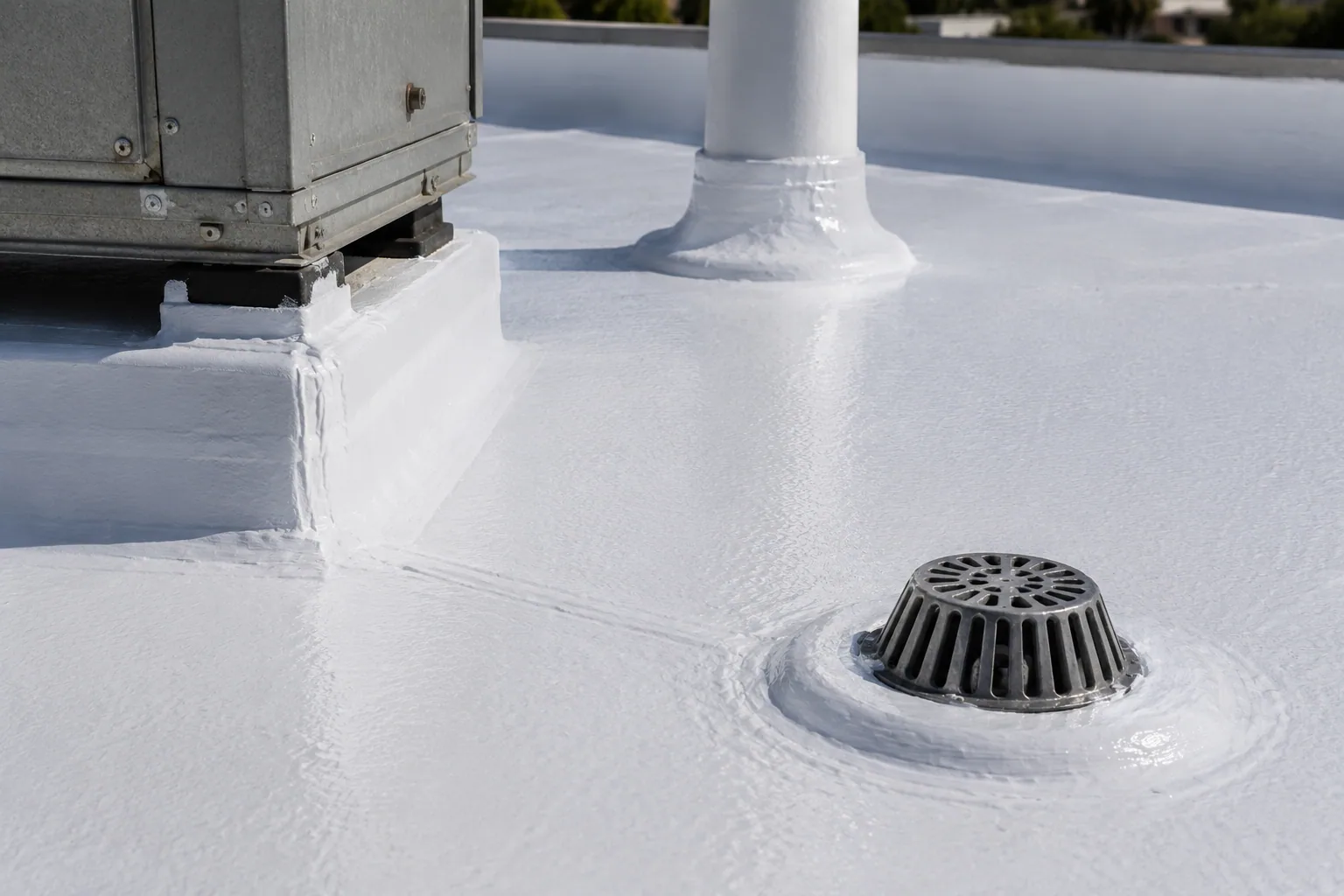
When the membrane is sound, the insulation is dry and the exhaust residue can be cleaned. A coating then resists heat and sun. If grease or chemicals are heavy, the coating must be compatible with them. A silicone coating is one option, and we test a patch first.