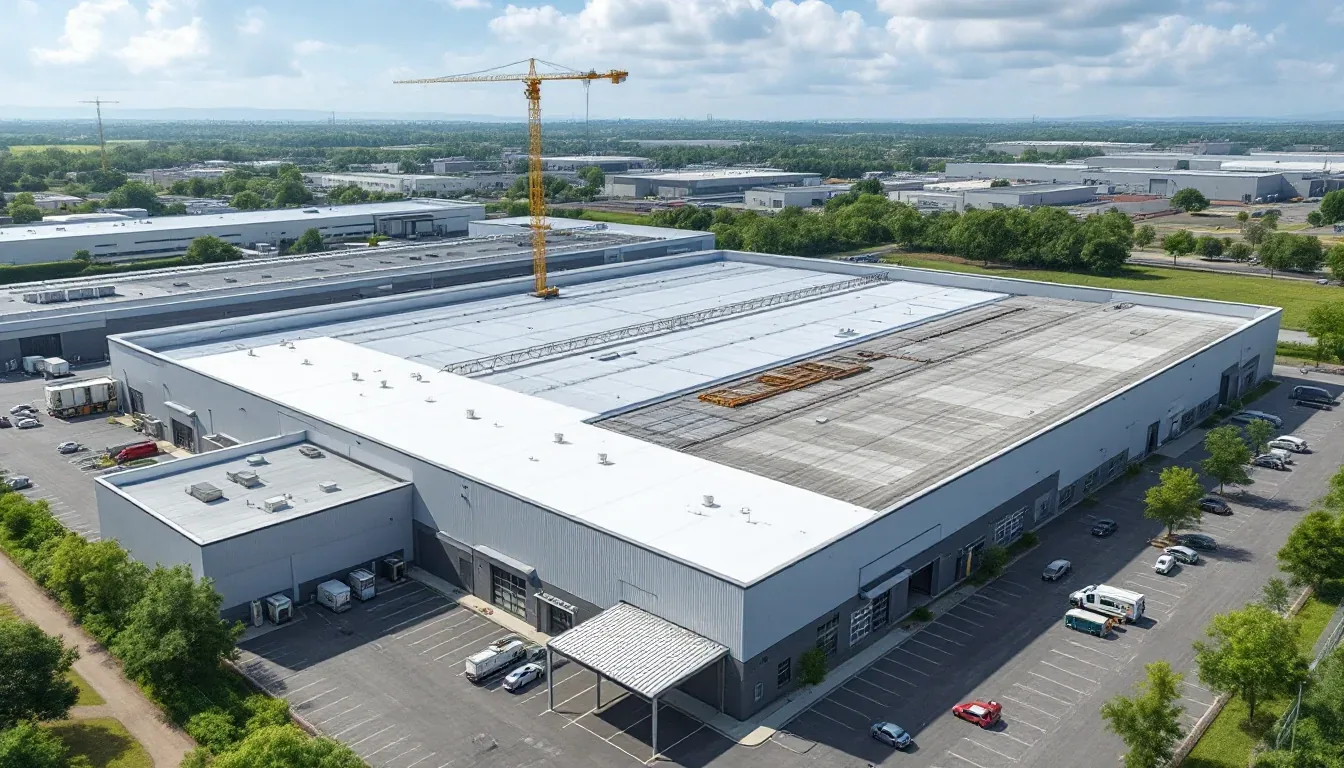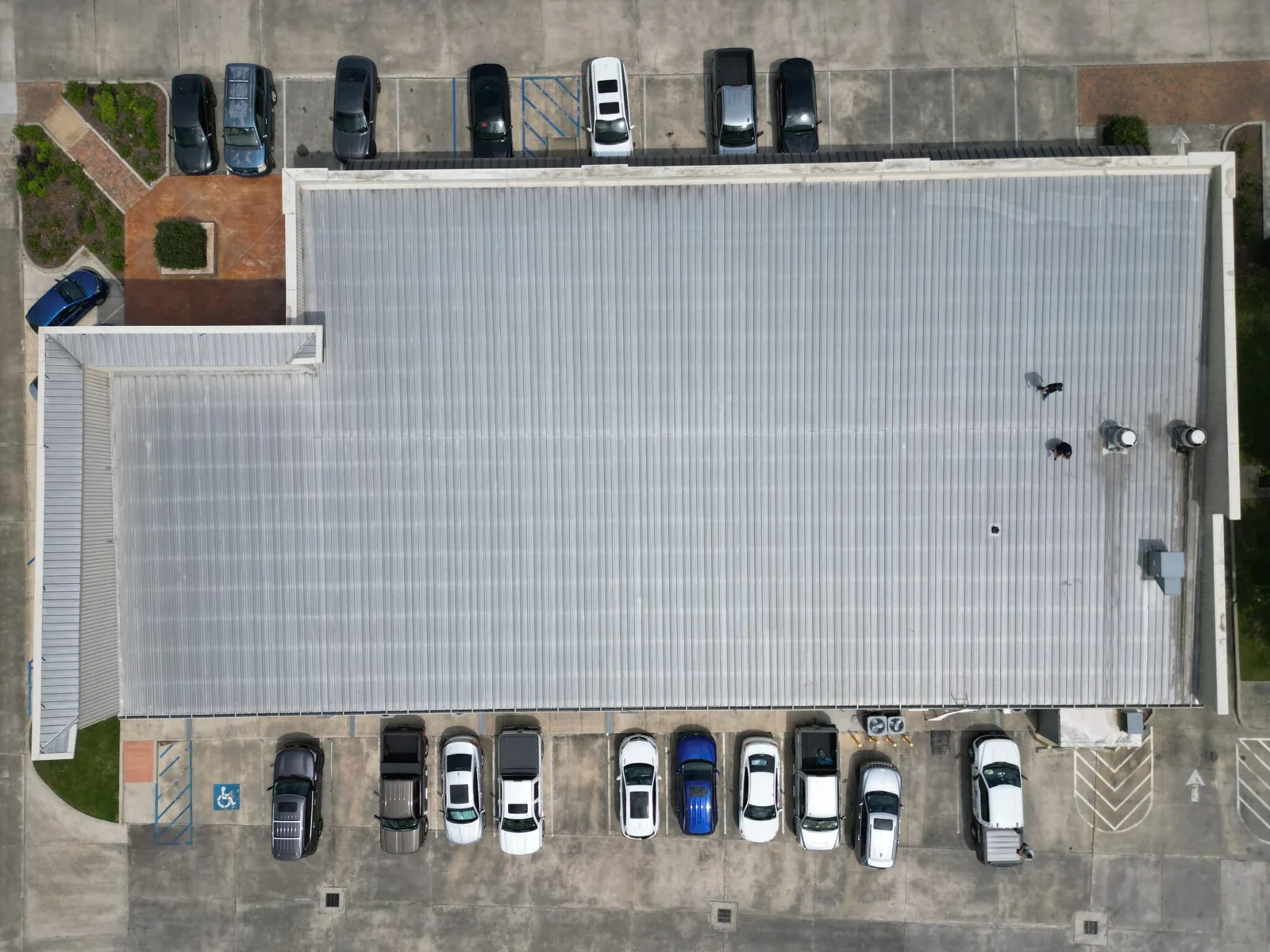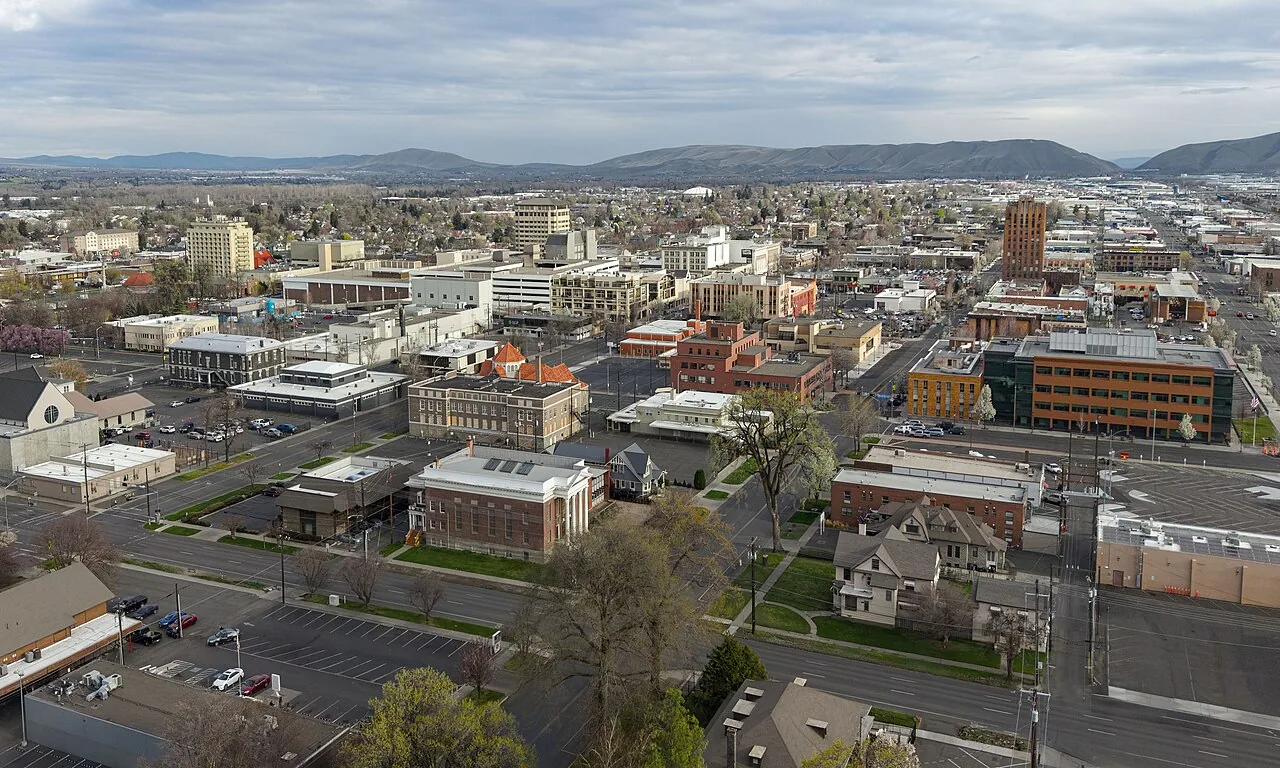
Commercial roof work in Downtown Yakima begins with the street grid, because a building around Front Street, Yakima Avenue and 1st Street works from the street: the crane, the delivery truck and the dumpster all stand where people walk. A January call from a property manager here usually carries two questions at once: where is the water coming in, and where can a truck stand while the crew works? Dispatch asks both before anyone climbs. Winter in Yakima, WA is mostly snow in December and January, so the first call of the year is often about snow that has slid, drifted or melted into a ceiling.
We repair, recover and replace low-slope commercial roofs in the downtown district, and we plan every job around street access and the tenants below. From the building address, the roof age and the permit's design snow load we plan a walk of the roof, a probe of the seams and a written list of what to fix first.
Read the Roof in Its Streetscape
Over the years the retail core gave up department stores and a shuttered mall to Union Gap. When a roof's tenants change, the equipment on it changes too. We start by asking what sits on the roof today and what was removed from it, because an abandoned curb is a leak the building has not found yet.
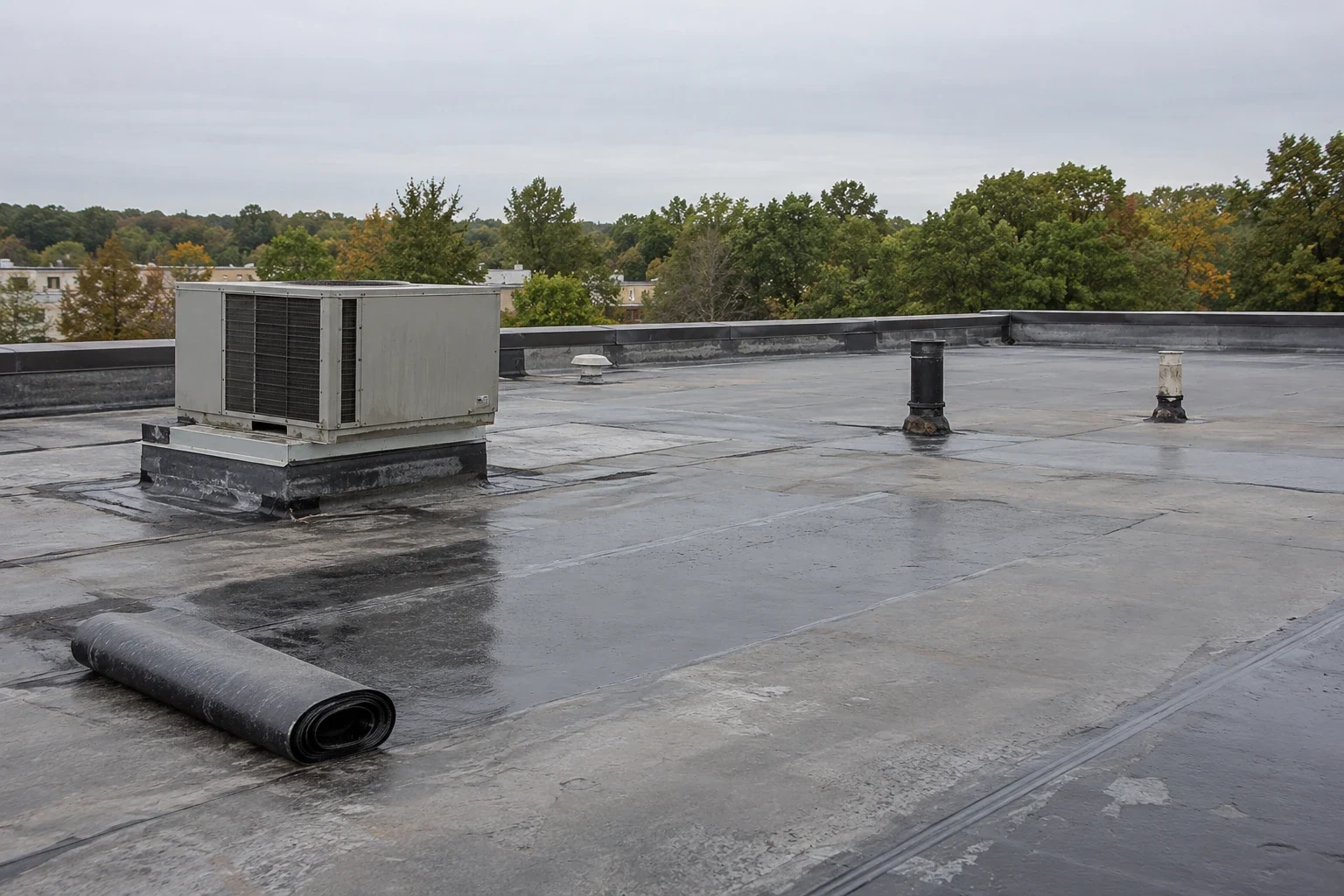
On a first walk we look at parapets, drains, scuppers and every penetration. We map where rooftop units have been added or moved, because an abandoned curb or a capped pipe is a common leak point. We note the roof type, the number of layers, the condition of the edge metal and the slope to the drains. Photos go with every note, and each photo is tied to a spot on a roof sketch, so a manager reading the report in the office can find the same corner on the roof a month later without a guide. The result is a written report that ranks each item as a patch or a fix, so a manager with several buildings can budget in order.
Plan Staging for Tight Street Frontage
A downtown roof job lives or dies on access. A crane or a delivery truck has to share the street with traffic and pedestrians, and a lane closure needs a city permit. Deliveries arrive early, the hoist stands clear of every entrance and nothing sits on the sidewalk. If the roof has no loading dock, materials go up in small lifts, and the plan allows time.
Inside, we notify tenants in writing and set quiet hours for the loud steps. A shop that opens at ten and a professional office that needs calm in the afternoon have different needs, and we name the dates and noisy tasks in advance. The planning follows the same pattern as our occupied building reroofing approach: agree the hours first, then write them into the schedule.
Prepare for Snow, Heat and Gusts
Snow load is set by each parcel, and a downtown building near South Third Avenue knows what a bulging wall can lead to, because one there was red-tagged in February 2019. Plastic tools do our clearing, a protective layer stays on the membrane, and we look at the ceilings inside for sags before anyone steps on the roof.
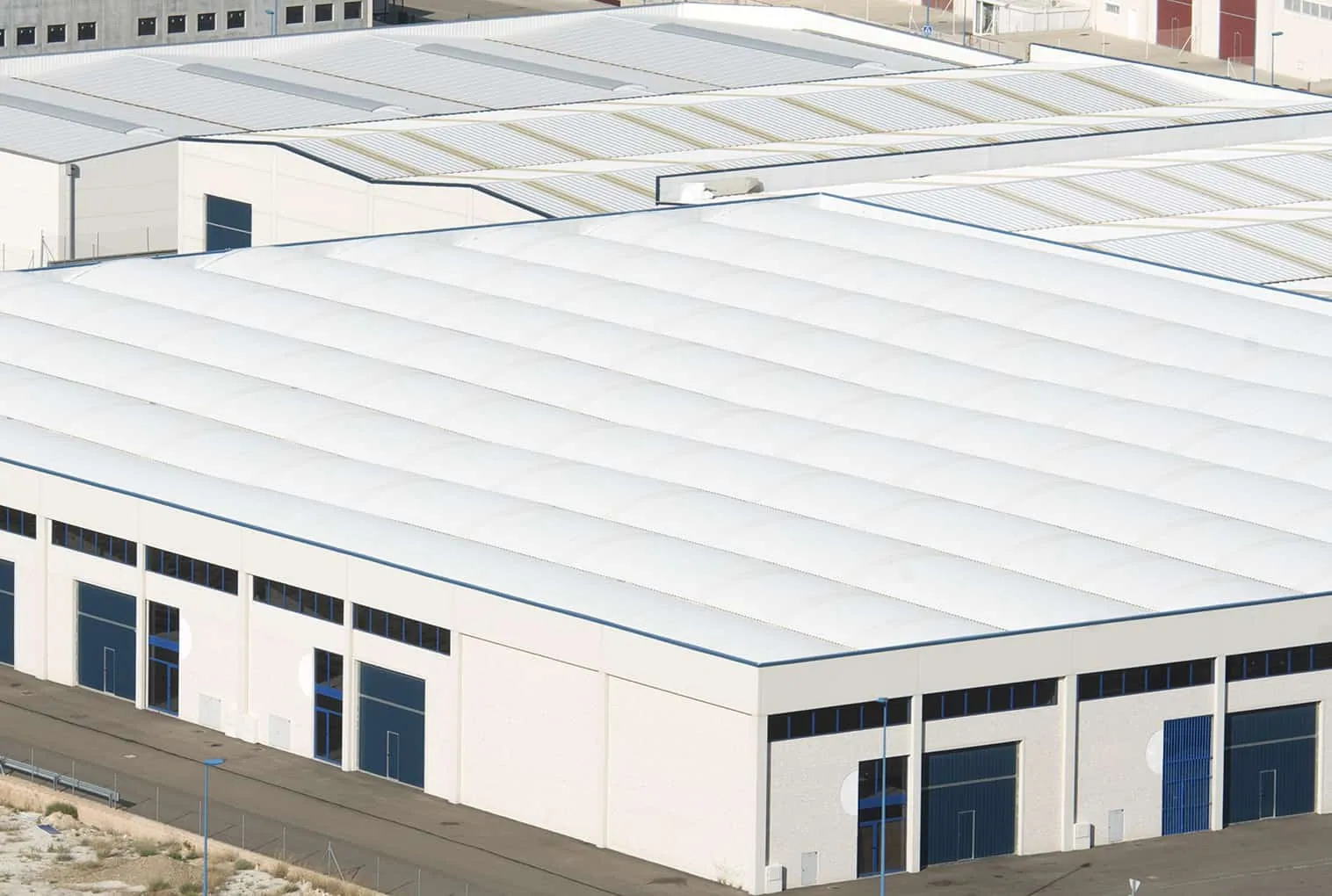
Summer brings roughly forty afternoons past 90 F and a 113 F record from June 29, 2021, and the late-November 2019 windstorm reached 51 mph in the city. The daily swing works every flashing and seam. A white TPO membrane lowers surface temperature, and edge metal gets extra fastening for the design wind speed of 110. After a gale we walk the sidewalks first, looking for trim on the ground.
Coordinate With the Hospital and Office Cluster
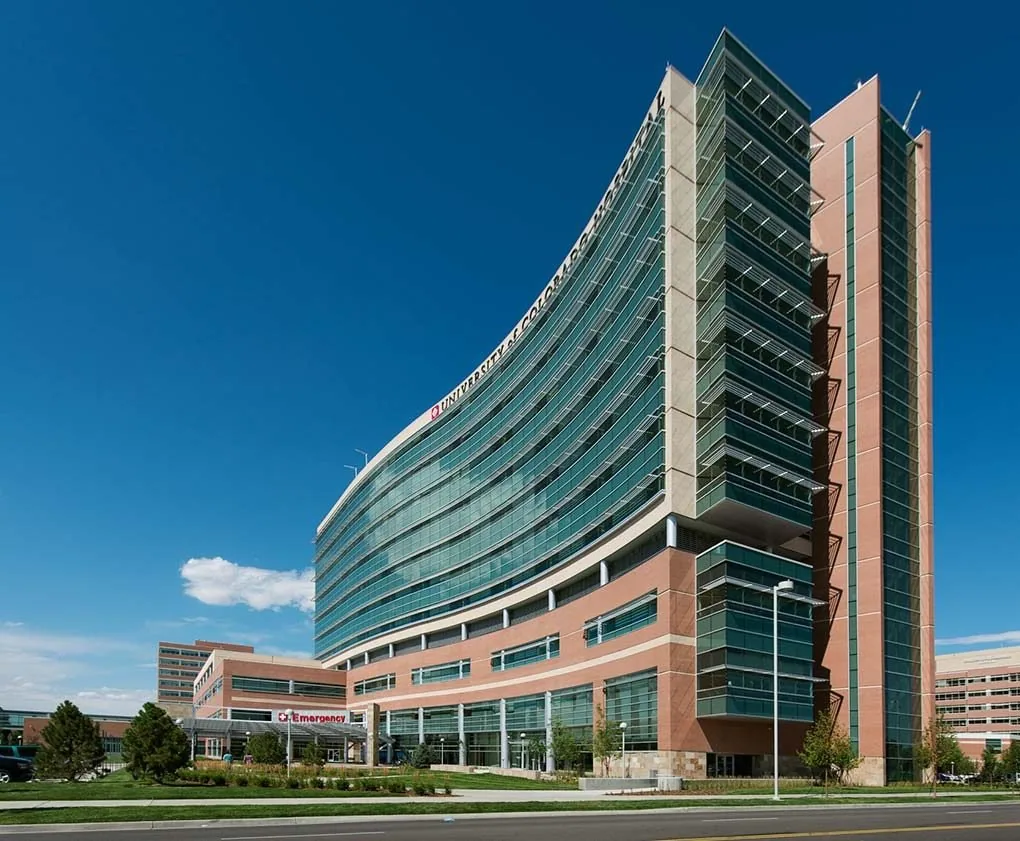
The healthcare cluster around Yakima Valley Memorial Hospital, which has 238 beds and a helipad and employs about 2,500 people, sets a standard for noise, dust and odor. The rules that apply to a hospital roof shape how we work on the buildings nearby. We choose low-odor systems where intakes are close and keep debris and staging away from entrances.
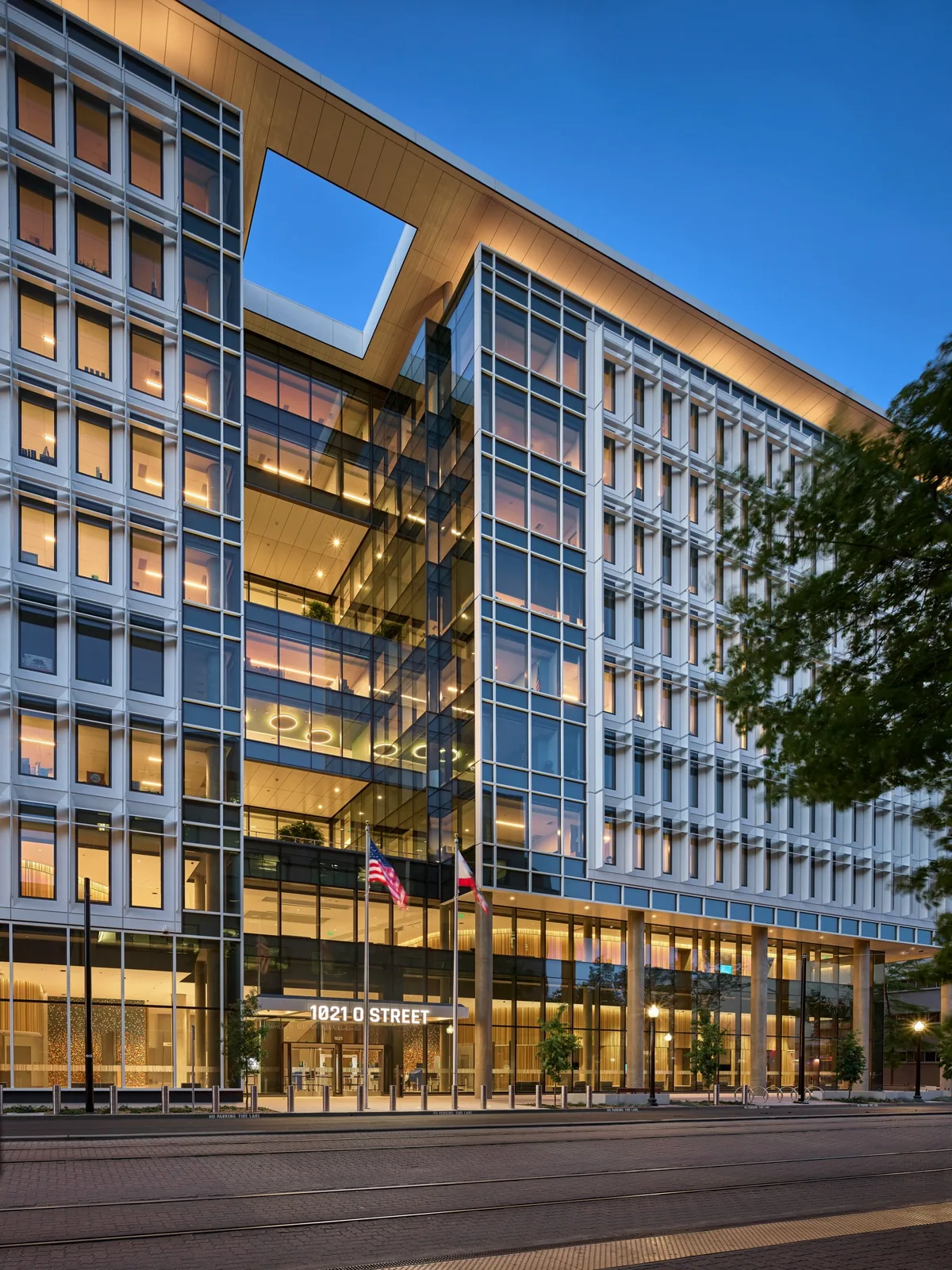
For an office building downtown, the focus is tenant communication and drain care. Interior drains clog with leaves and ice, and a ponded roof adds weight. We clear drains on every visit and check the connections to the pipes. The Yakima Greenway, a 20-mile park and path system along the Yakima and Naches rivers, runs through the city, and a roof near trees and river corridors collects leaves in autumn, so we add a drain-clearing visit after leaf fall.
Choose Between Repair, Recover and Replacement
A downtown building with a few leaks at flashings is a repair job. A building with soft spots, widespread stains or ceiling damage across several bays needs a moisture survey before any decision. Infrared scanning at dusk shows which insulation is saturated, and cores confirm it. A recover over dry insulation saves tear-off and downtime, but it adds weight that has to fit the snow load.
When retail has moved out and a building is being reused, the roof deserves a condition report before the lease is signed. Our commercial roof inspection includes photos, moisture findings and a ranked list with cost ranges. A building in Union Gap, where the retail moved, or in West Valley, gets the same report format, so an owner with properties in several places can compare them side by side. A report that predates a new tenant also protects the owner later, because it shows which stains and soft spots were already there when the lease began.
Commercial Roofing Questions
How do you handle deliveries for a downtown roof with no loading dock?
We schedule early-morning deliveries, coordinate with the city for any lane or sidewalk closure and hoist materials in small lifts to the roof. A flagger keeps pedestrians clear. We walk the street with the property manager before the first delivery and mark where trucks stand and where the hoist sits.
Our building changed tenants recently. Should the roof be inspected?
Yes, because a new tenant often brings new equipment, new penetrations and new loads. We check what was added, whether the curbs are flashed and whether drains and supports are intact. A written report at move-in gives you a baseline, so later damage is easy to identify.
What is the usual cause of leaks on older downtown flat roofs?
Flashings at parapets and penetrations, clogged drains and seams that have aged. We probe each one and trace stains inside. Often the entry point is some distance from the stain. A moisture scan finds wet insulation, which shows the path the water has traveled.
Can roof work happen while shops and offices stay open?
Usually. The work is on the exterior, and we protect entrances, schedule loud steps for quiet hours and keep walkways clear. Tenants get written notice. A few days of more intrusive work may need a coordinated closure of one area, and we flag those days in advance.
How should snow be cleared from a roof next to a sidewalk?
Use plastic tools, leave a layer of snow on the membrane and block the sidewalk below while the work is underway. Snow slides toward the street, and falling ice is a hazard. If a drift looks heavy or the ceiling inside shows sags, call us before anyone goes up.