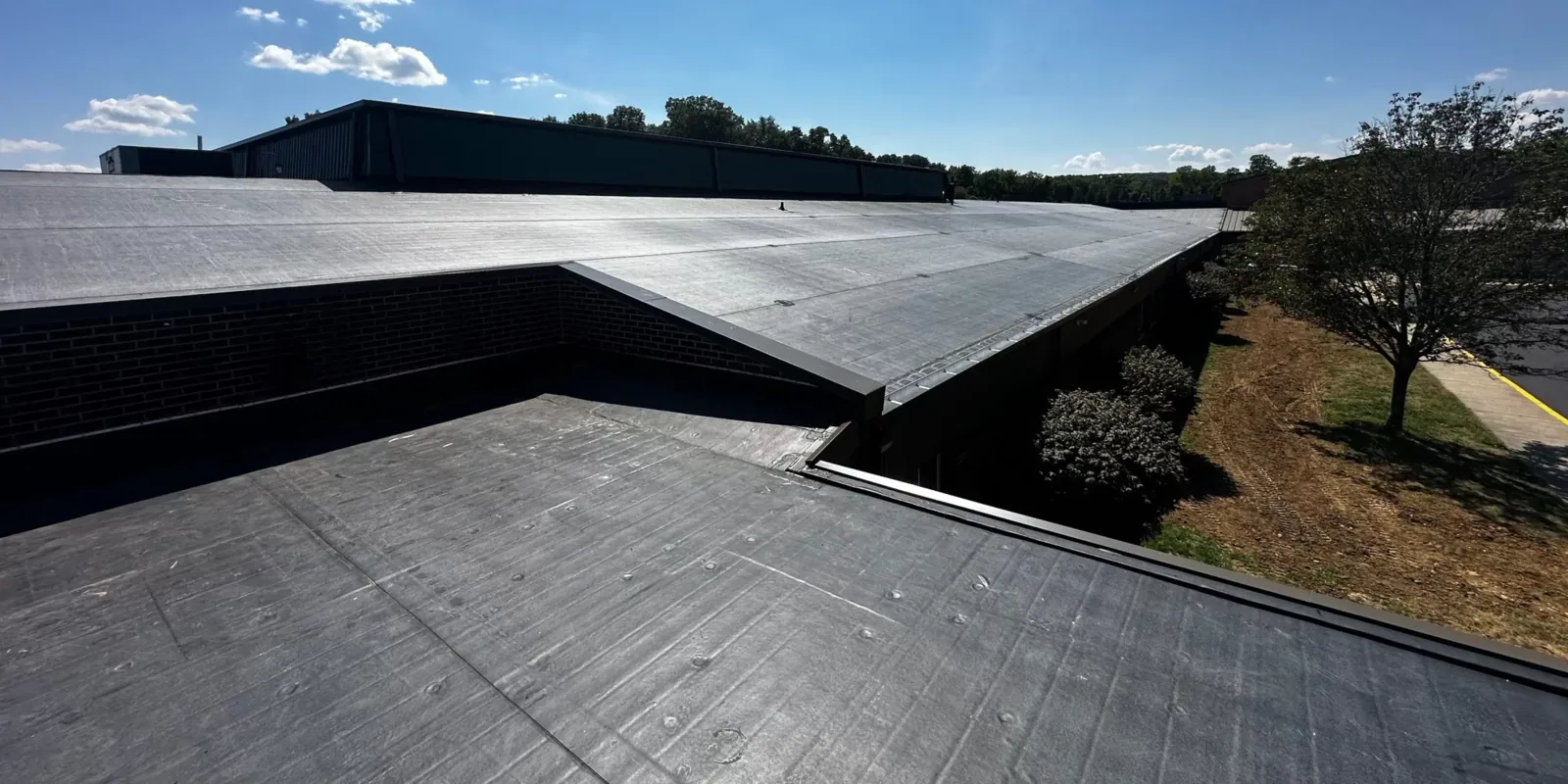
Two days after a January snowfall, a facility director notices that the black roof next to the packing shed has shed its load while the light-colored roof beside it is still buried, and the question dispatch asks is how old the rubber is. EPDM is a synthetic rubber sheet, usually black, that absorbs sun and stays flexible when the temperature falls. In Yakima, WA, where lows have touched minus 25 F and snow sits for weeks in December and January, a membrane that does not stiffen or crack in the cold has real value.
We repair it, recover it and replace it, and we tell you when the splices are finished and the sheet has aged out. Bring the roof age, the attachment type (fully adhered, mechanically attached or ballasted) and any leak locations when you call. That tells us whether we are looking at a repair or a decision about the next system.
Identify How the Sheet Is Held Down
An EPDM roof is attached in one of three ways. A fully adhered sheet is glued to the insulation or cover board across its whole surface. A mechanically attached sheet is fastened along the seams with plates and screws. A ballasted sheet lies loose under river stone or pavers, and its weight keeps it in place. Each fails differently. Adhered sheets lose adhesion at edges and corners, fastened sheets show screw backout and billowing, and ballasted sheets hide their problems under stone.
Ballast adds real weight, which matters because the same roof must also carry snow. On a ballasted roof we ask for the structural drawings and check the stone load against the design snow load, because a roof that is fine in August can be near its limit under a drift in February. Stone also traps debris at drains, and we clear it by hand so the sheet underneath is not scratched.
Check Every Splice Before You Trust the Field
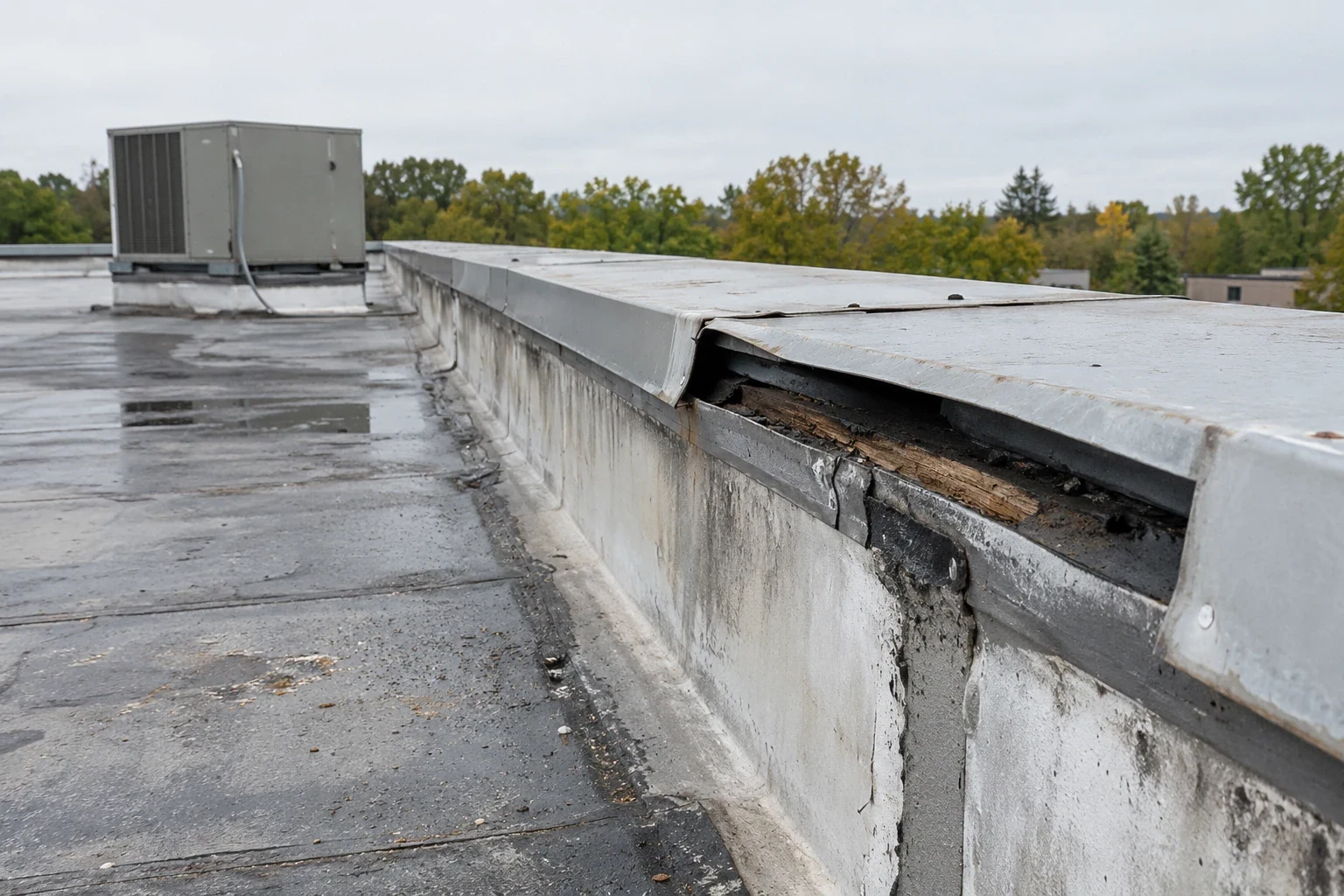
EPDM comes in very large sheets, so there are fewer seams than on a narrow-roll system, but the seams it does have are chemical rather than welded. Seam tape or a liquid splice adhesive holds the laps together. When a splice fails, the edge lifts and curls, and water finds the gap in the next rain or thaw. We press-test the splices, look for peeled tape, and mark any run that moves under the thumb. A short peeled run is a patch, and a long pattern of failing laps is a sign the adhesive has aged out.
Older EPDM can chalk and shrink at the edges, pulling away from a curb or parapet. A shrunken sheet needs new flashing, and sometimes a strip of added membrane so the edge is not under tension. Our flashing repair work starts by releasing the strain at each corner before any new material goes on.
Use the Cold-Weather Edge of the Rubber
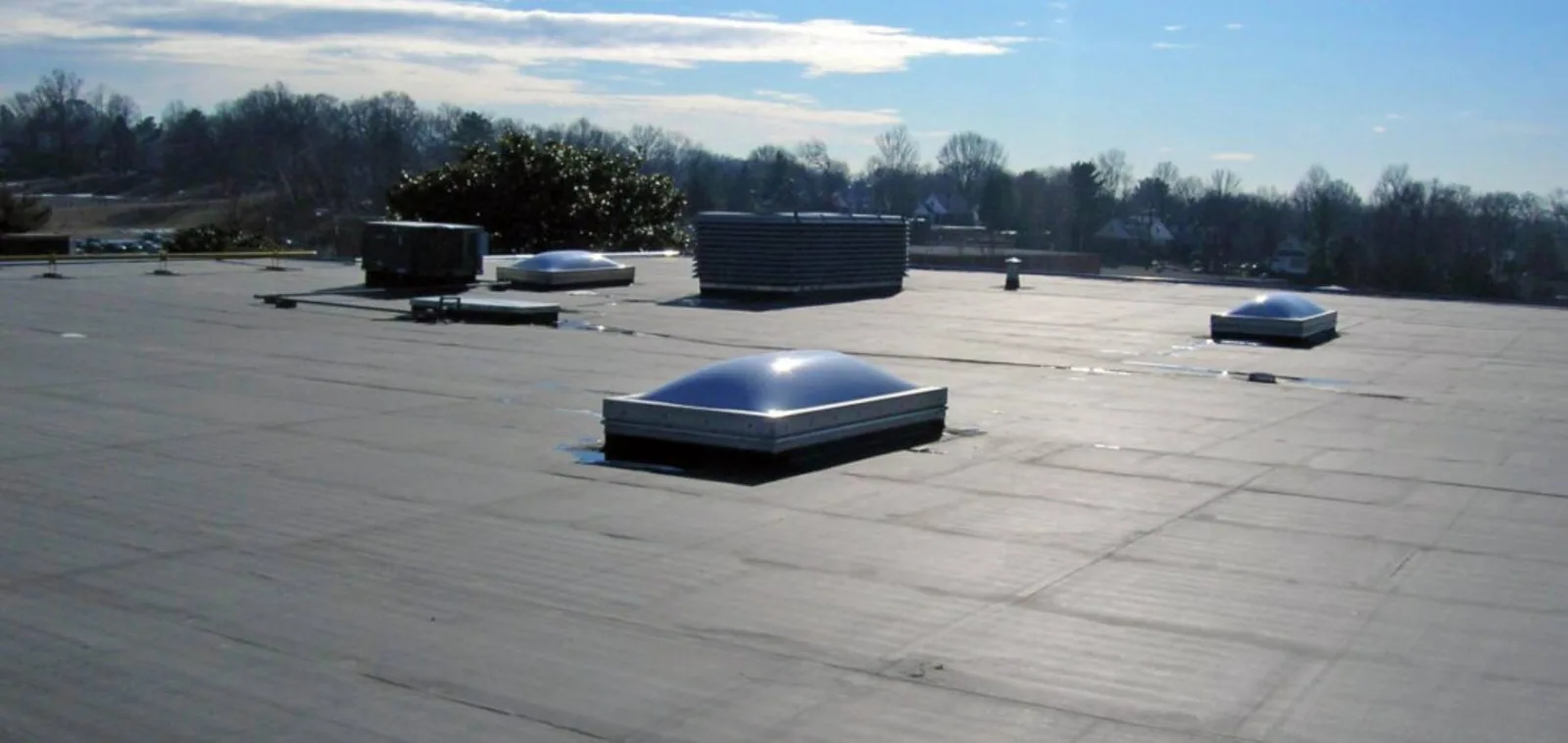
Yakima's highs stay below freezing about 19 days a year, and daily temperature swings can be large. Rubber keeps its stretch in that range better than a stiff plastic sheet, so an EPDM roof handles the day-night swing at its seams without the brittleness that shows up elsewhere. The black surface also warms quickly on a sunny day, which helps small drifts slump and drain once the sun hits the roof.
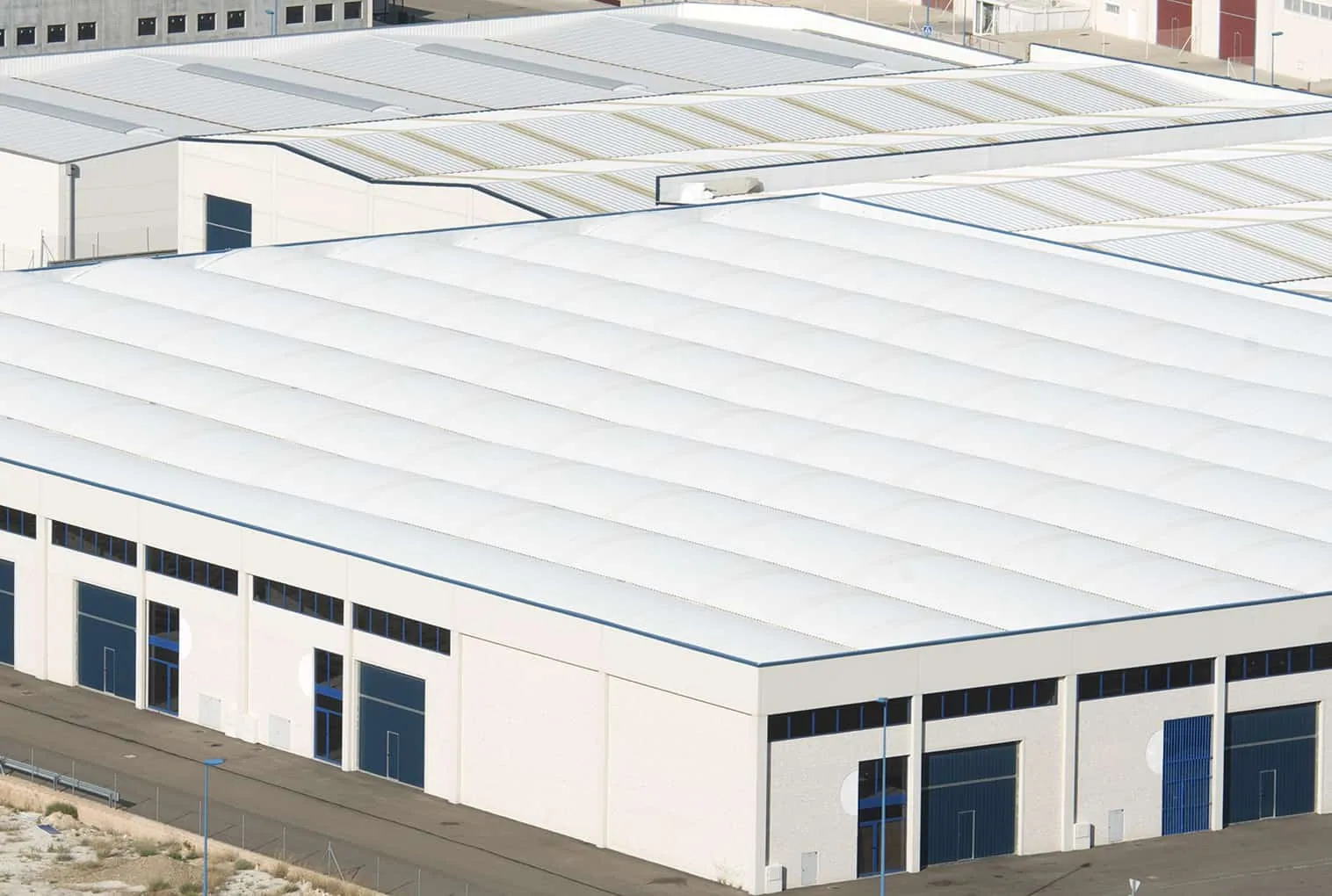
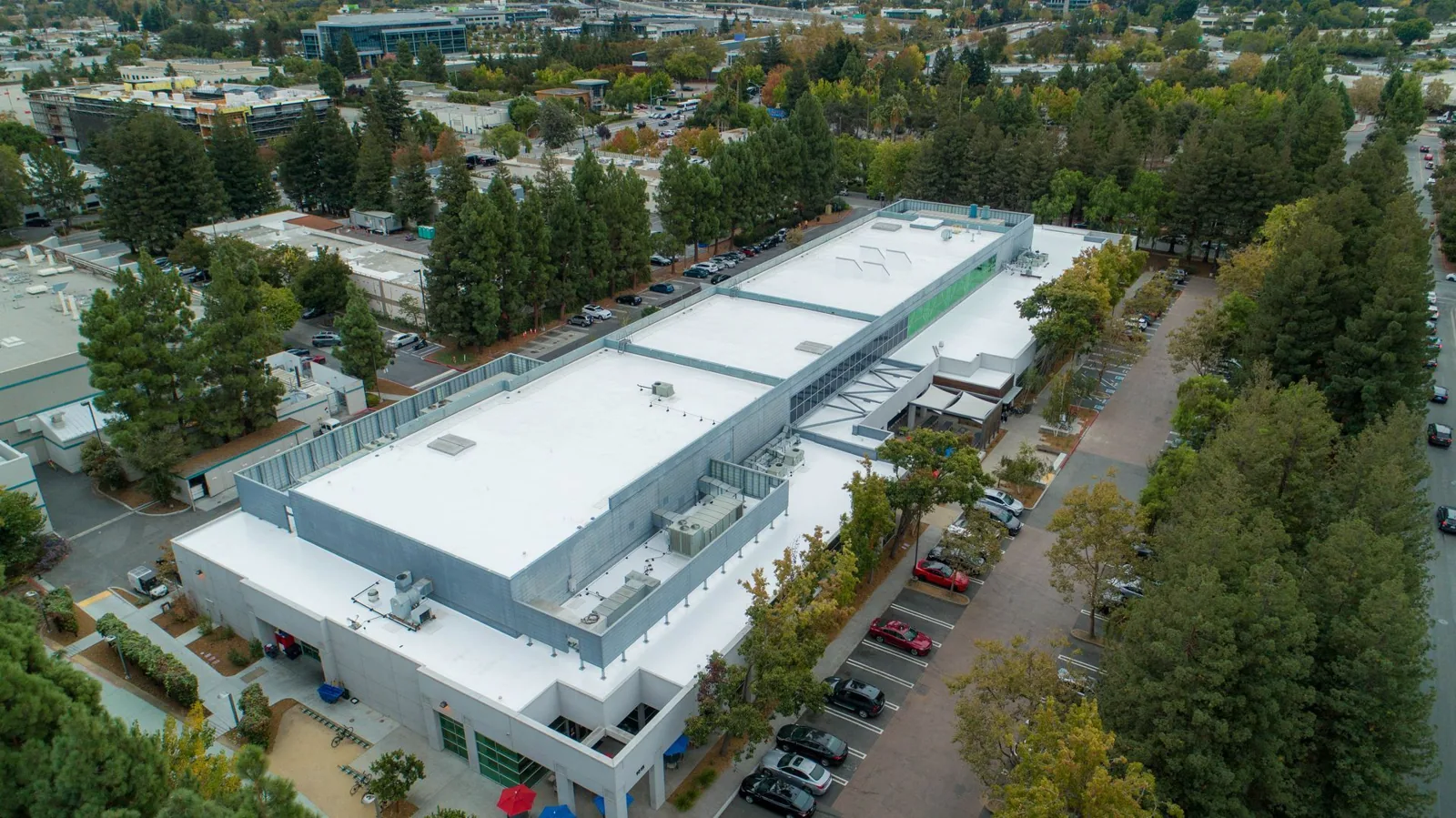
That heat has a cost. On a 100 F afternoon, which Yakima reaches about six times a year, the surface can run far hotter than the air, and it passes that heat into the building. A warehouse with no cooling will feel it, and a tenant with sensitive product may ask about a lighter surface. A white TPO sheet or a reflective coating is the usual answer, and we price it next to a new EPDM roof so the choice is clear.
Clear Snow With Plastic and Leave a Layer
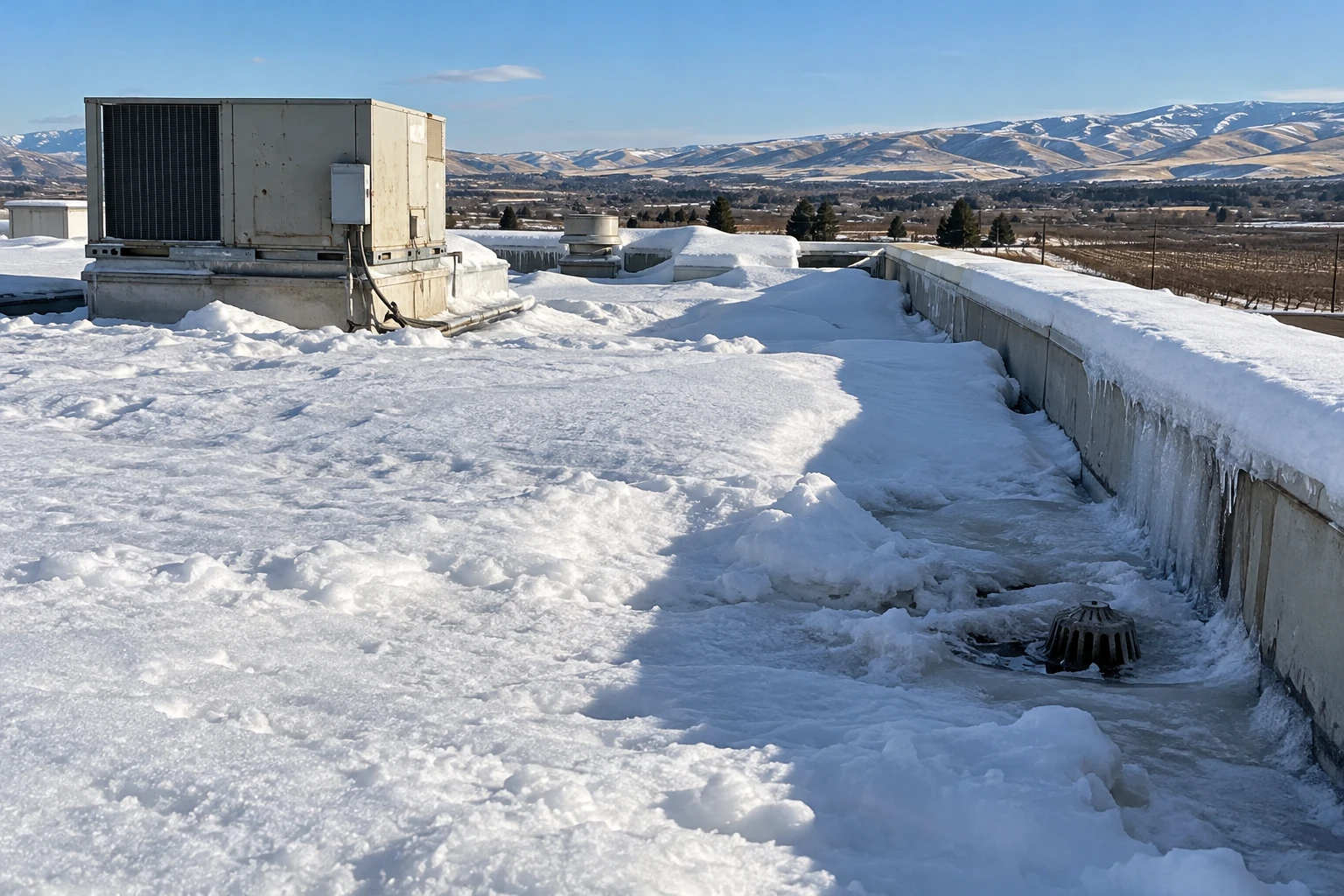
Drifts build against parapets and wherever a lower roof meets a taller wall, and those piles can load a small area far beyond what the flat field carries. Shoveling is the usual way EPDM gets cut in winter, because a steel blade slices rubber as easily as any plastic sheet.
We clear with plastic tools and leave a protective snow layer on the membrane. If a drift is deep enough to worry about deflection, we check the deck from below before anyone steps on it. The right response to snow and ice damage depends on whether the sheet is torn, the flashing is lifted or the deck has moved, and each calls for a different crew.
Decide Between Repair, Recover and Replacement
An EPDM roof that leaks at a few splices and flashings can be repaired economically. A roof with widespread shrinkage, cracked surfaces or soaked insulation has reached the end of its sheet, and spending more on patches wastes money. We scan with infrared when the pattern is unclear, since insulation soaked in one corner may be dry elsewhere and an infrared moisture survey tells us where the sheet can stay.
When the insulation is dry and the deck is sound, a recover with new membrane over a cover board is often cheaper than a full tear-off. When the insulation is wet, it has to be removed. A hop kiln or warehouse in Moxee, a retail roof in Union Gap and a packing shed in town may carry different sheets, so we survey each building separately and keep the findings in one report you can use for budgeting.
Commercial Roofing Questions
Why does the seam on my black roof keep lifting after repairs?
Usually the surface was not clean or dry when the tape went down, or the sheet is shrinking and pulling the lap apart. Rubber that has aged for years carries a film that tape will not grip, so we scrub it with a cleaner before the new tape or adhesive goes on. If the sheet itself is pulling at the edge, a fresh splice only holds until the next cold snap, and the fix is to relieve the tension or replace that section.
Can I put a coating on an old EPDM roof?
You can, provided the sheet is dry underneath, well adhered and free of widespread splitting. An acrylic coating made for rubber adds a reflective surface and seals small cracks, but it cannot rescue wet insulation or a sheet that has shrunk away from its flashings. We test adhesion and run a moisture scan first, and our roof coating plan states what will and will not be coated.
My ballasted roof is covered in stone. Can you still find the leak?
Yes, though it takes more work. We sweep the stone back in sections, inspect the sheet and seams underneath, and use infrared or electronic leak detection when the stain below does not line up with a visible tear. The stone goes back in the same pattern afterward. If the stone has shifted into piles, we redistribute it so the load stays even.
How does windblown debris affect an EPDM roof?
Rubber stretches around impact better than hard sheets, but a sharp object or a heavy tool dropped from a ladder can still cut it. After a valley gale, flying debris is the concern. We walk the roof, look for gouges and flapping edges, and patch with an adhered rubber piece rather than tape alone.
Is EPDM a good choice for a roof with a lot of rooftop traffic?
It tolerates occasional service visits, though heavy foot traffic wears the surface. We install walk pads along the routes technicians use to reach equipment, and we recommend that no one carries ladders or tools across the open field. If the traffic is constant, a thicker membrane or a protected walkway is worth the added cost.