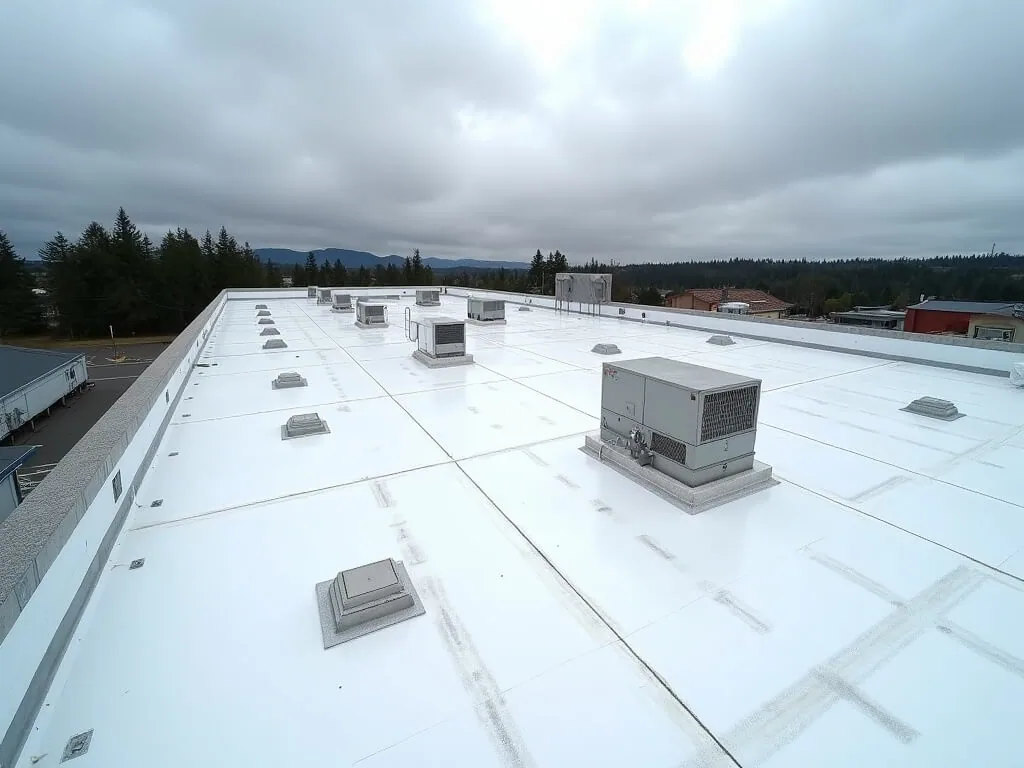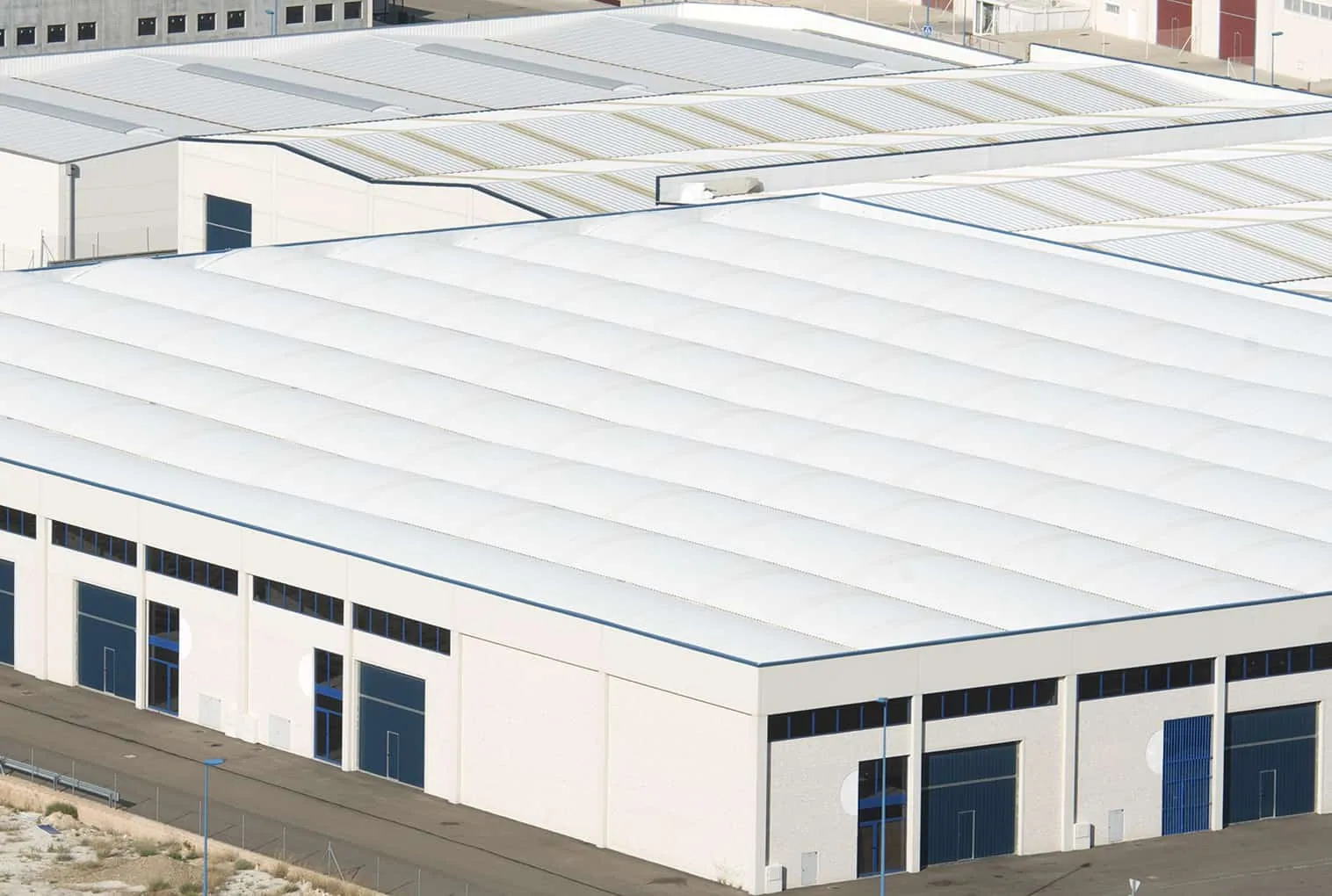
A warehouse manager phones on the first hot week of July because the white membrane over the dock office has a seam that looks lifted, and the question dispatch asks is how old the welds are, not what color the roof is. TPO is a single-ply sheet whose seams are fused with hot air, so the seam is the part that either holds or does not. In Yakima, WA the sheet works through about 40 afternoons at or above 90 F, then cold nights, then a winter of snow that sits on it for weeks. A well-welded TPO roof handles that cycle for years. A roof with cold welds or loose edge metal shows its trouble in the first January thaw.
We install TPO over new construction and over tear-offs, and we repair it where it has been punctured, split or pulled at the edge. Before you call, find the building address, the roof age if you know it, and the permit drawings if they are in a filing cabinet. Those papers tell us the design snow load, which shapes the choice between TPO and a heavier PVC membrane.
Judge the Weld Before You Judge the Sheet
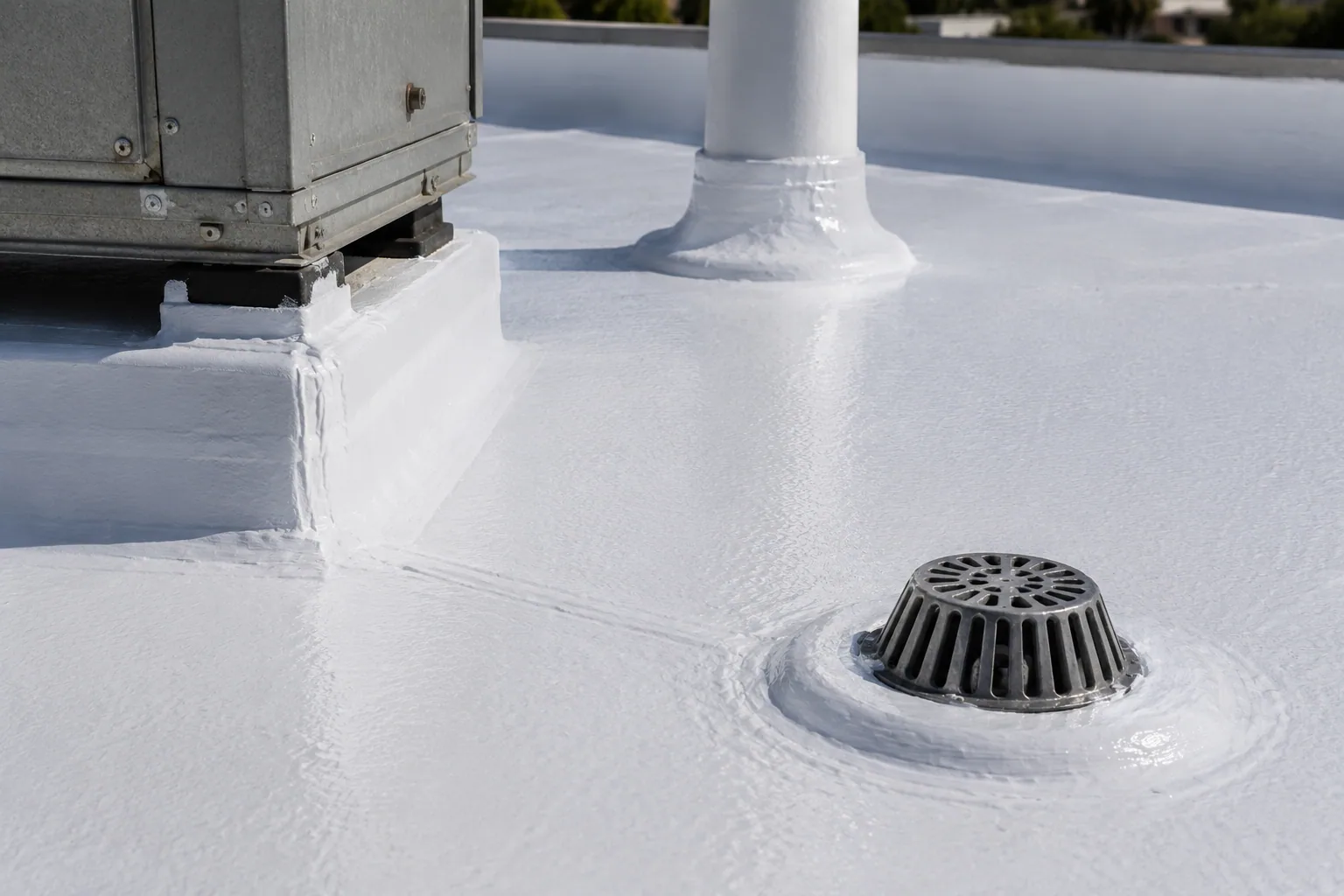
TPO arrives in wide rolls, gets laid over insulation and a cover board, and is joined at the laps by a robotic welder that melts both surfaces so they fuse. A good weld looks like a clean, slightly glossy edge with no wrinkles running into it. A bad one looks flat and dull, or has a gap you can slide a probe into. We test every seam on a new roof with a probe and cut sample strips on a retrofit, because the sheet itself seldom fails first. The seam does.
Thickness matters too. Thinner sheets scuff more easily where service crews walk to rooftop units. On a packing facility with refrigeration condensers, we put walkway pads along the routes technicians use.
Plan for the Heat Swing the Sheet Will Live Through
Yakima set a record of 113 F on June 29, 2021, and the same city has recorded minus 25 F. A membrane that survives that range is moving the entire time, expanding in the afternoon and shrinking overnight. White TPO reflects much of the sun, which keeps the surface cooler than a dark sheet, and a cooler surface means a smaller daily swing at the seams and flashings. That is why TPO suits the big-box retail around Union Gap and distribution roofs along Interstate 82.
Movement concentrates at corners, at curbs and where the sheet runs up a wall. We set the flashing with reinforced corners and leave enough slack at transitions so the membrane is not pulled tight as the day cools.
Size the Roof for Snow Before It Drifts
TPO adds little weight, which is one reason owners choose it over a ballasted system, but it does nothing about drift piles. Snow stacks deepest on the lee side of any wall or equipment that rises above the field. We look at those spots on every TPO job and note whether the deck below shows deflection, because a sagging deck turns into a ponding problem the sheet cannot cure.
A steel shovel cuts TPO easily. Clear with plastic tools, leave a protective layer, and call us before anyone climbs up if the drifts are higher than a knee.
Repair TPO Where It Is Actually Failing
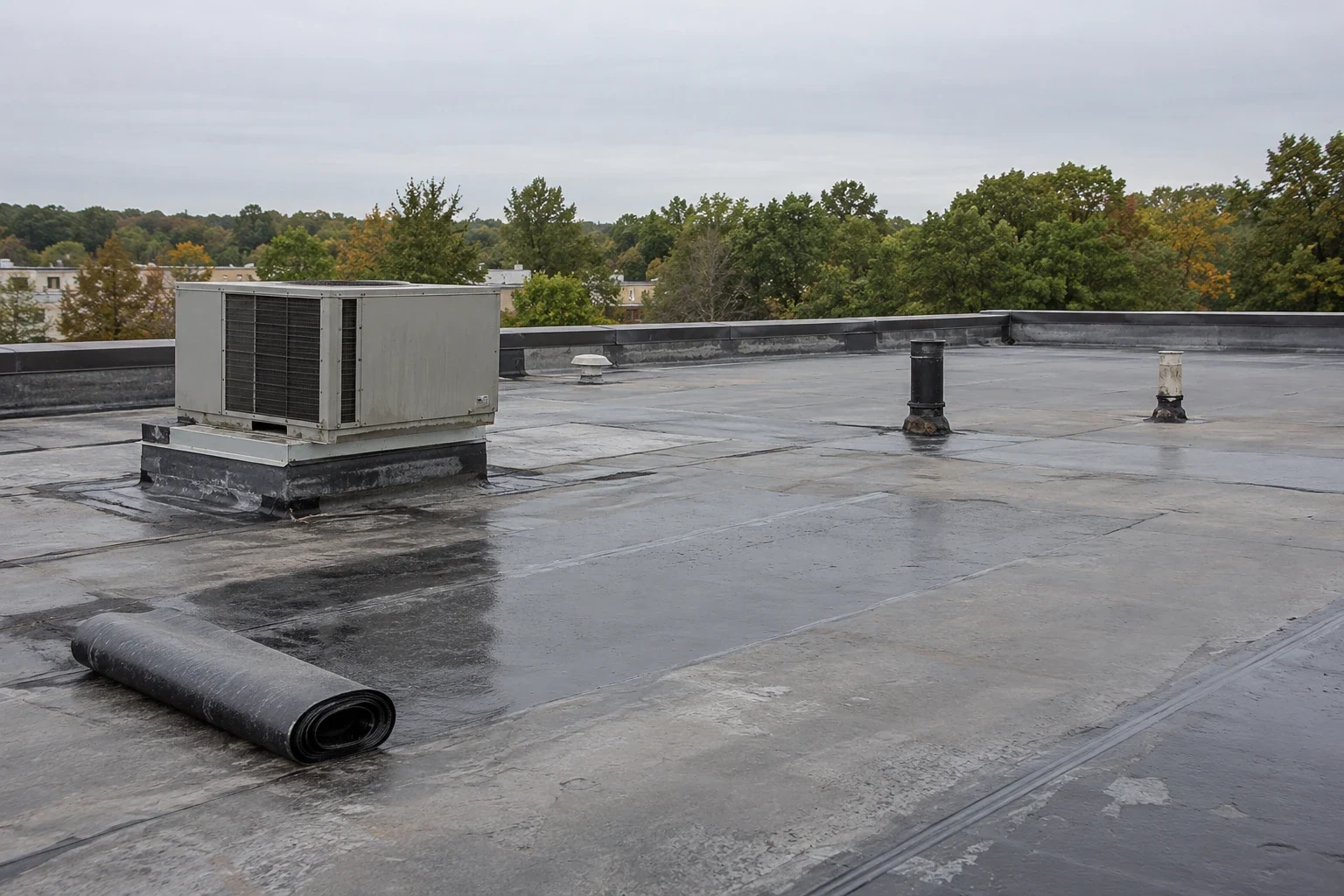
Most TPO repairs fall into three groups: a puncture from a dropped tool or a falling branch, a seam that has separated at a lap, and a flashing that has pulled away from a penetration. Each needs a different fix. A puncture gets a heat-welded patch with rounded corners, because square corners lift. A separated seam is cleaned, probed along its full length and re-welded, and we look for the reason it opened. A pulled flashing is stripped back to sound material and rebuilt.
Older TPO that has been in the sun a long time may not weld cleanly, since the surface has weathered and accepts a new weld poorly. In that case we use a cleaner and a test patch first, and if the sheet will not take a weld we tell you so before a crew is scheduled. At that point the choice is a coating over a sound roof or a recover. We will not paper over a roof that needs more, so our commercial roof repair list marks each item as patch or fix, and a recover over sound insulation is the next step.
Keep Operations Running Under the Tear-Off
A fruit packing line in Selah cannot stop for a roofing crew, and a hospital floor in Yakima cannot take dust through the ceiling. TPO installs quietly compared to hot-applied systems, with no kettle and little odor, so it suits buildings where staff and product sit directly below. The tear-off goes in sections, each dried in the same day, with temporary seal material kept on the roof in case a gust-lifted edge needs tying down.
We sequence the job around cold-room doors, intake louvers and packing-line shutdown windows, and log each section. Our plan for occupied building reroofing works the same way.
Commercial Roofing Questions
How can I tell whether the seams on my TPO roof are failing or just dirty?
A dirty seam still has a continuous bead of fused material along the lap, and a failing seam has a gap, a lifted edge or a ripple running away from it. Run a gloved fingertip along the edge on a cool morning, when the sheet is stiff, and note any spot where you feel a step. Photograph it, mark the location on a roof sketch, and send us the address. We probe the whole run and tell you whether it is a cleaning job, a re-weld or a sign the lap was never fused.
Does white TPO actually help a Union Gap retail roof in a Yakima winter?
The reflective surface mostly helps in summer, when afternoons climb past 90 F and a darker sheet would run far hotter. In winter the benefit is smaller, and a white roof holds snow the same way any flat roof does. The seasonal win is lower thermal swing at seams and flashings, which means less fatigue over the years. For a retail building, the insulation thickness and drainage under the sheet affect winter cost more than the sheet color does.
We have a TPO roof that is eight years old with a few leaks. Replace or repair?
Start with the leaks. If they trace to flashings, a handful of seams or a mechanical penetration, the sheet itself may be sound and repair is the right call. If the leaks are scattered across open field areas, or the membrane crazes and will not take a test weld, replacement or recover moves up. We scan with infrared when the pattern is unclear, so the decision comes from a map of the roof instead of a guess.
Can TPO go over an old built-up roof without tearing everything off?
Sometimes. A recover over an old built-up roof works when the existing roof is dry, the deck is solid and local code allows the added layer. We install a cover board over the old surface, fasten or adhere the new TPO through it, and check the extra weight against the design snow load. A moisture scan comes first, because trapped water under a recover shortens the life of the new sheet. If the old roof is saturated, it has to come off.
What should my facility team do after a windstorm like the November 2019 gale?
Walk the ground first, looking for membrane scraps and loose edge metal, the first signs of wind damage. Then check the ceilings below for new stains and note any rooftop unit door left open. Do not climb onto an unstable edge. Send us photos and the address, and we will inspect the perimeter, where a gust-lifted edge starts, and probe the seams nearest the corners, which carry the highest uplift.