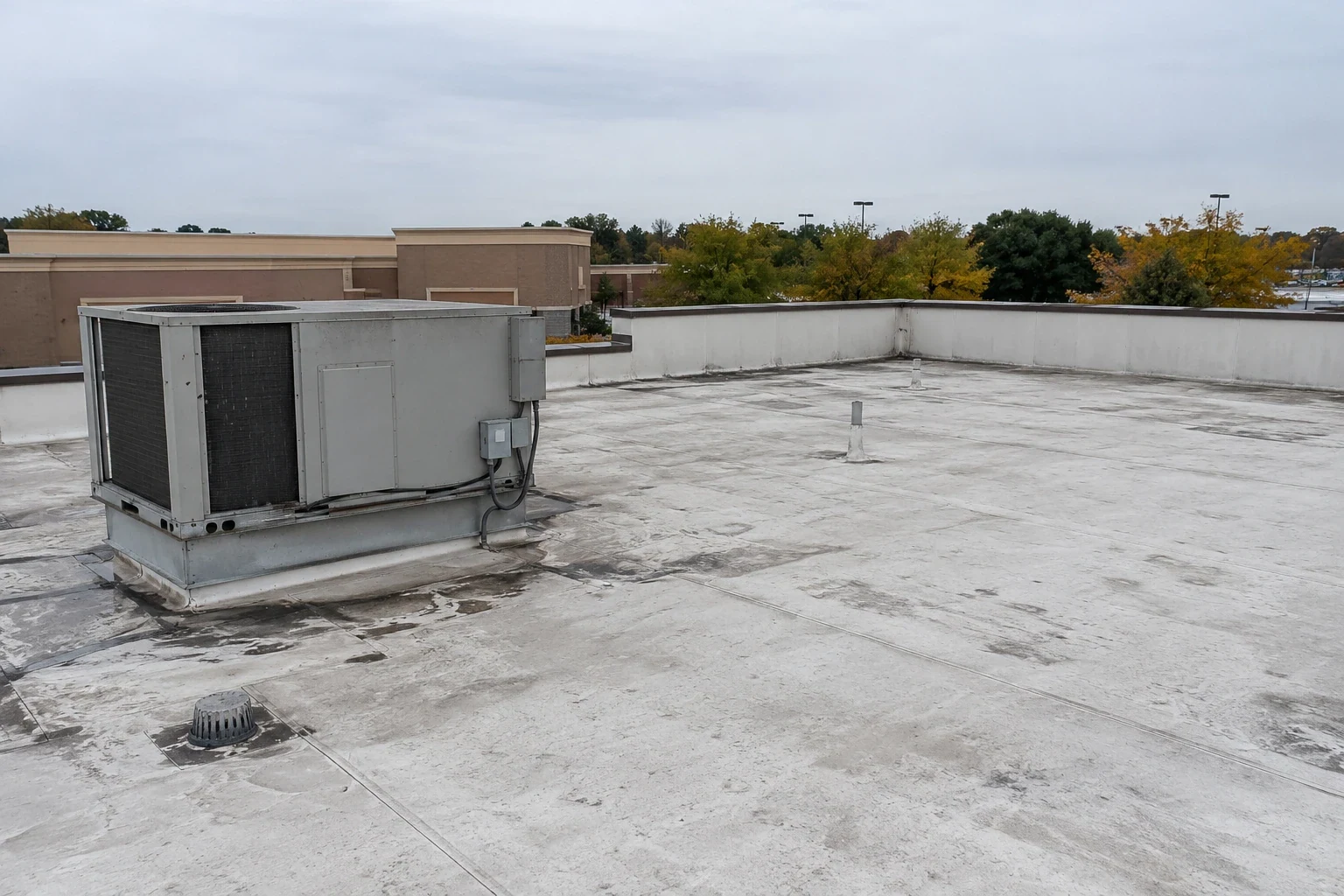
A regional operations manager calls on a Saturday morning in January because a store has a bucket under a ceiling tile and a restaurant two towns away has a drift against its rooftop unit. A chain in Yakima, WA takes the winter drifts and the summer heat at every site at once. Dispatch asks what each building was designed to carry and where customers will be at noon. Keep staff off the roofs and do not shovel.
A list of store addresses with whatever design snow loads the permits show, the places where snow or damage sits and the sites that cannot close lets us order the first visits.
Know Where the Retail Roofs Sit
Union Gap is the valley's retail hub, thanks to Valley Mall and the big-box stores around it. Downtown Yakima gave up several department stores and a closed mall as shoppers moved to Union Gap, and a chain with a site on Front Street or Yakima Avenue works around tight frontage. A chain with sites in both places holds roofs of very different ages.
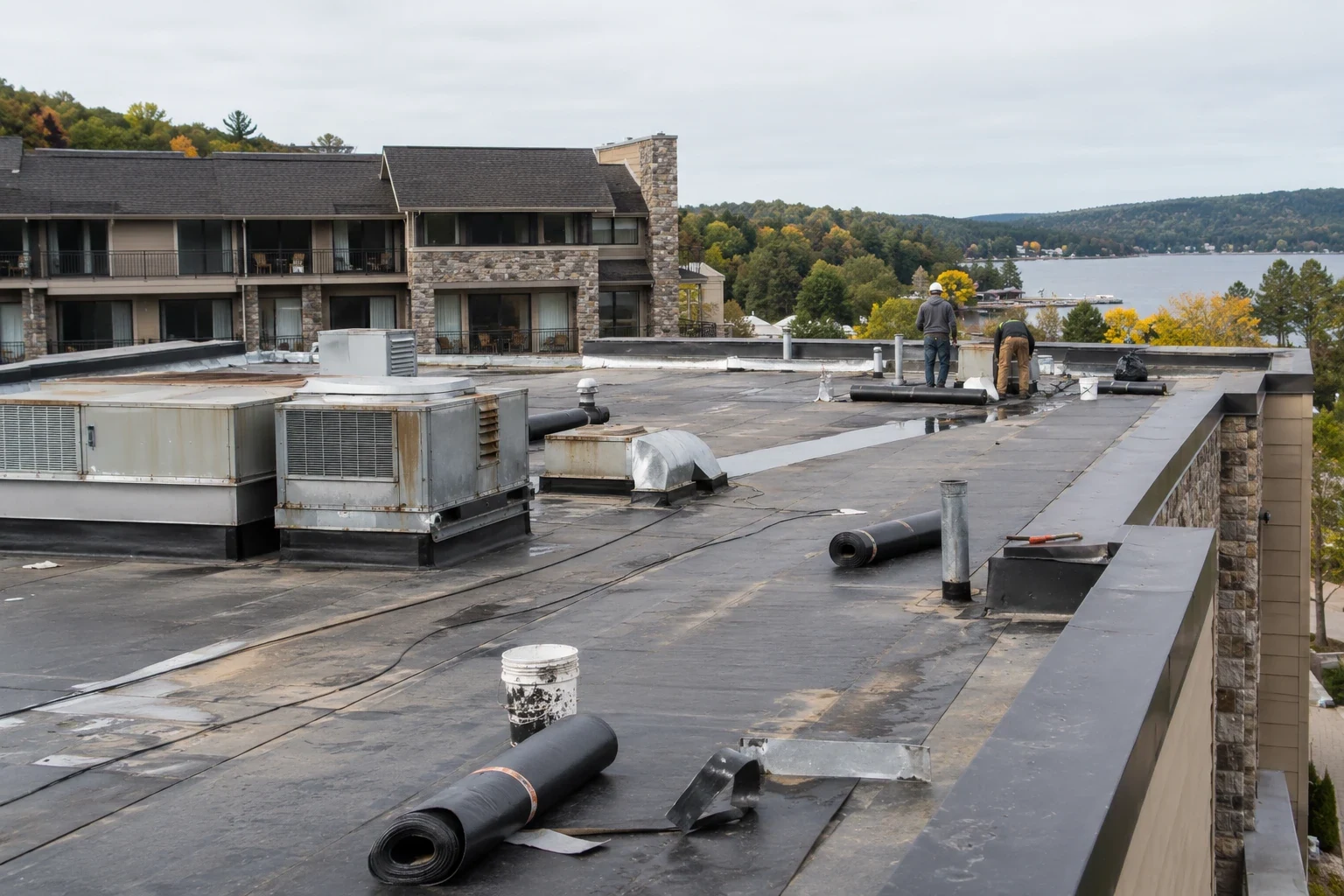
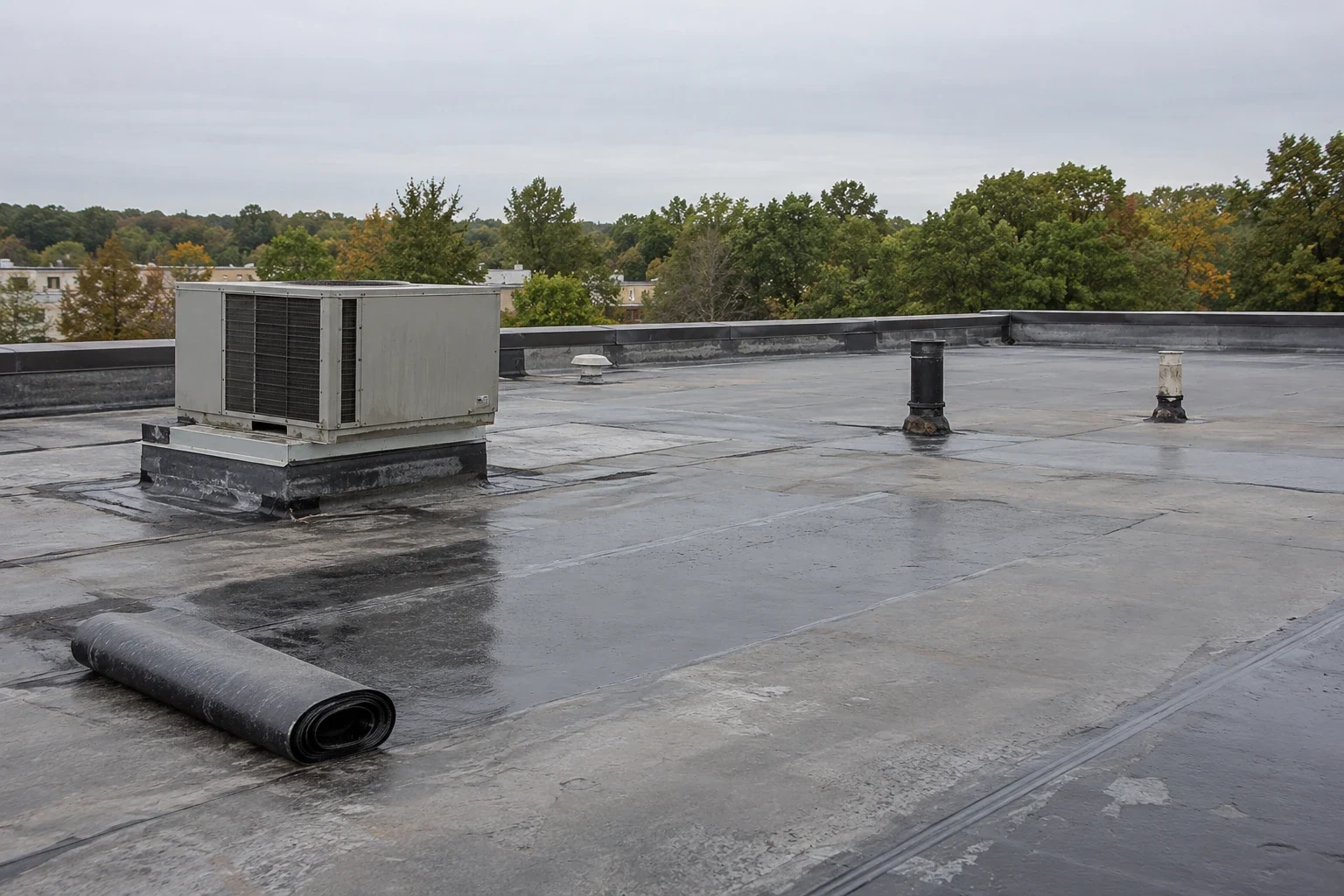
We do not assume what any one store has. A first walk grades each roof: field membrane, seams, flashings, drains, curbs and penetrations. Store roofs carry many rooftop units. Restaurant roofs carry kitchen exhaust. Each one is a place a leak can begin.
The result is a ranked list across the chain, with photos and cost ranges. A regional manager can read it in an afternoon and decide which sites go first.
Downtown sites carry their own constraints. Front Street and Yakima Avenue have tight frontage, shared walls and limited staging, and a crane day needs a street plan. A hospitality owner on the same block faces the same lift permits and the same neighbors' hours.
Find the Drift Behind the Sales Floor
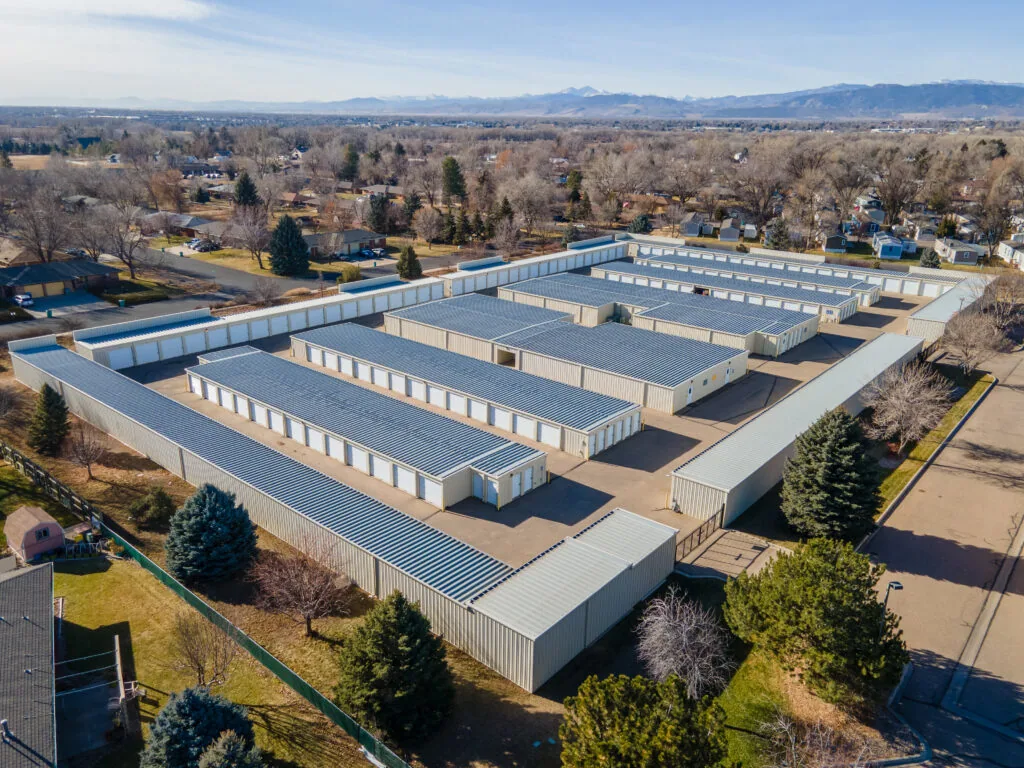
Big-box roofs are wide, and wide roofs hold a lot of snow. The design load follows each parcel, with engineering required above 70 psf, so a store built in one decade and a restaurant built in another can carry different numbers, even on the same lot.
Drifts build against parapets, rooftop units and the step between a tall sales floor and a low stockroom. The red tag put on a South Third Avenue commercial building in February 2019 came after a bulging wall, and a store should treat any stuck door or ceiling crack near a drift the same way.
Plastic tools do the clearing while a layer of snow stays on the sheet. Check the interior before anyone goes up. A sticking door, a ceiling crack or a sagging tile near a drift is the sign, and the call should say whether customers are on the floor below.
Rooftop units sit in their own drifts, and a unit added after the original design brings extra weight and a new drift line. Each unit is checked against the drawings and the late additions are flagged, since those are the spots an engineer will want to see after a heavy season.
Choose the Sheet for the Exhaust
Restaurant exhaust throws fat onto the roof. Fat softens some membranes and swells their seams. Oven exhaust adds heat. The area around the fan is the worst spot, and it fails first.
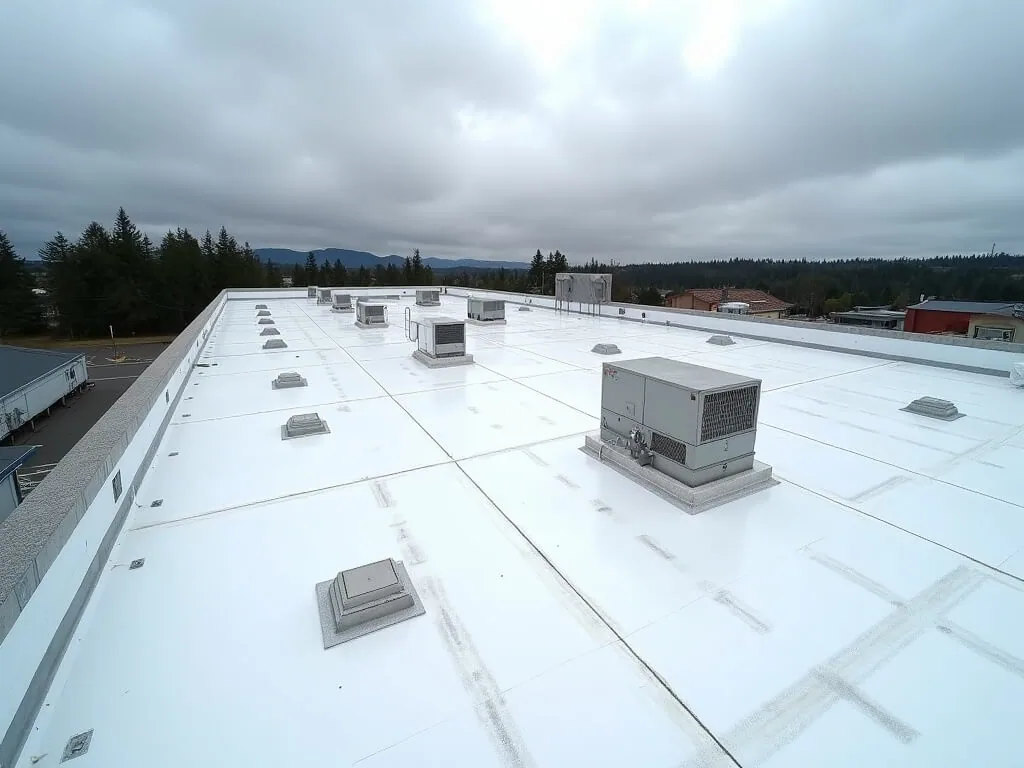
We look for staining, soft membrane and open seams near each fan. A walk pad under the fan protects the surface. Where exposure is heavy, a PVC sheet resists better than many alternatives, and a patch zone under the vent can solve the problem for less than a full replacement.
Exhaust fans need service too. Grease buildup on the roof around a fan is a fire risk and a membrane risk. We tell the operator when a fan needs cleaning and who should do it.
Heat belongs in the same check. An oven vent can warm a membrane above its comfort range, and repeated cycles harden some sheets. A reflective patch or a heat shield over the worst area reduces the stress. These are small items that protect the larger roof.
Drains under exhaust plumes collect grease too. A greasy sump slows flow, and a clogged drain on a flat roof turns a repair into a flood. We clear sumps and tell the operator how often to check them.
Plan Around the Blackout Weeks
A retail brand has weeks when no roof work can happen. Holiday selling, inventory counts and promotions set the calendar. We ask for the blackout weeks first and size the work to fit between them.
Customers walk under the eave, and noise reaches the floor. We work in strips, close each before the crew leaves, and move loud tasks outside business hours when the operator allows. Entrances get overhead cover and barriers. An occupied building reroof follows this sequence anywhere.
Winter work is repair work. We stabilize leaks in season and save permanent fixes for summer. A temporary seal costs little and keeps the floor dry.
Neighbors on a shared pad feel a roof job too. Dust, noise and parked trucks reach the next tenant. We tell adjacent businesses the dates and hours in advance, keep the work site tidy and sweep at the end of each shift. A courtesy note takes ten minutes and prevents most complaints.
Test Edges Against Heat and Gusts
A dark membrane over a store with heavy cooling takes a hard swing between afternoon and night. Yakima passes 90 F on about 40 afternoons, and the cycling loosens flashings and seams over seasons.
A loose coping cap on a long store wall lets wind under the membrane, as the late-November 2019 windstorm showed across the valley. Edges are tested by hand and fasteners pull-checked each season.
Set One Standard Across the Chain
A chain gains from sameness. One repair method, one photo set, one report format and one unit-rate sheet for common items mean a store manager can approve a drain clearing or a boot replacement in minutes. A multi-site program spreads mobilization over every site on a route.
Replacement follows Washington's energy code as updated in March 2024, and the estimate shows the extra insulation and taller flashings as their own line. Sites in Union Gap, Sunnyside and Yakima can share one schedule.
The record stays with each store: photos, test results, the material list and a maintenance interval. A new store manager inherits it, and a distribution partner can use the same format.
Approvals follow tiers. Small items under a set amount proceed on a unit rate with a same-day note. Mid-size items need a written scope and a quick sign-off. Large items go to a bid. The tiers keep small leaks from waiting on paperwork while larger spending gets a proper look.
Commercial Roofing Questions
Can a store stay open during a reroof?
Yes. The roof opens in strips, each one closed before the crew leaves, and loud tasks move outside business hours. Entrances get overhead cover and barriers, and the operator approves the staging plan before we mobilize.
What membrane suits a restaurant roof?
PVC, in most cases, because it resists fats and oils better than rubber. We add walk pads under fans and recommend fan cleaning. The exhaust list decides the choice.
Who should clear snow from a store roof?
Not store staff, because steel shovels cut membrane. Tell us the design snow load if you know it and which sections are open, and we clear with plastic tools.
How can a chain keep roof costs predictable?
With unit rates for common items and a standard report. Small repairs go ahead on approval, and large items go to a bid. The tiers keep small leaks from waiting on paperwork.
How do blackout weeks fit the roofing season?
We schedule around them. Late spring and summer are the install window, and the operator names the weeks to avoid. If the dates collide with a heat wave or wind, we hold.