Compressor run times have crept upward all winter, and a plant manager wants to know whether the roof could be the reason, so dispatch asks how old the insulation is and whether anyone has seen frost on the underside of the deck. A cold-storage roof is a thermal barrier as much as a weather barrier. It separates air held far below freezing from a Yakima, WA sky that ranges from minus 25 F to 113 F, and any moisture that gets into that assembly turns to ice.
Packing houses, cold rooms and processing plants fill much of the valley's industrial ground. Tieton's largest employers were historically cool warehouses for valley fruit, and Selah keeps warehouses near its orchards and rail line. We repair, recover and replace roofs on buildings like these, with the cold-room ceiling and the packing-line shutdown calendar in mind from the first visit. Bring the roof age, the permit drawings and any history of frost, ice or condensation inside.
Stop Moisture From Entering the Insulation
Inside a cold room, the air is dry and cold. Outside in July it is warm and holds more moisture. Water vapor moves from warm to cold through any gap, and when it reaches cold insulation it condenses and freezes. Over time, ice builds inside the insulation, lowers its value and adds weight. A vapor retarder on the warm side of the assembly slows that movement, and its seams, laps and penetrations must stay tight.
Roof work on a cold-room building can damage that layer. A fastener that pierces the retarder, a cut for a new pipe or a poorly sealed penetration gives vapor a path. Before we touch the roof we find out where the retarder sits and what it is made of. Every new penetration is sealed from the inside and the outside, and we document the locations in the callback log. Infrared moisture surveys show where ice or moisture has already collected.
Choose Insulation for the Temperature Difference
A freezer roof usually needs far more insulation than an office roof, because the temperature difference is large and year-round. Thick insulation changes the roof edge, the parapet height and the flashing detail. It also changes weight, which has to fit the design snow load on the permit, and engineering is required once a parcel passes 70 psf.
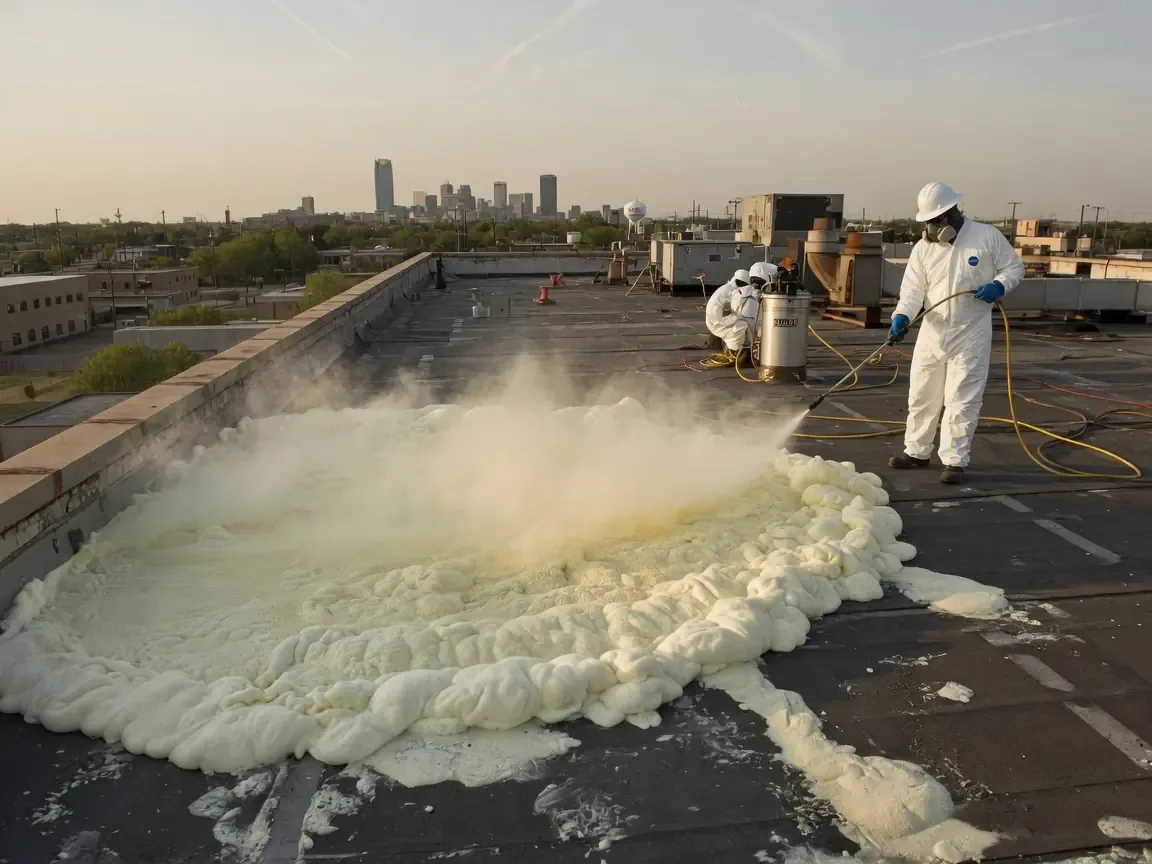
Spray foam is one way to build insulation and air seal in a single pass, and a spray foam roof can be a fit when the deck is dry and the geometry is complicated. Boards of rigid insulation with a fused membrane on top are the other common choice. In either case, the joint pattern, the staggered layers and the cover board matter. We lay out the assembly in writing before the order is placed: layer order, board thickness, joint stagger, vapor retarder position and every transition at a wall or curb. If the existing roof must stay in service while we work, we also list the temporary measures that will protect the cold room between work days, such as taped edges and sandbagged seals.
Plan for Snow That Does Not Melt From Below
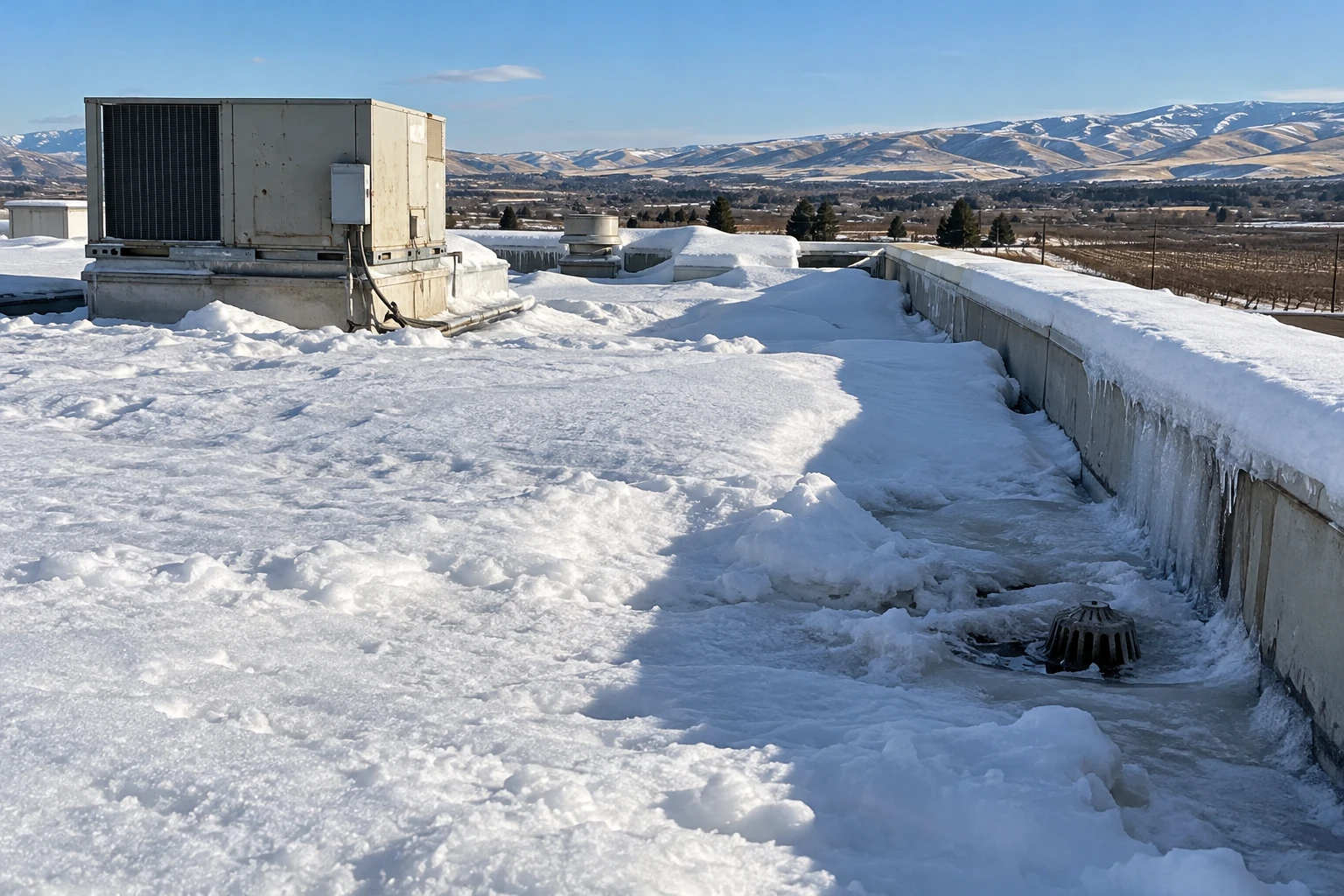
On a heated building, warmth leaking through the roof helps shed snow. A well-insulated cold room leaks very little, so a drift can sit on the roof for weeks. Snow also builds where a packing shed meets the cold room and at the rooftop condenser platforms, and steel shovels cut the membrane that has to keep that cold room dry.
We clear with plastic tools and leave a protective layer. Before anyone climbs up, we look at the ceiling inside for deflection: sagging panels, ice at joints, doors that rub. The response to snow and ice damage on a cold-storage roof starts with the structure, because a sagging bay ponds meltwater and ponded water refreezes around the drains.
Respect the Condensers and the Refrigeration Lines
Refrigeration equipment sits on or beside the roof, and lines run through it. Condenser fans blow warm air across the membrane. Line sets pass through penetrations that must stay tight. Maintenance technicians walk the same paths to service the units. We install walk pads on those routes and check each flashing at a penetration for cracks.
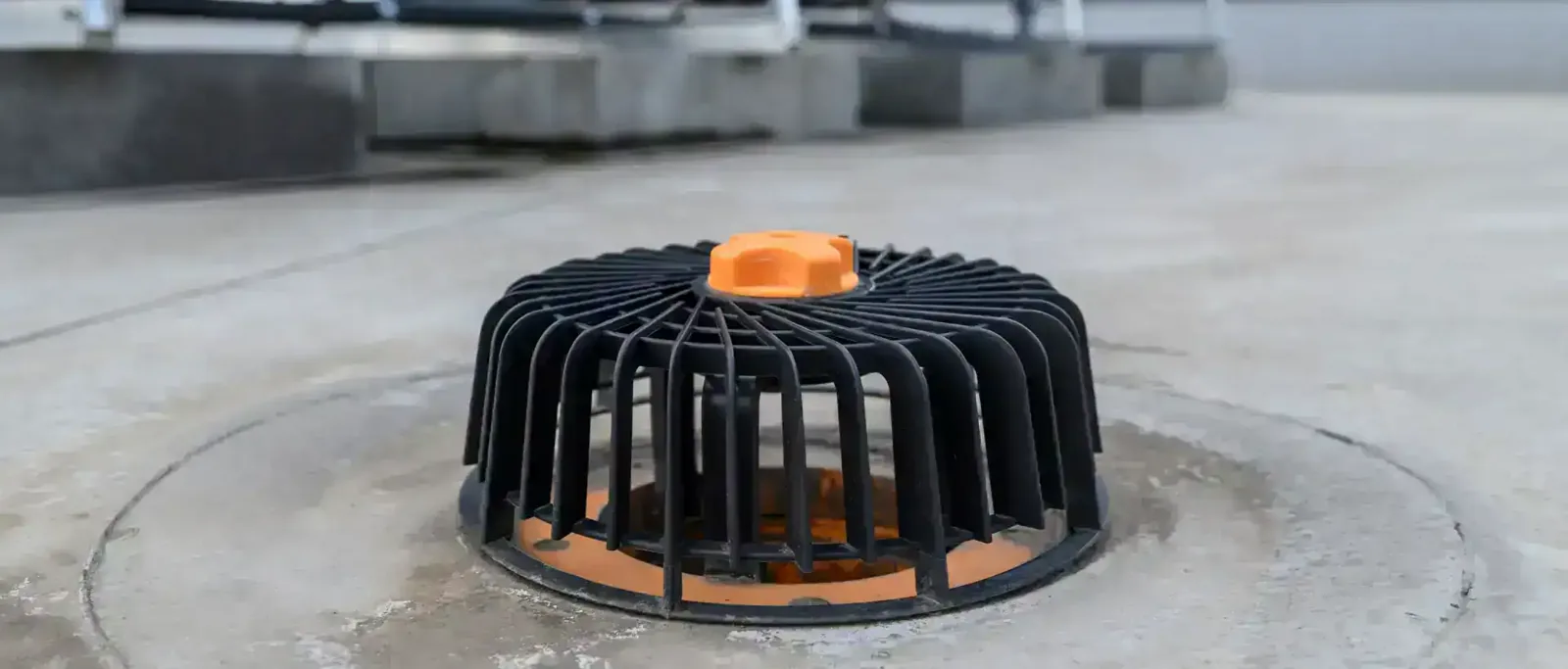
Work near refrigeration needs coordination. We schedule with your refrigeration contractor so lines are not damaged by dropped tools or heavy loads, and we protect drains from debris. An ice dam at a drain can back water onto the roof. During cold spells we check that drains and scuppers are open, and the drain and scupper work includes heat tracing if the building has it.
Keep Product Cold While the Roof Is Open
A cold room cannot warm up for a roofing project. We stage the work in sections, tear off only what can be dried in the same day and keep temporary seal material on the roof. Where the old roof is removed down to the deck, we install the new vapor retarder and insulation as fast as the weather allows. Cold storage is part of the economy around Grandview, and a building like that holds temperature while the roof is open, so the sequence starts with the refrigeration load and not with the tear-off.
The packing-line shutdown window is the best time for loud or dusty steps. Quiet steps happen during production. We agree on door and hatch schedules with your team so no open hatch lets warm air in. Nearby warehouse space or a distribution dock on the same site gets its own plan.
Commercial Roofing Questions
How can I tell whether ice or moisture has collected inside my freezer roof assembly?
Signs include frost on the underside of the deck, ice at ceiling joints, stains and compressors running more than before. An infrared scan from the roof and a few cores confirm it. We then map the wet zone and decide whether the section can be dried or has to be removed. Early detection limits the area, and a record of where moisture sits lets us compare the next survey against the first.
Can a cold-storage roof be replaced in winter?
Some work can proceed, but cold weather limits adhesives, welding and foam. We prefer mild, dry windows in spring and fall, with summer heat managed by early starts. If an emergency repair is needed in winter, we use a temporary seal and schedule the permanent work for a better window.
Why do ice dams form at the drains of my cold-room roof?
Meltwater reaches the drain and refreezes in the cold bowl or pipe, especially where the roof is well insulated and the drain sits over a cold space. The ice blocks flow and water backs up. Heat tracing, insulated drain bodies or a re-slope help. We inspect drains after every freeze and clear them with care.
How much does the roof affect my refrigeration costs?
A lot, if insulation is wet or compressed. A roof with moisture in the insulation loses thermal value, and the compressors run longer to compensate. We cannot quote your bills, but we can show you the wet areas and the dry areas, and you can compare run times before and after a repair.
What records should we keep after a cold-storage roof project?
Keep the insulation and vapor retarder specifications, the penetration locations and the moisture survey. We provide photos of each layer as it goes down and a roof sketch with the locations of sealed penetrations. Those records speed up any future repair and help your refrigeration contractor avoid damaging the retarder.