Four in the morning is when a night-shift supervisor radios that a ceiling tile near the sortation line has gone dark with water, and dispatch asks one thing before any other: how many trailers are due on the docks before sunrise. A distribution center runs on waves, and a leak over a conveyor or a pick module costs a wave. The roof above it takes Yakima, WA weather like any other, which means December and January snow, a summer of hot afternoons and the November 2019 windstorm.
The difference is the schedule underneath. We plan distribution roof work around shipping cycles, truck traffic and the sprinkler, lighting and conveyor systems hanging from the structure. When you call, give us the building address, the roof age if known and the design snow load from the permit, and name the quietest hours on the floor.
Read the Roof Against the Freight Routes
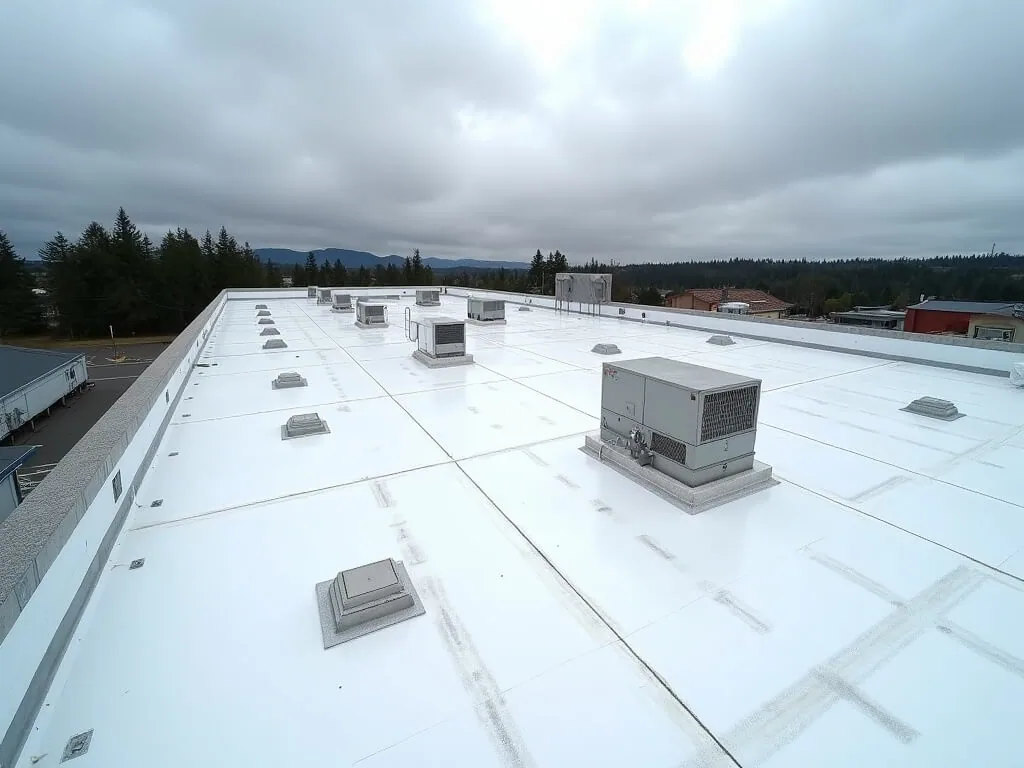
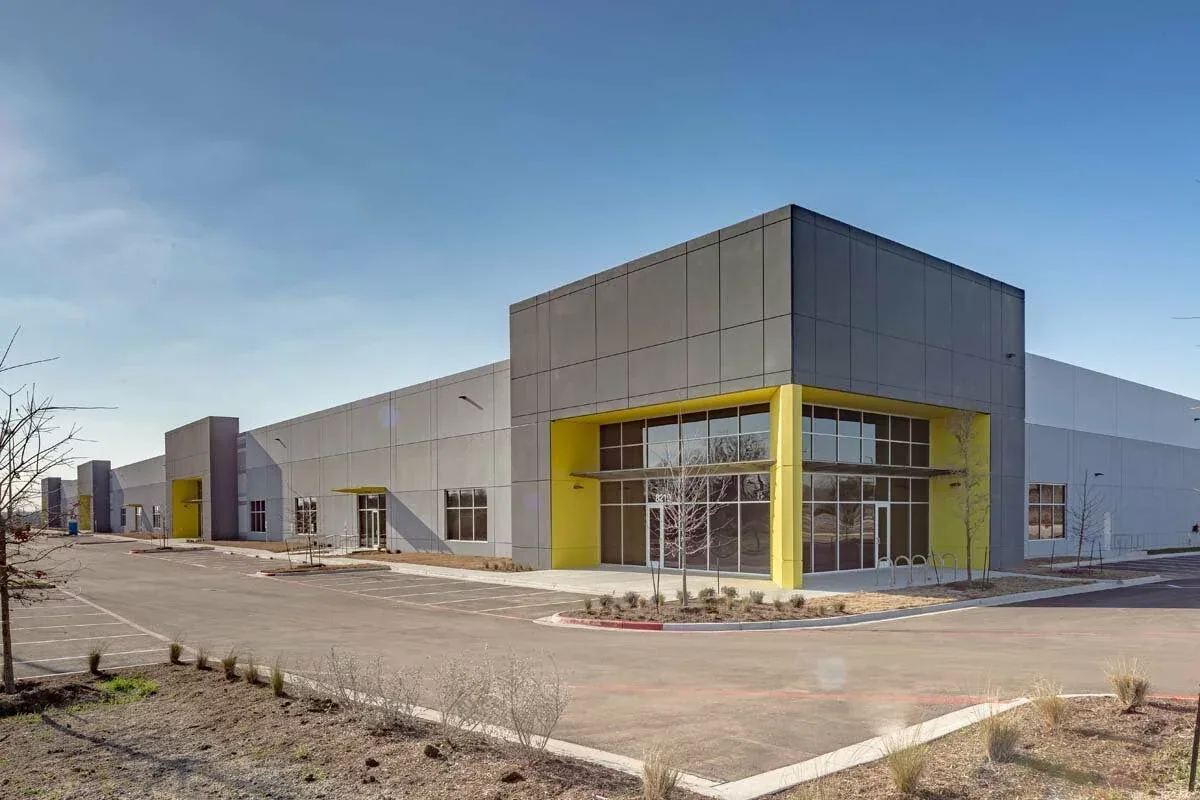
Yakima's freight moves on Interstate 82, with U.S. 97 and the BNSF Railway running through Union Gap, and a distribution building serving those routes usually carries docks on one or two sides. That layout shapes the roof: edge metal and parapets above the dock canopies, drains placed along the low line, and equipment clustered where the mechanical rooms sit. We start a survey at the docks and the yard edge, noting the parapet height, the canopy attachment and the drain locations along the low line. Those are the places where trucks, diesel exhaust and constant door cycling wear the nearby roof edge hardest.
Exhaust matters. Diesel soot and grease can stain and degrade some membranes over time, and idling trucks near a roof edge deposit it. Where the roof edge sits close to the yard, we pick a membrane and an edge detail that tolerate it, and we clean the surface during maintenance visits. A PVC membrane is one of the choices when residue is part of the daily environment.
Weigh the Deck Before Snow Settles on It
The design snow load is set parcel by parcel, and engineering is required above 70 psf. The structure over a sorting floor also carries sprinkler piping, conveyor hangers and lighting, so the deck is working before the snow arrives. A bulging wall is how the February 2019 South Third Avenue red tag began, and steel shovels on the membrane only add leaks to the list.
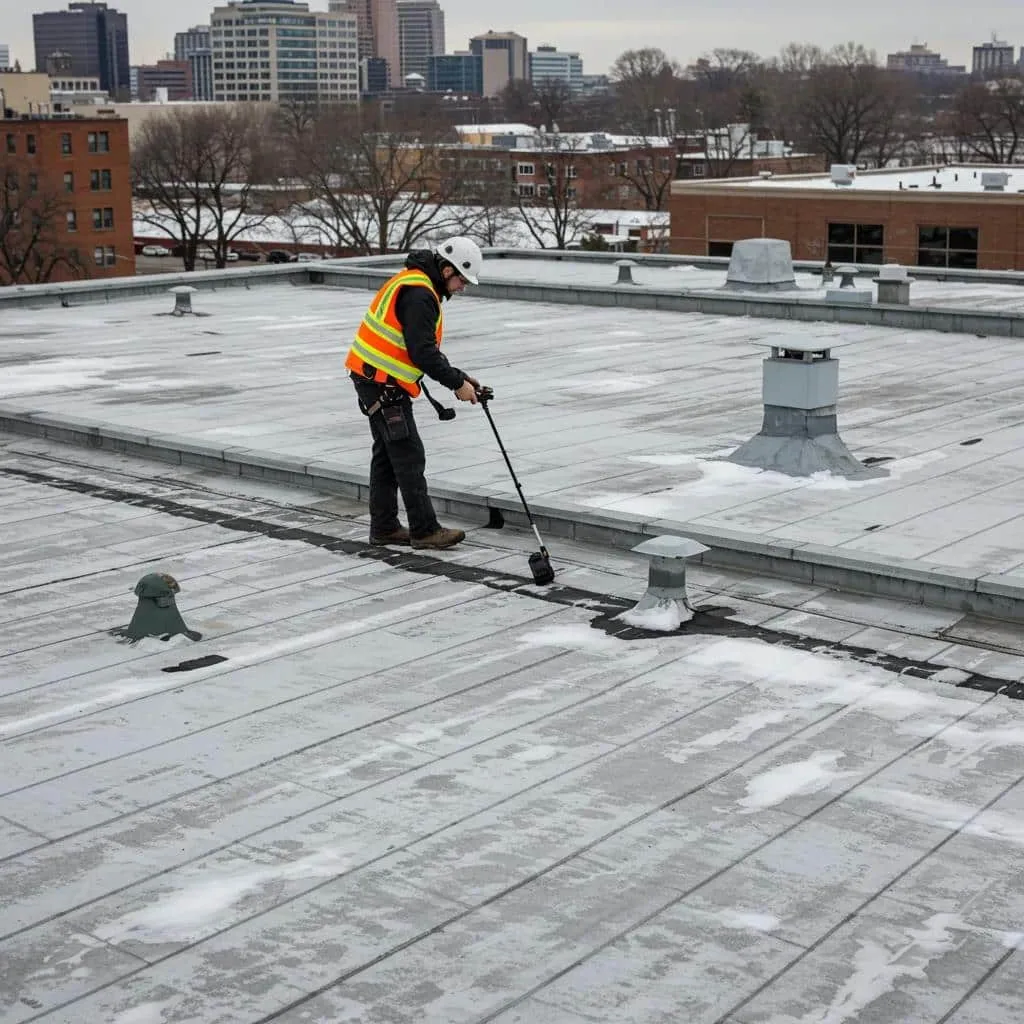
Drifts build against parapets, rooftop equipment and the step between a high bay and a low one. When we see a drift pile crowding one area, we check the deck from inside for deflection, watching for sagging ceiling lines, sprinkler pipes out of level or doors that stick. If any of those appear, we call for the drift to be cleared with plastic tools, leaving a protective layer on the membrane, and we advise keeping staff off the roof until the load is lighter.
Sequence Tear-Off Around the Shipping Waves
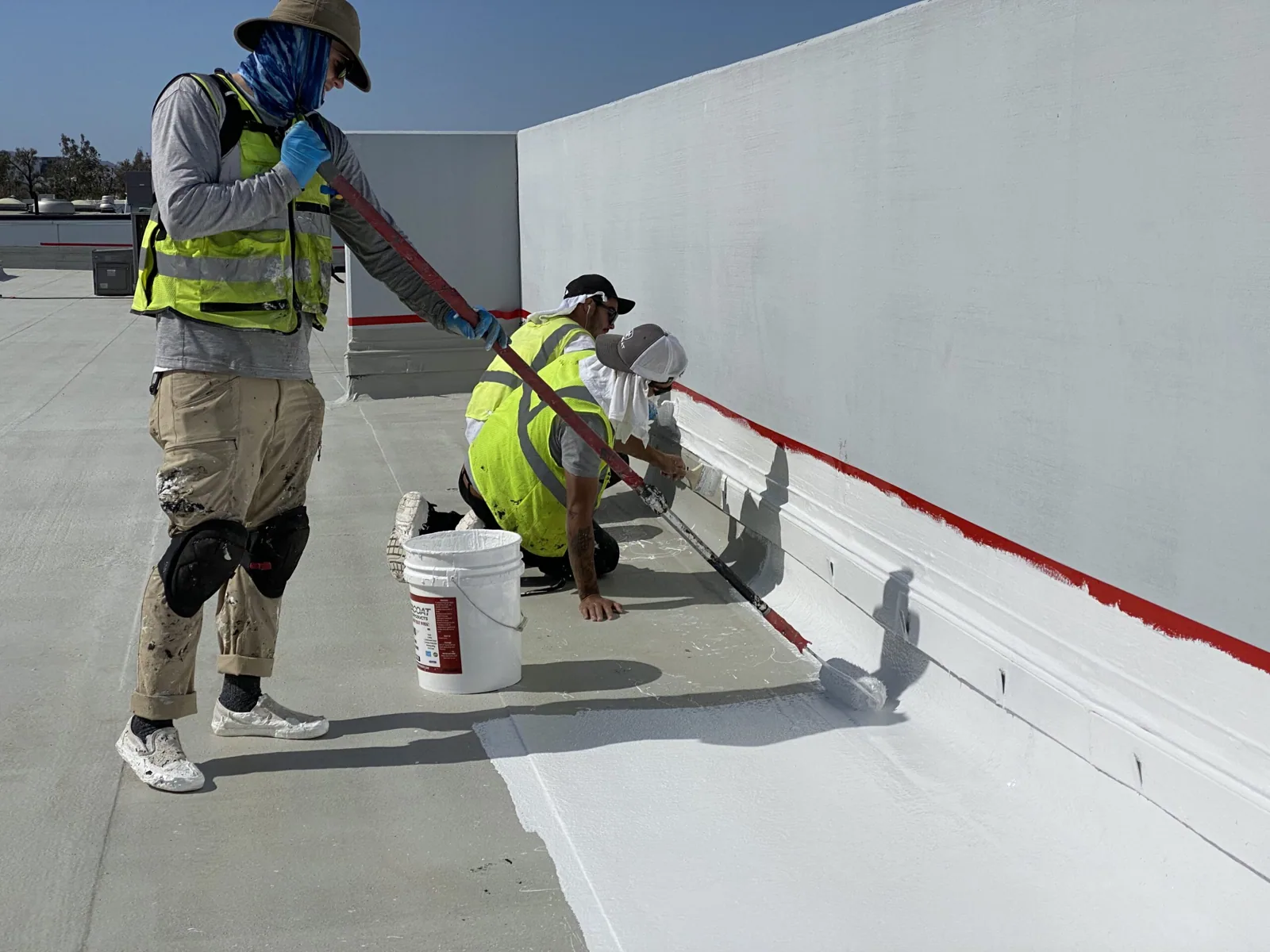
On a distribution roof the calendar carries as much weight as the membrane. We break the roof into sections, tear off and dry in each in the same day, and move the crew away from the dock side during loading peaks. Material staging happens opposite the busiest doors, and the crane or hoist pick is scheduled for the quietest window.
Inside, we ask where sorters, conveyors and charging stations sit. Those zones get protection under the work area, and we agree on a quiet hour for noisy steps such as fastening and tear-off. The same coordination applies to warehouse roofing generally, and a distribution building adds the pace of its daily waves. A short delay for a gust or a squall is cheaper than a wet sort floor, so we keep temporary seal material on the roof at all times.
Handle the Afternoon Heat Cycle on Rooftop Equipment
June 2021 set a Yakima record of 113 F, and the afternoon swing to cool nights is large. Rooftop units that cool a pick floor or an office pod run hardest on those afternoons, and condensate and refrigerant lines running across the membrane add traffic. Heat softens some membranes at the walk routes, and a worn path shows where technicians go.
We install walk pads on those routes, check flashing at each curb and look for sagging equipment frames that open the seam below them. Where a unit has been replaced and the curb was not rebuilt, the flashing often does not match. A mismatched curb is a leak waiting for a thaw, so we measure each one. Our preventive maintenance visits check these points in spring and fall.
Budget Roofs Across Several Buildings in Order
Owners with more than one building, or a mix of older and newer bays, need a ranking. A written condition report scores each roof zone, shows moisture findings, lists remaining life and puts repair, recover and replacement costs side by side. The roof condition report gives a lender or an asset manager something firm to work from.
We keep the plan flexible. A roof near the end of its life can be coated or repaired for a season while capital is arranged, and a roof with problems can be moved to the front of the list. For sites around Union Gap, where retail and freight share the corridor, that planning keeps one failure from setting the schedule for the rest. A cold storage wing on the same campus gets its own line in the report.
Commercial Roofing Questions
How do you replace a roof over a sorting floor without stopping the line?
We work from the outside, in sections, and dry in each one before leaving. Sheeting under the work zone catches dust, and we agree in advance on hours for the loudest steps. If a conveyor sits directly under a tear-off area, we can shift the section order so that zone is done during a scheduled maintenance window.
Why does the roof edge by the dock doors fail before the rest?
The dock side sees exhaust, door-cycle vibration, hoist traffic and the most wind exposure at the corners. Edge metal loosens, sealant cracks and the membrane flexes at the parapet. We inspect that edge first, tighten or replace metal and re-flash the corners, and recommend more frequent checks after any gale.
Can solar panels or new rooftop equipment be added to a roof that is due for replacement?
They can, but the roof should be replaced or confirmed sound first. Panels and curbs block access, so a leak beneath them is hard to fix. We coordinate with your electrical and mechanical contractors so new penetrations are flashed once and the warranty on the new roof is not disturbed.
What does a roof inspection report give me that a leak call does not?
It gives you a ranked list. Each roof zone gets a condition score, photos, moisture findings and an estimated range of remaining life. You can budget replacement, coating or repair from the report and show it to a lender or insurer. A leak call fixes the one problem; the report tells you which problem comes next.
How should we handle a leak that starts during peak season?
Call right away and tell us the aisle or the module, so we can trace water to the entry point. We apply a temporary seal in the first visit and schedule the permanent repair for a dry window. Move product from the drip area and place a tarp or a catch, but do not climb up in snow or wind to look yourself. Photos of the ceiling stain, the time it started and the weather that morning give dispatch what it needs to decide whether the crew goes out now or at first light, and they go straight into the callback log for the building.