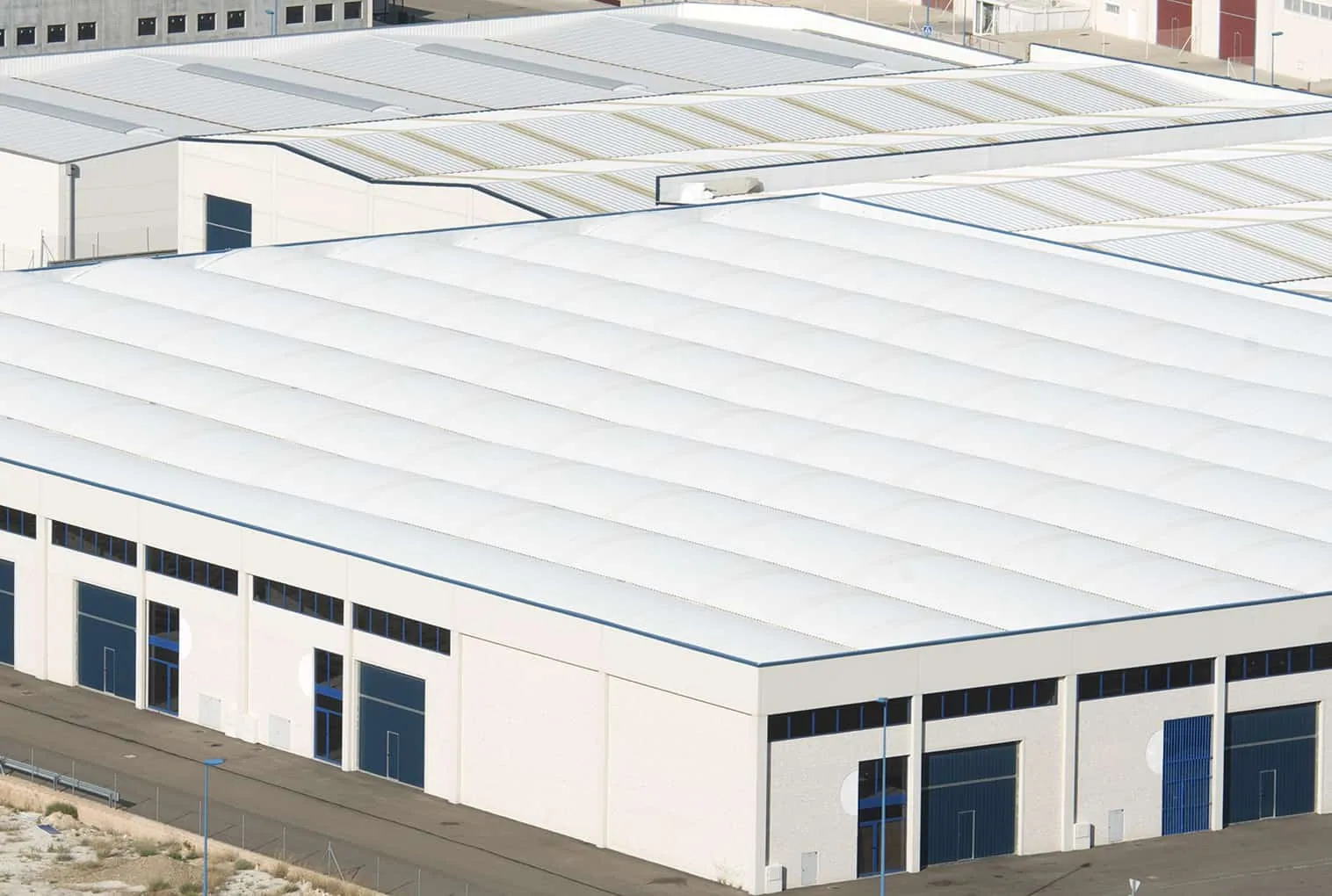
Retail roof work in Union Gap is a scheduling job before it is a roofing job, because Valley Mall and the big-box stores around it make the town the retail hub of the Yakima Valley, and a store manager's first question to dispatch is whether the crew will be gone before the doors open. The second question is where water is coming in. Union Gap sits near Yakima, WA, where winter snow arrives mostly in December and January, and the town also carries holiday traffic, truck deliveries and rooftop equipment that never stops.
Our crews repair, recover and replace low-slope commercial roofs here. Once we have the store address, the roof's age and the snow load on its permit, the first visit covers the whole roof and ends in a written list that separates patches from fixes.
Keep the Store Open and the Product Dry
A retail roof leak is a sales problem. Water over a sales floor stains ceilings, damages stock and brings customers to a halt. We trace leaks fast and tell the manager what to cover and what to move. Temporary seals go on in the first visit so the permanent repair can wait for a dry window. If the leak is over a refrigerated case, a checkout lane or an electrical panel, tell us at the first call, because that changes where the crew starts and how fast we move. We ask for a photo of the stain, the aisle number and the time it began, and we log all three.
For a larger job, we schedule around the store calendar. Early morning, late evening and slow midweek hours suit tear-off and hoisting. Holiday weeks are blocked out. We coordinate with the store's receiving schedule so trucks and the crane do not share the same dock. A big-box store and a shopping center follow the same pattern: loud steps at quiet hours, deliveries at the back, customer routes clear.
Plan Around the Corridor Traffic
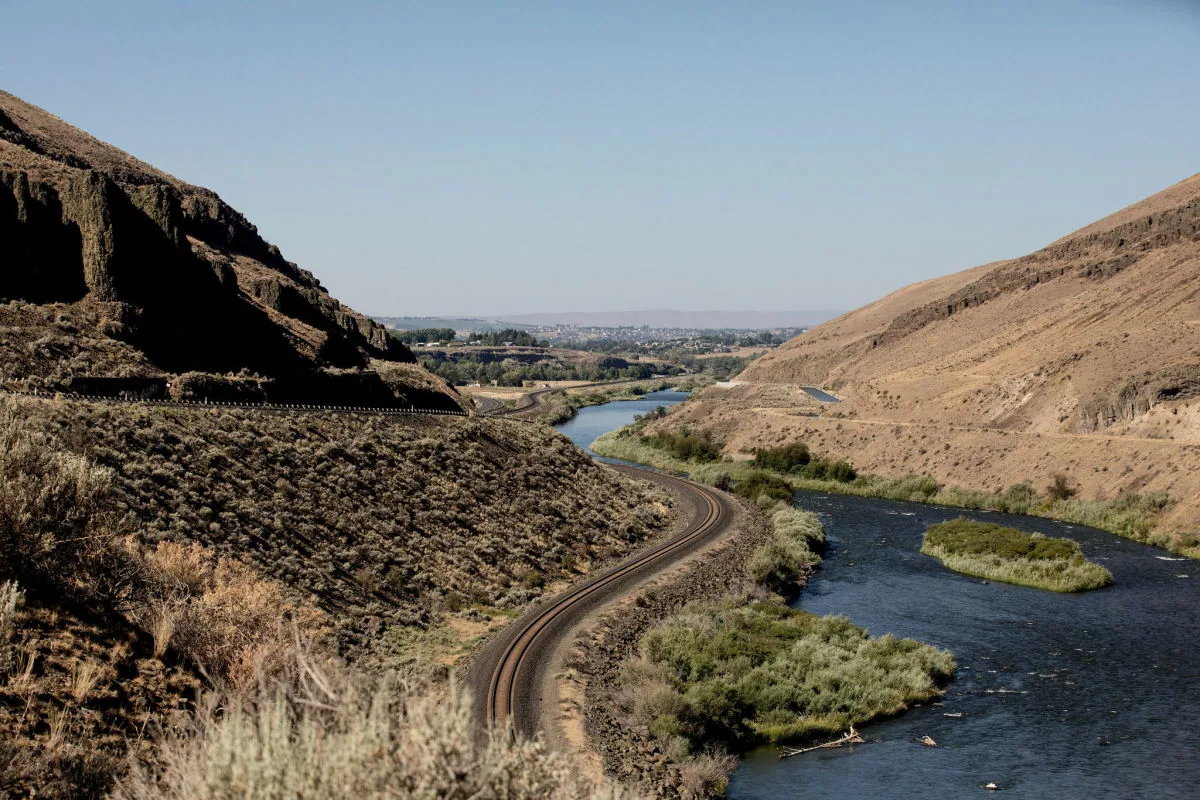
The gap the town is named for carries U.S. 97, Interstate 82, Thorp Road and the BNSF Railway through a single opening. That corridor puts trucks, trains and vibration around the buildings, and it shapes how a crew gets materials onto a roof. We choose staging areas that stay off public roads and schedule deliveries outside peak traffic.
Rail and highway noise also make a poor backdrop for a crane lift. We pick lift times when wind is calm and traffic is light, and we keep a spotter at the base. Parking-lot lanes under the lift are coned off before the first pick, and the gate or dock door nearest the crane stays closed until the load is down. A short briefing with the store's manager on duty covers who to call if a customer wanders into the zone. A loose sheet or a swinging load is a hazard in the kind of wind the late-November 2019 windstorm brought to the valley, so we do not lift on gusty days.
Account for Process Buildings Beside the Retail
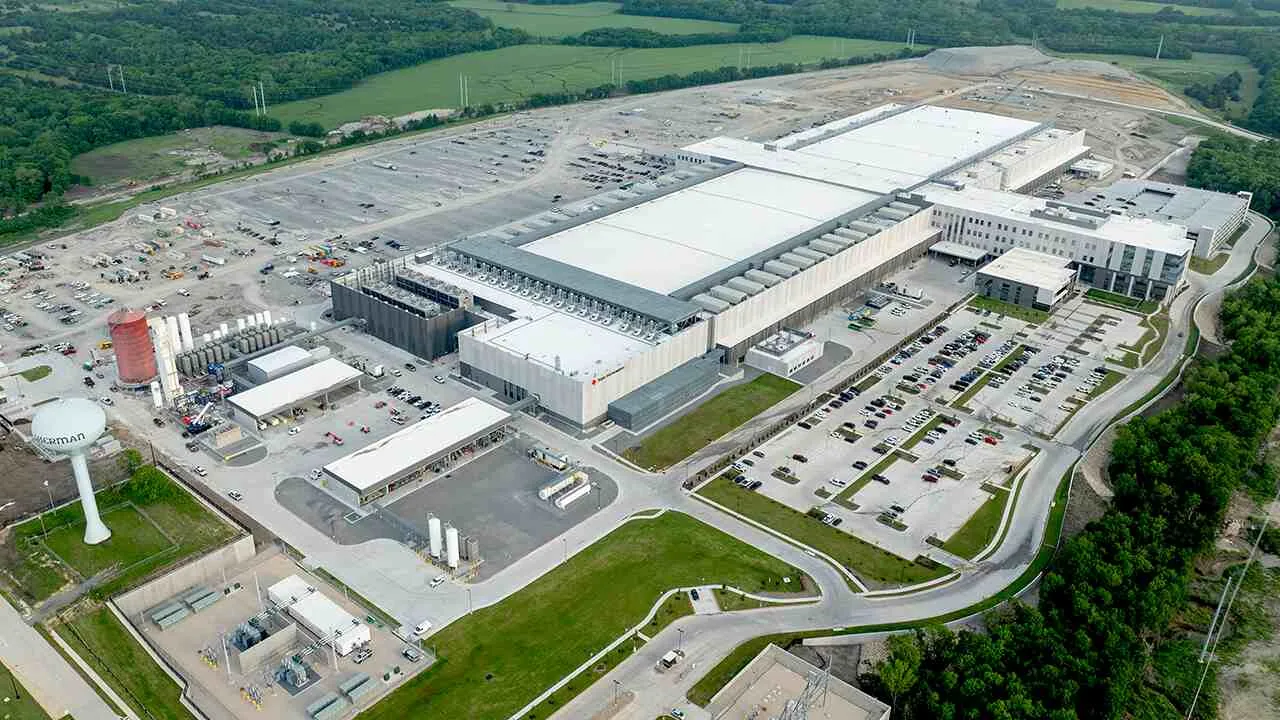
Liberty Bottleworks runs a water-bottle manufacturing plant in Union Gap, which is a reminder that the town is more than stores. A plant roof has its own questions: what vents onto the membrane, what the shutdown calendar looks like, and what is below. Our manufacturing plant roofing process begins with a list of stacks and fans and ends with a schedule set by the line.
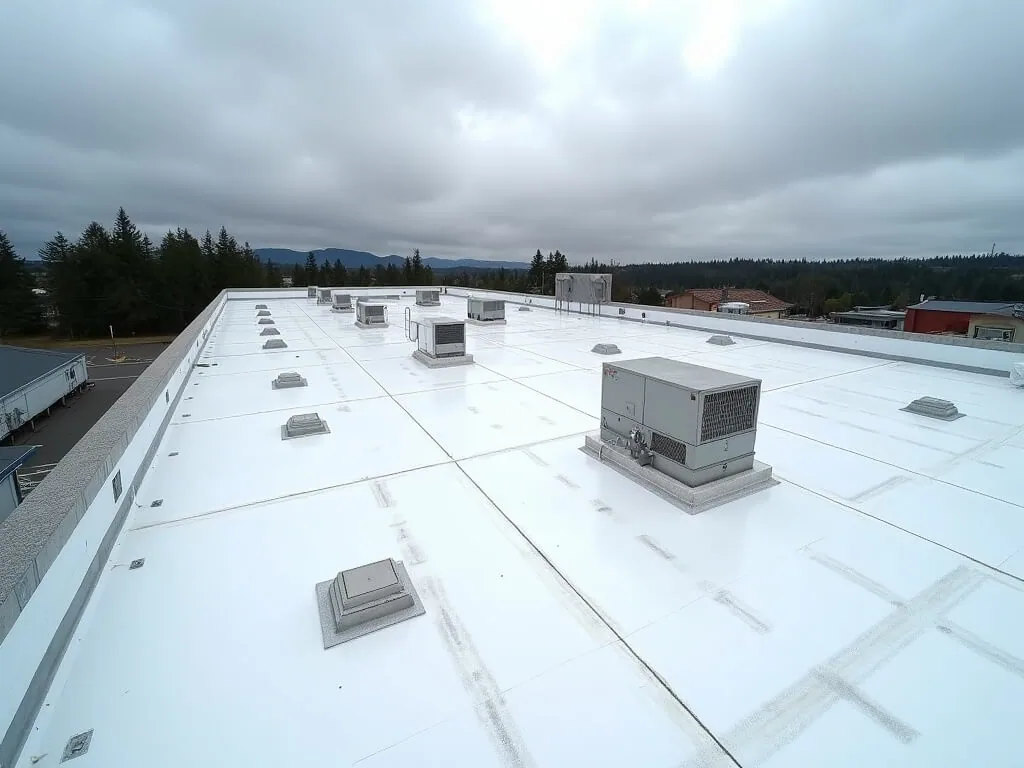
We do not assume anything about a particular plant's roof. We inspect the roof we are given, ask what lands on it and choose the system to match. For a plant with grease, steam or heat, a PVC membrane or a KEE sheet resists better than a basic one. For a plain dry roof, TPO is a sound economical choice.
Prepare for Snow Load and Summer Heat
Retail roofs have long, flat spans and rooftop units that create drifts on their leeward sides, and design load follows the parcel, with engineering required above 70 psf. A red tag went on a South Third Avenue building in Yakima in February 2019 after a wall bulged. Plastic tools do the clearing here, and a protective layer stays on the sheet.
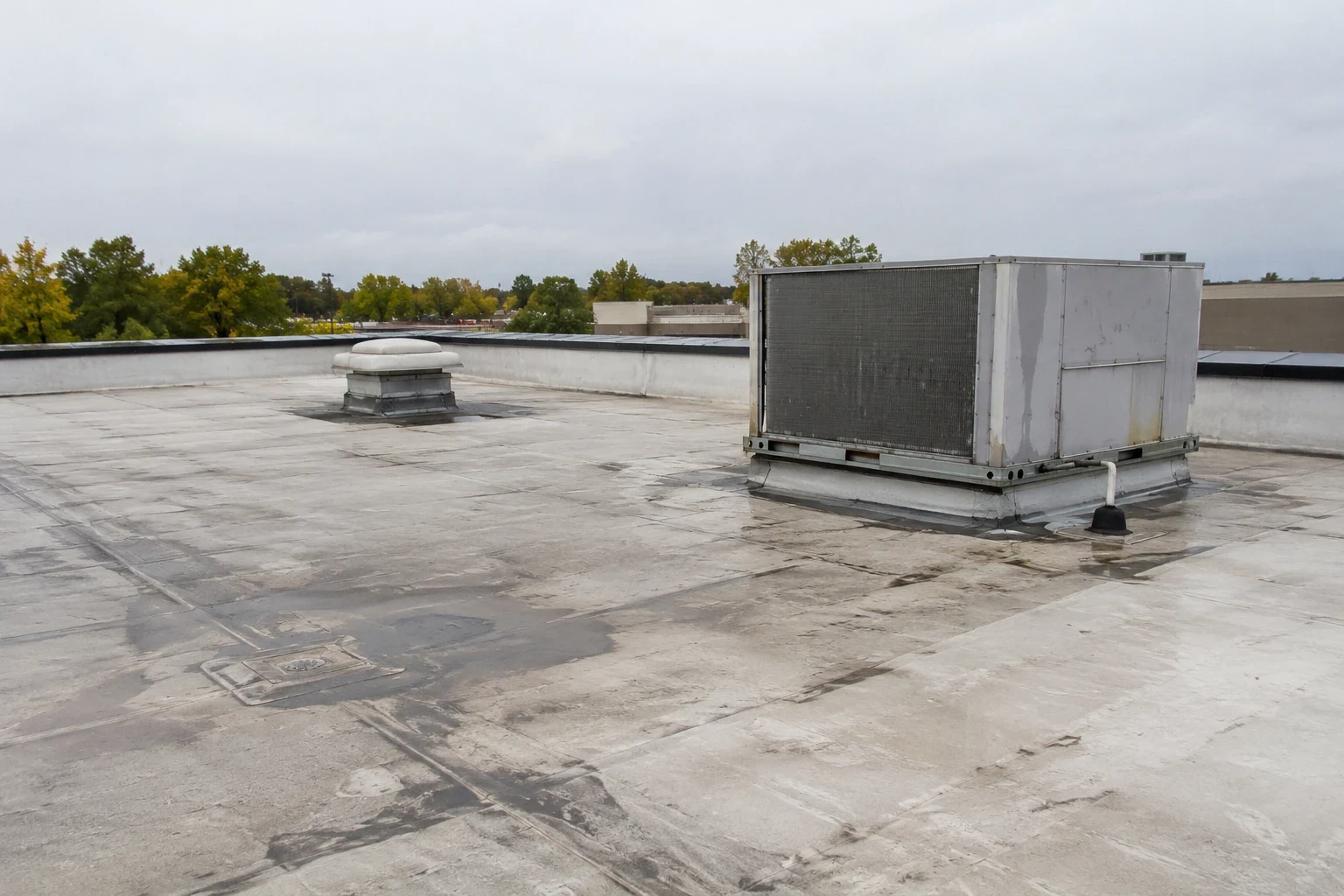
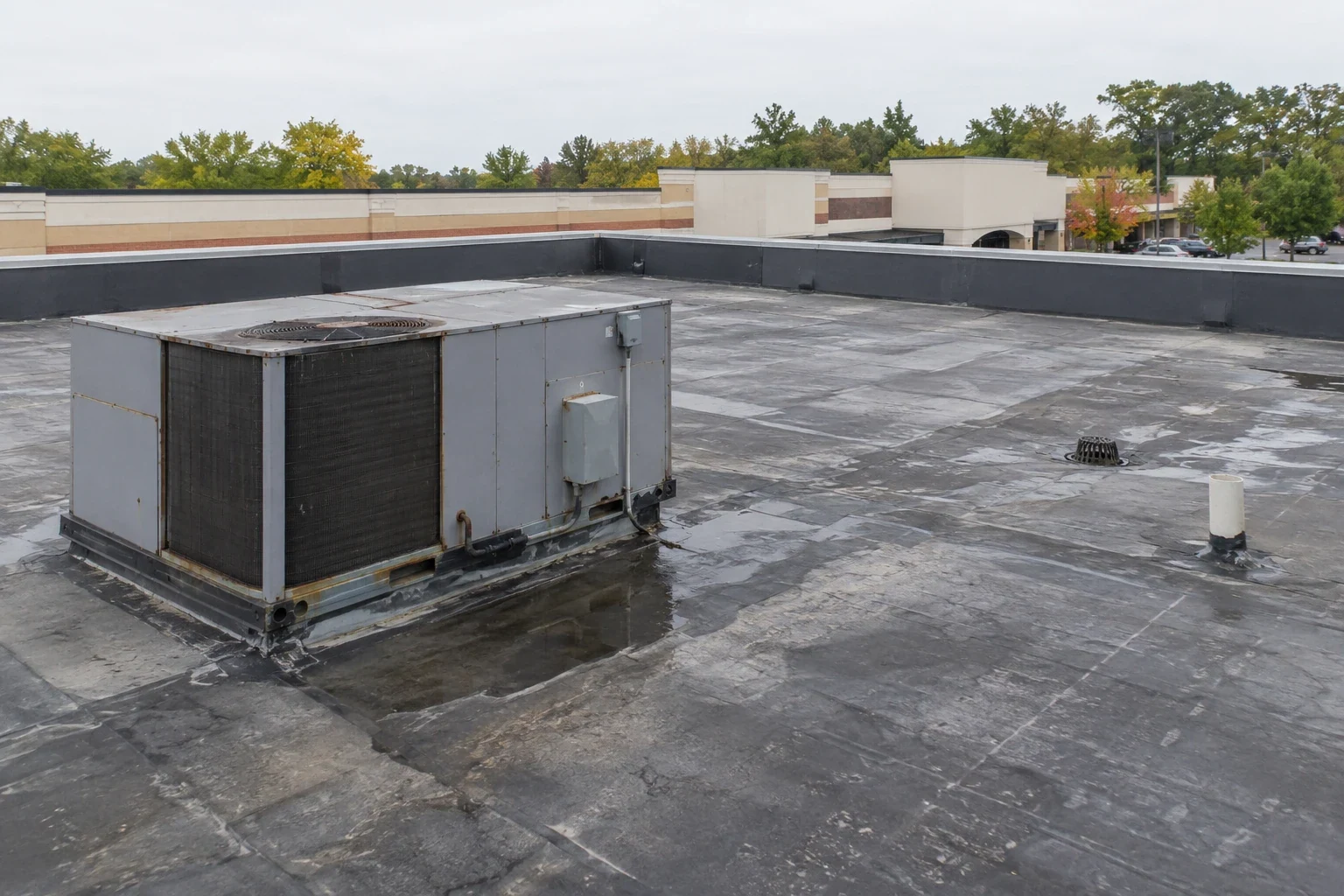
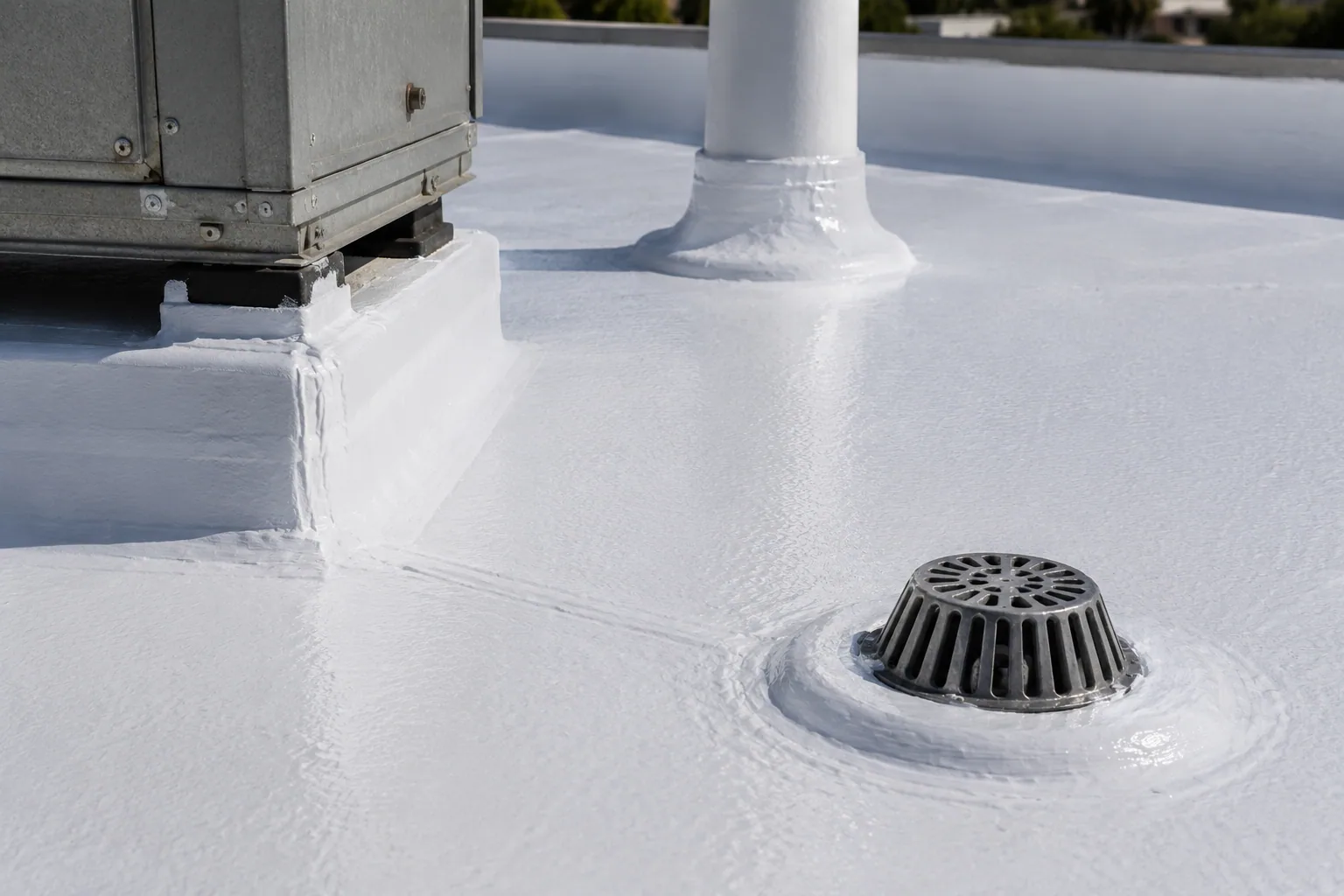
Rooftop units that cool a sales floor run hardest on the hottest afternoons, and Yakima's June 29, 2021 record of 113 F shows how hot they can get. We put walk pads on service routes, check each curb flashing and look for condensate lines that rest on the sheet. A refrigerant line lying across a seam rubs through the membrane in a few seasons, so we raise it on supports and re-weld the worn spot. These are small jobs that cost little when found early. A heat-damaged roof needing repair often traces to a unit that was replaced without rebuilding its curb.
Decide With a Written Condition Report
A condition report lists every roof zone, the system, its age, moisture findings and an estimated range of remaining life. For an owner of several retail buildings, it shows which roof to replace first and which can be coated or repaired for another season. We scan with infrared at dusk, confirm with cores and record the findings on a sketch.
The report supports a lender, an insurer or a buyer. Retail moved to Union Gap from Downtown Yakima, and owners on both sides of that shift compare their properties in the same format. Where a building has a long list of small repairs, the report shows when the cumulative cost passes the price of a recover. For plants in Selah or elsewhere, the same format applies.
Commercial Roofing Questions
Can a big-box roof be replaced while the store stays open?
Generally yes, since the work is on the exterior. We stage loud steps for early or late hours, protect the sales floor with sheeting where needed and keep customer entrances clear. A crane lift is scheduled for a quiet hour. We share the plan with the store manager and the district office before mobilizing.
What should the manager do when a leak appears over merchandise?
Move product, cover what cannot be moved and place a catch bucket. Photograph the stain and note the time. Give us the store address and the aisle, and a crew heads out to locate the entry point and seal it for the night. Staff should stay off the roof in snow or wind.
Why do rooftop units cause so many leaks on retail roofs?
Each unit sits on a curb that penetrates the roof, and each curb has a flashing that moves with heat and vibration. When units are replaced, the new curb often does not match, and condensate lines can drip onto the sheet. We inspect every curb and rebuild flashings that do not fit.
How do I budget for roofs across several retail buildings?
Start with a condition report on each, ranked by risk and remaining life. Replace the worst first, coat or repair those with life left and keep a reserve for emergencies. The report gives you cost ranges, and we update it after each inspection.
Will holiday season weather affect a roof project?
It can. Early winter brings cold nights, shorter days and the first snow. We prefer to finish major work before the holiday rush and keep temporary seal material ready. If a leak appears in December, we apply a seal and schedule the permanent repair for a better window.