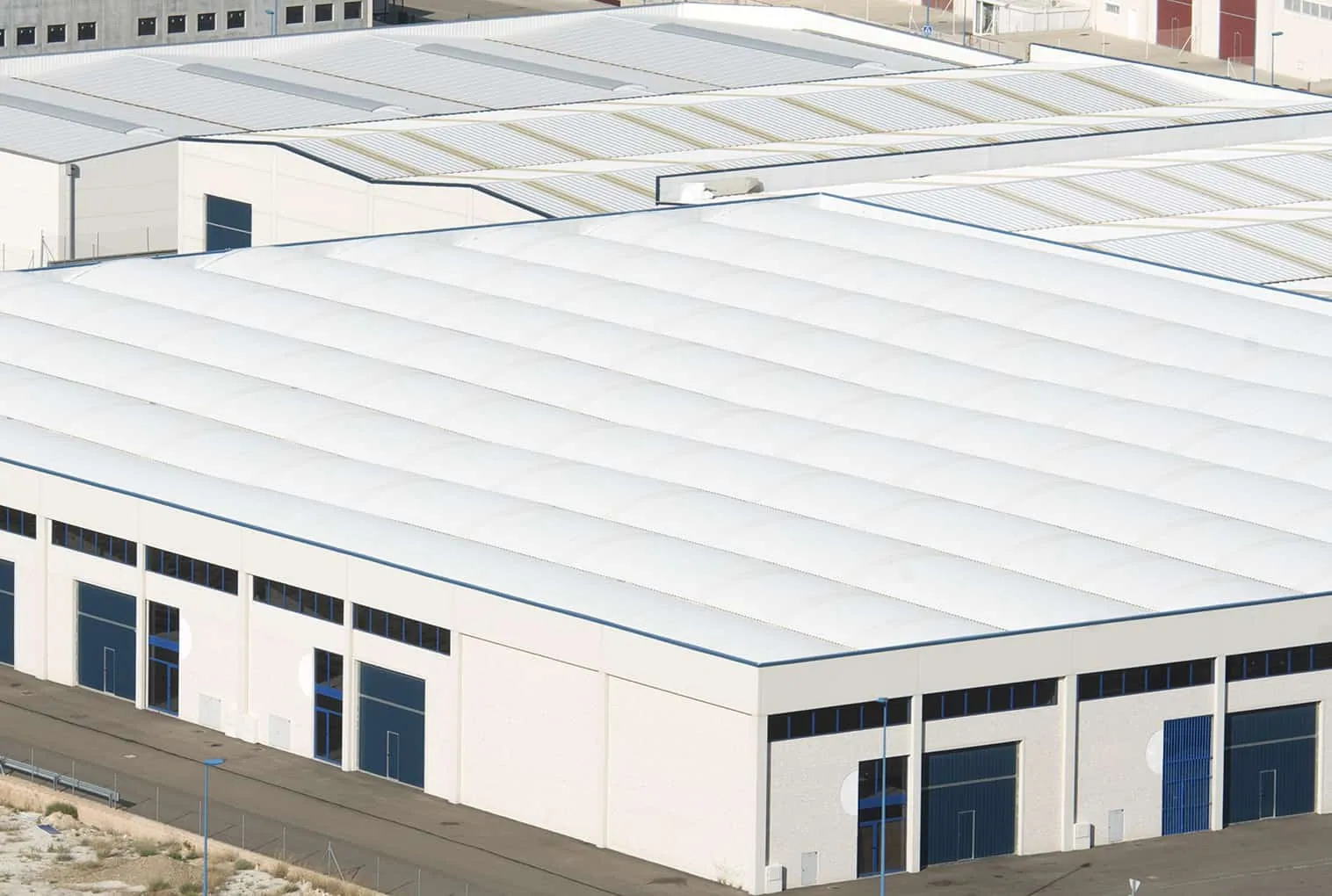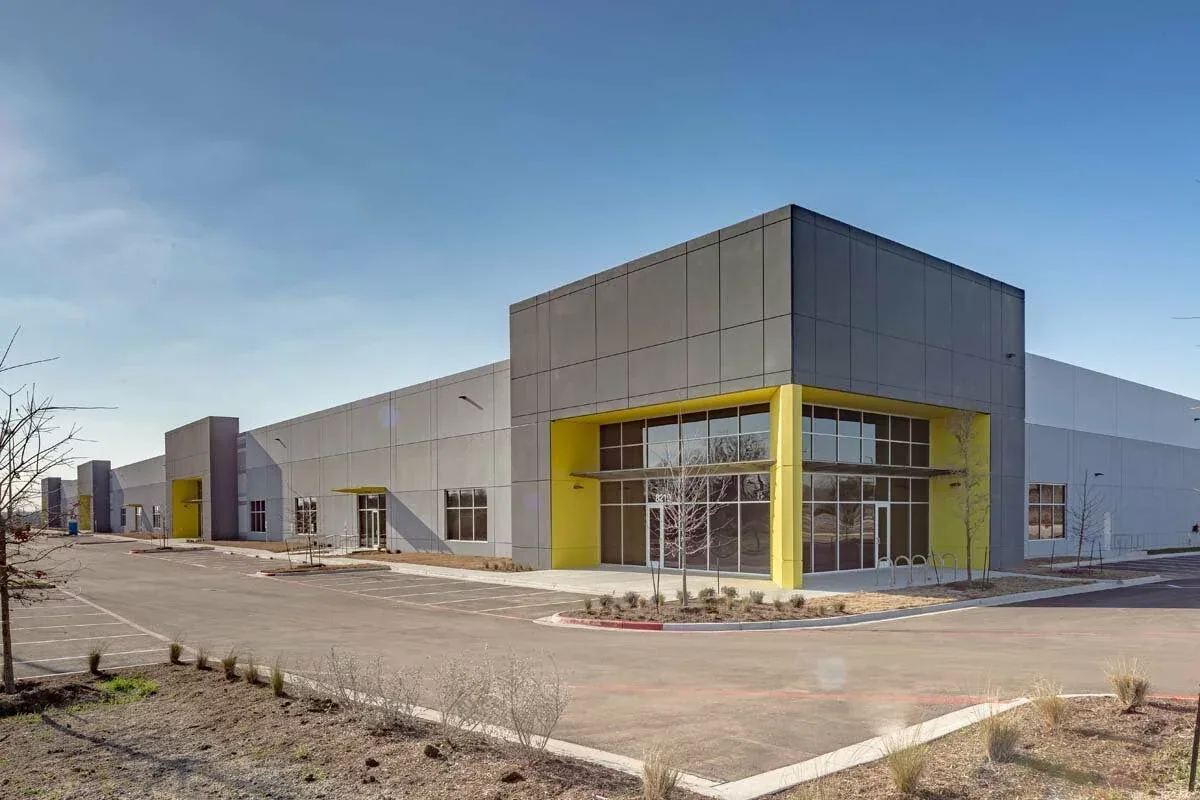
A forklift driver reports a drip landing on a pallet near the third dock door, three days after the snow slid off the back slope, and the first question dispatch asks is how high the racking stands under that spot. Warehouse roofs are simple on paper, a wide low-slope surface over a deep, open interior, and that simplicity is why small leaks do so much damage. The water finds product, racking and electrical gear before anyone sees a stain on a ceiling that is thirty feet up.
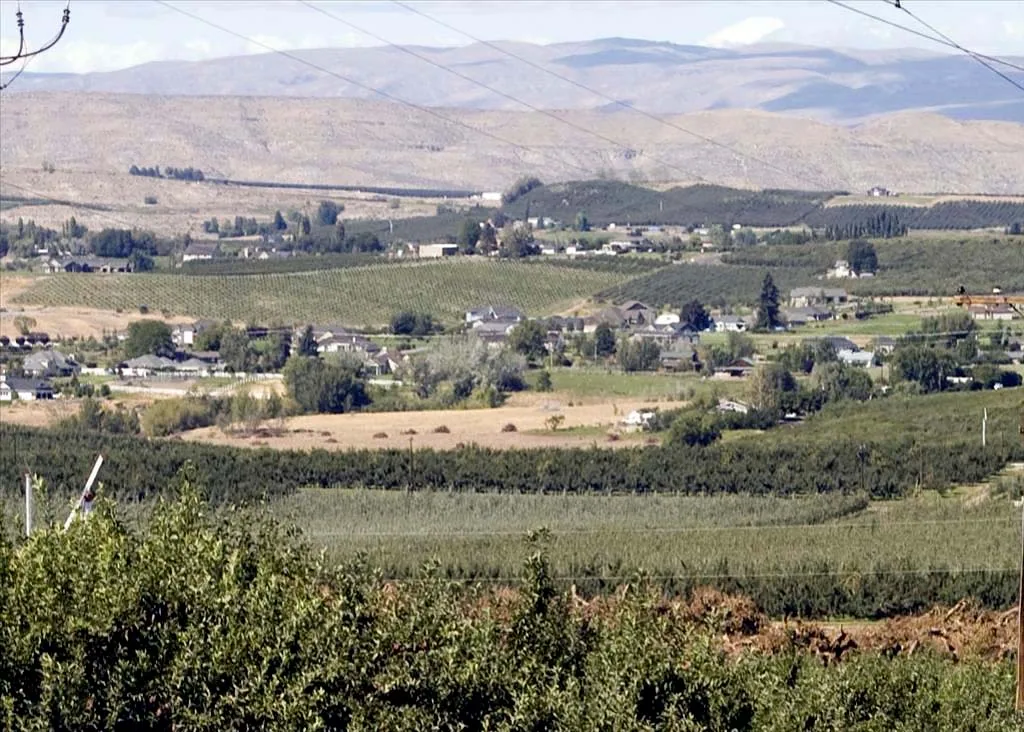
In Yakima, WA, fruit warehouses sit alongside general storage, and each roof takes December and January snow, a summer of 90 F afternoons and the occasional autumn gale. We repair, recover and replace warehouse roofs, and we sequence the work so docks keep shipping. Have the building address, the roof age and the permit drawings on hand when you call, because the design snow load controls what we can add.
Know What Is Overhead Before You Plan
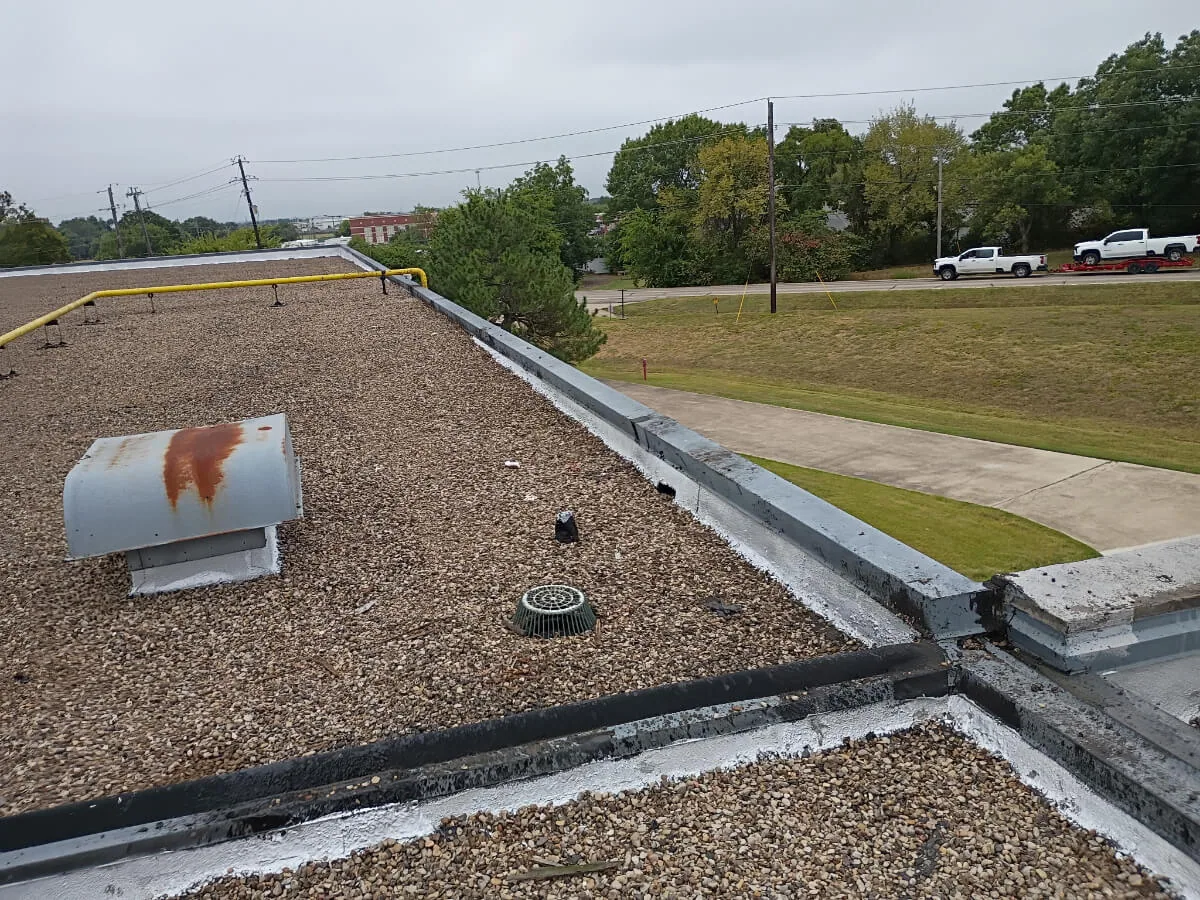
Most warehouse roofs fall into three groups: a mechanically attached or adhered single-ply membrane such as TPO, a multi-ply built-up system with gravel or a cap sheet, or a metal roof, either exposed-fastener or standing seam. Each has its own weak points. Single-ply fails at seams and flashings. Built-up roofs blister and lose gravel at corners. Metal roofs leak at screws and laps.
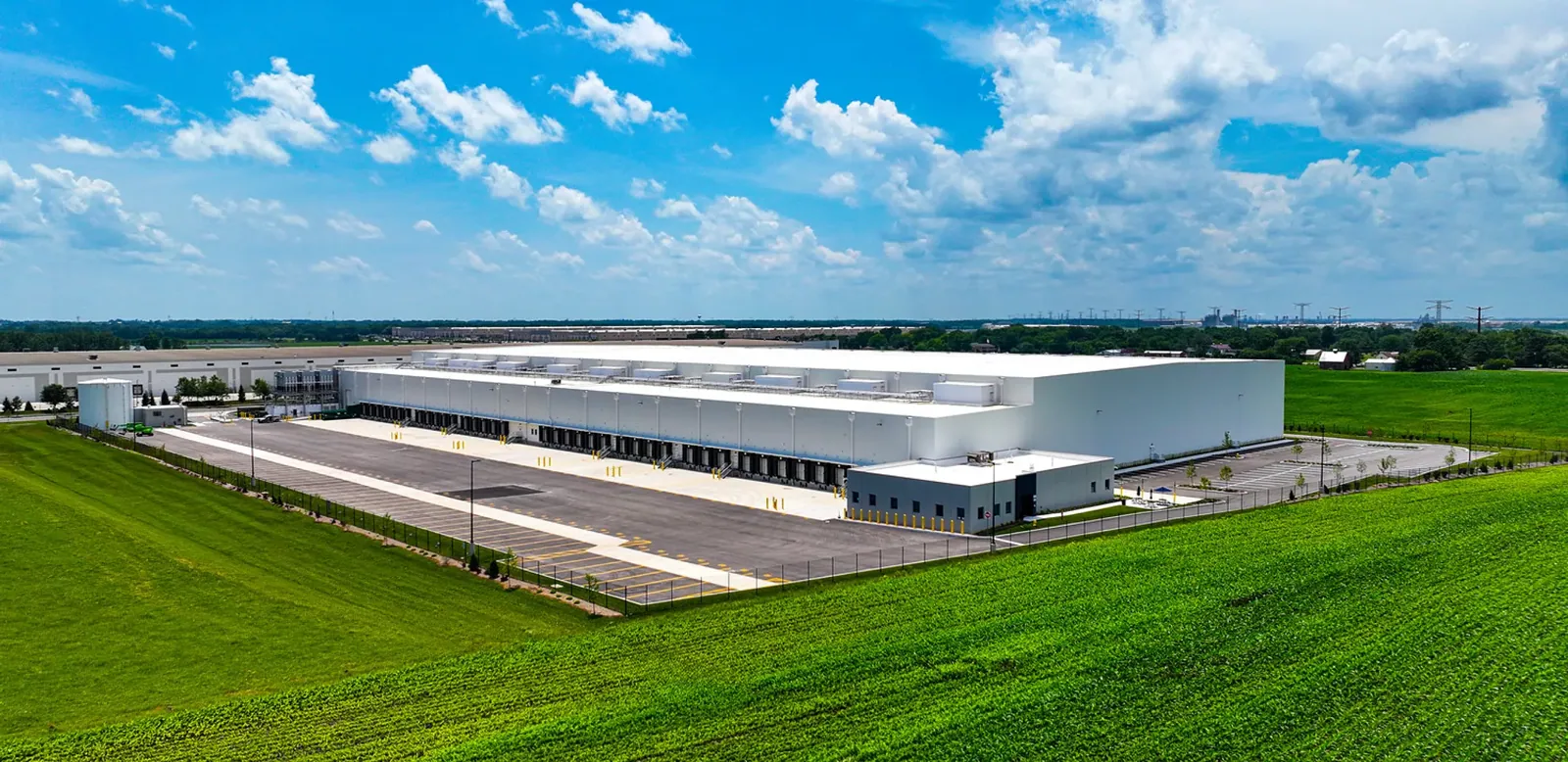
Warehouses grow by additions, and a roof often has different ages in different bays. A newer bay may share a wall with an older one, creating a step where snow drifts deepen. A building that pairs dry storage with a refrigerated wing, the way a cold storage building does, carries heat and moisture differently under each section, and a distribution center concentrates its traffic at the docks. We map the roof into zones, note the type and age of each, and score each zone for repair, recover or replacement. A single report then covers every bay, so you can budget in the right order.
Check Drift Zones at Every Step and Wall
A long, flat warehouse roof collects snow evenly until it meets a taller wall, a penthouse or a higher bay, and there the drift grows deep. The extra weight sits on a small area, and the deck beneath can deflect. The county requires an engineer once a parcel's design load passes 70 psf, so the permit number is worth finding before the first snow.
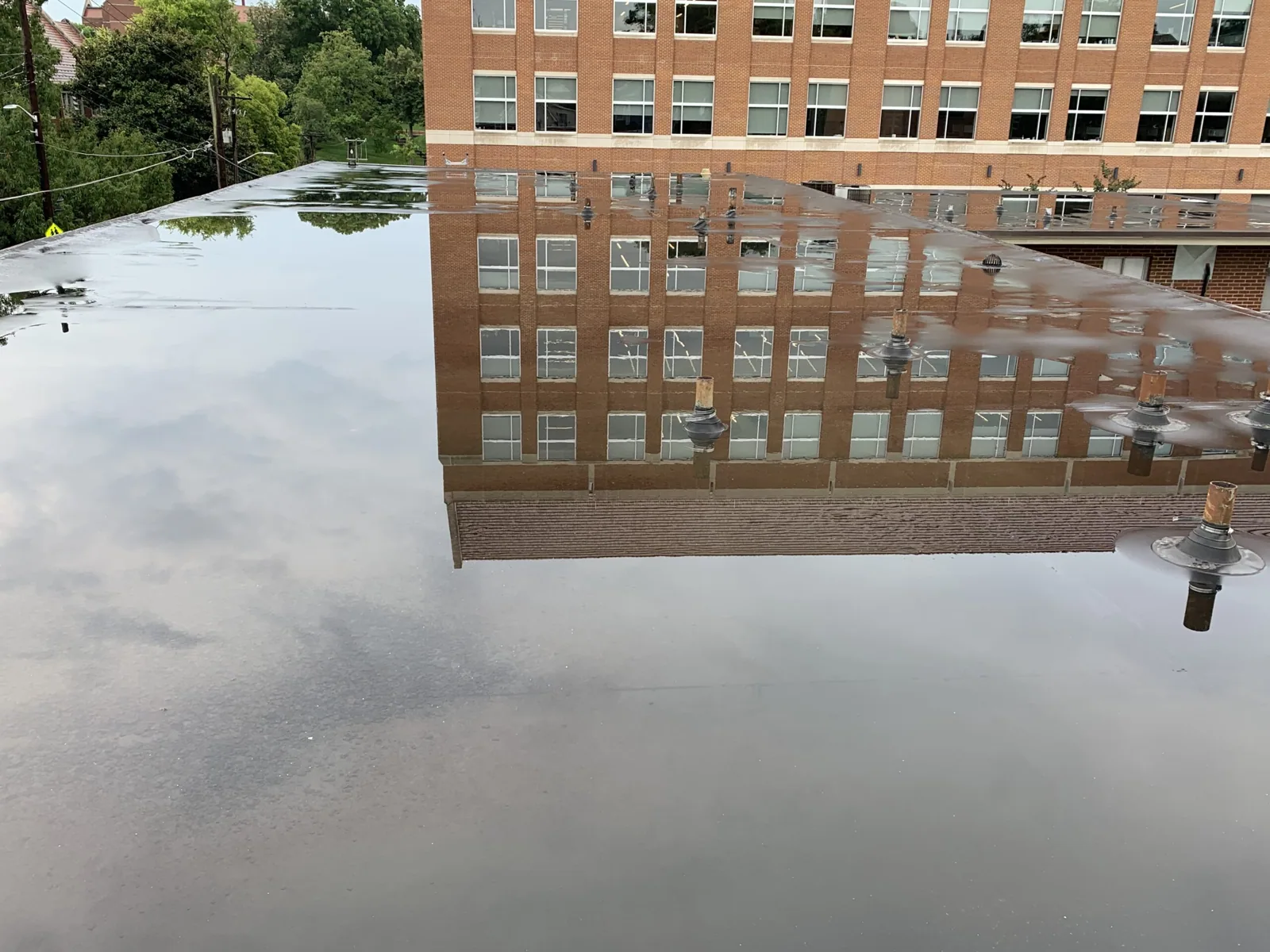
The red tag put on a South Third Avenue building in February 2019 began with a bulging wall, and a steel shovel is the wrong answer on a flat roof. Plastic tools do our clearing, a layer of snow stays on the membrane, and we ask your staff to stay off until we look at the deck from below. A deflection check from the interior, using a string line or a laser, shows whether a bay is sagging. Sagging bays pond, and ponding shortens the roof's life by holding water against seams and by adding load on top of snow that has not yet melted. Our ponding repairs usually begin with that measurement.
Keep the Docks Moving During the Work
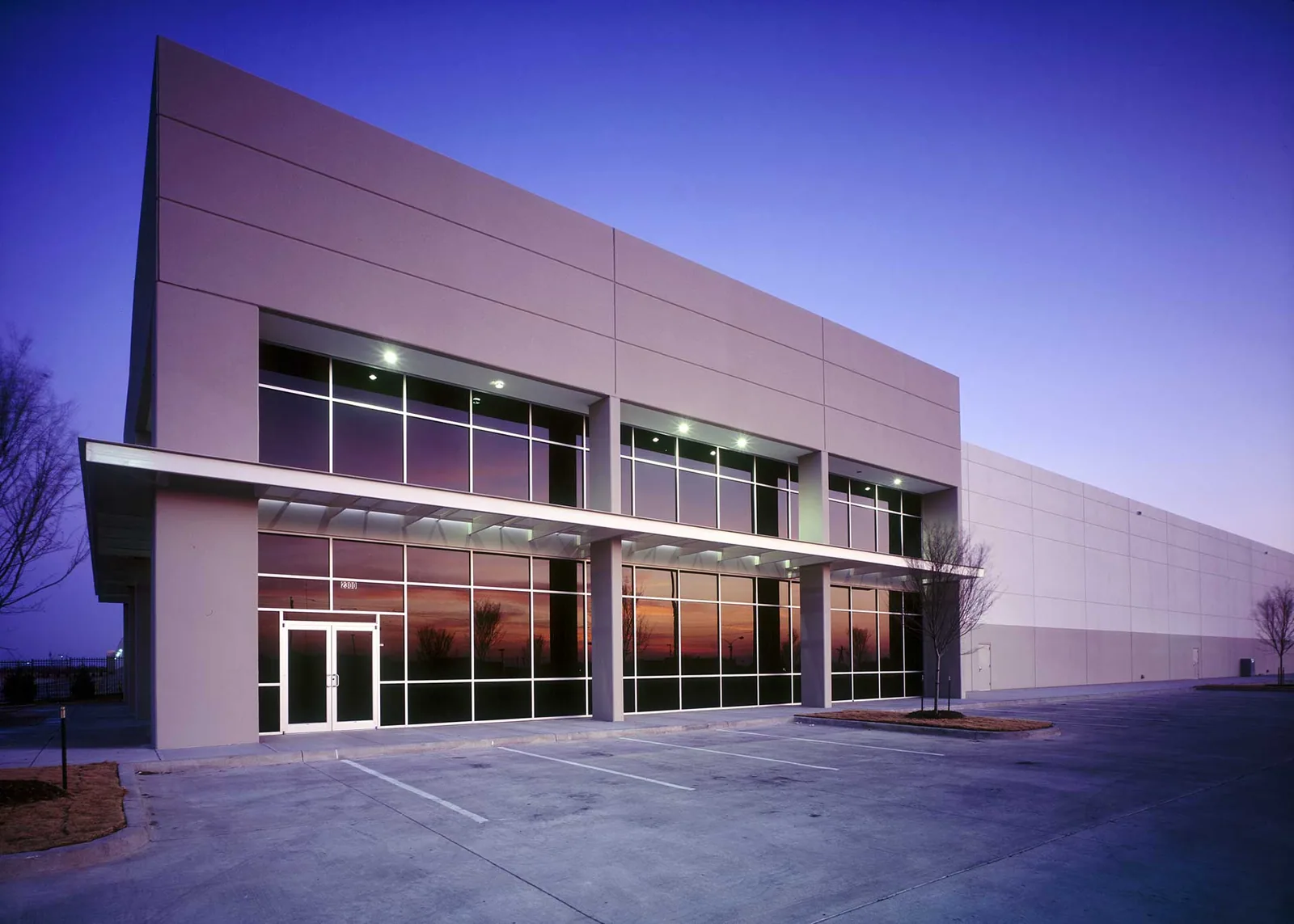
A warehouse cannot stop shipping for a roof, and the dock schedule is usually the real deadline for any tear-off. We stage the work so dock doors stay clear, with the crew staging materials on the side opposite the busiest doors. The roof hatch and ladder are rarely on the side where trucks line up, and we coordinate crane or hoist positions with your yard manager before the first delivery arrives.
Inside, we protect product and racking. Under the work zone we place plastic sheeting, and we ask your team to pull perishable or sensitive inventory away from the repair area. For a fruit warehouse near Selah, where orchards and rail access draw several fruit companies, product timing is the schedule. We plan the tear-off in sections and dry in each section the same day, so a shift in the weather does not catch an open roof.
Secure the Edges and the Penetrations
On a warehouse roof the corners and edges feel the strongest uplift, as the late-November 2019 windstorm showed. A loose edge metal or lifted coping gives wind a way under the membrane. We walk the perimeter after every gale and check that the metal is tight, the sealant is intact and the first rows of fasteners are in place.
Penetrations are the other risk. Smoke vents, exhaust fans, roof hatches and skylights puncture the membrane. Each needs a flashing that can move with the roof. We inspect the base of each one, replace cracked boots and re-seal where the sealant has pulled. A clogged scupper beside a penetration can send water back toward it, so we clear drains as part of every visit.
Decide Between Repair, Recover and Replacement
A warehouse with a handful of leaks at flashings and seams is a repair job. A warehouse with leaks in the field, soft spots underfoot or stains across many bays is a different case. An infrared scan at dusk shows which insulation is wet and which is dry. We follow with cores to confirm, and the result tells us whether a recover is possible.
A recover over dry insulation saves tear-off cost and downtime, but it adds weight, and the added weight has to fit the design snow load. If the roof is saturated, replacement is the answer. We price each path with the moisture findings and the weight check listed, so the decision rests on the building. An older bay in Moxee, where hop buildings and warehouses support the local economy, may call for a different path than a newer bay in town.
Commercial Roofing Questions
How do I find the source of a leak that shows up at one dock door but starts somewhere else?
Water travels along the deck, the insulation and the steel before it drips, so the stain rarely sits under the hole. We trace it from the roof with an infrared scan and a hose test, working uphill from the dock. Photograph the drip location, note the time and weather, and send us the address. Those details save an hour on the first visit.
Can a warehouse roof be replaced while racking and product stay in place?
Yes, in most cases. The work is on the exterior, and we protect the interior with sheeting under the work zone. The risk is dust and debris falling through gaps, so we seal penetrations and keep the tear-off area small. Tell us which racking holds sensitive product and we adjust the sequence.
What does the snow load on my permit mean for a new roof?
It sets the limit on total weight, including the roof system, insulation and ballast. A recover or heavier system adds dead load, which reduces the margin for snow. We compare the existing roof's weight and the new system against the permit number, and an engineer reviews it if the margin is close.
Should I coat my warehouse roof instead of replacing it?
A coating makes sense over a sound membrane with dry insulation and a surface that drains. It extends the roof's life and adds reflectivity, but it does not cure wet insulation or a failed deck. A coating plan begins with a moisture scan, and the survey tells you which sections qualify.
How often should we inspect a roof over product that cannot get wet?
After each major snow event, after every gale and every spring and fall. A roof over sensitive inventory merits the extra visits. We log each inspection with photos, so a pattern, such as a seam that opens each thaw, shows up before it becomes a loss.