On a cold February morning a maintenance supervisor walks a flat roof and finds granules crunching underfoot and a blister the size of a dinner plate near a drain, and the first thing dispatch asks is how many layers the roof has. Modified bitumen is asphalt blended with a rubber-like polymer, reinforced with a fabric mat and sold in rolls that are layered on the roof. SBS formulations add rubber for flexibility in the cold. APP formulations add plastic for stability in heat. Either one gives you a tough surface that tolerates foot traffic better than most single-ply sheets.
In Yakima, WA, the sheet works through snow that lingers in December and January, spring thaws, and afternoons that pass 90 F about 40 times a year. We install it on new roofs and over tear-offs, and we repair it where blisters, split laps or worn surfaces have opened the way for water. Tell us the number of plies, the surface type (granulated or smooth) and where the roof ponds, and we can plan the visit.
Count the Plies Before Any Repair
A modified bitumen roof is built in layers: a base sheet or two, then a cap sheet with a granule surface that shields the asphalt from sun. The layers share the load, so a split in the cap does not always mean water reaches the deck. That redundancy is the system's main advantage over a single sheet. It also means a repair has to match what is there. A patch that bridges only the top layer will hold in dry weather and fail when water works beneath it.
We cut a small test sample at a few locations, check the number of plies, inspect the mat for rot and look at the insulation underneath. If the sample shows that the base layers are dry and sound, the repair is local. If water has traveled between the plies, the layers are no longer bonded, and the roof needs a bigger plan. Our commercial roof repair list names which areas are patches and which are fixes.
Choose the Application Method for the Building
Modified bitumen goes down in several ways. Torch application melts the underside of the roll with a flame and rolls it into place, which gives a very strong bond but requires fire controls. Cold adhesive and self-adhered sheets avoid open flame and suit occupied buildings and roofs with combustible materials nearby. Hot mopped asphalt, the method behind a built-up roof, is also used on some multi-ply systems. The method changes the cost, the odor, the timing and the fire watch required.
For a school, a hospital annex or a food plant, we favor cold-applied or self-adhered rolls and keep the torch for sites where there is nothing combustible at the edges. When a torch is the right choice, the crew keeps extinguishers on the roof and holds a fire watch after the last seam is sealed. Your insurer may have a view on hot work, and we will get that in writing before the first roll is lit.
Let the Rubber Take the Cold
Yakima has logged minus 25 F and 113 F, and the daily swing can be large. SBS-modified sheet stays pliable in the cold, which helps seams and flashings survive the nights when the temperature falls fast after a hot afternoon. APP sheet holds its shape better under heat, which suits a roof with a lot of rooftop equipment radiating warmth. We choose between them based on exposure and the amount of foot traffic, not on a habit.
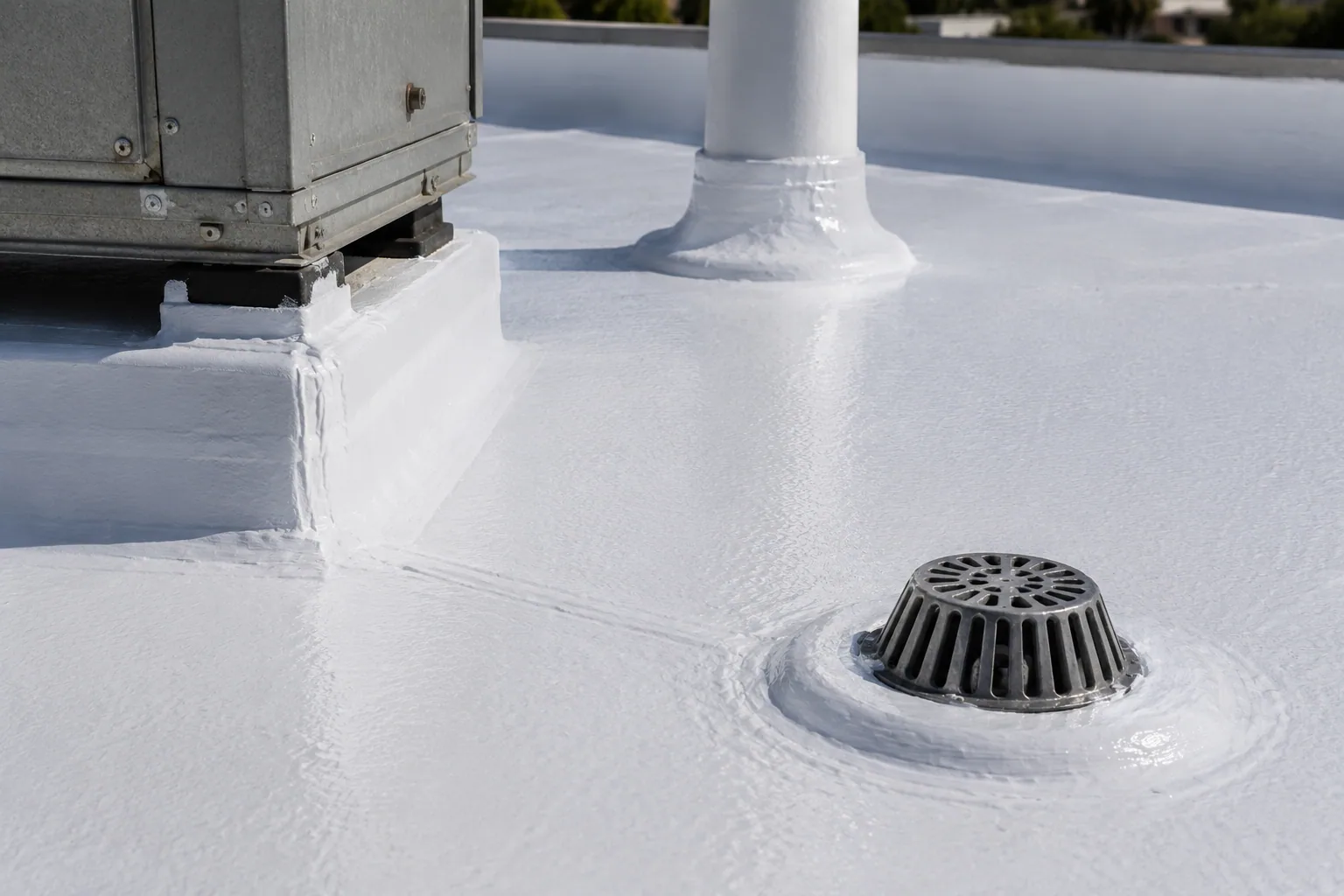
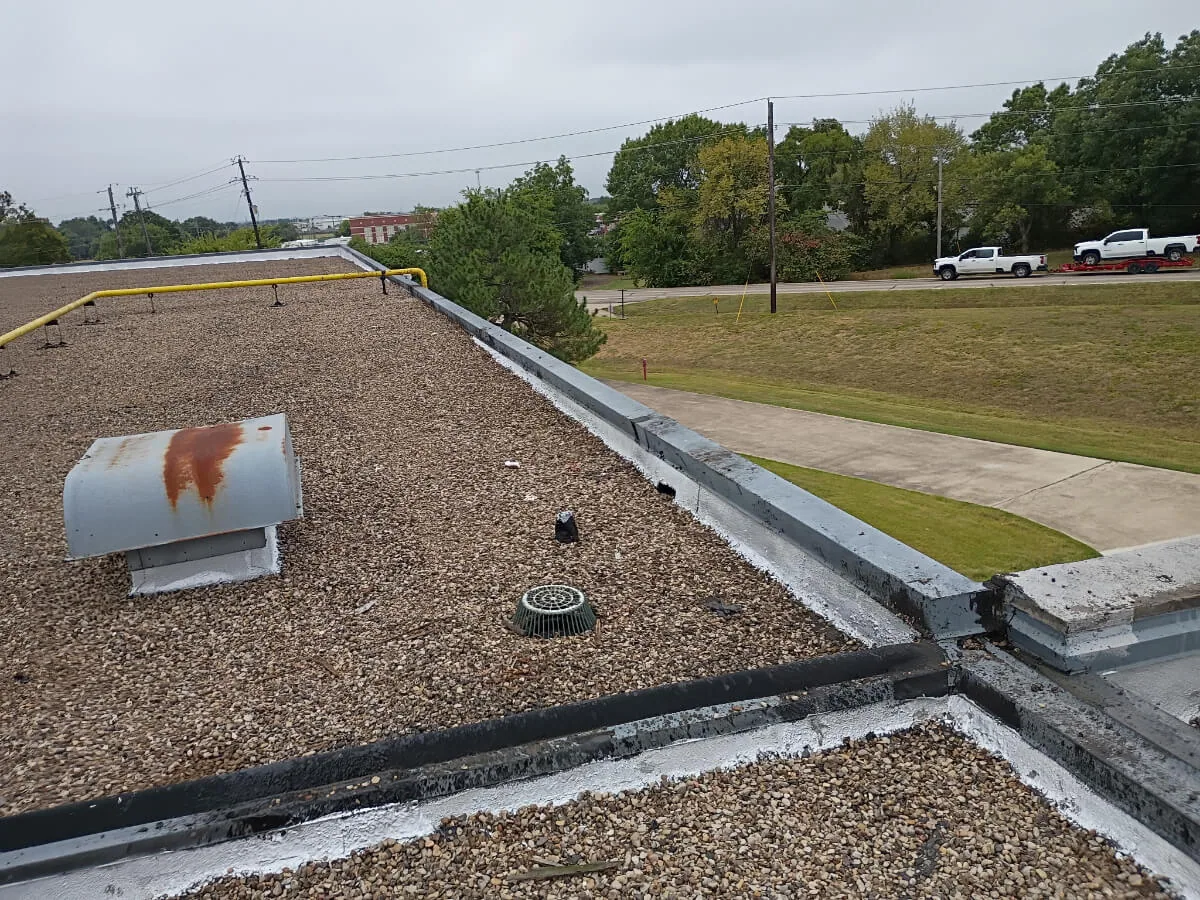
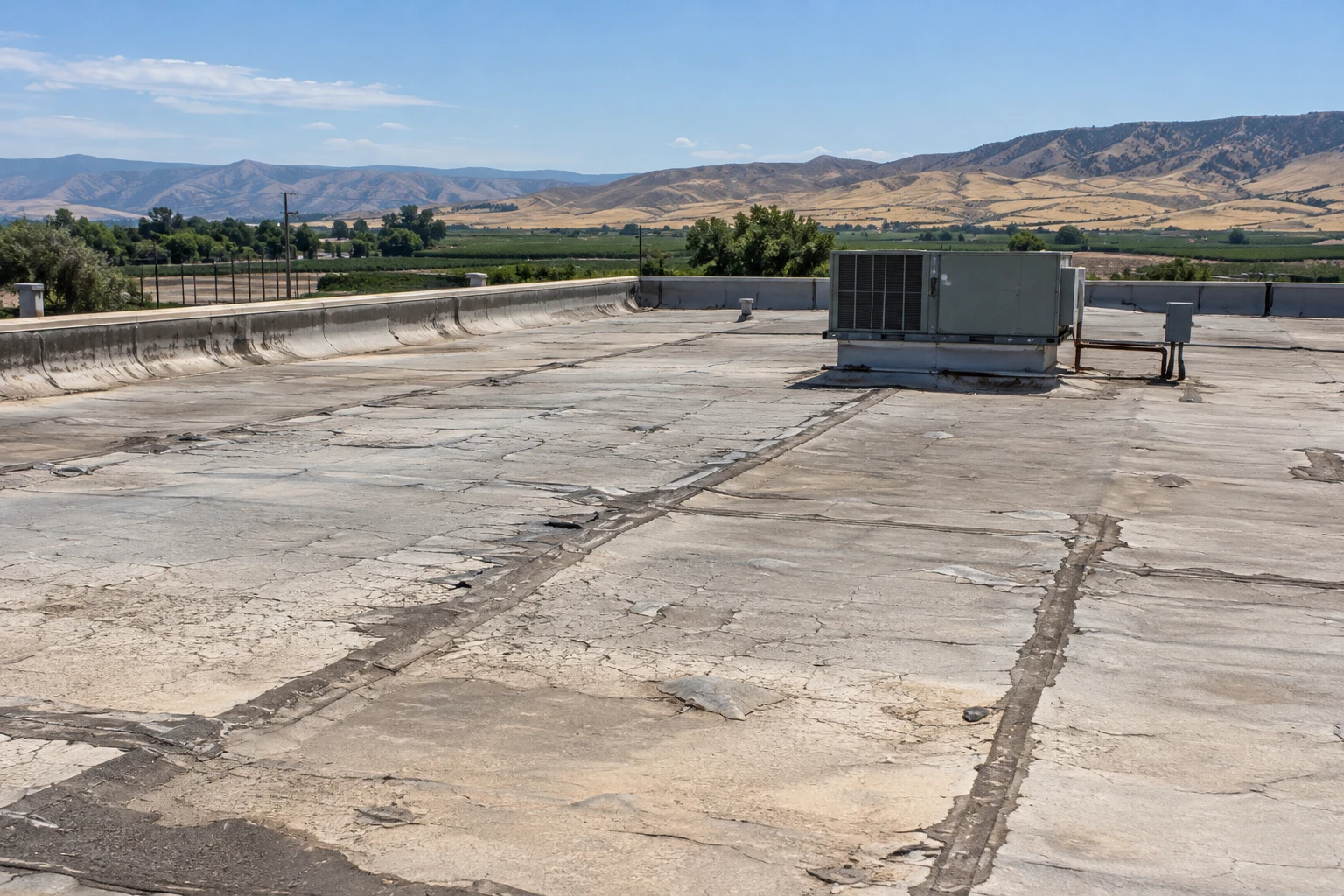
Granule loss is the visible sign of aging. When the surface turns smooth and dark in patches, the asphalt underneath is exposed to ultraviolet light, and it starts to crack. A heat and UV damaged roof can often be extended with a reflective coating if the layers are dry. If cracking has reached the mat, the cap sheet needs replacement.
Handle Snow Drifts on a Layered Roof
Snow load in Yakima County is parcel specific, from 20 psf to well over 200 psf, with engineering required above 70 psf. Drifts pile deepest at parapets and at the step where a low roof meets a taller one. A layered modified bitumen roof is heavier than a thin sheet, so on older buildings the dead load and the snow load have to be reviewed together. A deflection check on the deck under a long drift tells us whether a roof is at its limit.
A metal shovel can slice a cap sheet and strip granules, and a cap sheet that has lost its granules ages quickly. We clear with plastic tools, leave a protective snow layer, and look at the laps afterward, since a lap that has frozen and thawed several times is more likely to open.
Time the Work for Dry Days and Low Odor
Asphalt products need dry surfaces, and adhesives need a minimum temperature to cure. A Yakima crew has many dry days between the snow season and the afternoon heat, so we plan major work for those windows. A cold-applied adhesive can be used in mild weather, and we keep tarps and a temporary seal ready in case a front moves in.
A school building in Toppenish, where the school district keeps its offices, is best worked when classrooms are empty, though summer is not always free of use. We ask when classrooms, cafeterias and kitchens operate, and we schedule odor-producing steps for the quiet hours. For a school roof, that conversation takes place before the bid, so the dates are in the plan from the start.
Commercial Roofing Questions
Why did blisters form on my modified bitumen roof, and are they dangerous?
Blisters form when moisture or air trapped between layers expands in the heat. A small blister that has not cracked is a watch item. One that has split lets water into the layers and needs to be cut open, dried and patched. Many blisters across one slope suggest trapped moisture in the insulation, which is a replacement or recover question rather than a patch.
SBS or APP for a Selah processing building with rooftop equipment?
SBS is the flexible choice, good where cold nights and movement at seams are the main stress. APP holds up better where hot equipment exhaust or direct sun dominates. A building with several condensers and fans pushing heat across the roof leans toward APP at those zones, though we often use SBS elsewhere on the roof. We look at the equipment layout before choosing.
Can the old layers stay if I want a new cap sheet?
Often they can, if the base is dry, bonded and level. We test the layers, scan for moisture and check the weight against the design snow load. A new cap sheet over sound base layers, sometimes followed by a silicone coating, is cheaper than a tear-off, and it restores the surface. If the layers have separated or the insulation is wet, we remove them.
Does a torch-applied roof create a fire risk on my occupied building?
It can, which is why we use cold-applied or self-adhered rolls where there is any doubt. When a torch is appropriate, we keep fire extinguishers on the roof, clear combustibles from the edges and watch the area for a set time after the work ends. Your insurer may require a hot-work permit, and we handle that paperwork before work starts.
How long can I keep patching a modified bitumen roof before replacing it?
The limit is reached when the patches cost more each year than a new roof would, or when infrared shows moisture across a large portion of the insulation. Keep the repair log. Three seasons of growing repair totals, combined with a worn surface, usually signal it is time for a recover or overlay decision instead of more patches.