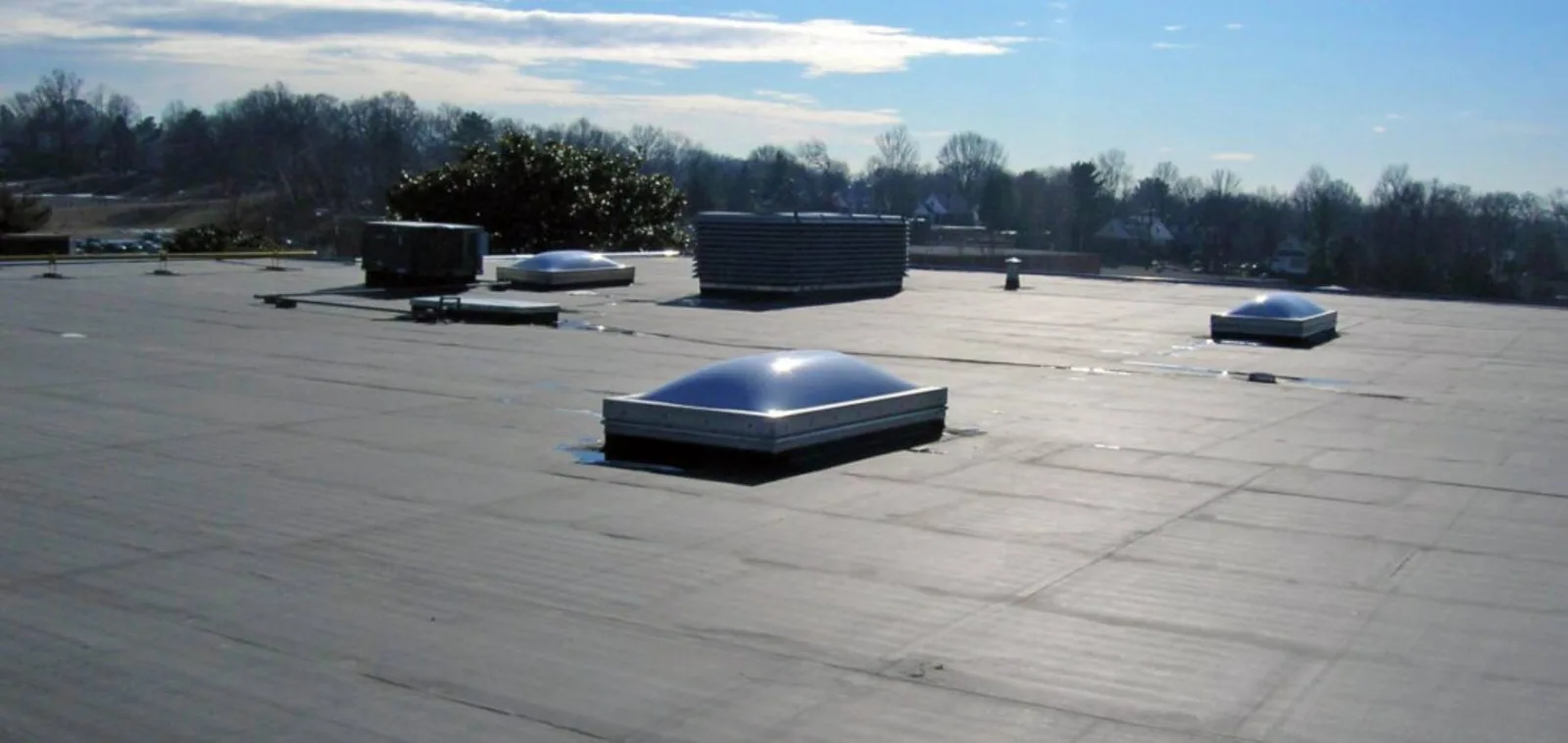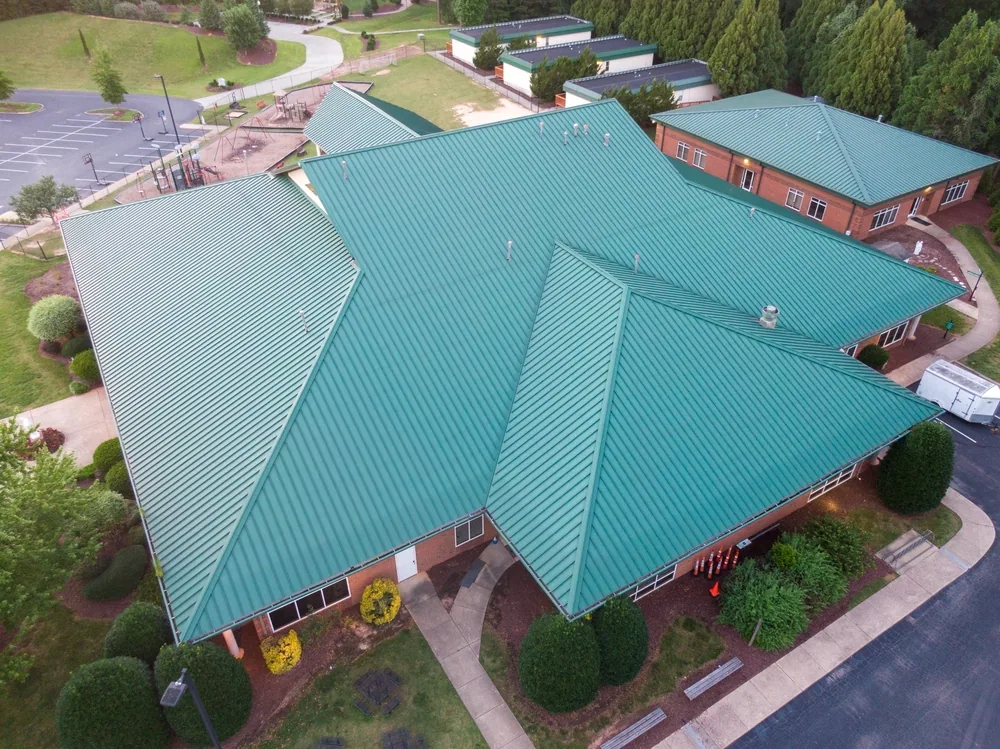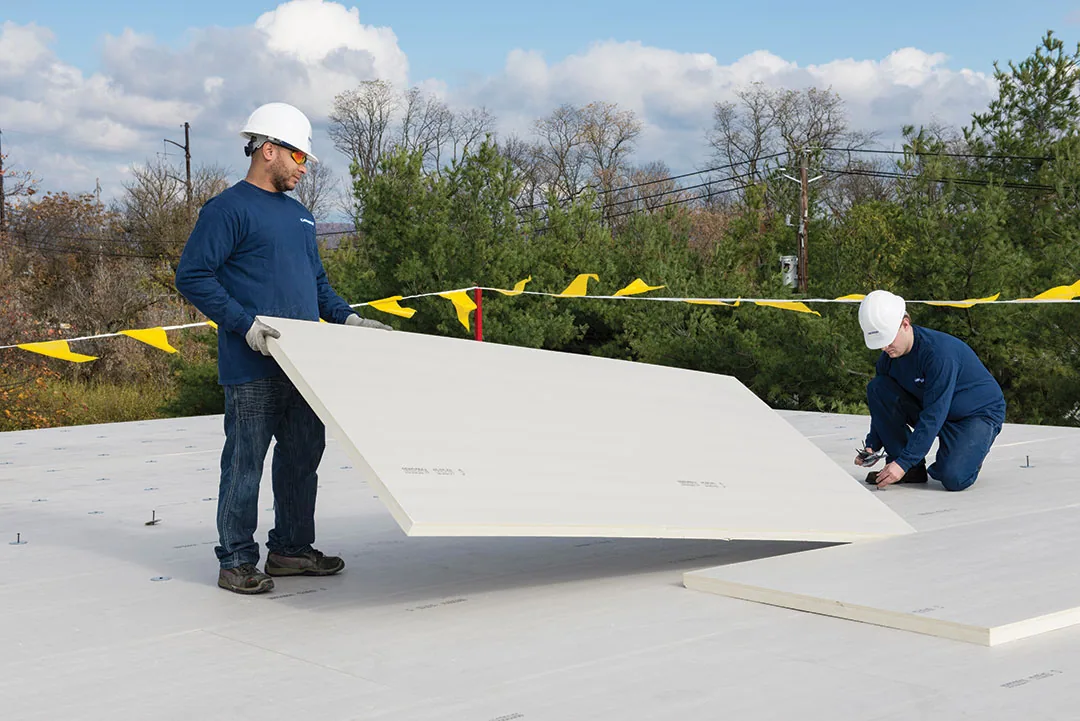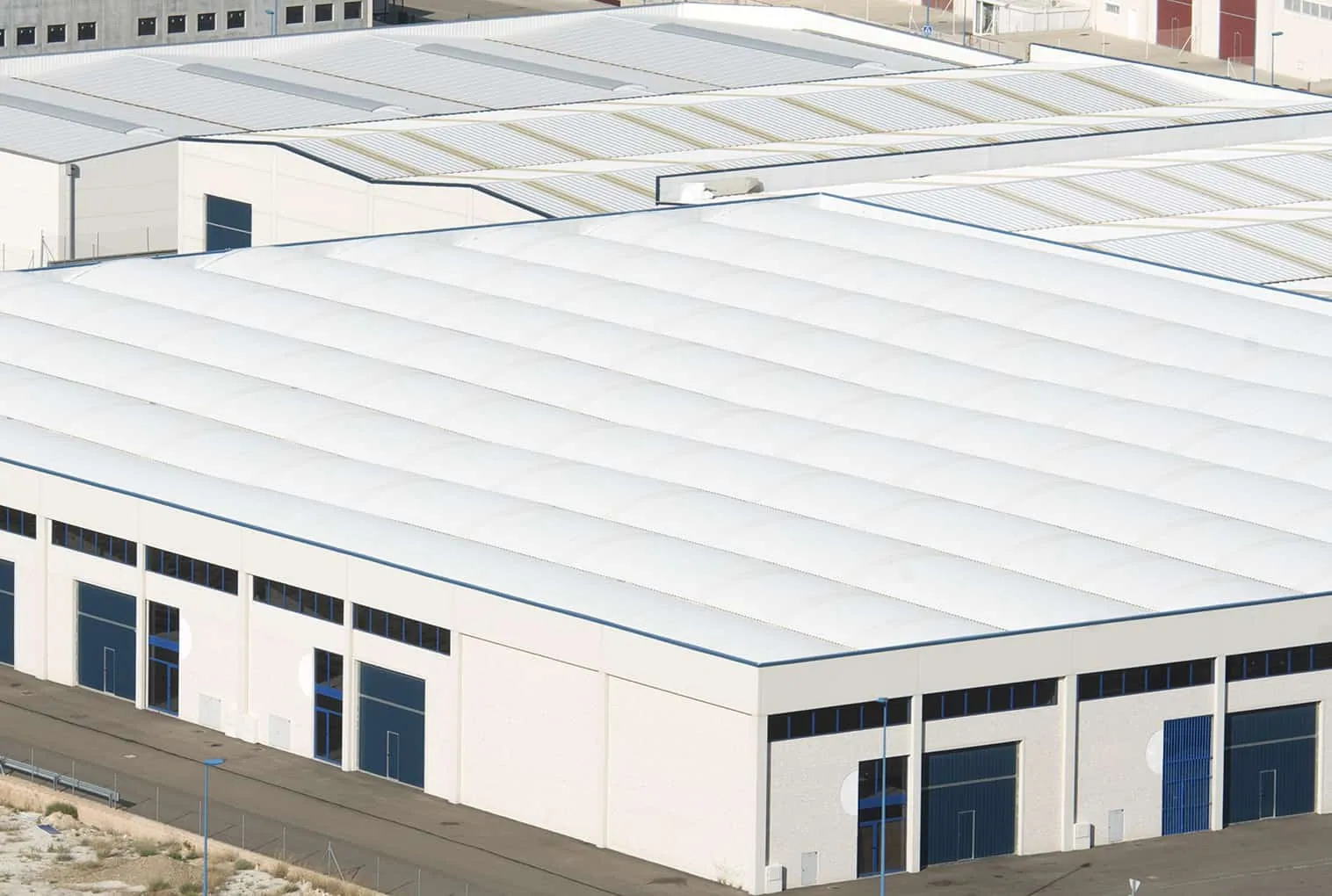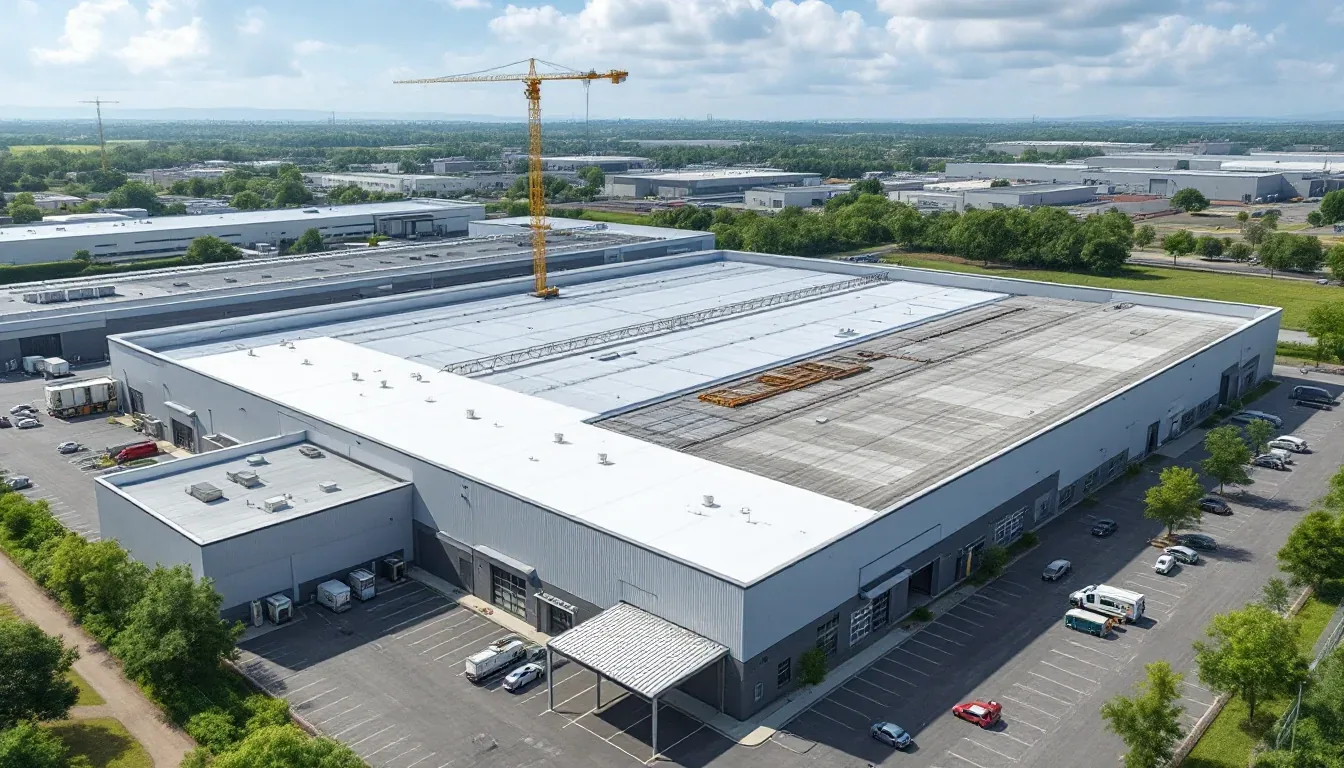
It is a 100 F afternoon in July, and the maintenance lead on a distribution building wants to know if the roof can be covered instead of torn off. Our first question back is about water, not budget: has anyone tested what is wet under the surface? A recover leaves the old membrane in place, adds a new insulation board or cover layer over it, and puts a fresh membrane on top. It saves the cost and the dumpster loads of a tear-off, and it keeps the building dry the whole time. It only works when the old roof underneath is dry, flat enough and light enough to carry another layer through a Yakima winter.
Test the Old Roof Before You Cover It
Trapped moisture is the reason most recover plans end in a tear-off. Covering saturated insulation seals it in, and the next hot afternoon turns that water to vapor that blisters the new sheet from below. We start with an infrared moisture survey after sundown, when wet areas hold heat longer than dry ones, then confirm the suspect areas with core cuts. Every core gets a photo and a location on the roof plan.
The survey result sorts the roof into three outcomes. Dry roofs go ahead. Roofs with small wet areas get those areas cut out and replaced with dry insulation before the cover goes down. Roofs where the wet footprint is widespread move to the full replacement track, and we show you the map that says so.
Count the Layers and Add Up the Weight
The building code limits how many roof layers a building can carry, and an existing roof that already has two systems on it usually cannot take a third. Weight matters even more in Yakima, where design snow load changes from one parcel to the next. A recover adds dead load, and that dead load sits on the deck at the same time as the drift pile against the parapet.
So we check the original design load on the drawings, count the layers by cutting a test section, and run a deflection check wherever drifts run deepest, which on most flat roofs means the lee side of every wall that rises above the field. If the deck has little reserve at those spots, a lightweight recover with a thin cover board may fit where a heavy ballasted option would not.
Choose the Cover Board and the New Membrane
Between the old roof and the new one sits a cover board, which gives the new membrane a flat, clean surface and separates it from old asphalt or adhesive that would attack it. Gypsum, high-density polyiso and fiberboard each behave differently under foot traffic and in a freeze, and we pick the board against what the building will see: rooftop units that get serviced weekly, or a quiet roof that is almost never walked.
For the new membrane, a white single-ply such as TPO handles Yakima's afternoon heat cycle well, since the city sees about 40 days at or above 90 F, and the roof also drops below freezing about 19 days a year. When the existing surface is a smooth modified bitumen or built-up roof in sound condition, it makes a stable base for that single-ply layer.
Pin the Perimeter to Beat the Gust
Wind is the third stress on a Yakima roof. A late-November 2019 windstorm gusted to 51 mph in the city and 53 mph in Sunnyside, and the county lists a design wind speed of 110. A recover adds a layer, so the perimeter fasteners and edge metal have to be reset to hold the thicker stack. We replace corroded edge metal, add perimeter fastening where the old sheet was only lightly attached, and raise the flashings at walls and curbs so they sit above the new surface. If we skip that raise, the new membrane ends up lapping over its own counterflashing, and water finds the lap.
Keep the Building Working Underneath
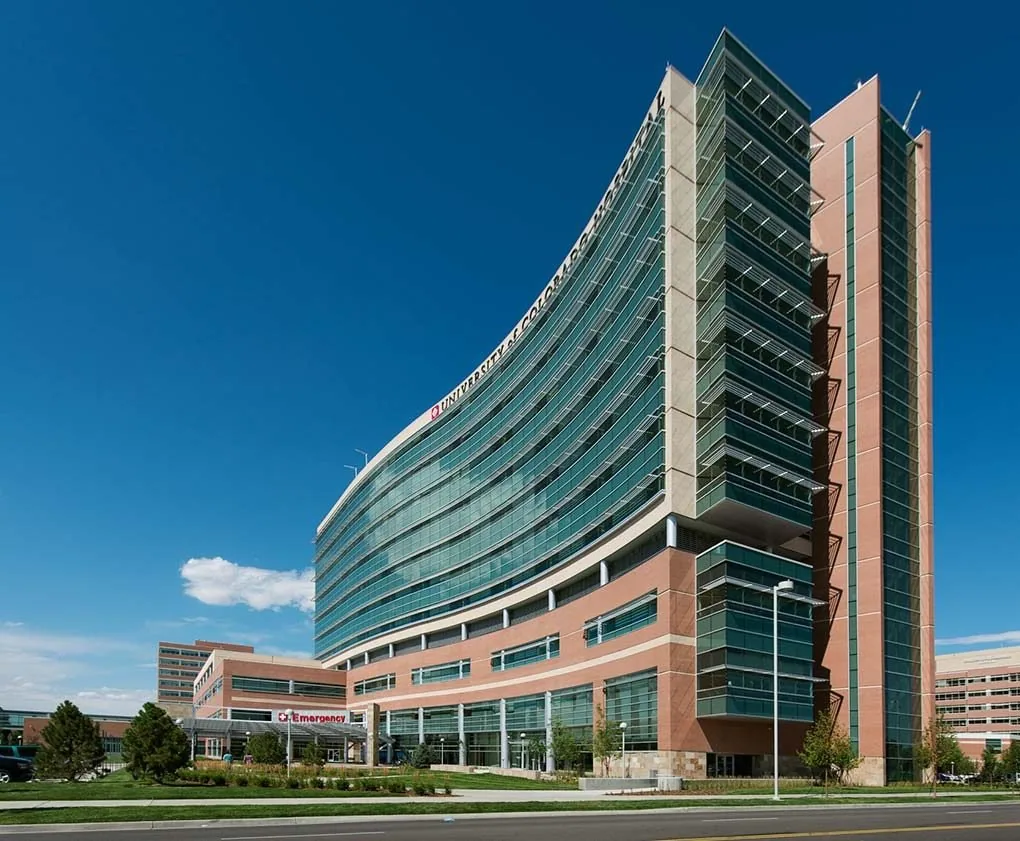
Because a recover produces far less debris and noise than a tear-off, it suits buildings that cannot tolerate either. A hospital such as Yakima Valley Memorial, with its helipad and patient floors, is the kind of building where a quiet, low-debris method is worth weighing. A warehouse in Union Gap with racking directly under the deck has a different reason: nobody wants dust and fasteners falling toward product. We stage materials by hand, cover the edge during the day, and finish every bay with a temporary seal where the section stops.
Hospital work adds its own rules about quiet hours, access routes and air handling, which is why hospital roofing gets a separate access plan before any material goes up. On a recover, the practical gain is that intakes stay clear and the ceiling below is never opened to weather, so the department underneath keeps its schedule.
Know When to Stop and Tear Off
A recover has a ceiling. If the cores show soaked insulation across much of the field, if the deck is rusted through, or if the old roof has so many seams and blisters that the new membrane cannot bond, then the recover is only a delay. We tell you when the numbers say stop, and we price the tear-off in the same proposal so the comparison is fair. A roof that has cycled through many hot afternoons and cold nights shows its condition most clearly at the seams and flashings, so those details decide the recommendation. Cracked sealant at a curb or a shrunken sheet at a parapet tells us the membrane has stopped moving with the building, and a new layer over that base will inherit the problem.
Commercial Roofing Questions
How do I find out if my roof has too many layers to be covered again?
We cut a test section through the roof and count the layers directly, because a roof plan or a past invoice rarely tells you what is actually up there. If two systems are already stacked, the code generally rules out a third, and the answer moves to a tear-off. The cut also tells us whether the old insulation is dry and whether the fasteners below it have rusted.
Will the extra weight of a recover matter with Yakima snow?
It can, and the check happens before pricing. A recover adds dead load that stacks with drifts at parapets and penthouses, and the permit set tells us what the deck was designed to carry. We compare your design load to the added weight, run a deflection check at the deepest drift spots, and pick a lightweight cover if the margin is thin.
What happens to a recover if a small leak develops later?
Because the old membrane stays under the new one, a leak in the top sheet can run sideways before it drops through, and that makes tracing harder. We mitigate that by sealing the bay edges during the install and logging every penetration and flashing location on the roof plan. When a leak call comes in, the log narrows the search to a short list of details instead of the whole field.
Does a recover cost less than replacement?
Usually the labor and disposal are lower, because there is no tear-off and no landfill load. Cost can climb if the survey finds saturated insulation that must be cut out first or if edge metal and curbs need rebuilding to match the thicker stack. We price the recover and the replacement side by side from the same moisture map so you can see where the gap closes.