Need a commercial roof looked at?
Send the address and what the roof is doing, and we will set up a time to walk it.
Request a Roof Assessment

The caller rarely says what kind of damage it is. They say the ceiling is wet, or the edge is flapping, or a door started sticking after the snow. Dispatch sorts the cause by asking when it started and what the weather did that day. In Yakima, WA the answer is usually one of a few events: a gust like the one that reached Sunnyside at 53 mph in November 2019, a heavy drift pile, a run of 100 F afternoons or a thaw that found a low spot.
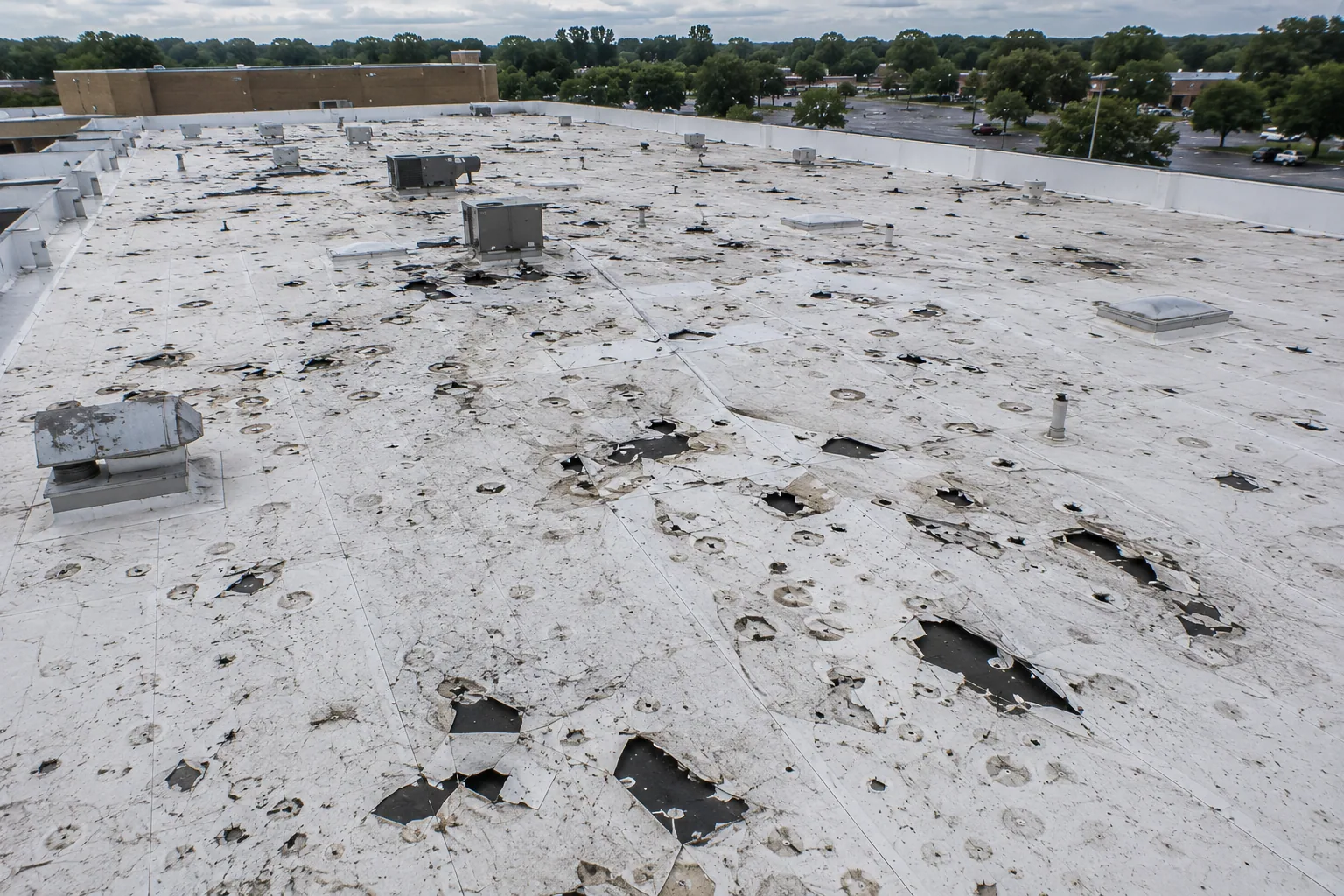
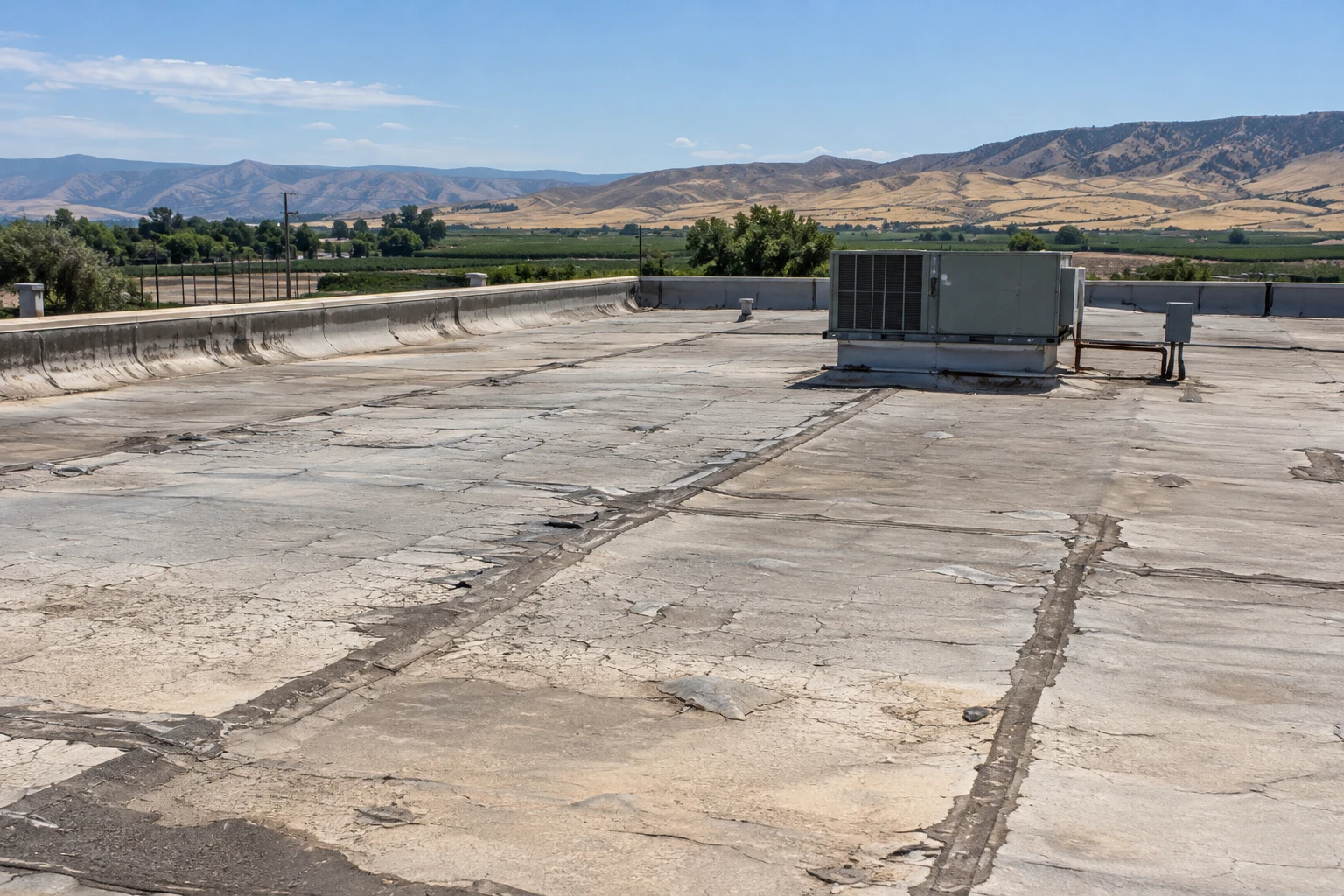
Wind damage starts at the edges and works inward. Snow and ice damage shows up as sag, split seams and frozen drains. Heat and UV damage shows as chalking, shrinkage and brittle sealant.
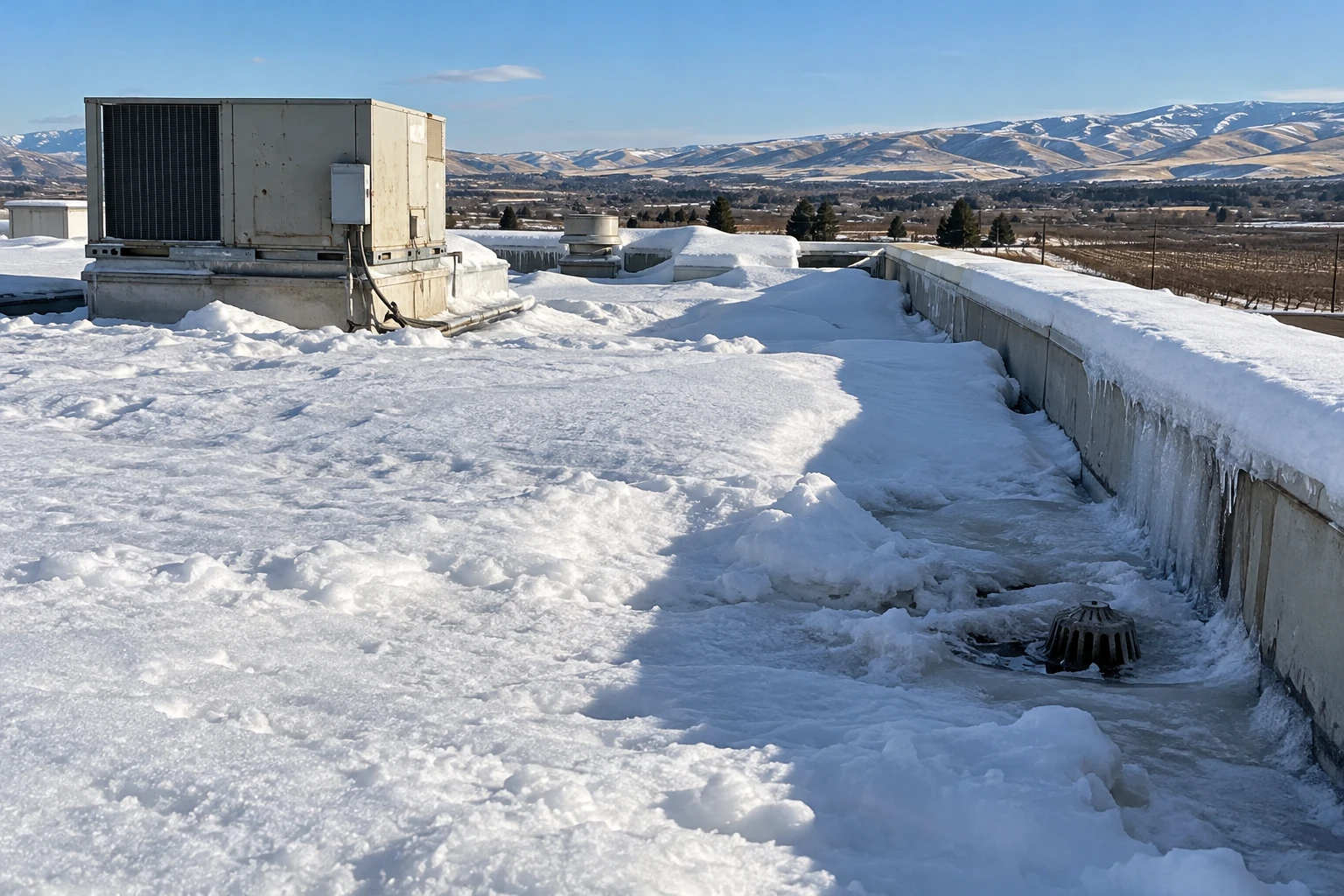
Snow is the heaviest of them. Each parcel carries its own design snow load, and a bulging wall got a South Third Avenue commercial building red-tagged under heavy snow in February 2019. A sticking door or a sagging ceiling is a reason to clear the area and call before anyone climbs up.
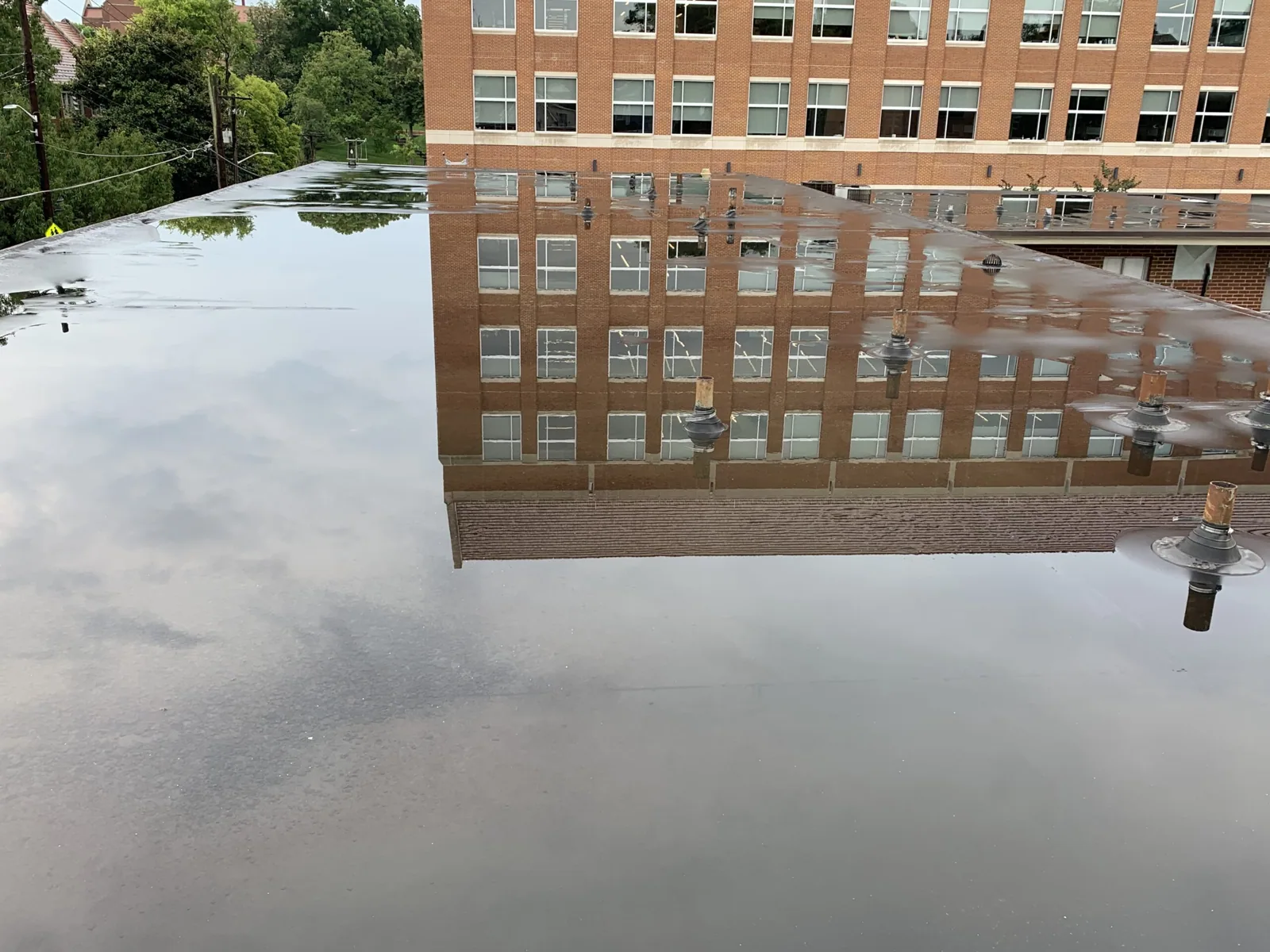
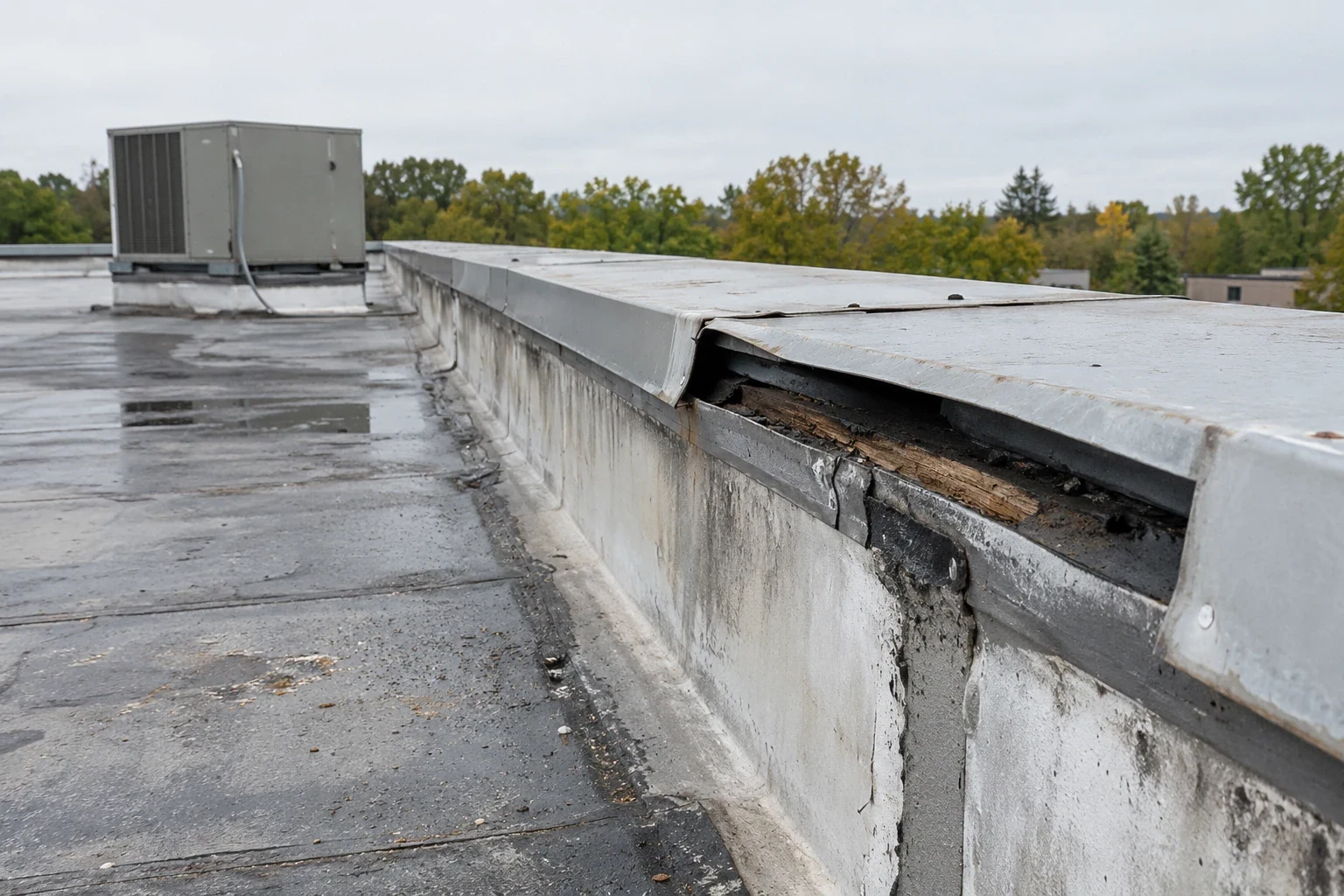
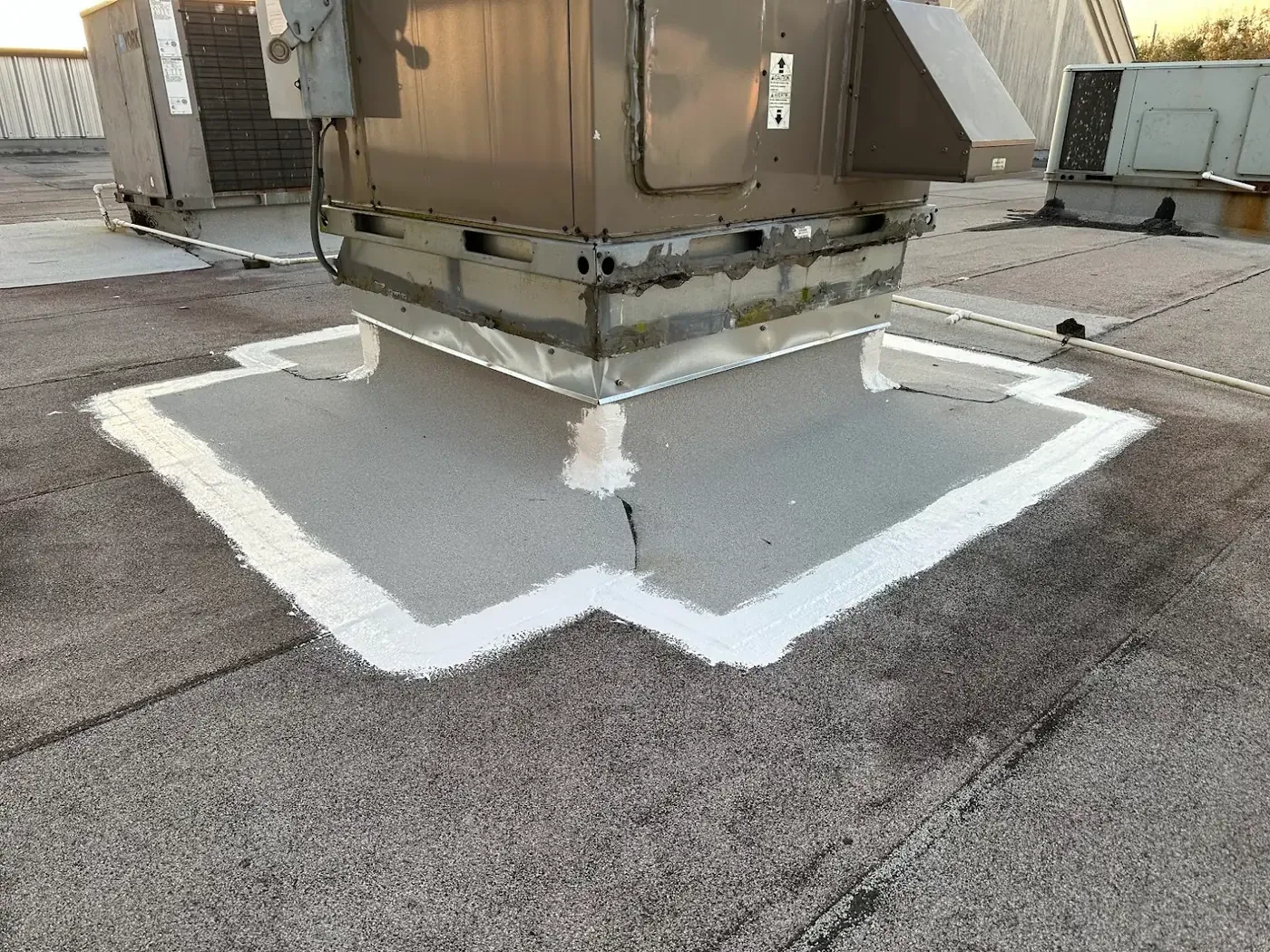
Ponding water points to slope, drains or deflection. Failed flashing and open seams are the usual entry points, and punctures come from foot traffic, tools and debris.
Union Gap's retail roofs and the packing plants in Selah show the same pattern: the leak shows up in a ceiling, but the cause sits at a detail some distance away. We trace the path before we repair the stain.
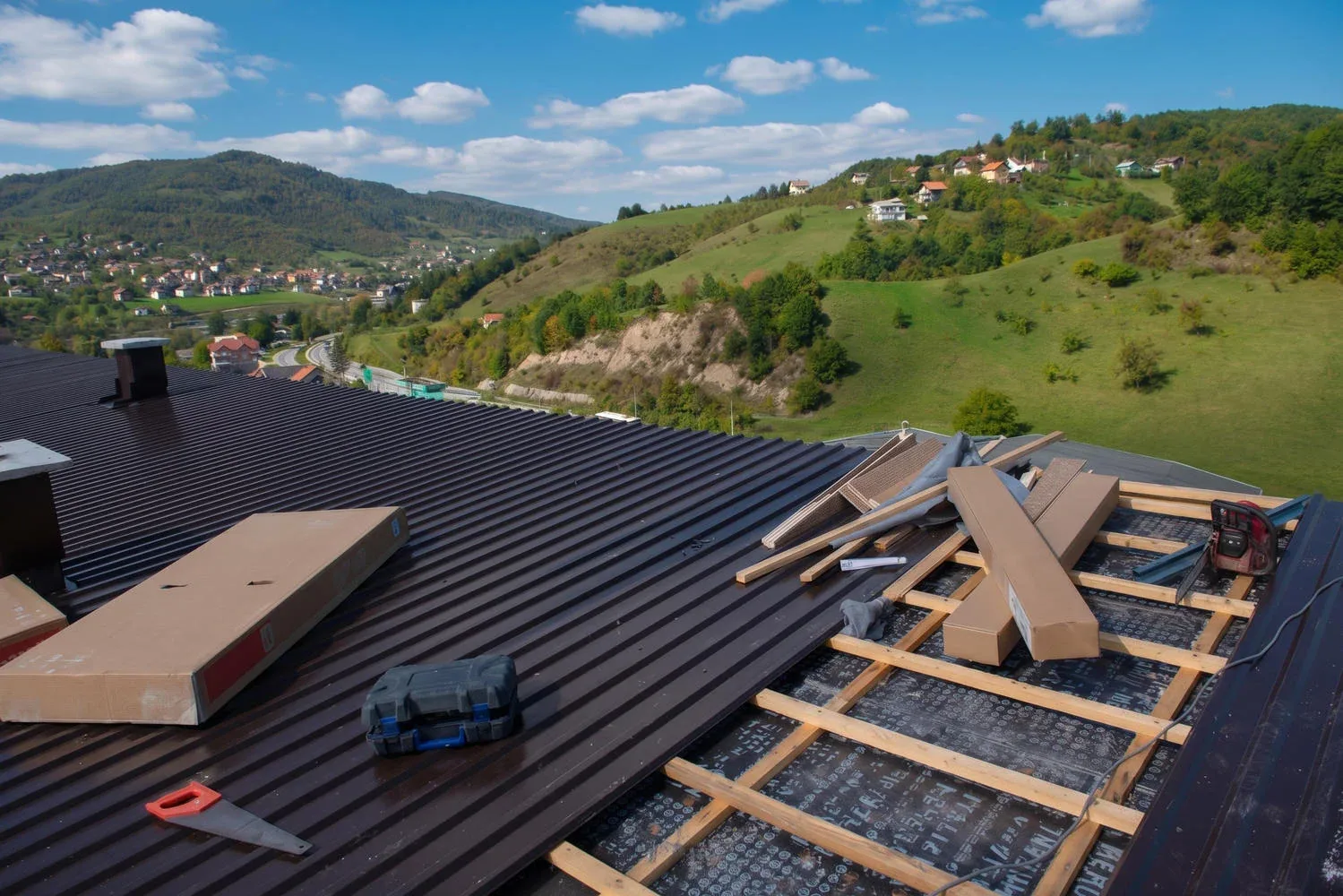
Fire damage begins with the release from the fire authority and an engineer's view of the deck. Dry-in follows, then the survey of burned, soaked and smoke-stained areas, and the rebuild last.
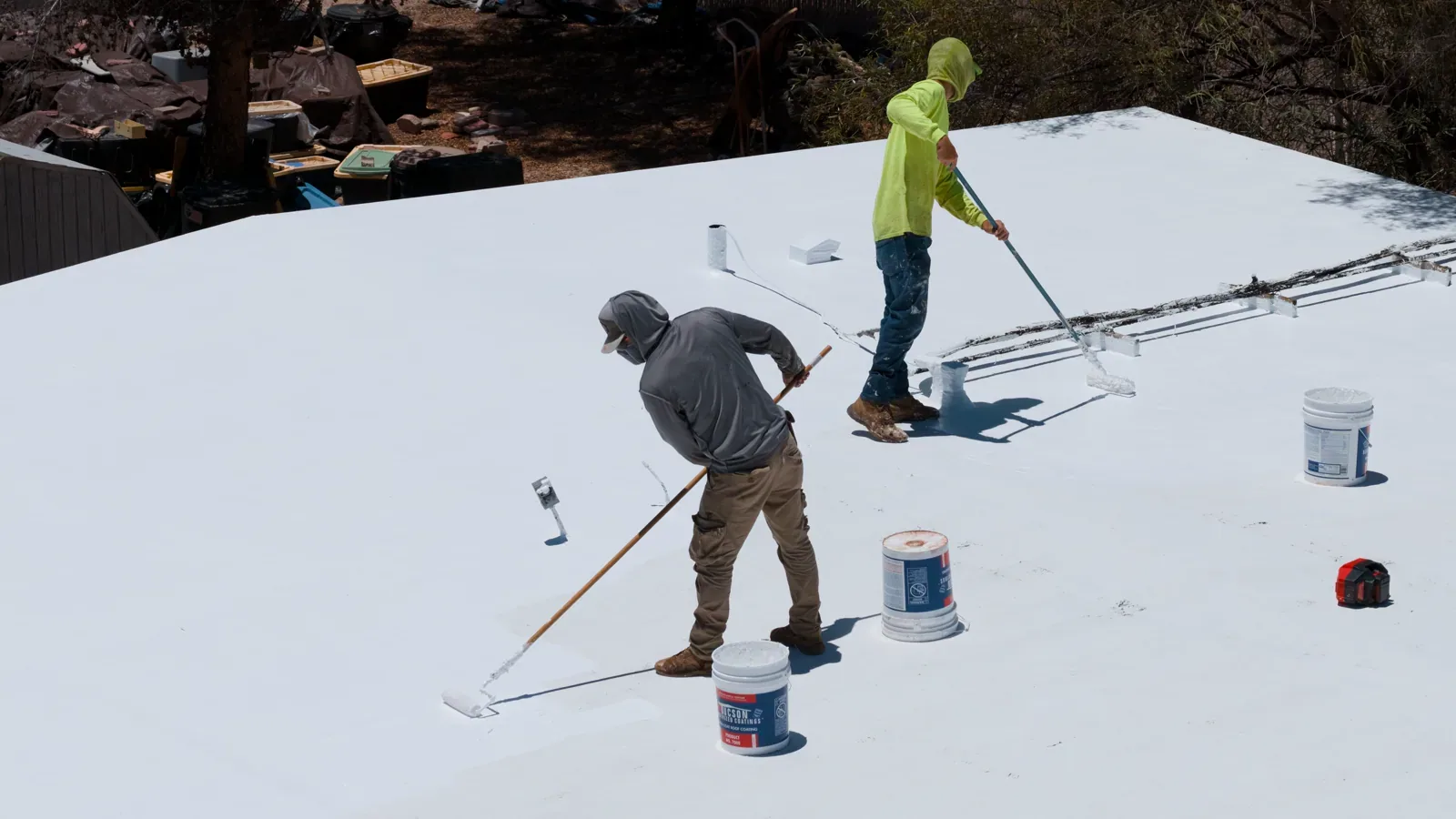
Record heat adds its own hazard, since Yakima reached 113 F in June 2021 and rooftop equipment runs hard on days like that. A hot-work permit and a fire watch belong in every repair plan that involves heat.
Dated photographs, moisture maps and a written scope show an insurer what the event did. Our claim documentation work builds that record while the damage is fresh, and the repair follows the same scope.
Look at the pattern. Fresh tears, bent metal and debris near a lifted edge suggest an event. Even chalking and widespread cracking suggest age. We record both and separate them in the report.
Protect people and product, photograph the damage and the stained areas, and call with the address. Keep staff off the roof in snow, ice or wind.
Often. We work in order of risk: dry-in, edges and fasteners first, then membrane and flashing, then insulation. Large repairs may need a second visit for weather or materials.
Repairs made to the manufacturer's published methods normally keep it intact. We note the governing warranty in the scope and use compatible products.
Send the address and what the roof is doing, and we will set up a time to walk it.
Request a Roof Assessment