A district facilities director calls on a snow-day morning because three schools report drips and one gym roof is holding a drift against its tallest wall. A district's roofs in Yakima, WA take the snow and the heat across many campuses on a school-year clock. The first question dispatch asks is which buildings were designed for what, and where the students and staff will be on Monday. Keep custodians off the roofs and do not shovel.
Each school's address, the design snow load on its permit, the place where snow or damage sits and the wings that must open on Monday give us what we need to order the first visits.
Rank the Campuses Before the Weather Does
A district holds many roofs of many ages. The Yakima School District alone employs about 1,594 people, and the Wapato School District operates six schools. Toppenish hosts district offices and the main campus of Heritage University. Each building has its own age, its own system and its own history of repairs.
The walk follows risk, from the roofs most likely to leak to the ones least likely, and each component gets a grade: field membrane, seams, flashings, drains, edge metal, curbs and penetrations. The result is one ranked list with photos and cost ranges. A board member can read it in an afternoon and see which roofs to fund first.
Keep the list as a living file. Each year it updates with new findings and completed work, and the capital plan follows it. Our capital planning places replacements in the years where cost and risk balance.
Mixed building ages are the norm in a public district. An older wing may carry several layers of past work, and a newer addition may sit beside it at a different height. We core the older roofs to learn the layers and scan them for moisture, because a recover that looks cheap on paper fails if the old insulation is wet.
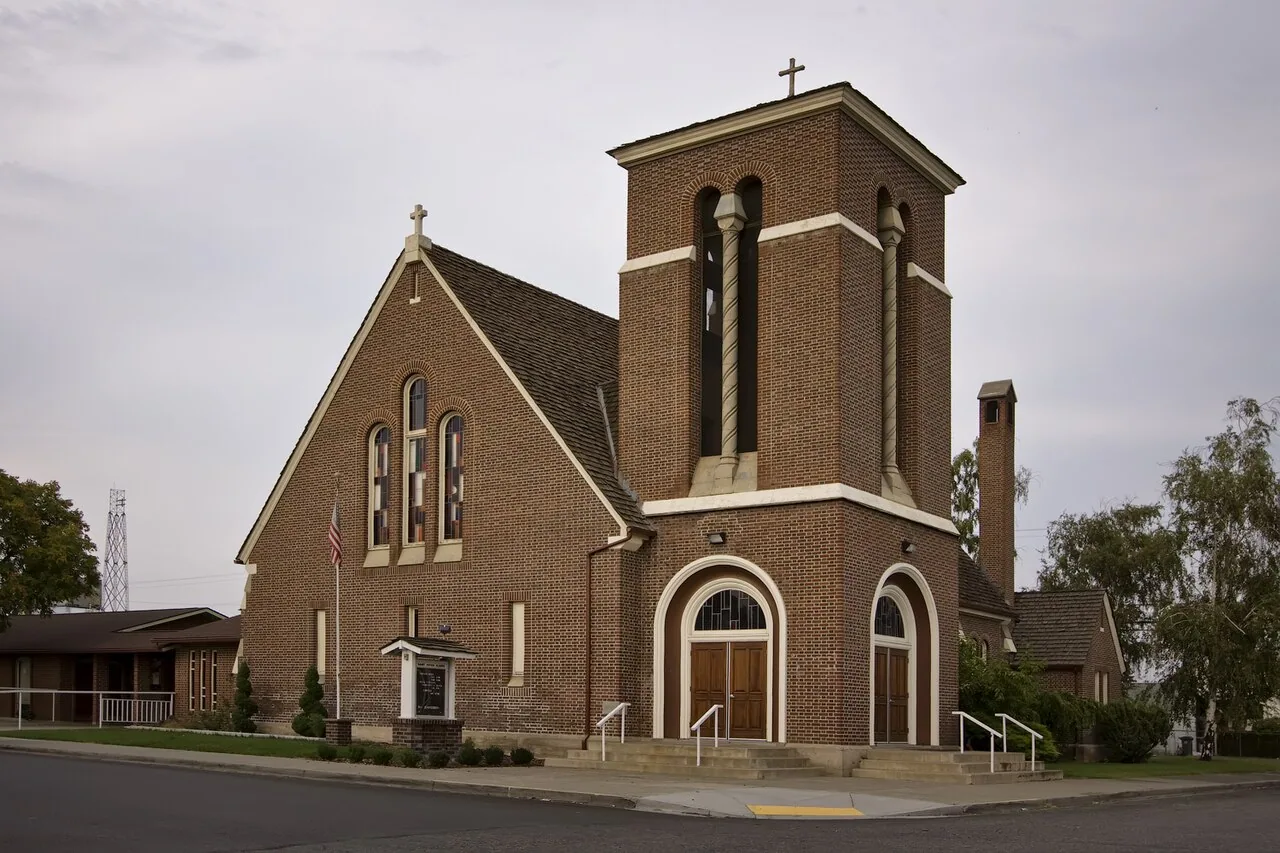
Access and security are part of the list. A school hatch, a locked gate and a visitor sign-in all affect how fast a crew can reach a roof. Background rules for adults on campus apply, and we ask for them before the first visit so the crew arrives cleared.
Read the Snow Load Before Anyone Climbs
A gym towers over a classroom wing, a cafeteria sits lower than both, and every change in height collects a drift. A gym and a classroom wing on one campus can carry very different design snow loads, and the county wants an engineer above 70 psf.
A bulging wall at a South Third Avenue commercial building produced a red tag in February 2019, and a school should read that as a reason to check the building before anyone clears the roof. Plastic tools do the clearing, and a protective layer stays on.
Look inside first. A door that sticks, a ceiling crack near a drift or a sagging tile is a deflection sign. Report it when you call and say whether the wing is occupied, so the district can decide whether students move before anyone goes up.
Parapet drifts build on the leeward side of tall walls, and step-down drifts build where a low roof meets a high one. A drift can carry far more weight than the open field. We mark drift zones on the plan and look at the deck and framing under them, and where a roof has sagged, we tell the district before winter, not after.
Plan Around the Summer Break
Summer is the install window, and it is short. A reroof needs weeks of dry weather, and the building has to be ready before staff return. A decision made in March can be installed in July. A decision made in June waits for next year, because materials need lead time and approvals take weeks.
Work back from the first day of school. Set the decision date, the order date and the install date on one calendar. We tie each to material lead times and the district's own approval steps. A missed board meeting can push a roof into the fall.
During the school year the work is repair work: leaks get stabilized, and the permanent fix waits for summer. A temporary seal is inexpensive and keeps the classroom dry.
Phasing is an option when the budget cannot cover a whole school. A building can be roofed in sections over two or three summers, worst areas first, while the rest stays in service under repair. Each section is drawn on the plan and priced separately, so the board funds what it can this year.
Watch the Day-Night Swing
A school roof that sat idle through summer break takes its heat cycle without anyone watching: about 40 afternoons above 90 F, a few above 100 F and a June 2021 record of 113 F. Each night pulls the membrane back, and the swing works flashings and seams.
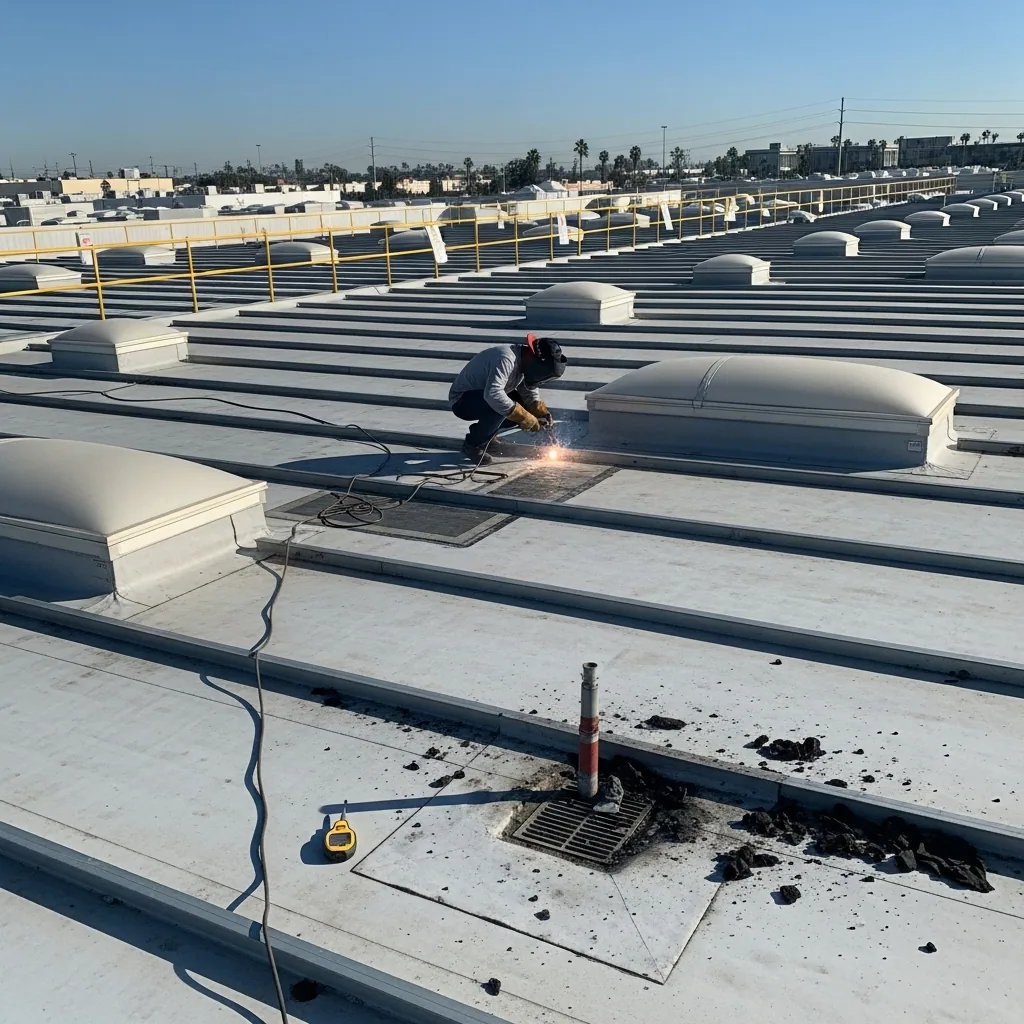
A late-August walk finds what the heat did before the first leak call of fall. We check corners, curbs and wall terminations, and we clear drains of summer debris. A maintenance visit costs far less than a repair in a full classroom.
Edge metal runs a long way on a gym or cafeteria roof, and the November 2019 windstorm put every foot of it to the test.
Price the Whole Decision, Not Just the Membrane
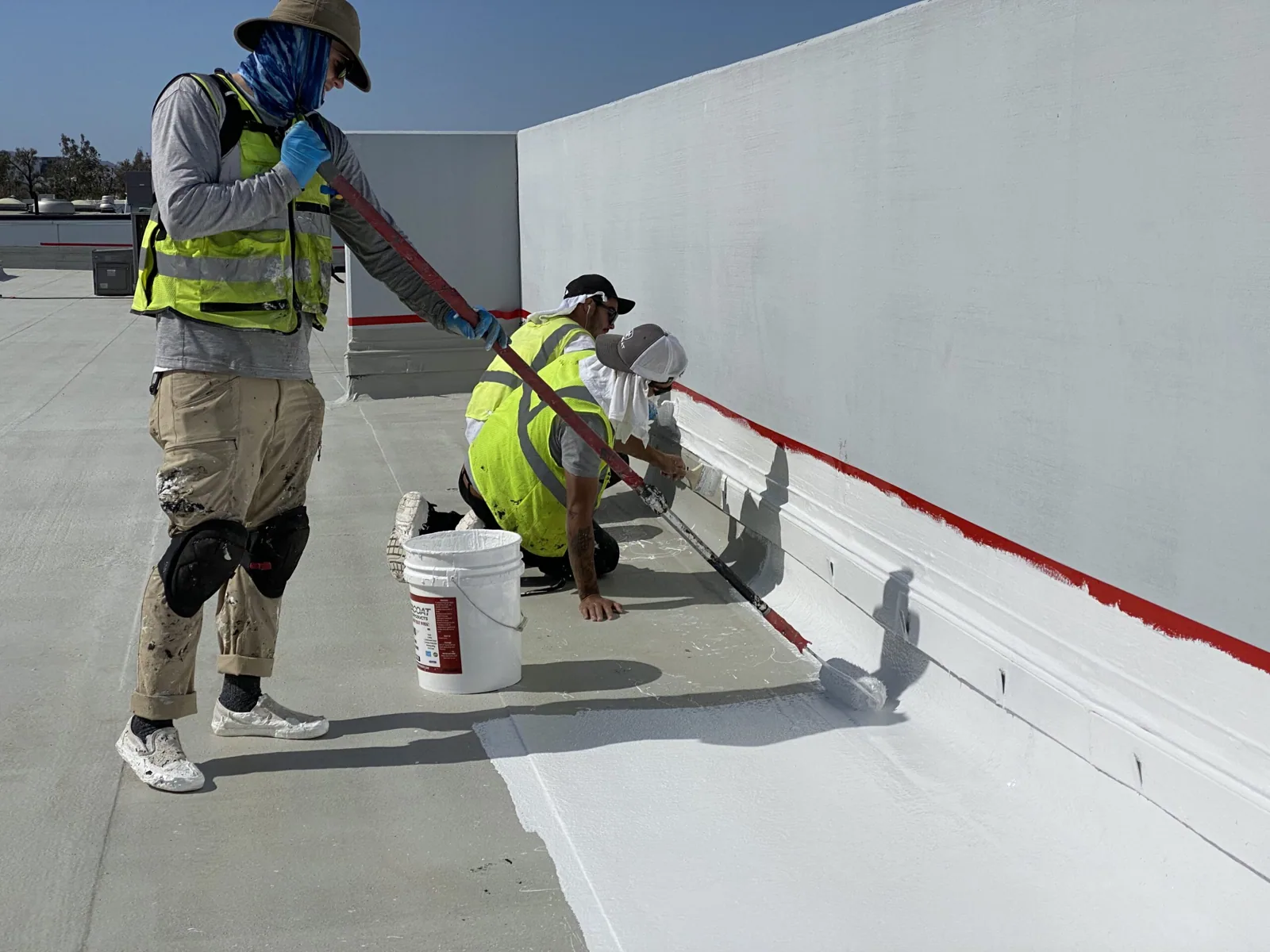
A public district buys by procedure, so the scope has to compare cleanly. Field membrane, terminations, edge metal, curbs, drains, access, code-driven items and weather days each get their own line, which lets the board see what every choice costs.
A new assembly has to meet Washington's March 2024 energy code, so the estimate breaks out the added insulation and the taller curbs and flashings.
Compare options on cost per year of life. A coating or recover on a sound roof can cost a fraction of replacement, and a replacement on a failing roof can cost less than years of repairs. The comparison sits on one page.
Close the Job With a Record
At closeout every school gets its own photo set, seam tests, material list and maintenance interval, with warranty terms filed beside them. The district keeps one file per building, and a new facilities director inherits it.
Schools in Wapato, Toppenish and Yakima can share a route and a standard, and a public agency or a health system nearby may be able to share the crew schedule.
The record also helps with grants and bonds, where a documented condition is part of the case. Dated photos, grades and cost ranges are the language a funder reads, and they save the district from reconstructing a roof's history from memory.
Commercial Roofing Questions
Should custodians clear snow from a gym roof?
No, because steel shovels cut flat membrane. Call us and name the spaces below the drift. Plastic tools do the clearing, and the interior gets checked for deflection first.
When should a summer reroof be booked?
In winter or early spring. Materials need lead time, and approvals take weeks. A March decision lands in July, and a June decision waits for next year. We work back from the first day of school.
Can one building get a recover while another is replaced?
Yes. Each building is judged on its own moisture and condition. A dry, sound roof can take a recover or coating, and a saturated one needs replacement. We price both and show the gap.
What records does the district receive?
Each school gets its own photo set, seam tests, materials list, warranty terms and maintenance interval. The file stays with the building and passes to the next facilities director.
How do you work around students?
By scheduling noisy and dusty tasks outside school hours, protecting entrances and keeping staging away from bus lanes and playgrounds. The district approves the staging plan before we mobilize.