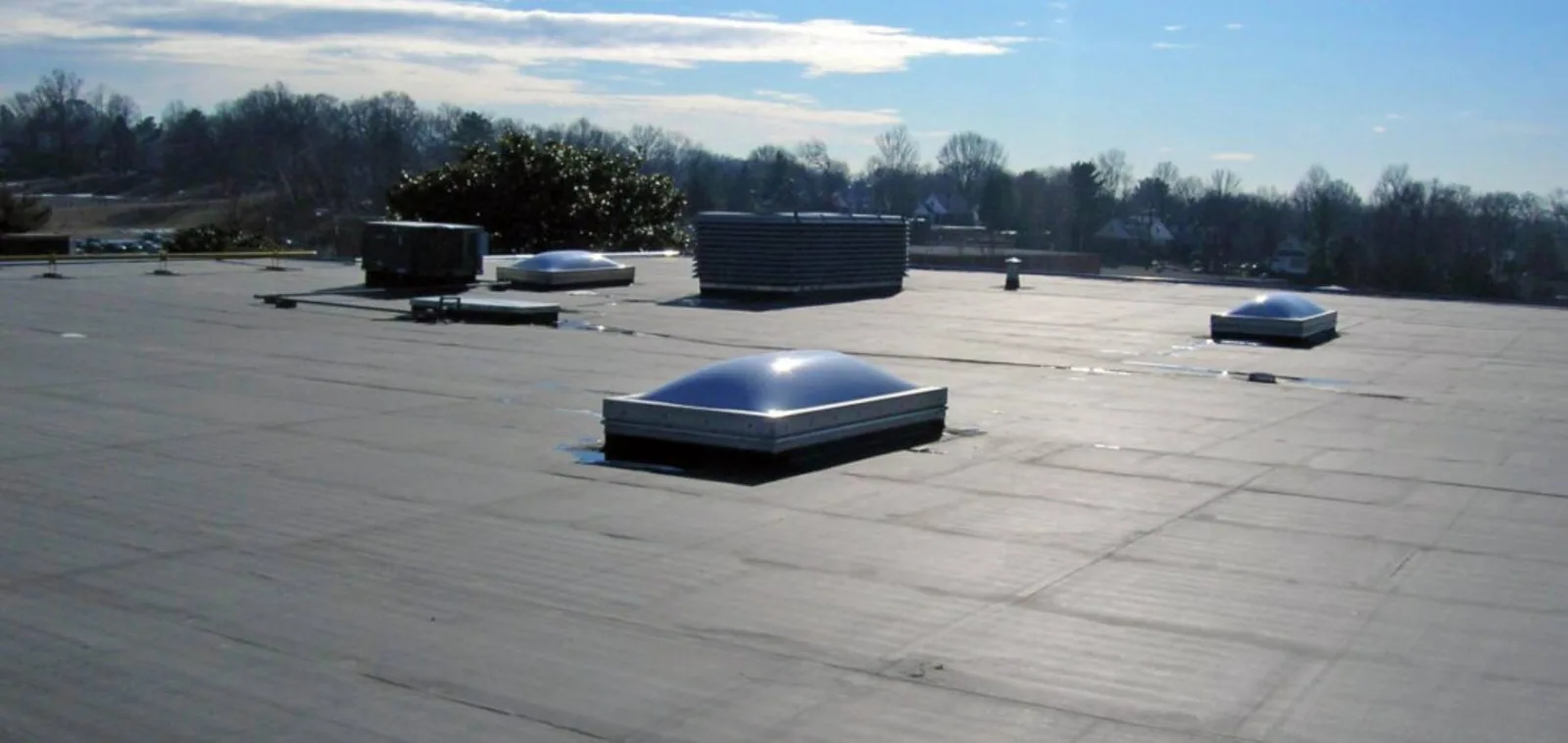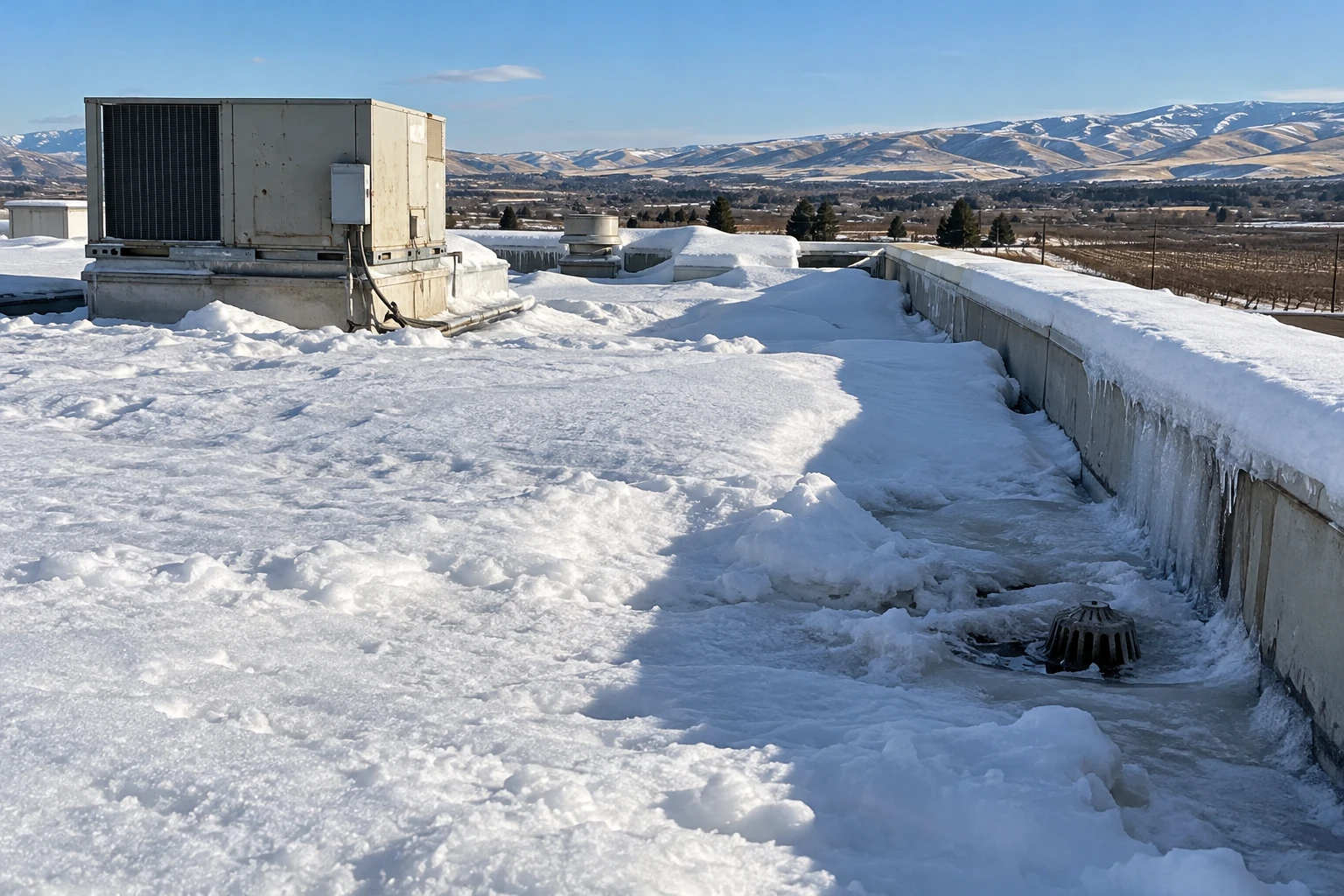
A January thaw is the likeliest moment for a stockroom leak in Yakima, WA, because snow that sat on the roof for a week turns to meltwater and finds the first weak spot. A facility manager phones from a stockroom with a bucket under a ceiling tile, and the first question dispatch asks is when it started and what the weather did that day. Meltwater from a drift behaves nothing like rain on a flat roof. It sits against a parapet for hours, finds a pinhole or a failed termination, and shows up inside the building far from the entry point. Stopping it means finding the actual opening, and that takes a method.
Read the Weather That Came Before the Drip
The city gets about 8 inches of precipitation a year, so rain alone rarely explains a leak. Snow does, and so do the hot afternoons. Yakima sees about 21.6 inches of snow, mostly in December and January, and highs stay below freezing about 19 days a year. That cycle of freezing, thaw and refreeze drives water into laps and lifts sealant. Summer does its part too, with about 40 afternoons at or above 90 F pulling flashings loose from the walls they seal against, a pattern we see on the long retail roofs of Union Gap as readily as on a Yakima office.
So the first thing we ask for is the timeline: did the drip follow a snowmelt, a hot week, a gust or a rooftop unit service call? A leak that tracks with thaw points us to drifts and parapet terminations. One that shows up after a service visit points to a cut or an open panel on the roof.
Test Details in the Order They Fail
We start at the stain and work upstream along the deck slope, then check the details most likely to be involved: penetrations, curbs, drains, parapet flashings and seams. Each suspect detail is isolated and tested. A hose test works from the low end of the area to the high end so that a result means something, and we change one variable at a time. If the roof has insulation that holds moisture, an infrared moisture survey maps how far the problem has spread beyond the visible stain.
A membrane puncture from a dropped tool or a service technician's boot is often easy to find once the hose test narrows the area. A split seam or a loose termination takes longer, since water travels along the underside of the sheet before dropping.
Match the Ceiling Mark to the Roof Plan
Water on a ceiling is rarely under its entry point. It follows a steel purlin, a duct or a deck flute and exits where the structure lets it fall. We map every stain on the interior reflected plan, note the direction of the framing, and project the likely entry points back onto the roof drawing. Two stains that look separate often come from one opening, and one stain can come from two.
On a building like a packing house or a processing plant in Selah, where a cold-room ceiling sits close under the deck, a small leak builds ice on the underside of the panel in winter and drips in the first warm week. The ceiling mark can be several days behind the cause, so we ask for the dates of every spot we are shown.
Stop It for Tonight, Then Fix It for the Season
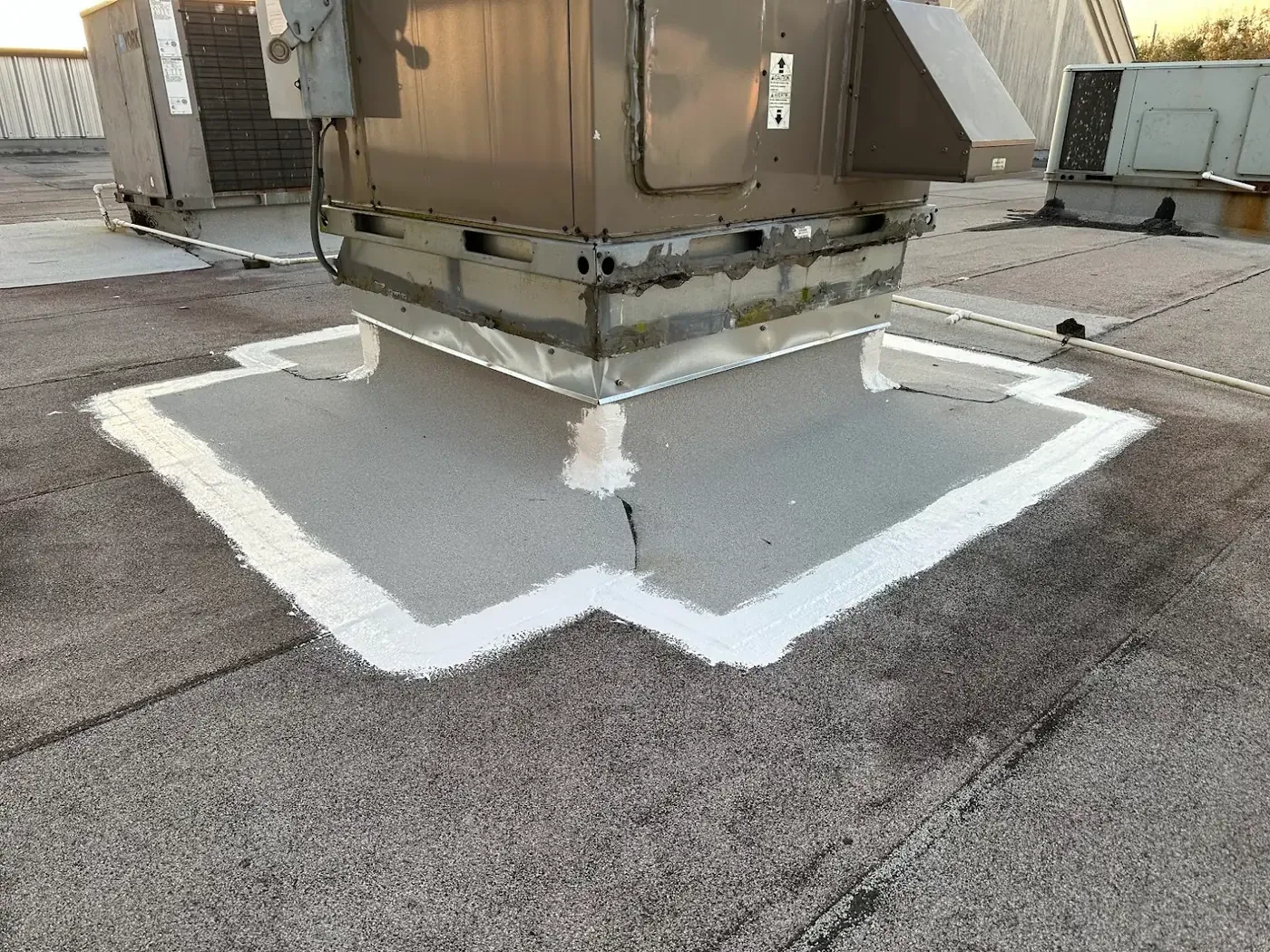
Two repairs often come out of one leak call. The first is a same-visit seal that keeps water out right now: a flashing strip, a temporary membrane patch or a sealed penetration. The second is a permanent repair scheduled for dry weather, when the substrate is clean and the material can cure properly. We tell you which is which in writing, so a temporary seal does not get mistaken for a finished repair.
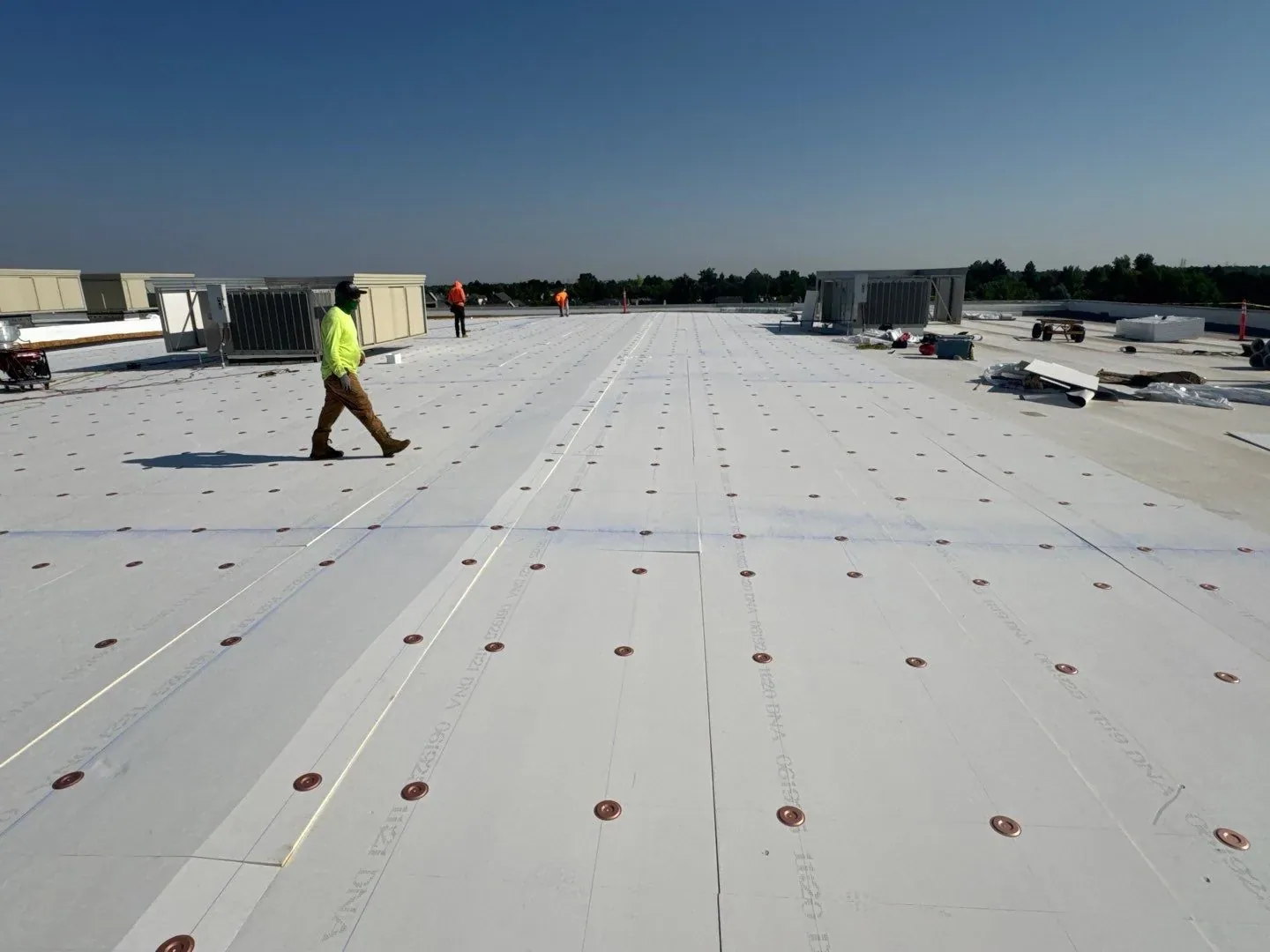
If conditions are severe, such as an open roof after a gale or a panel gone from a rooftop unit, the work moves to the emergency response track, and a crew goes to dry in the building first. When the leak turns out to be one of many on a tired roof, we show you the count and cost of the planned repairs next to the cost of a larger solution.
Clear Snow Without Creating the Next Leak
Owners often reach for a shovel when a leak appears during snow, and that can cause the next one. After a South Third Avenue building was red-tagged over a bulging wall during heavy snow in February 2019, officials warned that shoveling flat membrane roofs can cause leaks. A steel blade cuts a seam in seconds. We clear with plastic tools, leave a protective snow layer on the membrane, and work from the drift edge inward. If you suspect a heavy load on a deck, call before sending staff up, because the snow and ice damage that follows a collapse-risk situation is a different problem from a leak.
Write Down the Cause for the Callback Log
Each leak call ends with a short report: where the water entered, what failed, what we did, and what we recommend if anything else on the roof looks similar. Ponding near a drain will show up there as a ponding water pattern, which tells you the leak may repeat after the next storm unless the low spot is addressed. The callback log keeps the history in one place, so the next leak call starts with a list of what has already been repaired and what has not.
Commercial Roofing Questions
Why does water show up in the stockroom when the roof damage is across the building?
Water travels along the structure before it drops. A steel purlin, a duct or a deck flute can carry it twenty or thirty feet from the opening. We map every stain on the interior plan, check the framing direction, and project the entry point back onto the roof, which is why the visible stain alone is a poor guide to where we cut.
Can a leak start from rooftop equipment service and not from the membrane?
It can. A dropped tool, an open panel or a disturbed curb flashing after a technician visit is a common source. We ask when the last service call was, then inspect the curbs and unit connections before testing the field. If the timing matches, the repair is often a small flashing or a patch rather than anything on the larger membrane.
How soon after a leak call can you stop the water?
For an active leak we aim for a same-day seal, which could be a membrane patch, a sealed penetration or a temporary flashing, as long as the roof is safe to reach. Rain is not the usual limit in Yakima. Snow cover and ice are, since they can hide the opening. In that case we work from the drift edge and keep the protective layer intact.
Is it a leak or condensation?
Condensation tends to form on cold surfaces in winter, on duct work, deck bottoms and cold-room ceilings, and it appears across an area rather than at a point. A true leak shows a clear entry and often follows weather. We check the dew point and the insulation, then test the roof before deciding, since treating condensation as a leak wastes a repair and treating a leak as condensation lets it grow.
Will repeated leaks always mean the roof needs replacing?
Not by count alone. Three leaks from one failed flashing type can be repaired together, and the roof is fine. Leaks that spread across the field, with saturated insulation at the cores, point toward replacement. We give you the cores, the map and a side-by-side repair and replacement cost so the decision is yours.