On a 100 F afternoon the condensers run flat out, and a store manager notices a drip near the produce wall. Dispatch asks first whether the water is clear or oily, because clear water points to the roof and oily water points to a refrigeration line. Yakima has about 6 afternoons a year at or above 100 F, and the stress they put on a condenser deck is larger than their number suggests.
Move product from under the drip, and leave the roof to us. Send the store address, the equipment schedule and the cold rooms that cannot warm up.
Inspect the Condenser Deck in Summer
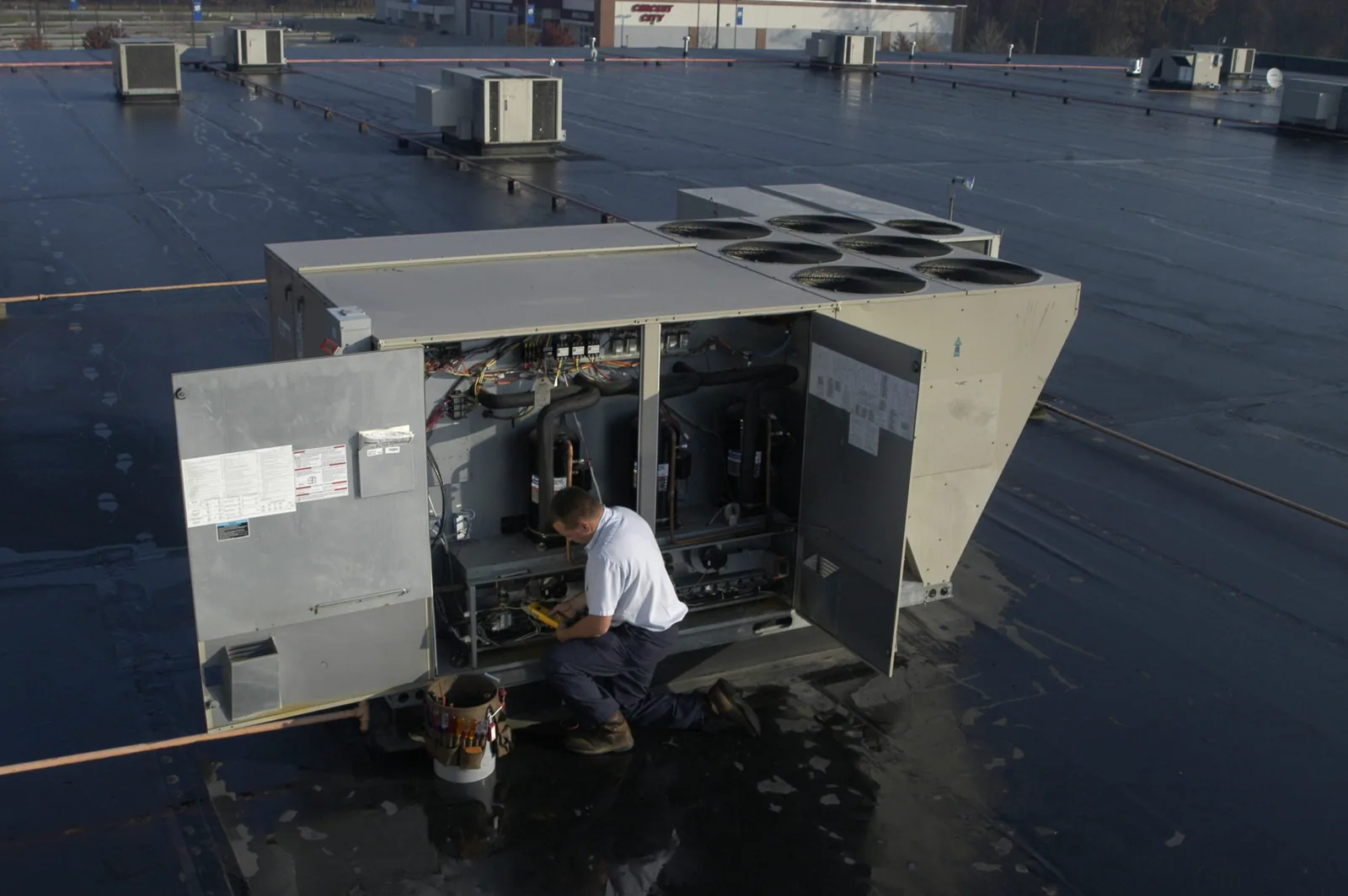
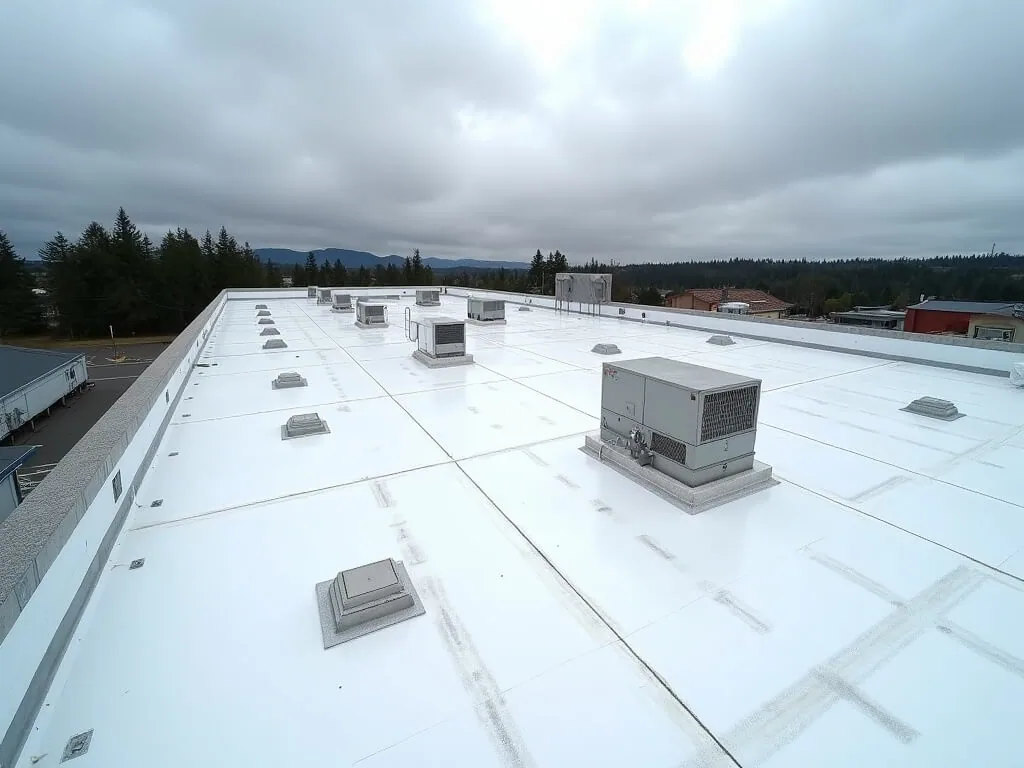
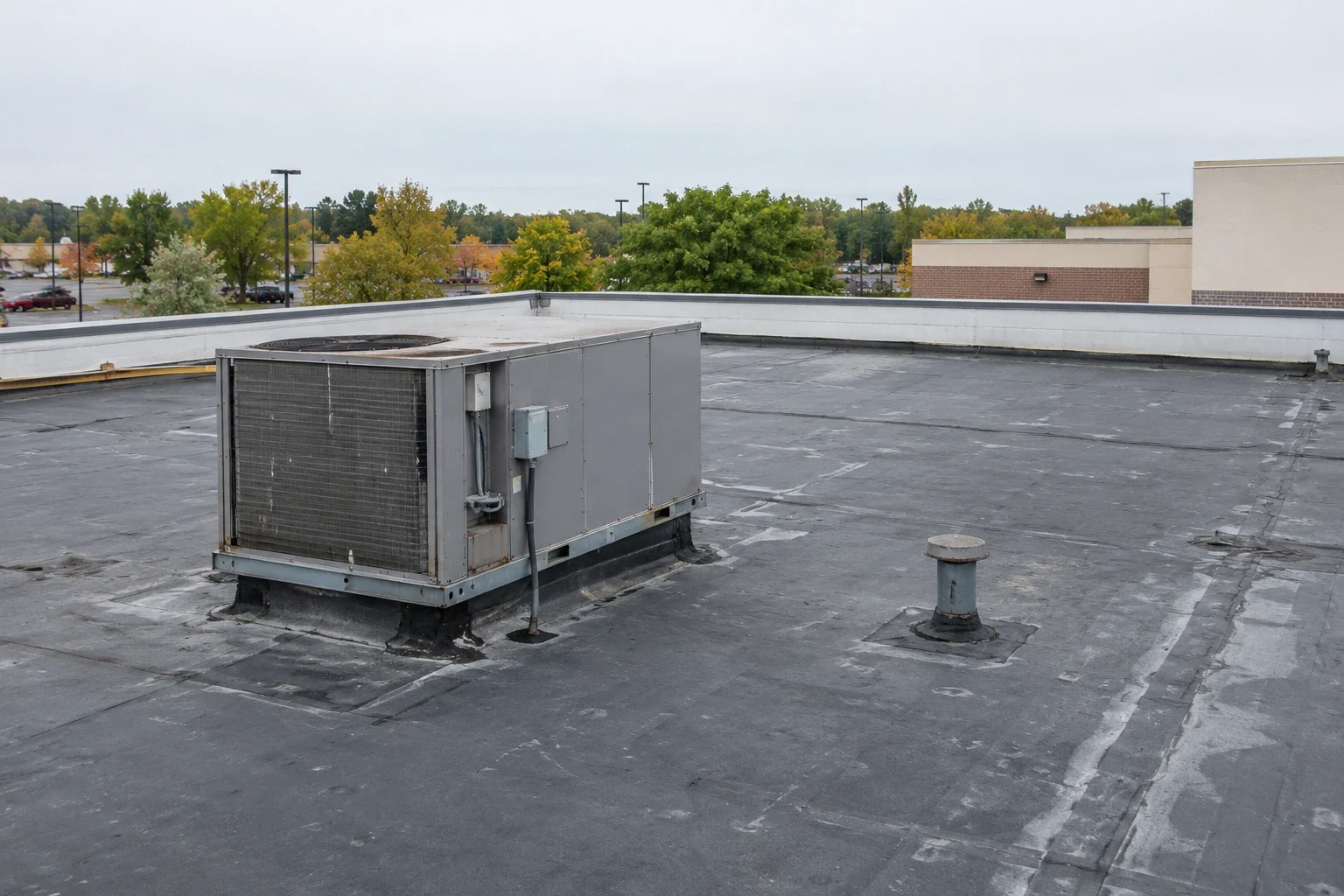
Most grocery roofs hold a cluster of condensers, fans and line sets over the refrigeration rooms. Each line set passes through the roof, each condenser sits on a curb and each curb wears its own flashing. The first visit maps the cluster, with curb height, base flashing and sealant age recorded for each unit. We look for glycol or oil staining, since those fluids attack some membranes, and we trace condensate to its drain. The curb and support list becomes its own bid line, so the refrigeration contractor and the roofer work from the same page.
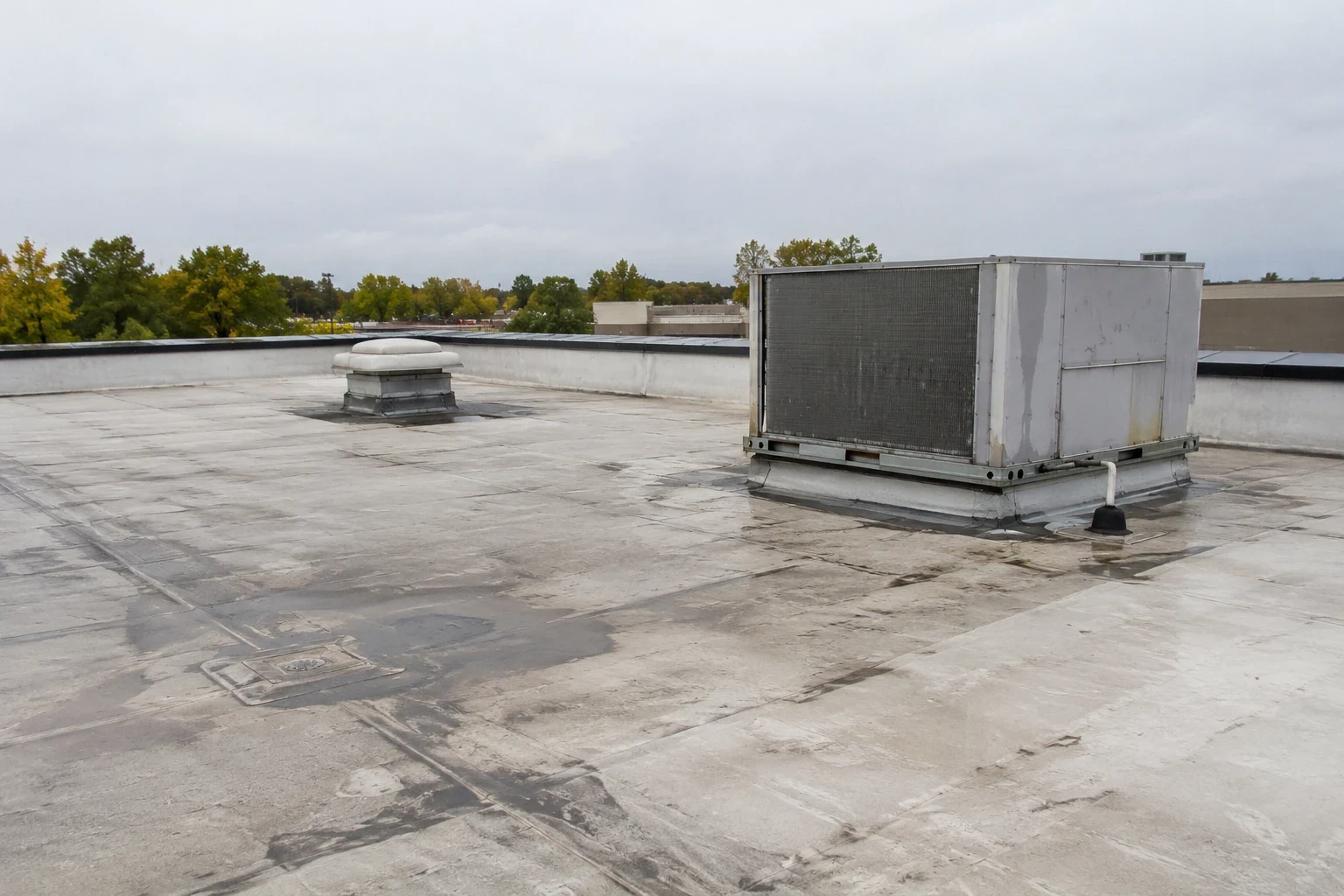
Condensate drains deserve a trace. Condensate from the cases may be piped into a roof drain or left to spill over the sheet; spilled water stains the membrane, grows algae, and freezes into a ridge at the scupper in winter. We route each discharge to a drain or a splash pad and note the change in the log. Refrigeration technicians visit on a fixed rhythm, so their path from the hatch to each condenser is worth a walk pad of its own; the sheet wears first where boots land every month, and a worn path shows up in the log long before it shows up as a leak.
Protect What Sits Below the Leak
A produce wall, a dairy case and a bakery floor tolerate a roof leak differently, and the roof plan has to know which is which. The roof plan is laid over the store plan, every section is ranked by what stands beneath it, and the lowest-risk areas open first. Above coolers and prep rooms we open small areas, close them the same day and keep a leak watch and tarps ready. The store manager receives a daily plan naming the sections open and the person to call.
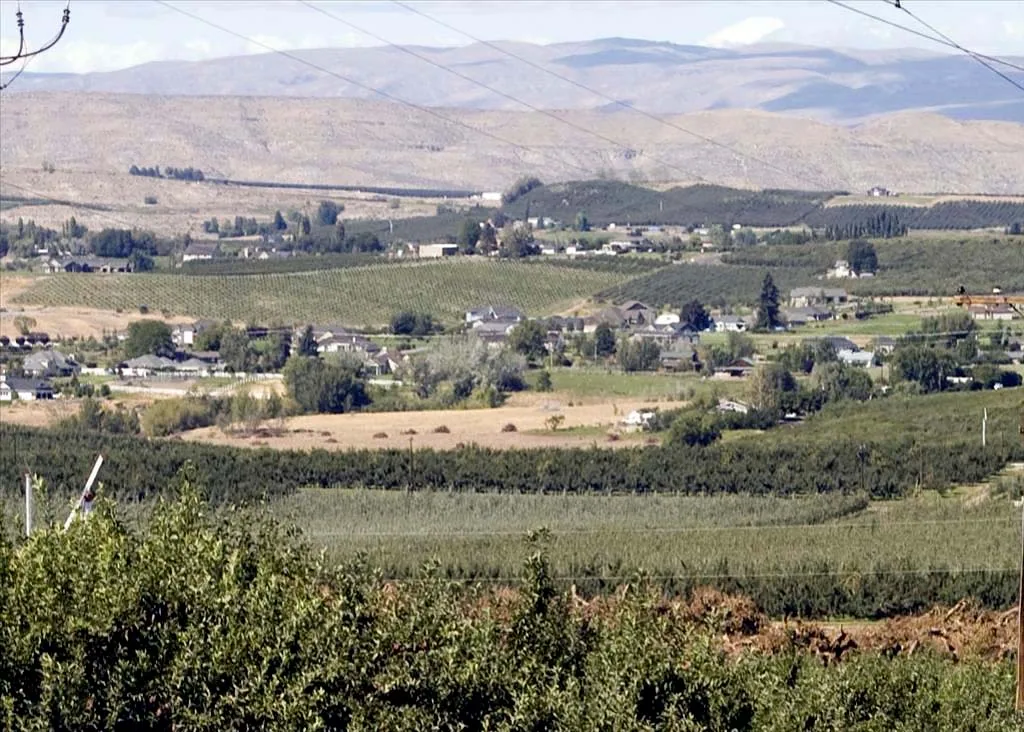
Processing towns shape the supply side. Selah hosts Tree Top's headquarters and two apple processing plants, plus the Sun-Rype juice plant, and Sunnyside has a cheese factory that reportedly made 150 million pounds a year. Harvest season is when crew calendars fill in those towns, so a grocery roof there is booked early and the dates go into the bid.
Clear Snow From Condenser Curbs, Not Just the Field
December and January bring most of Yakima's 21.6 inches of snow, and the load each roof was designed for changes from parcel to parcel. On a grocery roof the drift piles against the tall front, the unit enclosures and the parapet, and snow banked against a condenser curb can block airflow and load the flashing.
Clear around the units only with plastic tools and only after a call to us, because steel shovels cut membrane. We free the condenser airflow, leave a protective snow layer on the sheet and check the ceiling below for deflection.
Inside the store, the first sign of overload is small: a door that sticks, a ceiling tile that drops, a joint that opens. Staff who see any of those should clear the area below and call right away, since a closed aisle costs less than a collapsed ceiling.
Secure the Signs, Screens and Canopy
A grocery front carries tall signs, an entry canopy and rooftop screens, and all three caught the late-November 2019 windstorm. Canopy flashings leak onto customers, so they get their own test with water. Screen panels around condensers get a fastener check, because a panel that rattles in a gust loosens its mounting over a season.
After a gale, stand in the lot and study the canopy, the signs and the screens. A piece that sits crooked needs a call before the next rain, and we arrive with fasteners and sealant, fix it and log the date.
Vestibules and loading docks get the same ranking, since their doors swing open through the day and blowing snow hits the canopy edges first. The canopy is flashed as a separate item and tested with water before handover.
Cart corrals, light poles and tall signs in the lot send the same question up to the roof: what is fastened, and to what? We list each mount that touches the building and tighten the ones that belong to the roof.
Compare Recover and Replacement With the Equipment in Mind
Dry insulation and sound seams allow a recover, which keeps dust and noise out of the store. Condenser zones may need a tougher sheet or a protective layer, and a PVC sheet is one option near oils and fats. A new assembly follows Washington's energy code as updated in March 2024, so thickness and flashing heights are confirmed first. Receiving docks work early, and a lift or hoist in the wrong place stops a truck. We agree a staging pad with the receiving lead and keep the dock path open each morning.
Leave the Store With a Roof File
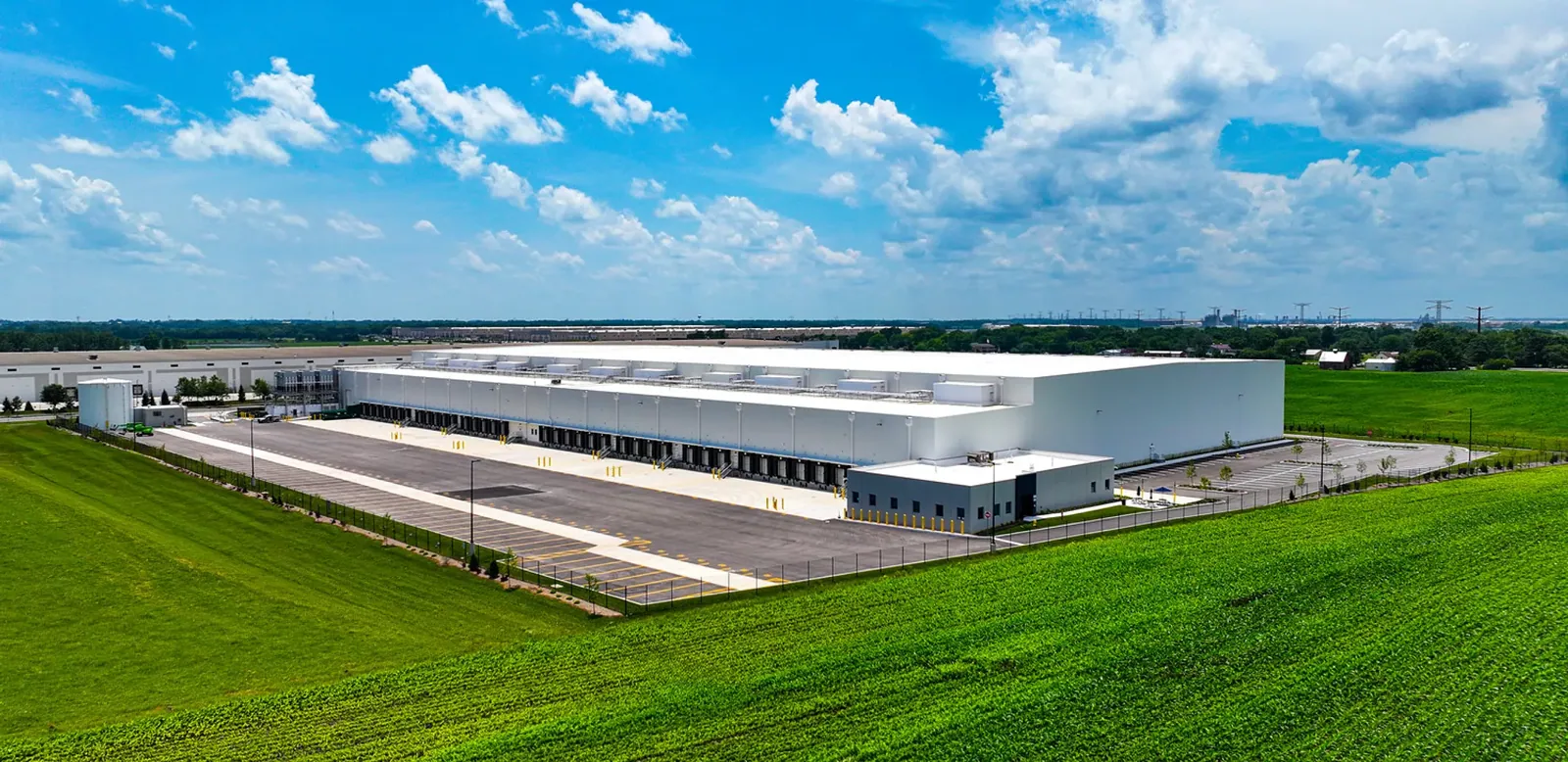
Before handover the curbs, canopy joints, seams and drains are tested and every open item is dated. The store then holds a roof map, photos and a penetration log, and refrigeration contractors follow the log when they cut new openings. A big box store or a cold storage building can use the same method, and a store in Union Gap follows the same steps.
Every spring the curbs are resealed where needed, the drains flushed and the photos retaken.
Health inspectors also look up. A stained ceiling over a prep area or a produce wall can draw an inspector's notice before it becomes a leak, so we photograph every ceiling stain we are called about and note whether it is old or active.
Commercial Roofing Questions
How do I tell a roof leak from a refrigeration leak?
Look at the water. Clear water that appears after rain or snowmelt points to the roof. Oily or glycol-tinted water points to a refrigeration line. Send us a photo and the date, and we sort the source before anyone opens the membrane.
Do the refrigeration systems have to keep running while the roof is worked on?
Generally, yes. The curbs are reflashed in phases, and refrigeration is shut down only when a curb has to be rebuilt, in coordination with the refrigeration contractor. Cold rooms that cannot warm up go on the first list we receive.
What damages membrane near condensers?
Hot exhaust, dripping condensate, glycol and oil all attack the sheet. The membrane around each unit gets inspected, walk pads go in where wear shows, and a tougher sheet is recommended where staining is heavy.
Is it safe for staff to clear snow from around the condensers?
Not without a call to us. Steel shovels cut membrane, and a protective snow layer helps the sheet. We free the airflow with plastic tools and check the interior for deflection as we work.
What does the manager receive at closeout?
The manager receives the roof map, the photos, a log of every roof opening and the signed punch list, plus