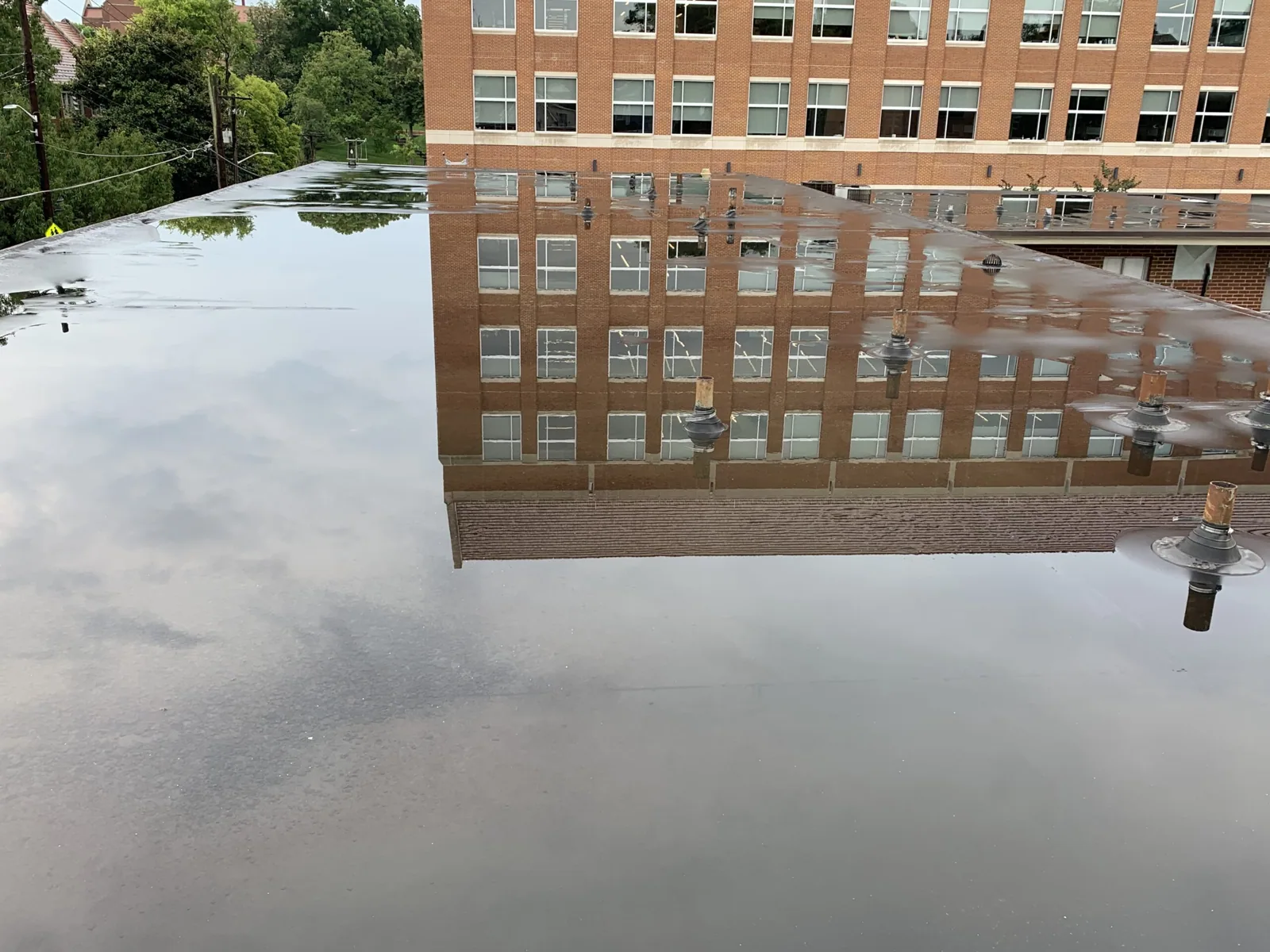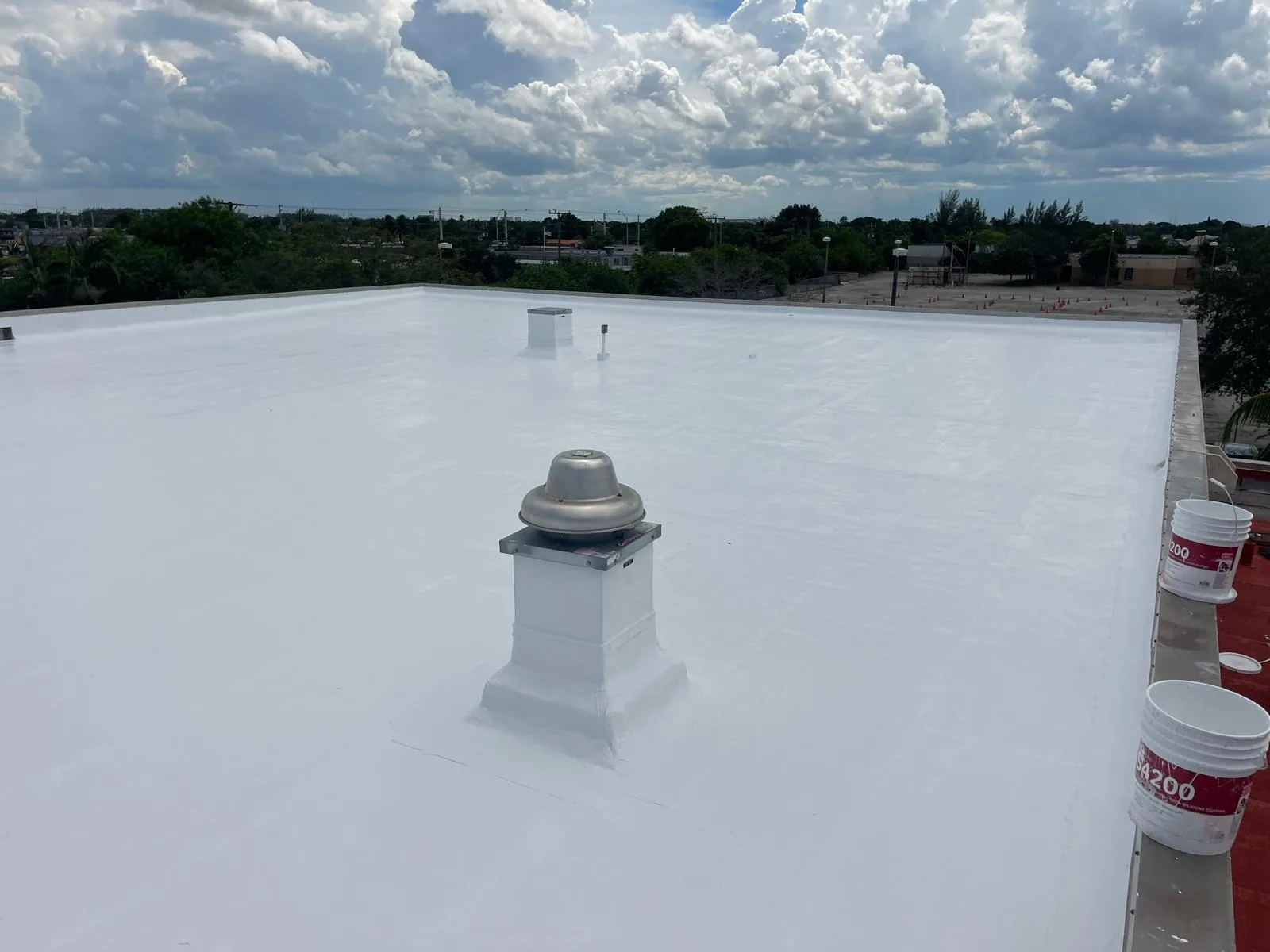
Three days after the last snow melted, a property manager still sees a shallow pool sitting in the low corner of a distribution roof, and the question dispatch asks is how long that pool has been drying slowly. Silicone coating is the liquid-applied system most often chosen when water lingers. Once cured it forms a rubbery, waterproof skin that tolerates standing water and holds up under strong sun, and it is applied over an existing roof that is still dry and sound underneath.
In Yakima, WA, where the sun is strong in summer, with about 40 afternoons at or above 90 F, a silicone surface protects the membrane or metal below from the ultraviolet exposure that cracks aged roofs. We apply it to single-ply sheets, metal panels, modified bitumen and spray foam. It cannot fix a wet roof or a failed deck, and we say so before the first bucket is opened. Bring the roof type, the age, the leak history and the places where water ponds.
Use Silicone Where Water Lingers
Most coatings soften or break down when water stands on them for days. Silicone does not, which is why it is the usual choice for roofs with low spots, sagging bays and drains that sit above the roof surface. A roof that holds a puddle after snowmelt is still a problem, since standing water adds load and collects dirt, but the coating survives the puddle and keeps the membrane under it intact.
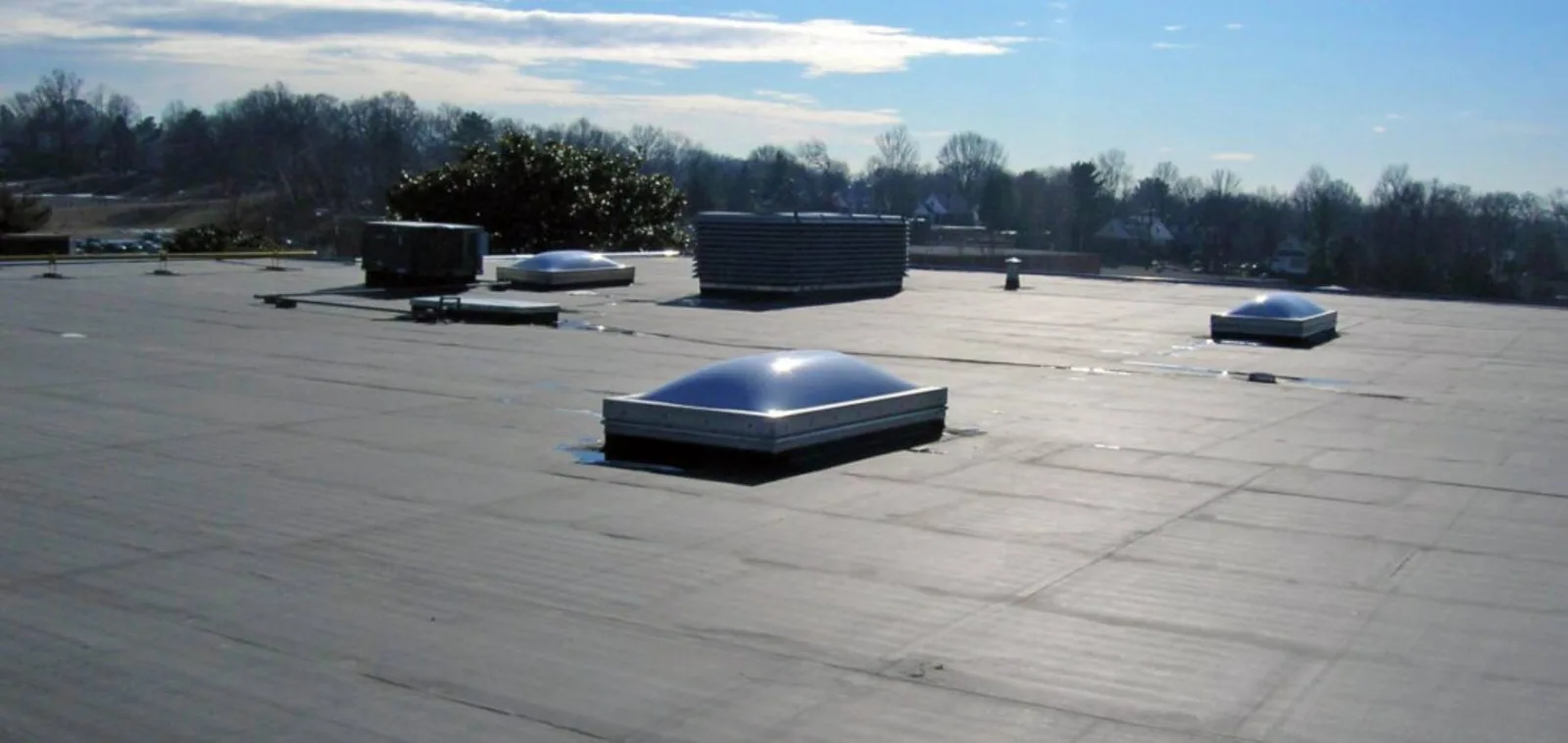
We still try to fix the cause. If a bay has deflected under snow, we measure it, and if a drain is blocked or set too high, we correct it. Our ponding repairs sometimes include tapered insulation or a new drain sump before the coating goes on. The coating then protects the repaired roof rather than hiding the defect. On a flat roof, the difference between a puddle that clears in a day and one that sits for a week is often under an inch of slope, and a laser level on the deck settles the question before any material is ordered. We record those readings alongside the infrared scan so the repair has a before picture.
Clean, Test and Prime Before Spraying
Silicone bonds poorly to dirty, chalky or oily surfaces, and it is hard to recoat with anything else once it has cured. Preparation decides the result. We pressure wash the roof, scrub areas with grease or biological growth, and let the surface dry fully. We re-fasten loose metal, seal laps, and reinforce seams and flashings with fabric and base coat. A test patch checks adhesion, and some surfaces need a primer first.
Moisture is checked before any of that. A coating over insulation that is soaked cannot dry out, and it traps water. We run an infrared moisture survey and cut a few cores to confirm the roof is dry. Wet areas are cut out and replaced, and the coating covers the rest. This step is where many failed coating jobs would have been caught.
Pick Application Days by Dew and Temperature
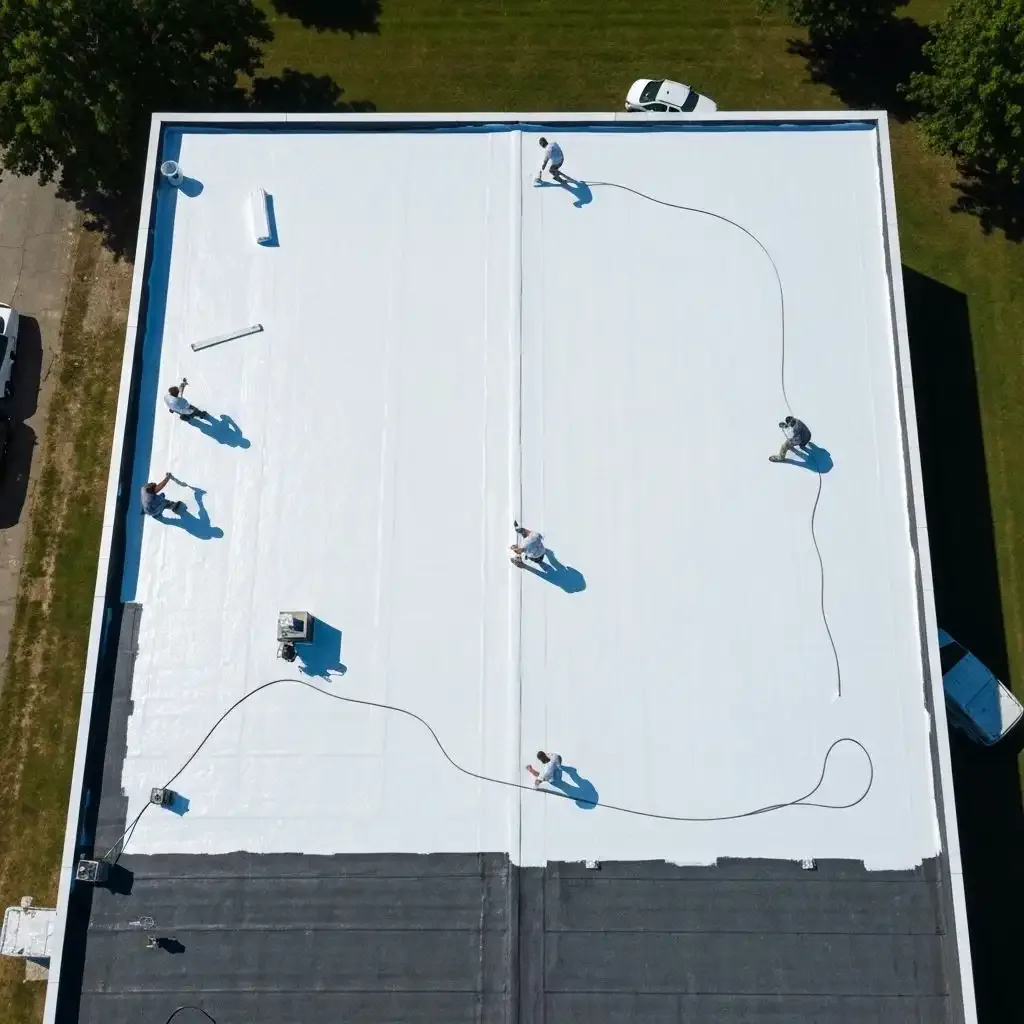
Silicone cures by reacting with moisture in the air, so it can go on in cooler weather than some coatings, but it must not be applied to a damp surface or ahead of rain. In Yakima, cool nights follow hot afternoons, and dew can form on the roof by early morning. We wait until the surface is dry, apply during the warm part of the day and make sure the coating has time to set before evening. A forecast with rain or snow within a day stops the job.
The roof surface itself can run far hotter than the air in July, and the record temperature of 113 F on June 29, 2021 shows how hot the summer can get. Crews work early, drink water and watch the surface temperature, since the material and the workers both do poorly on a scorching deck. We schedule the job to avoid the hottest hours and to avoid the cold shoulder season.
Put On Enough Material to Last Through Winter
Thickness is what a coating job sells. A thin coat looks fine on the day and wears through in a few seasons. We measure the amount of material by the gallon per square, track it on a sketch and check thickness with a gauge on a sample. Seams, corners and flashings get extra coverage, since they move the most through the daily temperature swing and the cold.
Yakima has recorded a low of minus 25 F, and highs below freezing about 19 days a year. A silicone film that has enough thickness stays flexible through those days and bridges small movements at seams. Heavy drifts of snow can also scuff the surface, so after the February 2019 storm that red-tagged a South Third Avenue building, we advise clearing only with plastic tools and leaving a layer of snow in place.
Wash and Inspect on a Schedule
Silicone attracts dirt, and a dusty roof loses reflectivity. A gentle wash once or twice a year keeps the surface clean without harming the film. We walk the roof after each winter, check the seams and flashings, and note scuffs, pinholes and areas where equipment traffic has worn the surface. A small repair done early keeps the whole system performing.
Because silicone is hard to overcoat, future renewal is usually another layer of silicone rather than a switch to acrylic. That is worth knowing at the start. The wider roof coating and restoration plan sets the inspection and recoat intervals, and we put them in the callback log for the building. A hop-country facility in Moxee and a packing building in Selah can track their intervals on a single calendar.
Commercial Roofing Questions
Can silicone go over my old roof, or does the surface need to be removed?
It can go over aged modified bitumen when the roof is dry, well bonded and clean. The granule surface is washed and primed, and cracks are sealed with fabric. If the felts are blistered or the insulation is wet, those sections have to be repaired first. We test adhesion on a patch and recommend the coat only when the test holds.
How long before foot traffic is safe on a freshly coated roof?
Plan for a day or two of dry weather. The coating skins over fast and cures through over time, and heavy traffic too early can scuff it. We mark the finished zones and keep service technicians to the pads. If a mechanical contractor needs to reach a unit, we coordinate the days.
Does a white silicone roof cut cooling costs for a distribution center?
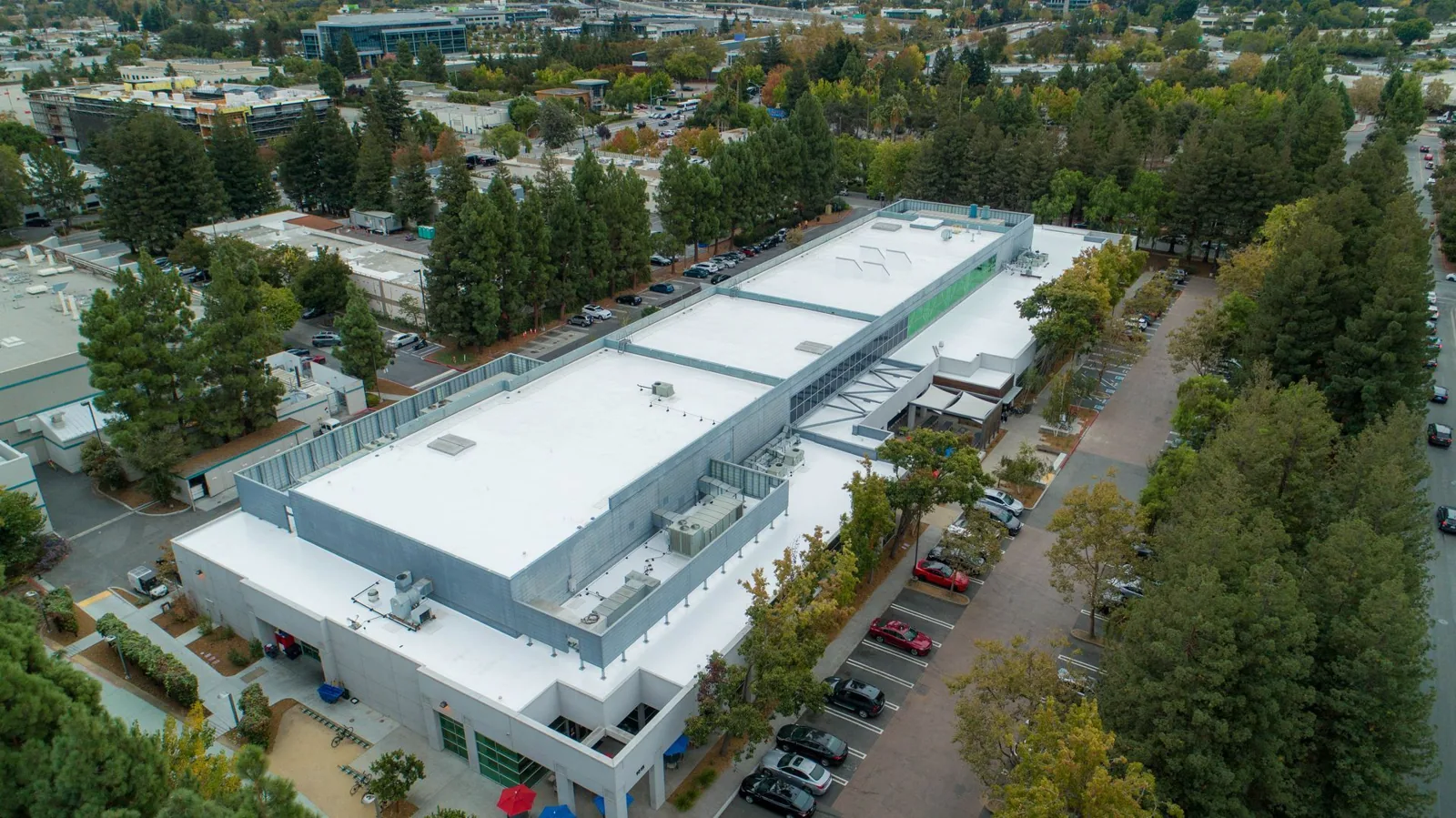
The reflective surface lowers roof temperature on hot afternoons, which reduces heat gain into a distribution center or any other big, lightly insulated box. The savings depend on insulation, ceiling height and how much of the building is cooled. We make no claim on savings, and we point to the surface temperature drop we can measure on the roof.
Why can I not switch to a different coating after silicone has cured?
Most coatings will not stick to cured silicone, which sheds almost anything applied over it. A new silicone layer bonds to the old one if the surface is clean. If you ever want a different system, it usually means removing the old film or installing a new roof, so make the choice with a long view.
What if a leak appears a year after coating?
We trace it before we assume the coating failed. Most post-coating leaks come from a penetration, a flashing that moved or a spot missed during prep. We probe the area, repair it with fabric and silicone, and log the location so the next inspection checks it. A leak is a data point, not a verdict on the whole roof.