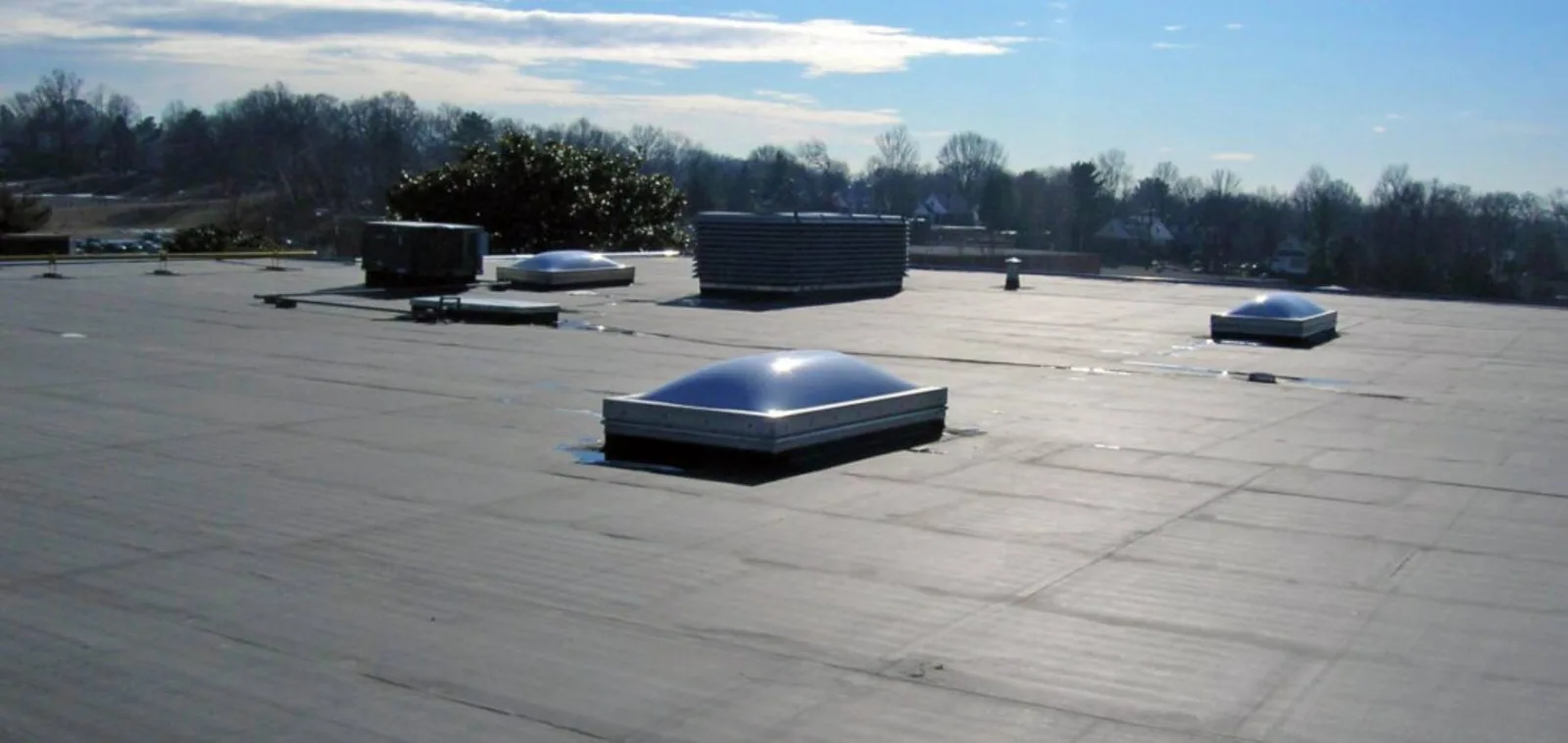

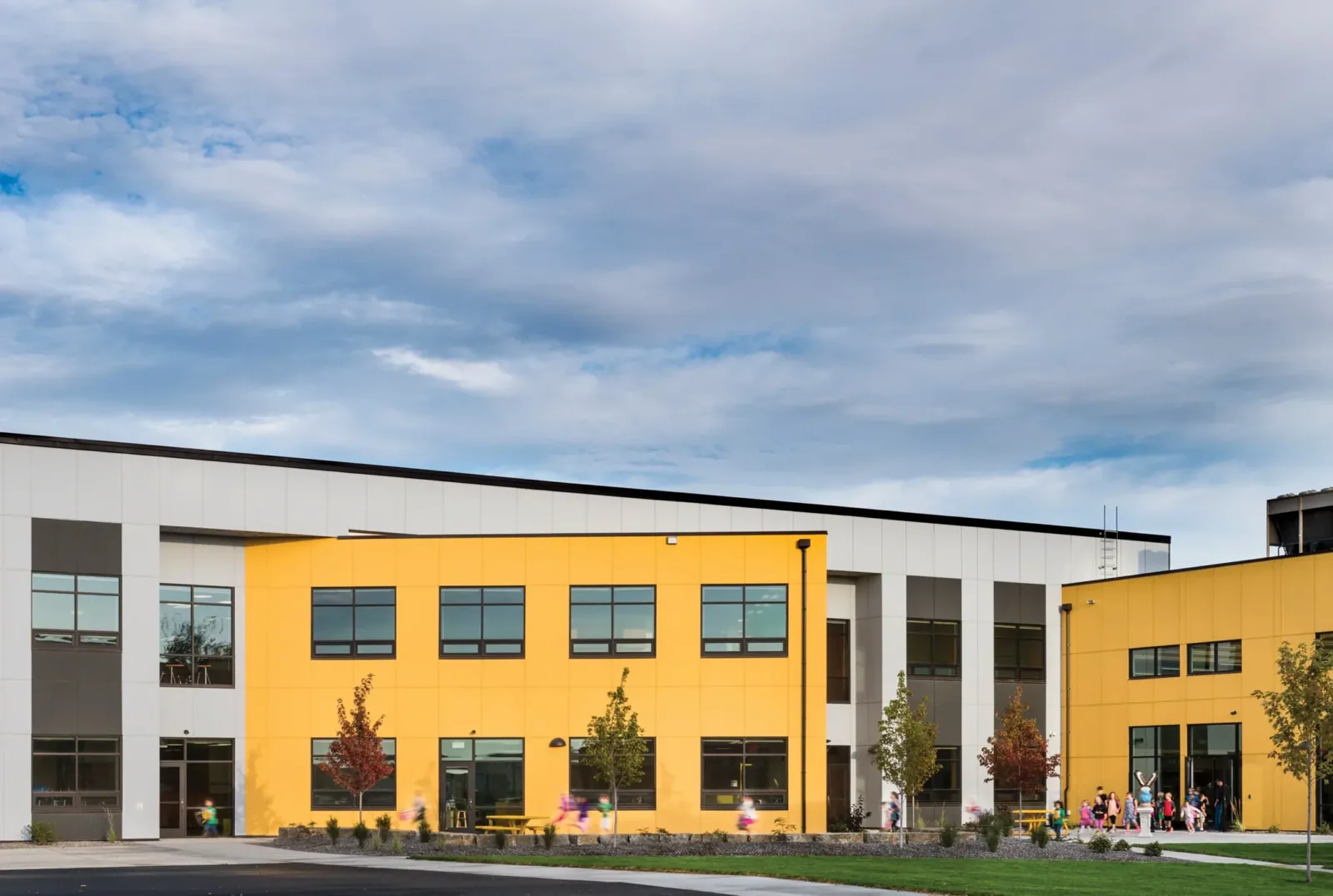
A facility director calls on a January morning about a gym roof holding a long drift against its tallest wall, and the first question dispatch asks is what the gym was designed to carry. Yakima, WA is a snow-and-heat valley, and a school roof has to answer both within the same school year. Gyms, cafeterias and classroom wings sit at different heights, so drifts pile where one roof steps up to another. Keep students and staff off the roof and wait for instructions.
The school address, the design snow load from the drawings and the wings that cannot close are what we need first.
Read the Snow Load Before Anyone Climbs
The county sets snow load parcel by parcel and wants an engineer above 70 psf, so two schools a few miles apart can carry very different designs. Winter snow, mostly December and January, settles unevenly. The deep piles sit against a gym wall, around a mechanical penthouse and at the step down to a lower classroom wing. Those are the spots where deflection shows first.
Do not clear a flat membrane roof with metal shovels. A South Third Avenue building was red-tagged in February 2019 over a bulging wall, and the warning that followed was plain: shoveling flat membrane roofs can cause leaks. Drift piles come off with plastic tools, and a layer of snow stays on the sheet to protect it while we watch the ceiling below for sagging tiles or doors that stick. A door that begins to stick, a ceiling tile that drops, a crack that opens at the head of a wall: each can mean a roof carrying more than its drift pile should. Staff who notice any of them should clear the room below and call, because a school with a sagging roof section is a closure decision, not a maintenance ticket.
Plan Around the Summer Break
The Yakima School District employs about 1,594 people, and each building it runs has its own roof and its own calendar. A reroof has to start after the last day and finish before staff return, so the work window is short and the order of buildings matters. Summer break is also the hot stretch: roughly 40 afternoons reach 90 F, and about 6 reach 100 F. Membranes soften in that heat and crews need early starts. We schedule welds and adhesives for the cooler morning hours and use the afternoon for detailing and cleanup.
Fall and spring give the second and third windows. Repairs to flashings, drains and edge metal fit into a long weekend, and we use those weekends to keep small problems from collecting over the winter. A short list booked early beats a long list booked after the first January storm.
Watch the Day-Night Swing
Yakima records extremes from minus 25 F to 113 F, and in an ordinary week the afternoon-to-dawn drop alone is large. Every cycle works a flashing a little looser. Metal edges and copings on a long gym wall expand during the day and pull back at night, and sealant at the joints takes the movement. A school roof has more edge than a house roof, and edge is where the movement concentrates.
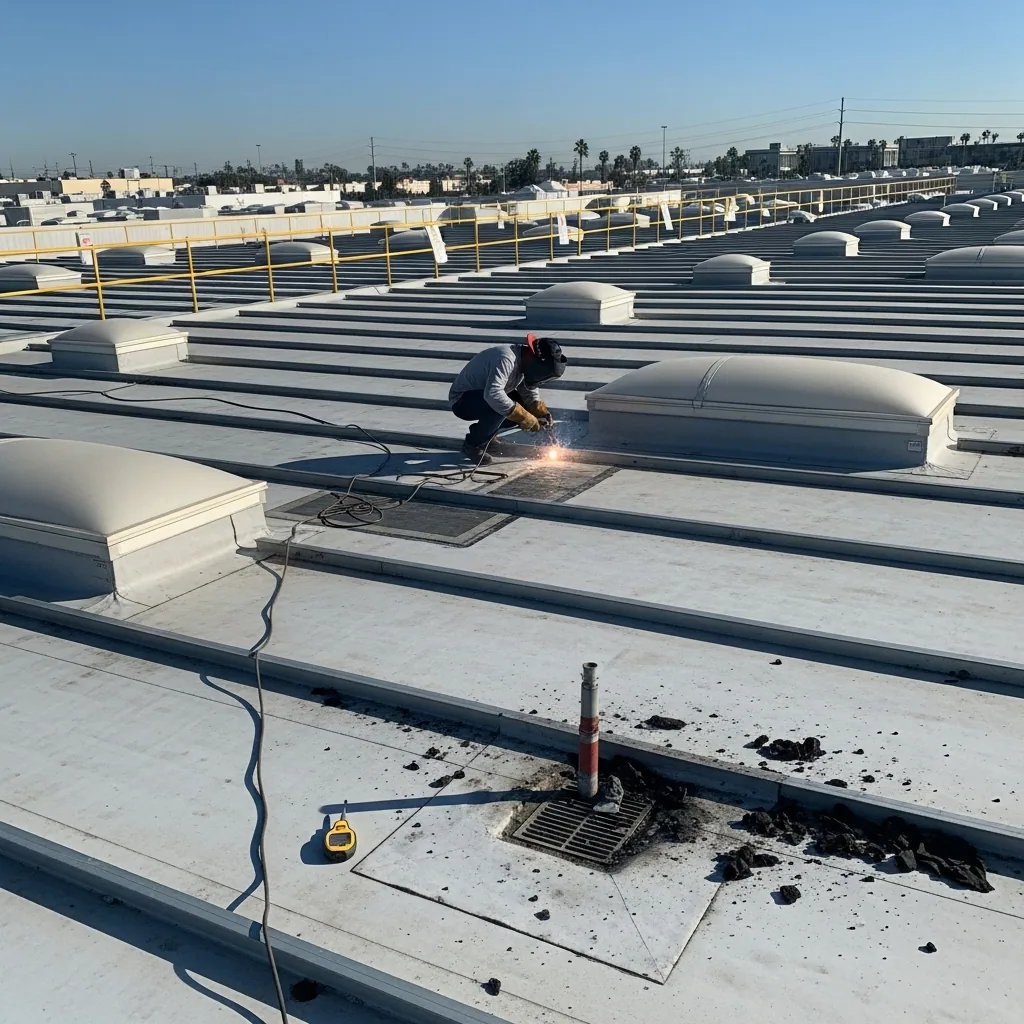
On the first visit we check coping joints, counterflashing at the tall walls, expansion joints and the seams around rooftop units. We log what we find in a callback log, so a spring leak can be traced to a fall observation. Facility teams should photograph any stain below a wall-and-roof junction and send the photos before the next storm.
Check for Gust-Lifted Edges
The gale of late November 2019 blew 51 mph at Yakima and 53 mph at Sunnyside, and the all-time Yakima gust, 69 mph, dates to May 1985. County design wind speed is 110. Edge metal on a long, open school roof catches that wind first, and a gust-lifted edge often settles back so quietly that nobody notices.
After any gale we recommend a short check of edge metal, rooftop unit panels and sign or flagpole bases. Look from the ground first. If a cap sits crooked or a panel gaps, call before the next rain, not after it. We bring fasteners and sealant for the fix, and we note the spot on the roof map.
Price the Whole Decision, Not Just the Membrane
A school roof decision comes down to moisture, layers and time. Dry insulation under sound seams opens the door to a recover, which spares the classrooms below the tear-off dust. A roof with trapped moisture needs the wet sections removed, and an infrared moisture survey shows where. Insulation on a new assembly follows the energy code Washington revised in March 2024, so thickness and flashing heights are settled before a number goes out.
Repair, recover and replacement arrive priced side by side, with the drivers named: tear-off depth, insulation, access, safety fencing and how long the break lasts. A district that wants a five-year plan can ask for a roof capital plan that ranks every building and spreads the work across summers.
Close the Job With a Record
After the work we walk the roof with the facility director, probe seams, pull caps and test drains. Each open item gets a name and a date. The district keeps the roof map, the photo set and a running log of every hole cut in the roof. When a mechanical contractor swaps a unit later, the log shows which curbs are new and which are original.
Schools in Union Gap, Selah and Terrace Heights follow the same sequence. A college campus runs on a different calendar, and a government building shares many of the same paperwork steps.
One more habit pays back: a spring check each year. We re-probe the seams, clear the drains and photograph the roof, so a leak report in fall reads against a clean baseline.
Before the summer start date, walk each roof with the custodial lead and mark where bus lanes, playground fences and the kitchen vent sit. Those marks keep staging out of the places children use in August practice and fall registration.
Commercial Roofing Questions
How much snow is too much for a school roof?
That depends on the design snow load, which belongs to the parcel and appears on the permit. Check the drawings or the permit for your building's number, and call us if drifts have reached a parapet, a penthouse or the step between two roof levels. We sequence the visit around where the snow sits and what sits beneath it.
Should our custodial staff clear snow off the gym roof?
No. Steel shovels cut the membrane, and officials have warned that shoveling flat membrane roofs can cause leaks. If drifts are deep, call us. Our crew clears with plastic tools and leaves a protective layer, after checking the interior for signs of deflection.
When should a summer reroof be booked?
Book in winter or early spring. A school reroof has to fit between the last day and the return of staff, and crews, material and permits all take time.
Can one roof be recovered while another is replaced?
Yes. Moisture readings decide building by building. Where the roof tests dry a recover may work, and where it tests wet the saturated sections come out. We price each building on its own results and give the district a ranked list.
What records does the district receive?
The roof map, photos, moisture readings, penetration log and signed punch list, with the warranty packet once the list closes. Keep the file with the building so later contractors can see what was done.