A receiving supervisor phones on a mild February afternoon because meltwater is pouring off the roof edge onto the dock apron and freezing as it lands. The first question dispatch asks is where the water is coming out and where it is not. A scupper that runs while the interior drains sit silent tells us the lines are frozen or packed. A scupper that runs dry while a pond grows tells us the opening sits above the low point. Yakima, WA gets only about 8 inches of precipitation a year, but a flat roof here carries a winter snowpack from 21.6 inches of seasonal snow, and a warm spell sends it all toward the drains at once. A system that is almost adequate becomes the main failure point.
Size the Drainage for the Thaw, Not the Annual Total
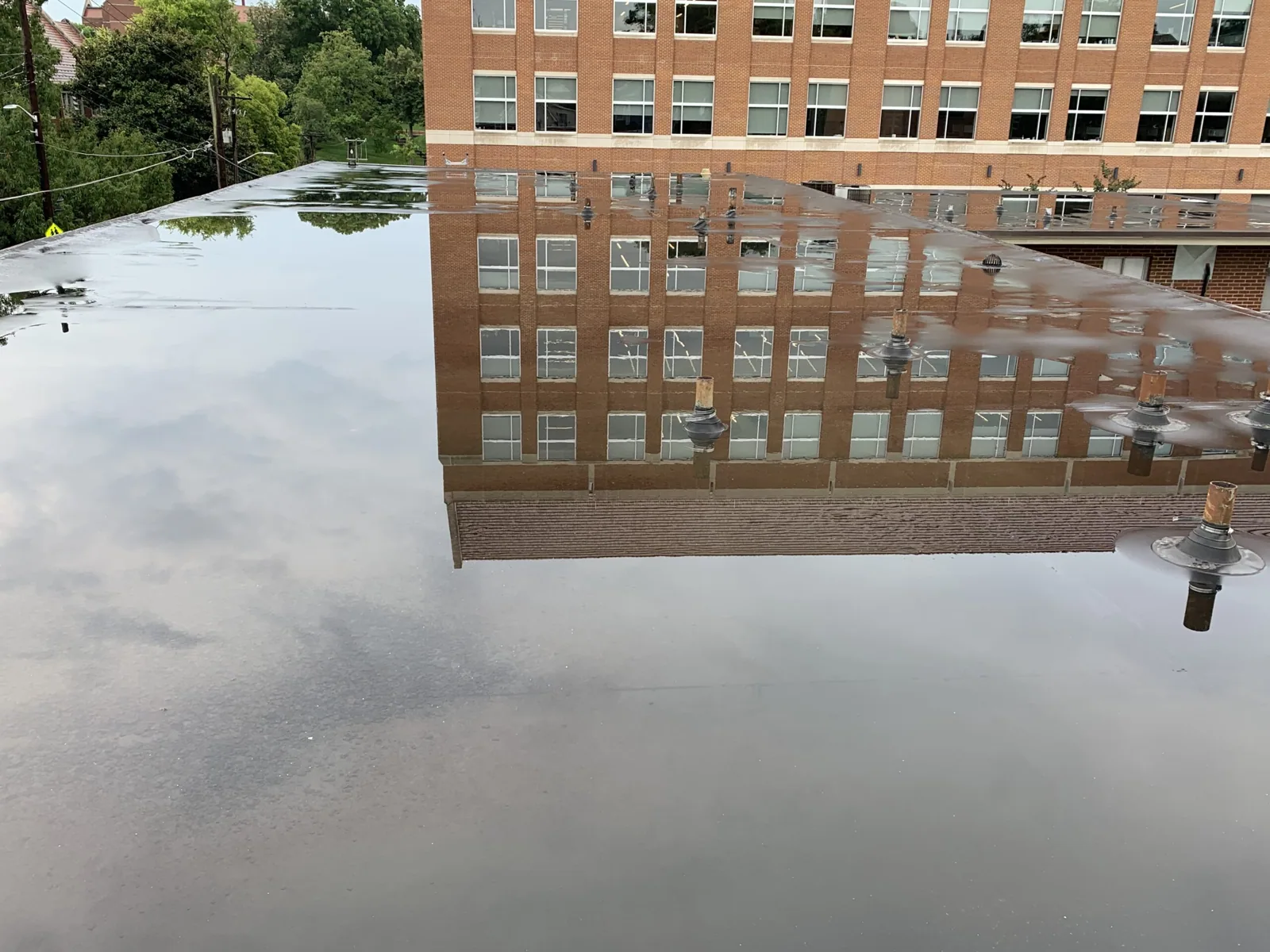
Low annual rainfall tempts owners to treat drains as an afterthought. The problem is rate. When a deep pack melts in a warm spell, a roof receives its water in hours, and a drain that was fine for a spring shower cannot pass it. Water rises behind the opening, spreads sideways under the membrane edge, and refreezes overnight into a plate of ice.
We check the number and the size of every opening against the roof area and the code in force. The Washington State Building Code Council's 2021 code editions, including the 2021 IBC, took effect statewide on March 15, 2024, and we check any new or altered drainage against them. Where a roof has parapets and no emergency overflow path, we recommend overflow scuppers so a clogged primary drain cannot load the deck.
Measure Where the Roof Holds Water
A level straightedge and a tape measure tell us more than any drawing. After the next rain or melt, we walk the roof and mark every area that holds water for more than two days. Depth and extent go on a plan. A shallow stain around a drain is a maintenance issue. A wide pond between supports is a structural one, because deck deflection under snow load can leave a permanent low spot.
The ponding water repair options range from adding a drain at the low point to building up the roof with tapered insulation. Which one fits depends on the deflection, the age of the membrane and how much load the structure can carry. We lay out the choices and the tradeoffs in the written scope.
Build Crickets Where Water Stalls Behind Obstacles
Water stops where something blocks its path: a rooftop unit curb, a skylight, a parapet corner, a penthouse wall. A cricket is a small tapered saddle built uphill of the obstacle that turns stagnant water around it and toward the drain. Without one, the water stays, the debris collects and the membrane under it ages faster than the rest of the field.
Crickets are cut from tapered insulation and covered with the same membrane as the roof, with seams welded or adhered to match. On older roofs we also check whether prior crickets were built with the wrong slope, since a low-angle cricket still lets water sit. Hop kilns, warehouses and processing buildings in Moxee carry vents, fans and units that each form an obstruction of this kind.
Cut and Flash Scuppers That Can Pass a Drift Melt
A scupper is a hole through a parapet, and it only works if the opening sits at the lowest edge of the roof and is lined with sound metal. We check the height of the sill against the field of the roof. A sill set an inch or two high leaves a permanent pond behind it.
New scuppers are fitted with a metal liner, flashed into the membrane with a fabric-reinforced seal, and paired with a downspout or conductor head sized for the flow. For exposed walls near entrances, we direct the discharge away from walkways, since a scupper that spills on a doorway freezes and creates a slip hazard. Work on edges and gutters that receive scupper flow is coordinated with our edge metal and gutter crew.
Keep Lines Open Through the Freeze
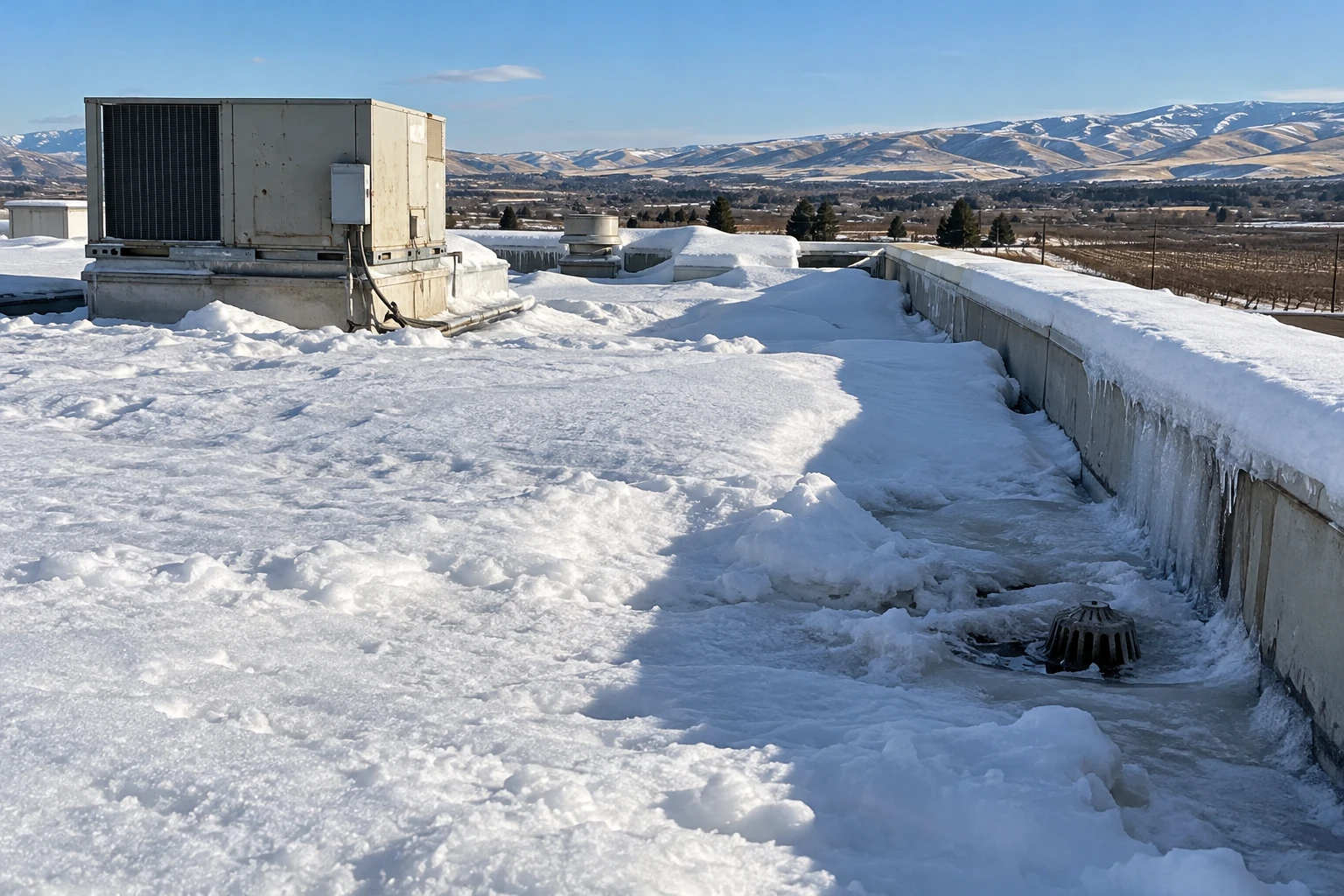
Highs stay below freezing on about 19 days a year in Yakima, with record lows near minus 25 F. Ice that backs up from a frozen drain adds to the snow and ice damage a roof already carries. Interior drain lines that pass through unheated space can freeze and split, and a drain packed with ice will not release when the sun comes up. We inspect lines for insulation, trace heating where it exists, and slope.
Where lines run through a cold room or an unconditioned plenum, we flag them for protection before the first hard freeze. If a drain does freeze, we thaw it with steam or warm water and never with an open flame. Clearing snow from around drains using plastic tools helps meltwater find them, and it keeps the protective snow layer over the rest of the membrane in place, which respects the warning issued after a February 2019 South Third Avenue building was red-tagged under heavy snow.
Set a Cleaning Schedule That Matches Your Trees and Your Grit
Orchard leaves, wind-blown grit and the debris from a gale all end up in the drains. Properties that sit close to orchard ground, as many fruit warehouses around Selah do, fill faster than a downtown office, and a warehouse beside a gravel lot needs more frequent attention than one beside pavement. Our maintenance visits include cleaning every drain, flushing lines and testing flow, and we recommend an extra check after any hard autumn gale. For distribution centers with long roofs and many drains, a map of every opening and its last service date saves time on every call.
Commercial Roofing Questions
Our roof has interior drains and no overflow scuppers. Is that a problem?
It can be. If a drain clogs, water has nowhere to go but up, and the load on the deck grows with every inch of depth. Adding overflow scuppers through the parapet gives the water an exit before it reaches a dangerous level. We check the parapet height, the position of the roof's high points and the structural capacity before recommending locations.
How can I tell if a pond is a structural problem or just a drain problem?
Measure the depth and watch how long it stays. A pond that clears in a day or two after rain is usually a drainage fix. One that persists for a week or deepens each winter often means the deck is deflecting. We survey with a level, compare against the drawings and flag any area where a structural engineer should take a look.
Can tapered insulation fix ponding without replacing the membrane?
In many cases a tapered system can be added during a recover or a replacement, and it is the cleanest way to restore slope. Over an existing membrane, the roof must be dry and sound enough to accept a new layer. We test the old roof before proposing it, since wet insulation would defeat the work.
Why do my drain strainers keep breaking in winter?
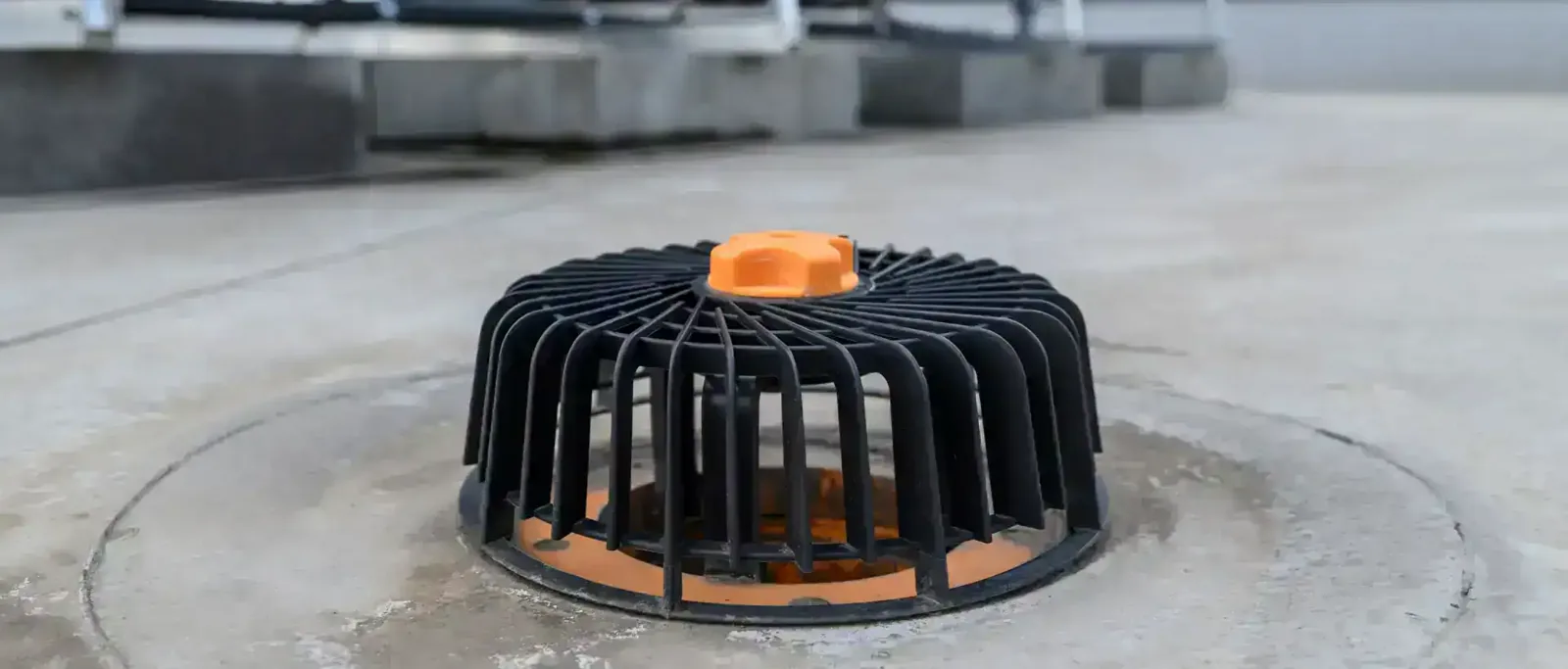
Ice forms in the strainer, expands, and cracks a plastic or thin metal dome. Heavy snow can also crush a strainer that sits below the surface of a drift. We replace them with strainers rated for the loads and set them slightly above the field, and we mark their positions so crews know where to clear.
Do scuppers need to be cleaned like drains do?
Yes. Debris builds up at the opening, and a blocked scupper holds water against the parapet wall, where it finds flashing seams. A quick visit before the freeze and again after the first thaw is enough for most buildings, and we log the condition each time.