A photo arrives at six in the morning, taken from a parking lot: a membrane edge slapping against a parapet in a steady wind. The first question dispatch asks the sender is whether the flap is still moving. A moving edge widens with every gust, and a roof that lost a foot of membrane at dawn can lose ten feet by noon. In Yakima, WA, the wind is the third stress on a roof after snow and heat, and it works fast. The city's record gust, 69 mph in May 1985, shows what the valley can produce, and the late-November 2019 windstorm was a fresh reminder. Wind repair is a race against the next gust, and it starts at the edge.
Follow the Uplift from the Corners Inward
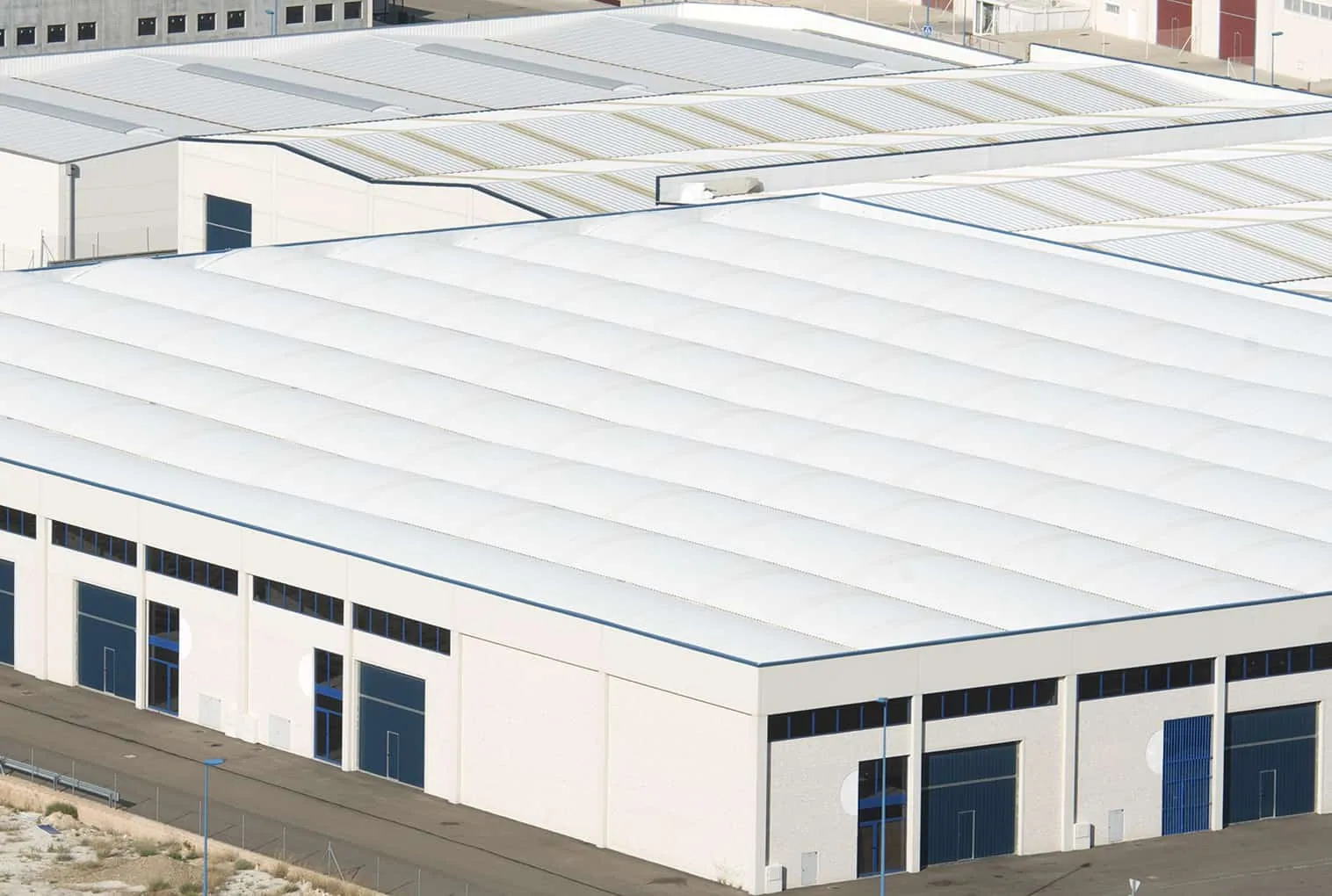
Air flowing over a flat roof creates suction, strongest at corners and along the perimeter. New construction here is designed for a wind speed of 110, and the attachment of membrane, insulation and edge metal is meant to resist uplift at that speed. Where the attachment is weak, a gust finds the corner first and peels the sheet back toward the field.
We read a damaged roof from the corner inward. The edge metal tells us where the load went in, and the fasteners tell us whether they pulled out of the deck or tore through the sheet. A line of lifted membrane that stops at a seam suggests one cause. A broad billow across an open field suggests another. Reading the pattern first keeps the repair from covering the symptom.
Rooftop equipment changes the airflow too. A tall unit near the edge can funnel air onto the membrane beside it, and an old penthouse wall can create a pocket of turbulence that works one spot loose again and again. We mark those spots on the roof plan, because they tell us where to put the extra fasteners.
Re-Secure the Edge Before Patching the Field
Coping, fascia and drip edge are the most common casualties. A loose cap lets the wind get under the membrane edge, and the membrane lifts and tears. We re-secure or replace the metal first, with continuous cleats and fasteners suited to the substrate, then address the sheet. Our work on edge metal and coping follows this order on every wind call.
A membrane termination needs a clean surface and a tight seal. If the sheet tore at the edge, we cut back to sound material, install a new termination bar or welded strip, and seal it. A patch that overlaps a lifted section without securing it will lift again at the next storm. The edge, not the patch, is what holds the repair.
Replace Fasteners and Plates That Let Go
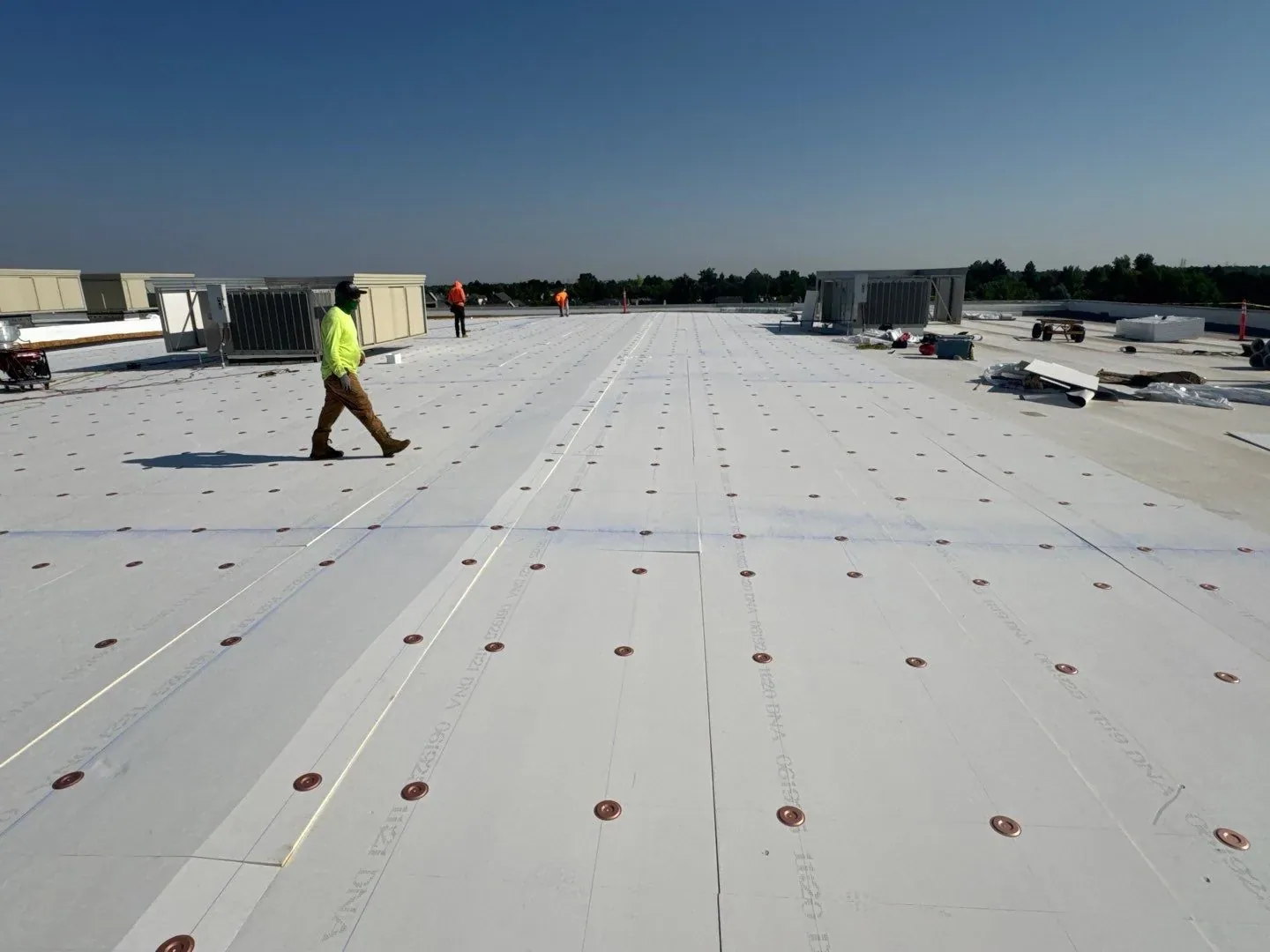
On mechanically attached roofs, the sheet is held by fasteners and plates spaced along the seams. Under repeated flutter, plates can crack or fasteners back out of the deck. A section that billowed in a storm may have loosened dozens of them without tearing anything.
We probe the sheet along the affected area, listen for the sound of a loose plate and check fastener pull-out where we can. Loose fasteners are replaced with the right length and type for the deck, and the pattern is restored to the manufacturer's spacing, tighter at the perimeter. On adhered systems, we test the bond and re-adhere any area that lifted. Ballasted roofs are checked for displaced stone and exposed membrane.
Debris is the last item. Wind throws loose gravel, branches and sheet metal across a roof, and every strike can puncture or scar the membrane. We sweep the area, probe marks and record any damage separate from the lifted section so the scope stays accurate.
Compare the Gust Record With the Damage You See
The same November 2019 storm registered 52 mph at Vagabond Army Airfield near Selah and 52 mph at Terrace Heights, with 53 mph in Sunnyside. Each gust was recorded at a different spot, and a roof at each one had its own exposure depending on height, parapet and neighboring buildings. A tall building with a low parapet sees more suction than a short building behind a screen of trees.
We note the building's exposure, its height and the direction of the damage, and we compare them with the storm's direction. That helps explain why one roof lost a section and the next one did not, and it helps shape the fix. A roof on open ground may need heavier attachment than a sheltered one, whatever the original spec said.
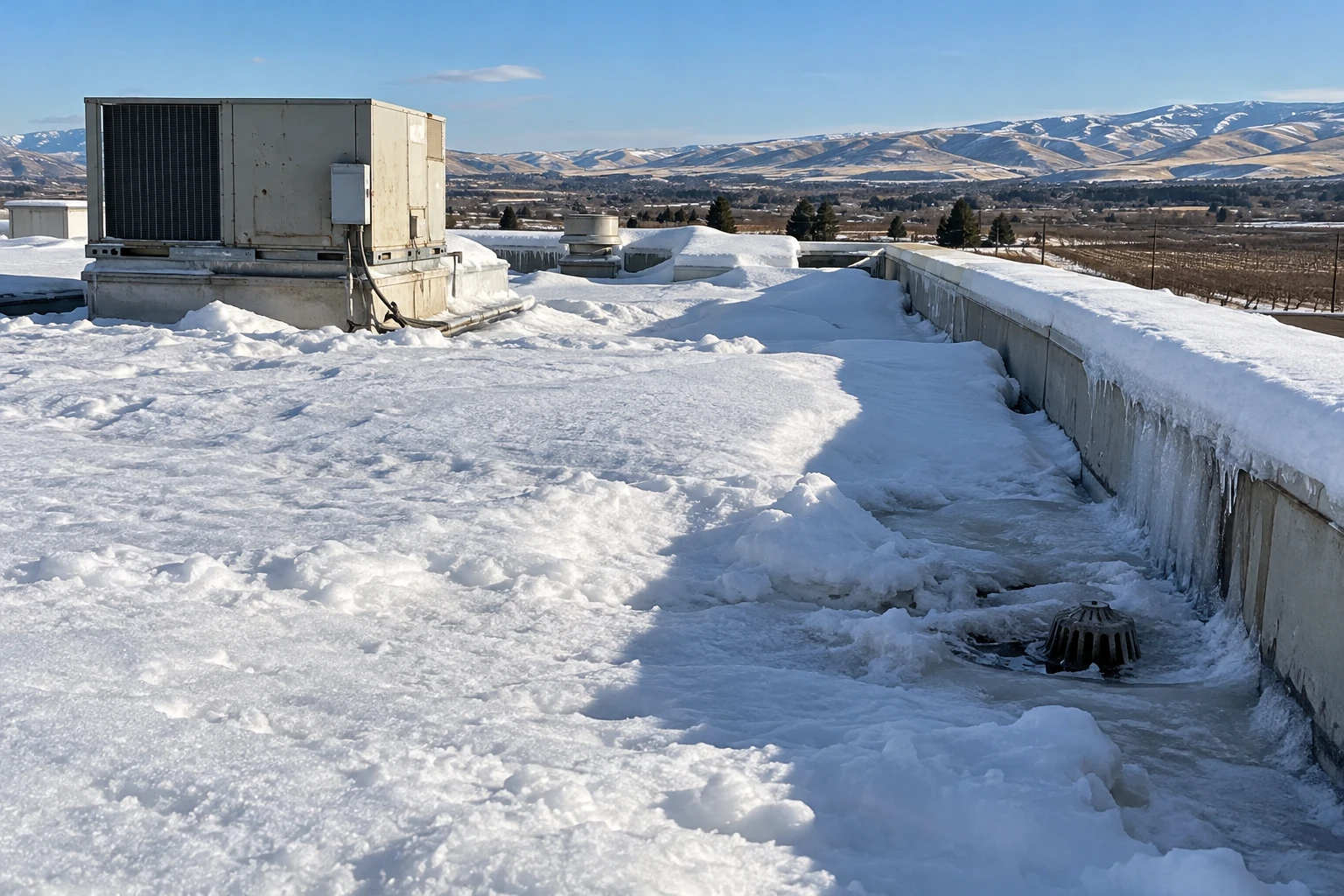
Winter wind carries a second problem. A gale that follows heavy snow can drive drift against walls and loosen ice-bound edges, so the snow and ice damage and the wind damage often have to be sorted out together. We check both before deciding which came first.
Cover the Opening Until the Real Repair Fits the Weather
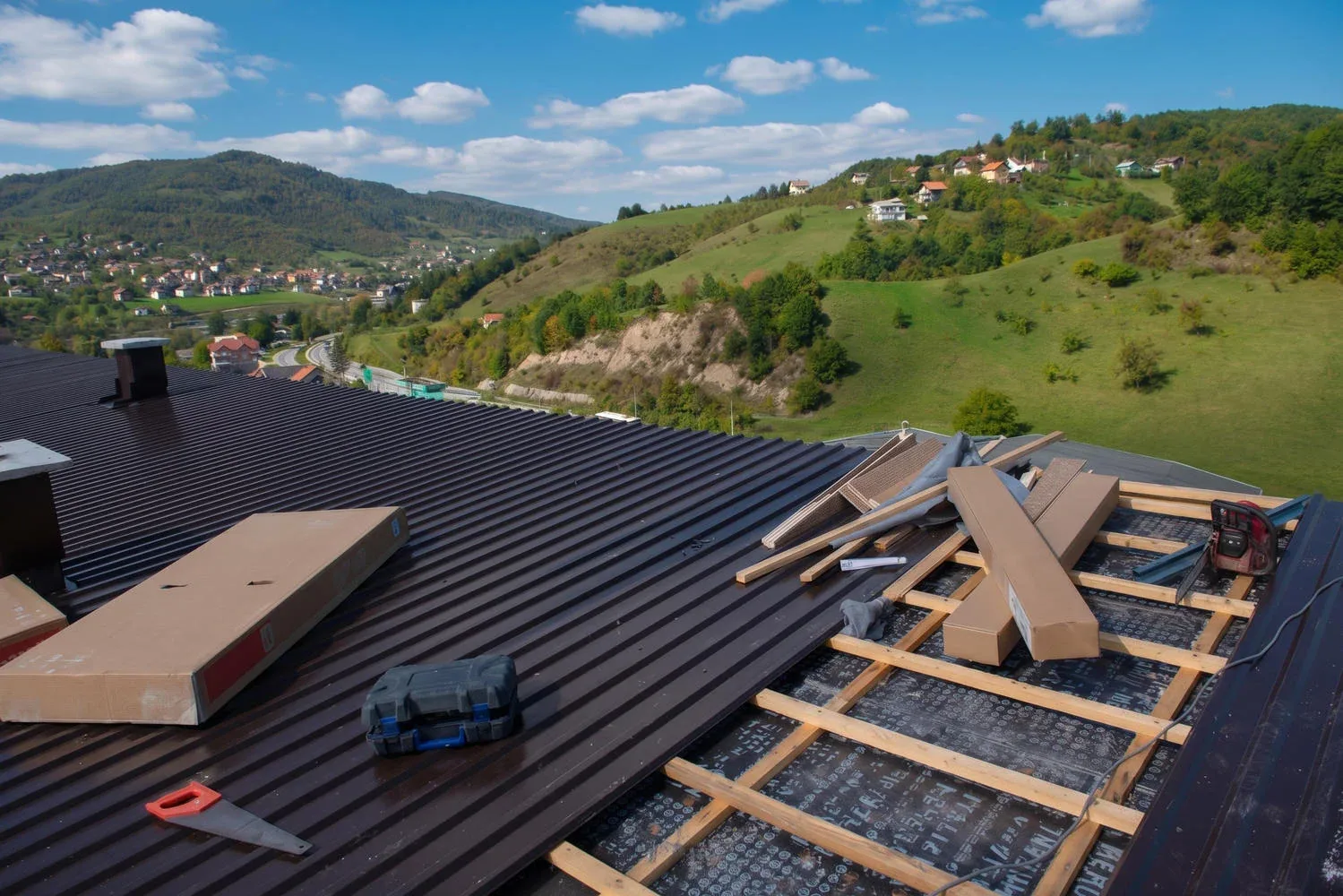
When wind exposes insulation or deck, the first job is to cover it. A tarp that holds in a gust is fastened into solid structure with battens and not weighted by blocks, which wind will lift. We check temporary covers after the first night and after any gust that follows. Dispatch treats this as emergency roof repair until the opening is closed.
Permanent repair then waits for a clean, dry surface and temperatures that suit adhesives and sealants. In Yakima that window is wide from late spring through early autumn. In winter, we weld, mechanically attach or use cold-rated products where we can, and we wait for a warm spell when we cannot.
Strengthen the Roof Before the Next Gale
After the repair, we look at the roof's weaknesses as a whole. Extra fasteners at the perimeter, heavier edge metal, a reinforced corner and a revised pattern can lift the roof's resistance. If a seam failure showed up in the same storm, we address it so the repaired section and the rest of the sheet match. For a TPO roof, we also test the welds across the area.
Commercial Roofing Questions
A gust lifted a section but the roof is not leaking. Do we still need a repair?
Yes. A lifted section has lost some of its attachment, and the next gust may peel it further. Water may also have entered the insulation without showing inside. We reattach the area, test for moisture and document the condition.
How can an owner tell whether the damage qualifies as a wind loss for my insurer?
Look at the pattern. Fresh tears, bent metal, displaced pieces and debris near the roof point to a recent wind event, and they photograph well. We date and document everything and compare it with local gust records. Your insurer makes the coverage decision.
Can an older roof be upgraded to resist more wind?
Often. We add fasteners, replace weak edge metal, install perimeter strips and improve adhesion where needed. If the roof is near the end of its life, an upgrade may be better combined with a recover or replacement. The condition survey tells us which route is sensible.
What is the minimum I should do right after a windstorm?
Look from the ground and from inside for new stains, loose metal, debris or open flashing. Keep staff off the roof. Photograph what you see, then call with the address and where the damage sits so we can plan the first visit.
Why do repairs sometimes fail in the next storm?
Usually because the repair treated a tear instead of the attachment around it. A patch over a section that is still loose will lift. We fix the edge or the fastening pattern first and let the patch follow.