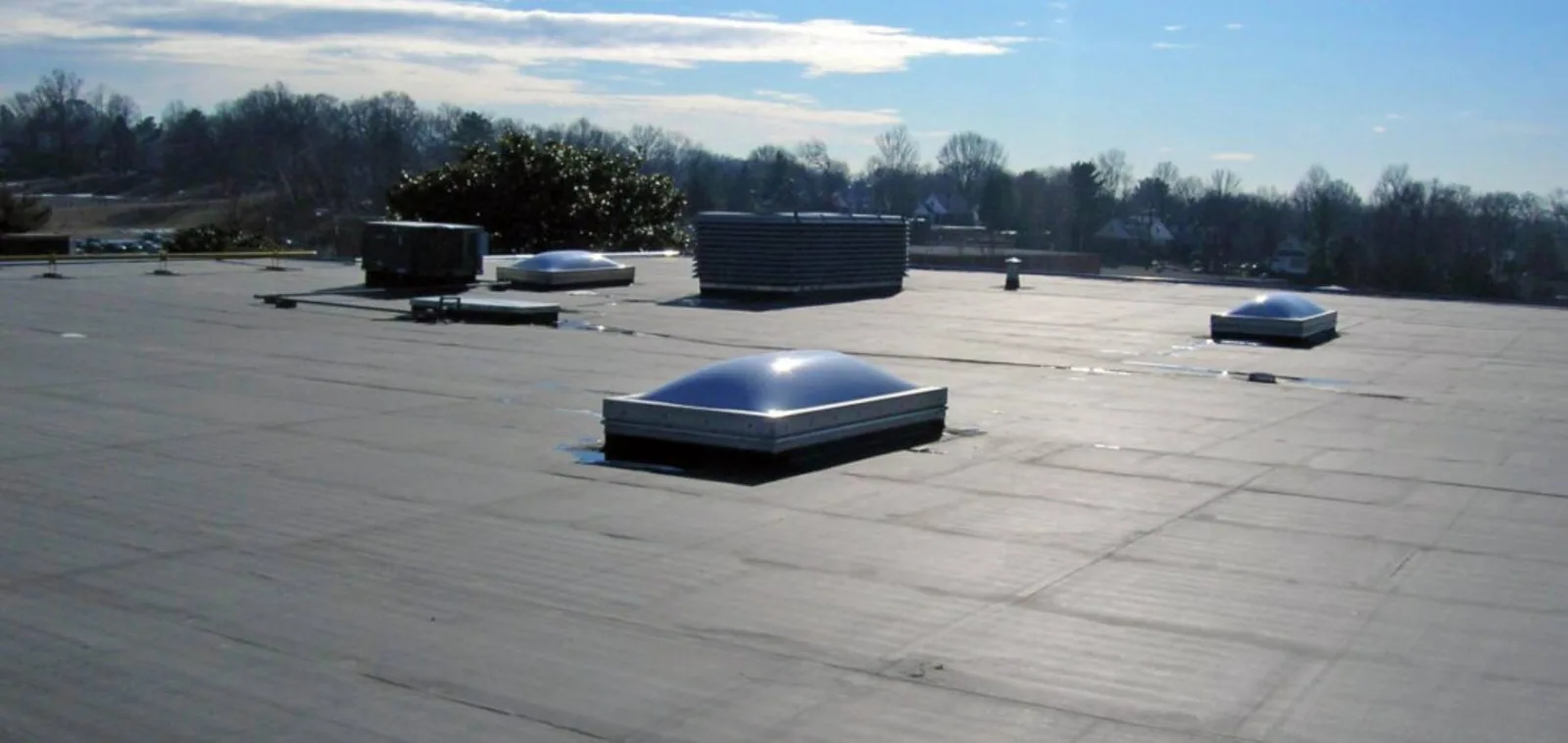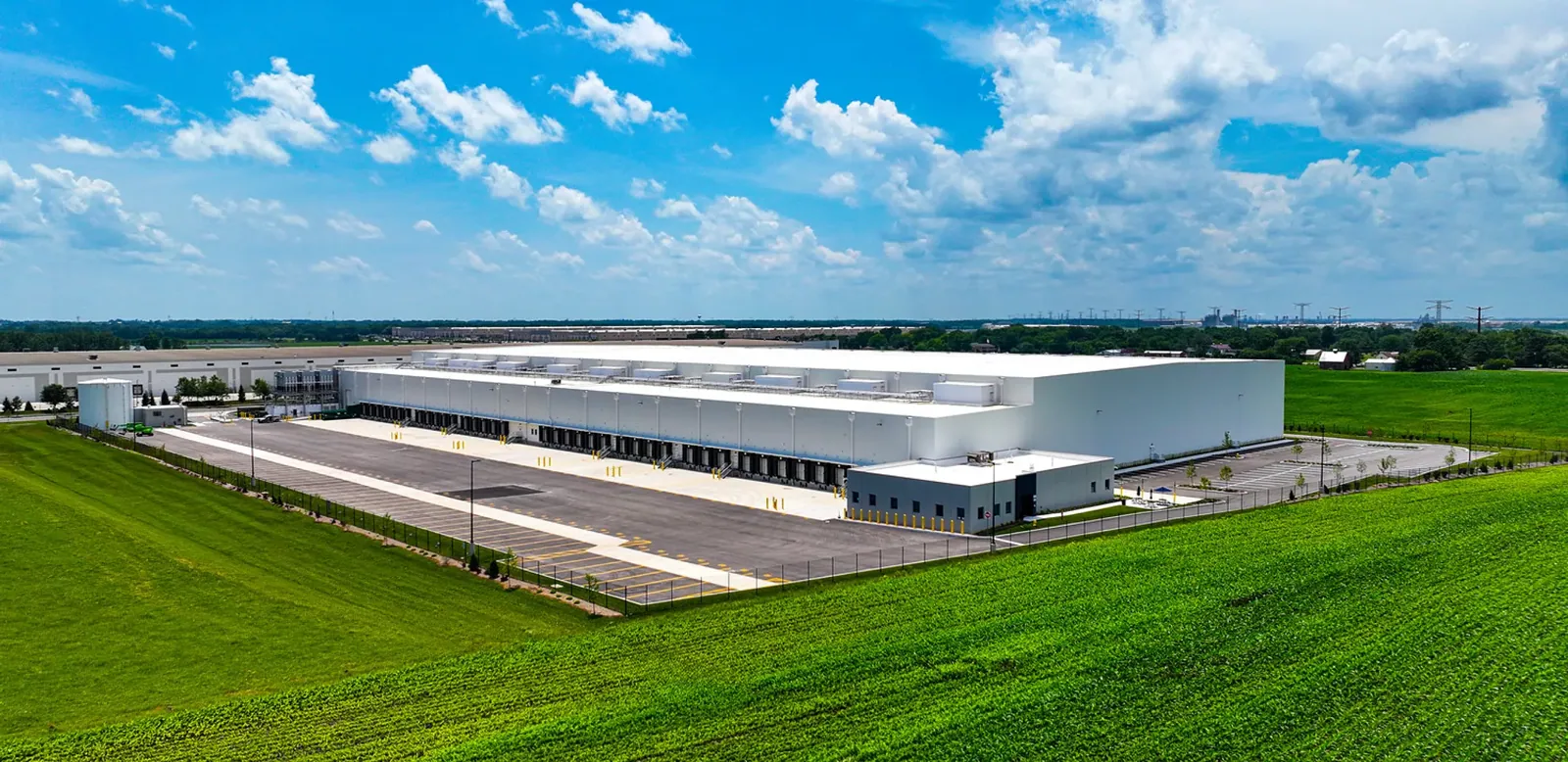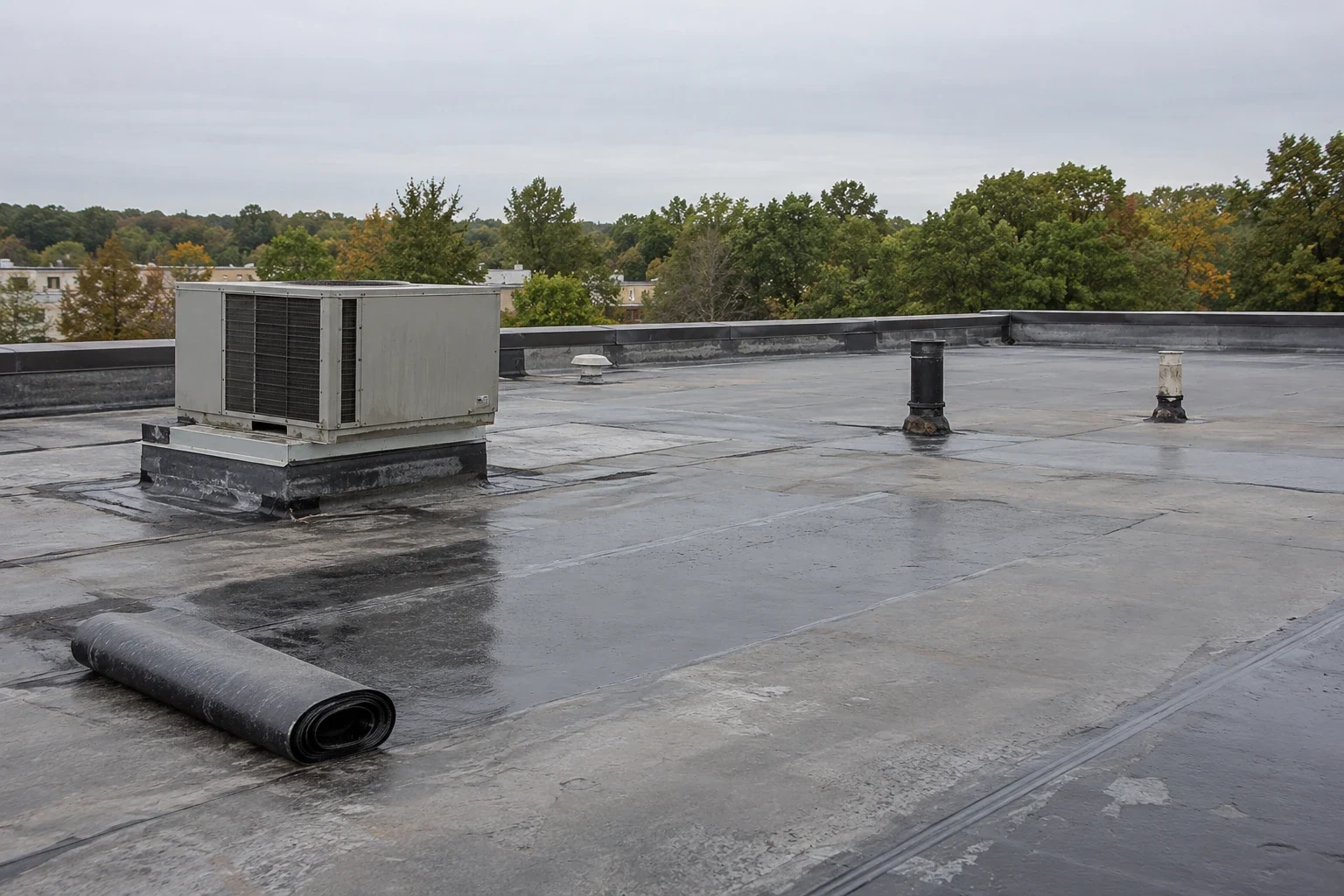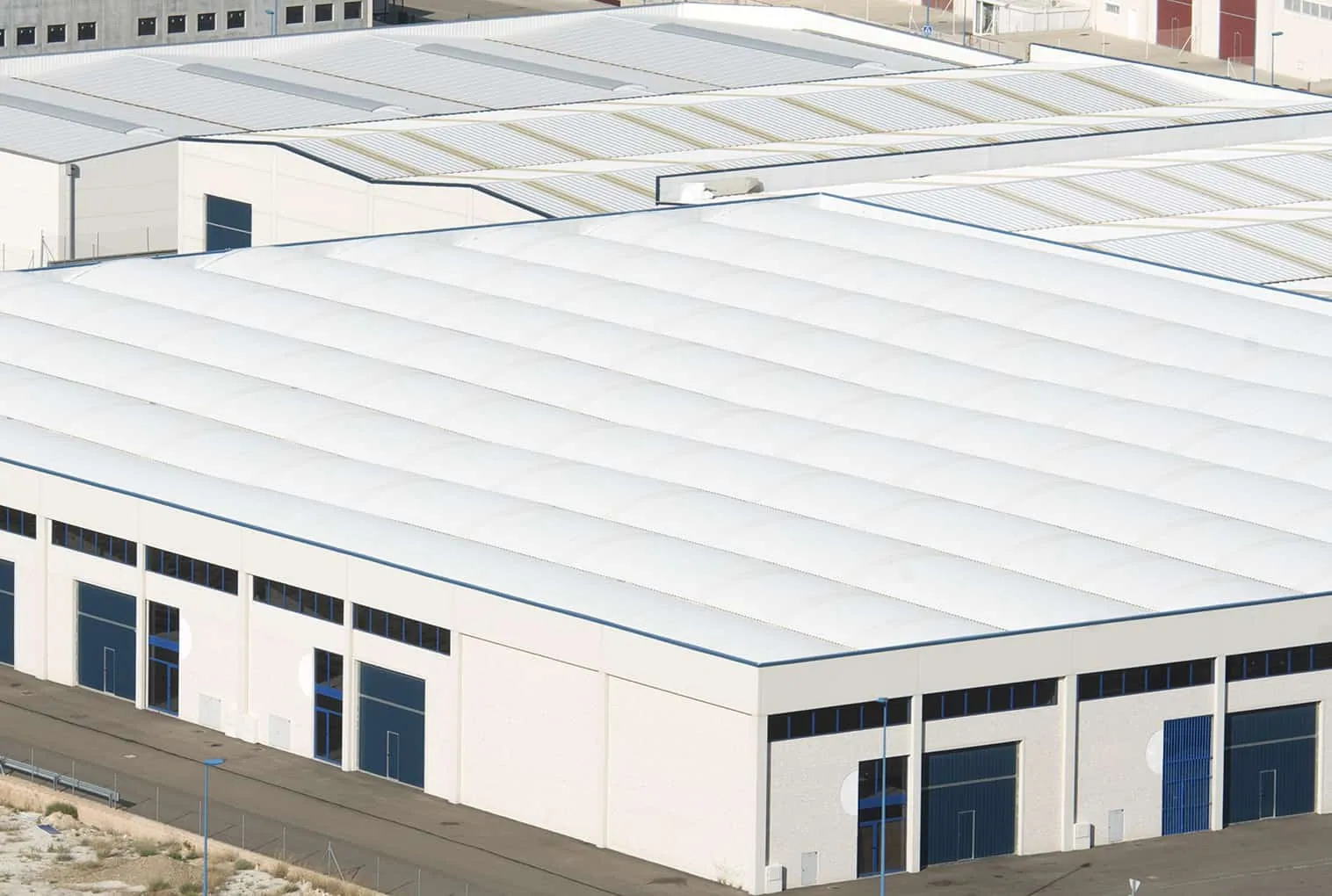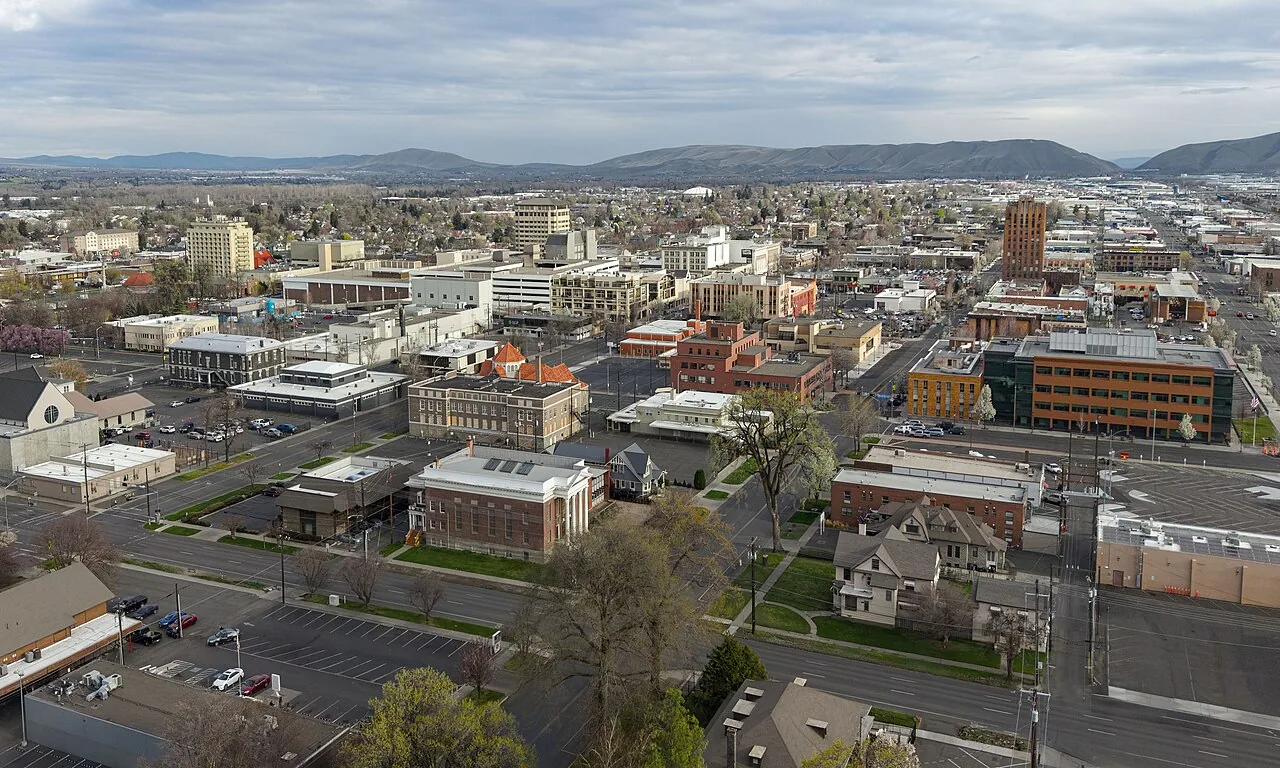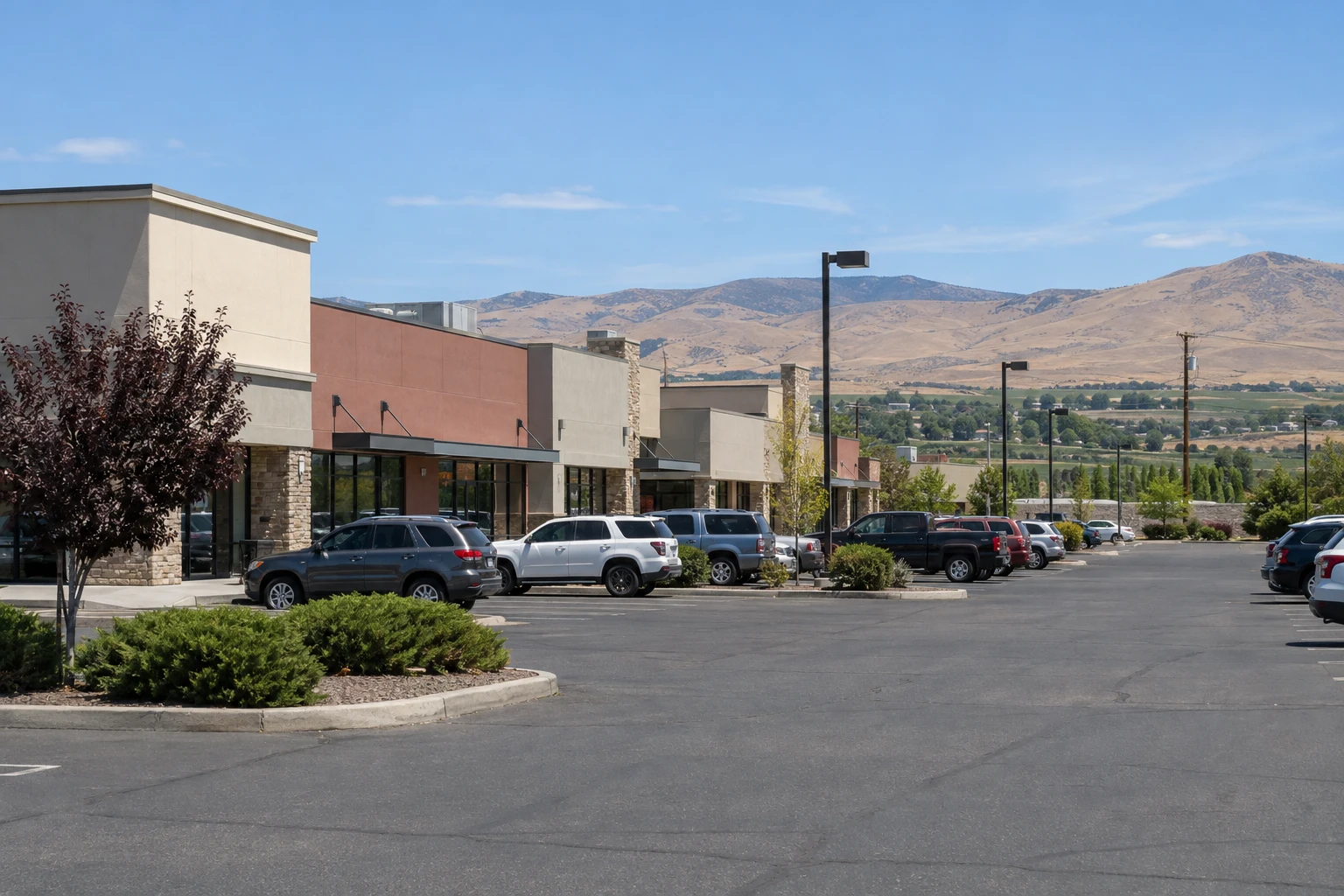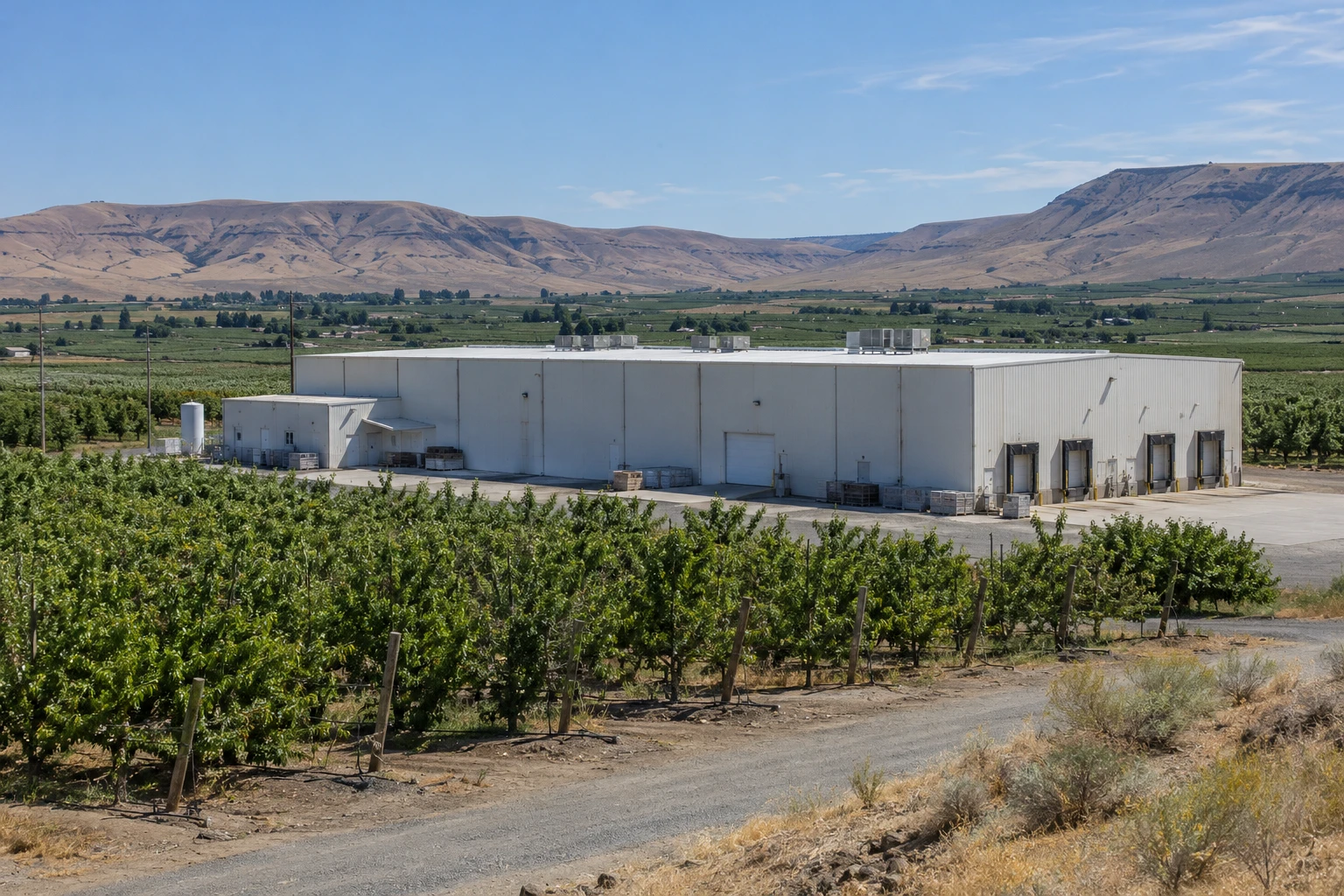
Fruitvale is an unincorporated community within the north city limits of Yakima, ZIP code 98902, named for the importance of fruit production to the valley economy. On fruit-industry buildings the roofs that matter most sit over cooled rooms, packing floors and loading docks, and the first question dispatch asks on a call from there is what sits directly under the leak: product, a refrigerated space or a line that cannot stop. Fruit processors in the Yakima area, including Zirkle Fruit, Washington Fruit and Produce, and Borton Fruit, each employ over 1,000 people, and that scale of industry shapes how roof work is planned. Our crews repair, coat, recover and replace flat and metal roofs, and the line is answered at any hour, in Yakima, WA and around it.
Protect the Ceiling Over a Cold Room From the Top Down
A roof over a refrigerated space has a hard job: it separates freezing air below from summer sun above, and any moisture that gets into the insulation turns to frost or ice. Signs of trouble inside include frost on the ceiling, a damp patch at a corner, a compressor that never rests and drips that appear when the sun warms the roof.
We trace those signs with a hands-on survey and an infrared moisture scan after sunset, then confirm with core samples. The fix may be as small as sealing a gap at a penetration or as large as replacing a wet section. Where a roof covers a cold storage room, we check the vapor retarder and the seal at every opening before we recommend a membrane, because a good membrane over wet insulation still fails.
Drains over cold rooms deserve a look of their own. Condensate lines and roof drains that pass through cold space can freeze and split, and a leak from a split pipe inside the assembly looks like a roof failure. We check the insulation and slope of those lines and flag any that cross unheated or cold voids.
Sequence Roof Work Around the Packing-Line Shutdown
A packing line has a season, and a roof project has to fit around it. We ask the plant engineer for the shutdown windows, the weeks when lines run hardest and the rooms that must stay at temperature. Heavy tear-off goes in the quietest window, and sections are small enough to close the same day.
The roof is opened only as far as it can be dried in before dark. Temporary protection stays on site and ready if the sky changes. Noise, odor and dust are agreed in advance, and air intakes near the work are filtered or shut down. This is occupied building reroofing adjusted for the sanitation rules of a food handling space, and quality staff tell us what covering and cleaning they require.
Contingency is part of the schedule. A section that was supposed to close by four in the afternoon may need to close by two if clouds build, and the crew carries enough membrane and fasteners to do it. The plant engineer gets a daily note on what was opened, what was closed and what is planned for tomorrow.
Plan for Harvest-Season Heat on a Working Roof
Harvest runs into hot weather, and Yakima's afternoons pass 90 F about forty times a year, with a June 2021 record of 113 F. Condensers and exhaust fans run harder then, and the membrane around them runs hotter. Chalking, shrinking and cracked sealant appear first near equipment.
A reflective surface helps. A white TPO membrane or a reflective coating narrows the daily temperature swing and lowers load on the cooling plant. Walk pads along service paths protect the surface from the traffic of mechanics, and flexible boots at pipe penetrations absorb movement. We record where the hot zones are, so the next visit looks there first.
Roof drains and scuppers get hot-weather attention too. Warm days follow the winter's thaw, and debris from orchards, packing yards and nearby lots collects at the openings. A clear drain on a hot day means no standing water to bake into the surface, and we record the condition at each visit.
Carry the Winter Load Without Overworking the Roof
Winter snow lands mostly in December and January on a design load that belongs to each parcel. Drifts build where roofs change height, and the equipment on a large building adds to the weight. We read the design value from the permit, mark the drift zones and clear heavy accumulations with plastic tools.
A packing building that sags or a door that sticks calls for the response that a South Third Avenue wall bulge demanded in February 2019: clear the area and call before anyone climbs up. We follow with a deflection check once the snow is off.
Ice that builds at a loading dock is an additional hazard. Meltwater from a roof edge that discharges over a dock door freezes on the apron, so we direct scupper and downspout outlets away from walkways and docks and keep them clear through the cold months.
Handle Fruitvale as Part of the Wider North and Valley Picture
Fruitvale sits inside the city limits on the north side, and owners who also hold buildings in downtown Yakima or in West Valley can put them under one schedule. A single inventory, one set of design loads and one callback log let us see which roof is aging fastest across the whole group.
A reroof that opens the assembly may need to meet the insulation values in the code editions Washington adopted in March 2024. We confirm the requirements before pricing and put them in the proposal, together with the phasing plan and the temporary-protection method.
Records move with the building. When a plant changes hands, adds a cooler or replaces a condenser, the roof record shows the date, the detail and the person responsible, which shortens every future repair.
Plant engineers can speed the first visit by sending the refrigeration shutdown calendar and the location of the condensate drains. With those two pieces the crew can place temporary protection before the first panel is opened.
Commercial Roofing Questions
Frost is forming on the ceiling inside a cold room. Is the roof the cause?
Often, but not always. Warm moist air reaching a cold surface can come through a roof penetration, a failed vapor retarder or wet insulation, or from an interior air leak. We scan the roof and look at the room's ceiling to find the path, then repair that spot.
How do you keep the building cold while the roof is open?
We open small sections, close each one the same day and keep the vapor barrier intact between phases. The plant engineer gives us the room's temperature limits, and we plan the size of each section around them.
Can roof work happen during harvest?
Sometimes. It depends on which areas are critical and whether the line can run beneath a protected section. We schedule heavy work for slower weeks and agree on days with no work, and we confirm the plan with operations before the first day.
What is the best surface for a roof above a cooled space?
A reflective membrane with well-insulated assembly and sealed penetrations is a strong choice. TPO and PVC both fit, and a coating can restore a sound existing roof. The moisture survey and the use below decide.
Does a processing building need special products for sanitation?
Often. We choose low-odor adhesives and keep debris away from open product, and we protect air intakes. The quality team tells us the rules, and we follow them, with cleaning records provided at close-out.