A property manager calls the morning after a gale about a canopy that now sits a half inch off the wall, and dispatch asks one question before it sends anyone: which bays are under that stretch of roof? A strip center in the Yakima Valley is one long surface shared by many leases, and a small gust-lifted edge over bay three can leak into bay five. Tell the tenants to move stock away from the affected ceiling and leave the roof alone until we arrive.
The center address, the lease map and the list of bays that cannot close are what we need first.
Follow the Retail Where It Moved
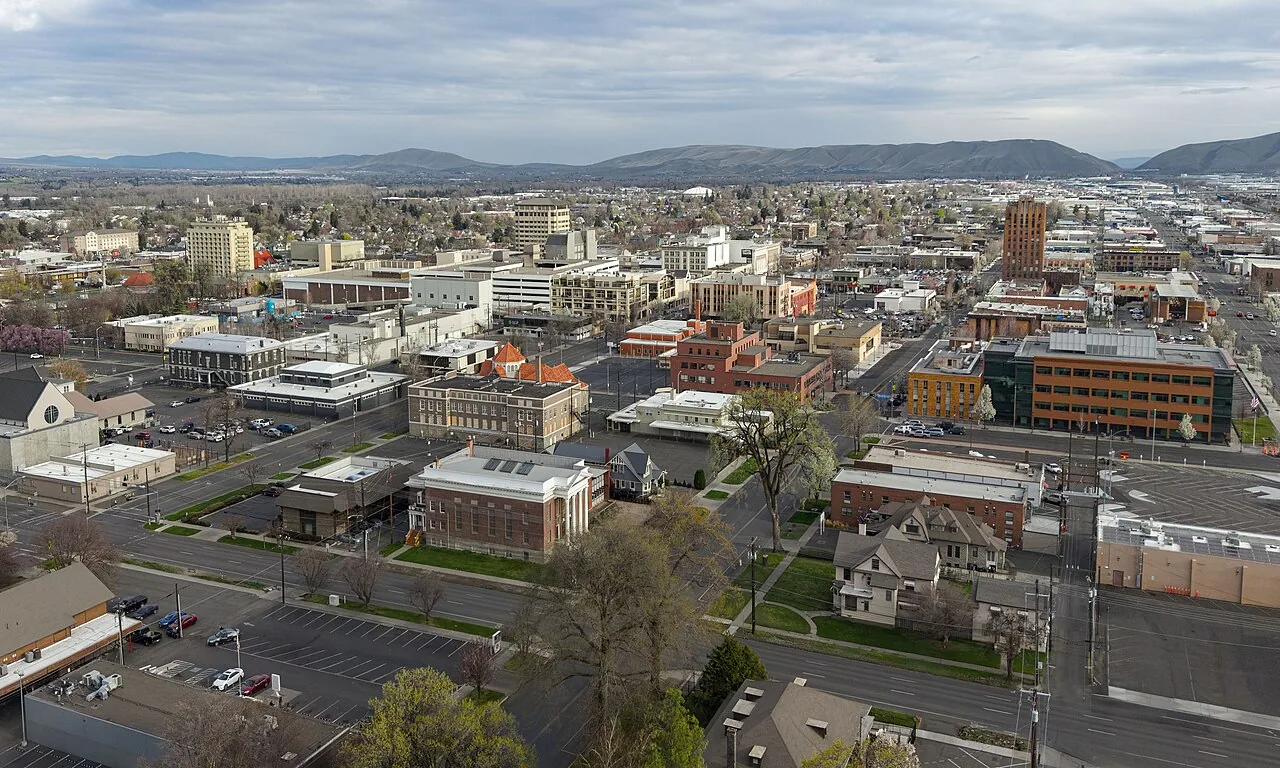
Retail moved. Downtown Yakima, with Front Street, Yakima Avenue and 1st Street at its center, lost several department stores and a closed mall to Union Gap. Union Gap is described as the retail hub of the valley because of Valley Mall and other businesses there, and U.S. 97, Interstate 82, Thorp Road and the BNSF Railway all pass through the gap. Valley Mall and the surrounding big-box retail make up the main retail roof inventory for the valley.
That shift matters to a roofer in a practical way. A district where retail left may hold older buildings with older roofs, and a district where retail arrived may hold newer roofs with fresh punch-list items. The first visit identifies each roof, since an address says nothing about its age. Work around Union Gap and in downtown Yakima gets its own plan.
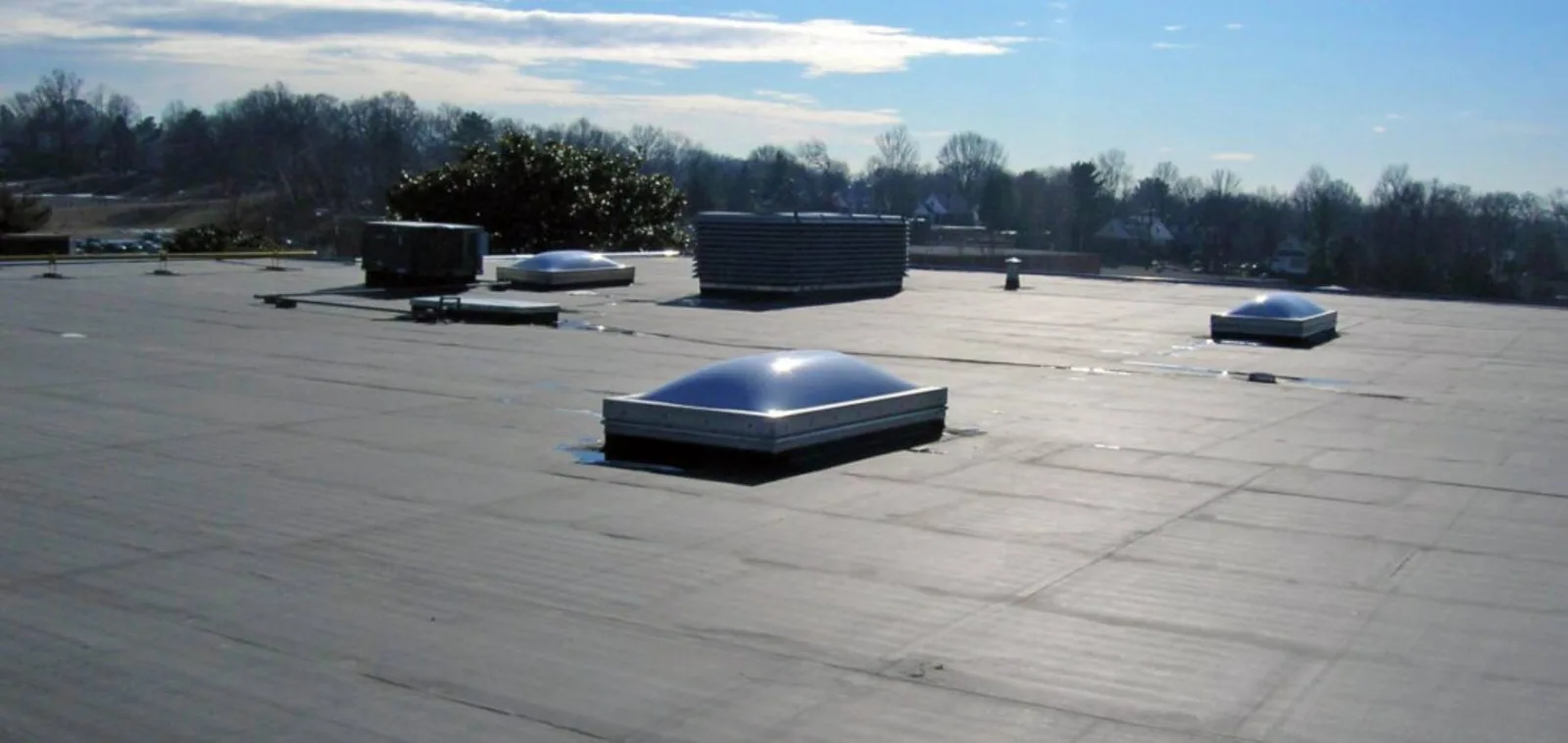
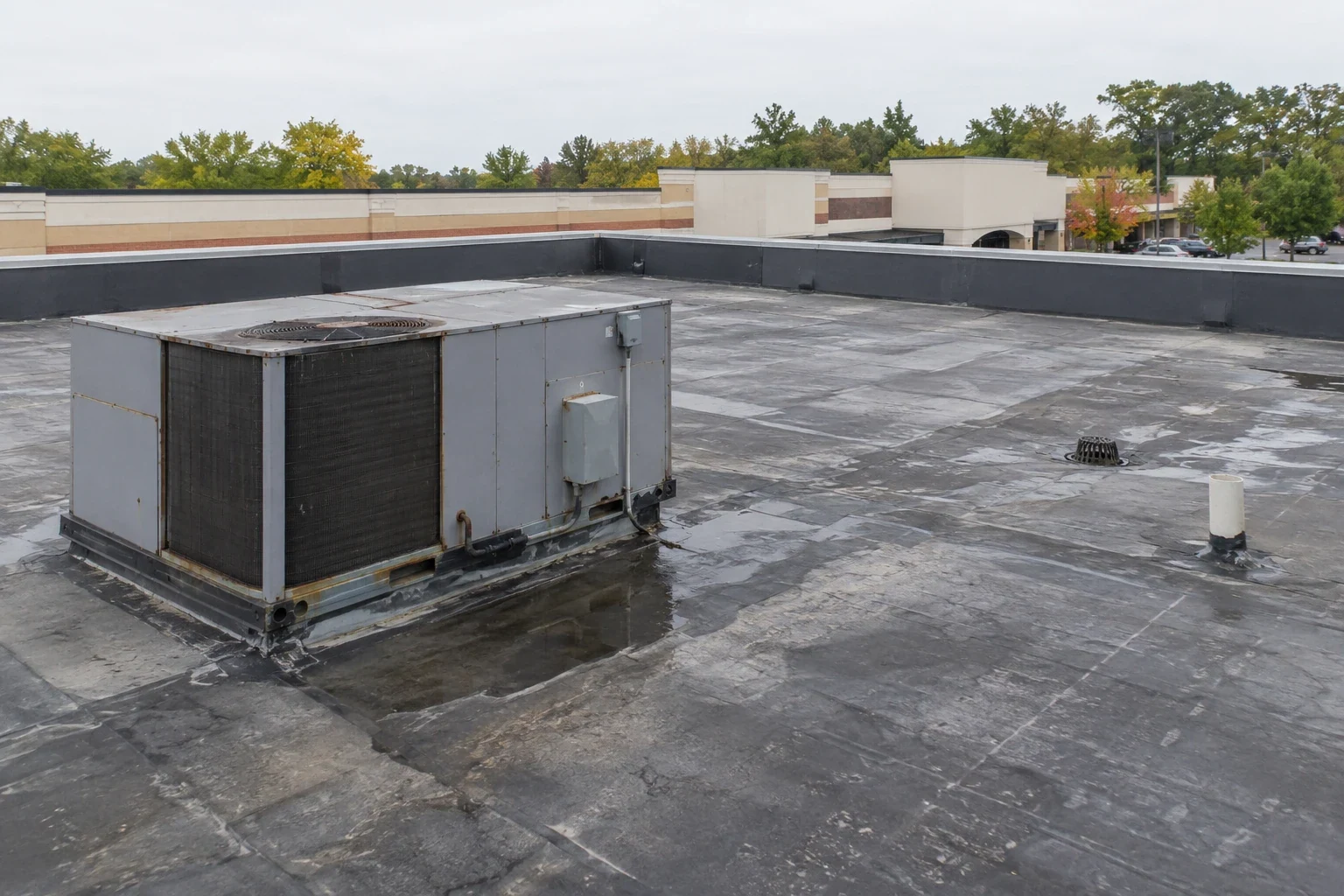
Rooftop equipment tells the rest. Every tenant who adds a unit adds a curb and a pipe, and a center that has changed hands several times may hold curbs of several ages. We list each one with its flashing date, so the owner can see which were rebuilt and which are original. The list becomes a bid line, and it keeps tenant improvement work from adding holes the roof file never hears about.
Clear the Parapet Drift Pile First
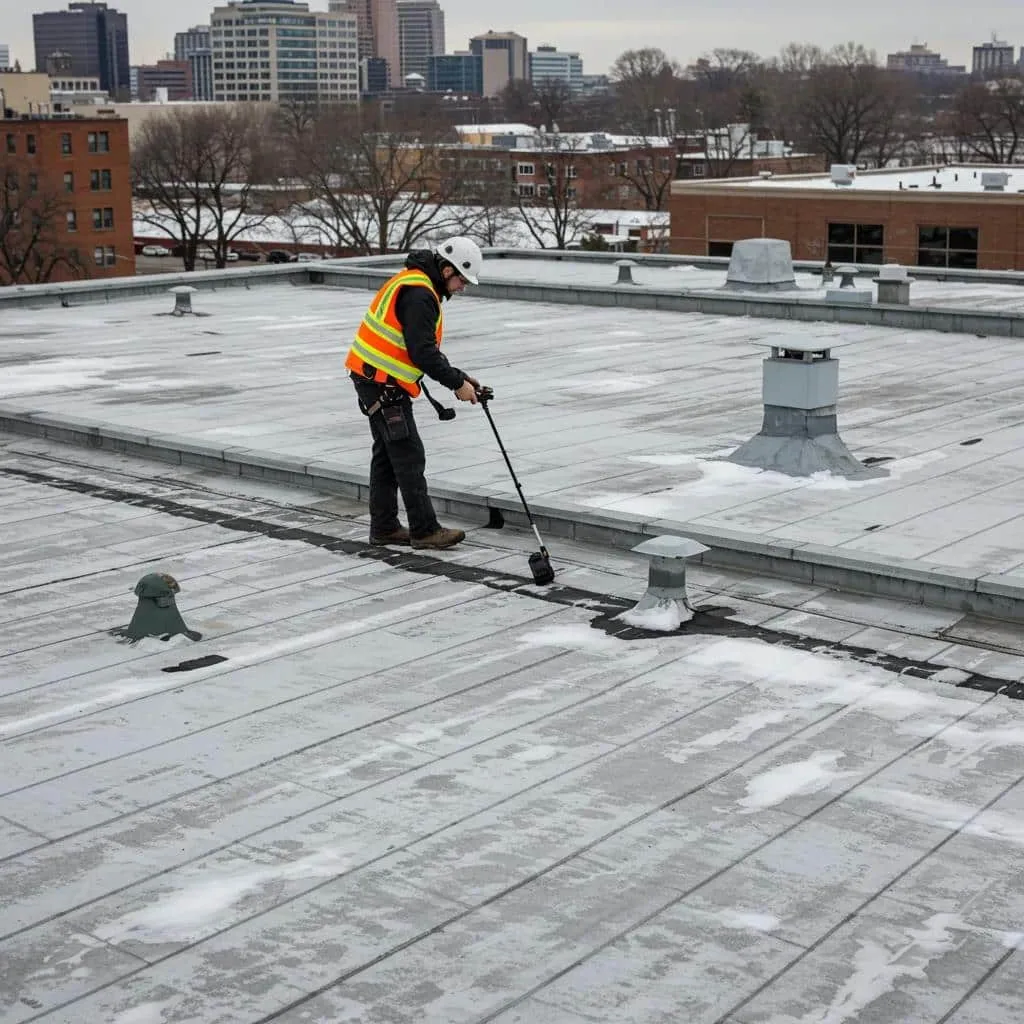
A strip roof is flat, and flat roofs gather snow against any wall that rises above them. The tall front parapet, a taller wall at one end and every rooftop unit enclosure all collect drift piles, against design loads that depend on the parcel. A steel shovel cuts the membrane, so plastic tools take the drift off and a layer of snow stays behind as protection while we watch the ceilings below for new cracks or sticking doors. A canopy with little slope can hold a heavy cap of wet snow against the wall, and the wall flashing takes the load. Canopy returns and downspouts get a look after each big storm, and they are cleared only with plastic tools from a safe position.
Trace the Shared Drain Before You Assign the Leak
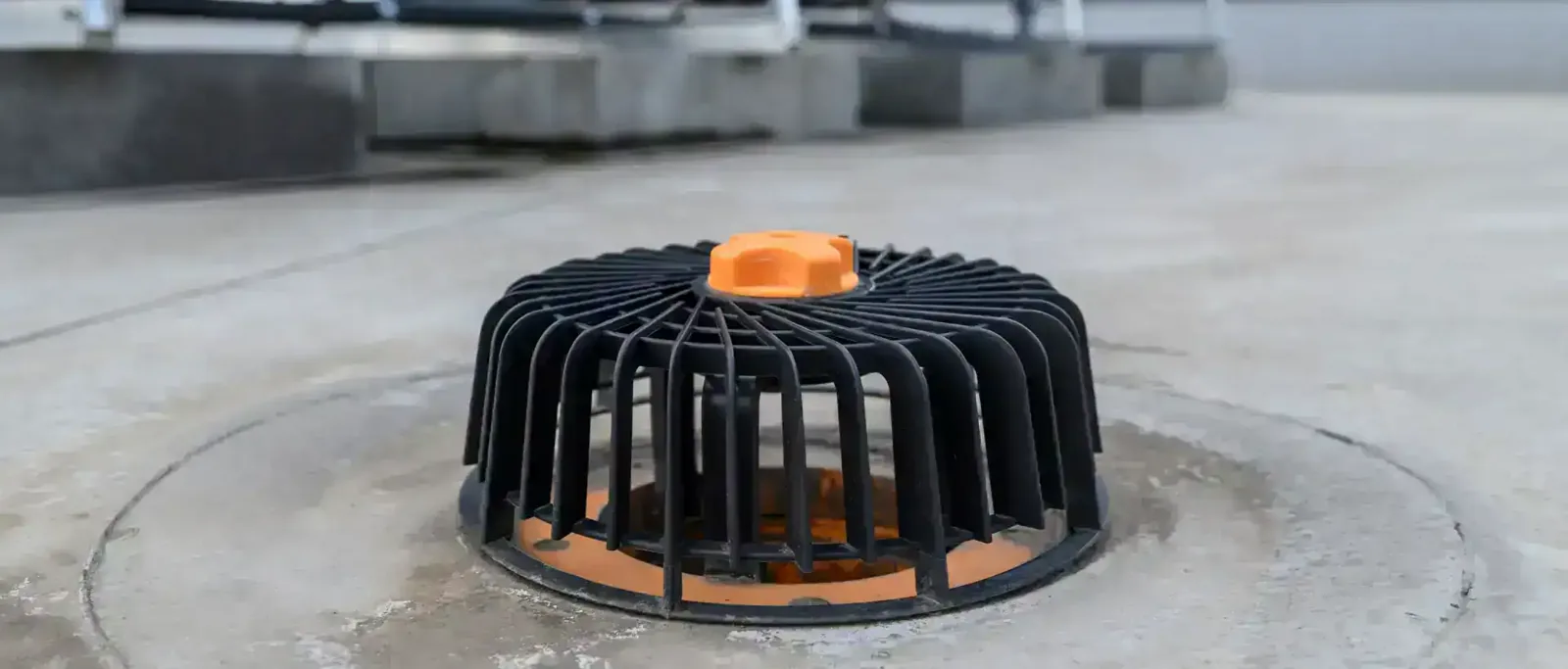
Water on a long roof travels to a few drains, and a clogged strainer at one end can back water under flashing at the other. We trace every drain and scupper on the first visit and flood-test the runs. A leak that shows in one tenant's ceiling may start two bays away.
Photograph the stain, note the date and send it with the lease map. The record lets the landlord and the tenants settle responsibility without a dispute over what happened. A drain and scupper repair often costs far less than the stock a leak can ruin.
Gutters and scuppers freeze at night after a thaw. Ice at a scupper holds meltwater on the roof until the afternoon sun frees it, and the pond rides back up against the flashing. A heated drain cover is a bigger project, but clearing ice by hand before a freeze is often enough to prevent the ponding.
Plan for the Afternoon Heat Cycle
About 40 afternoons a year top 90 F, a handful top 100 F, and the nights cool off fast. That day-night swing works every seam and sealant bead on a long retail roof. Rooftop units, vents and canopy returns each add flashing that moves with the heat.
We schedule repairs and detail work for early morning, pause adhesive work in the worst heat and resume when the surface cools. For tenants, that means the loud tasks happen before the doors open. The bid shows the quiet hours and the cost of keeping them.
Large dark membranes soak the sun, and cooling load follows. A reflective surface can lower rooftop temperature, so the choice of sheet colour belongs in the repair-or-replace conversation, not after it.
Compare Repair, Recover and Replacement on One Page
If the center roof tests dry with sound seams, a recover keeps tear-off dust and noise out of the stores. Trapped moisture changes the answer, and an infrared moisture survey shows where. Pricing waits on thickness and flashing heights, because Washington's March 2024 energy code sets what a new assembly must carry. A center with several tenants can also keep its roof records in one roof condition report that follows the building through leases.
Close Out Bay by Bay
Closeout goes bay by bay, with seams probed, caps pulled and drains flooded, and each open item is dated. The owner then holds a roof map, photos and a log of penetrations. The same steps apply to a big box store at the end of the strip, to a grocery store in the middle and to a restaurant pad out front, each with its own zone in the file.
Each spring the seams are probed again, the drains cleared and the photos retaken. A fall leak report then reads against a clean baseline, and an insurer sees a maintained roof.
A tenant paying percentage rent and a tenant paying flat rent both feel a closed bay in the same way. A roof plan that lists blackout dates, delivery hours and parking limits before the first lift saves a week of arguments among landlord, tenants and crew.
Leases for the largest tenants often carry their own roof clauses, so the owner's file should list which bays follow which rule. A one-page matrix of bay, tenant, roof section and responsible party saves the first hour of every leak call.
Commercial Roofing Questions
A tenant reports a drip but I see nothing outside. What should I do?
Ask the tenant for a photo, the date and the bay number, and have them move stock away from the ceiling. Drain runs get traced and flood-tested before we name a cause, since water on a long roof often enters far from where it drips.
Who is responsible when one tenant's unit causes a leak?
The lease decides, and we do not interpret it. Photos and moisture readings of the failed flashing give owner and tenant the same record to work from.
When should snow be cleared from a strip center roof?
Clear when drifts approach the design load or when ceilings show new cracks, and call us before staff go up. The clearing is done with plastic tools, a layer of snow is left behind, and the interior is watched for deflection.
Can the stores stay open during a reroof?
Usually yes. We phase the work by bay, keep loud tasks to early hours and put a leak watch inside each open section. Holiday blackout dates are set first, so the roof stays closed when sales matter most.
What does a roof condition report add?
It gives the landlord a graded view of each section, with photos and moisture readings. A lender, a buyer or a new tenant can read it in minutes, and it supports the reserve schedule.