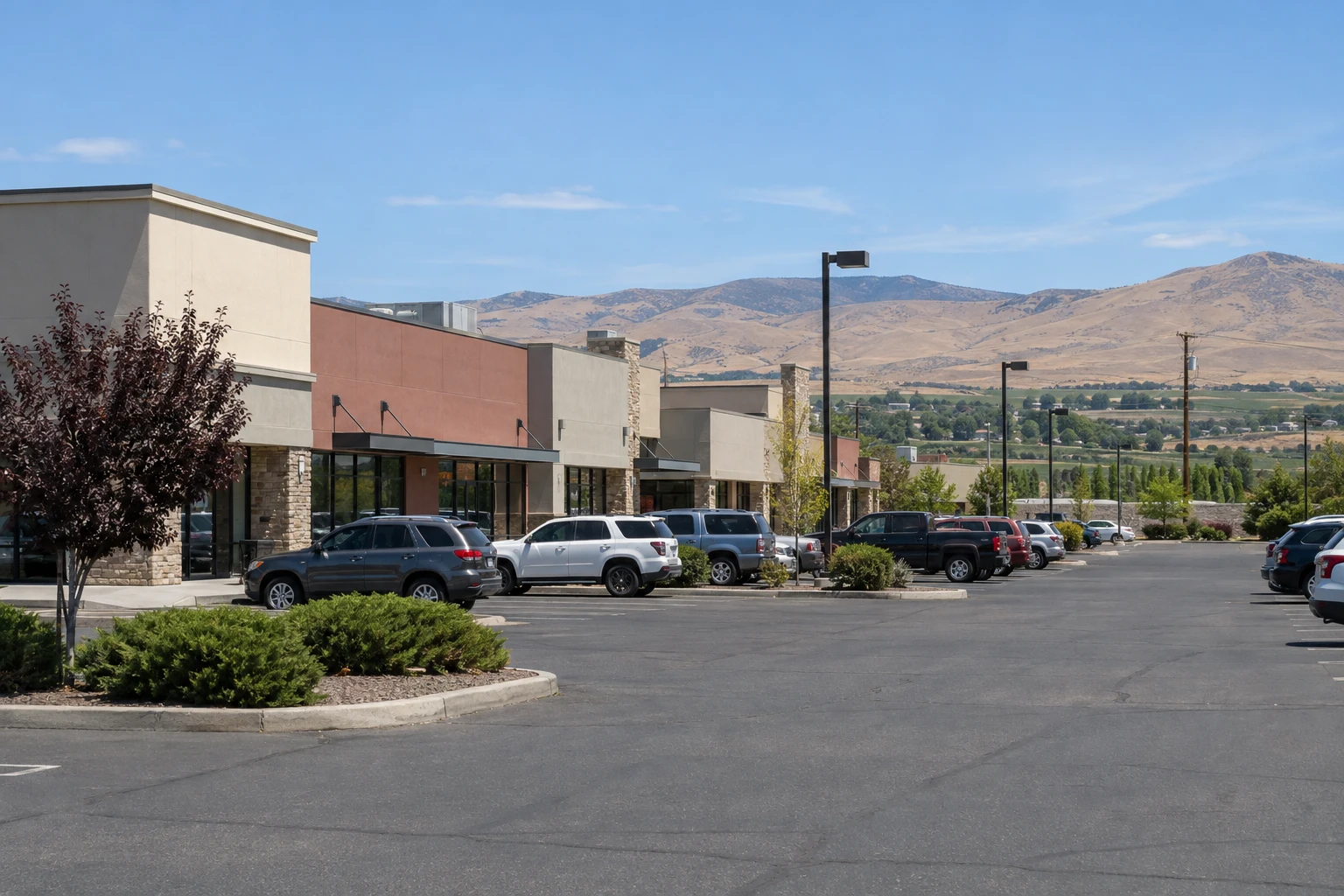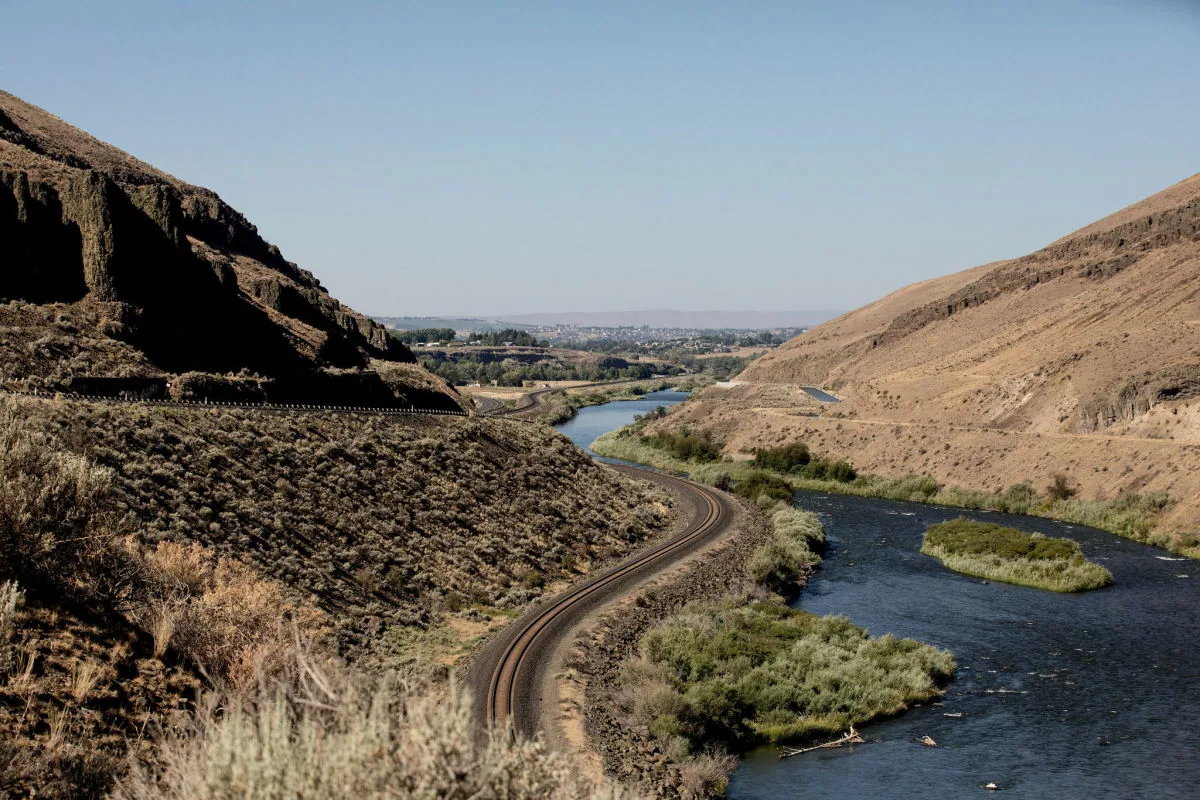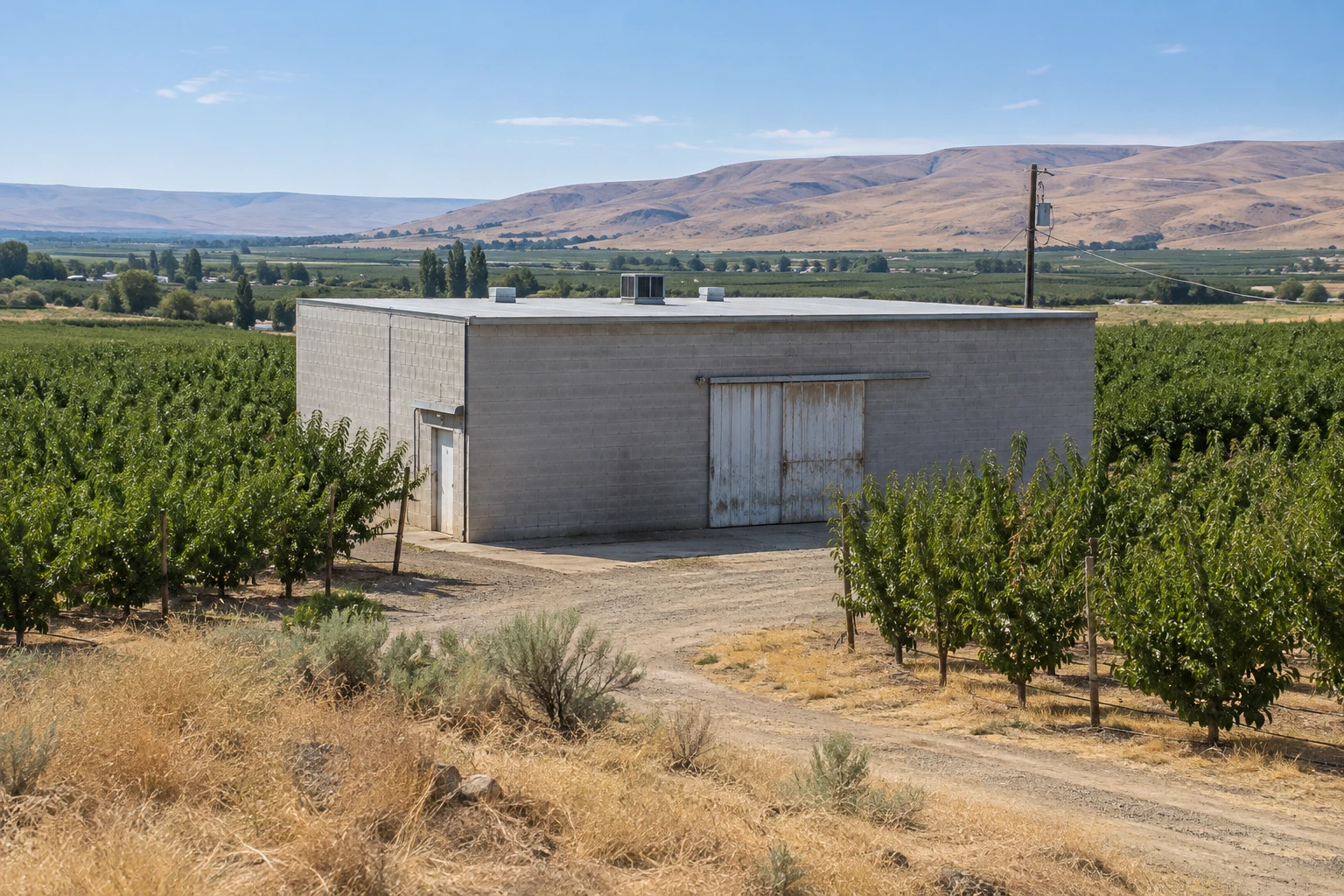
A commercial roof in Wiley City, an unincorporated Upper Valley community near the southwest city limits of Yakima, WA, carries the same weather as one downtown and the same question when it fails: who can be there first? Dispatch asks for the address, then asks what sits under the damaged area. Yakima's climate brings snow mostly in December and January, dozens of afternoons past 90 F and a 113 F record from June 2021. That is a hard range for a flat roof to cover, and the buildings of a community this close to the city need a contractor who answers at any hour. Our crews repair, replace, recover, coat and maintain low-slope and metal roofs here, always around the people and operations inside.
Walk the Whole Roof Before Naming a Fix
The first visit to a Wiley City building is a full walk, not a quick look at the stain. We start at the access point and cover every section: membrane surface, seams, flashing at walls and curbs, drains and scuppers, edge metal, and every penetration. Each finding gets a photograph and a spot on the roof plan.
We add instruments where the walk raises questions. An infrared scan after sunset maps wet insulation, and small core cuts confirm what the scan suggests. The written report ranks items by risk and says which are patches and which need a full fix. An owner can then budget against a real list instead of a guess, and a building manager can see which items belong to this winter and which can wait.
Access and safety come first on any visit. We locate the ladder or hatch, check the parapet height, set fall protection and note where equipment, skylights and open edges sit. A roof that has not been visited in years may hide soft deck near a leak, so we test footing as we go and mark areas to avoid.
Plan for the Parcel Snow Load, Not the City Average
Design snow load follows the parcel, with engineering required above 70 psf. Two roofs a short drive apart can be designed for very different loads, and a roof in an unincorporated area follows the county's rules and not the city's. We ask for the permit set or the drawings, read the design value and mark the drift zones where snow stacks against parapets, penthouses and step-downs.
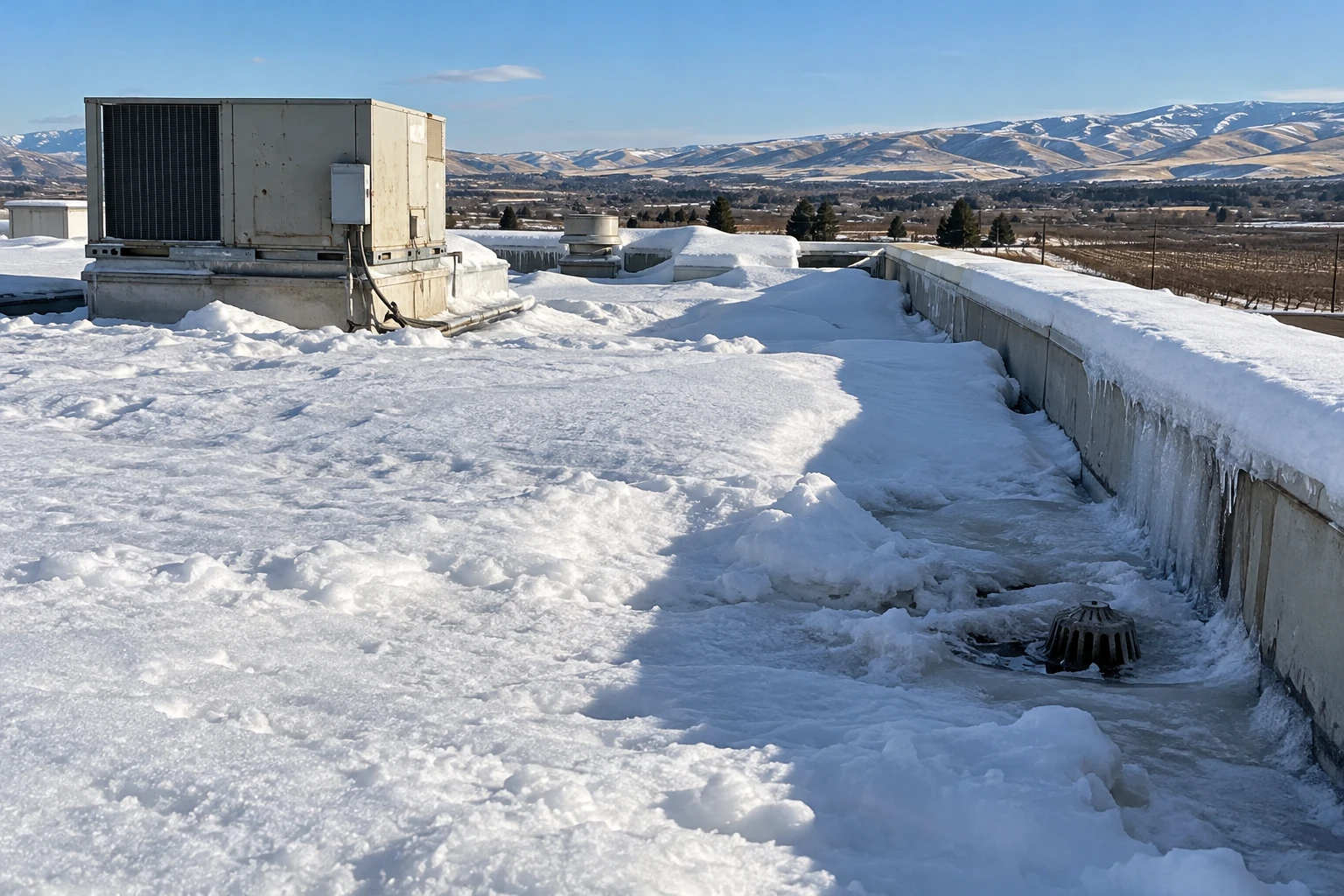
Winter work follows the load. When drifts build, the clearing is done with plastic tools, starting at the deepest pile and leaving the membrane a cushion of snow. A snow and ice damage call gets careful handling wherever it comes from, as the South Third Avenue red tag of February 2019 showed.
Protect Membranes From the Afternoon Heat Cycle
Summer in the Yakima area is long and dry, and the sun does slow, steady work on a roof. Large daily temperature swings stretch and shrink the membrane, and the places where materials meet take the strain: curb corners, pipe boots, termination bars and seams. Sealant dries out and cracks, and flashing pulls away from walls.
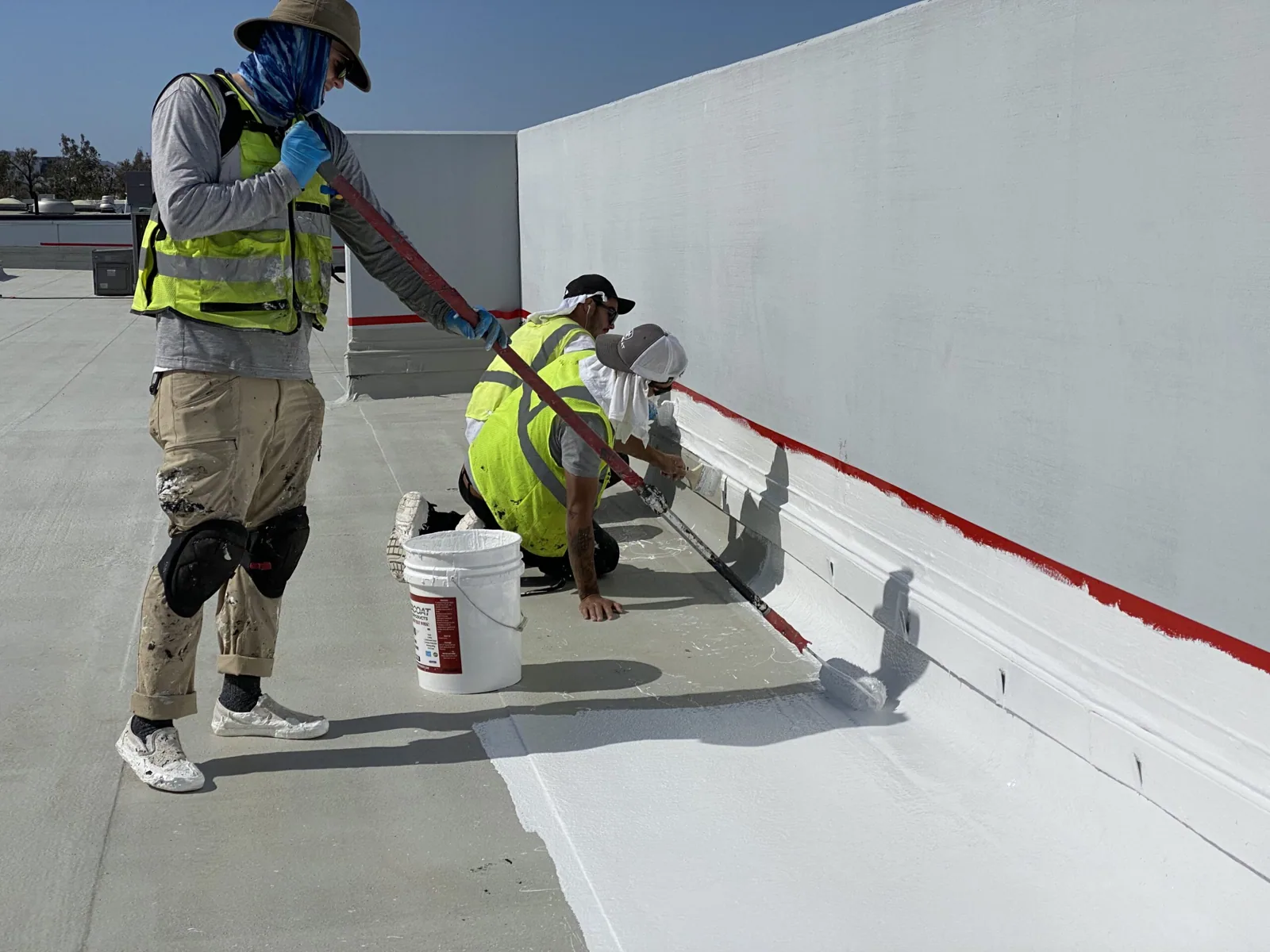
Our preventive maintenance visits go after those joints before they open. We press seams, replace brittle boots, renew sealant where it has failed and clear the drains. If the surface is aging but the roof is dry and sound, a coating can extend its life without a tear-off. A roof that is tended twice a year gives its owner warning of trouble, and warning is what a budget needs.
Roofs also gather debris in a dry, windy valley. Leaves, grit and blown litter collect at drains and behind curbs, and a clogged drain turns a quick thaw into a pond. We clear them on every visit and record the condition, so a pattern of buildup shows up in the log.
Weigh Repair, Recover and Replacement on the Evidence
Not every aging roof needs a new one. We lay out the choices with their trade-offs: keep repairing with a stated limit, restore with a coating, add a recover system over a dry roof, or replace the whole assembly. Cost follows the access, the roof area, the amount of wet insulation and the equipment that has to be lifted or worked around.
Timing follows the weather. The long dry stretch from late spring through early autumn suits adhesives, coatings and welded seams. Winter work is limited to emergency dry-in and repairs that tolerate cold. We also check the code in force, since a larger reroof may need to meet the insulation values of the editions Washington adopted in March 2024.
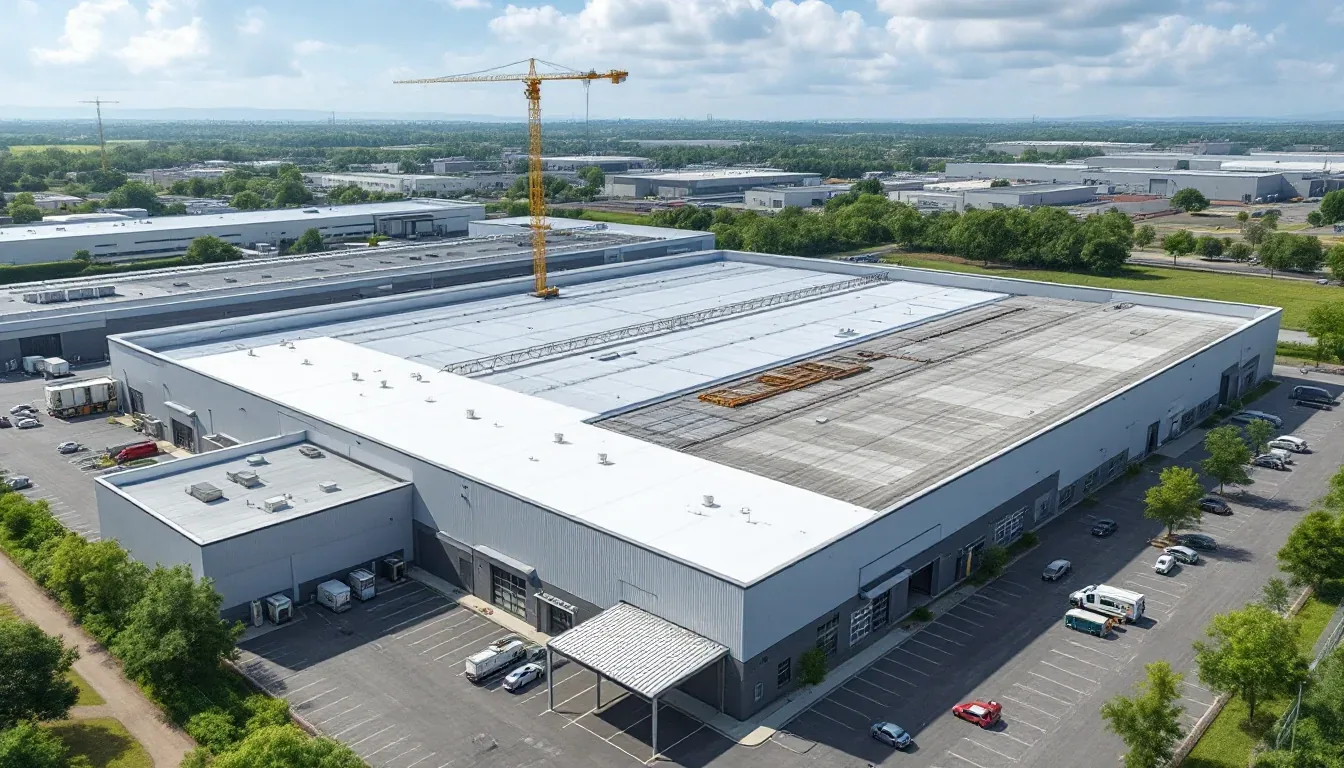
The proposal states what each path buys. A coating buys time and a cooler surface. A recover buys a new membrane without tear-off but adds weight against the snow allowance. A replacement resets the clock and lets us correct slope, flashing and drainage from the deck up.
Keep Records Where Buildings Have Changed Over Time
Wiley City was served by Yakima Valley Transportation Company freight rail until 1985, a reminder that a community's buildings can change use over the years. A building built for one purpose may now hold another, with new equipment, new penetrations and new loads. Roof records matter in that situation. We note every opening, every unit and every past repair, so a new tenant or owner inherits the history of the roof.
When a building has changed hands or purposes, we look hardest at the added details. Openings cut by other trades are often flashed in a hurry. A short written log of what is on the roof and when it was done lets the next repair start from facts. Owners in nearby West Valley and Union Gap can use the same format.
Commercial Roofing Questions
Does a building outside the city limits follow the same roofing rules?
Unincorporated areas follow Yakima County's design specifications, including the parcel snow load and a design wind speed of 110. Permit requirements for a given reroof should be confirmed with the county before work starts. We review the scope against the code in force and say whether a permit is likely.
A wet spot appeared under the roof after the thaw. What should our staff do first?
Keep people away from the area, protect equipment and take photographs of the stain and any dripping. Do not send anyone onto the roof while snow or ice is present. Call with the address and the location of the stain, and we will plan a dry-in or inspection to match.
How long can a patched roof last before replacement makes more sense?
A patch pays off when the surrounding membrane and insulation are sound. When repairs cluster in the same areas, or a moisture scan shows wet insulation across a wide area, spending on patches stops making sense. We compare the cost of repairs over the next few years with the cost of replacement and put both in writing.
Can you work around a business that stays open during the day?
Yes. We schedule noisy work for quiet hours, phase sections so the roof is closed each evening and coordinate with the building manager about air intakes, access and parking. Rooms that cannot tolerate odor or vibration are named before the first day.
What records should we keep after a repair?
Keep the dated report, the photographs, the invoice and the name of the material used. Those papers support a warranty claim or an insurance claim, and they tell the next contractor what lies under the surface. We give you a copy and keep one.