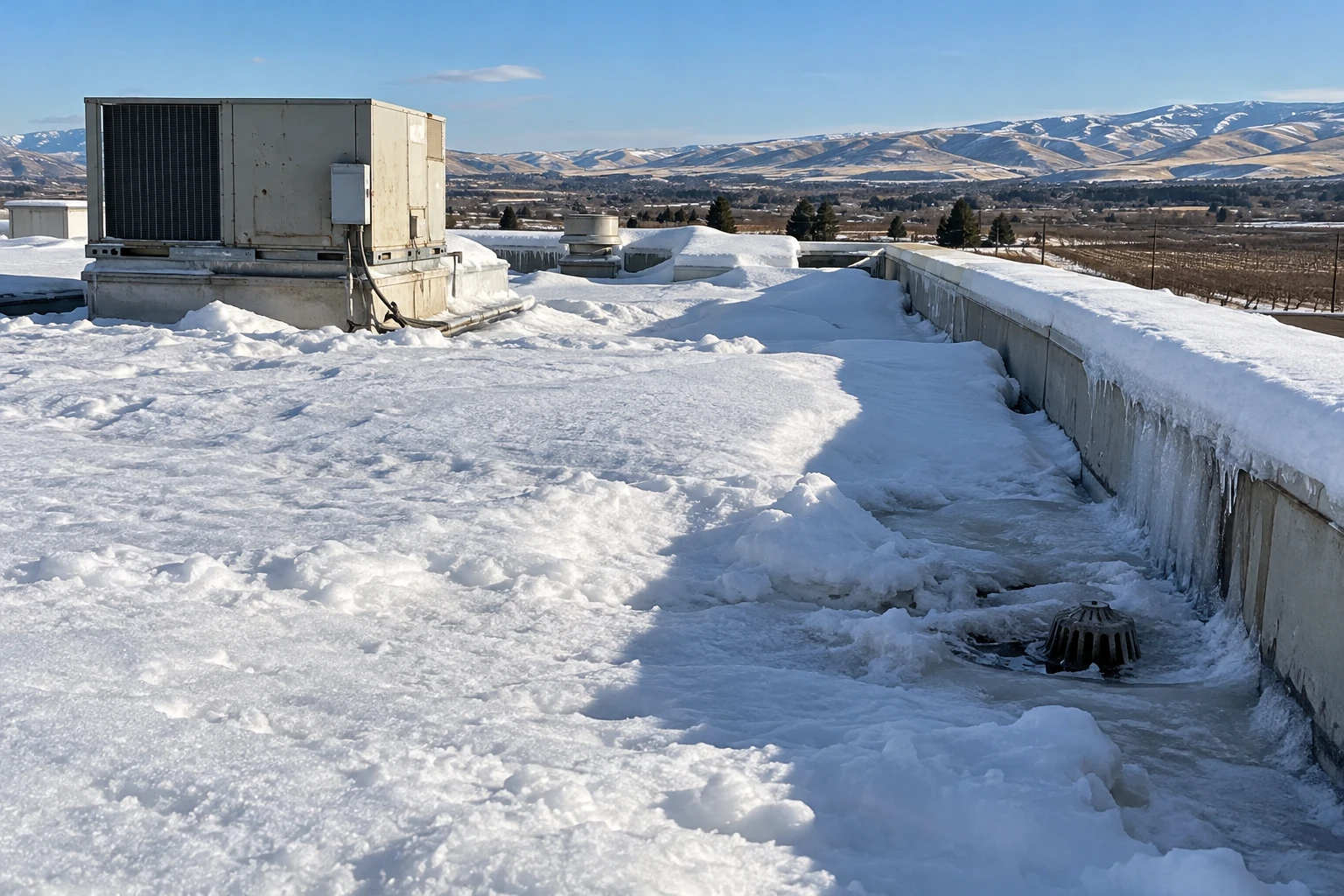
It is the second week of February, the drift on the north parapet has been packing down since the first storm, and a plant engineer calls to say a door in the break room has started to stick. Dispatch does not ask about leaks. It asks whether the engineer can see the ceiling sag, whether any wall has bulged, and what the design snow load on the permit says. In Yakima, WA, where about 21.6 inches of snow falls a year and parcel loads run from 20 psf to well over 200 psf, the first sign of trouble is often structural, and the membrane is the second thing to go.
Stop and Check for Signs of Overload Before Any Repair
A sticking door, a new crack in drywall, a sagging ceiling, a hum or a pop from the structure: each is a reason to clear the area and call before anyone steps on the roof. February 2019 brought both a red tag on a South Third Avenue commercial building, after a wall bulged under heavy snow, and a partial roof collapse on an Outlook home.
We treat those signs as a structural question first. If the building shows distress, we ask the owner to call a structural engineer, and we do not send workers onto the roof until the engineer says it can carry them. Roof repair waits for safety. That is the single rule we do not bend.
Keep staff and product away from the area under any sag. If a sprinkler line, a ceiling grid or a light fixture has moved, treat it as a load warning and not a maintenance item. We would rather get the call early and find nothing than arrive after a failure.
Clear Snow in a Load Sequence That Takes Weight Off the Worst Spots First
When clearing is needed, the order of work matters. We start with the deepest drift piles, which usually sit in the lee of any wall that rises above the field. Removing snow from the middle of the field first can leave a heavy drift pushing on an unsupported edge. We work from the drift edge inward and move downhill.
Tools are plastic, not steel. A steel blade cuts a sheet faster than a freeze does. We leave a protective layer of snow on the membrane, a few inches deep, and we avoid dragging tools across seams. Workers stay tied off, spotted and clear of the roof edge. Calls like these go to emergency roof repair, which answers around the clock.
Run a Deflection Check After the Load Comes Off
Once the snow is gone, we measure. A level and a string line show where the roof has sagged, and a laser scan maps a large area. We compare the readings with the original drawings and with earlier surveys, if they exist. Deflection that recovers when the load leaves is acceptable within limits. Deflection that stays is a structural finding.
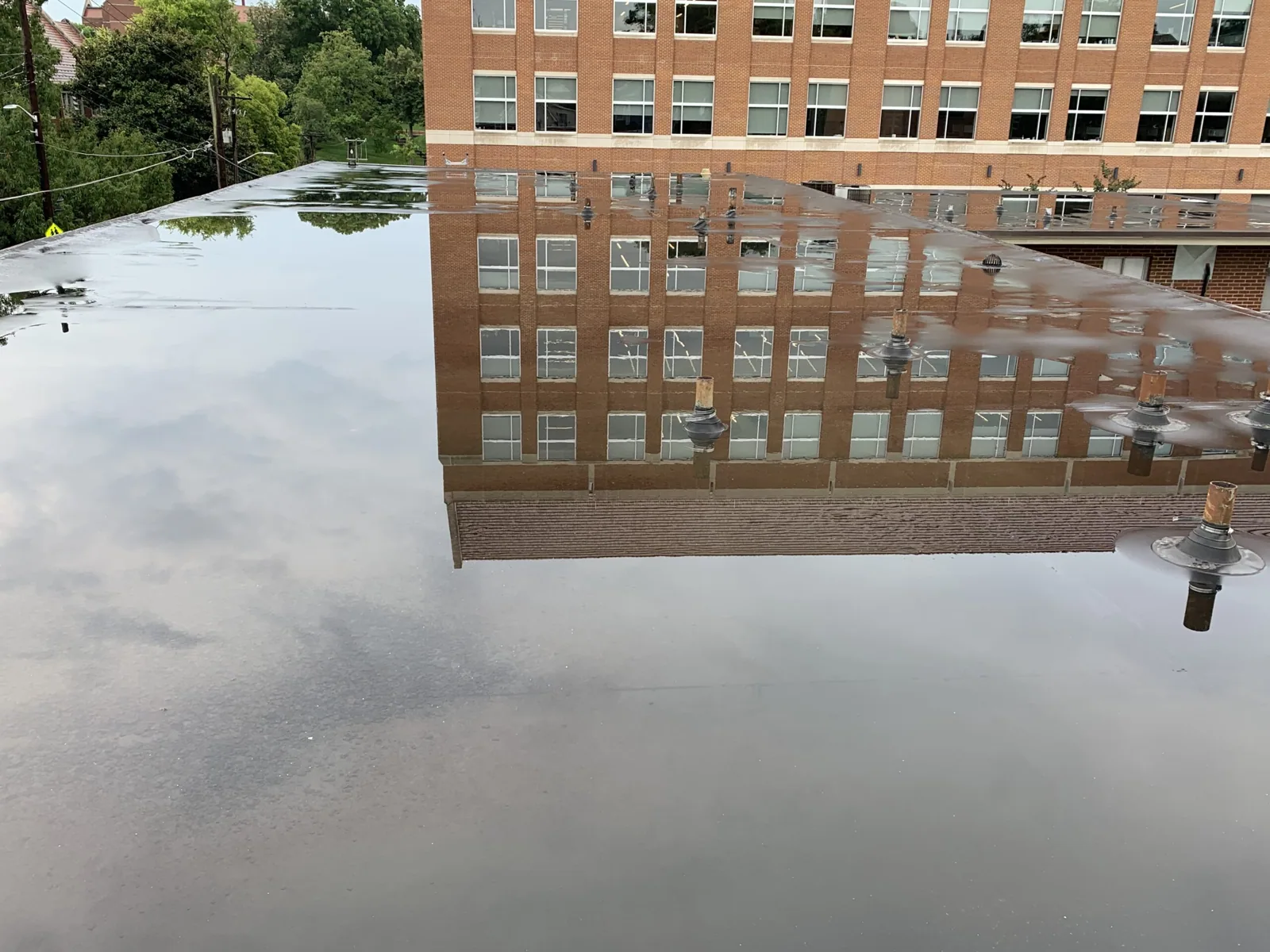
Lasting dips create ponds, so we pair the deflection check with a look at drainage. A roof that now holds water where it used to drain needs the cause addressed, and the repair path runs through ponding water repair. We report the numbers in writing so the owner and the engineer can compare them with the next winter's readings.
Repeat the check after the next heavy storm. A roof that rebounds fully in March and sits a little lower each year is telling you the structure is aging, and the capital plan should reflect it.
Find the Damage Snow Leaves in the Membrane
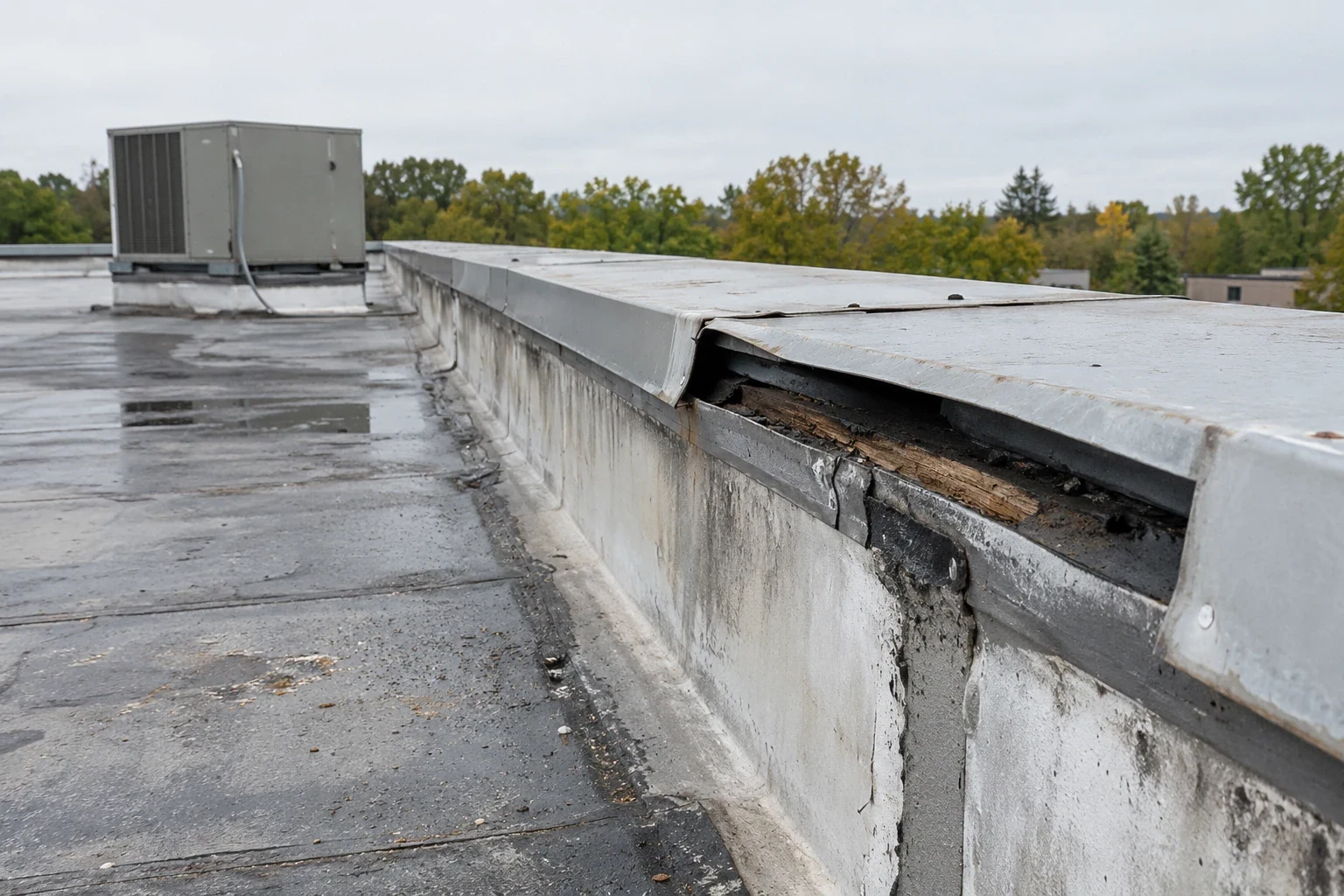
Heavy drifts compress insulation, pull seams apart at parapets and crack flashing at step-downs. Ice sheets form where meltwater refreezes, and they lift edge metal and pull at counterflashing. When the snow retreats, we probe seams, check flashing terminations and look for splits where the membrane was held tight against a wall.
The flashing failures and open laps we find are mapped and repaired in order of risk. Compressed insulation shows as a soft area that does not rebound. We measure its thickness and, where it is crushed, replace it, since it no longer insulates and no longer supports the membrane evenly.
Walls are the usual victims. A parapet or penthouse that catches a drift holds snow against the base flashing for weeks, and the melt that follows runs behind it. Cold storage buildings, where a cold storage roof already works against a large temperature difference, see the most condensation damage when insulation is crushed.
Break the Ice Cycle at Drains, Edges and Eaves
Ice forms where warm air melts snow near the roof edge and the water refreezes in the cold. Frozen drains hold back meltwater, scuppers become plugged with ice and gutters pull away under the weight. Yakima has about 19 days a year when the high never clears freezing, and the nights after warm days are the ones that build ice.
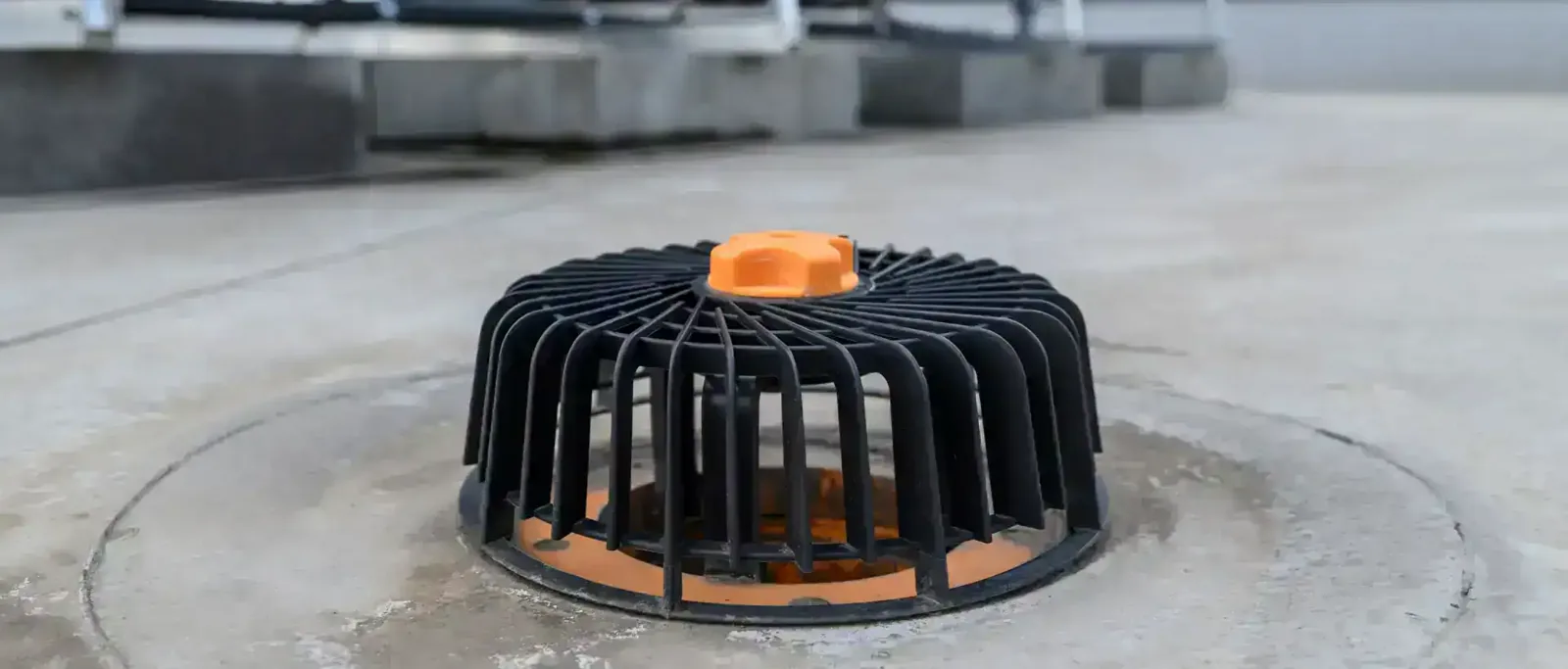
We open drains with steam or warm water, never an open flame, and we clear scuppers by hand. Where ice builds every winter at the same spot, we look for the cause: a lack of insulation, air leakage into the roof edge or a drain with no protection. Fixing that spot is part of the drains and scuppers work we plan for the season.
Plan Differently for Buildings Higher in the Valley
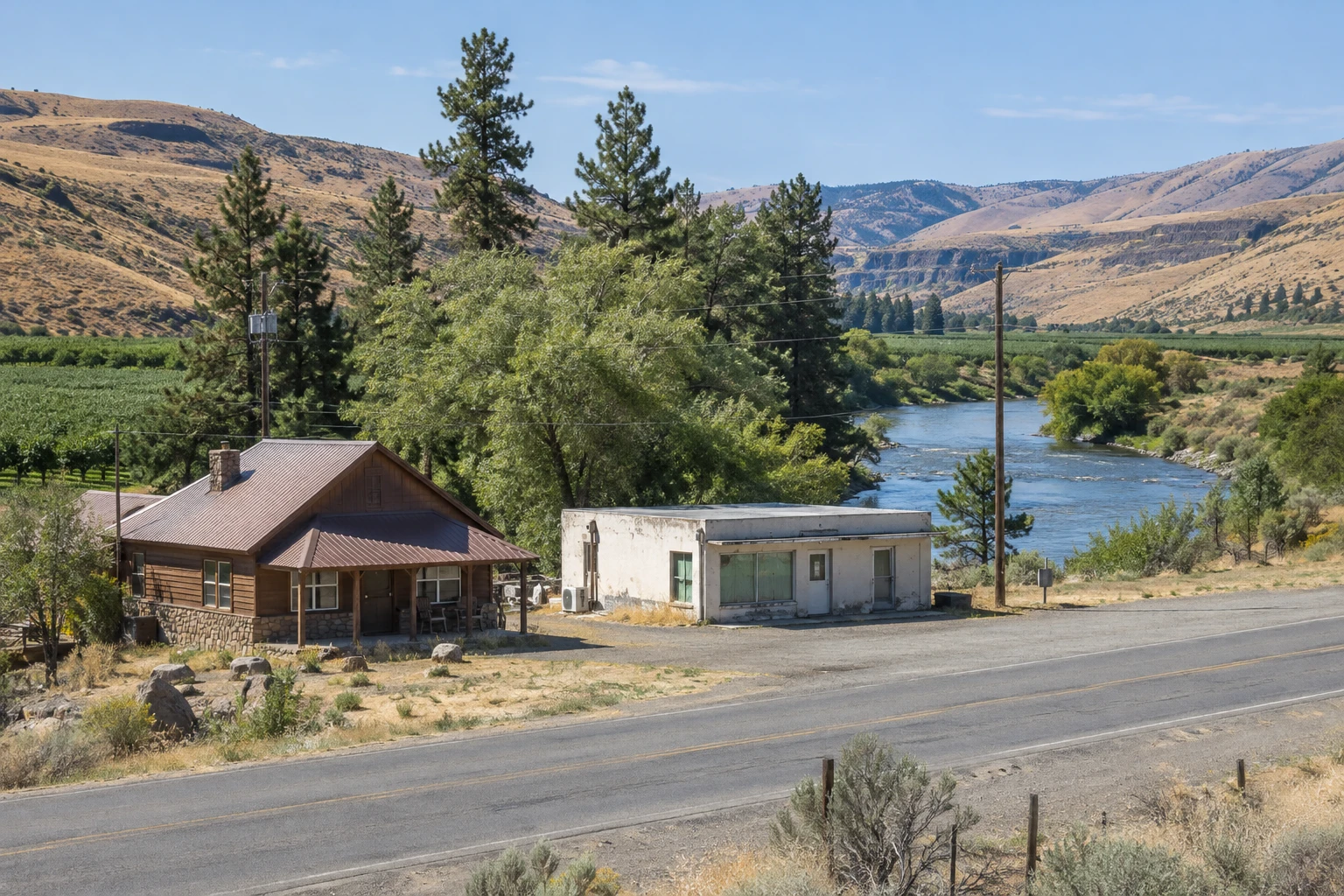
Snow exposure rises with elevation. Nile sits at about 2,008 feet, higher than Yakima, and the town's snow exposure is greater as a result. Tampico, about 18 miles west of Yakima, sits at about 2,136 feet, and Naches lies near the Cascade foothills. A building in Nile or another foothill community should be checked against its own parcel load and not against the city's, because the permit number for that parcel is the one that counts.
The same discipline applies to a packing or storage building there as on the valley floor: know the design load, watch the drifts, and call before the roof tells you something is wrong. Higher sites also keep snow later into spring, so the inspection after the melt happens later too.
Commercial Roofing Questions
How much snow is too much for a flat commercial roof?
The answer is in your building's design load, which is parcel specific in Yakima County and listed on the permit or drawings. A fixed depth does not work, since wet, packed or drifted snow weighs far more than light powder. We estimate weight from depth and density and compare it with the design value.
Can we hire our own crew to shovel the roof?
Anyone who clears a roof should use plastic tools, work from the drift edge, leave a protective layer and stay tied off. Steel shovels cut membranes, and untrained crews walk onto unsafe areas. We are glad to clear the roof ourselves, and we document the condition afterward.
A roof leaks only when snow melts. Where should we look?
Look at flashings, drains and parapet walls, because meltwater concentrates there. Ice dams can push water under laps that rain would not reach. A moisture scan after the thaw shows where water entered, and we trace it back along the deck.
Does snow damage show up in the spring or the first winter after?
Both. Some damage, such as torn seams and cracked flashing, appears at once. Other damage, such as deflection and compressed insulation, shows in the next melt or the next storm. A spring inspection catches what the first thaw left behind.
Will insurance cover snow load damage?
Coverage depends on the policy and the cause of loss, so talk to your insurer promptly. We document the load, the damage and the repair, and we keep removed materials until the adjuster has seen them.