A regional property manager calls in the first week of December, before the snow has started, and asks a plain question: which of my buildings will give me trouble this winter? Dispatch cannot answer from memory, and neither can the manager. The answer lives in a record: each roof's system, age, repair history, design snow load and the places where drifts pile up. In Yakima, WA, a market that swings from 113 F summers to minus 25 F winters and 21.6 inches of snow, a roof asset record turns a hope into a short list. Managing roofs as assets means knowing what you have before the weather tests it.
Build the Inventory Roof by Roof
The first job is a clean list. For each building we record the address, the number of roof sections, the system on each, the approximate install date, the insulation type and the access route to the roof. Each section gets its own entry, because a warehouse with a later addition and a newer cold room has two roofs, not one.
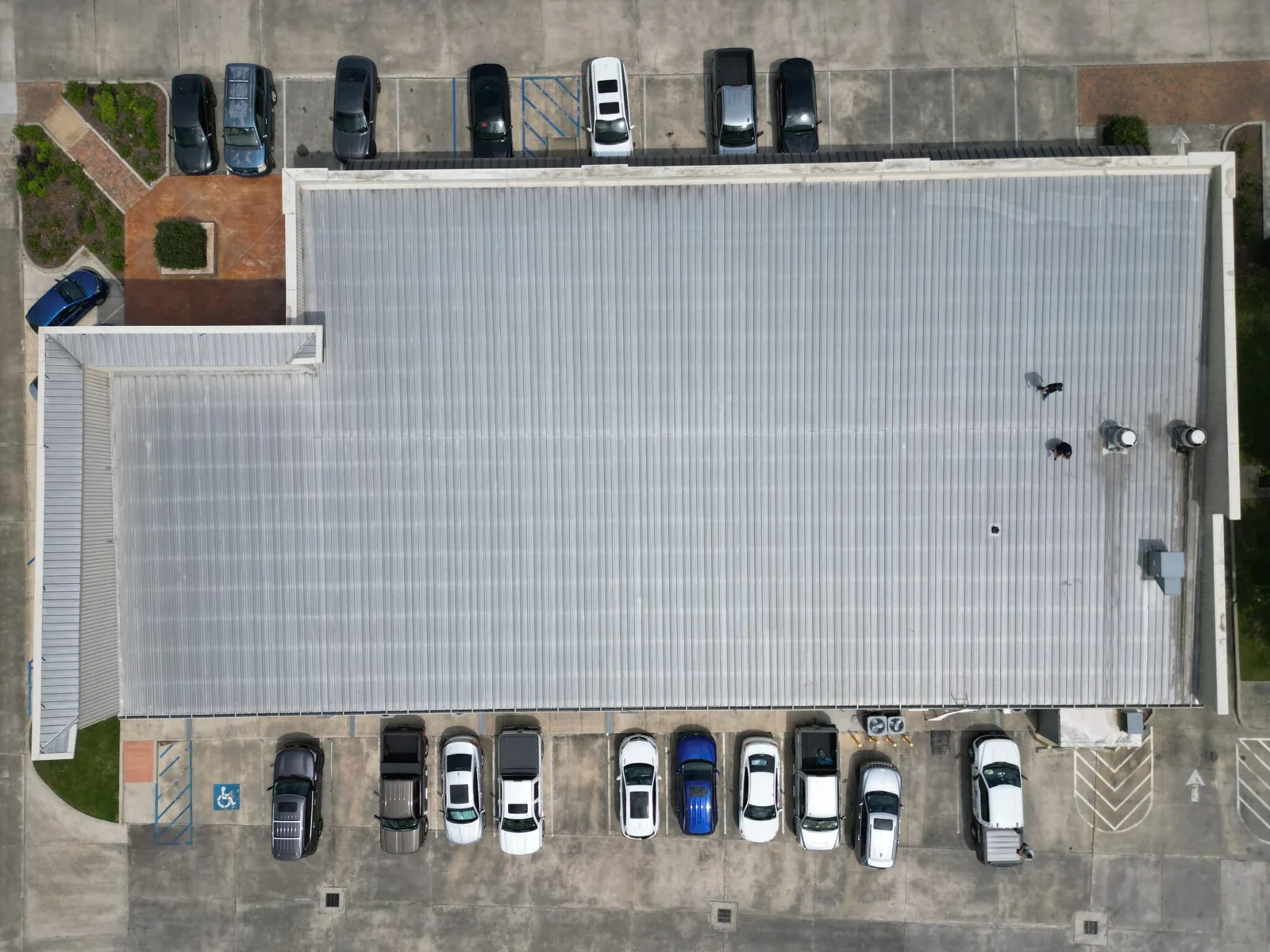
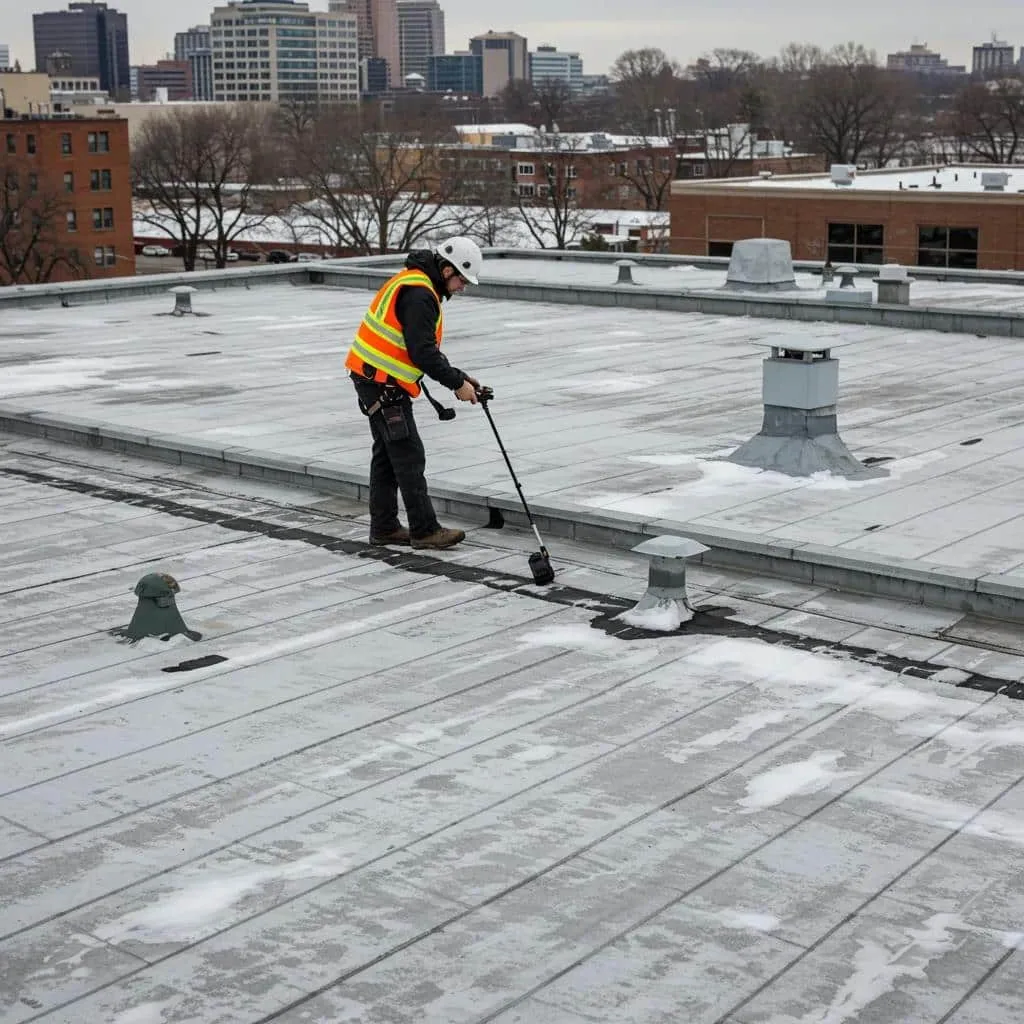
We also record who services the rooftop equipment, where the drains and scuppers sit and which areas show repair history. A roof plan with numbered sections and photographs ties the list to the real building. The inventory takes shape during a first round of commercial roof inspection visits, and it becomes the base for every later decision.
Access notes save real time later. We write down where the hatch or ladder is, whether a lift is needed, what the parapet height is and which doors are locked after hours. When a storm hits at night, the on-call crew does not stand at the gate asking how to reach the roof.
Attach the Design Snow Load and Wind Speed to Each Entry
Snow load follows the parcel, engineering is required above 70 psf, and the county's design wind speed is 110. Two buildings a mile apart can carry very different numbers. We pull the figure from each permit set or drawing and write it into the record, so the person who calls in January knows the threshold before the snow reaches it.
Where the drawings are missing, we flag the gap and suggest an engineer's review for the buildings that matter most. The record also notes drift zones: the parapets, penthouses and step-downs where snow stacks. After the February 2019 red-tagging of a South Third Avenue building under heavy snow, those notes have a very practical use.
Score Condition with a Method You Can Repeat
A condition score is only useful if two inspectors would give the same number. We rate each section on a fixed scale that covers the membrane, seams, flashing, drainage, insulation and deck, and we back each rating with photographs and, where it matters, moisture readings. The result is a ranking that moves the worst roofs to the top.
Scores are revisited at each visit, which turns single observations into a trend. A section that drops one step in a year needs a different plan from one that has held steady for five. We share the scoring sheet with your team so the numbers are not a mystery. A detailed condition report sits behind each score and carries the evidence.
We also record the operating context for each score. A roof over a cold room, a clinic or a packing line carries a higher consequence for the same condition, and the ranking reflects that. A moderate score above a patient area can outrank a worse score above an empty storage bay.
Log Every Storm, Leak and Repair Against the Roof It Touched
The event log is the memory of the program. Any roof that lost an edge in the late-November 2019 windstorm should carry a note. The same goes for each leak call, each patch and each snow clearing. We use a simple format: date, cause, location, action and cost.
Over a few seasons the log shows patterns that no single visit can. A roof that leaks at the same parapet each spring has a design problem. One that needs repairs after every gale has weak edges. We call this record the callback log, and it feeds directly into the maintenance schedule we build.
Photographs belong in the log from the start. A dated image of a lifted edge or a stained ceiling settles arguments about when something happened, and it gives the next inspector a baseline. We store images by building and section so any one of them can be found in a minute.
Forecast Remaining Life and Hand It to the Budget
From the condition data we estimate how many years each section has left. The estimate has a range, not a single number, because weather and use change the answer. We sort sections into groups: sound, watch, repair soon and replace. The groups feed the capital planning process, which assigns budget years.
The goal is to avoid two kinds of waste. Replacing a roof that still has years left spends money early. Waiting on a roof that is failing spends it later, on emergency calls and interior damage. A forecast based on measured condition lets the owner choose the year.
Warranty dates and manufacturer terms go in the same record. A roof that is eight years into a longer warranty needs different attention from one that has just passed it, and the notice requirements for a repair are easier to meet when they sit next to the roof they affect.
Match the Record to the Kind of Buildings You Hold
Portfolios in the valley differ. A retailer around Valley Mall in Union Gap holds roofs with many rooftop units and a strong need for leak-free ceilings. A food company holds cold storage and processing buildings. A hospital system such as Yakima Valley Memorial holds patient areas where a leak is a clinical problem. Tenants at the Yakima Air Terminal hold hangars. The record is shaped to each, and a property management team gets a format that fits a multi-owner reporting chain.
Commercial Roofing Questions
Do we need to inspect every roof before starting a record?
A full first pass is the cleanest route, because each roof needs a baseline. For a large portfolio, we may start with the buildings that matter most to operations or carry the greatest risk, then fill in the rest over a season. Every entry begins with a visit, not a guess.
What format do you deliver the asset record in?
A shared spreadsheet and a set of photo folders organized by building and roof section are the usual format, with a summary page for managers. If your organization uses a work-order system, we can supply the data in the form it accepts. The roof plans come as annotated PDFs.
How often should the record be updated?
After every visit, storm and repair, and with a full review each year. The spring visit updates condition scores after winter, and the autumn visit sets the winter plan. Keeping the log current is what makes it useful in an emergency.
Can a record help with insurance or a sale?
Yes. Dated photos, repair history and condition scores answer many of the questions an underwriter, lender or buyer asks. A record kept over several years also shows that roofs were maintained, which supports a claim and a valuation.
What if our existing roof files are incomplete?
Most are. We start with what exists, mark the gaps and fill them as we inspect. Missing drawings and warranty papers can often be recovered from contractors, building departments and former owners, and we note where they could not be found.