A maintenance lead peels back a corner of seam tape on a cold January morning and finds it dry, and the question dispatch asks is whether the sheet underneath is rubber or plastic. Carlisle SynTec is a single-ply roofing manufacturer whose commercial systems cover both: EPDM rubber, TPO thermoplastic and PVC thermoplastic. The category matters more than the label, because rubber is spliced with tape or adhesive and thermoplastics are welded with hot air, and the two age differently. In Yakima, WA, where lows have reached minus 25 F and highs 113 F, each family meets the same weather in its own way.
We install, repair and recover these categories of single-ply roof. Bring the roof label or a photo of it, the roof age, the attachment method if you know it and the permit drawings with the design snow load. We will identify the family, probe the seams and tell you what the roof needs.
Read the Rubber Splices Before Anything Else
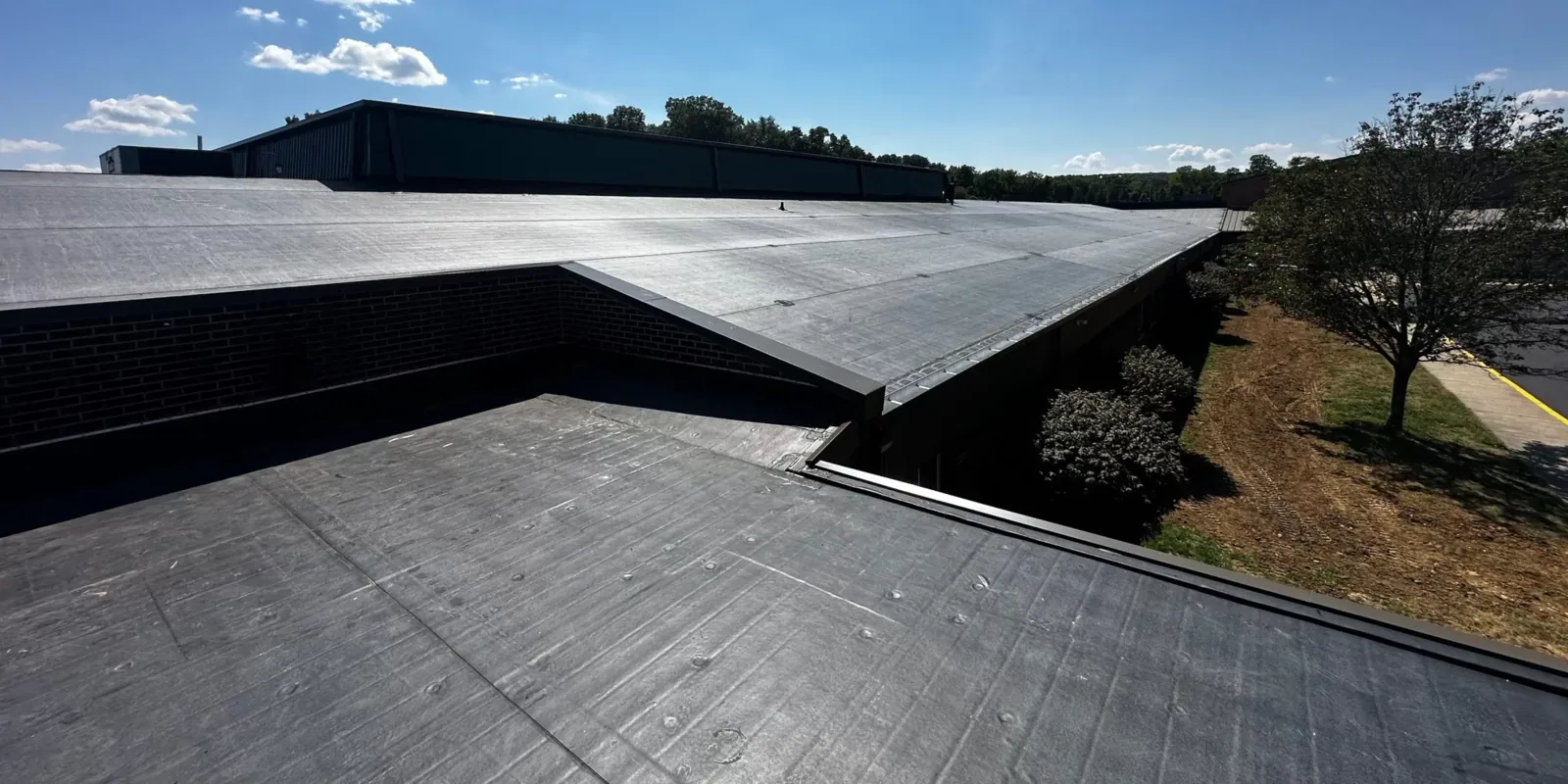
On an EPDM roof, the weak points are splices, flashings and aged adhesive. Large sheets mean fewer seams, but each seam is held by tape or adhesive that dries over the years. We press-test the splices, look for lifted edges and check where the sheet has shrunk away from a curb or a parapet. Shrinkage pulls the flashing taut, and a taut flashing splits in the first hard freeze. The fix is to release the tension, add a relief strip of new membrane at the corner and re-seat the termination bar, not to smear sealant over the split. We photograph each corner before and after so the owner can see what changed.
A repair starts with cleaning, because tape will not grip a surface covered in a chalky film. We use a cleaner, a primer and fresh tape, and we leave a lap of new material beyond the failed area. For a roof with widespread splice failure or shrinkage, the EPDM roof has reached the end of its sheet and the discussion turns to recover or replacement.
Probe the Welds on the Thermoplastic Families
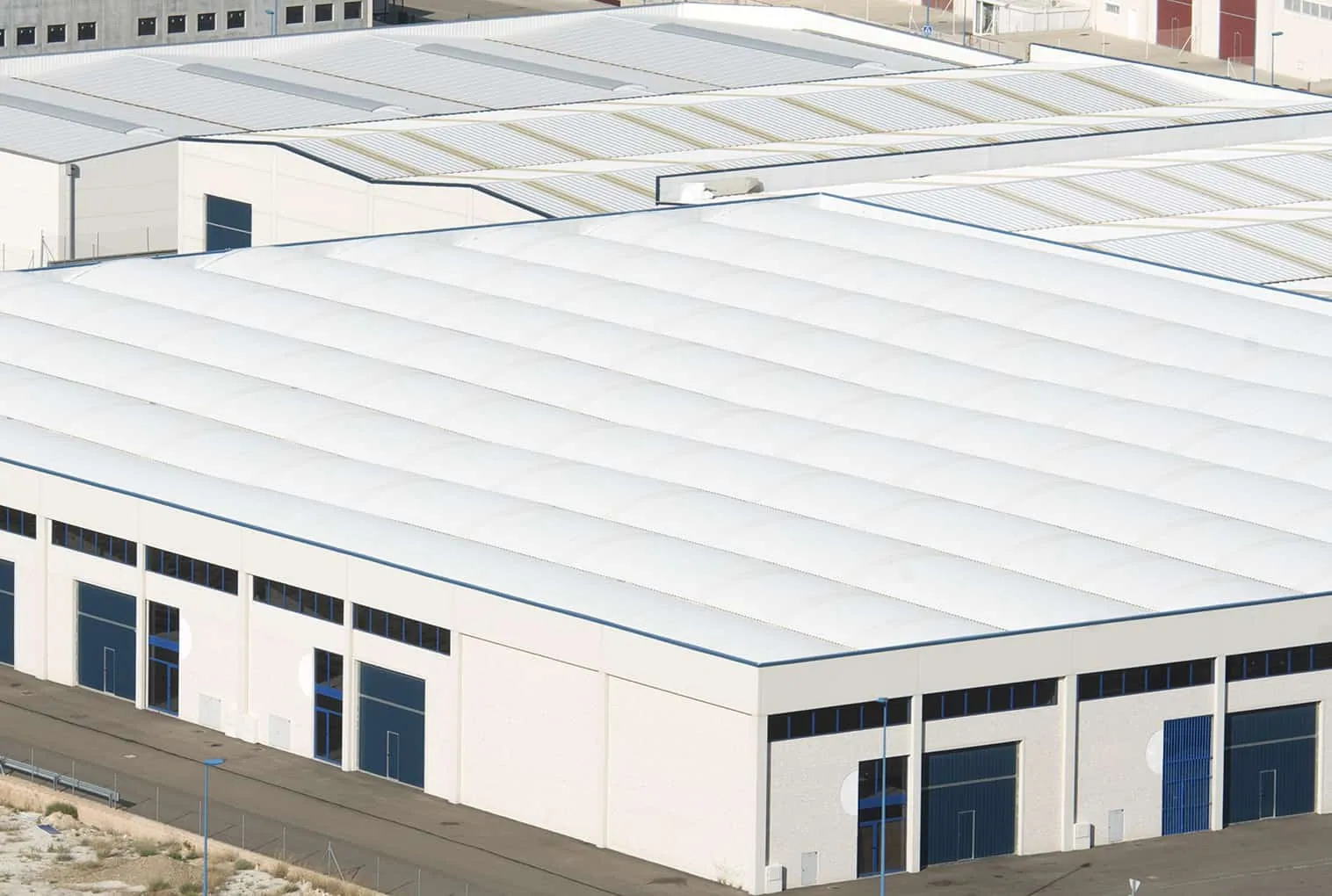
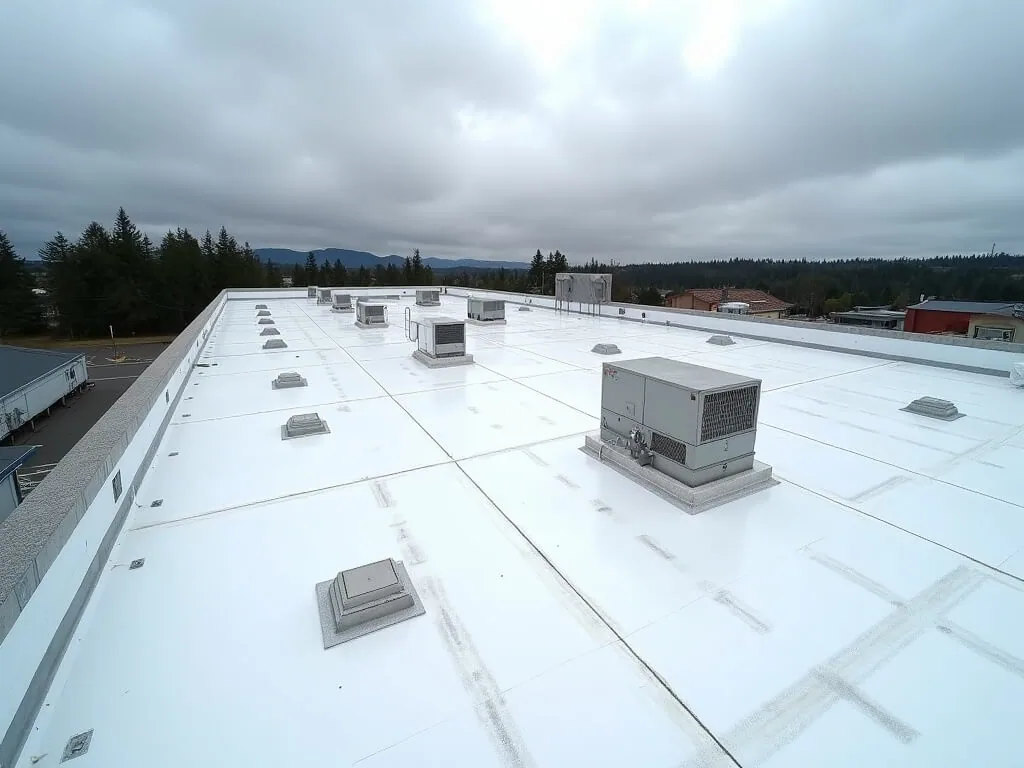
TPO and PVC sheets are joined by hot-air welds. A good weld is continuous, slightly glossy at the edge and free of wrinkles. A bad one is dull, gapped or pulled at the corner. We probe each lap with a blunt tool and test cut samples on a retrofit. The probe tells us whether the weld is continuous, and the sample, pulled apart by hand, shows whether the two layers have actually fused or merely stuck. A fused weld tears the sheet before it lets go of the seam, which is the result we look for on a new roof and the one we cannot find on a roof that has aged out. Where a weld has failed, we clean the surface and re-weld, and we look at why it opened.
Older thermoplastic may not accept a new weld, because the surface has weathered. A test patch tells us. If it fails, the choice is a coating over a dry, sound roof or a recover. The choice between TPO and PVC on a replacement turns on what the roof sees: grease, heat or standing water push toward PVC, and a dry, plain roof suits TPO.
Know How the Sheet Is Held Down
Single-ply roofs are fully adhered, mechanically attached or ballasted. Each has a distinct failure pattern. Adhered sheets lose bond at edges and corners. Attached sheets show fastener backout and billowing in wind. Ballasted sheets hide problems under stone and load the structure. We identify the method before we price, because a repair that suits one fails on another.
Single-ply roofs across the valley were tested by the late-November 2019 windstorm, and the county's design wind speed is 110. At the perimeter and corners, uplift is highest, and extra fastening or a heavier adhesive pattern is standard. After any gale, we walk the edges and check the metal. A lifted edge on a single-ply roof starts a tear that the next gust finishes.
Handle Winter With Plastic Tools and a Load Check
Black EPDM absorbs sun and sheds light snow quickly, while a white thermoplastic holds it longer. Either one collects drifts at parapets and at the step between roof levels, and the design snow load belongs to the parcel. A steel shovel does the same damage to rubber as to plastic.
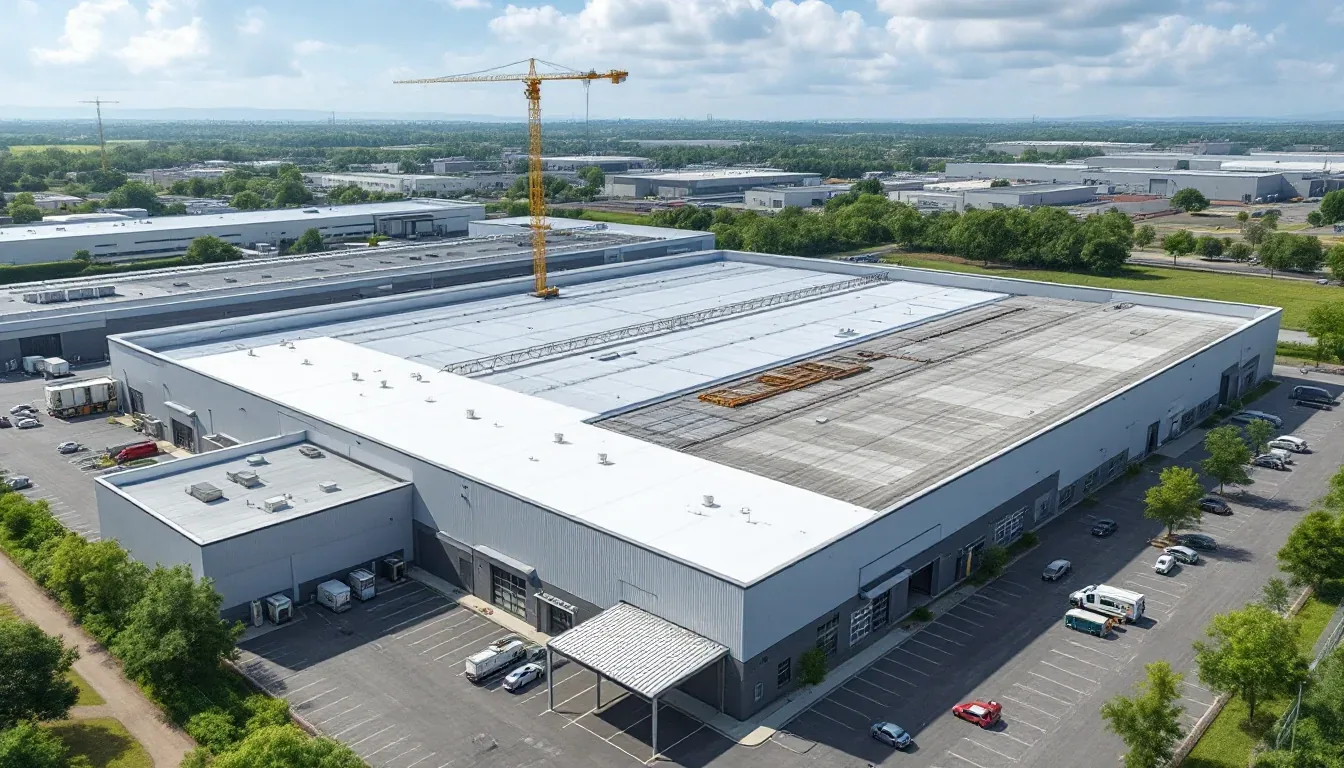
Our crews clear with plastic tools and leave a layer of snow in place. Before a recover adds weight, we check the permit load and look for deflection in the deck. A recover over a single-ply roof only works if the old insulation is dry, so a moisture scan comes first.
Place the Roof in the Valley
The big-box stores around Valley Mall in Union Gap carry much of the valley's retail roof area, and a single-ply system there meets the same questions as one on a plant or warehouse in a town such as Wapato, where agriculture has been the main industry since the Irwin Canal was built in 1896. We inspect each building for its own conditions, because two roofs on the same street can differ in age, attachment and drainage. The walk covers drains, scuppers, edge metal, curbs and every penetration, and the results go into a short written report that ranks the findings by urgency.
For comparison, look at how sister categories behave. A Versico roof and a Duro-Last roof are both single-ply, and the checks are similar: seams, flashings, attachment. Where the roof is a blend of two systems from a past recover, we mark the boundary and treat each side by its own rules.
Commercial Roofing Questions
How can I tell whether my roof is EPDM or a thermoplastic sheet?
EPDM is usually black, feels rubbery and has tape or adhesive at the seams. TPO and PVC are usually white or light gray and show a welded edge. A small core sample or a label confirms it. Send us photos of the surface and a close shot of a seam, and we will tell you which family you have.
Can you repair a roof if I do not know who installed it?
Yes. We identify the system by its surface, seams and label, and we repair it with compatible materials. We also document the findings so the next owner knows what is there. If the roof has a manufacturer warranty, send us the paperwork and we read the terms before we touch it.
Is it worth repairing an EPDM roof that is nearly twenty years old?
It depends on the splices and the insulation. If the sheet is flexible, the splices are mostly sound and the insulation is dry, targeted repairs buy time. If the sheet is brittle, shrunken or leaking across the field, the money is better spent on a recover or replacement. A moisture scan and splice test give the numbers.
What happens if I recover a single-ply roof with another membrane?
The new sheet goes over a cover board or separation layer, and the old roof stays as a base. A recover avoids tear-off cost and downtime, though the added weight and the hidden old surface are the price. The old roof must be dry, and the deck must be sound. We check both before we recommend it.
Should the edge metal be replaced when we re-roof?
Usually, yes. Edge metal is the first line of defense against wind, and old metal may be loose, bent or corroded. New edge metal, with proper cleats and fasteners, helps the perimeter resist uplift. We inspect the existing metal and give you a clear recommendation.