A tape measure, a sketch and a handful of photos are all the crew carries up the ladder on the first visit, because the roof being measured will be cut in a factory before it ever sees a deck. Duro-Last is a roofing manufacturer known for prefabricated PVC membrane: sheets are fabricated off site to the measurements of each roof, with welded seams and preformed boots made in advance, then shipped to the building and installed. Dispatch asks one thing about such a roof: how long ago was it measured, and has anything changed on the deck since?
In Yakima, WA, where the roof ranges from minus 25 F to 113 F, a PVC sheet with fewer field seams is attractive. We install, repair and maintain prefabricated PVC roofs. Bring the label if you have one, the roof age, the permit drawings with the design snow load and any record of additions or equipment changes, and we will tell you what we find.
Measure Twice Because the Sheet Is Cut Once
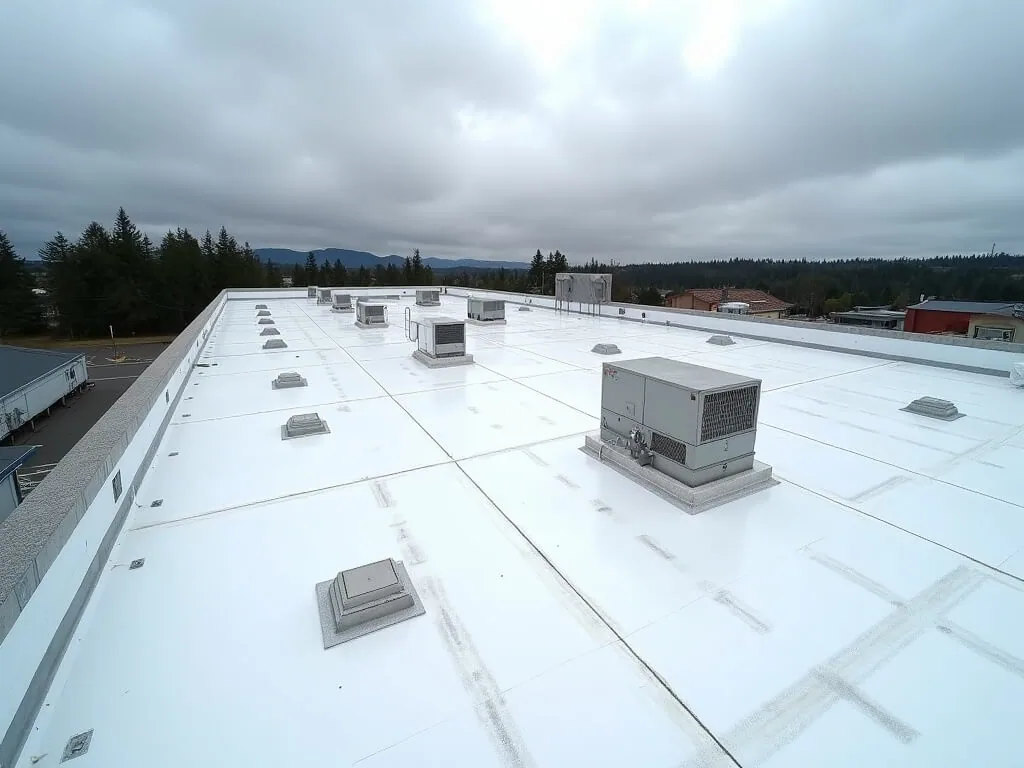
A prefabricated roof is only as accurate as its measurements. Every parapet height, every curb, every pipe, every drain and every corner goes onto the sketch. We photograph each penetration, measure it with a tape and note its distance from the nearest wall. An error of an inch can mean a boot that does not fit.
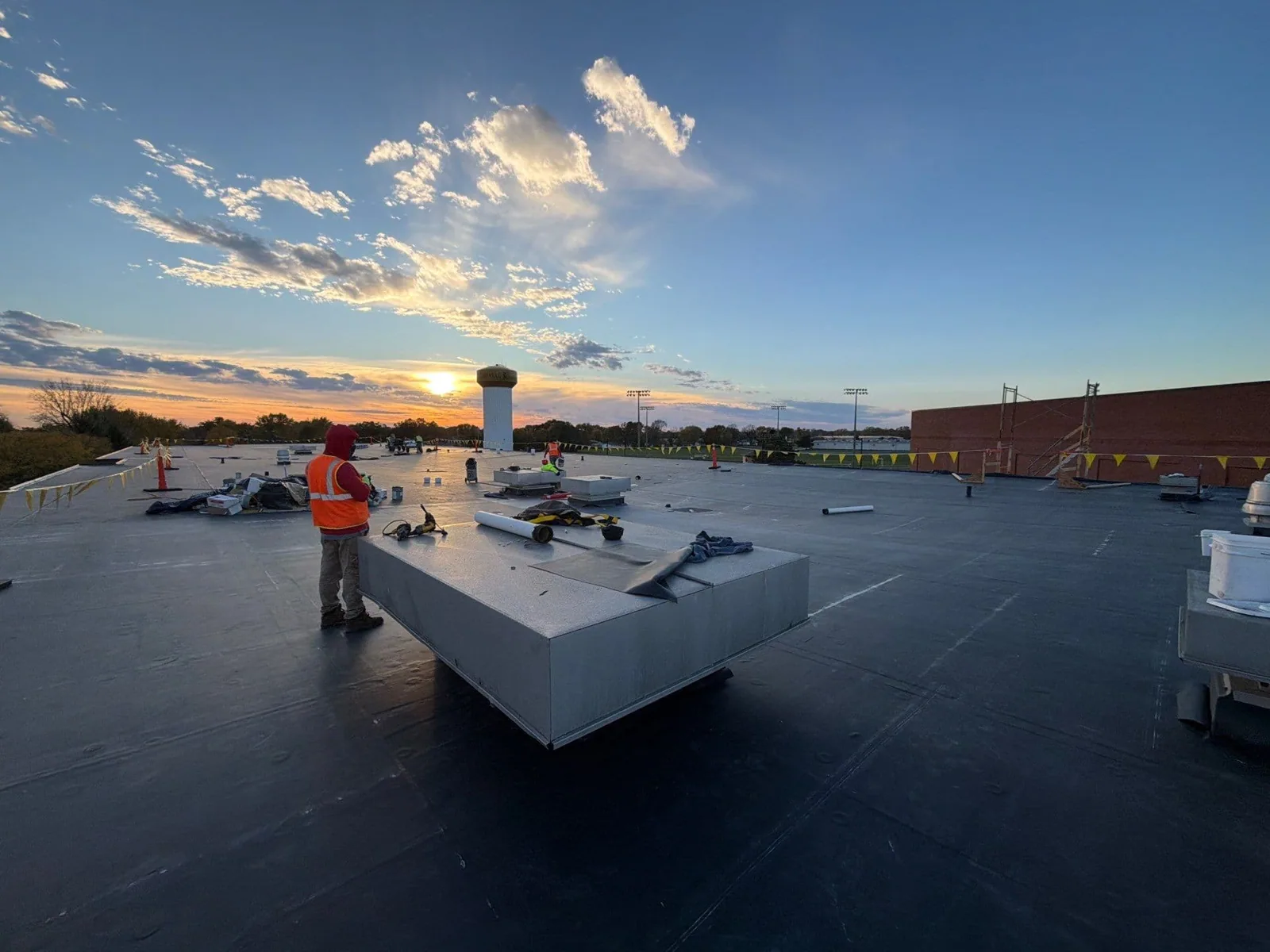
On the day of installation, the sheets arrive rolled and labeled, and the crew lays them out in order. Field fitting handles small differences, and any large mismatch is caught before welding begins. We verify the dimensions a second time against the sketch before a single sheet goes down. It adds half a day and prevents a rework that costs weeks. On a roof with a dozen curbs, we also number each one on the sketch and on the sheet layout, so the crew can find the boot for curb seven without unrolling every sheet. Photos of each curb before the old roof is disturbed go into the file, because the old flashing often shows how the original installer handled an awkward corner.
Weld the Few Field Seams With Care
The factory welds most seams under controlled conditions. The field seams, where prefabricated panels meet on the roof, are welded by hand-held or robotic equipment. Those seams are the ones to probe. We test each lap with a blunt tool, mark gaps, and re-weld before the next section goes down. Corners and penetrations use preformed boots made to measure, which reduces hand-cut detail work.
Compared with a roll-goods PVC roof, a prefabricated roof shifts effort from the roof to the factory. That helps on small and mid-sized roofs with many penetrations, where hand-cut flashings would otherwise multiply. It helps less on a very large, plain roof, where long rolls are efficient. We compare both for your building and put the tradeoffs on paper: the number of field seams, the number of hand-cut details, the lead time, the weight and the cost of each. A roof with a dozen penetrations and tight walls tends to favor prefabrication, and an open expanse with few penetrations tends to favor rolls.
Recover Over a Dry Roof Instead of Tearing Off
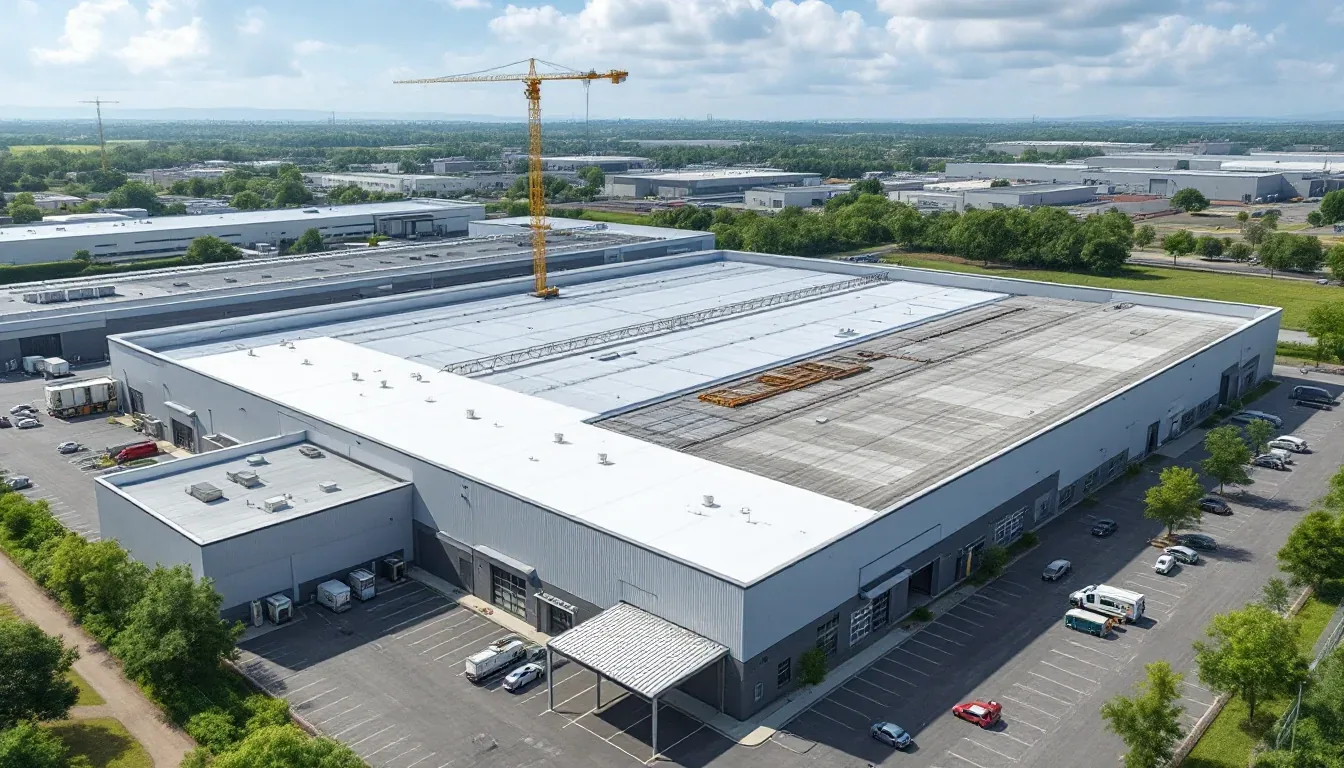
Prefabricated PVC is often installed as a recover over an existing roof. The old roof stays as a base, a separation layer or cover board goes over it, and the new sheets are laid on top. This cuts tear-off cost and downtime. It adds weight, and the parcel's design snow load decides how much can be added, with engineering required above 70 psf.
The old roof must be dry. We run a moisture survey, cut cores and mark wet areas for removal. Some old materials react with PVC, so a separation layer is standard. Where the existing roof is saturated, it comes off. Our recover and overlay work states the added weight, the moisture findings and the layer sequence in writing before the order is placed.
Plan the Install Around Wind and Cold
Large prefabricated sheets catch wind, whether the building is in Union Gap or out toward Wapato. A loose sheet on a roof is a sail, and the late-November 2019 windstorm showed how fast valley wind arrives. We lay sheets in sections, secure each as it goes down, and keep the rest weighted or stored. Gusty days are not days to unroll.
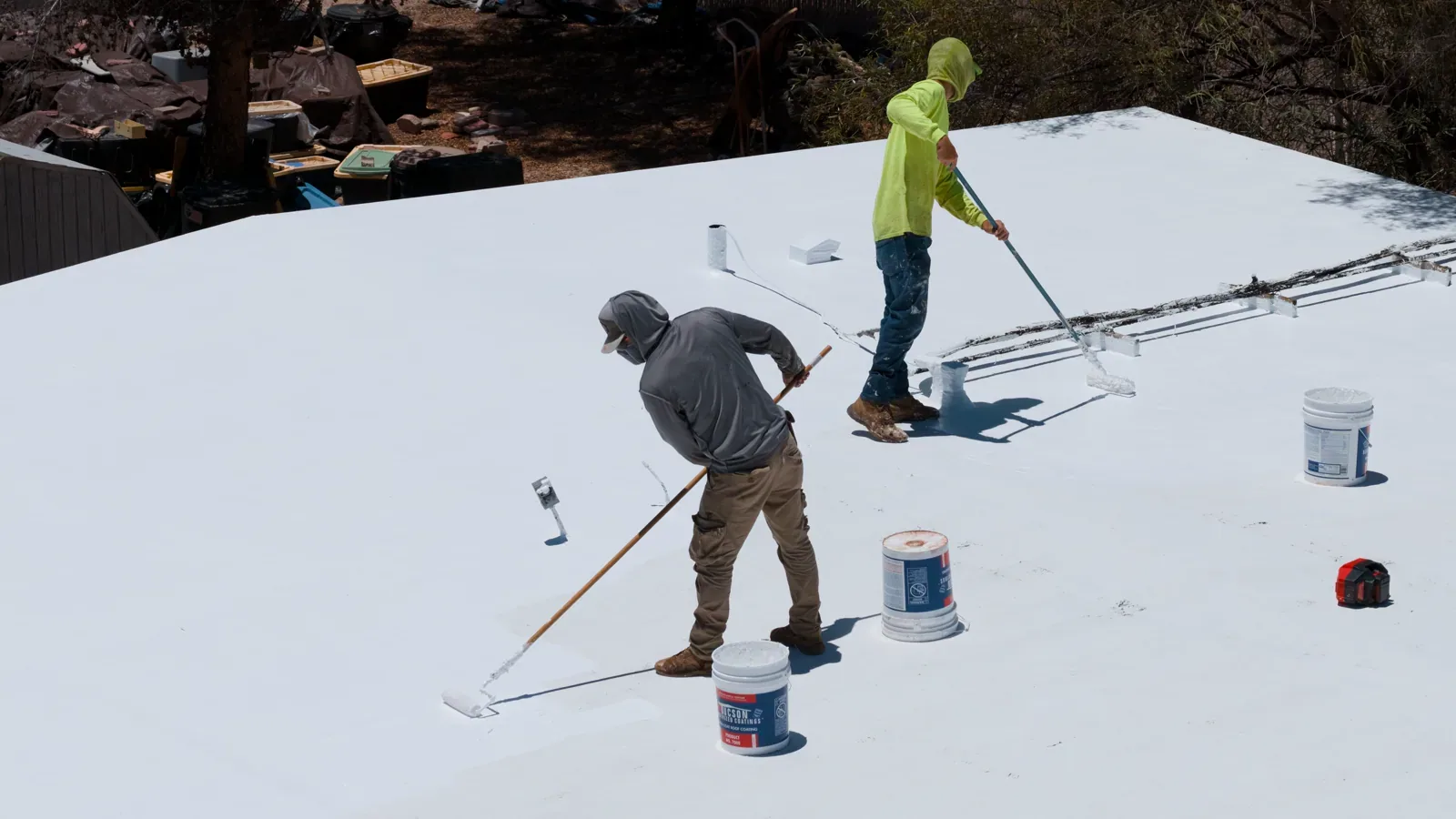
PVC stiffens in the cold, and welding in winter is slower and more delicate. We prefer mild, dry days and use heat-gun technique to keep welds consistent. If snow is forecast, we seal the open edge. Later snow is cleared with plastic tools, and a layer of snow protects the new sheet.
Inspect the Field Seams and Boots Each Season
A prefabricated roof is low in maintenance but not free of it. In spring and fall, we walk the roof, probe field seams, check boots for cracks and clear drains. Exhaust residue near vents is cleaned. Walk pads along service routes are checked and replaced if worn. A roof near Ahtanum or in the valley's other communities receives the same walk, adjusted for what vents onto each surface.
When a leak occurs, the repair uses the same material family, and the first question is whether it is a seam failure at a field weld, a boot that has cracked or a flashing that has pulled loose. A patch with rounded corners is welded over a cleaned surface and probed. Compare this with the thermoplastic work of Sika Sarnafil and the single-ply catalog of Holcim Elevate: the repair methods overlap, and the difference is in how the sheet was made.
Commercial Roofing Questions
How accurate must the measurements be for a prefabricated roof?
Close to an inch on key dimensions, and every penetration must be located. We measure each curb, pipe and drain, photograph them and draw a sketch. Before sheets are cut, we check the sketch against the roof again. Small differences are handled in the field, but large errors mean rework, so the second check matters.
Does a prefabricated roof leak less because it has fewer seams?
It has fewer field seams, which are common failure points, and preformed boots reduce hand-cut details. That helps. The remaining seams and boots still need probing and maintenance, and flashings at walls and curbs still fail if not rebuilt properly. Fewer seams is an advantage, and the rest still depends on the details.
Can my existing roof be covered with prefabricated PVC?
Usually, if it is dry and the deck is sound. We use a separation layer or cover board between old and new, and we check the added weight against the snow load. Moisture readings come first, and any wet areas come off, with the quantity named in the proposal.
How long does it take to receive the sheets after measuring?
Fabrication and shipping take time, and the schedule depends on the manufacturer's queue. We plan the install date around the delivery, not the other way around. If the roof is leaking in the meantime, we apply a temporary seal and book the install for the first mild, dry window.
What happens if we add a rooftop unit after the roof is installed?
The new curb needs a flashing that welds into the membrane. We cut an opening, set a boot or a prefabricated curb flashing and weld it to the sheet. Tell us before the unit is set, so the roof is not damaged by the lift and the new flashing can be planned with the mechanical contractor.