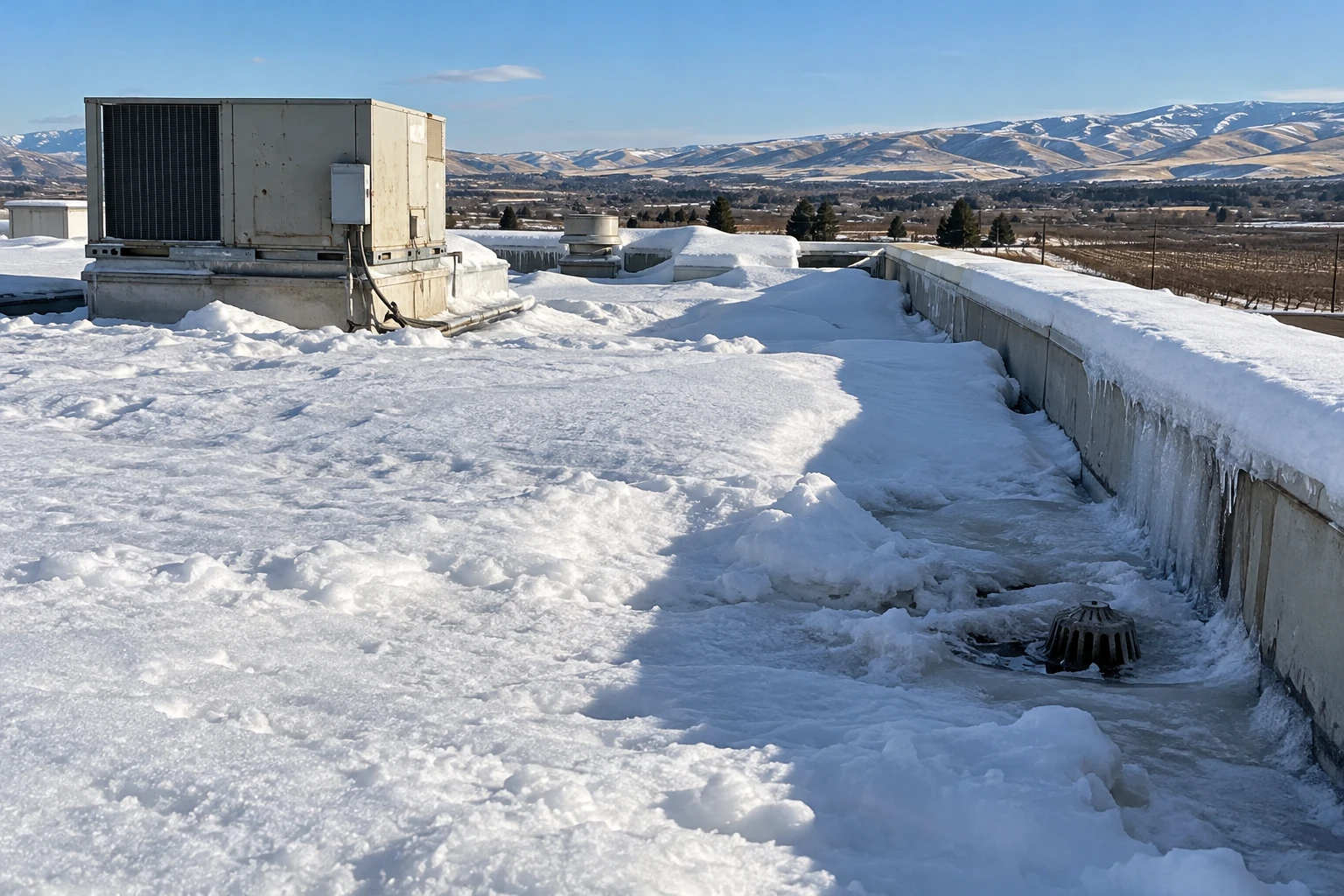
The January call from a Wapato facility director goes the same way: three days of snow, a sagging ceiling tile near the back wall, and a question about whether anyone should go up there. Dispatch answers with its own question, which is what the building was designed to carry. Snow load is set parcel by parcel, so the permit or drawings give a better answer than a guess from the parking lot. Wapato has about 4,607 residents as of 2020, sits within the Yakama Indian Reservation, and has been an agricultural town since the Irwin Canal went in during 1896. Roofs in a town like this can cover farm-support sheds, storage space, retail and school buildings, and each one meets winter differently.
Match the Roof to the Farm-Support Building Under It
Agriculture has been Wapato's main industry since 1896, which means a good share of local commercial roofs cover buildings that exist to hold, sort or move crops. A shed with large open bays and a long clear span carries snow differently from a block building with interior walls, because there are fewer places for the structure to share the load. The same snow that a short-span roof shrugs off can load a long-span roof at midspan.
On a first visit we ask how the building is used: dry storage, cold storage, equipment or a mix. A cold room under a roof needs a vapor seal that stays intact, and open-bay storage needs edge metal that survives gusts. We look at the framing from below when we can, check the deck for rust at fastener lines and note where the membrane has been patched before. That tells us whether a repair makes sense or whether a roof recover over sound insulation would last longer for less disruption.
Plan Around the School Year for Six School Buildings
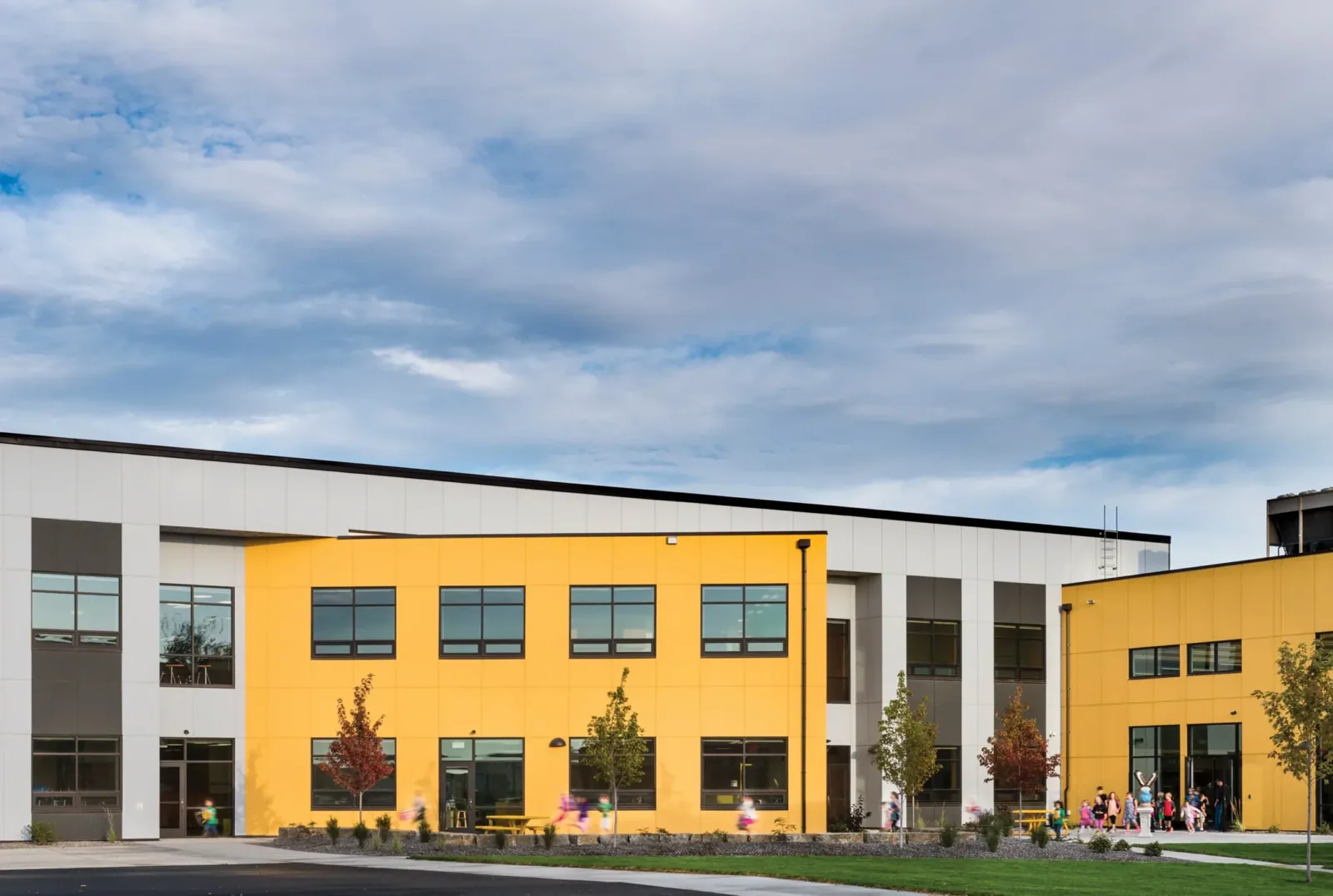
The Wapato School District operates six schools. Six schools do not mean six roofs, since a school can have several roof areas at several ages, but they do give the district a set of institutional buildings that must stay dry through a long winter. Schools have predictable calendars, and that helps: work that would disturb a classroom waits for summer, while emergency leak response happens whenever the weather forces it.
We prepare a written inspection for each building that grades the membrane, flashing, drains and insulation, so the district can sort needs into this summer, next summer and wait-and-watch. Parapet caps, penetrations near mechanical rooms and the roofs over gymnasiums are where we look first, because a large clear span reacts to snow load sooner. On school roofing the ranking comes first, and when a classroom ceiling is already stained, our leak repair crews stage a temporary dry-in before the permanent fix.
Clear the Drains Before the Thaw Arrives
In the valley's rain-shadow climate, about 8 inches of precipitation a year falls in Yakima, so owners get complacent about drainage. Snow changes that. A roof that sheds a summer thunderstorm without trouble can hold meltwater against a clogged scupper for days, and the standing water adds weight on top of the snow that was already there.
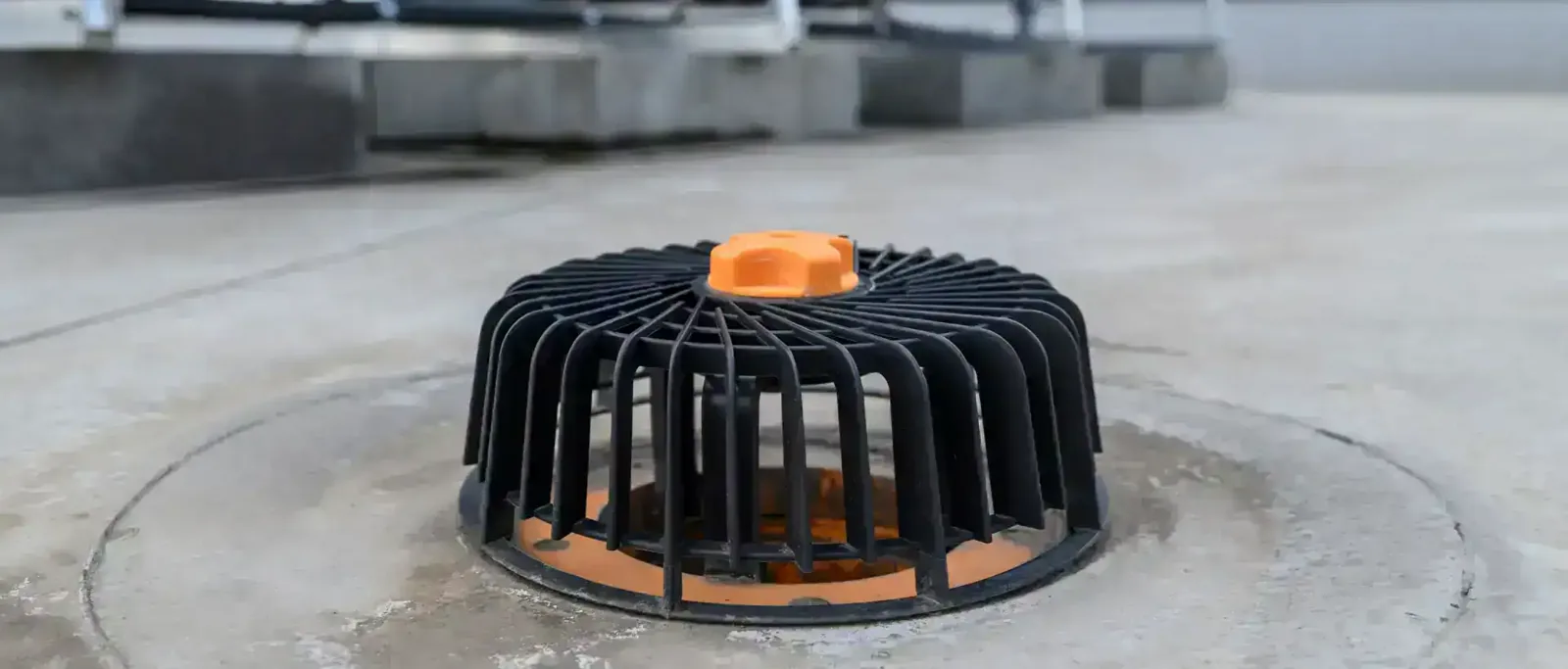
Before the winter, we check every drain, scupper and overflow on the roof for debris, confirm the strainers are in place and look for ponding from deflection or old patches. After a heavy snow we check again during the first thaw, because a drain frozen at the surface sends meltwater across the membrane instead of through the pipe. Facility teams can help by keeping leaves and orchard debris off the roof and by telling dispatch where water gathers after rain. When old drains are undersized or cracked, we replace them and resize the roof drains and scuppers to match the area they serve.
Respond to Snow Damage Without Steel Shovels
A bulging wall put a red tag on a South Third Avenue building in Yakima after the snow of February 2019, and the lesson applies on any low-slope roof in the valley, including the ones in Wapato. A steel blade finds the membrane before it finds the snow.
When a roof does need relief, we clear in a pattern that removes weight from the most loaded areas first, usually drifts at parapets and around rooftop units, using plastic tools and leaving a protective layer over the membrane. We watch for doors that stick, cracks in interior walls and ceilings that deflect, and report anything structural to an engineer. After the thaw, our snow and ice damage inspection looks for punctures, split seams and displaced flashing before the next storm arrives.
Coordinate Work Across Neighboring Valley Buildings
An owner with property in Wapato and a second building in Toppenish or Union Gap (home to Valley Mall and the big-box retail that forms the main retail roof inventory for the valley) can send one crew to inspect all of them in a single trip, which reduces the cost of each visit and gives a consistent set of condition reports.
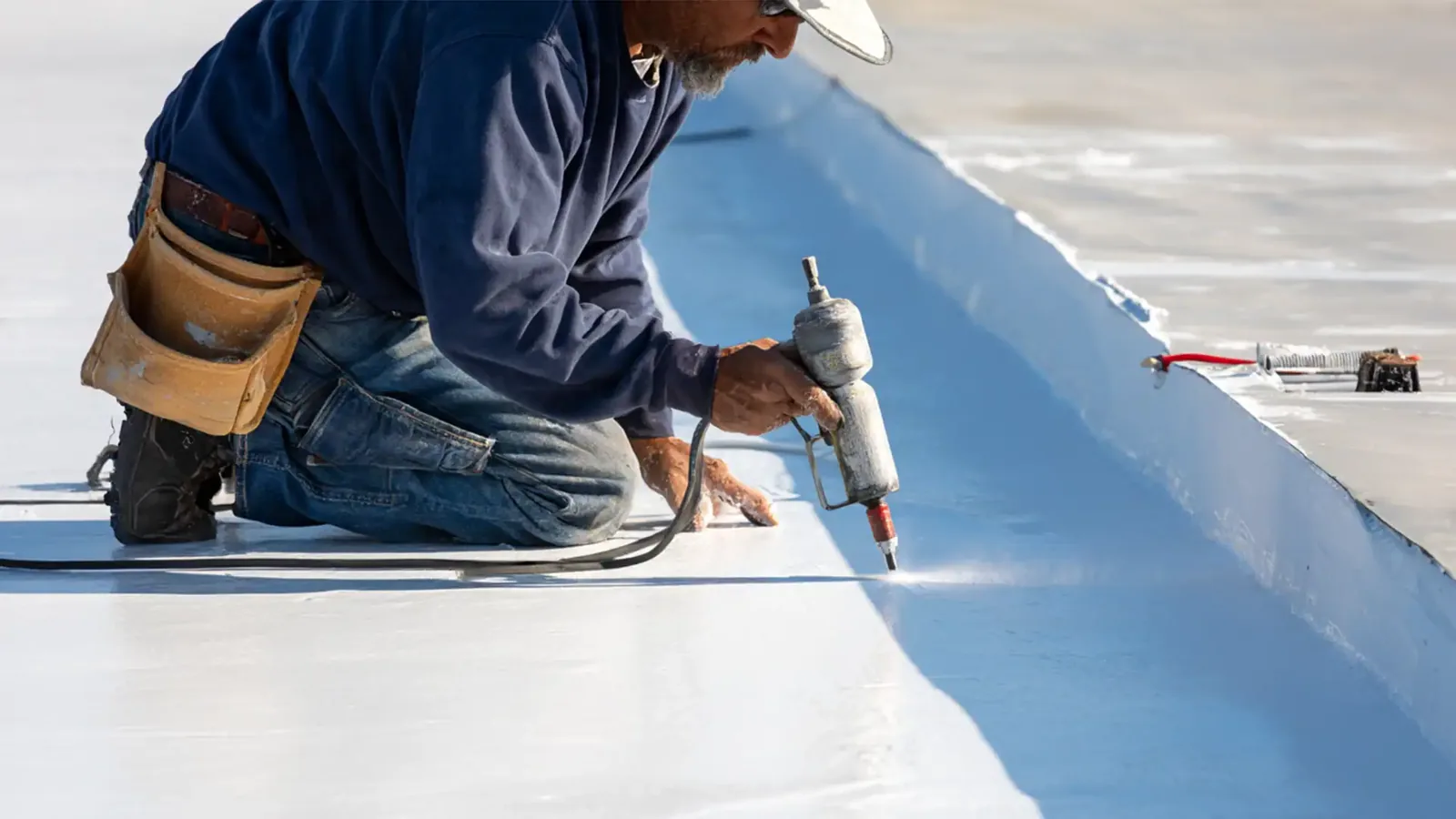
For retail space and warehouses, the questions are different from those on a school: customers and deliveries continue while we work, so staging happens at the back, and a loading dock never loses access for more than a short period. For buildings with metal roofs, we check fasteners, panel seams and sealant at penetrations, and for a worn standing seam metal roof we look at clip movement and panel end laps. Our emergency roof repair line is staffed around the clock, holidays included.
Commercial Roofing Questions
The ceiling of our Wapato storage building shows a water stain after the snow melted. Do we need a new roof?
Not necessarily. A single stain after a thaw usually points to a flashing, seam or drain issue at one spot, and a targeted repair can solve it. We trace the stain to the source, scan the surrounding area for trapped moisture and compare the pattern to prior stains. If the insulation is wet across a wide area or the membrane has failed in several places, a larger scope is worth pricing. Send photos and the permit snow load if you have it.
What should the district do before a classroom wing is reroofed in summer?
Settle the schedule early. Confirm the end date for the school year and the first day staff return, so the crew can plan around both. Tell us about air intakes, playground paths and bus routes, and mark roof access points for the crew. We provide a sequence of sections, a plan for protecting interior spaces and a daily dry-in routine. Order materials early, since summer demand from other districts tightens supply.
Is a recover over the old roof acceptable on a farm-support building?
Often, if the existing insulation is dry and the deck is sound. We take core samples and run a moisture scan before recommending it. A recover saves tear-off and keeps the building in use, but it adds weight and covers any hidden problems, so a wet roof must come off first. Local code and the snow load on the parcel decide how many layers the structure can carry. We put the findings in writing so the decision rests on evidence.
How do we get a leak stopped after hours?
Call the first-hour line any hour of the day or night. Have the building address, the location of the leak and what lies beneath it ready. We send a crew to stop the water with a temporary patch, tarp or sealant, then return for the permanent repair when conditions allow. In the meantime, move product or equipment out from under the drip, cover what cannot move and keep the area clear for the crew.