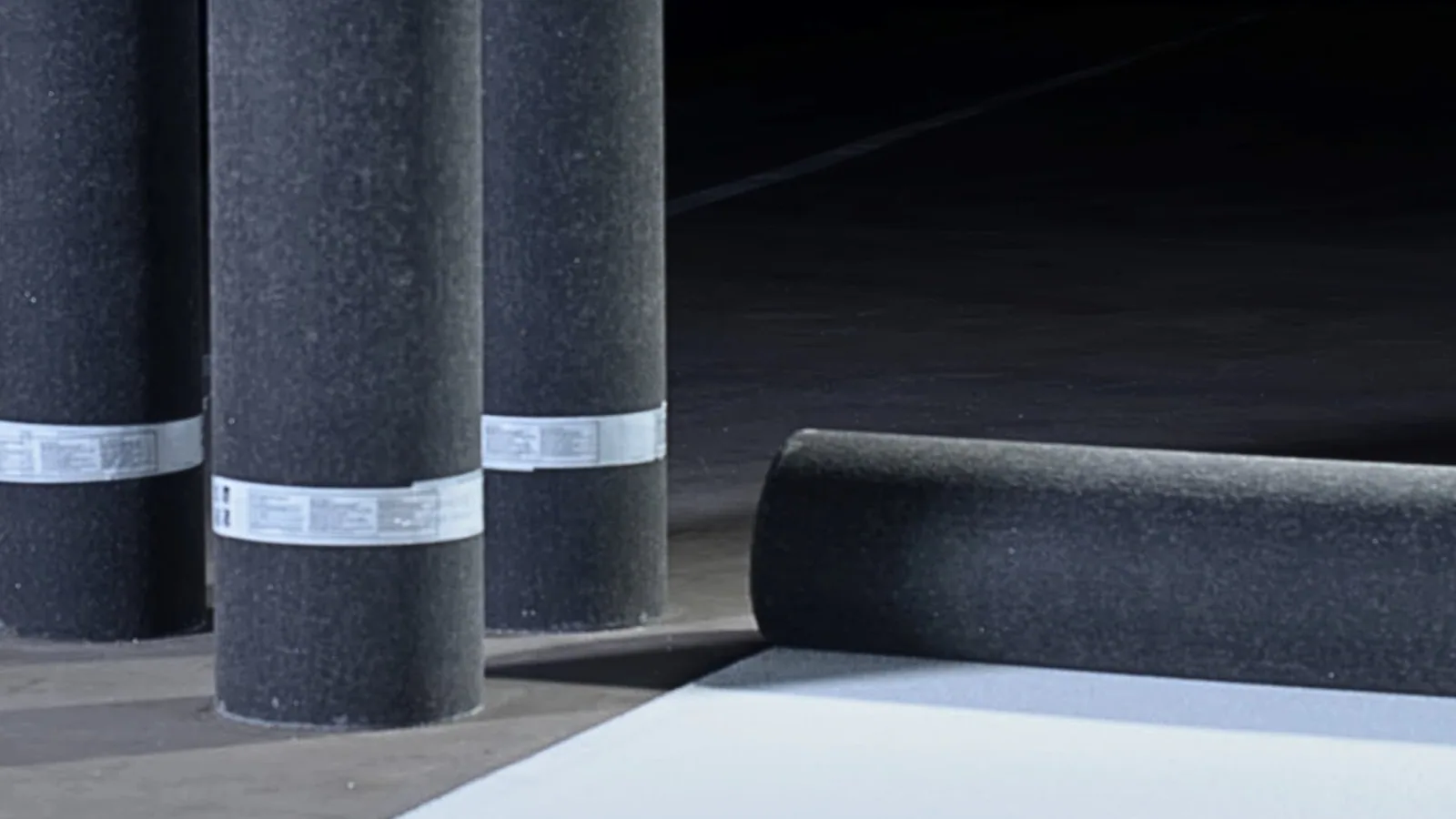
A designer sends a roof plan to a building owner in the week before a bid, with an insulation board and a membrane both named from the same manufacturer, and the first thing dispatch asks is what the code now requires over that deck. Johns Manville is a building-products maker whose commercial roofing line covers single-ply membranes, polyisocyanurate insulation and bituminous components. In Yakima, WA, the state's 2021 code editions took effect on March 15, 2024, and that changes how much insulation a new roof is expected to carry.
We install and repair these categories of roof assembly. With the plan, any roof label or insulation data and the permit drawings in hand, we can say how the pieces fit, what a recover will add in weight and where the repair risk sits.
Treat the Insulation as Half the Roof
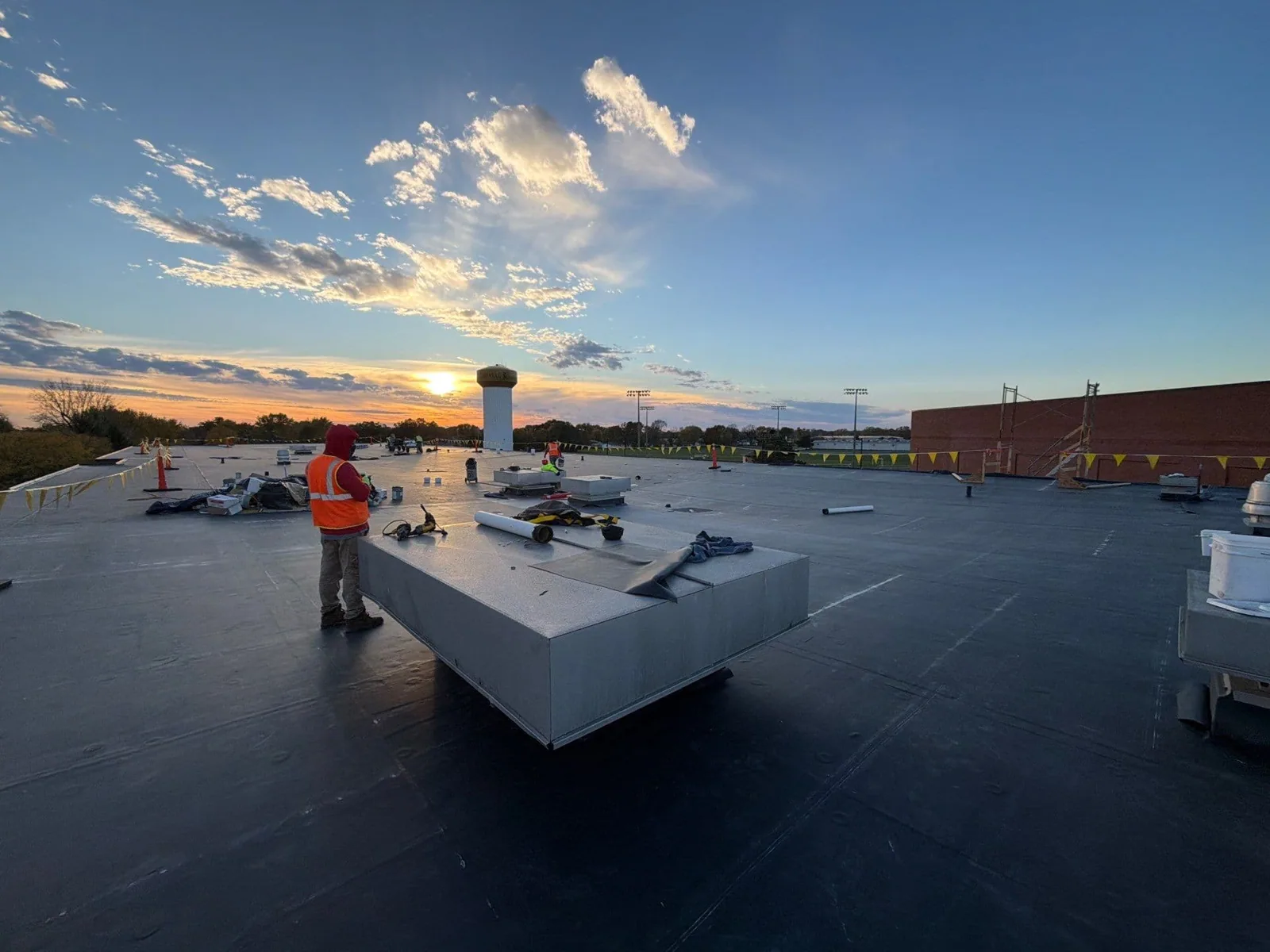
On many commercial roofs, rigid polyiso board is the largest part of the assembly by thickness. It supplies most of the thermal resistance, it forms the surface the membrane is attached to, and it takes the damage when water arrives. A roof with a good membrane over saturated board still fails, because the board loses insulating value and weight rises. We test the board with an infrared scan and cores before we judge the membrane.
Board joints, tapered layers and cover boards all matter. Staggered joints keep thermal bridges from lining up. A cover board protects the foam surface from foot traffic and hail. A tapered layer sends water to drains and removes the ponding that shortens a sheet's life. We lay out the layers on paper before ordering, so thickness, fastener length and flashing height agree. A fastener that is too short misses the deck, and one that is too long can pierce the underside of a metal deck and rattle in wind, so the schedule names the length for each layer count. The same drawing lists the slope of each tapered board and where the crickets go, which is how ponded corners are removed from the roof before the membrane arrives.
Check the Energy Code Before a Recover or Replacement
The State Building Code Council issues the state codes, and the commercial energy provisions sit in WAC 51-11C. Current insulation requirements may apply to a full replacement, while a recover may or may not trigger them, depending on how much of the roof assembly is replaced. We do not guess. The designer or code official decides what applies, and we price the assembly that results.
The practical effect is often thicker insulation, though the exact figure belongs to the designer. Thicker board raises the roof surface, which means taller flashings, longer fasteners and sometimes new edge metal and parapet caps. It also adds weight, which has to fit the design snow load. Design snow load belongs to the parcel, and engineering is required above 70 psf, so the check is not optional.
Pair the Membrane With the Exposure
Over the insulation goes a membrane chosen for the building. For a plain dry roof, TPO is a common, economical choice. Where grease or standing water is part of daily life, PVC resists better. Where cold flexibility and simple repair matter, EPDM performs well. Modified bitumen and built-up systems remain options where foot traffic is heavy.
A membrane in Yakima rides a range from minus 25 F to 113 F, with 90 F afternoons arriving about 40 times a year. We detail corners with slack, reinforce penetrations and fasten the perimeter for the county's design wind speed of 110. Neighboring makers such as Carlisle SynTec and Holcim Elevate make comparable membranes, so we compare by exposure and cost.
Find Trapped Water Before Adding Layers
A recover is only as good as the roof it covers. If insulation under the old membrane is wet, the new sheet will trap it, and the problem returns in a season or two. We run a moisture survey, cut cores at the suspect spots and mark the wet and dry zones on a sketch. Wet board is cut out and replaced. Dry board stays, and the boundary between the two is marked on the sketch so the owner can see why one section was removed and its neighbor was not. That boundary also tells us where the new and old board meet, which is where we stagger joints and add a strip of cover board to bridge the change in thickness.
Moisture often enters at details: a pipe boot, a curb, an edge. Replacing only the membrane leaves that path open. We rebuild each detail with new flashing and seal it to the new roof. Where an infrared moisture survey shows a broad wet area, the section is removed, the deck dried and inspected, and new board installed.
Keep the Snow Plan in Writing
A well-insulated roof keeps more heat inside, so snow melts more slowly and drifts persist. Snow comes off with plastic tools, a protective layer stays on the membrane and the deck is checked for deflection before any weight is added.
We walk the perimeter after any gale, as we did after the one in late November 2019. For a retail roof near Union Gap or a plant in Selah, the written plan lists who clears snow, when and with what, and who we call when a bay looks overloaded.
Ask the designer whether the specification allows an approved equal for the cover board or the fasteners. A single substituted component can change the attachment pattern, and settling that question before the order saves a change order in the middle of a tear-off.
Commercial Roofing Questions
How thick does the insulation on a new Yakima roof need to be?
The 2021 Washington State Energy Code, effective statewide on March 15, 2024, sets the requirement, and the commercial provisions sit in WAC 51-11C. Your designer or code official confirms the figure for your building. We build the roof to the number on the approved plans and flag any change that affects flashings or parapets.
Does a recover trigger the new energy code?
It depends on how much of the roof assembly is replaced and on the code official's reading. A recover that leaves the existing insulation in place may be treated differently than a full replacement. We ask the building department early and price both paths so you can decide with the facts.
Will thicker insulation change my edge metal and parapets?
Yes, often. The roof surface rises with the board, so flashing heights, coping and edge metal may need to be taller. We measure the existing parapets and draft the details before ordering. If the parapet is too short, we raise it or change the edge detail.
Can soaked insulation be dried in place?
Rarely. Foam board that has absorbed water loses much of its insulating value and may not recover. Small, local wet spots are cut out and replaced. Broad saturation calls for removal. We map the wet area with infrared and cores, then replace only what has to go. Cutting out a section also lets us look at the deck: rust on a steel deck, softness in a wood one, or a crushed flute all change the plan, and we photograph each find before the new board goes down.
What do you need from the designer before bidding?
The roof plan, the insulation and cover board schedule, the membrane type, the flashing details and the design snow and wind loads. If a manufacturer label or data sheet is part of the plan, include it. We review the package and note any conflicts before the price is set.