The data plate on a rooftop unit still reads Firestone, the invoice from the last re-roof reads Holcim Elevate, and a property manager wants to know whether they are looking at the same roof. They are. Holcim Elevate is the name of the company that was formerly Firestone Building Products, and its commercial range covers EPDM rubber, TPO and PVC thermoplastic membranes, metal roofing and insulation. Dispatch asks which name is on the roof label, because an older label can point to an older sheet, and an older sheet ages by different rules than a new one. In Yakima, WA, where the record high is 113 F and the record low minus 25 F, age shows first at the seams and edges.
We install, repair and maintain these categories of roof. A label or paperwork under either name, plus the roof age and the permit's design snow load, is enough for us to identify the system and tell you what it needs.
Identify the Roof Under Either Name
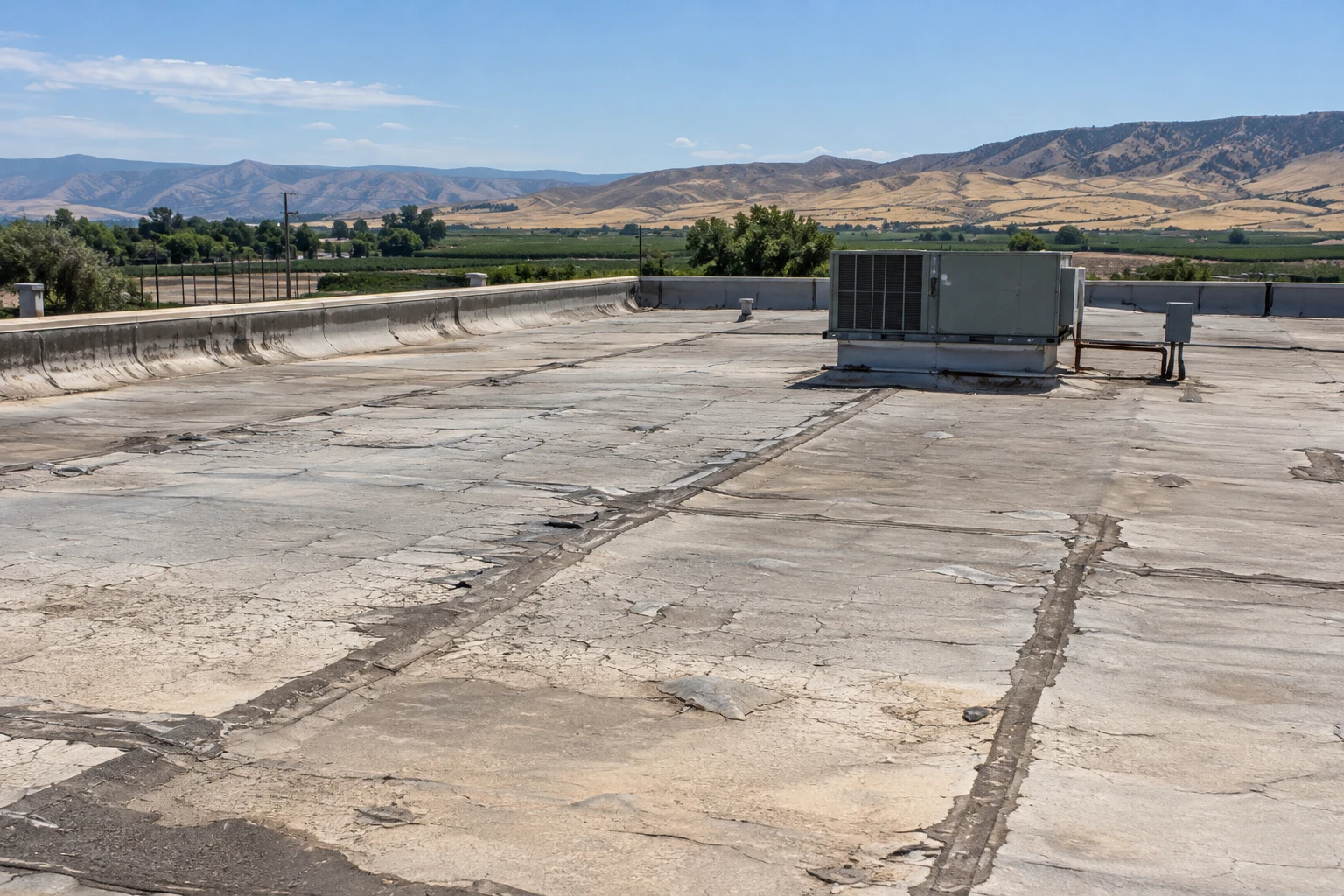
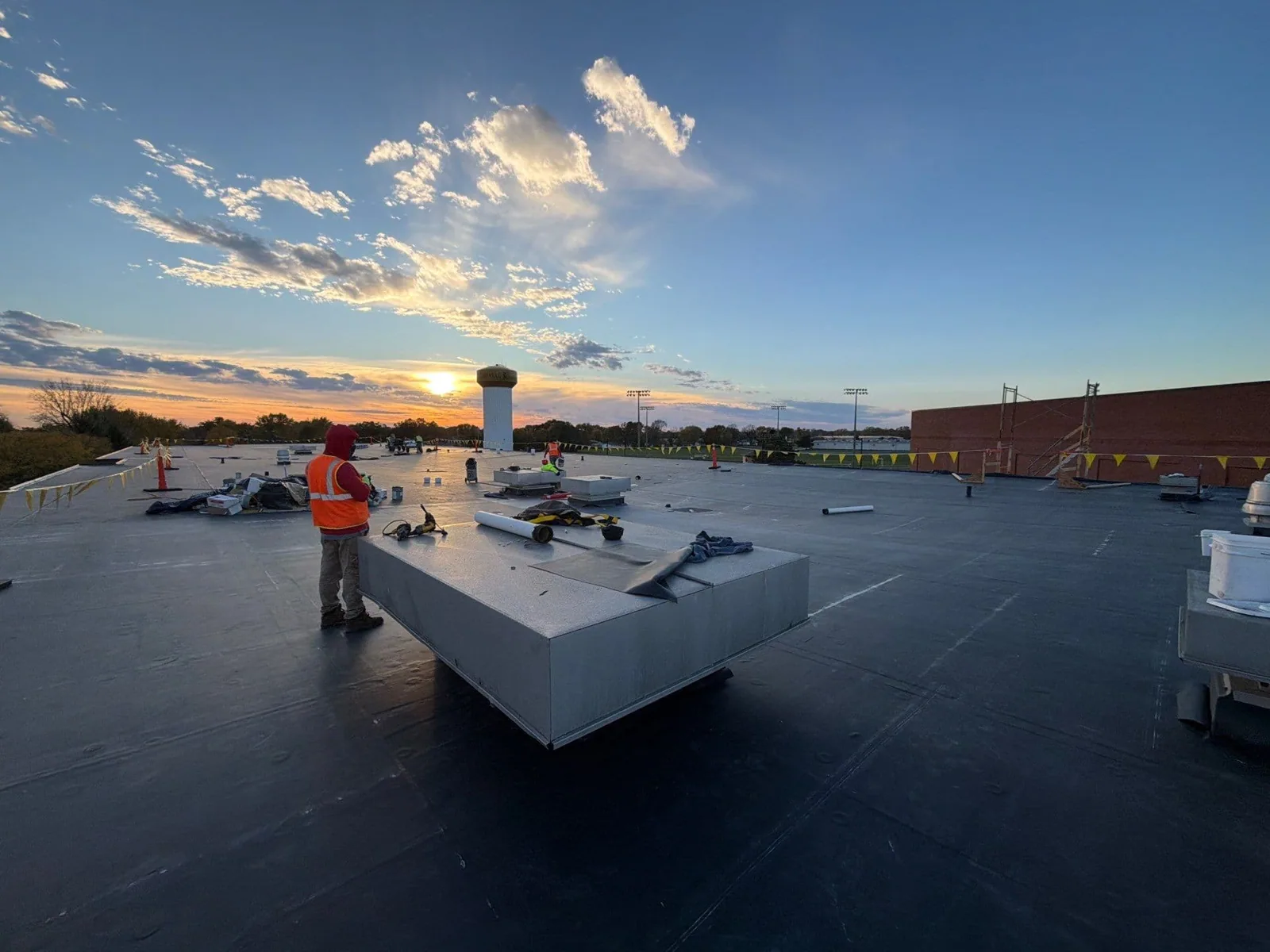
A name change on the label does not change what is on the deck. We read the roof itself: color, thickness, seam method, attachment and the condition of the flashing. A black, rubbery sheet with taped seams is EPDM. A white or gray sheet with welded laps is a thermoplastic. Standing seam or corrugated steel panels are metal. A core sample shows the insulation type and thickness.
With the family known, we read the history. Patches from different decades, mismatched flashings and added curbs tell us how the roof has been treated. The history guides the plan. For a retail roof near Union Gap or a processing roof in Selah, we ask who has been on the roof, which trades added equipment and whether any penetration was cut without a proper curb, because uncurbed holes and mismatched flashings are the usual source of repeat leaks. The answers come from the facility log, the building engineer and the stains on the ceiling, and we check them against what we see on the deck. A roof that has been patched many times with incompatible materials may need a complete rebuild at the details, even if the field is sound.
Plan for the Surface Heat of 90 F Afternoons
About 40 afternoons a year in Yakima reach 90 F, and a few pass 100 F. On such days a dark membrane can run far hotter than the air, and the heat works its way into seams, adhesives and flashings. Reflective thermoplastic sheets reduce the temperature, and a reflective coating can do the same for a sound roof of another type.
Heat cycles are the real stress. After a hot afternoon, nights cool quickly, and the membrane shrinks. A sheet that was installed tight pulls at its edges. We install with slack at corners and walls, and we check older roofs for shrinkage that has pulled flashings from their terminations. Where a roof surface is too hot to touch by midafternoon, we also look at the nearest rooftop unit's curb and the pipe insulation, since heat-damaged wrapping and cracked sealant tend to show up in the same place. Damage of this kind is a case of heat and UV roof damage, and the fix begins by releasing tension.
Secure the Perimeter Against Gusts
Uplift is highest at corners and edges, and the county designs to a wind speed of 110, a figure the late-November 2019 windstorm made real. For mechanically attached roofs, fastener density increases in those zones. For adhered roofs, adhesive coverage and bond are checked at the perimeter. For ballasted roofs, stone size and weight at the edge matter.
Edge metal is the part owners notice last. A loose coping or fascia gives wind a path under the sheet. Our edge metal and coping work includes cleats, sealant and fasteners, and we test pull strength on older metal. After a gale, a walk of the ground around the building shows trim in the lot before anyone climbs a ladder, which is how many wind damage repairs start.
Keep Metal Panels Moving and Sealed
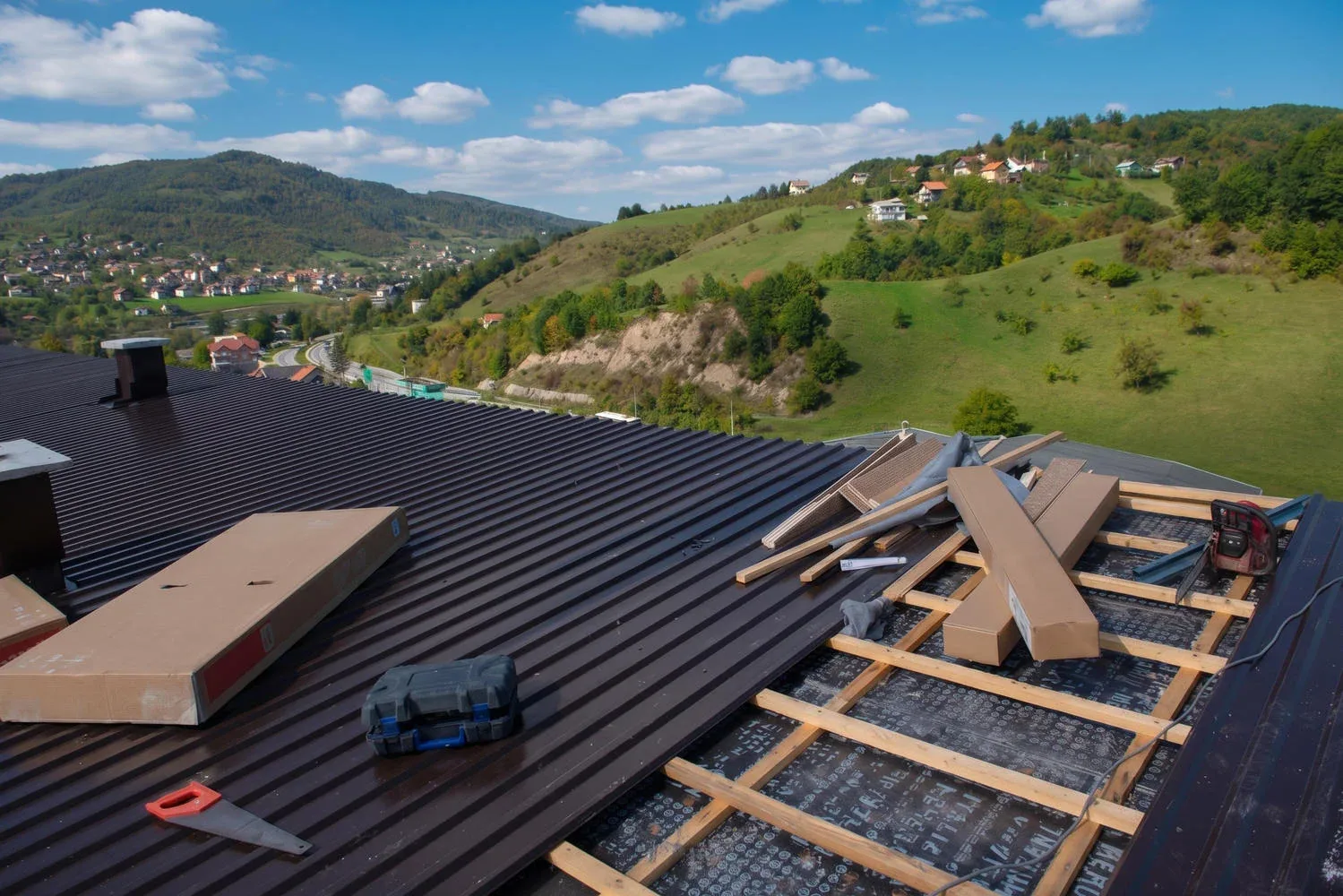
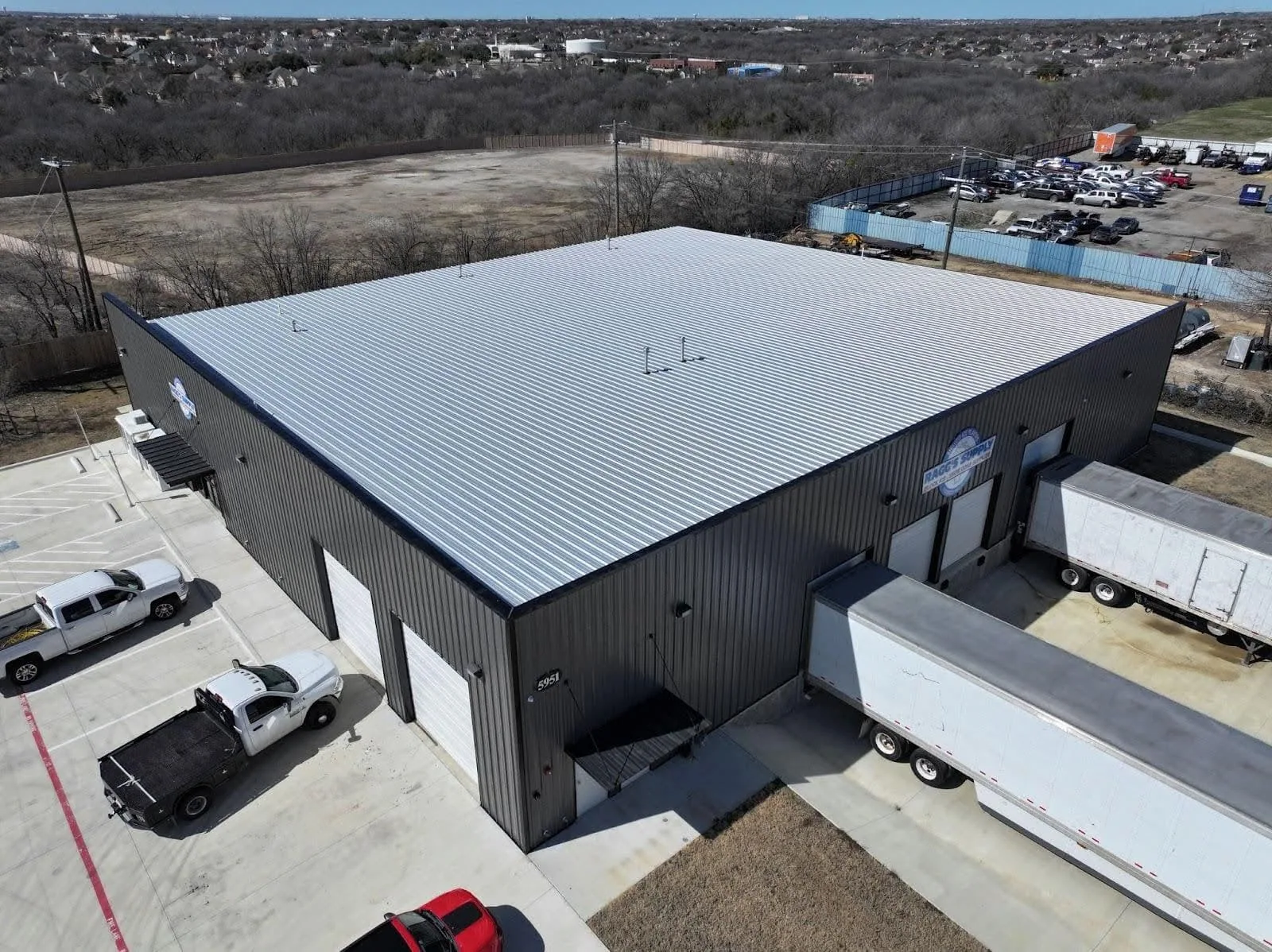
Where the roof is metal, the checks change. Exposed-fastener panels need screws tested and laps resealed. Standing seam panels need clips free to slide and seams fully closed. Snow guards need to be present above doors and walkways. A metal roof sheds snow in sheets, and a slide can injure a person or crush a car. Guards clamped to the seam break that sheet into small pieces, and the spacing depends on the pitch and the snow load. We also look at the eaves and valleys, where compacted snow and ice can back water under the edge.
When metal panels are spent, a retrofit over the old roof can avoid tear-off. A metal roof retrofit adds framing, insulation and new panels, and the added weight is checked against the design snow load. The permit's design snow load decides how much can be added.
Clear Snow Without Cutting the Roof
A steel blade slices rubber and thermoplastic sheet easily, which is why snow comes off with plastic tools, a protective layer stays behind and the deck is checked for deflection first. Drifts against parapets, penthouses and taller walls are the places to watch.
For comparison with other makers, the same snow rules apply to Carlisle SynTec and Sika Sarnafil systems. A building in Sunnyside, which is the second most populous city in Yakima County with 16,375 residents in 2020, has the same load questions as one in Yakima, and the permit sets the number.
When a roof carries both old and new paperwork, keep the two together in one folder and note the changeover date on the first page. The next contractor reading the file then sees at once which name governs which part of the roof.
Commercial Roofing Questions
My roof label says Firestone. Is that the same as Holcim Elevate?
Holcim Elevate is the name of the company that was formerly Firestone Building Products, so a roof marked with the older name is in the same family. We identify the actual system by its surface and seams, since the name alone does not tell us the type. Send photos of the label and a seam.
Can you repair a roof that was installed years ago under the old name?
Yes. We identify the system, use compatible repair materials and document what we find. If the roof has a warranty document, send it and we read its terms before work starts. We also note the roof age and condition, which helps you plan the next replacement.
What is the main weakness of an aging rubber or thermoplastic roof?
Seams and flashings. Rubber splices dry out, and thermoplastic welds can fatigue where the sheet has moved. Shrinkage pulls flashings from terminations. We probe the seams, check the flashing corners and scan for moisture. Most failures start at details, not in the middle of the field.
Does a white roof help in Yakima's winters or only in summer?
It helps mostly in summer, when it lowers the surface temperature and reduces heat gain. In winter the effect is small, and snow stays longer on a white surface than on a black one. For most buildings the main advantage is a smaller daily temperature swing, which reduces stress at the seams.
How do you handle a mixed roof with several systems from different years?
We map each zone, note the system and age, and rank each for repair, recover or replacement. Boundaries between systems get special attention, because incompatible materials can react. The map becomes your budget plan, with the weakest zones first.