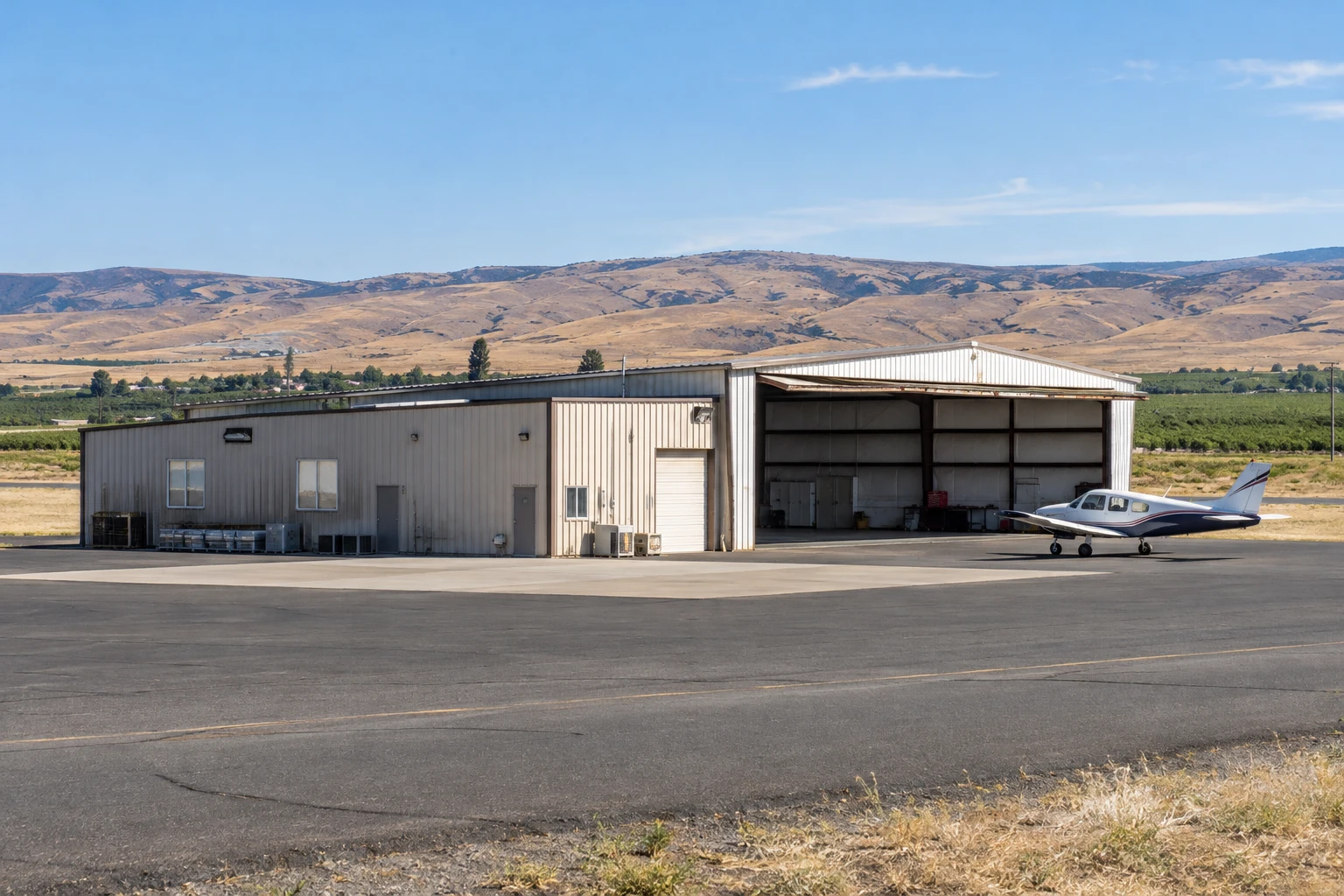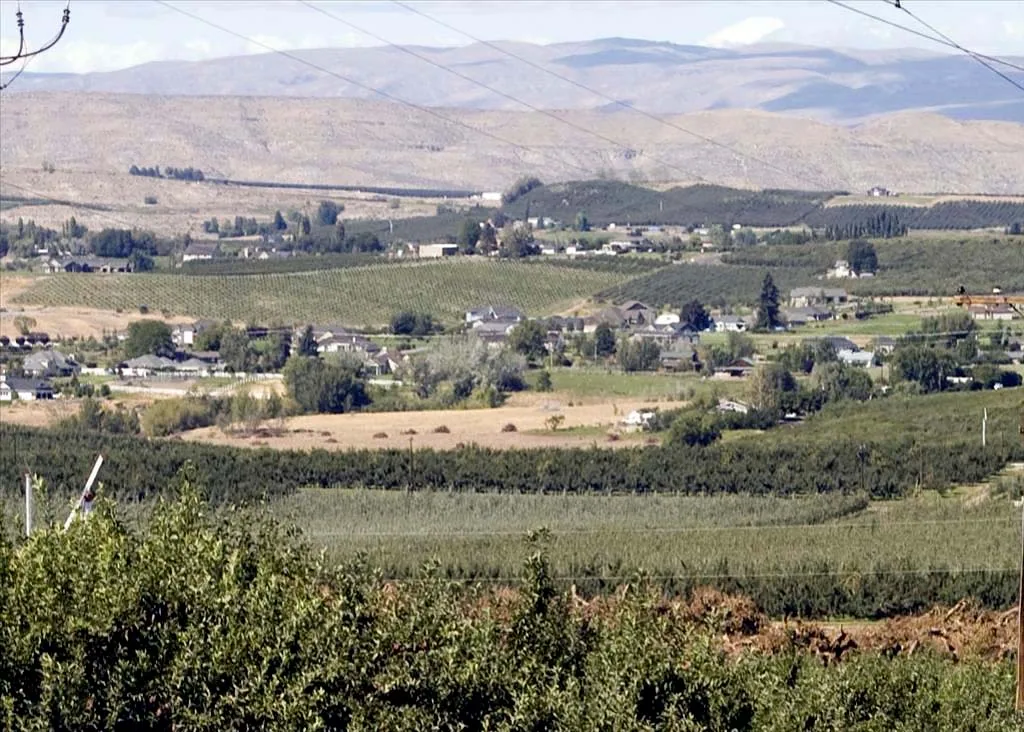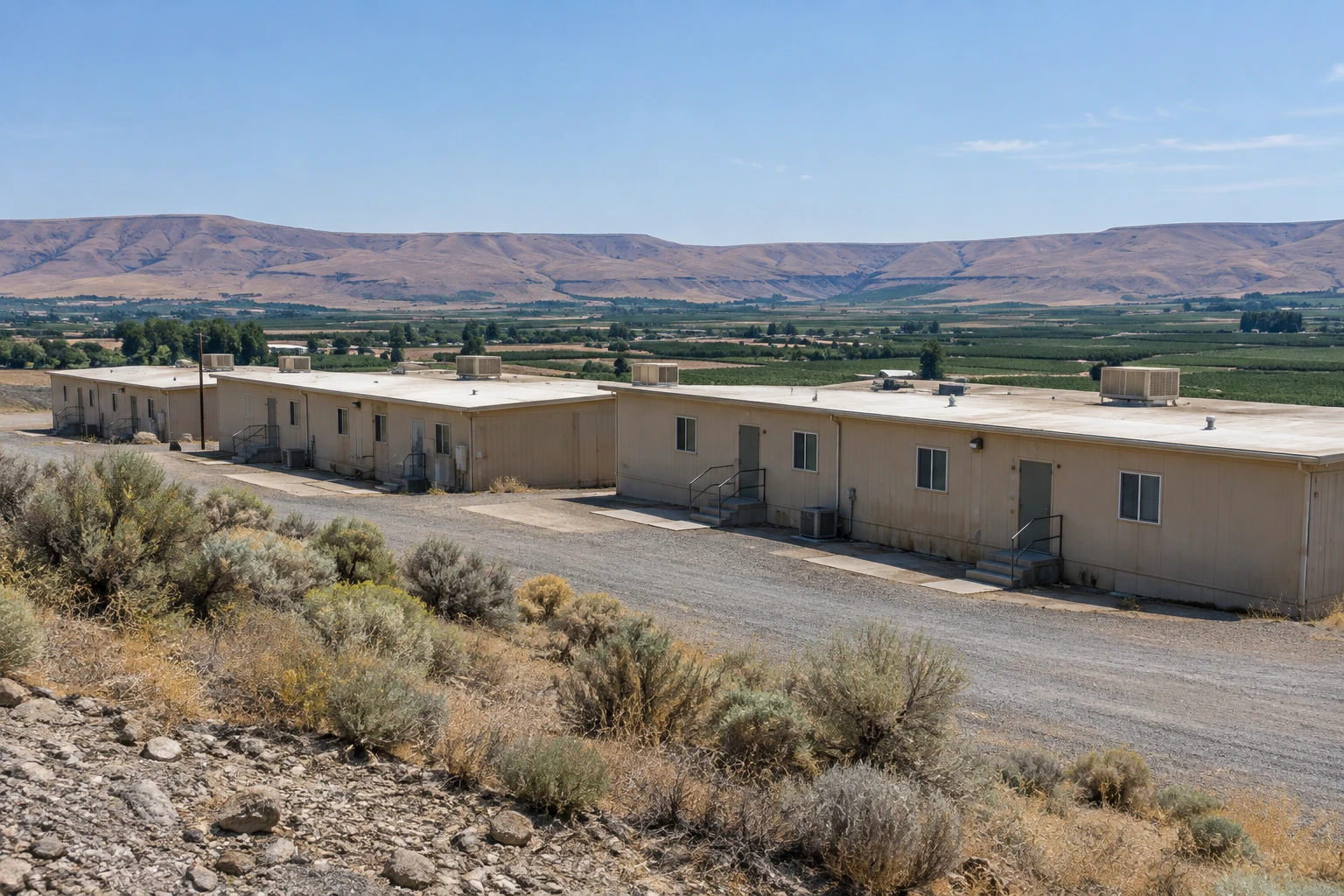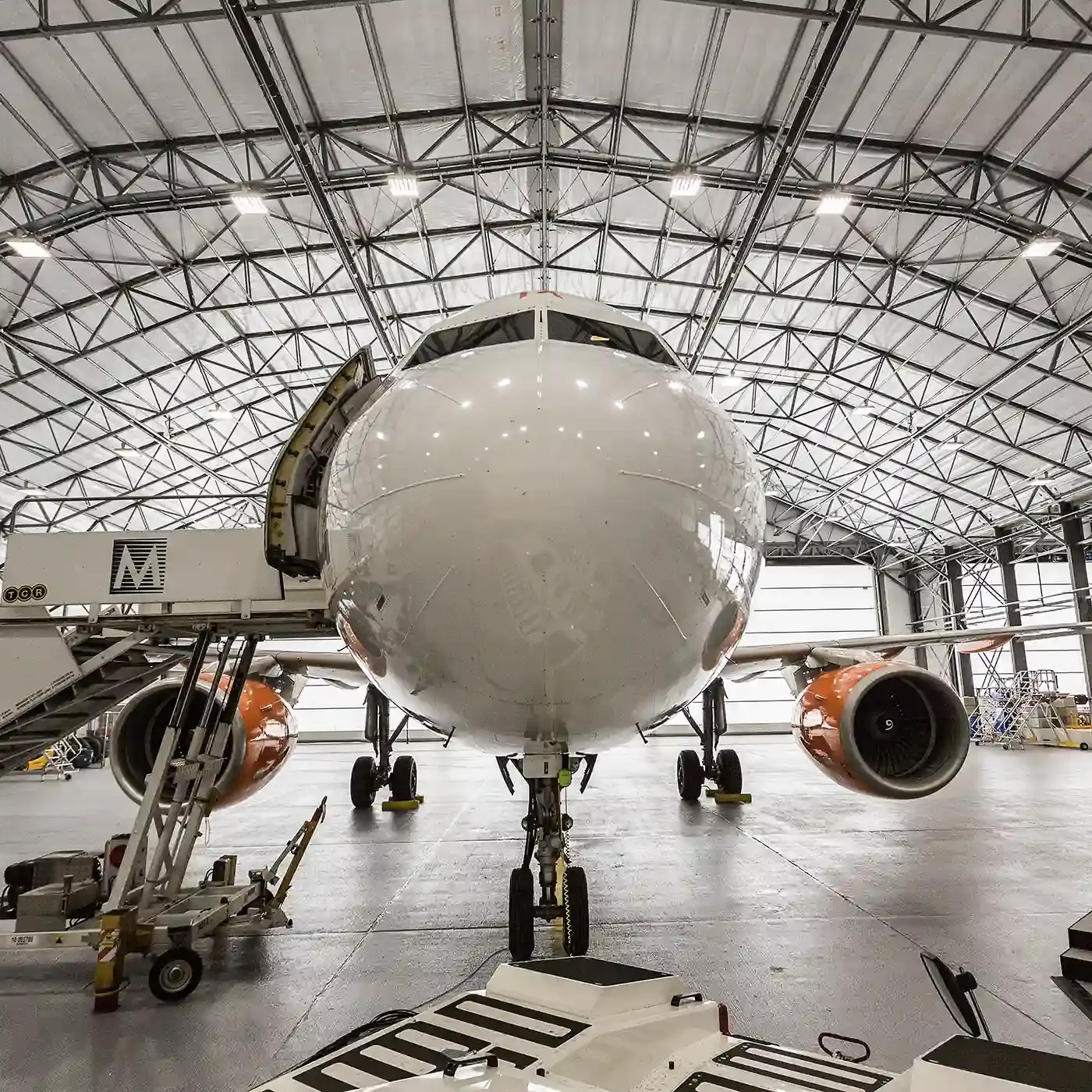
A hangar door is the biggest sail on the field, and the first question dispatch asks after a gale is whether the door moved or the roof above it did. Late November 2019 brought 51 mph gusts to Yakima, and a wide-span hangar with a roll-up or bi-fold door takes wind on a surface the size of a house. A gust-lifted edge above the door track can bind it. Keep aircraft and people clear of the door line and leave the roof to us.
Send the hangar address, the span and door type if you know them and the aircraft or operations that cannot be disturbed. We sequence the first visit from that list.
Read the Span, the Doors and the Roof Together
A hangar is a wide room with few interior supports, so the roof deck spans a long way and the structure is sensitive to extra load. Snow load is set by parcel in the county, from 20 psf to well over 200 psf, with an engineer required above 70 psf. A hangar near a runway can see drifting against a taller office wing or a lean-to shop.
We ask for the drawings to see the design load, the deck type and the door framing. When snow piles against the door header or the office wing, we call an engineer if deflection shows. Staff should watch for doors that bind, ceiling cracks and sounds under load, and they should clear the hangar floor beneath any sag before calling.
Wide spans give deflection room, and a long deck can sag a little before anything shows below. A sprinkler line that tilts, a light fixture that hangs off plumb and a door that rubs its seal are quiet signs. Operators should photograph them with the date, because a pattern across weeks tells an engineer more than a single look. We include the log in the first-visit report.
Learn the Airfield's Rules Before Mobilizing
The Yakima Air Terminal, also known as McAllister Field, covers about 825 acres about three miles south of Yakima. Tenants include Cub Crafters, an aircraft manufacturer, McCormick Air Center and the McAllister Air Museum. It has two asphalt runways, 7,604 and 3,835 feet long, and logged 35,588 aircraft operations in 2022.
A roof crew near active aircraft follows the field's rules for access, escorts, equipment height and foreign-object control. A crane boom can matter near an approach path, and a loose fastener on a ramp can damage an engine. We settle those rules with the airport operator and the tenant in writing before we book equipment, and we sweep the roof and ramp for debris at the end of each day. Roof work in the McAllister Field area follows that sequence.
Foreign-object control is not a slogan on an airfield. A dropped screw, a scrap of membrane or a bit of sealant tube can damage an engine or a tire. Crews carry magnetic sweepers, count fasteners in and out and bag every scrap before it leaves the roof. The count goes in the daily sheet, and the tenant can check it.
Secure Edges Above the Doors
The county's design wind speed is 110, and Yakima's record gust is 69 mph from May 1985. Edge metal, door-header flashing and gable trim take the highest uplift on a hangar, and a gust-lifted edge often settles back with no mark visible from the ramp.
After any gale, we check caps by hand, check fastener spacing and probe the seams behind them. A cap that moves under a hand will move again. Loose metal on a hangar roof is a debris hazard for aircraft, so the priority is high and the repair is quick. We log each fix against the door line.
The same storm reached Vagabond Army Airfield near Selah, which recorded a 52 mph gust, so a hangar anywhere in the valley can see wind of that size. Door tracks, header flashing and edge metal are the first places we look.
Plan for the Day-Night Swing on a Wide Metal Roof
Many hangars carry metal panels or a single-ply sheet over steel, and both respond to the valley's range. Ninety-degree afternoons number about 40 a year, and the record range runs from minus 25 F to 113 F. Large daily swings pull on panel laps, fasteners and skylight curbs, and a long roof moves more than a short one.
We check laps and fasteners in spring and again after the hottest weeks, and we reseal what has opened. Where a hangar is conditioned, we look at the insulation too. A new assembly in a conditioned hangar carries insulation under the 2021 code editions that took effect statewide on March 15, 2024, and that affects flashing heights at the door header. Their curbs and glazing joints move with the heat and leak first, so we reseal them in the cool weeks and log the work.
Sequence the Work Around Aircraft and Fuel
Aircraft may sit in the hangar during the work, and fuel, paint and avionics may sit in the shop. We cover aircraft and equipment with protective sheeting, plan hot work with the tenant's fire rules and keep ignition sources away from fuel storage. A recover over a dry assembly avoids tear-off debris above aircraft, and an infrared pass shows whether the assembly qualifies.
Where tear-off is needed, we work in bays, close each bay the same day and keep a tarp crew on hand. The owner sees the schedule by bay, with the aircraft moves it requires.
Hot work needs the most care. Fuel, paint and avionics make a hangar a fire-code space, and open flame is rarely allowed. Heat-welded and cold-applied systems avoid torches, and we confirm the permit and fire watch with the tenant before the first day.
Close Out With Records the Operator Can Use
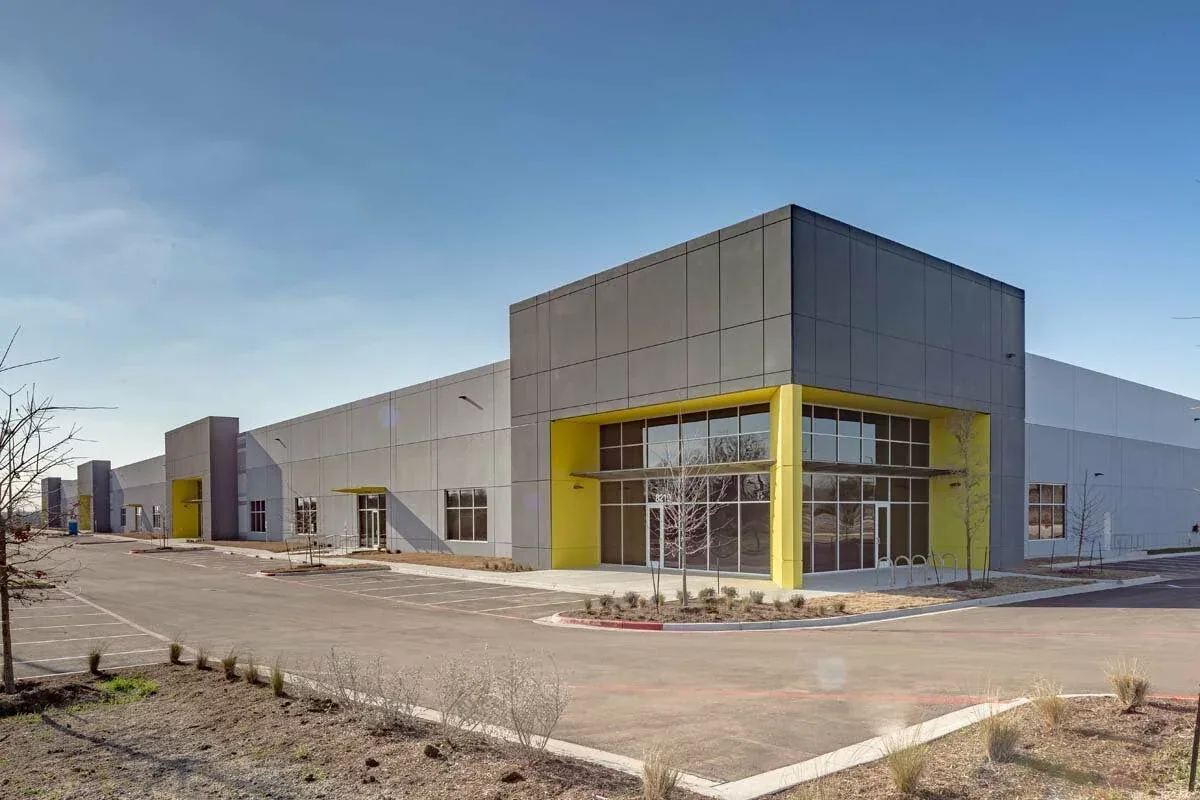
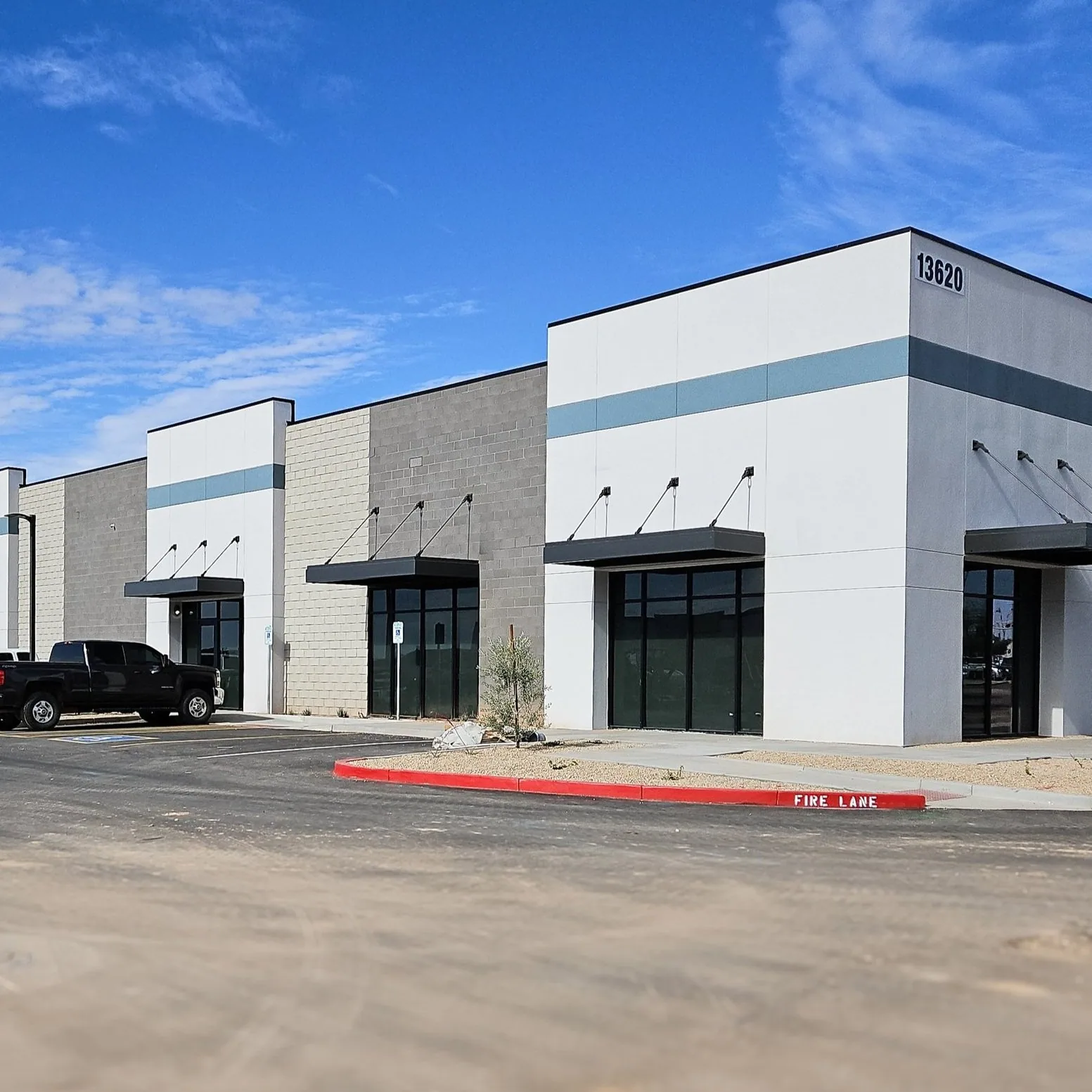
The punch walk tests seams, caps, door-header flashing and drains. Each open item is named and dated. The owner keeps a roof map, photos and a penetration log, and the tenant keeps a debris-control checklist. A warehouse and a flex industrial building follow similar steps, and a hangar on a base follows the rules in military installation work as well.
Operators can help by marking the door track line and the fuel storage on a copy of the roof plan before the first visit. The crew uses that marked copy to place ladders, barricades and the debris sweep route.
Commercial Roofing Questions
A hangar door binds after a windstorm. Is the roof involved?
It may be. A lifted edge or a shifted header can bend the track line. Keep aircraft and people clear of the door, send a photo and the time you noticed it and call. We check the header flashing, the caps and the structure before anyone forces the door.
How do you work near active runways and ramps?
We settle access, escort, height and debris rules with the airport operator and the tenant in writing before mobilizing. We sweep the roof and ramp each day, and we plan crane use around approach paths.
Can the aircraft stay inside during a reroof?
Often, with protective covers and a bay-by-bay plan. Where an aircraft must move, we show the move on the schedule so the tenant can arrange it.
Does a hangar roof need a special sheet?
Not always. The choice follows the deck, the span, the door framing and the tenant's use. We compare metal retrofit, single-ply recover and replacement with the cost drivers named.
What records does the operator keep?
The operator files a roof map, photos, moisture readings, a penetration log and the signed punch list, plus the debris checklist. File them with the lease and maintenance records.