Highs stay below freezing about 19 days a year in Yakima, and on one of those days a kitchen exhaust fan that has been running since dawn meets a roof that has not seen above-freezing air since the night before. Grease and cold do not mix well on a membrane. The first question dispatch asks a restaurant owner is whether the fan has a catch pan, because fat that freezes on the sheet cracks it.
Keep staff off the roof, and keep the fan running if it is safe to do so. Send the address, the exhaust schedule and the service hours that cannot stop.
Trace the Grease Before You Choose the Sheet
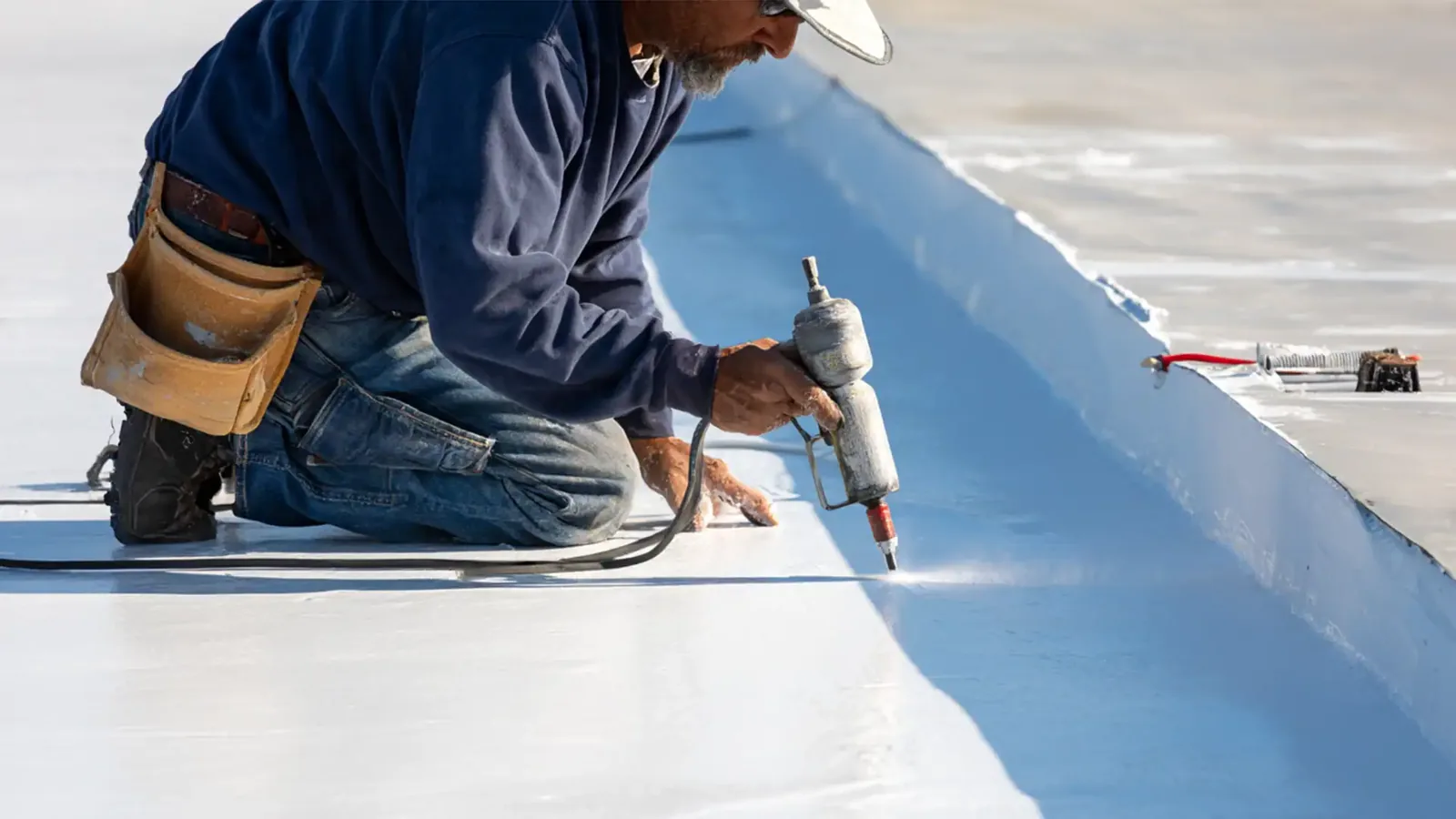
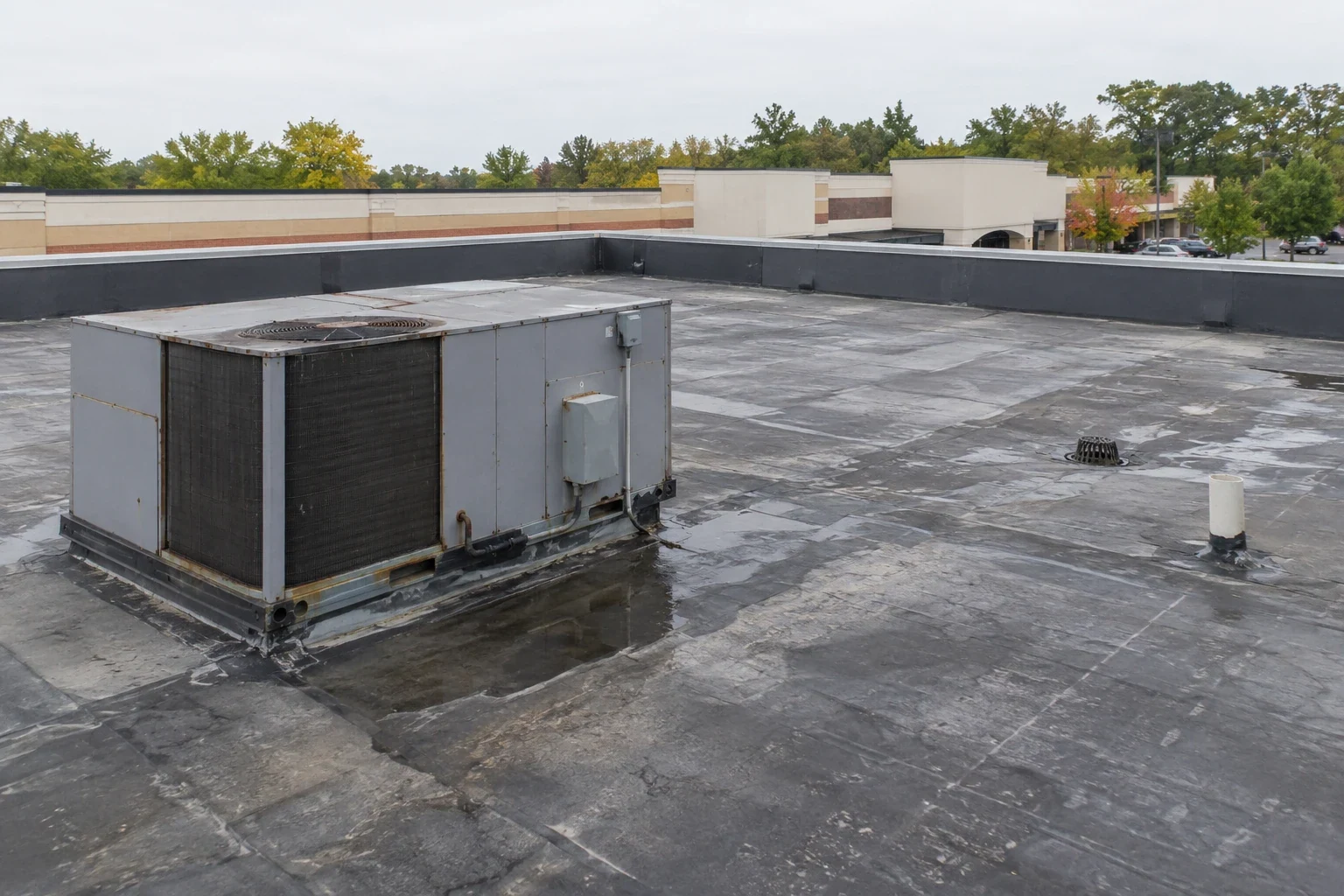
A kitchen vent sends fat, steam and heat onto the roof, and some sheets stand up to that far better than others. Swelling, softening and staining around a fan are early signs that the sheet is losing. Near fat and oil, PVC is often the sheet to choose, while ordinary membrane can serve the remaining field.
The roof is divided into zones by exposure. Around the fan we use the tougher sheet with a protective layer, and the rest of the field keeps the standard system. Grease containment matters as much as the membrane. Catch pans, grease absorbers and a regular cleaning routine lighten the load, and if a fan lacks them we price the fix. We press the stained area, scrape a sample and photograph it. Some sheets recover after cleaning and others do not. Where the maker's published data names a grease limit, we compare it to what the fan puts out and write the result into the scope, so the owner knows whether the sheet will last or whether the zone should be replaced now.
Inspect Fans, Hoods and Make-Up Air Curbs
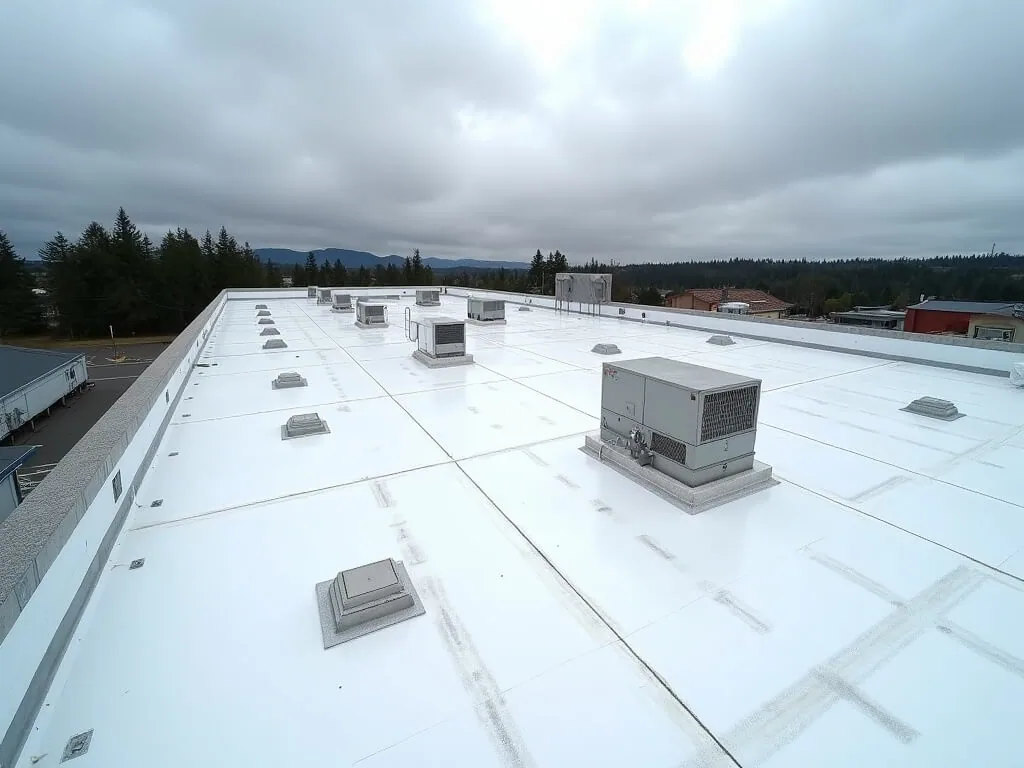
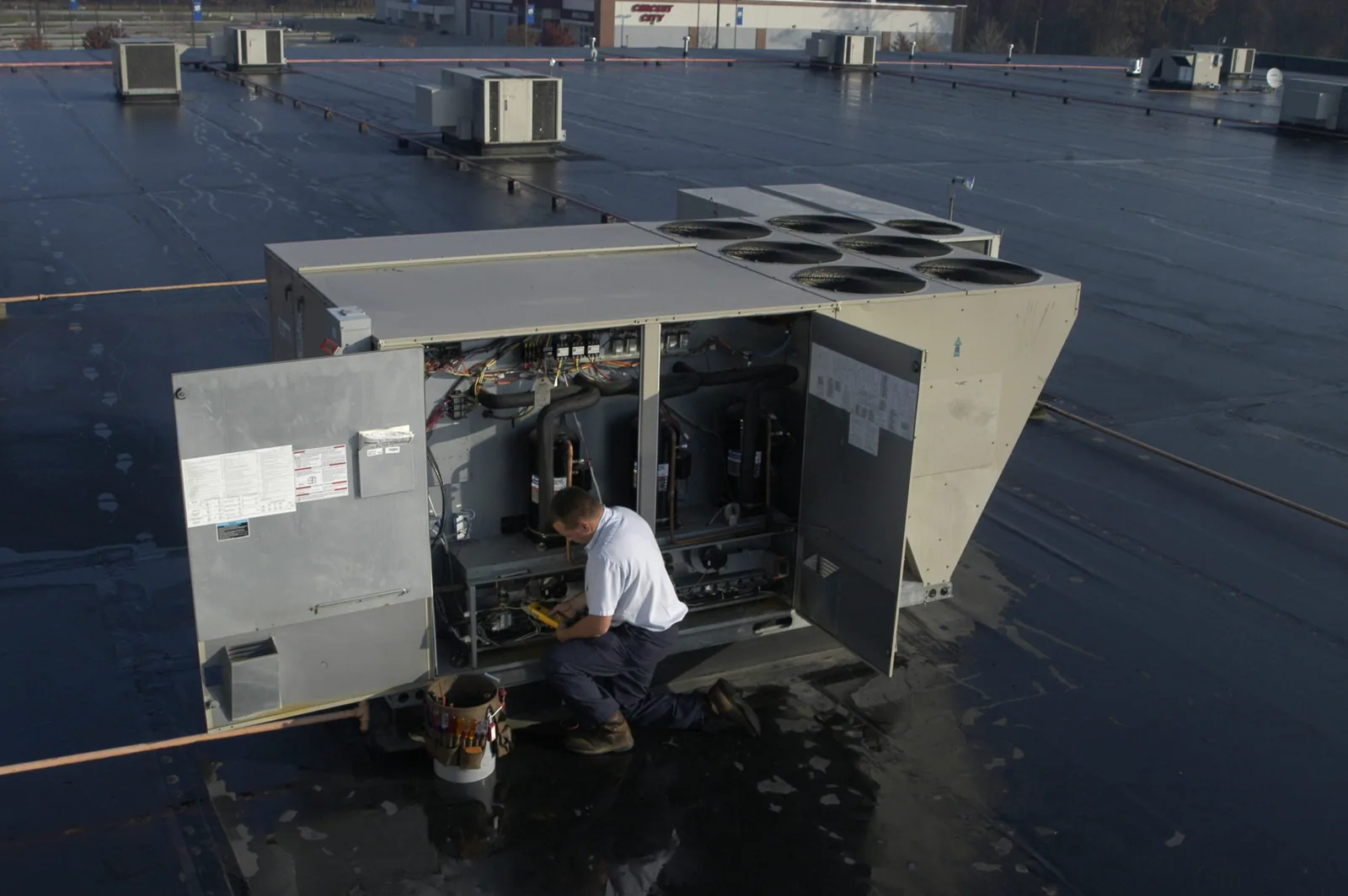
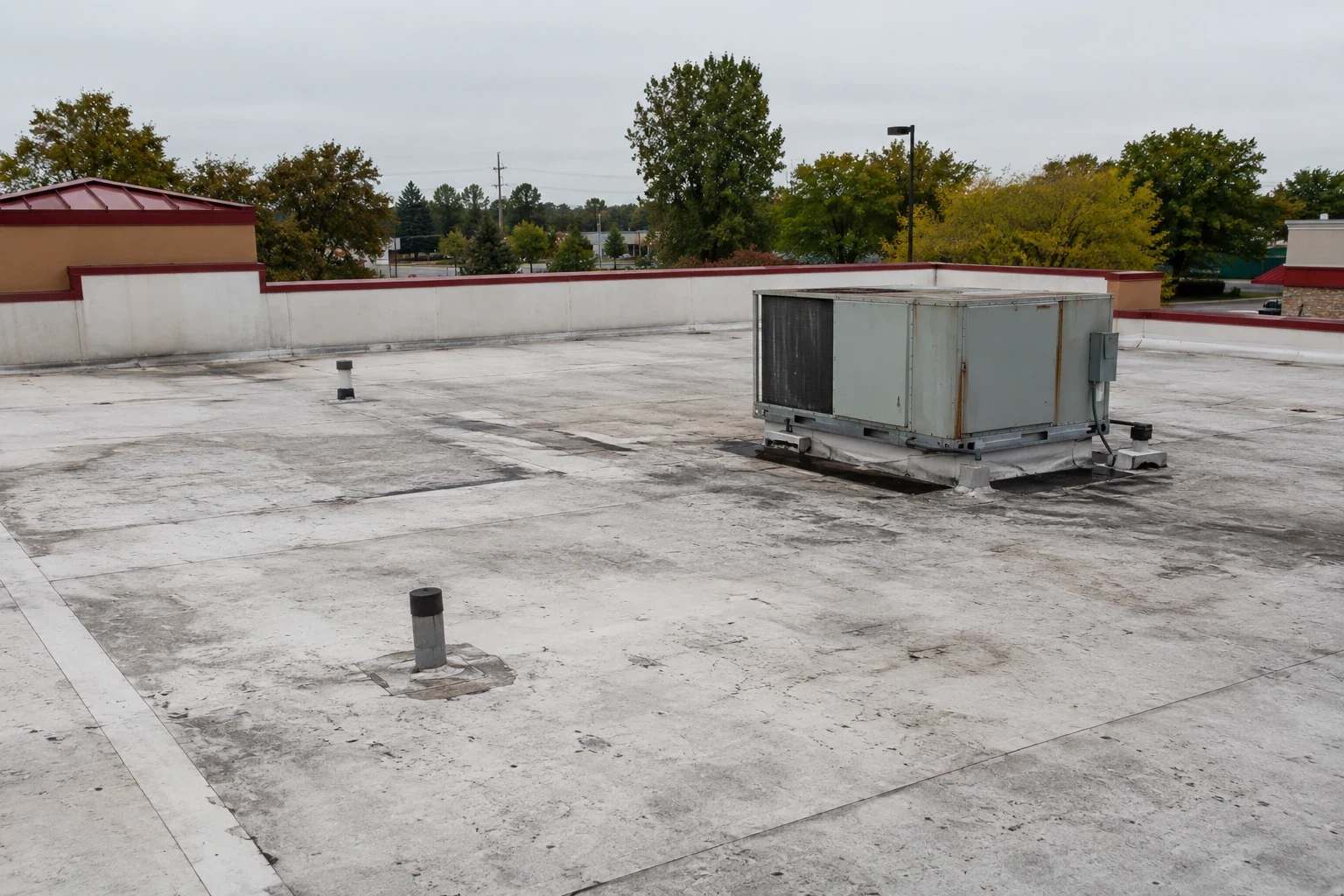
Exhaust fans, make-up air units and at times cooler condensers all sit on a restaurant roof. Each sits on a curb, and each curb sheds heat that cooks its sealant faster than the field around it. A hood cleaner who visits the roof adds buckets, brushes and degreaser, and a spill leaves both a stain and a slick spot.
We map every fan and curb on the first visit, check height and sealant age and note the cleaning route. Walk pads cover the route to the fan, and a rule about drips protects the sheet from hood cleaners. The curb and support work becomes its own bid line.
Drainage near the fans needs the same care. Runoff carries grease and debris to the closest drain and clogs it, which is how a grease pond forms next to a fan. We check those drains first, add a screen where it helps and flush the run with water on the visit.
Plan for the Swing From 90 F to Freezing
In a typical Yakima year about 40 afternoons reach 90 F, a few pass 100 F and the extremes on record stretch from minus 25 F to 113 F. A kitchen roof takes the summer afternoon and the winter morning in the same year, and the day-night swing works every seam. Heat from the fan adds to the load in summer and thaws snow around the curb in winter.
That thaw matters. Meltwater near a warm curb refreezes at the edge of the warm zone, and an ice dam can back water under flashing. We look for it on cold mornings and clear the drain path by hand when it forms. Staff should not chip ice from the membrane.
Spring and fall are the best windows. Mornings are cool enough for adhesive work, afternoons are not yet in the nineties, and the holiday rush has not arrived. A kitchen that can lose a few hours on a quiet weekday gets a long, calm job.
Keep Snow Off the Dining Room Ceiling
Winter drops about 21.6 inches of snow on Yakima, mostly in December and January, and the load a small roof must carry depends on its parcel. A restaurant roof with a low slope, a tall sign or a parapet gathers its drift behind each of them.
Do not shovel flat membrane roofs. A steel shovel cuts a kitchen roof as readily as any other, and the leak shows up over the dining room. If a ceiling stain appears or a door begins to stick, call us. Our crews clear with plastic tools, leave a layer of snow on the sheet and watch for deflection below. A canvas cover that holds a wet pile of snow pulls on the wall flashing it ties to. Remove covers before a forecast storm, and let us check the attachment points after it. A pulled bracket opens the wall, and the repair is cheaper before water finds it.
Match the Plan to the Setting
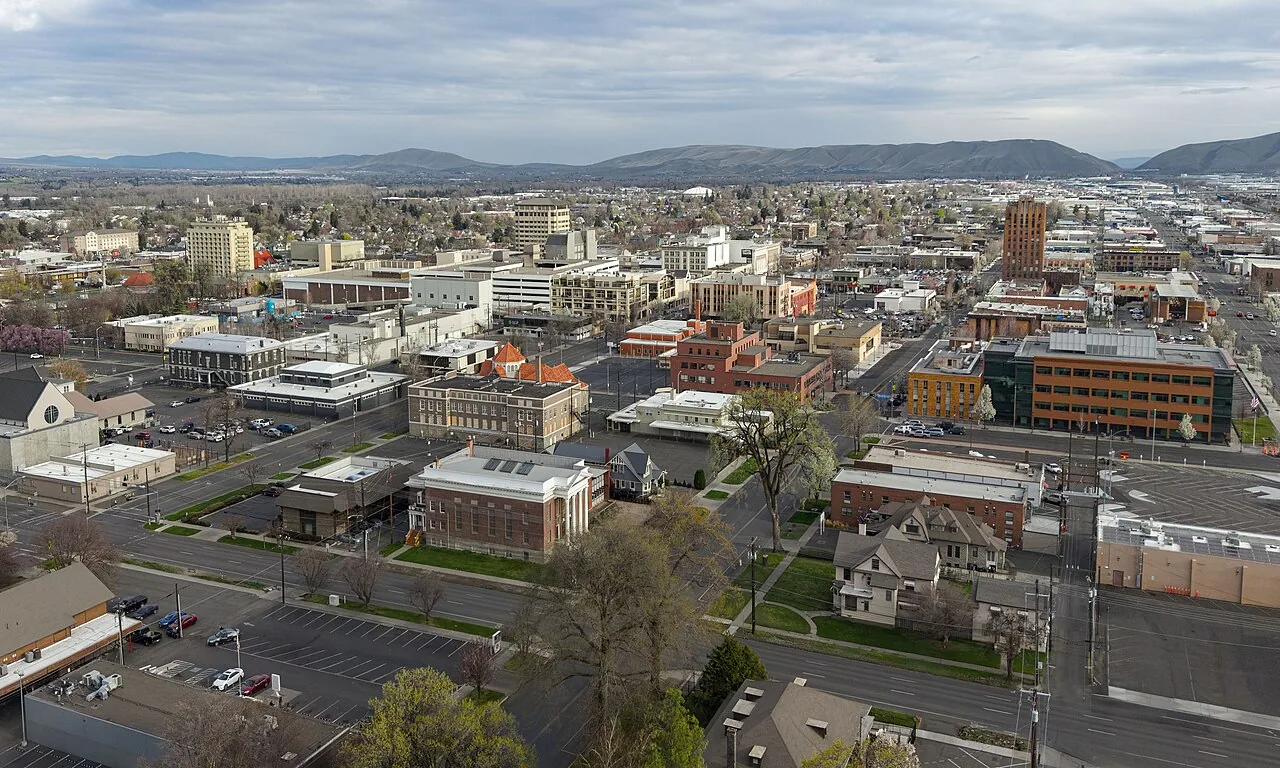
Restaurants sit in many kinds of buildings across the valley. Downtown Yakima, centered on Front Street, Yakima Avenue and 1st Street, may put a restaurant in a block that shares walls with its neighbors. Wine-country tasting rooms serve a region with over ninety wineries, and the Yakima Valley AVA produces more than 40 percent of Washington's wine. Each setting asks its own question about staging, noise and access.
A tasting room with a patio brings weather coverings and string lights that load the edge. The first walk identifies the roof, the penetrations and the seasonal fixtures, so the owner knows which items to remove before a storm.
Access is the other variable. A tight downtown alley may need a hoist and hand carry, while a roadside lot has room for a lift. The approach gets scouted at the hour the restaurant is busiest, and the lift plan is priced from what we see.
Choose Repair or Replacement and Close With a Record
A small kitchen roof is often a repair. A leak repair at a fan curb may buy several years, and a replacement makes sense when the grease zone has failed. We price both. The punch walk tests seams, caps and drains, and the owner keeps a roof map, photos and a log of every penetration. Following a kitchen fire or grease fire, the insurer may want to know the roof's condition, and dated photographs plus moisture readings answer that; both go into the file at the first visit.
The same file format serves the dining room of a hotel or a pad site inside a shopping center, each with its own fan and curb list.
Commercial Roofing Questions
Which membrane survives a grease fan?
PVC or another grease-resistant sheet, paired with a catch pan and cleaning routine. The sheet near the fan is checked on each visit and the zone replaced if swelling or staining starts.
Can the kitchen stay open during roof work?
Normally, yes. Roof work happens in short windows around service hours, the dining room gets a leak watch, and fan shutdowns are timed with the chef so fumes and dust stay clear of patio seating.
Why do ice dams form near the exhaust curb?
Warm air from the fan melts snow, and the water refreezes where the warm zone ends. The ice holds more water against the flashing. We clear the drain path by hand and recommend a gentle slope where the deck allows.
What should a hood cleaner do on the roof?
Use walk pads, carry drip trays and report spills. A spill softens the sheet and leaves a slick spot. We add the rule to the closeout file so the cleaner's contract can follow it.
Does a tasting room need anything extra?
Often. Patio covers, string lights and sign mounts load the edge, and they should come off before a gale. We list them on the first walk and flash any mount that penetrates the roof.