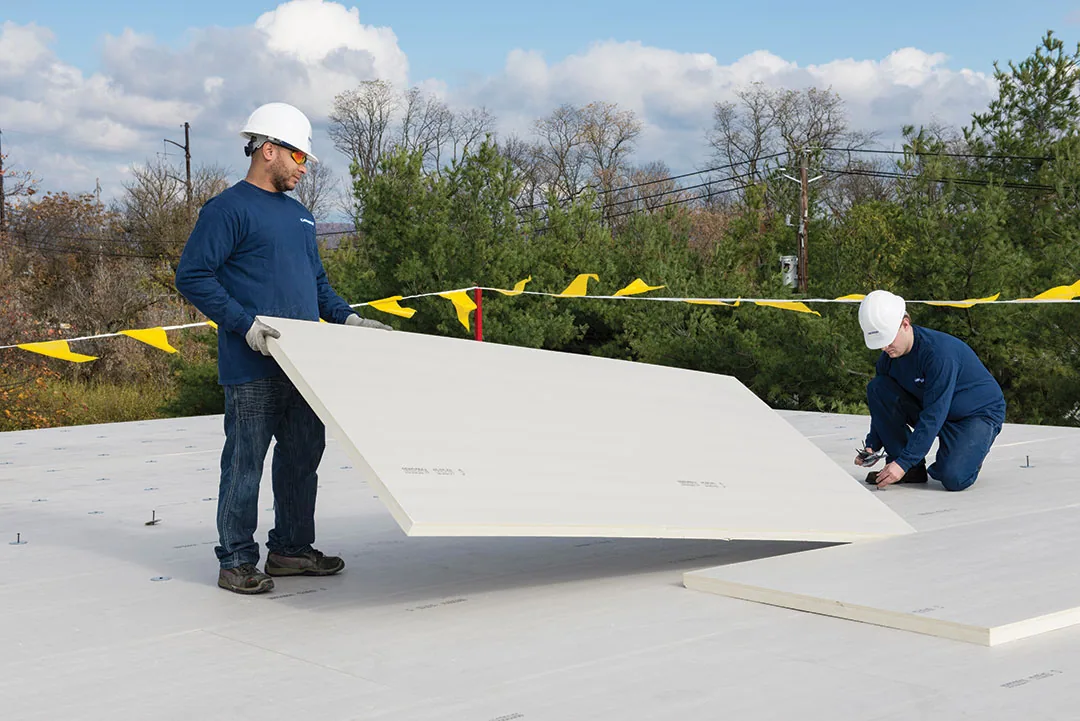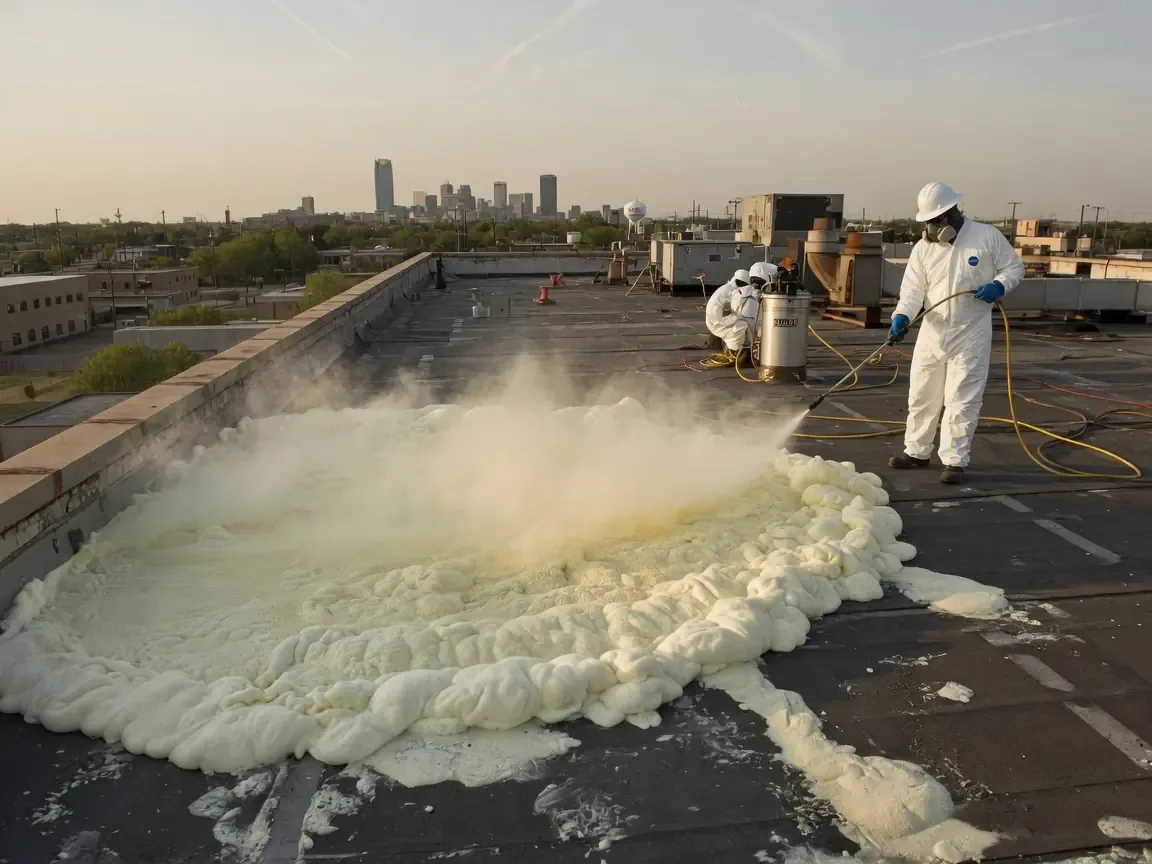
Frost on a cold-room ceiling in the middle of a warm week is the signal a refrigeration supervisor reports, and the question dispatch asks is what sits between that ceiling and the roof. Spray polyurethane foam, or SPF, is a two-part liquid sprayed onto the roof deck that expands into a continuous, rigid layer of insulation and waterproofing in one pass. There are no seams, because the foam adheres to itself and rises around every curb, pipe and corner. A protective coating on top shields the foam from sun and weather.
In Yakima, WA, where cold storage and fruit warehouses are a large part of the industrial stock and temperatures range from minus 25 F to 113 F, a roof that insulates and seals together is attractive. SPF is not a fit for every building, and the weather has to cooperate during application. We install it, repair it and recoat it, and we tell you when another system will serve better.
Count the Insulation You Get With the Seal
Foam is a good insulator per inch, and because it is sprayed in place there are no joints for air to move through. For a cold room, that matters twice: the compressors work less to hold temperature, and the ceiling below stays free of the cold spots where condensation forms. The foam thickness is set to the target insulation value and tapered where the roof needs to drain, so we can fix a ponding problem and insulate in the same visit.
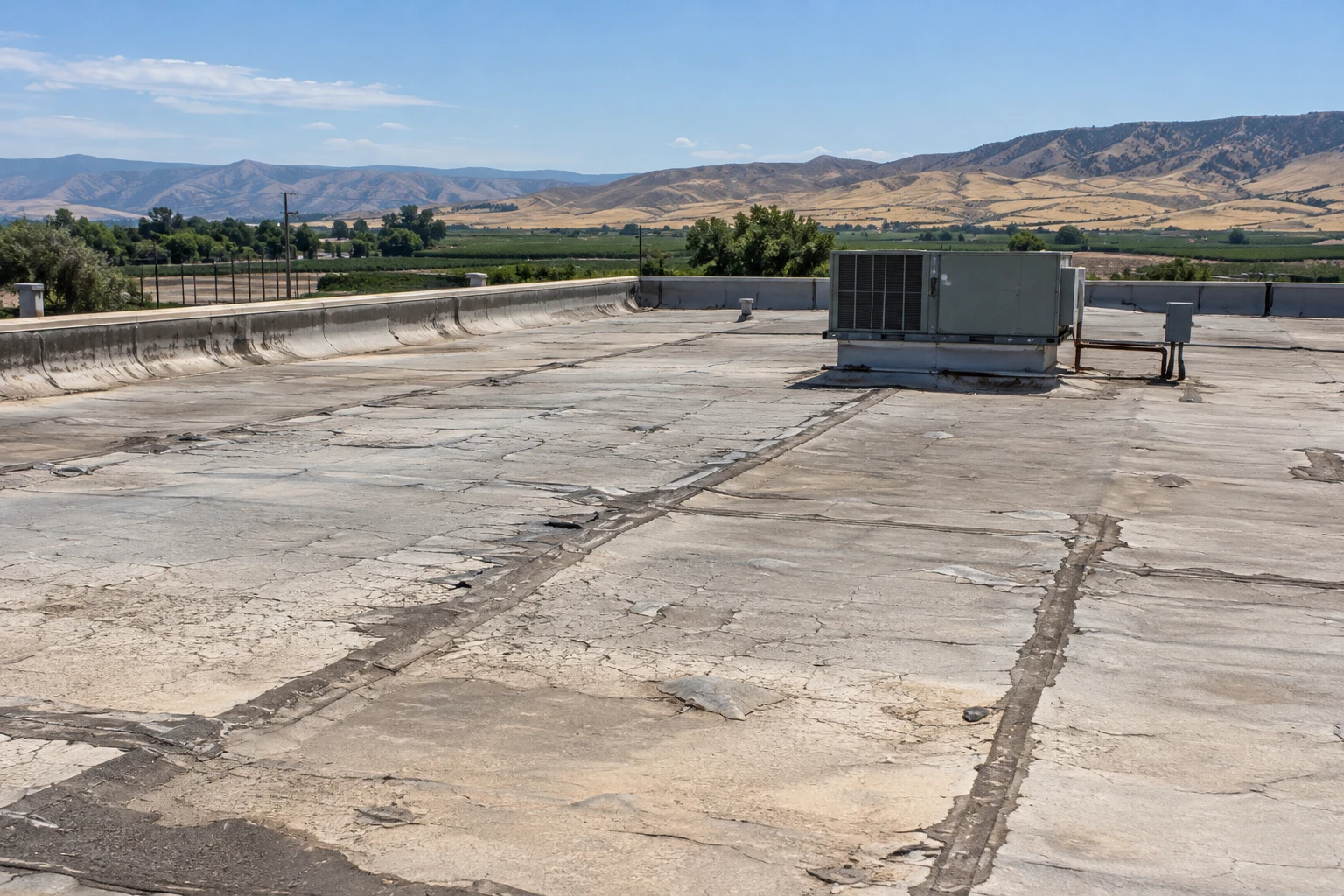
Foam is also lightweight. A foam roof adds far less dead load than a ballasted or multi-ply system, which helps when a building carries snow loads in the upper range of the county's 20 psf to over 200 psf. On an older roof, SPF can often go over the existing membrane after a moisture scan confirms the old roof is dry, so we do not need a heavy tear-off. A cover board and insulation upgrade is rarely needed with foam, because the foam is the insulation.
Spray Only When the Weather Lets the Foam Rise
SPF is sensitive to the conditions during installation. The deck must be dry and clean. Wind must be light enough that overspray does not drift across parking lots and neighboring buildings. Surface temperature affects how the foam rises and cures. Yakima's dry climate, with about 8 inches of precipitation a year, offers many good spraying days between the snow of December and January and the heat of July, though a day with a 30 mph gust is no day for spraying.
We read the forecast the evening before and the deck conditions that morning. If a front is coming, we stop and protect what is already sprayed. Foam that gets wet before the coating goes on can lose bond. The crew masks cars, windows and air intakes within the spray zone, and we notify neighbors on the days of application. A window left open at an adjoining building can turn the day into a complaint, so the crew leader walks the property line before the first pass and again after the last pass, checking cars, glass and louvers for drifted mist. If anything is found, we clean it that afternoon, before the material cures.
Protect the Foam With a Coating That Fits
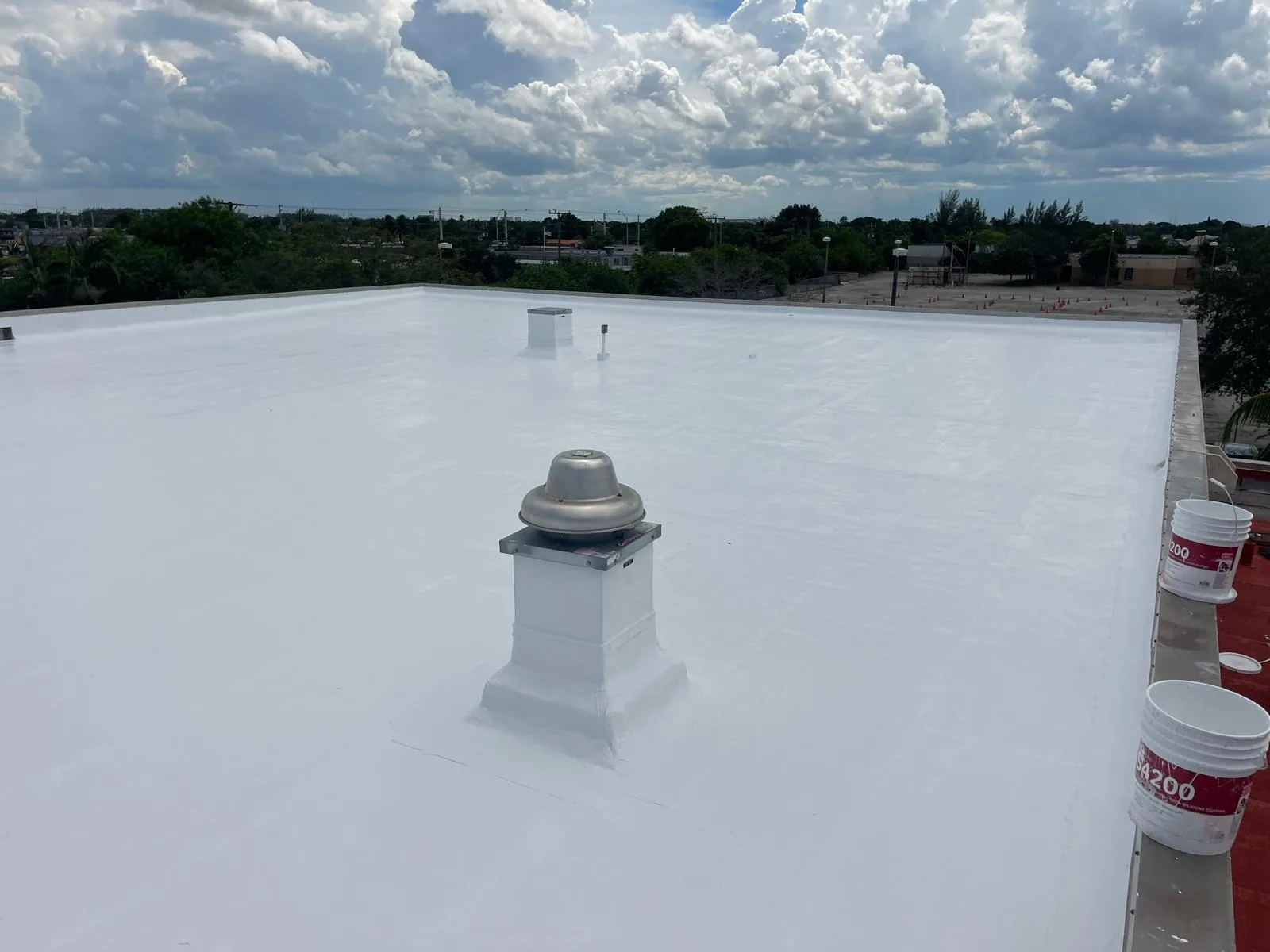
Foam breaks down in sunlight, so it must be covered. The coating is a fluid-applied layer, usually silicone or acrylic, with granules added in walk areas. It is the part of the system that takes weather, hail and foot traffic, and it needs to be renewed on a schedule. A coating applied to the right thickness, kept clean and recoated when it wears, keeps the foam underneath protected and the roof in service for a long time.
Yakima records about 40 afternoons at or above 90 F, and a reflective coating lowers the roof surface temperature on those days. The coating also resists the day-night swing, which flexes a rigid foam surface. We inspect the coating after every winter and after every storm like the one that gusted to 51 mph in late November 2019, looking for pinholes, scuffs and blisters. A small break repaired promptly keeps water out of the foam.
Guard the Surface From Tools, Hail and Traffic
Foam is not as hard as a membrane. Dropped tools, ladders and foot traffic can dent it, and a hole that reaches the foam lets water in. Birds sometimes peck at it. We add walk pads on the paths to equipment, and we repair holes with new foam and coating, not caulk. A technician servicing a rooftop unit should carry tools in a bucket, not drag them.
Snow is the other factor. On a foam roof a metal blade can gouge the coating and the foam beneath, so winter clearing is done with plastic tools and a protective layer stays on the surface until the roof is dry enough to look over. Repairs after heat and UV wear are a routine part of the program.
Pick the Buildings Where Foam Earns Its Place
SPF suits roofs with many penetrations and irregular shapes, since the foam flows around them. It fits warehouses used for fruit storage, like the cool warehouses that were historically the largest employers in Tieton, and it suits cold rooms where the insulation matters most. It is a poor fit where grease, steam or chemicals fall on the roof, or where the deck is wet and cannot dry.
For a cold storage roof, we also check whether the existing roof was built with a vapor retarder, because that layer affects moisture movement in the new assembly. We bring the findings to the facility team before work begins and keep a written record of the foam thickness and coating thickness at each test point.
Commercial Roofing Questions
Can spray foam go over my existing roof, or does the old one come off first?
If the existing roof is dry, firmly attached and clean, foam can go over it and save a tear-off. We scan the old roof for moisture first, since trapped water under foam leads to blisters. A saturated roof has to be removed in the wet sections. We test adhesion with a small foam patch before committing to the full area.
How often does a foam roof need recoating?
The coating is the wearing surface, so it gets recoated when it thins, chalks or shows scuffs. The interval depends on the coating type, sun exposure and traffic. We measure the coating thickness during our yearly inspections and recommend a recoat before the foam is exposed. Waiting until the foam shows through costs more.
What happens if the wind picks up during the spray day?
We stop. Overspray drifts and the foam rises unevenly in gusts, which can leave voids. Any foam already sprayed is covered, and we resume when the wind settles. Yakima had gusts of 51 mph in November 2019, so we keep the forecast in mind through the week.
Is spray foam safe to apply while staff work in the building?
The chemicals give off fumes during spray and early cure, so we need to seal the air intakes and ask staff to avoid the area near the spray zone. For a school, clinic or office, the work is usually planned for off hours with air handlers shut down, then reopened after the cure period.
Does foam help a roof that ponds water in a Selah warehouse?
It can. Foam is sprayed at varying thicknesses, so we build slope into the roof and send water to drains. That works best on a roof with a dry, sound deck. If the deck itself is sagging from snow load, we address the structure first and then spray. A ponded corner left alone shortens the coating's life.