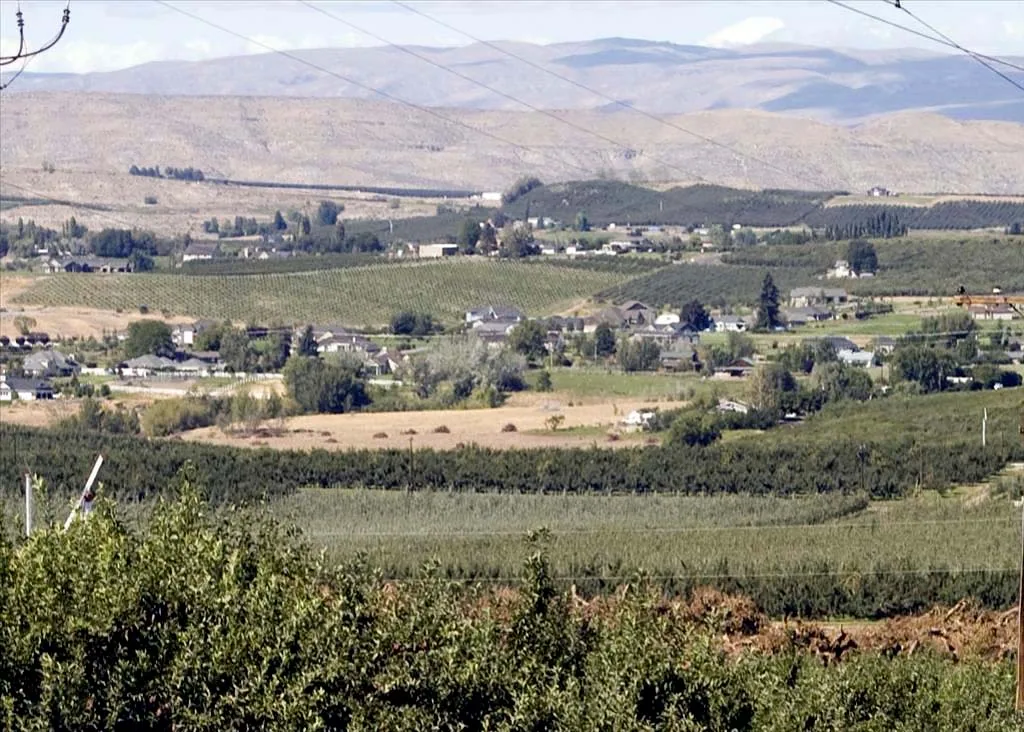
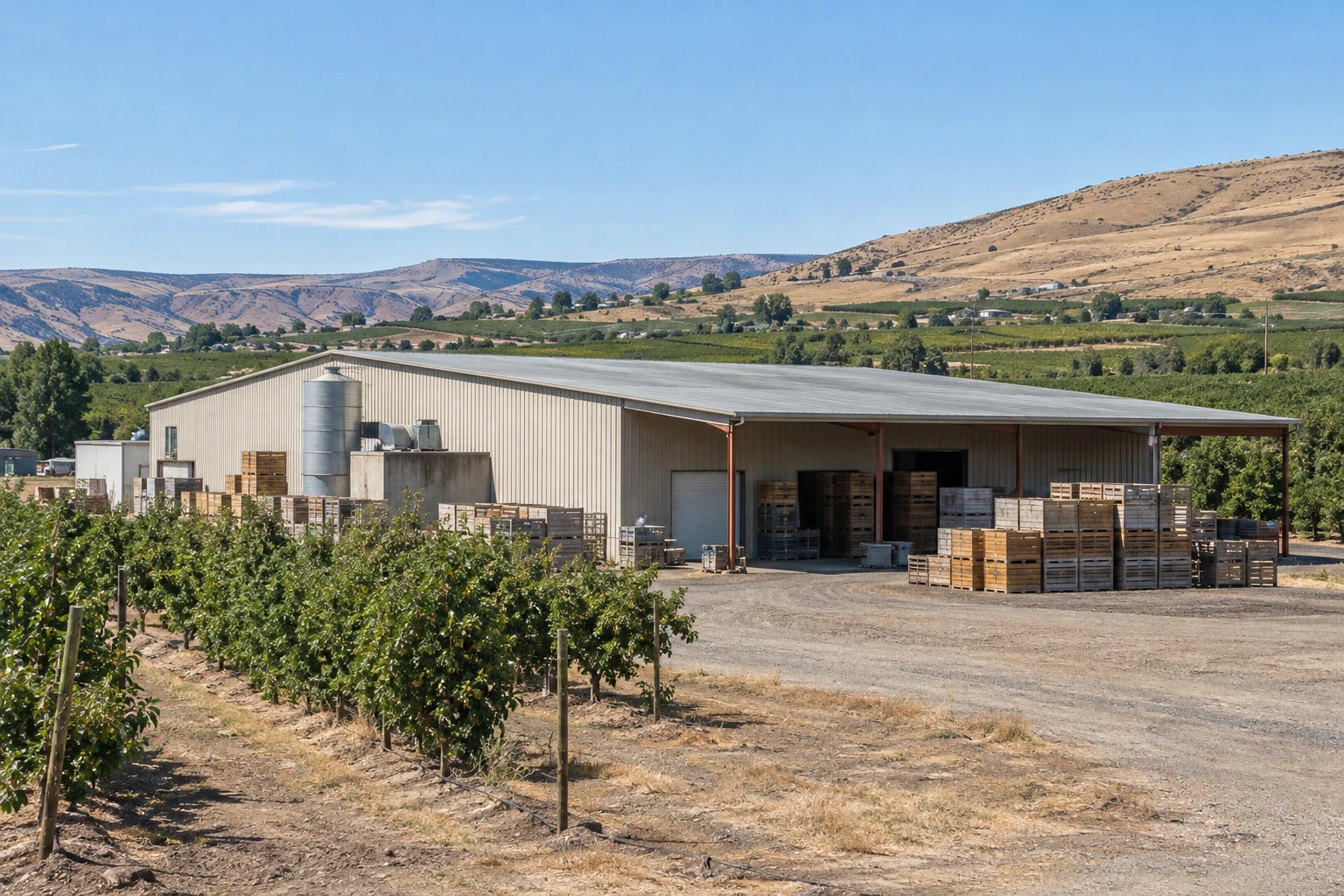
Pomona is an unincorporated community just northeast of Selah, ZIP code 98901, and its station on the Northern Pacific line was called Selah in 1885 before it was renamed Pomona in 1908. Next door in Selah, Tree Top and Sun-Rype run juice processing plants, and a roof on a processing building carries more than weather: exhaust, steam, condensate and equipment. The first question dispatch asks on a call from the Pomona side is what the roof holds besides water. On this side of Selah we repair, coat, recover or replace flat and metal roofs and take calls at all hours, planning each job around Yakima, WA weather, from heavy December snow to afternoons past 90 F.
Treat Every Fan, Vent and Condenser as a Roof Detail
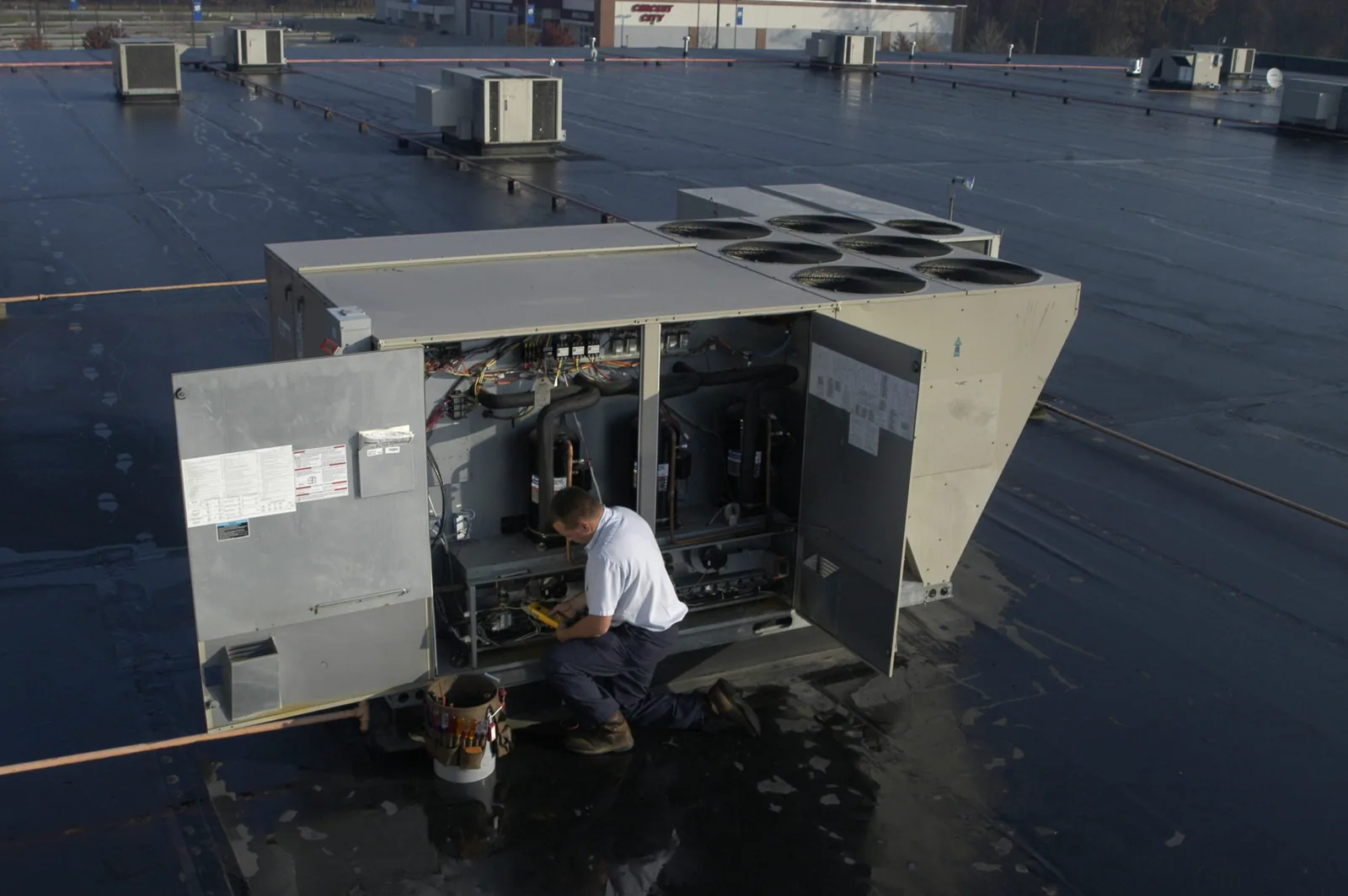
Buildings that handle food and drink put a lot of equipment on the roof, and each piece is an opening, a weight and a source of wear. Exhaust fans, make-up air units, vents and condensers each sit on a curb or a support, and each curb needs flashing that can take movement and heat.
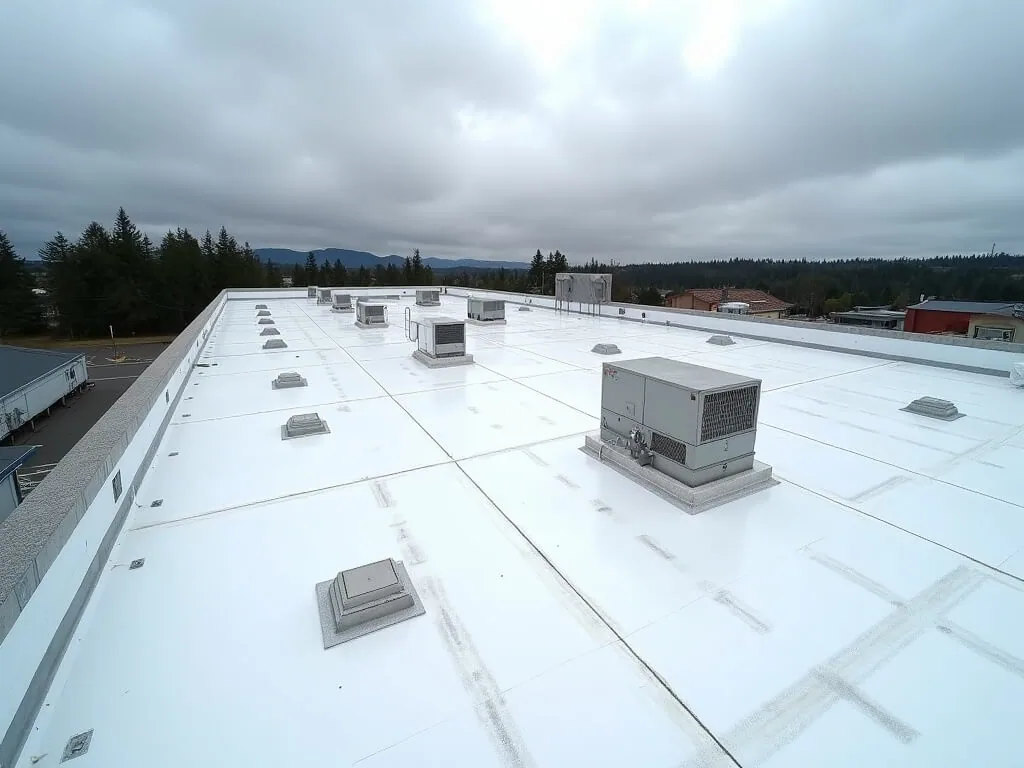
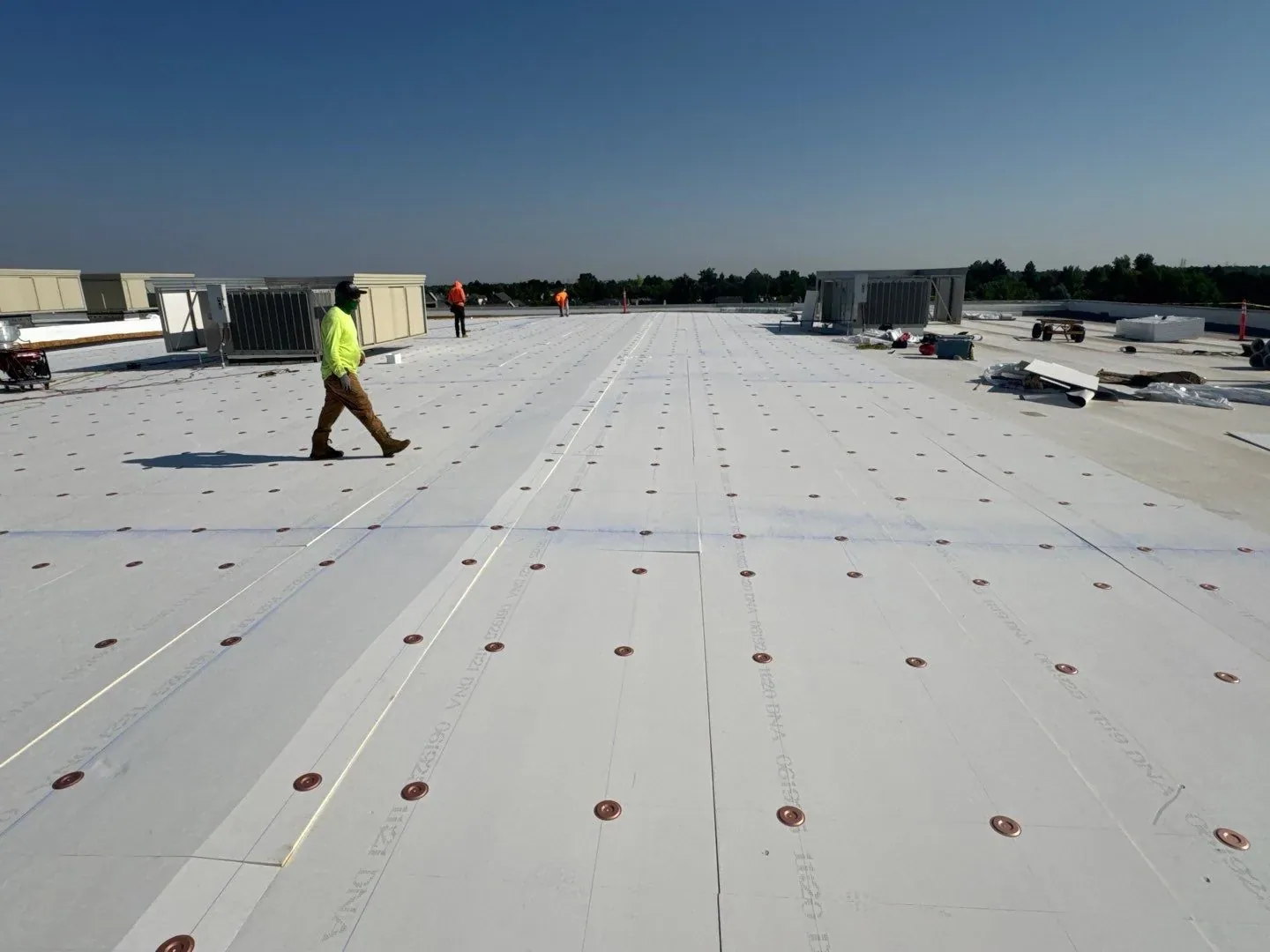
On the first walk, we log every unit and check its curb, its flashing and the membrane around it. Our rooftop equipment curb and support work rebuilds worn curbs, raises low ones above the snow line and sets pipe supports off the membrane. Dense clusters of equipment also change snow behavior, so we mark drift zones around them and watch those spots after each storm.
Service routes get protection. Technicians who visit a unit every week wear a path into the membrane, so we lay walk pads from the hatch to each unit and mark the route on the plan. Conduit and pipe runs that lie on the roof go onto adjustable supports, since a block resting on the sheet grinds through it over the years.
Choose Membranes That Tolerate Exhaust and Residue
Exhaust plumes carry grease, steam and chemical residue, and some roof membranes break down under that exposure. A PVC roof resists many oils and chemicals, which makes it a common choice where exhaust reaches the surface. Other single-ply sheets and coatings do better elsewhere on the roof.
We survey the roof for stains, softening and blistering near each exhaust point, and we match the repair or replacement to what the surface has met. A section near an exhaust stack may need a different material from the rest of the roof, with a transition detail between them. The report states which material goes where, and why.
Heat from exhaust and equipment shows up in the sheet before it shows in a leak. Softening, shrinking and curling near a stack tell us the surface has seen too much, and we protect those spots with a heavier membrane or a reflective cover. Drift of residue onto nearby areas is cleaned with a method that suits the material.
Move Process Water and Meltwater Off the Roof Reliably
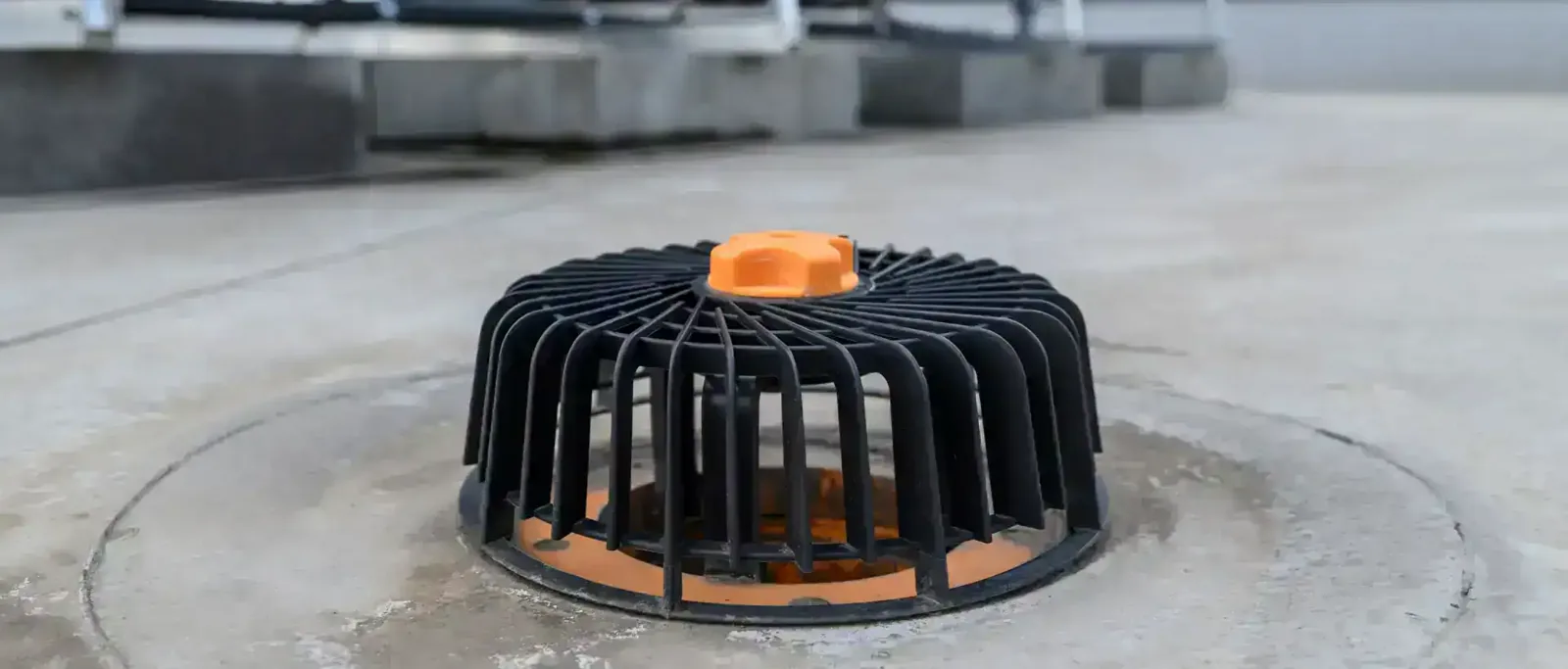
Condensate lines, wash-down water and winter meltwater all end up on or near the roof. A drain that is almost large enough passes a light rain and fails in a thaw, when a winter's snow, most of it fallen in December and January, can melt in a few warm days.
We trace each drain line, check strainers, clear debris and look for ponding. Where water stands, the cause may be a drain above the low point, a sagging deck or a missing cricket behind a curb, and our drains and scuppers work fixes the one that applies. Outlets near doors and walkways are directed away, because ice at an entrance is a hazard that grows overnight.
Wash-down water adds its own rule. Water from equipment cleaning should never discharge onto the roof surface or freeze at an edge, so we trace where it goes and move or extend the line if it is landing on the membrane. Records of each change keep the next trade from undoing the fix.
Sequence Work Around Production, Sanitation and the Season
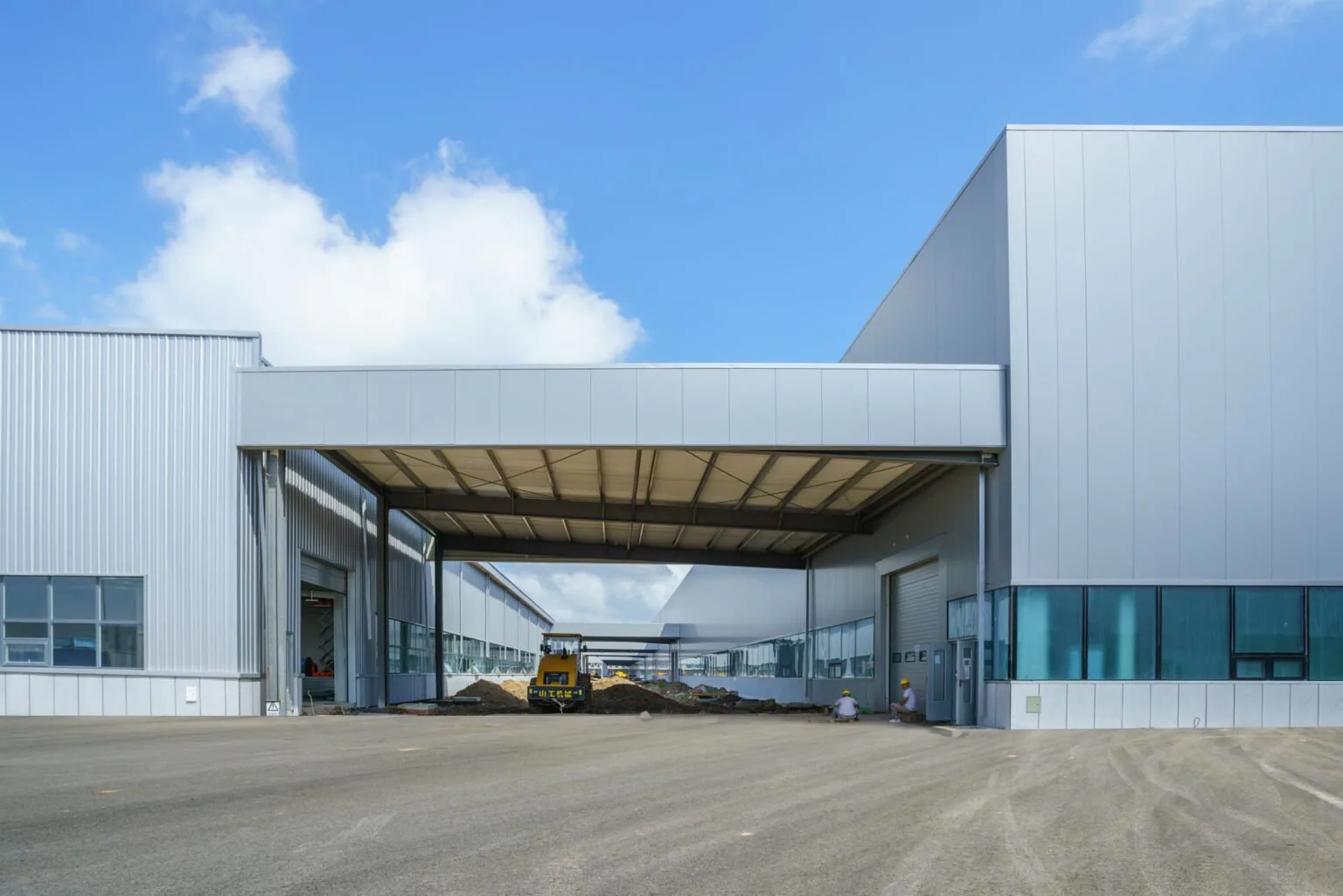
Processing runs on a calendar, and roof work has to fit it. We ask the plant engineer for shutdown windows, the rooms that cannot be disturbed and the sanitation rules that apply. The heaviest tear-off waits for the quietest window, in sections small enough to close that same day.
We protect product and intakes: air-handler filters, covers over open vents and a plan for odor from adhesives. Daily notes tell operations what was opened and what is next. For manufacturers and food processors alike, the aim is the same: finish a section, dry it in and keep production running below.
A reroof that opens the assembly may need to meet the insulation values of the code editions in force since March 2024. We put that in the proposal with the phasing plan and the temporary-protection method, so operations can plan around the real scope.
Pin the Edges and Check After Each Gale
The late-November 2019 windstorm gusted to 52 mph at Vagabond Army Airfield near Selah. Tall equipment collects wind, and the edge of the roof is where it works first. Coping, edge metal and the first few feet of membrane are checked at every corner, and weak fasteners are replaced.
After any strong gust, we offer a phone and photograph triage first and a visit if the pictures show a gap. A lifted cap caught the same day is a small repair. A strip of torn membrane three weeks later, after a second gale, is a call for emergency roof repair that did not need to happen. Roof records matter here: every visit adds a dated report with photographs, so a repair on a curb or a stack can be matched against the last one. Neighbors in Selah and East Selah can share one route and one record.
Insulation and cover board take the next look. A hard-working roof near heat and moisture can compress or soak its insulation, and a firm cover board under the membrane protects it from foot traffic at the service routes.
Commercial Roofing Questions
How do you tell exhaust damage from normal aging on a roof?
Exhaust damage clusters near the source and follows the direction of the plume, with staining, softening or blisters in a pattern. Aging spreads more evenly across the roof. We map the marks on the roof plan and test the membrane near them.
Can we replace a unit on the roof without damaging the membrane?
Yes, with planning. The pre-lift meeting, the crane path, temporary protection and a freshly flashed curb all come before the unit goes down. A dated photograph set from before and after shows the roof's condition.
What roof system suits a building that makes juice or similar products?
The exhaust, the roof's slope and the cleanliness rules point to the system. PVC and TPO are common single-ply options, and a coating can restore a sound roof. The survey and the plant's rules narrow it to one.
A roof drain is backing up during thaws. What should we check first?
Check for debris in the strainer and for ice in the line. Do not climb onto a snowy roof to look. Call with the address, and we will clear the drain, trace the line and check the slope toward the opening.
How do you protect product while the roof is open?
Small sections, each closed the same day and covered with temporary protection, keep the building dry, and operations decides what to move or cover below. Air intakes are filtered or shut down during the work.