A buyer's analyst phones in the middle of a cold week in January with a closing date eleven days out and a roof nobody has measured. Dispatch asks three things: where is the building, who holds the drawings and is there snow on the roof right now? A roof survey for an acquisition has to be quick without being thin. In Yakima, WA the season shapes what can be seen, because snow hides seams, and the design load, which ranges from 20 psf to well over 200 psf by parcel, shapes what the buyer must reserve for. The survey gives the buyer a number to negotiate with and a plan to carry out afterward.
Agree on What the Survey Has to Answer
Buyers and lenders ask different questions. A buyer, especially one of the real estate investors who hold many roofs, wants the remaining life and the near-term repair cost. A lender wants to know whether the roof threatens the collateral. A seller who commissions a survey wants to know what a buyer will find. We open each job by naming the question and the deadline, then set the field method to fit.
The scope covers every roof section, the equipment on the roof and the drainage. We ask for the drawings, warranties, repair invoices and any prior reports, and we note what is missing. A building with no records is not necessarily a bad building, but the gap goes into the report so the buyer can price the risk.
Access terms are agreed before the visit. We need a safe route to the roof, permission to take cores and a contact on site who can open doors and hatches. For tenant-occupied buildings, the seller or property manager coordinates notice, and we keep noise low and the work short on each section.
Work Around Snow, Heat and the Closing Calendar
Winter limits the survey. Snow cover hides membrane, and cold weather makes probing and moisture scanning harder. When a roof is covered, we say what can be learned from drains, parapets, interior ceilings and cleared patches, and we write the limits into the findings. A buyer can then choose to delay closing, negotiate a holdback or accept the uncertainty.
Summer brings its own issue. Afternoons at or above 90 F occur about 40 times a year, and a hot roof is hard to work on at midday. We scan after sunset and walk early. A moisture survey needs a clear, dry evening, so we book it with some slack in the schedule.
Closing in the dead of winter is common, and a buyer who cannot see the roof can still protect the deal. A holdback sized to the unknowns, a right to a follow-up survey in spring and a seller's warranty on roof condition are three tools buyers use. We describe the risk in each case so the buyer's attorney can draft around it.
Use Instruments to Cover the Roof Fast
Time is short in a transaction, so we use tools that cover area efficiently. A drone flight photographs the whole surface in a short time, and an infrared scan marks suspect wet areas for core samples. A hands-on walk confirms what the images suggest. Together they give a reliable map of the roof in a day or two for most buildings.
Cores are taken at the spots the scan flags and at a few controls. They show the number of layers, the insulation type, the condition of the deck surface and whether water is present. Each core hole is patched on the spot with compatible materials, and the location is recorded.
Images from the drone are tagged to a roof plan and delivered in a folder a buyer can review in an hour. The infrared scan overlays on the same plan, so a reader sees the wet areas in the context of curbs, drains and seams, not as isolated pictures.
Report the Remaining Life and the Repair Bill Together
The two numbers a buyer needs are how long the roof will last and what it will cost to get there. We give the remaining life as a range for each section, along with a list of repairs needed in the first year, and a reserve estimate for replacement. These figures are qualitative guidance backed by evidence, not a quote, and the report says so.
We also flag items that change value quickly: wet insulation across a bay, a deck with deflection, a drain system that cannot handle a thaw. Those are the findings that move a price. The capital planning work that follows a closing starts from the same data, so nothing is wasted.
Insurance enters the picture as well. A lender may ask for evidence that the roof is insurable, and an underwriter may ask about age and condition. The survey answers both with dated photographs and a clear statement of what was found.
Check the Load, the Drainage and the Structure
In a snow market, structure is part of roof due diligence. We record the design snow load from the permit or drawings, note drift zones and look for signs of past overload. The South Third Avenue building that was red-tagged over a bulging wall in February 2019 is the local reminder, and a buyer wants to know whether the building under contract has shown similar signs.
Where deflection, cracks or ponding point to a structural question, the report recommends an engineer's review and says why. We do not assess structural capacity ourselves. We report what we see and who should look next.
Adjust the Survey to the Kind of Asset
A retail building around Valley Mall in Union Gap raises tenant coordination and rooftop equipment questions. A warehouse puts the focus on area and drainage. A cold storage or packing building adds moisture and vapor questions. A healthcare building adds operational constraints. Newer commercial space in growing areas such as Terrace Heights, which went from 6,937 residents in 2010 to 9,244 in 2020, may carry roofs that are young, with warranty status as the main question. We adapt the checklist to each, and tie warranty questions to the warranty management record.
Commercial Roofing Questions
How quickly can you deliver a survey for a closing deadline?
Most single buildings can be surveyed in a day or two of field work, with a written report soon after. Large portfolios take longer. Tell us the closing date when you call, and we will say what is possible and what limits the weather puts on it.
Can the survey be used to renegotiate the price?
The findings give you evidence for that conversation. Wet insulation, a short remaining life or a stack of near-term repairs are typical grounds. The report separates immediate needs from long-range items so each side sees the same facts.
What if the seller will not allow core samples?
We can still do a visual walk, drone imagery and infrared scanning, which together find most problems. The report notes that no cores were taken and what that leaves uncertain. A buyer can then request cores as a condition of closing.
Does a survey cover rooftop mechanical equipment?
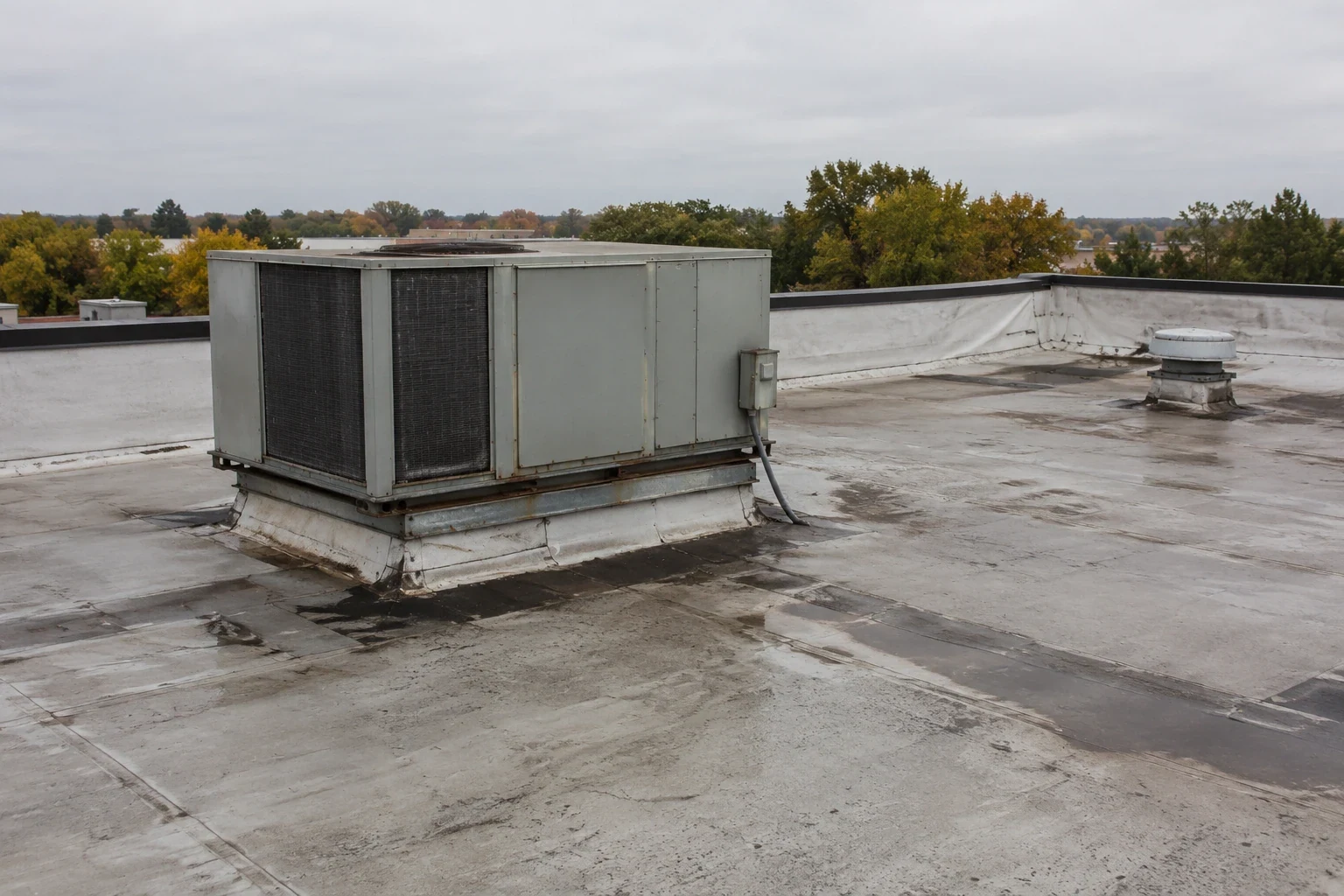
We look at the curbs, supports, flashing and condition of the roof around equipment, not at the mechanical operation. We recommend a separate mechanical inspection for the units themselves. Roof damage near units is common, so we check that carefully.
Who owns the report and who may rely on it?
The party that commissions it owns the report. Lenders and other parties may rely on it only if the engagement says so, so tell us at the start who needs a copy. We keep our field data on file for later questions.