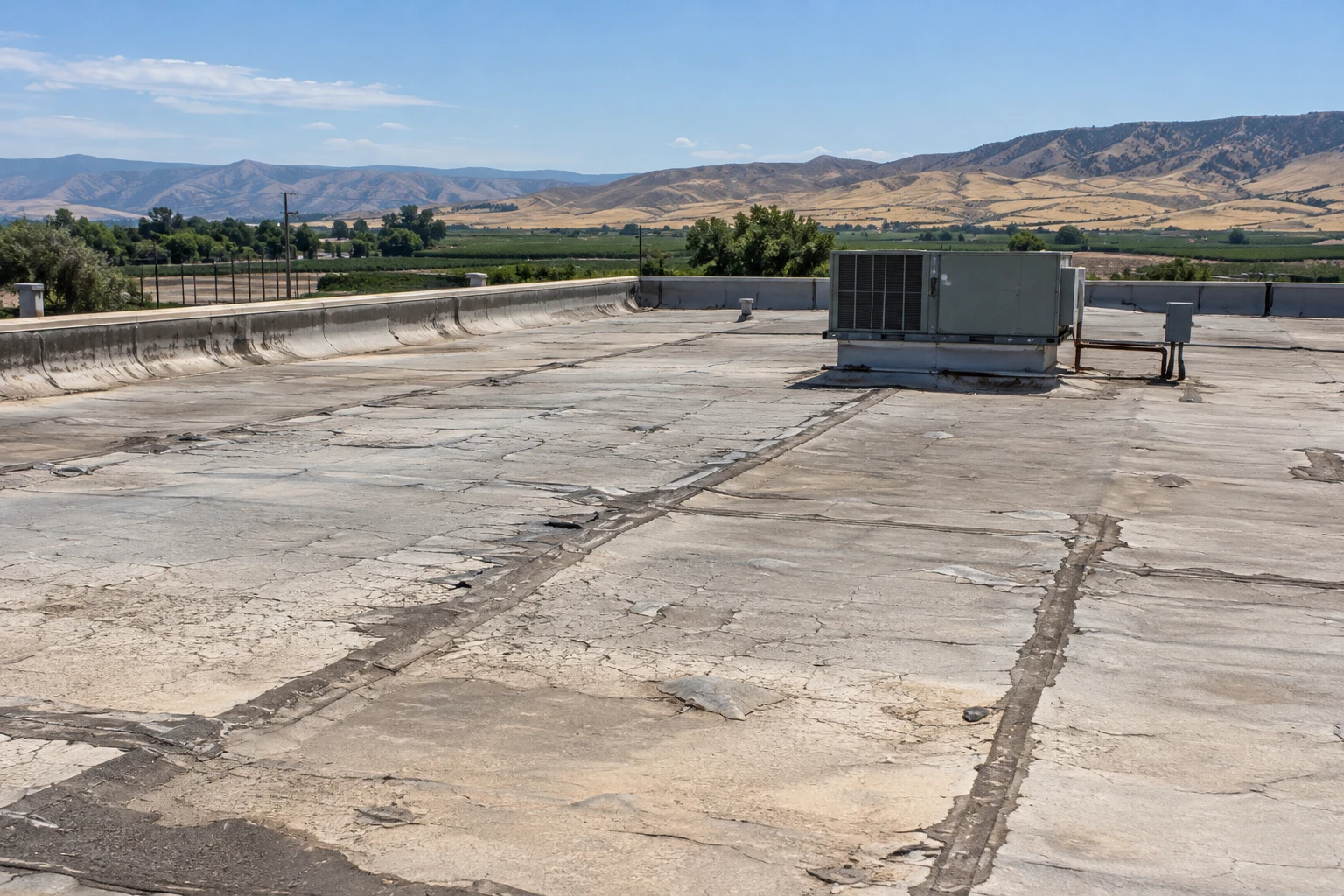
The call comes while the hoses are still being coiled: a plant manager standing in a lot at the end of a 100 F afternoon, a scorched patch visible on the roof above a rooftop unit, and a fire crew that has just cleared the building. The first question dispatch asks is whether the structure has been released for entry. A fire in Yakima, WA leaves a roof in three conditions at once, burned, soaked and open to weather, and the dry climate gives a short but real window before rain or the first snow reaches the exposed deck. Repair begins with safety, then dry-in, and only then with the permanent work.
Wait for the Release, Then Walk the Structure
No crew steps onto a fire-damaged roof until the fire authority and, where needed, a structural engineer clear it. Heat weakens steel and wood in ways that are not visible, much as heat and UV damage ages a membrane out of sight, and a deck that looks sound may not carry a worker. Structure is the engineer's call. We ask for the report and follow it.
Once the roof is released, we inspect from the ground and from a lift where possible, and then from the roof with fall protection and spotters. We check deck sections, purlins and joists for char and deflection, and we mark safe paths. Areas with unknown capacity stay off limits until confirmed. The first walk takes more time than a normal inspection because every step is tested.
Dry In the Opening Before the Next Weather Arrives
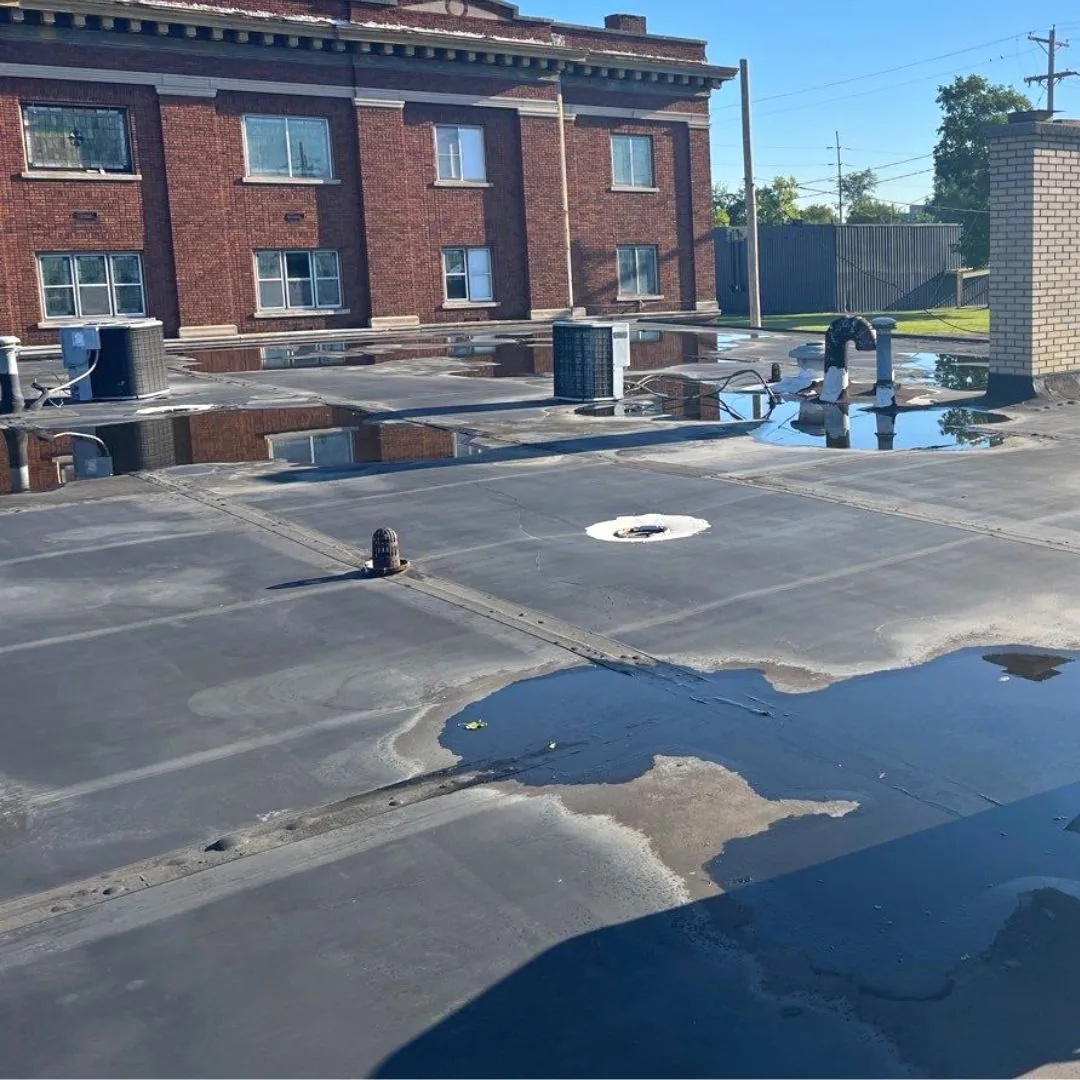
Water from fire hoses soaks insulation, and an open roof lets more in. The first repair is a temporary cover. We use reinforced tarps secured to sound structure or temporary decking where the deck is damaged, with edges lashed against the wind. A late-November 2019 gale gusted to 51 mph in Yakima, so a cover has to be built for that, not for a calm afternoon.
We also open drains and scuppers that debris or foam may have blocked, because a roof that cannot drain turns a dry-in into a pond. Our emergency roof repair crew handles this stage around the clock, and the building owner gets a photo record of the cover as installed.
Gusts matter when a roof is open: the same storm reached 53 mph in Sunnyside, and a cover that holds in the city may not hold on open ground at the edge of the valley. We add fasteners and battens in proportion to the exposure.
Map the Burned, Soaked and Smoke-Stained Areas
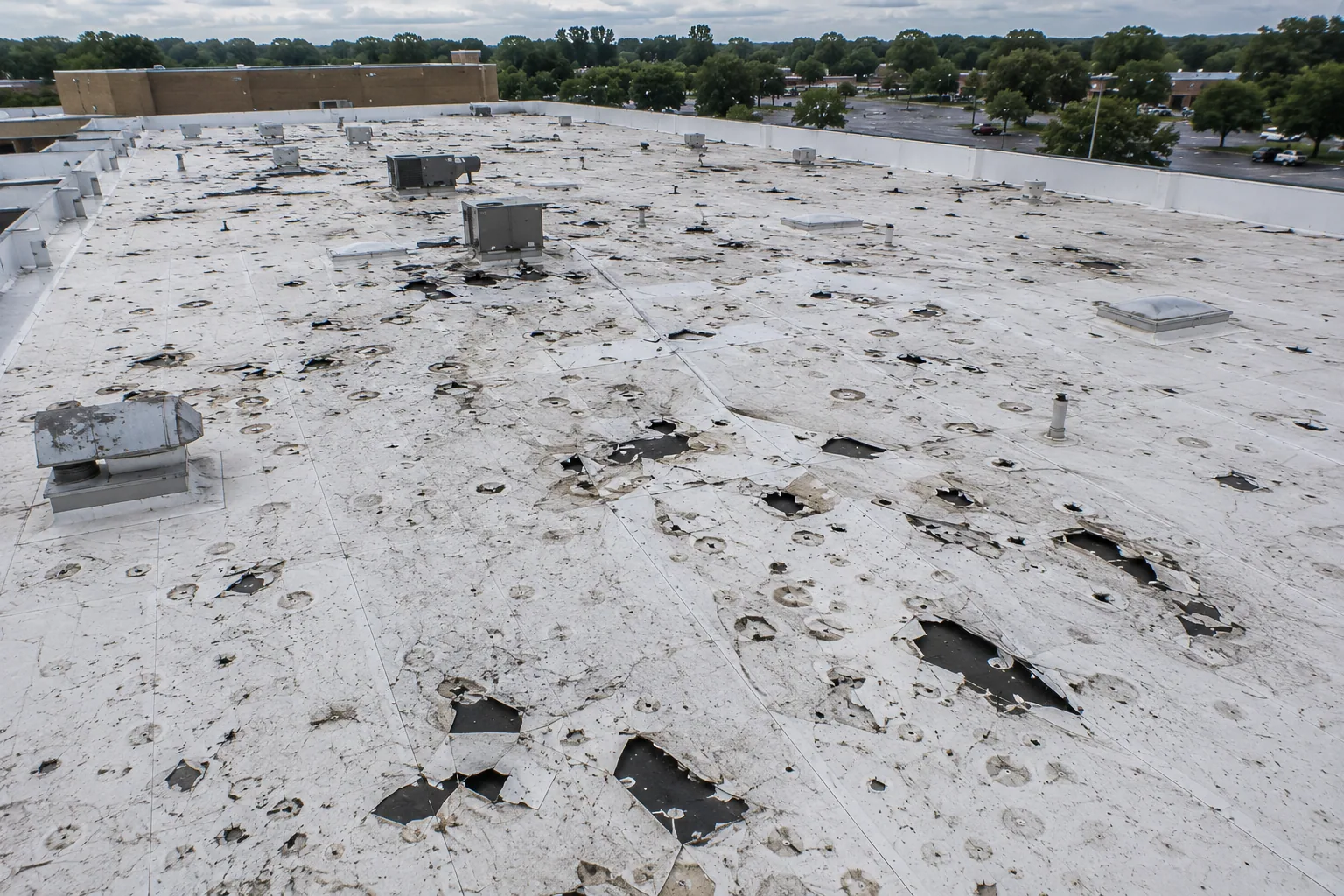
Fire damage comes in three layers. Burned areas show char, melted membrane and open deck. Soaked areas hold water in insulation and fasteners. Smoke areas carry soot and odor, and heat may have distorted the membrane without burning through it. Each needs a different response.
An infrared moisture survey maps the soaked insulation, and core samples confirm it. Heat-distorted membrane shows ripples, blisters and shrunk seams, and we probe it for bond loss. We plot all three on the roof plan, which becomes the scope of work and the basis for the insurance estimate. Mapping first prevents the common error of replacing only what is visible.
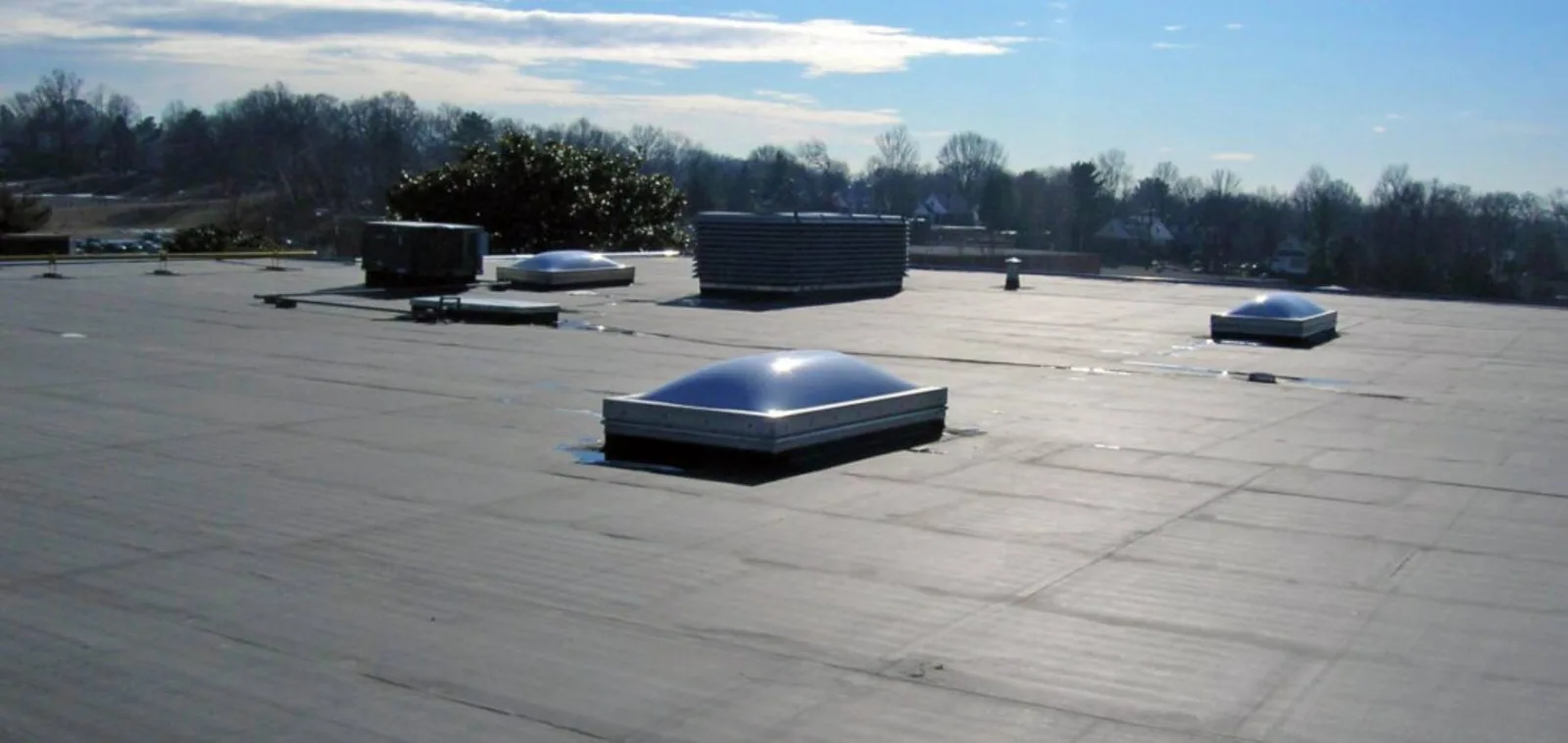
Rooftop equipment deserves its own entry in the map. Fire can damage curbs, wiring and refrigerant lines, and an electrician or mechanical contractor has to clear each unit before our crew works near it. We note which curbs need rebuilding so the flashing is not reused over a scorched base.
Replace What the Fire Changed, Not Only What It Burned
Insulation that has been soaked and heated seldom recovers. Polyiso and foam boards can melt, char or shrink, and wet fiberboard loses strength. We remove damaged insulation to sound material, replace deck sections as the engineer directs, and install new insulation and cover board to the thickness the current energy code asks for. The Washington State Energy Code took effect in its 2021 edition statewide on March 15, 2024, and a repair that reaches a certain scale may have to meet it.
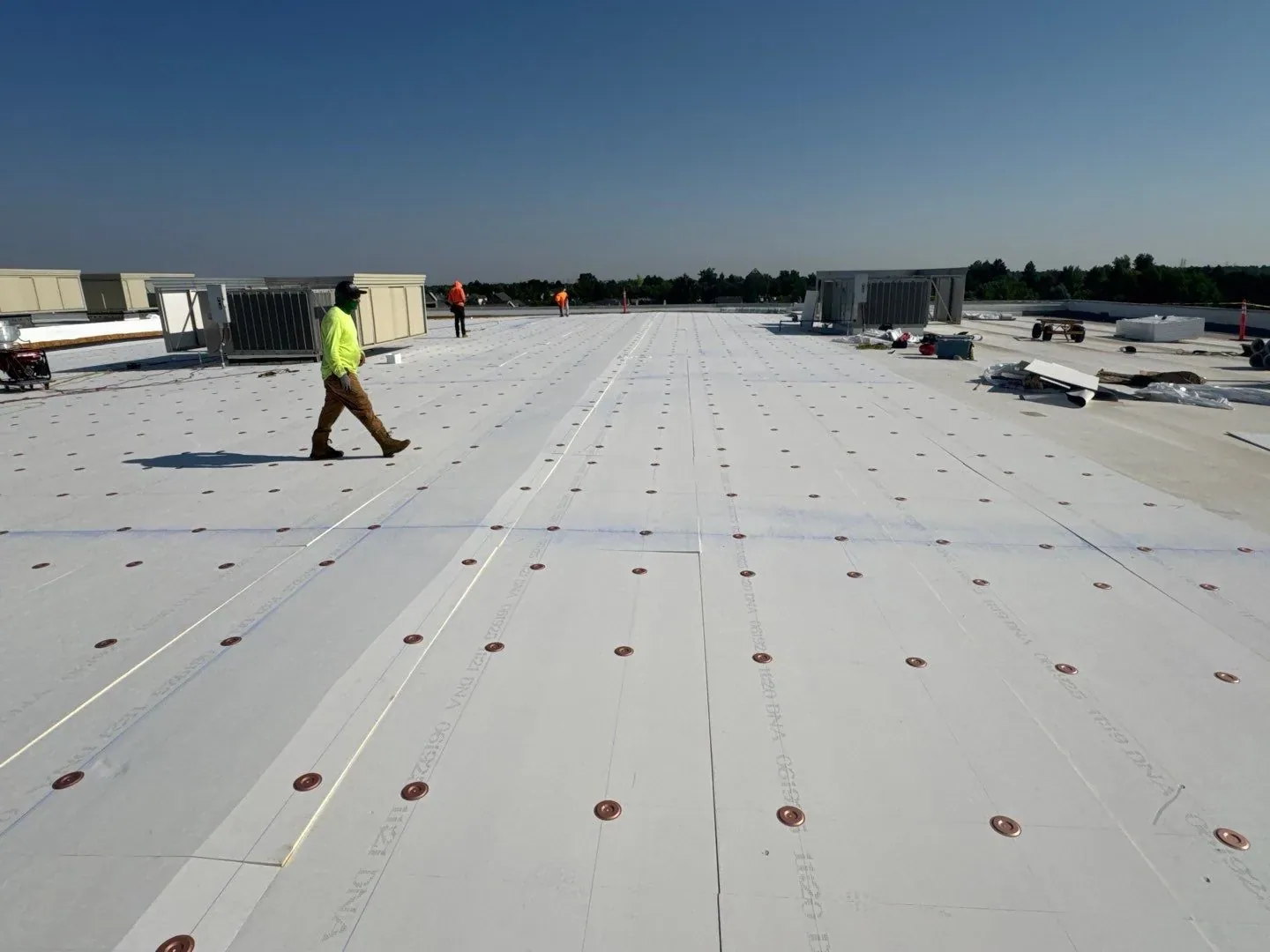
The membrane goes down last and ties into the sound roof with welded or adhered laps. Where the damaged area meets old roof, we test the transition for adhesion, since the old sheet near a fire has often been heated. A full replacement becomes the better path when heat damage extends across much of the field.
Deal With Smoke, Soot and Odor on the Roof
Soot settles on membranes and equipment, and the odor can follow the building's air intakes. We clean the surface with methods suited to the material, and we protect or replace filters in rooftop air handlers. Seal-coats or primers may be required before a coating or a new membrane will bond to a smoke-stained surface.
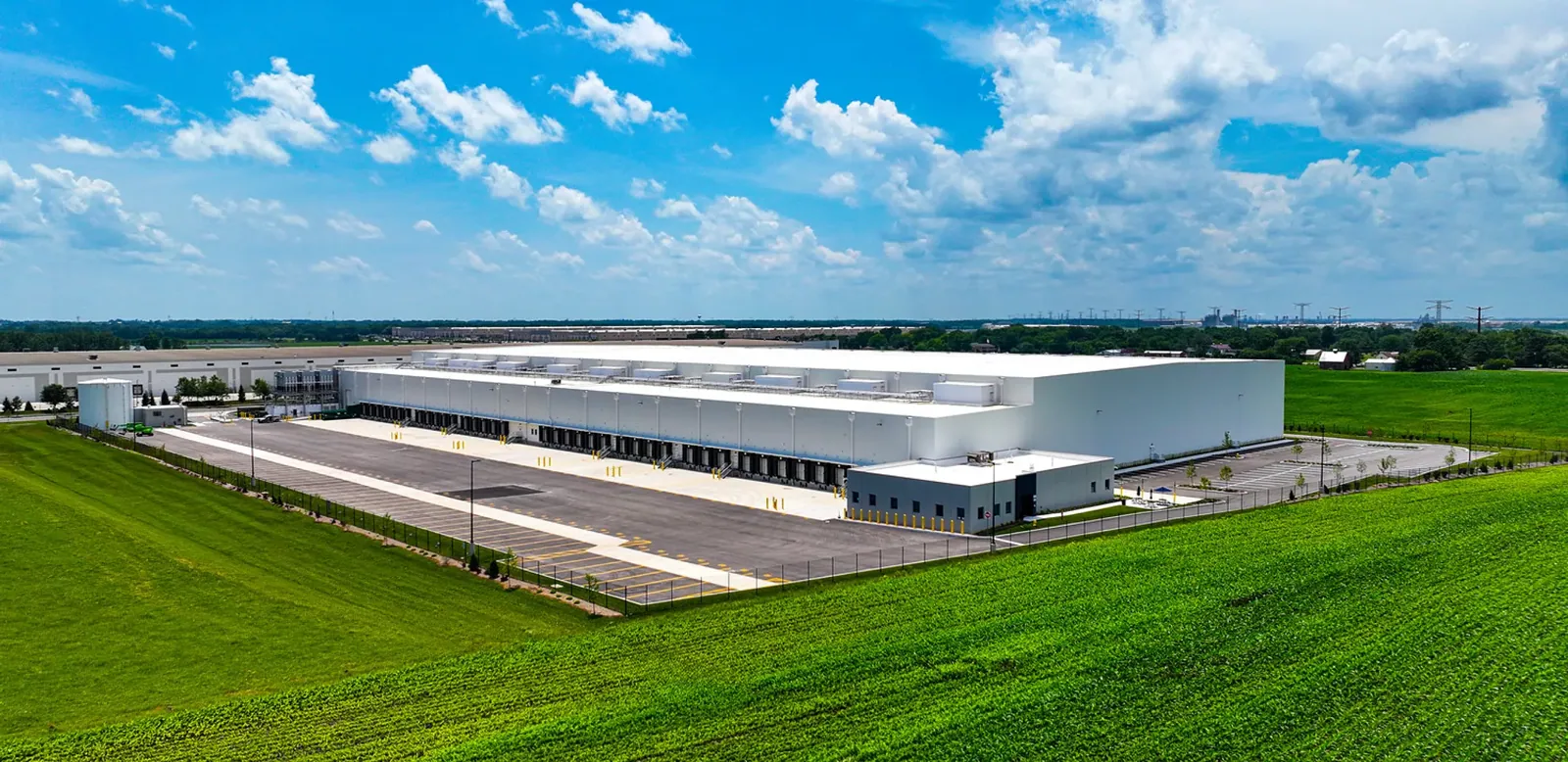
Food processing and cold storage buildings, which fill much of the industrial stock in the valley, have strict rules on air quality and surface cleanliness. A cold storage roof that has absorbed smoke needs coordination with the plant's quality team before the work is declared complete. We provide cleaning records and product data for their files.
A processing building and a retail store have different air-handling needs, and the cleaning plan follows the use. A food plant wants clean surfaces and a store in Union Gap wants the odor gone before customers return.
Keep Records an Adjuster and a Fire Marshal Can Read
A fire claim is large and moves slowly, and records from the first day make the difference. We photograph every area before we touch it, keep samples of damaged materials and log the temporary work with dates and costs. Our insurance claim assistance arranges that record into a scope with line items.
Fire investigators may ask us to preserve the roof as found until their work is complete. We follow those instructions, and we do not remove material from the area of origin without permission. Wind can complicate that, since a gust across an opened roof spreads debris, and wind damage to the temporary cover is a separate record. For a building near Front Street in downtown Yakima, we also check neighboring roofs for sparks, heat and debris.
Commercial Roofing Questions
How soon after a fire can roof work begin?
Temporary protection can begin as soon as the fire authority releases the building and a safe path is established. Permanent work waits for the investigation, the engineer's report and, in most cases, the adjuster's visit. We arrange the sequence so the building stays dry in the meantime.
Does a fire on a different part of the building affect the roof?
It can. Heat rises, and smoke and water travel through ceiling spaces and roof assemblies. A fire on a lower floor can scorch the underside of a deck or soak the insulation above it. We inspect the roof over any burned area and anywhere water ran.
Can a coating restore a roof that was only smoke damaged?
Sometimes. If the membrane is intact and the insulation is dry, cleaning and a compatible coating can bring the surface back. We test the bond first, because soot and heat can keep a coating from adhering. If the sheet was heated enough to shrink, replacement is the better route.
Who decides whether the damaged deck can be reused?
The structural engineer decides, not the roofer. We provide access and photographs, and we carry out the repair the engineer specifies. Steel can lose strength from heat without showing it, so reuse is never assumed.
Will the energy code require a thicker roof after a fire?
It may, depending on how much of the roof assembly is replaced. We review the code in force against the scope and tell you before the estimate is final. The state's 2021 code editions took effect statewide in March 2024.