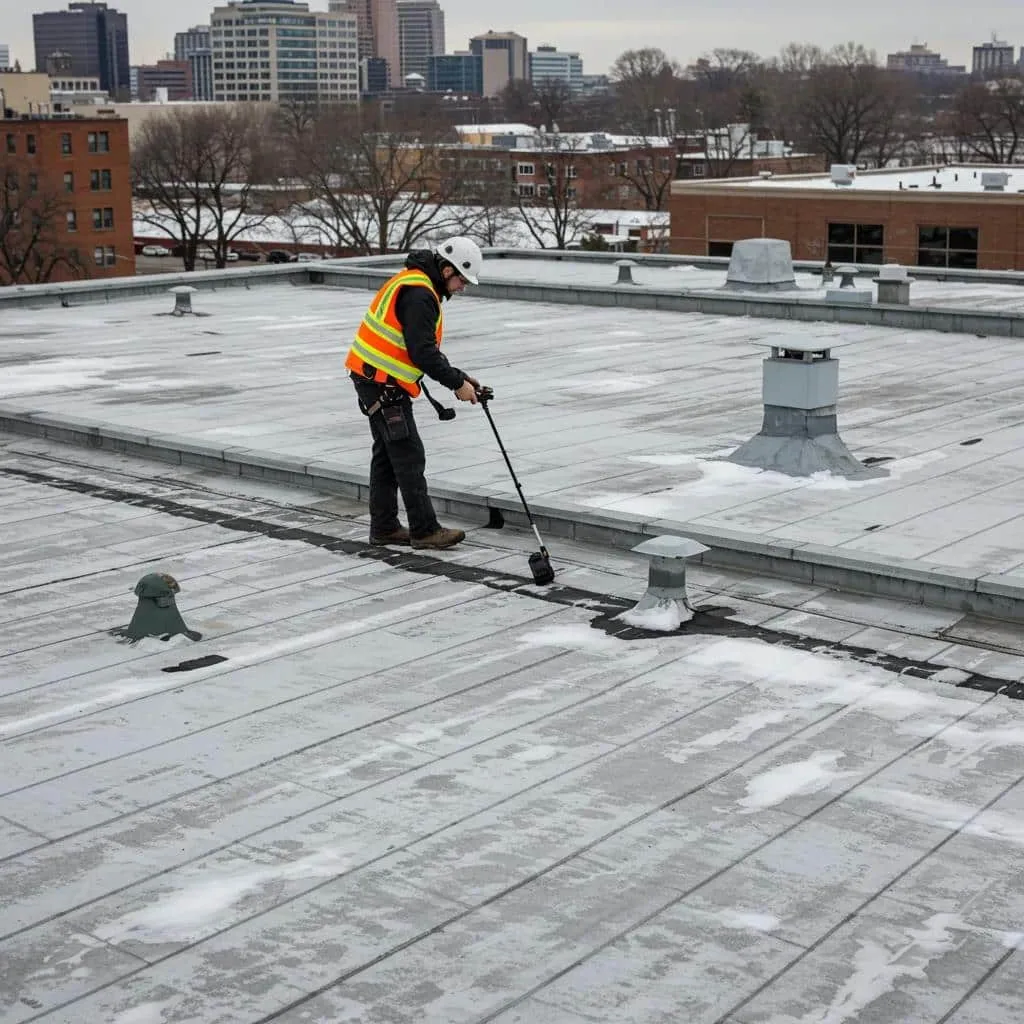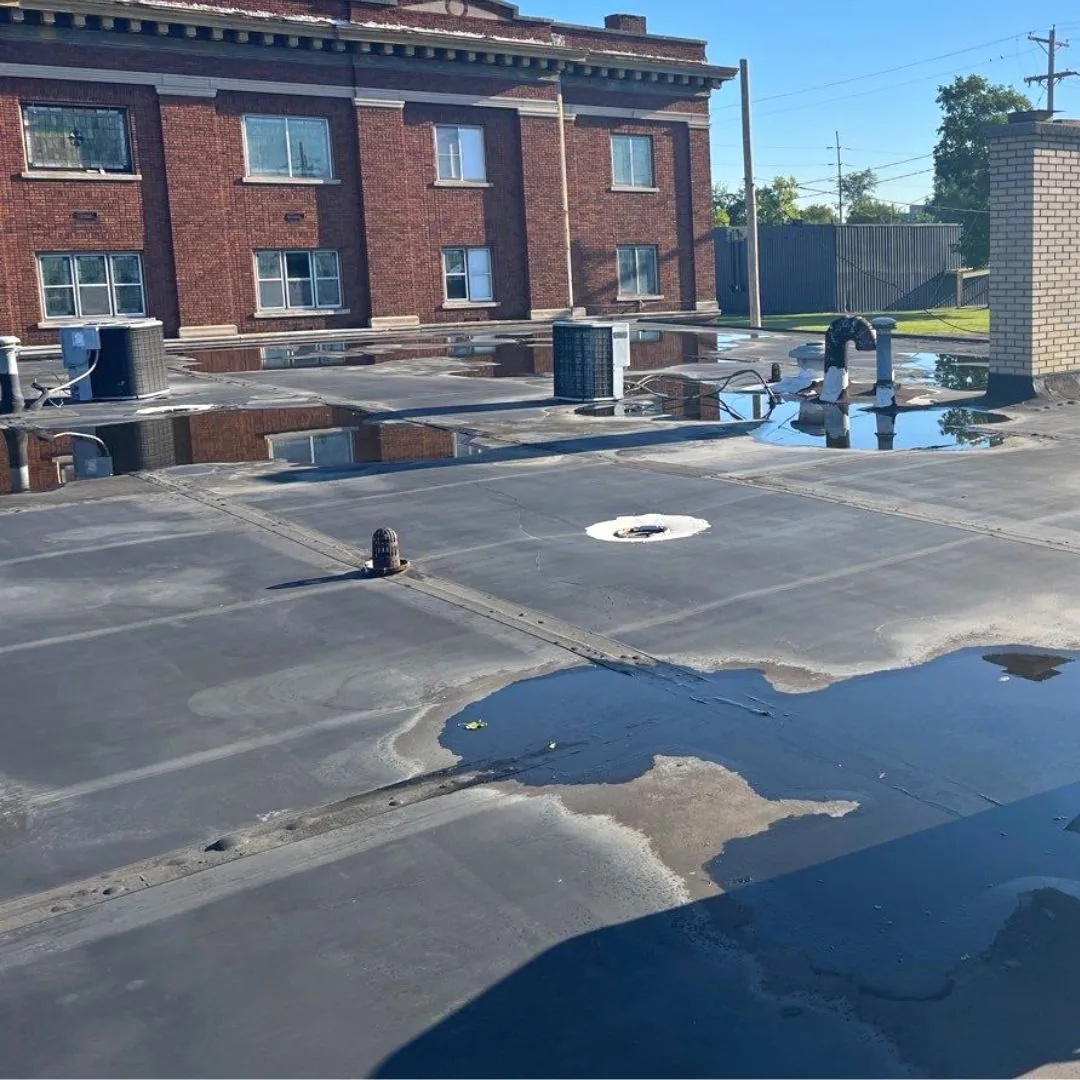
The call comes in the week after a snow load has melted off a flat roof, from an owner who has just heard the word claim from the office manager and has no idea what to hand an adjuster. Dispatch asks for dates before it asks for damage. When did the snow fall, when did the ceiling first stain, and when did anyone last look at the roof? In Yakima, WA the answers matter because a winter event, a gust and a hot spell can all leave marks on one membrane, and a claim file succeeds when it separates what the storm did from what age and wear did. Our part is to build the record that makes that separation possible.
Pin Down the Storm Date First
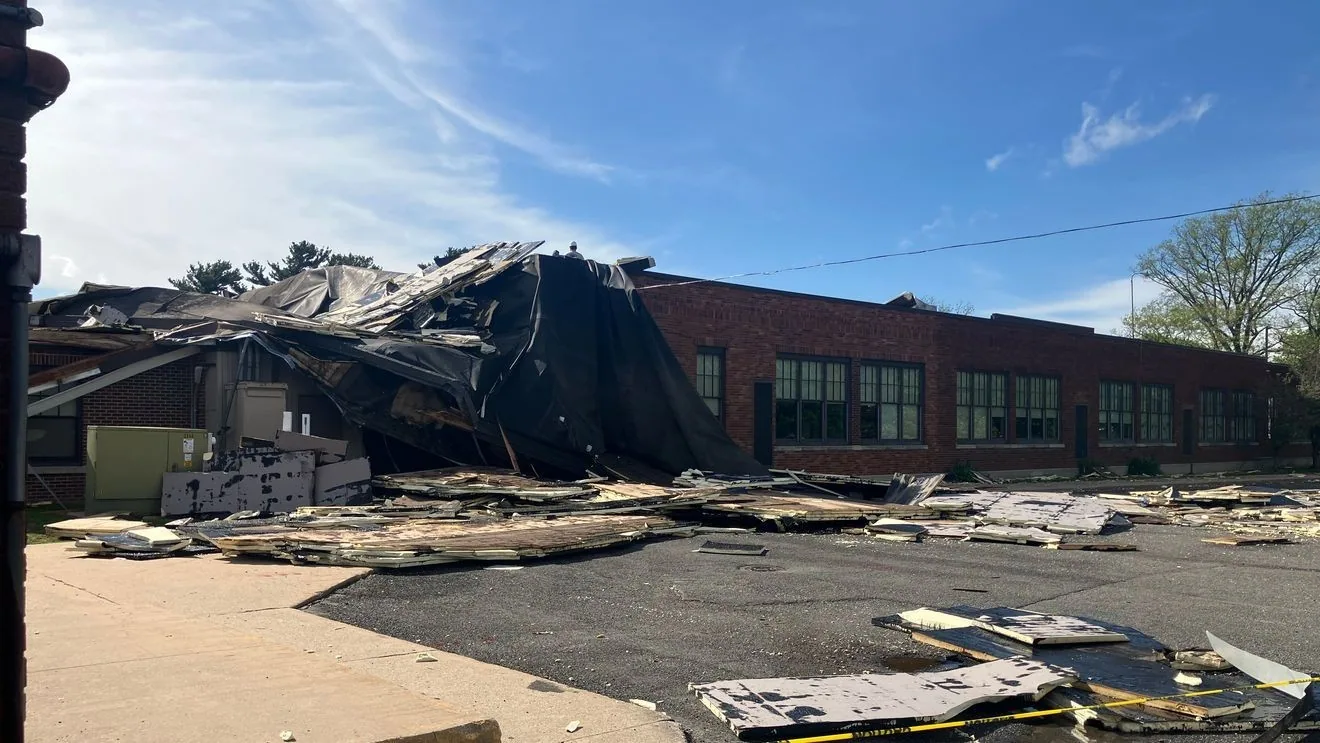
An adjuster needs a covered event with a date. We start by matching the damage to the weather record for the days in question. The late-November 2019 windstorm and the heavy snow of February 2019 are the kind of dated events an adjuster can check, and the second one ended with a red-tagged building on South Third Avenue. Events like those leave signatures on a roof: lifted edges and torn fasteners from wind, deflection and split seams from load.
If the damage on your roof does not fit any single event, we say so and describe the likely cause. Gradual deterioration is normally excluded from coverage, and a report that blurs the line weakens the rest of the file. A clear distinction at the start saves weeks of back-and-forth later.
Keep a simple timeline while the memory is fresh: the first stain, the first drip, who reported it, and what was done that day. A property manager who writes this down on the day it happens gives the file a spine that no later reconstruction can match. We fold the timeline into our report and cross-check each entry against the weather record.
Photograph Every Detail With a Scale and a Date
The strongest claims are the best documented ones. On the first visit we shoot wide views of each roof area, close views of each damaged item, and a few reference frames showing the surrounding condition. Every image carries a time stamp, and we mark its location on the roof plan so a reader who has never been on the building can follow it.
Aerial images from our drone roof inspection work add context across long roofs, and interior shots of ceilings, walls and stored goods show the consequences. Facility teams should keep damaged ceiling tiles and wet product until the adjuster has seen them, and should note the date any item was moved or discarded.
If a roof section has to be opened to see the damage, we photograph it before, during and after the cut. The record of what lay under the surface is often the deciding evidence about when the water arrived.
Map the Wet Areas Before the Insulation Dries Out
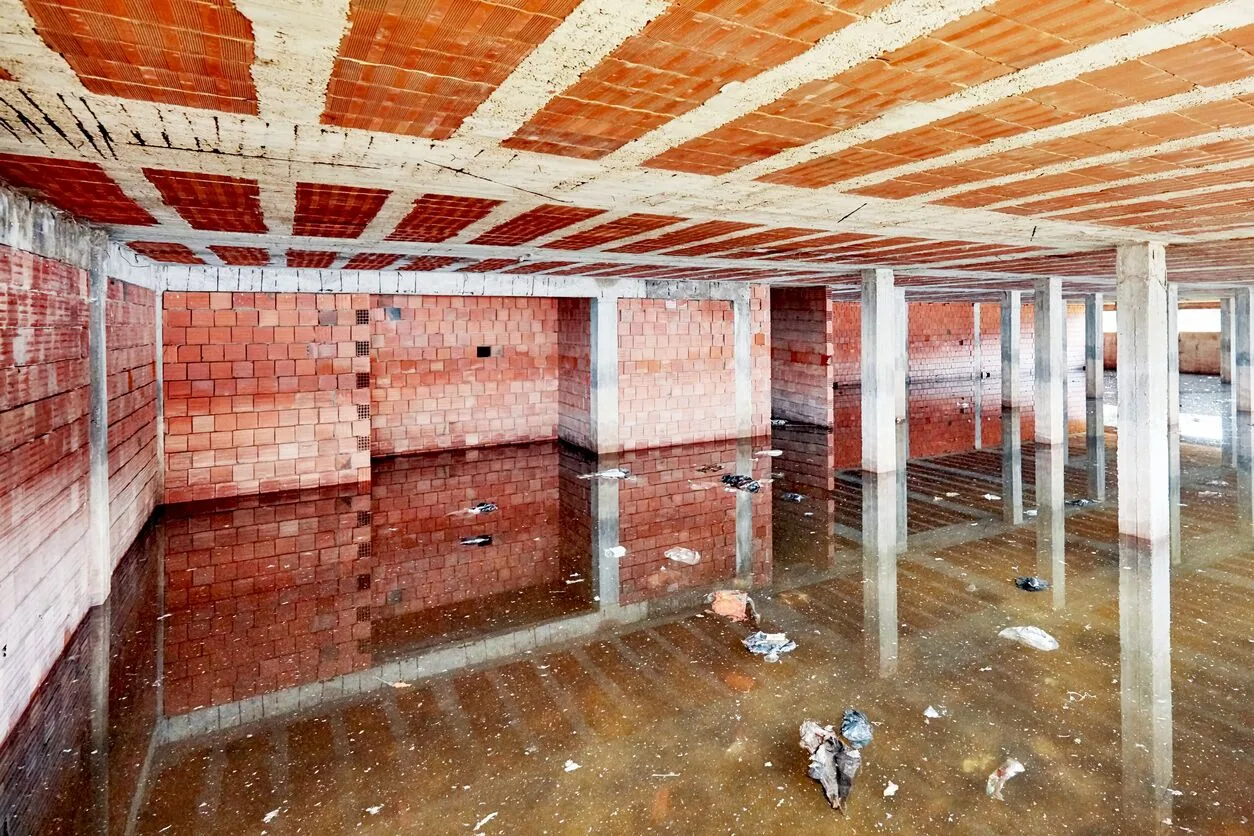
Moisture is the hardest part of a claim to prove after the fact. Water can sit in insulation for months, and a roof that looks dry on top may still be saturated below. We scan with infrared and meter readings, confirm with core samples, and record the results on a plan that shows the wet area, the dry area and the boundary between them.
That map sets the scope. It separates a patch from a section replacement and shows whether the insulation can be dried in place or must be removed. Without it, the claim usually goes to a dispute over how much roof is actually affected, and the repair waits.
Write the Scope an Adjuster Can Check Line by Line
Our written scope lists each damaged element, the repair method, the material, the quantity and the sequence. It describes what is needed to return the roof to its pre-loss condition, not to upgrade it, unless local code requires an upgrade. Where the 2021 state code editions, in force since March 15, 2024, change the repair, we say so separately.
Pricing in the scope is itemized. When the adjuster's estimate differs from ours, the line items show exactly where, and we can speak to each one on a joint walk-through.
Quantities come from measured drawings, not from guesses at the parking lot. We measure the affected area, count penetrations and linear feet of flashing, and note access conditions such as a rooftop unit that must be disconnected or a crane lift that must be scheduled. Those items are the ones adjusters most often overlook, and they change the price.
Walk the Roof With the Adjuster
We attend the adjuster's inspection when you ask us to. We bring the roof plan, the moisture map and the photo log, open any areas that need to be seen, and answer questions about methods and materials. The goal is not to argue. It is to make sure the adjuster sees every damaged item and understands why the repair costs what it does.
For larger campuses, such as a hospital complex or the fruit-processing plants in Selah, the walk-through may take more than one visit. We record what was shown on each day so the file stays complete. Carriers and restoration firms often send their own technicians, and we coordinate with them so one set of openings serves every reviewer.
Protect the Building While the Claim Moves
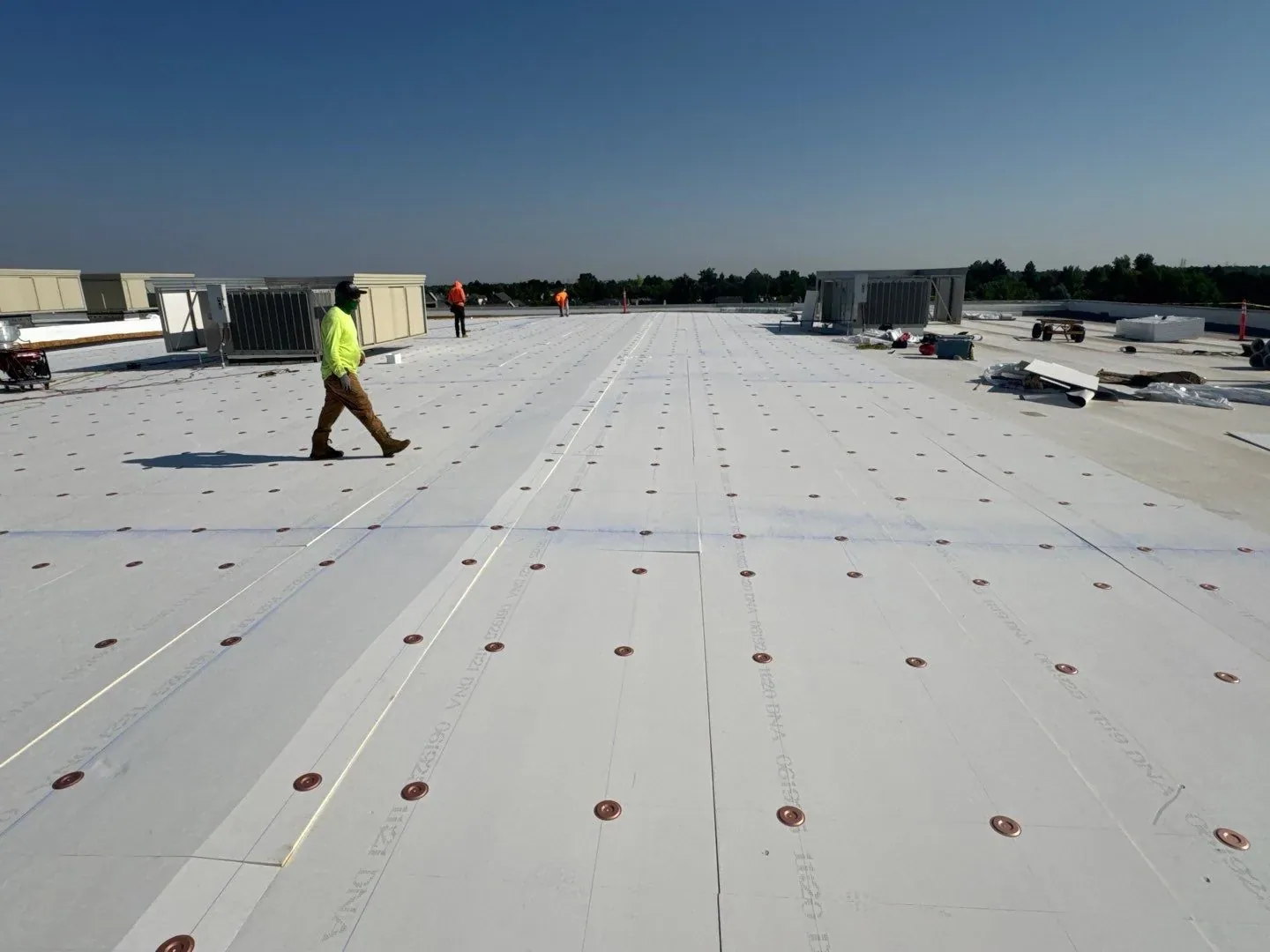
A claim can take weeks, and the roof cannot wait. We dry in the building immediately with emergency roof repair, document the temporary work, and track its cost for reimbursement. When the claim is approved, the permanent repair proceeds under the scope the adjuster has reviewed, which avoids rework.
If coverage is denied or reduced, our records still serve you. They support an appeal, a second opinion or a decision to pay for repairs from the capital budget, with a written condition report that shows the roof's true state.
Commercial Roofing Questions
What records should our maintenance staff keep before a loss ever happens?
Keep dated inspection reports, repair invoices and photographs from before the event. They show the roof's baseline, which lets an adjuster tell new damage from old. Our maintenance reports are written for that purpose, with a callback log that lists every visit and what was found.
Do you negotiate with the insurance company on our behalf?
We supply the technical record and attend the walk-through, but the claim itself remains between you and your insurer. We do not act as a public adjuster. If the dispute turns on roofing methods or quantities, we can explain our scope line by line to your adjuster or to one you hire.
A tenant reported a leak last month, but the roof looks fine. Can we still file?
Possibly, if the leak can be tied to a covered event and reported within the policy's time limits. We trace the entry point, document the condition and describe the cause in plain terms. Late reports are harder to support, so move quickly and keep the stained ceiling materials.
Will a claim for one building affect the policy on our other properties?
That question belongs to your insurance agent, since policy terms and renewal practices vary. What we can do is keep records separate for each property, so a claim on one roof does not tangle with the files for others. Multi-building owners in Union Gap or along the valley's retail corridors benefit from that separation.
Can we start repairs before the adjuster has visited?
Emergency protection should start at once, and we document it fully. Permanent repairs should wait for the adjuster's visit unless the delay would cause further damage. We hold removed materials and photograph every step, so the work does not undercut the claim.