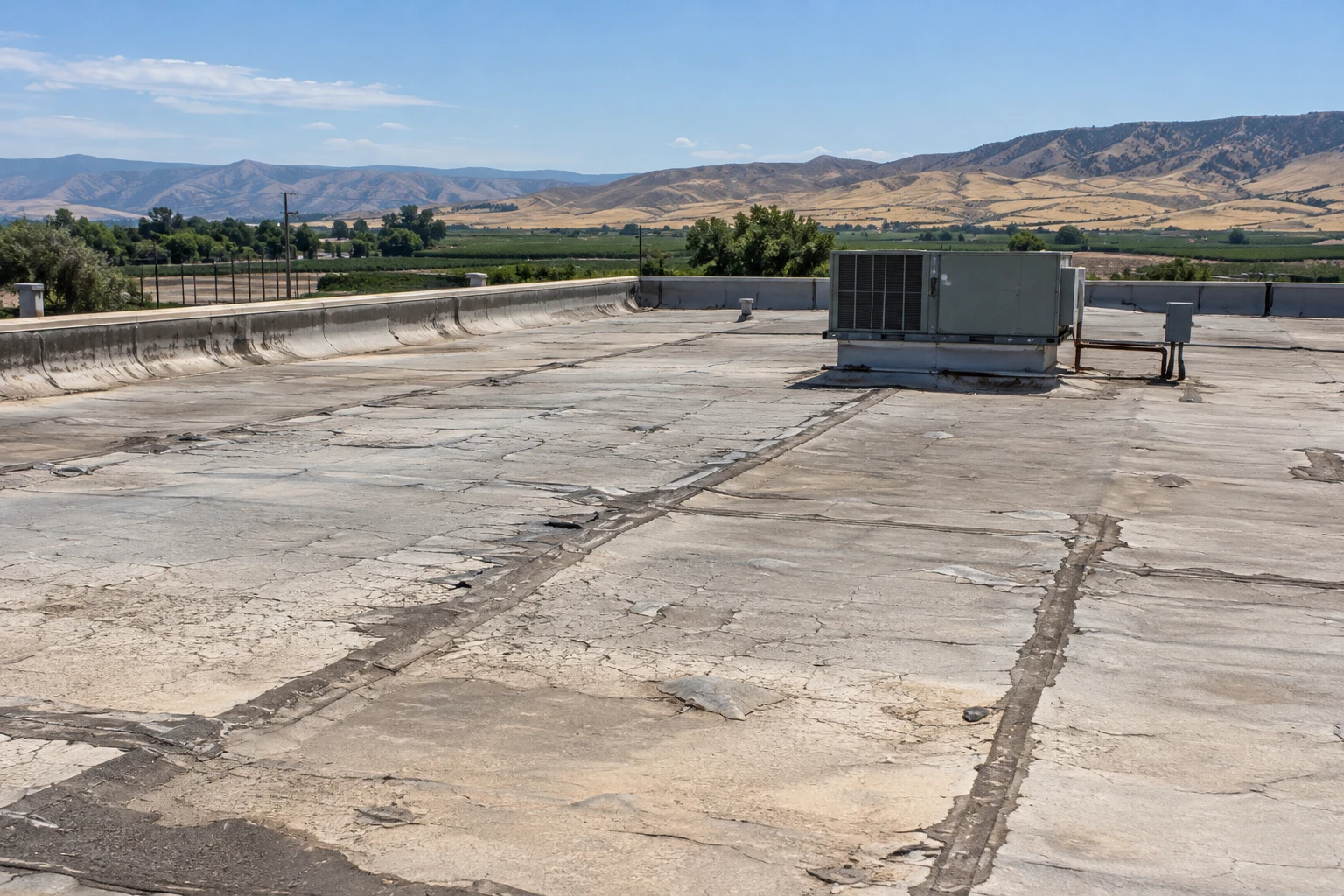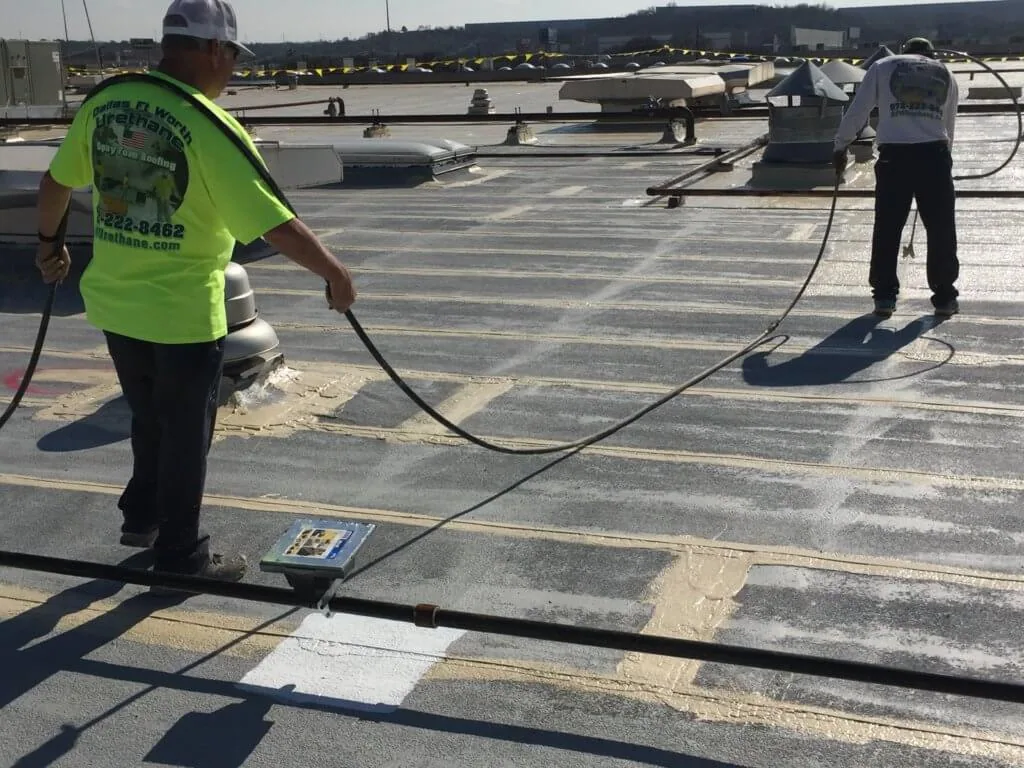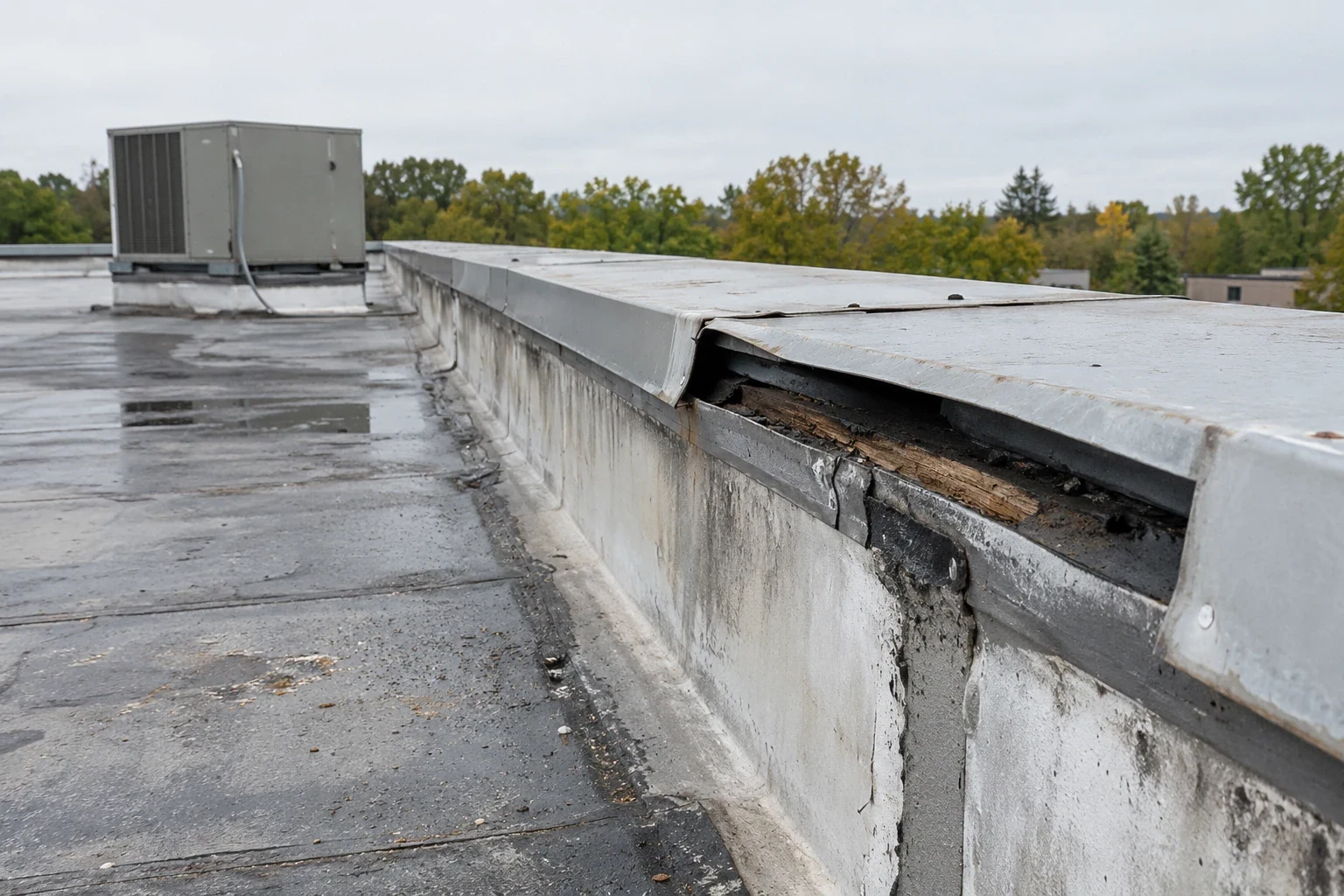
After the third straight week of 95 F afternoons, a maintenance lead climbs the access ladder and finds the sealant along a parapet wall hanging in dry strips, the membrane behind it standing off the masonry by a finger's width. The first question dispatch asks is whether any of it has rained in yet. Flashing is where the roof's field of membrane meets everything that rises from it: walls, curbs, pipes, vents and edges. Yakima, WA puts the summer afternoon, the January freeze and the November gale to work on those joints, and a flashing that has opened by even a little admits water that no field repair can stop.
Find Out Why the Joint Moved Before You Reseal It
Yakima's record temperatures run from minus 25 F to 113 F, and even one ordinary week can swing widely between day and night. A wall and a roof expand at different rates, and the joint between them takes the difference. If the flashing was fastened rigidly across a moving joint, it will crack. If sealant was asked to bridge a gap wider than it can stretch, it will pull away.
A repair that ignores the cause fails on the same schedule as the original. We look for the source of movement: a parapet that shifts, a curb that rocks, a deck that deflects under snow. Fixing the movement, or building a flashing that allows for it, is what makes the new detail last longer than the old one did.
Snow adds its own push. A drift against a parapet wall presses on the base flashing in winter and then melts away, and the cycle of load and release works on the termination bar and the fasteners behind it. We check the top edge of every wall flashing for pulled fasteners after a heavy winter, before spring rain finds the gap.
Rebuild Wall Flashing from the Base Up
Base flashing runs up a wall from the membrane, and a counterflashing or reglet covers its top edge. Failures show up in three places: the base where it meets the field, the top where the termination has dried out, and the corners where the sheet must fold. Masonry walls add trouble, since mortar joints crack and let water behind the top edge.
We cut out the failed material, repair the wall surface, install new base flashing with the proper height and fasten it at the top with a termination bar. A new counterflashing or sealed reglet covers the edge. At corners we use prefabricated pieces whenever the roof system allows, because a field-folded corner is a weak point. The seam failure checks that follow ensure the new flashing joins the field cleanly.
Brick and block walls often need tuckpointing before flashing can seal to them. We repair the joint, let it cure and prime the surface, because a flashing set on crumbling mortar peels away within a season. Where a wall is stucco or metal panel, the termination detail changes, and we form it to suit.
Replace Pipe Boots and Curb Flashing That Have Aged Out
Rubber and plastic boots crack in the sun, a slow kind of heat and UV damage, and about 40 afternoons a year in Yakima reach 90 F or more. A cracked boot admits water straight down the pipe. A curb flashing that has lost its seal does the same at a larger scale. We replace brittle boots with new ones suited to the pipe and the roof type, and we reflash curbs with fabric-reinforced details.
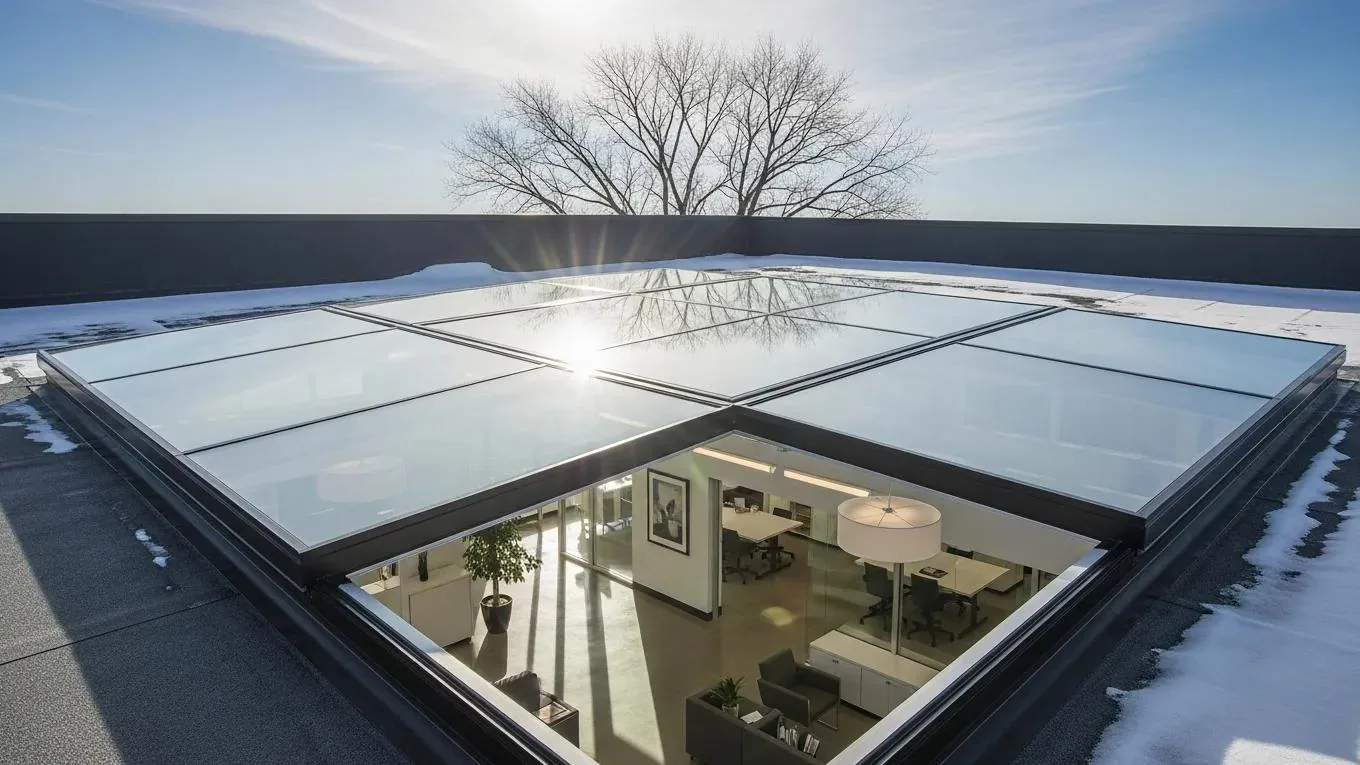
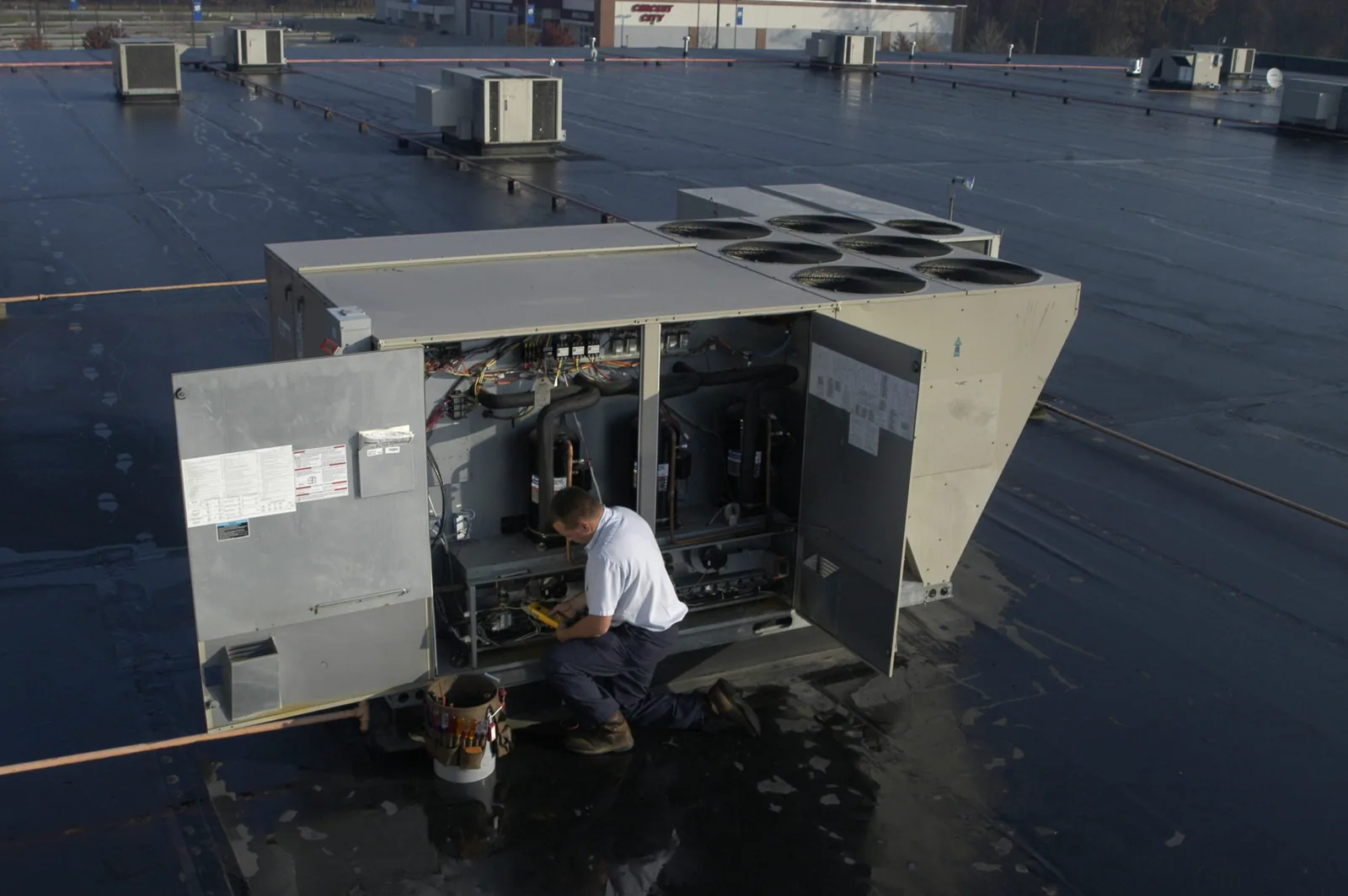
Where openings were added after the original roof, the flashing is often improvised. Our work on skylight and penetration flashing and on equipment curbs brings those openings up to the same standard as the field. We photograph each repair for the roof record, and note the date and material.
We also check how the boot was fastened. A clamp that was overtightened cuts the rubber, and one that was left loose lets water travel up the pipe. A new boot is fitted with the correct collar and sealed at the base with the same material as the roof.
Pin Edge Flashing Against the Gust
Edge flashing meets wind first. The late-November 2019 windstorm was a test for every flashing in the valley, and any flashing with loose fasteners or open laps was a candidate for failure. Coping, drip edge and gravel stop are meant to hold the membrane down, and when they loosen, the membrane follows.
We re-secure the edge metal, replace sections that bent and seal the joints between pieces. Cleats along the outer face keep the lower edge from lifting. Because the metal and the membrane work as a pair, we check the termination below the metal as well, and rebuild it if needed. The edge metal and coping work includes this check as a standard step.
Match the Repair Material to the Roof System
Flashing materials must be compatible with the field membrane. A thermoplastic roof takes heat-welded flashing, a built-up or modified bitumen roof takes compatible plies and mastic, and a metal roof takes formed sheet metal and sealant rated for movement. Mixed materials can chemically attack each other or fail at the lap.
When we cannot identify the existing system by sight, we take a small sample and test it. Using the wrong flashing resin or tape can look fine for a few months and then peel. Matching the system is basic, but it is the most common reason a second repair is needed within a year or two.
Cold weather limits what can be done in winter. Adhesives and welded joints need a certain surface temperature, and sealants cure slowly in the cold. For emergency work between December and February we use mechanical terminations and cold-rated patches, then return in warmer weather to finish the permanent detail.
Trace Interior Leaks Back to the Flashing That Caused Them
Flashing leaks rarely show up where the failure is. Water runs down the wall cavity or across the deck before it appears as a ceiling stain, sometimes far from the source. Our leak repair process starts at the highest flashing on the plan and works downhill, testing each detail with a water source. Healthcare and processing buildings, such as those around Yakima Valley Memorial Hospital and the Tree Top plants in Selah, benefit from this method because a wrong guess costs a repeat visit inside a sensitive room.
Commercial Roofing Questions
Can flashing be repaired with sealant alone?
Only as a short-term measure on a small gap. Sealant stretches only so far, and in a climate with Yakima's day-night swing it cracks again. We use sealant as a supporting material, not the main waterproofing, and we replace flashing that has failed structurally.
How do you know whether the flashing or the membrane is leaking?
We test. A controlled water test, run from the lowest point to the highest, isolates each detail. Moisture mapping shows where water has traveled. The flashing is the likely culprit when the stain lines up with a wall, curb or pipe, but we confirm it before repairs begin.
Does flashing repair affect the roof warranty?
Repairs made to the manufacturer's published details normally keep the warranty intact, and repairs made with the wrong materials can put it at risk. We use compatible products and keep records. Review your warranty terms for notice requirements before work on a covered roof.
Why does flashing fail more on south and west walls?
Those faces get the most afternoon sun, so materials heat and cool through the widest range and age sooner. Dark flashing and sealant dry out quickly. We inspect those elevations first, and we prefer reflective or UV-stable finishes there.
How long will a flashing repair last?
A properly built flashing can last as long as the surrounding membrane, though sealant joints need periodic checks. We note the expected maintenance interval in the report and include the area in the next scheduled visit.