On the Monday after a November gust, a maintenance lead walks the lot and finds a ten-foot run of coping lying against the fence. The first question dispatch asks is what is still attached on either side of the gap. Edge metal is the first line the wind tests, and when a piece leaves, the membrane beneath it is exposed to the next gust with nothing to hold its edge down. In Yakima, WA, where a 2019 windstorm reached 51 mph in the city and 53 mph in Sunnyside, edge metal is not trim. It is the part of the roof that keeps the rest of the roof in place, and it has to work through a temperature range that runs from minus 25 F to 113 F.
Fasten the Perimeter for the Gust, Not the Average Day
Wind pulls hardest at the corners and edges of a roof, where air accelerates over the parapet and creates suction. Yakima County uses a design wind speed of 110 for new construction, and the edge system has to be tested to a rating that matches that exposure. A cap held by a few thin screws into a wood nailer will not meet it after ten winters of movement.
We replace weak attachment with continuous cleats, heavier fasteners and properly spaced fasteners into sound substrate. Joints between sections get a splice plate and a bead of sealant that can move. The result is an edge that resists the gust-lifted failure that follows older, loose installations. Our wind damage repair work often starts here, because a restored edge protects every repair made inside it.
Rebuild Coping Where Parapets Leak at the Top
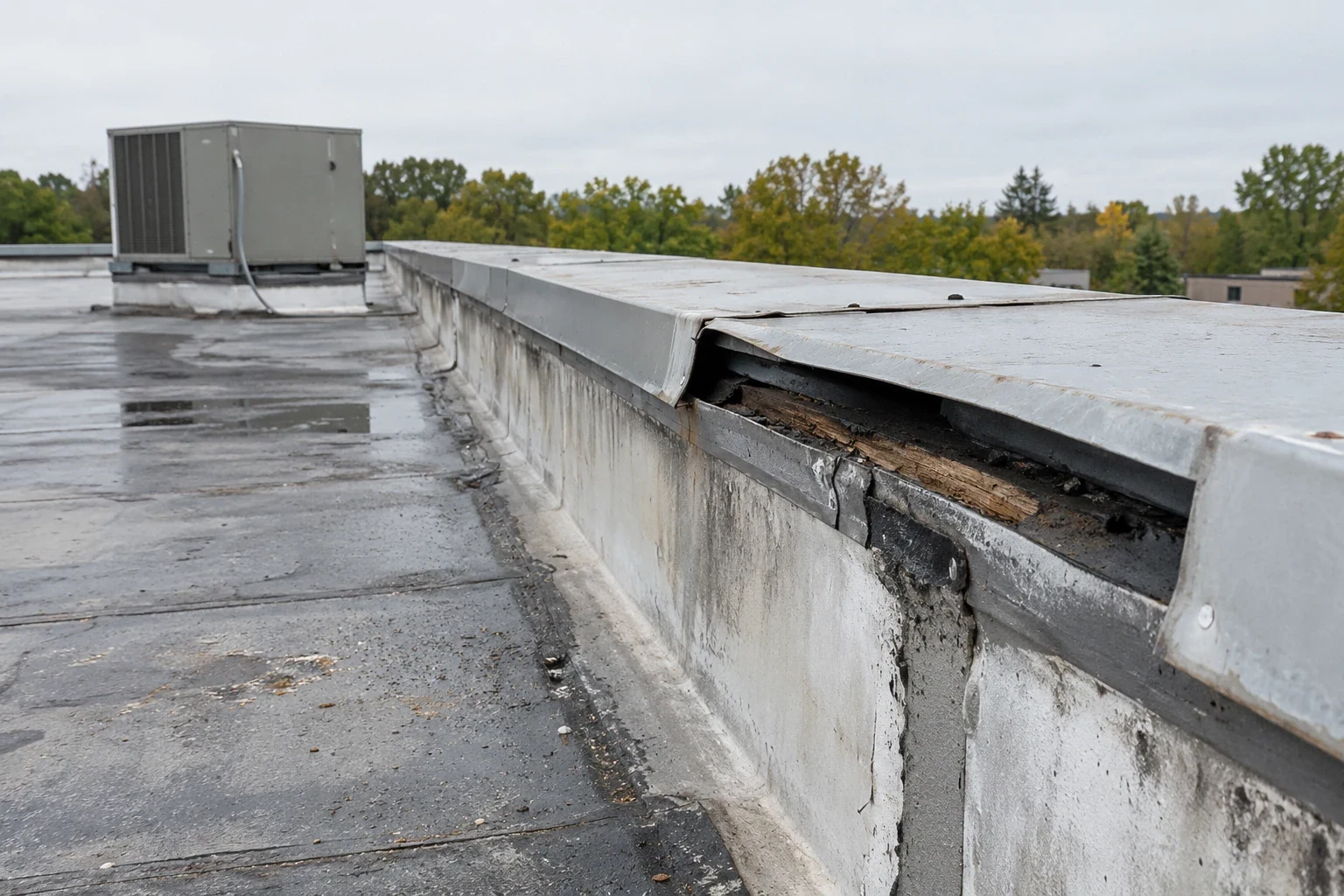
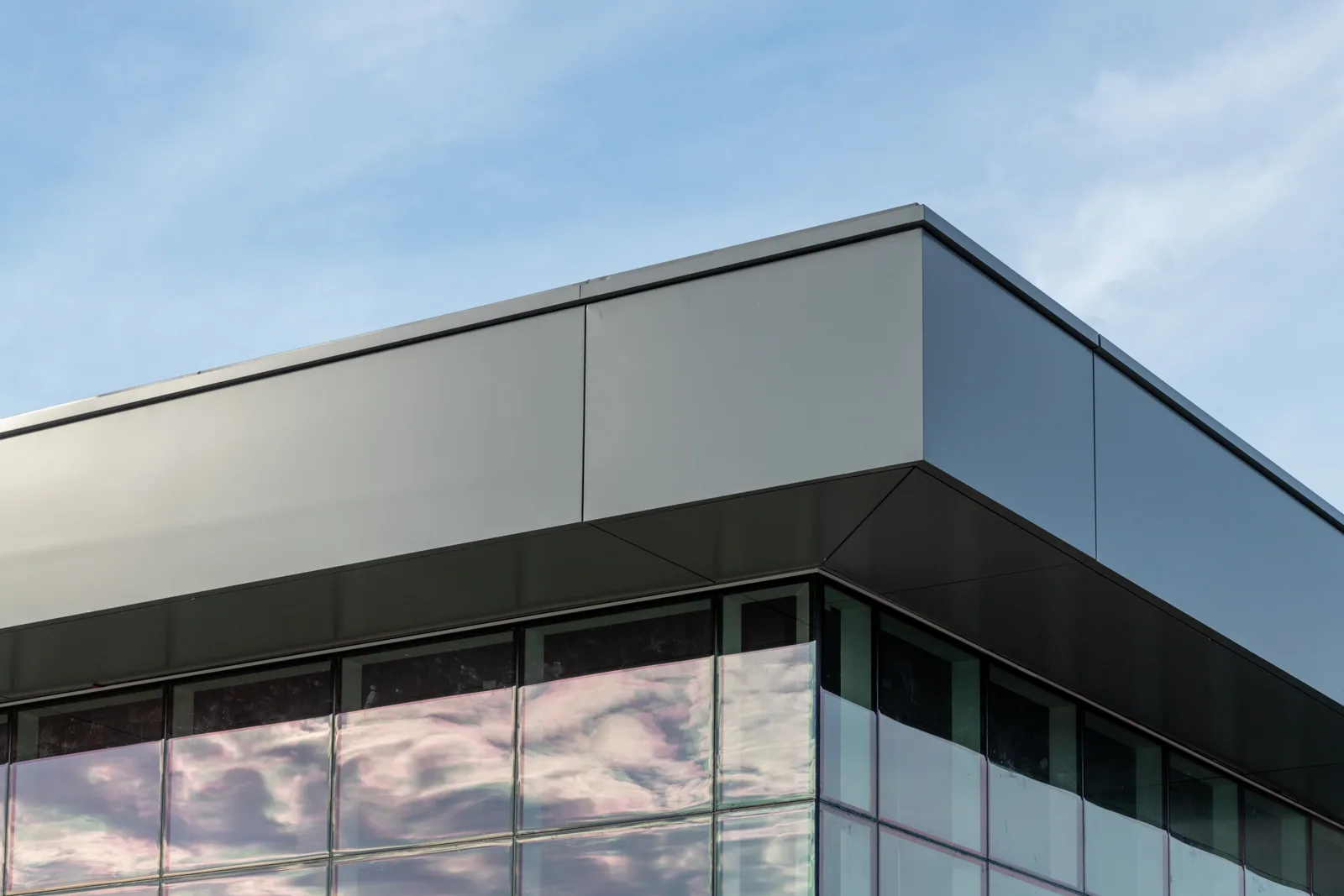
Coping caps the top of a parapet, and it fails in two ways. Joints open, letting water into the wall, and the cap itself lifts or bends. Water in a parapet wall rots the nailer, rusts fasteners and finds its way down to the interior side of the membrane flashing, where the damage shows as a ceiling stain nowhere near the cap.
When we find these conditions, we remove the cap, inspect the wall and nailer underneath, replace damaged material, and install a new cap sized for the parapet width, with a continuous cleat on the outside face. For concrete block or tilt-up parapets, we use fasteners suited to masonry. Clean, tight splices and a slight slope toward the roof keep water off the face of the wall.
Inspection comes before any promise. We lift a few caps on each parapet to look at the condition underneath, because the outside of a cap says little about what the wall has absorbed over several winters.
Allow for Expansion Across the Day-Night Swing
Yakima records about 40 afternoons at or above 90 F, followed by cool nights, and a long metal run grows and shrinks across that cycle. Sealant alone will not follow a joint that moves a quarter inch, so we build slip joints into long runs of coping, fascia and gutter, and we leave fastener slots free enough to let metal slide without tearing the roof beneath it.
Metal color matters too. Dark finishes absorb more heat and expand more, which is one reason we confirm the finish when we match existing trim. A long gutter on the south face of a warehouse can see a larger daily swing than the north face of the same building, and we space expansion joints accordingly.
Size Gutters and Downspouts for Melt Surges
Gutters in Yakima see less rain than gutters in wetter markets, but they carry sudden loads when a snowpack melts. A gutter filled with ice can pull away from the fascia, and a downspout that freezes at the elbow splits along its seam. We choose heavier gauge material, closer hanger spacing and downspouts with enough capacity to pass a thaw.
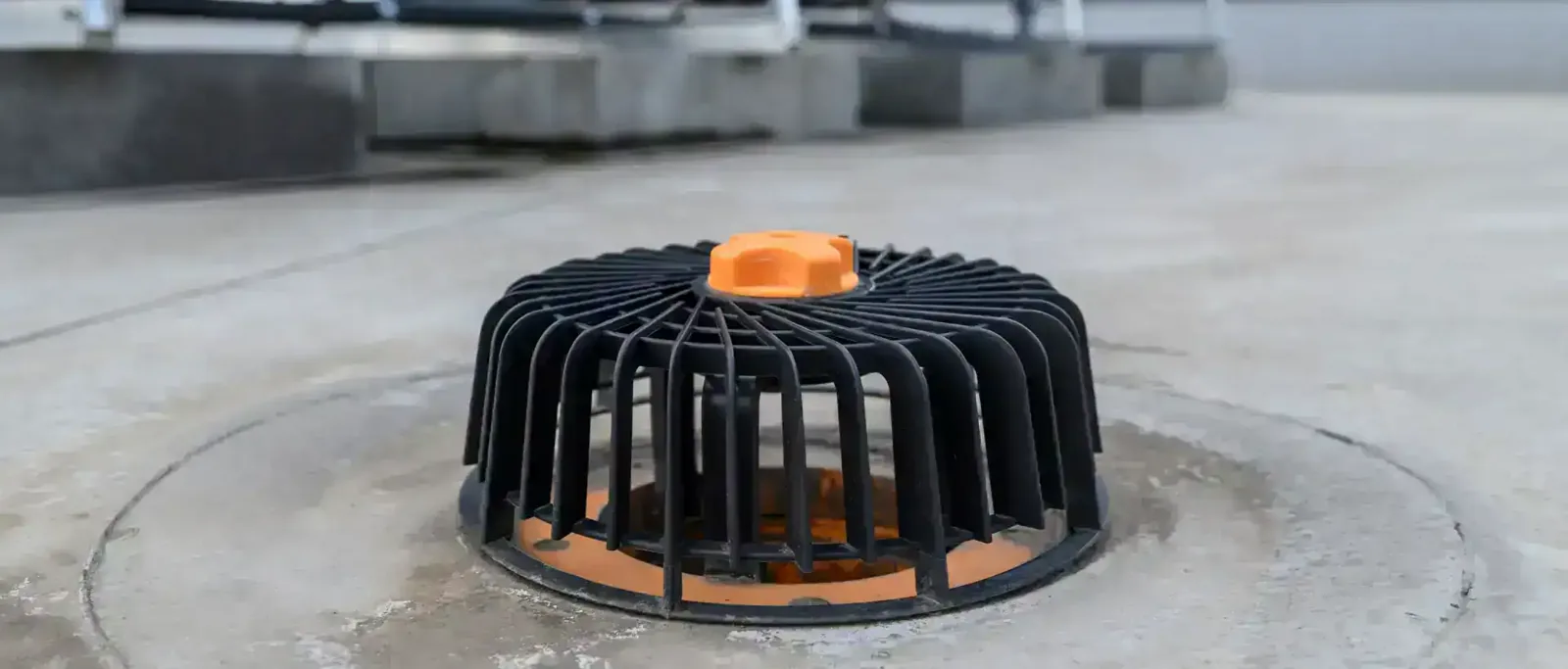
Gutters that receive water from a roof edge are paired with the drainage above them. If scuppers or drains discharge into a gutter, we size the gutter to the flow and tie it into the drains and scuppers serving the same roof. Discharge points near entrances get directed away from walkways, because ice at a doorway is a liability, and a good downspout layout prevents it.
Heat tape and sloped gutter bottoms help where ice is a chronic problem, but they are a supplement. Ice dams form when warm interior air melts snow near the edge and the water refreezes at the cold eave, so we also look at insulation and air leakage at the roof perimeter.
Tie the Metal Into the Membrane Without Gaps
Edge metal is only as good as its connection to the roof. At the perimeter, the membrane should run under or over the metal flange with a reinforced termination, and the transition should be sealed with a material compatible with both. On a thermoplastic roof, we use coated metal with a welded membrane strip. On an older built-up roof, the flange gets stripped in with plies and mastic.
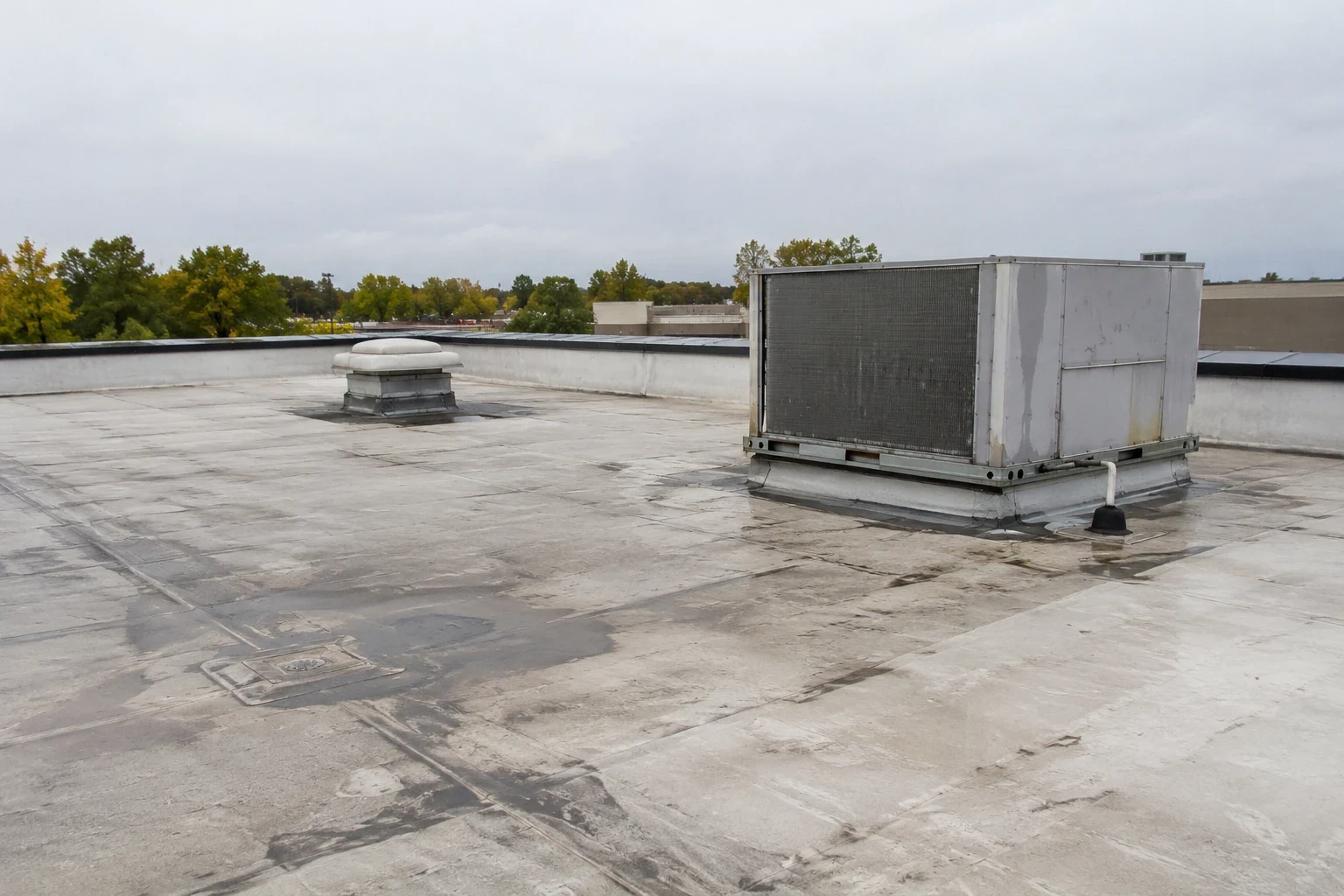
Flashing joints are the places where leaks begin, so we inspect and, where needed, redo them as part of flashing failure repair. A big-box roof in Union Gap, where Valley Mall and its neighbors form the valley's retail roof inventory, has long parapet runs, and every foot of that edge needs a sound termination. Roofs like that put a great deal of edge metal in the wind.
Replace Edge Metal During a Reroof, Not After It
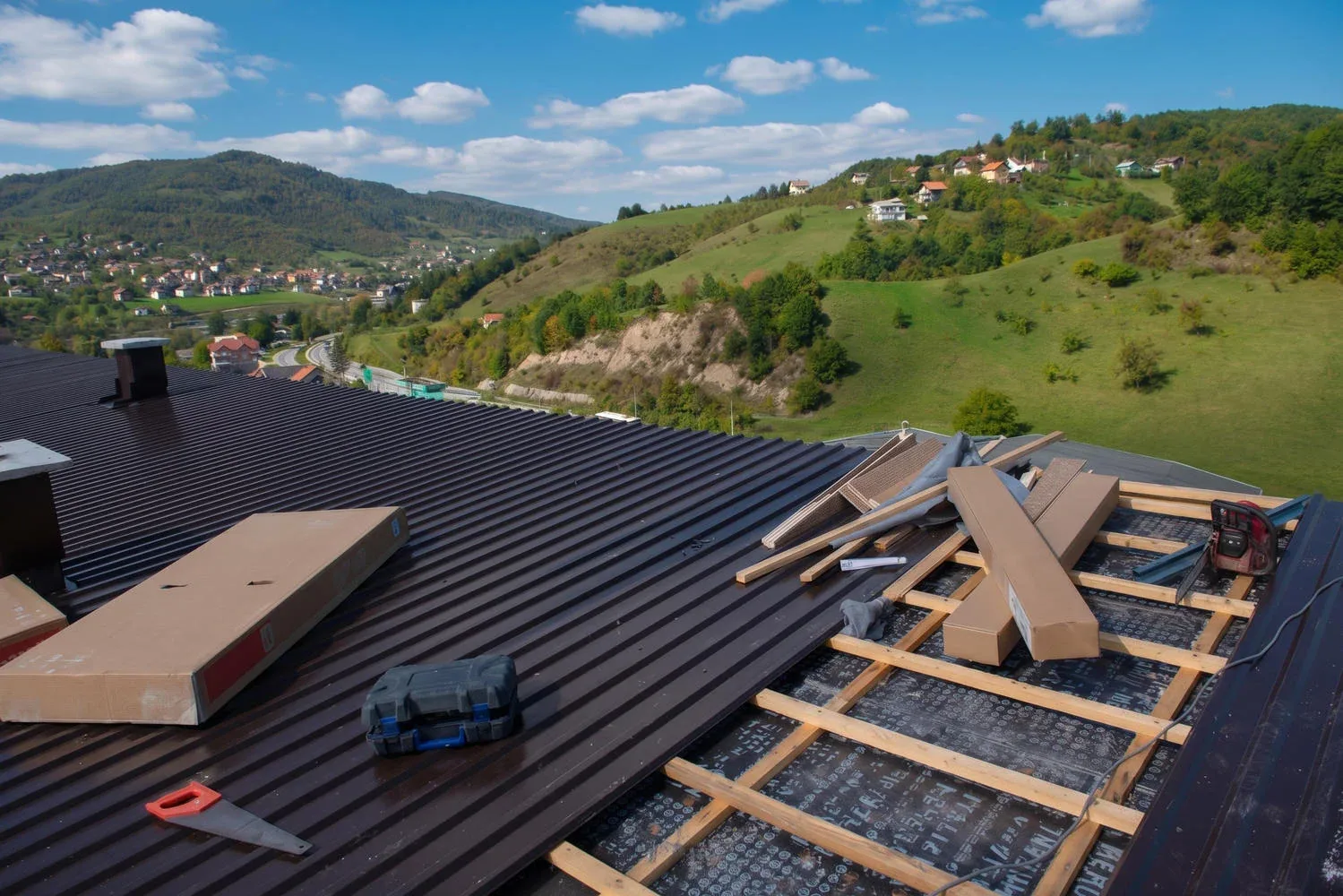
Installing a new membrane against old, failing metal is a common cause of early repairs. When we plan a recover or replacement, we evaluate every inch of the edge, and replace it whenever the metal is bent, corroded or poorly attached. That sequence lets the new membrane terminate into a clean, solid edge, and it prevents a second mobilization to fix the perimeter in the first spring.
Commercial Roofing Questions
A section of coping blew off. Can we just reattach it?
Sometimes, if the cap is intact and the nailer behind it is sound. More often the fasteners tore out of rotted wood or the cleat bent, and reattaching the same piece into the same holes fails again at the next gust. We inspect the substrate first and replace the attachment, not only the metal.
What gauge and finish do you use for edge metal on a commercial building?
The gauge depends on the profile, the span and the exposure, and heavier gauge goes on exposed corners and long runs. Finish follows the existing trim so the building keeps a uniform look, and a coated finish resists the UV load of Yakima summers. We specify both in the written scope before ordering material.
Why does water stain the wall below our parapet?
Water that gets behind the coping or through an open joint runs down the inside of the wall and exits at weep points, floor lines or cracks. Staining is a signal that the top of the wall is not shedding water. A cap replacement with sealed splices usually ends it, once any damaged substrate is repaired.
Do gutters need to come off before a reroof?
Often they do, so the edge termination can be built properly, and then they go back on or are replaced with new material. We plan that into the schedule so the building does not go without drainage for long. If the existing gutters are in good shape, we protect and reinstall them.
Can edge metal repairs be done in winter?
Mechanical repairs, such as re-securing a cap, can go ahead in cold weather when the surface is clear of ice. Sealants and adhesives have temperature limits, so we use cold-rated products or wait for a warm window for those steps. Emergency securing happens anytime, since a loose cap is a hazard to people below.