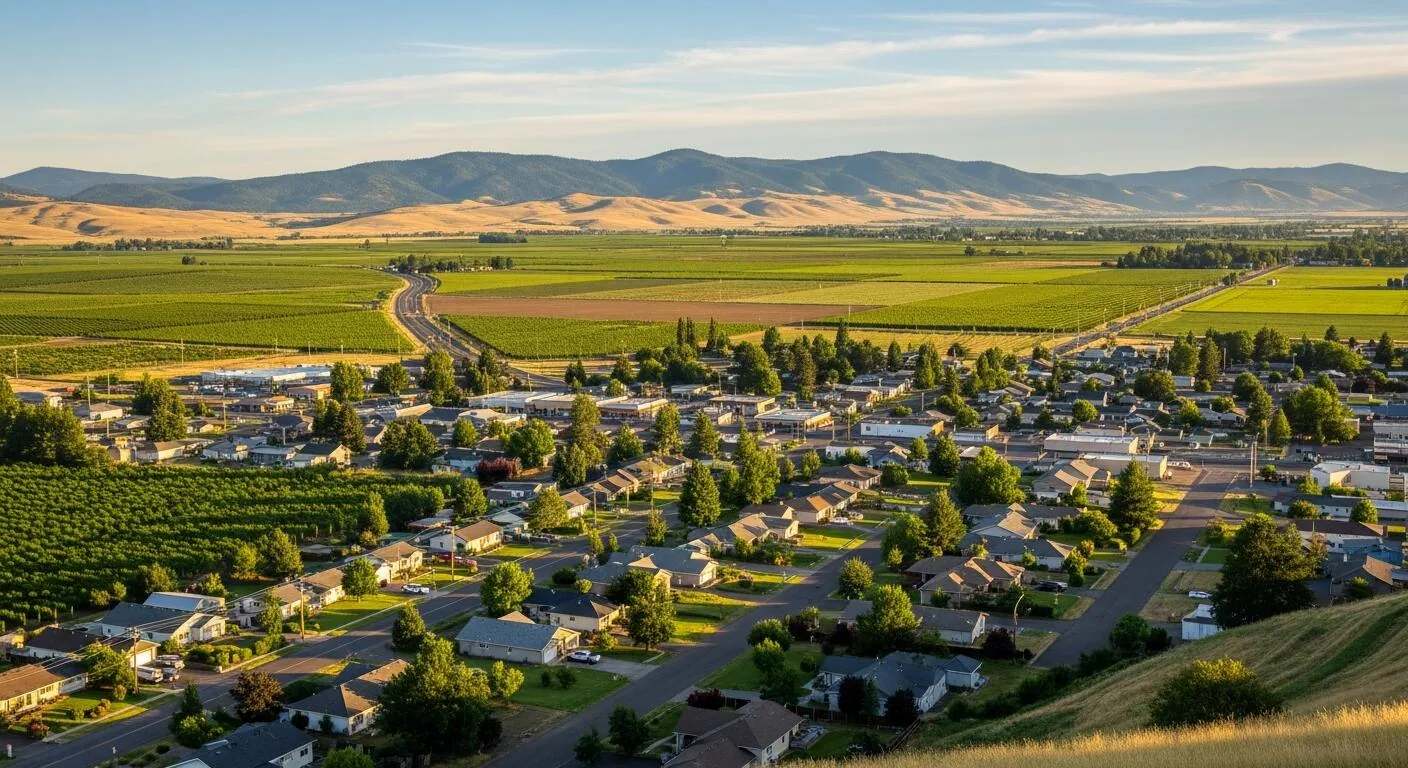
Once a gale has hit a Sunnyside building and the facility director picks up the phone, the first question dispatch asks is not what blew off. It is what moved. The late-November 2019 windstorm put Sunnyside at 53 mph, a notch above Yakima, WA, and a gust like that leaves small displacements behind: an edge that lifted and settled, a coping run sitting a half inch proud, a unit panel that now rattles. Each one is an opening for the next rain. Sunnyside is the second most populous city in Yakima County, in the same farm-driven economy as Grandview and Toppenish, with a cheese factory and a wine history among its businesses. Tell us what sits under the affected area before you tell us anything else, because that decides whether the first visit is a tarp or a plan.
Start From the Room Under the Roof
Dairy and food plants push warm, humid air upward all day, and in a cold month that moisture finds the first cold surface it can reach. The Darigold Dairy Fair cheese factory in Sunnyside reportedly made 150 million pounds of cheese a year, which hints at the scale of continuous, wet-floor operation that a roof over a plant like that has to accommodate. When a roof over a production floor starts to drip, the leak is often condensation or a failed vapor seal rather than a hole in the membrane. We check the room side first, and a written roof inspection report shows where the moisture sits.
Our crew looks for stained deck laps, rusted fasteners that show from below, and insulation that has gone soft near penetrations. A dry-looking membrane over a wet room is a common finding. Keep product covered, tell dispatch which lines cannot stop, and leave the ceiling tiles alone until we have photographed the pattern.
Trace the Gust Damage From the Edges Inward
A 53 mph gust is not a hurricane, but a low-slope roof lifts at its perimeter long before the field feels anything. Wind speed at the edge of a roof runs well above what the weather station reports, and the first things to give are the metal edge, the cleat that holds it, and the membrane under the flange. The county's design wind speed is 110, and a roof built to that number still depends on its edge metal staying fastened.
After a windstorm we walk the full perimeter, press on coping joints, look for gaps at the termination bar and check every rooftop unit panel for movement. Then we work inward toward seams and drains. A wind-damaged roof gets its edge fixed before anyone patches the field, because a patch next to a loose edge fails with the next gust.
Clear Snow With Plastic Tools and Leave a Layer
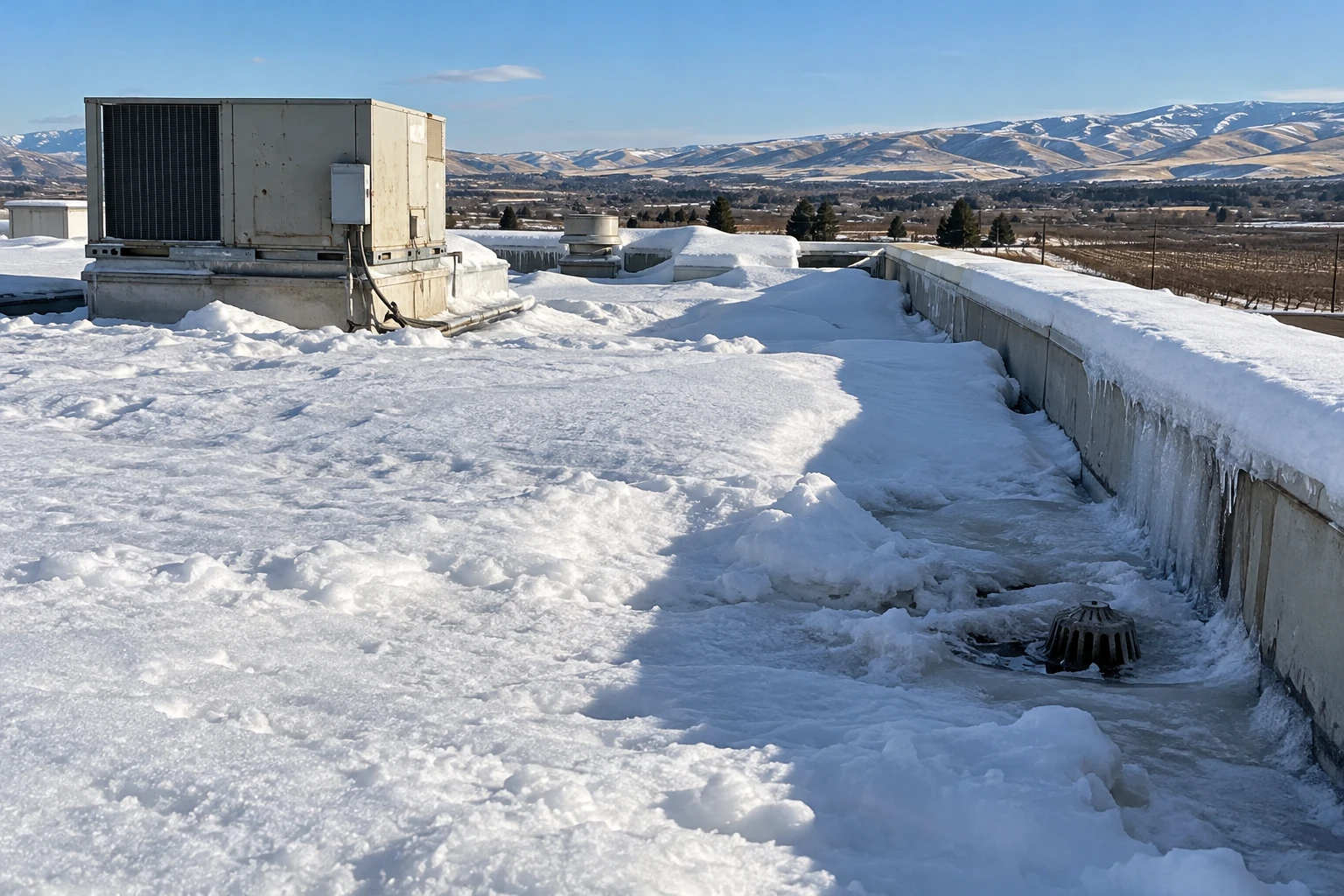
Snow arrives mostly in December and January, and Sunnyside buildings sit in the same valley weather pattern even though the city has its own readings. Snow load here is set parcel by parcel, so the permit or drawings tell us more than the weather forecast does. On a processing building with a step-down roof, drifts pile against the upper wall and press on the lower deck.
If a roof needs clearing, we use plastic tools and leave a protective snow layer over the membrane, because steel shovels cut flat roofs. Our snow and ice damage checks start after the thaw. Before the crew arrives, keep staff off the roof and note any ceiling that sags or any door that suddenly sticks. Those are the first signs of deflection.
Plan Around Vineyard and Winery Buildings
Associated Vineyards planted its first vines beside a pioneer vineyard in Sunnyside in 1961, and the Yakima Valley wine economy has kept production, barrel and tasting buildings in the area ever since. A winery roof carries two demands that do not always agree: it has to shed weather, and it has to keep the temperature swing inside a barrel room small. Dark membranes soak up an afternoon heat cycle and pass it down.
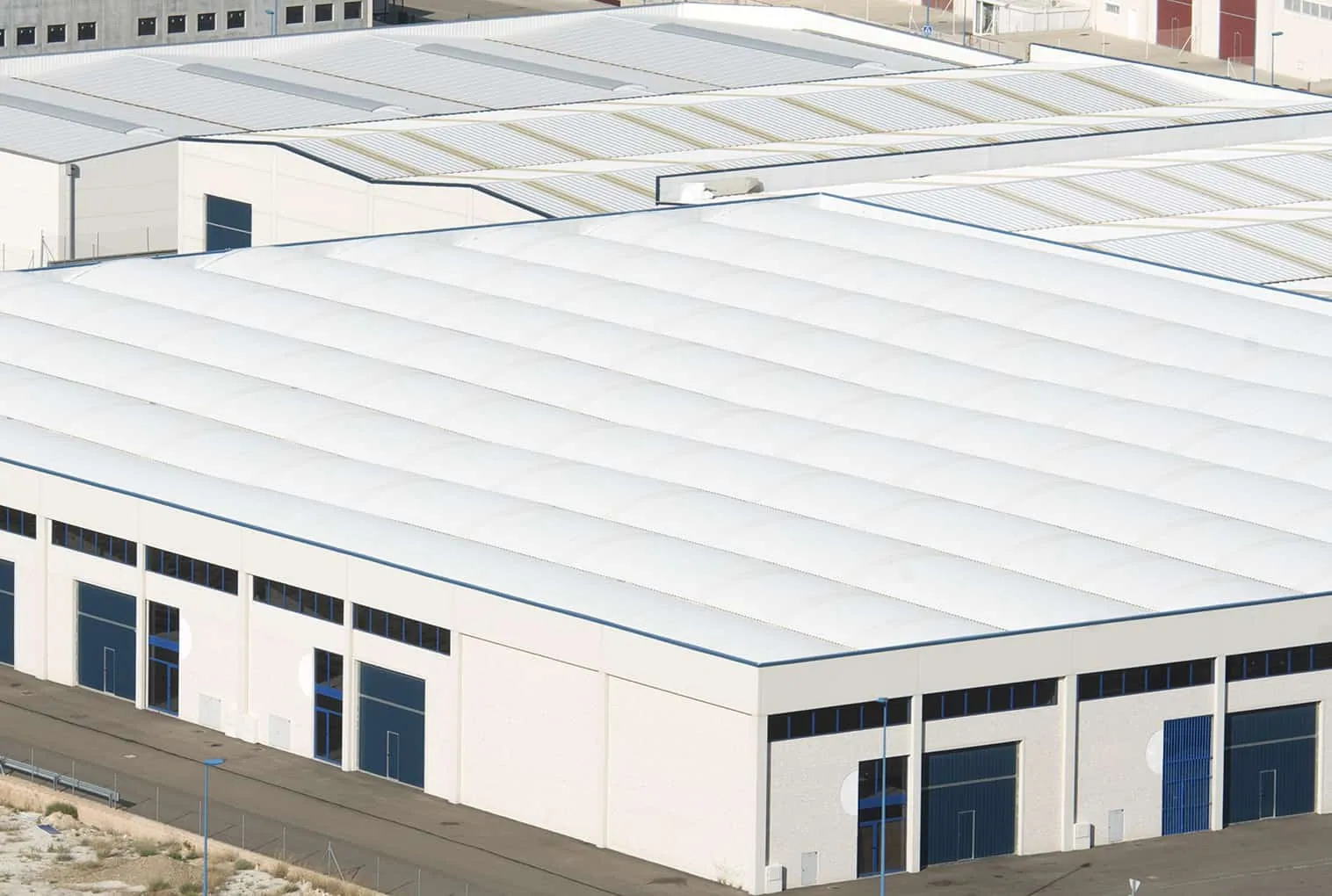
When we look at a roof over a production or tasting space we check how the insulation and cover board are holding, whether the membrane color suits the sun load, and where mechanical equipment sits relative to drains. A TPO roof in a light color is a common answer for a building that wants to run cooler, but an older roof that is still sound may only need cleaning and a coating to last another stretch. We lay out both options with the cost drivers before anyone commits.
Schedule Work Around Harvest and Packing Runs
In an agricultural city the calendar controls access. A roofer who arrives during a packing-line peak will be turned away or, worse, allowed in and then blamed for dust. We ask facility directors for the weeks when the line can pause, which rooms are cold rooms, and where forklifts cross under the work area. Then we sequence tear-off in sections so the building is dry at the end of each shift.
Wind and snow set the other half of the calendar. Heat above 90 F, which Yakima sees on dozens of afternoons a year, makes adhesives behave differently and shortens the workable window for some membranes. Planning a commercial roof replacement for the shoulder seasons keeps materials and crew in their working range, and an ongoing preventive maintenance visit before harvest catches loose flashing while the building is still quiet.
Commercial Roofing Questions
Our Sunnyside building has a condensation drip at a skylight curb after every cold snap. Is that a roof leak?
Often it is not, and the difference changes the repair. We check whether the drip follows the temperature drop or the rain. If it follows the temperature, warm room air is reaching the cold curb and the fix is an air seal and added insulation at the curb, not a patch. If it follows the rain, the flashing is open and we rebuild it with new base flashing and sealant. Send photos of the stain and the date it appeared, and we will tell you which one fits before the visit.
How soon after a windstorm should we have the roof checked?
Within days, and before the next forecast if anything looks disturbed. A lifted edge does not always leak the same night, which is exactly why it gets missed. Call the first-hour line if you see metal sitting out of line, membrane flapping or debris on the deck. Otherwise, schedule a perimeter check and a walk of every rooftop unit. We photograph what we find so your insurance file has dated images of the condition.
Can a dairy or food plant roof be replaced without stopping production?
Usually it can, in sections. We work from the side away from sensitive rooms toward the side that matters most, close the tie-in to the existing roof each day, and keep debris off intake louvers and open product areas. You will need to tell us where air handlers draw from and which rooms are cold or washed down. If a section has to shut for a short stretch, we give the date well ahead so you can plan the line.
Does a cold-climate roof in this valley need a different membrane than one on the coast?
Valley roofs deal with a wide daily swing, snow load and strong sun, more than constant rain. Membranes with good low-temperature flexibility and reinforced seams do well here, and thicker systems resist foot damage when crews clear snow. We match the membrane to the building: a flat processing roof with heavy equipment traffic gets a tougher surface than a quiet storage building. We lay out two or three options and what each one changes in cost and lifespan.