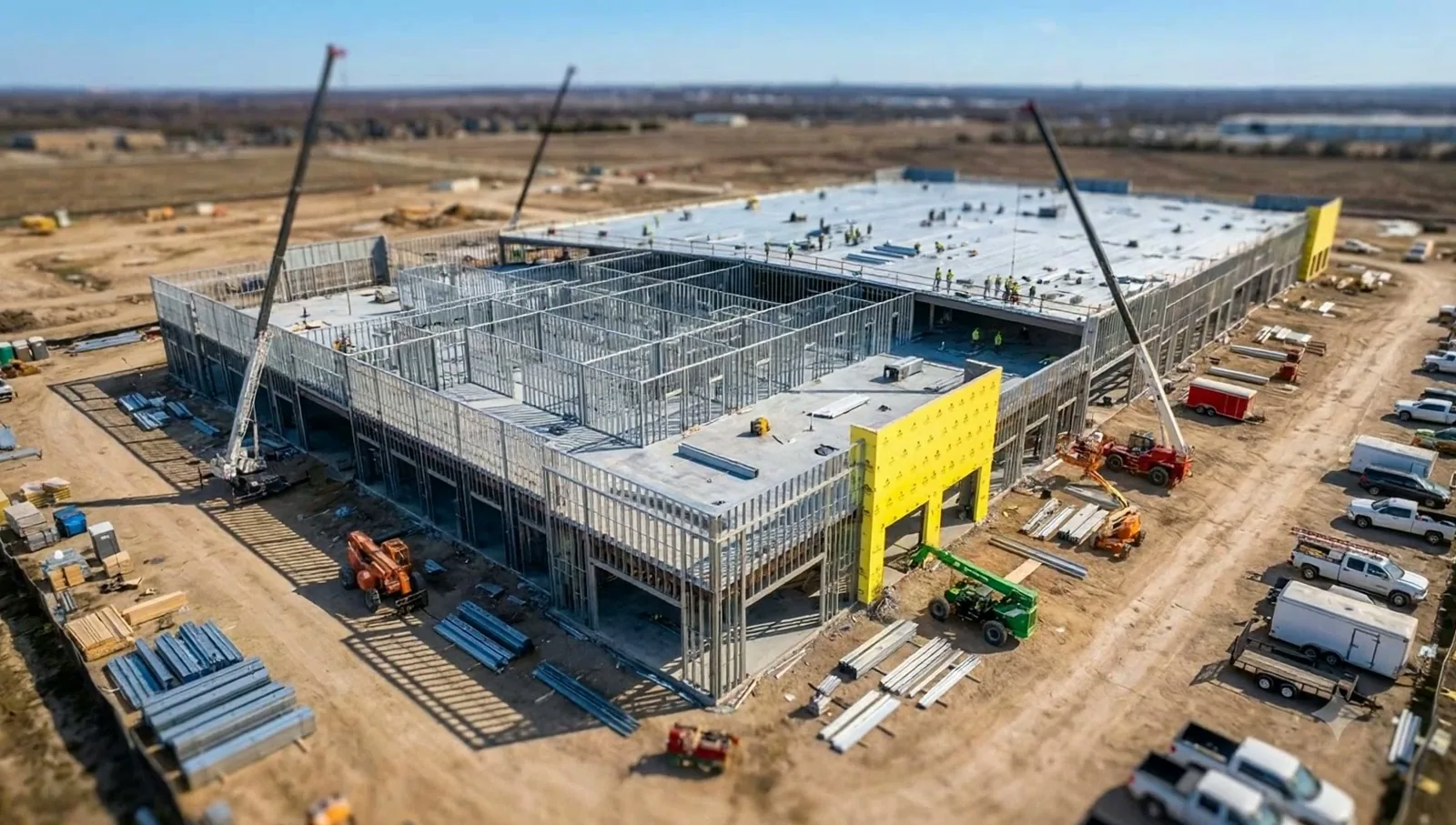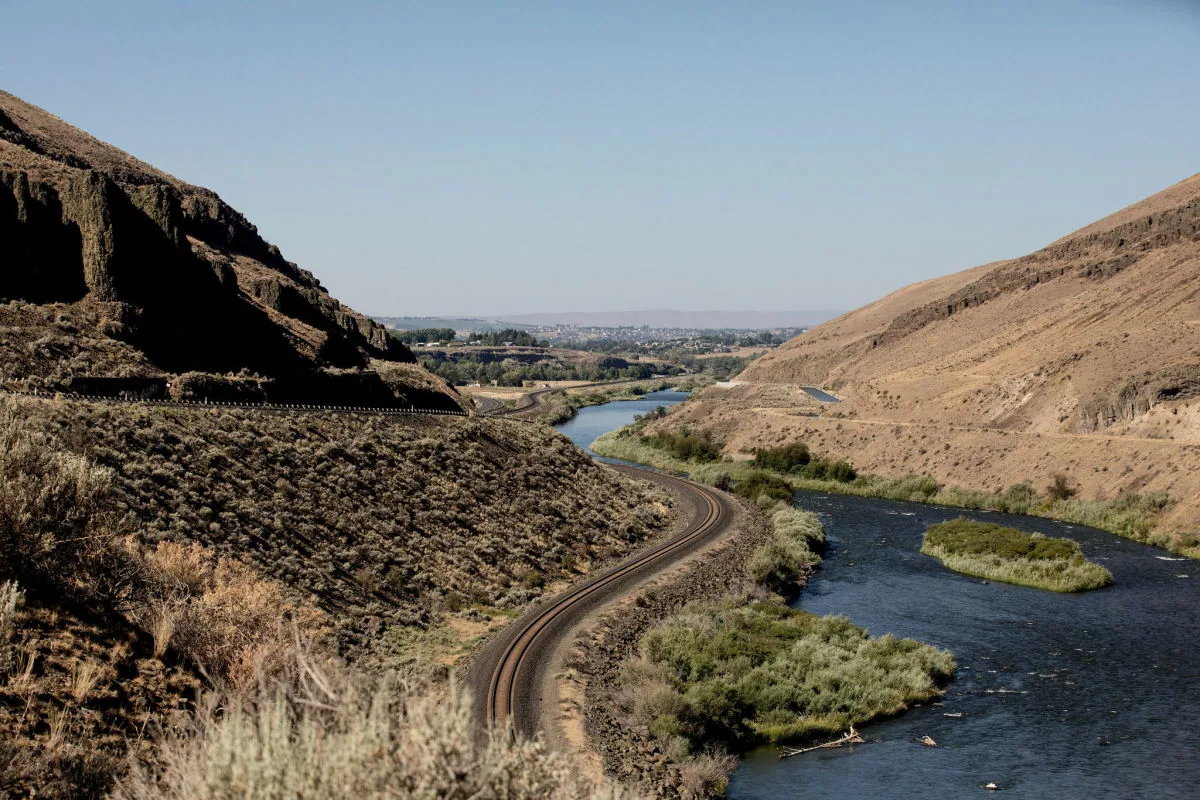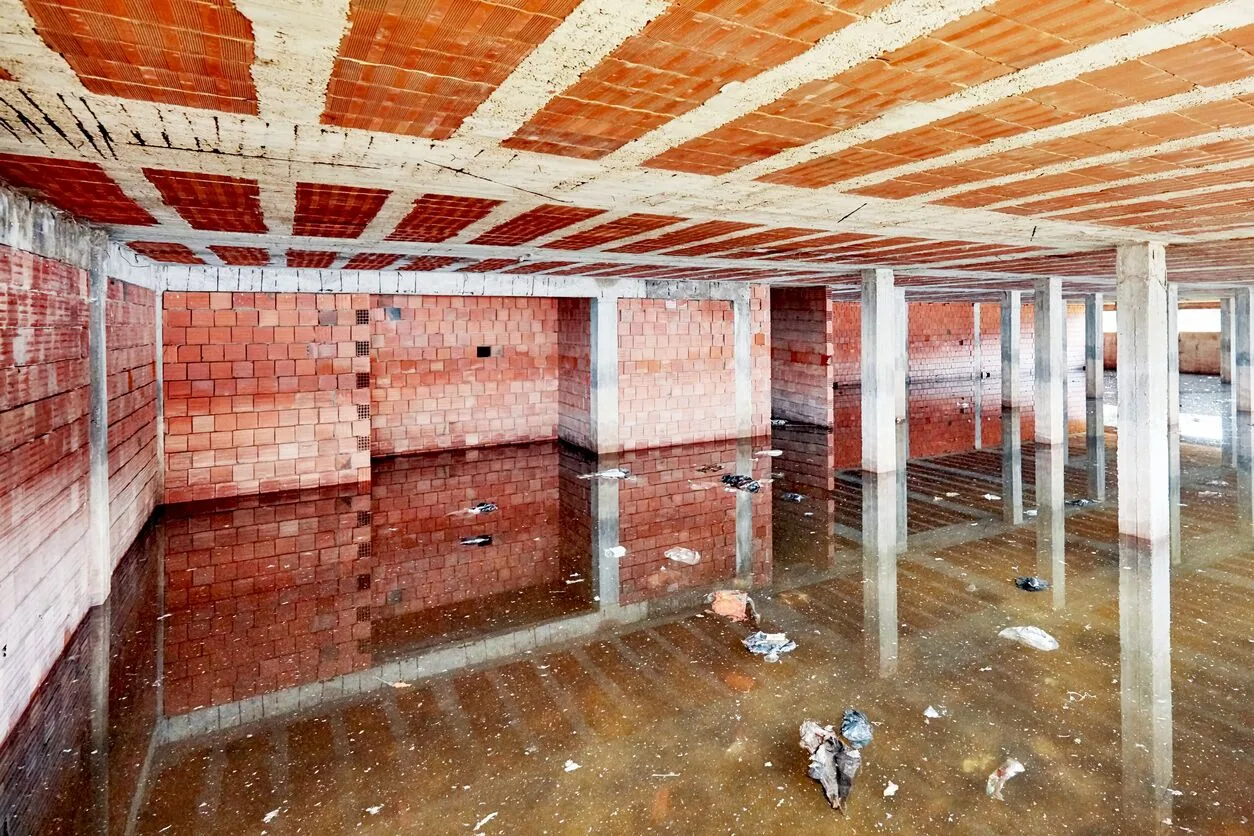
An adjuster calls two days after a late-November gale because a policyholder reports lifted membrane on a Yakima, WA warehouse and a wet ceiling in the office below. The first question dispatch asks is not who pays. It is whether the building is dry tonight and what the roof looked like before the wind. A claim here turns on three things: the storm, the roof's condition and the record.
Send the building address, the date of loss, where damage sits and which operations cannot be interrupted. We sequence the first visit to protect the building and capture the evidence in the same trip.
Stop the Water Before Anything Else
Mitigation comes first. A roof open to weather gets worse every hour, and many policies ask the owner to take reasonable steps to prevent further loss. We make a temporary seal with materials that can be removed or incorporated, so the permanent repair is not harmed.
Every step is photographed before and after. Close-ups show the defect, and wide shots show where it sits. Each image carries a grid reference on the roof plan. The photos are dated, so the file shows what the roof looked like at arrival.
Interior protection matters too. Tarps, containment and moisture readings below the damage show the extent. The restoration firm can start drying from that record, and the adjuster sees the same facts.
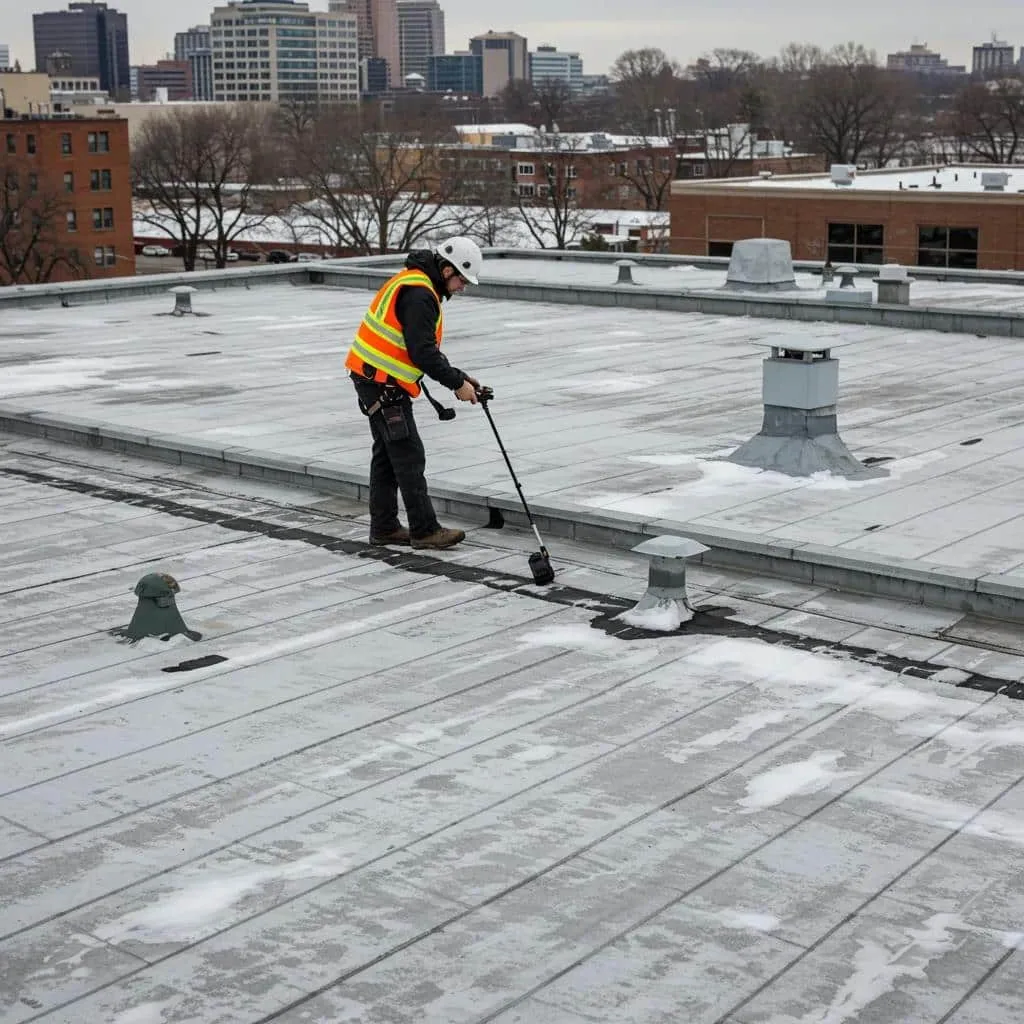
Safety comes with it. A storm-damaged roof can hide weak decking, and a crew steps with care, tied off and probing. Snow and ice add risk. We do not walk a roof we cannot read, and we use a lift or a drone to look first when the surface is unsafe.
Match the Damage to the Event
Yakima's weather gives distinct loss types. A dated wind event, like the late-November 2019 windstorm, gives a claim a fixed date to work from, and Yakima's record gust of 69 mph dates to May 1985. Wind loss shows at edges: lifted coping, torn flashing, peeled membrane at corners.
Snow loss shows differently, as deflection, drain backup and cuts from tools. February 2019 supplies the local example: heavy snow, a bulging wall and a red-tagged commercial building on South Third Avenue.
Heat is slower. Yakima logs about 40 afternoons at 90 F or hotter, and the record is 113 F. Heat cycling loosens flashing and cracks sealant over time. A scope that separates event damage from wear gives the adjuster a clean line.
Mixed causes happen. A roof with old wear can fail in a storm that a sound roof would survive. The scope does not hide that. It names the age-related items, the storm-related items and the overlap, and the adjuster applies the policy to each. A clean split saves weeks of back and forth.
Write the Scope With Lines an Adjuster Can Read
A good scope names each item, its location, its cause and its cost range. Field membrane. Seams. Flashings. Edge metal. Drains. Curbs. Insulation. Each has a photo and a note. Cause is stated plainly: wind lift, snow load, tool damage, age or heat cycling.
We separate repair from replacement. A moisture map shows the wet insulation, and the scope cuts out only what is wet when a patch is sound. A moisture survey and a few cores support the boundary. Large wet areas point toward replacement, and the survey says so.
Code items get their own line. Washington's current code editions have been in force since March 2024, so a covered replacement may bring insulation upgrades. The design team and the carrier decide what applies, and we show the code-driven cost separately.
Pricing follows the same format. Each line has a quantity, a unit and a cost range, with notes on access, protection and weather days. A reviewer can compare it with another contractor's scope line by line. Where a number depends on an unknown, such as deck condition under a failed seam, the scope says what test will settle it.
Keep the Record That Settles the Claim
The callback log carries the file. It records the date of each call, the weather, who responded and what was done. When a second storm arrives before the first claim closes, the log separates the two events.
Before-loss records help. A dated condition report from before the storm shows the roof's state, and it shortens the argument over age and wear. Owners who keep one hand the adjuster a baseline.
Our claim documentation work packages the photos, the scope, the moisture map and the log into one file. The adjuster, the restoration firm and the owner read the same facts.
Owners can prepare. Keep the warranty paper, the last two repair invoices and a set of dated roof photos in one place. After a loss, those items answer the first questions an adjuster asks, and the file can be assembled in hours rather than weeks.
Coordinate With the Restoration Crew
A restoration firm dries, cleans and rebuilds the interior. The roofer closes the envelope. The two schedules overlap, and a wet building cannot be dried under an open roof. We agree on the order: temporary seal, moisture readings, drying, permanent roof repair, interior rebuild.
Access is shared. The restoration crew needs hatch access for ducting and lines. We need clear routes for materials and a dry deck for the repair. A short call on day one settles the paths.
Large losses get phased. The worst section is sealed first, the rest follows by priority, and each phase has a photo set. Work for property managers with many buildings follows the same logic across the group.
A general contractor who handles the rebuild joins the same calendar. Roof, interior and finishes each depend on the one before, and a single schedule keeps the owner from guessing what comes next. We share the dry-in date and the roof closeout record with every party.
Plan the Permanent Repair for the Right Weather
Winter limits permanent work. Snow on a deck stops everything, and cold stalls adhesives. We stabilize the building in season and schedule the permanent fix for dry weather. The scope says which items are temporary and which are final, with dates.
Summer repairs have their own limits. Hot decks change how adhesive flashes off, and afternoon heat stretches membrane. We start early and finish seams when the surface cools.
Losses in Union Gap, Selah and other valley towns follow the same sequence. After a wind event, the repair is often at edges and flashings, and the permanent fix goes quickly once the deck is dry.
Commercial Roofing Questions
What should a policyholder do before the roofer arrives?
Call dispatch, protect contents, photograph the interior and stay off the roof. Tell us the date of loss, where water shows and which operations are affected. We make a temporary seal and capture dated photos on arrival.
How do you separate storm damage from wear?
By pattern and condition. Wind lifts edges and corners. Snow bends decks and blocks drains. Wear shows as chalking, cracking and shrunken flashing. We state the cause for each item and photograph it.
Can a temporary seal affect the claim?
Used correctly, it helps. A removable or incorporated seal prevents further loss and leaves the permanent repair unharmed. We record the method and the materials in the file.
What if wet insulation is found?
A moisture survey maps it and cores confirm. Small wet areas are cut out and replaced, and large ones point toward replacement. The scope shows the boundary on the plan.
Who decides what the code requires?
The design team and the building department, with the carrier. We show code-driven items as their own line so each party can see the cost.