A public works supervisor calls on a January morning because snow is deep against the parapet of an office building and a council meeting is scheduled in the room below. In Yakima, WA the council calendar does not move for weather, so the roof has to. Dispatch asks for the roof's design load and for what is happening beneath the drift. Keep staff off the roof and leave the shovels in the closet.
The building address, the design snow load on the permit, the location of the snow or damage and the rooms that must stay open give us what we need to plan the first visit.
Know the Public Building Stock
Public roofs range widely, from small offices to airfield buildings. Yakama Nation government employs about 1,289 people. McAllister Field, the Yakima Air Terminal, is city-owned and covers about 825 acres, with hangars and a terminal.
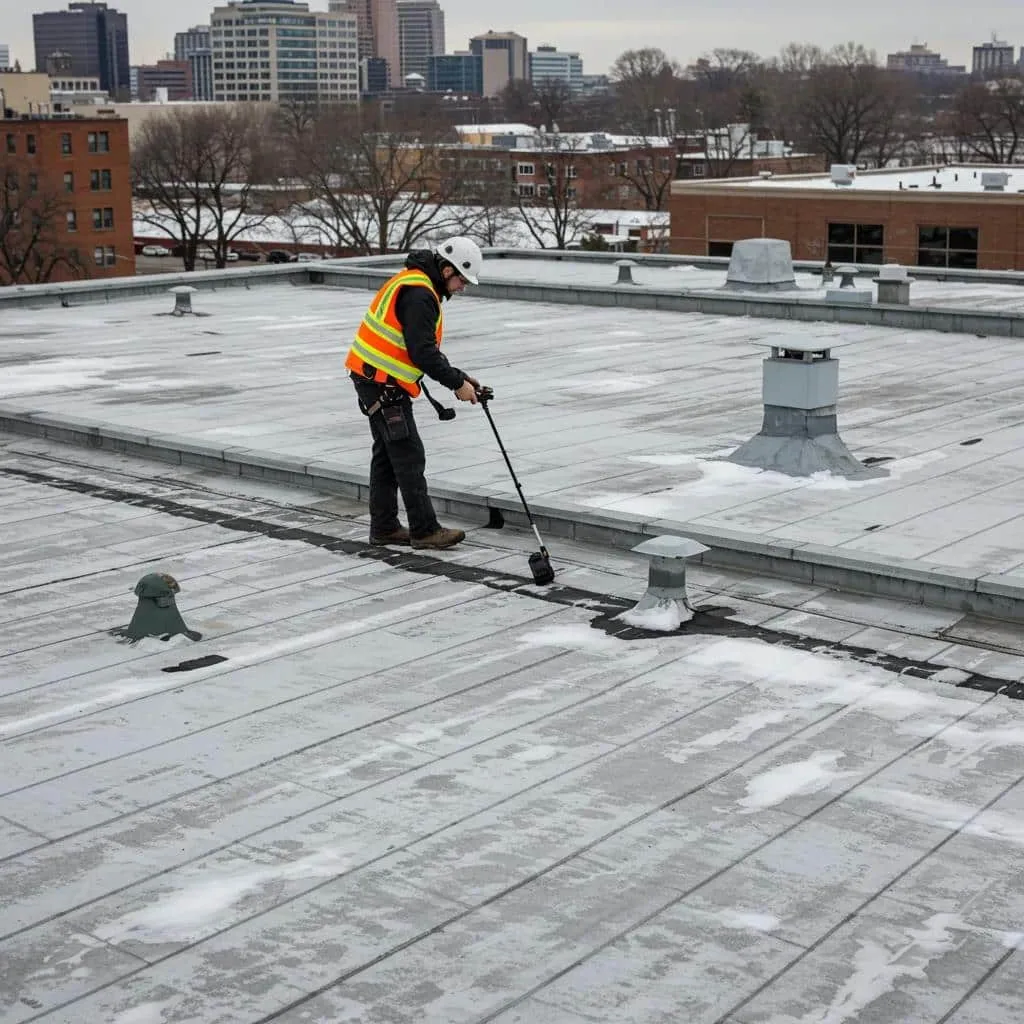
We do not assume what any one building has. We read it: membrane type, seams, flashings, drains, penetrations and ponding. Hangar roofs are long and wide, and an office roof is small and crowded. Each asks for a different system and a different schedule.
A first walk produces a graded list with photos and cost ranges. A department head can read it, and a council can fund from it. Our condition reports follow one format for every building.
Age and records vary. A building transferred between departments may arrive with no roof file at all. We start from the roof and work backward, using cores and scans to learn the layers and the moisture state. Missing records are a finding, and we note them so the next manager does not repeat the search.
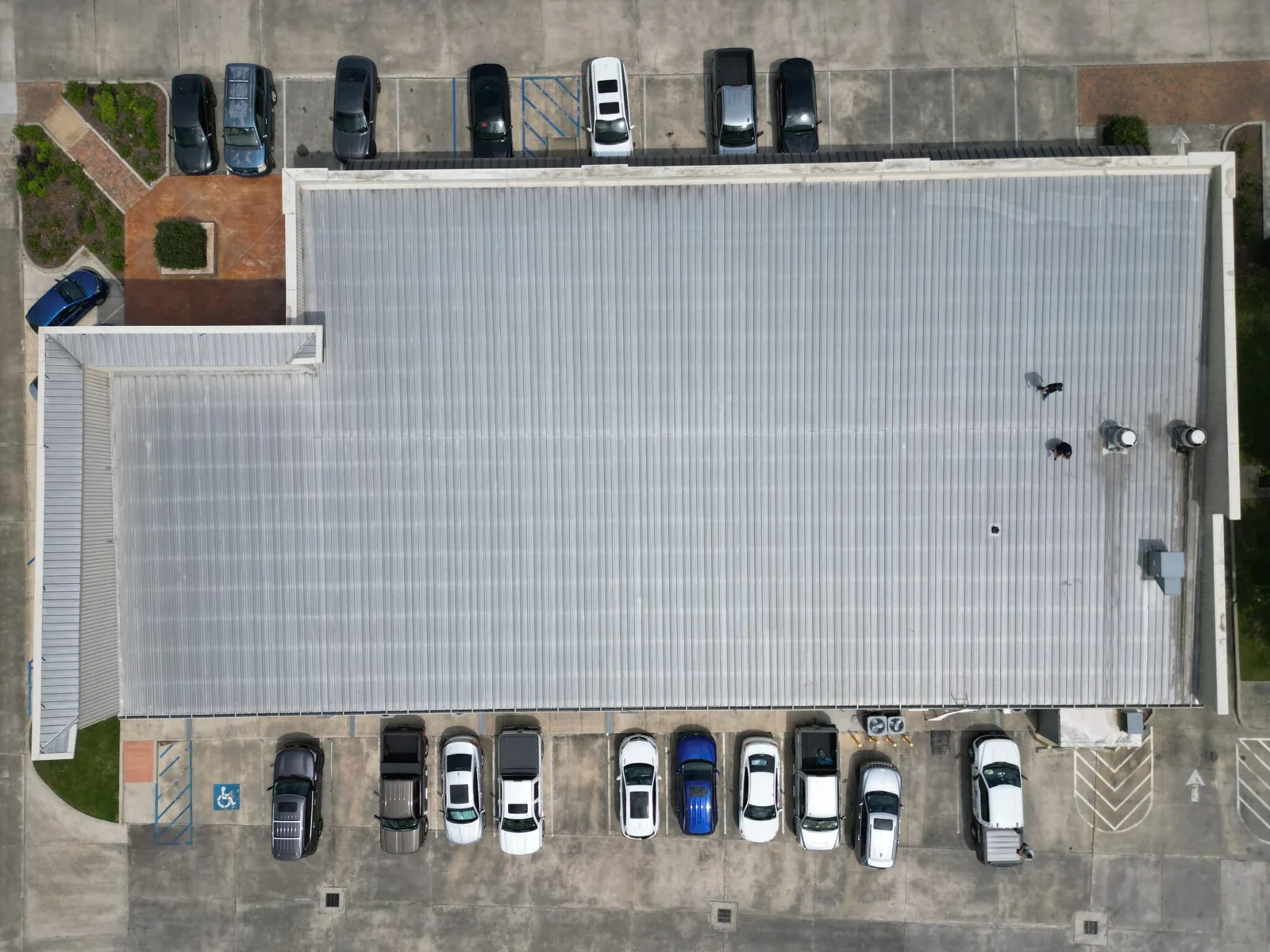
Staffing matters too. A small public works crew cannot walk every roof each season. A scheduled inspection from outside, with a drone for large roofs, covers the gap and produces a record in the agency's own format.
Read the Load Over the Council Room
The permit drawings carry the design load, and that number follows the parcel. An office wing and a maintenance shed can differ, and above 70 psf the county wants an engineer. Winter snow arrives mostly in December and January, and drifts build at parapets, penthouses and step-downs, which is where a council chamber or a records room tends to sit under the worst of it.
A commercial building on South Third Avenue was red-tagged after heavy snow in February 2019, and a public owner should read that as proof that roof and structure are one question. Staff stay off, and our crews bring plastic tools and leave the membrane a cushion of snow.
Check inside before anyone goes up. Stuck doors, new ceiling cracks and sagging tiles near a drift are deflection signs, and we ask whether the room is occupied. We decide with you whether staff move first.
Write the Scope So Bids Compare
A public owner buys by procedure, and the scope has to compare cleanly across bidders. We break out each line: field membrane, terminations, edge metal, curbs, drains, access and protection, code-driven items and weather days. A bid with visible lines lets a reviewer see what each choice costs, and what a cut removes.
Replacement also meets the energy code in force since March 2024, which raises insulation levels and lifts every curb and wall flashing.
Compare options on cost per year of life. A recover or a coating on a sound roof costs a fraction of replacement. A replacement on a failing roof costs less than years of repair. A moisture survey settles the choice before the budget is set.
Procurement rules shape the calendar. Advertising, bid opening, award and notice to proceed each take weeks, and a summer install needs the process finished by spring. We tell the agency the date by which a scope must be released to keep a July start, and we prepare submittals early, since a late submittal can hold a crew off the roof for a week.
Handle Airfield and Yard Roofs
McAllister Field sits about three miles south of Yakima at 1,099 feet, with two asphalt runways and tenants that include an aircraft manufacturer and an air museum. Airfield roofs add height limits, crane restrictions and approach paths. A lift or a crane near a runway needs clearance from the airport before it is booked.
Hangars have wide spans, tall walls and big doors. Wind loads at corners are high, and the access plan has to account for lifts that fit the working height. Our hangar roofing approach covers those details.
Maintenance yards and vehicle shops carry exhaust and fuel vapors. We read what vents onto the roof and choose a membrane to suit. Cold snaps and heat cycles work these buildings too, so we check flashing and sealant each season.
Public-use buildings add accessibility and egress rules. Entrances stay open, ramps stay clear and fire lanes stay free on every shift. We lay out staging with the building manager before mobilization, and a notice goes to staff and visitors a few days ahead with dates and hours.
Watch the Swing Over the Records Room
Summer brings about 40 afternoons above 90 F to Yakima, a handful above 100 F, and a record of 113 F on June 29, 2021. Each night pulls the membrane back, and a year of that motion loosens flashing at corners and curbs. A public building that goes years between roof visits shows the result as a stain over a records room, and a yearly walk finds the lifted flashing before the stain does.
Long public buildings give wind a lot of edge to work on. The late-November 2019 windstorm was a recent test, and Yakima's record gust of 69 mph dates to May 1985. Coping and fasteners get tested each season, and a maintenance program keeps drains clear and edges tight.
Write the File for an Audit
On closeout the agency gets dated photographs, weld and seam tests, a materials list, warranty terms and a maintenance interval, written in plain language so an auditor can follow the dates and locations without us.
An agency with buildings in Toppenish, Wapato and Yakima can fold them into a single program, and a school district in the same town may share the crew route.
Agencies in the valley also coordinate with health systems and tribal government offices on shared corridors, and a combined route can cut the cost per roof for every owner on it.
Commercial Roofing Questions
How should a public owner handle snow on a building with an event scheduled?
Call dispatch before staff go up, and say which rooms are in use. A look from inside for deflection comes first, then clearing with plastic tools while a protective layer stays on. If a room is at risk, we advise moving the event.
How do you write a scope that bids compare cleanly?
By breaking out each line and naming the assumptions. Field membrane, terminations, edge metal, curbs, drains, access, code items and weather days each get a price. A reviewer can see what a cut removes.
Can a hangar roof be repaired without closing the hangar?
Often, in sections. We close each section before the crew leaves and coordinate lifts and crane swing with airport staff. Work over parked aircraft waits for the tenant's window.
What records survive an audit?
Dated photos, probe and weld test results, material lists, warranty terms and a callback log. We write them in plain language with locations and dates.
How do we fund a replacement over several years?
By ranking the roofs and phasing the work. Worst roofs go first, repairs hold the middle and the list updates each year. Our capital plan shows each building's range and year.