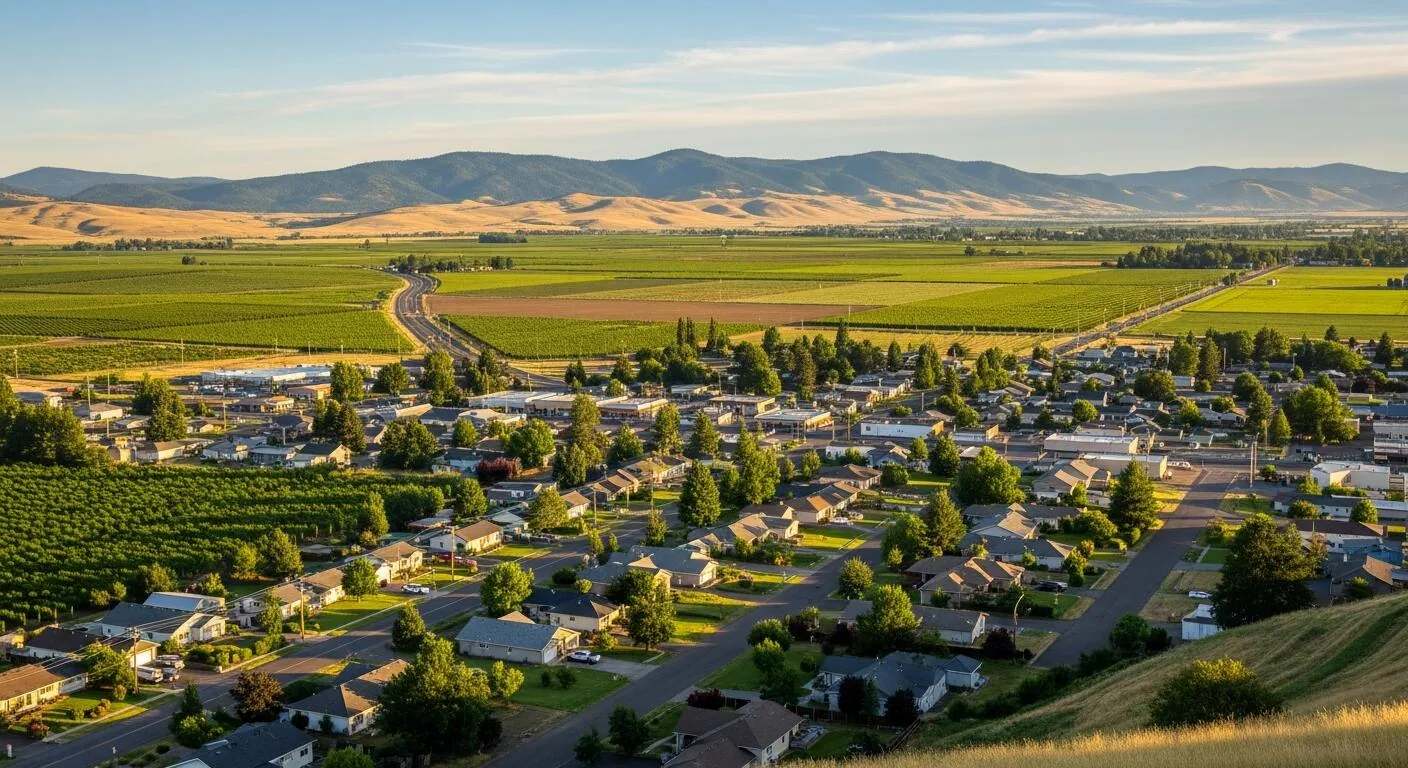
A Toppenish facility director who calls at four on a 100 F afternoon usually reports a smell before a leak: hot membrane, tar, or the sweet odor of a seam that has softened. The first question dispatch asks is where the building is hottest, because heat finds the weak joint before water does. Yakima, WA passes 90 F on dozens of afternoons and 100 F on a handful, then drops into cool nights, and the daily swing works every flashing a little looser. Toppenish sits inside the Yakama Nation Reservation with 8,854 residents in 2020, and its commercial roofs include school district buildings, a university campus and Astria Health facilities. Those buildings keep people inside through the worst of the heat, so a failing roof there is a comfort and safety problem as much as a water problem.
Read the Afternoon Heat Cycle on the Seams
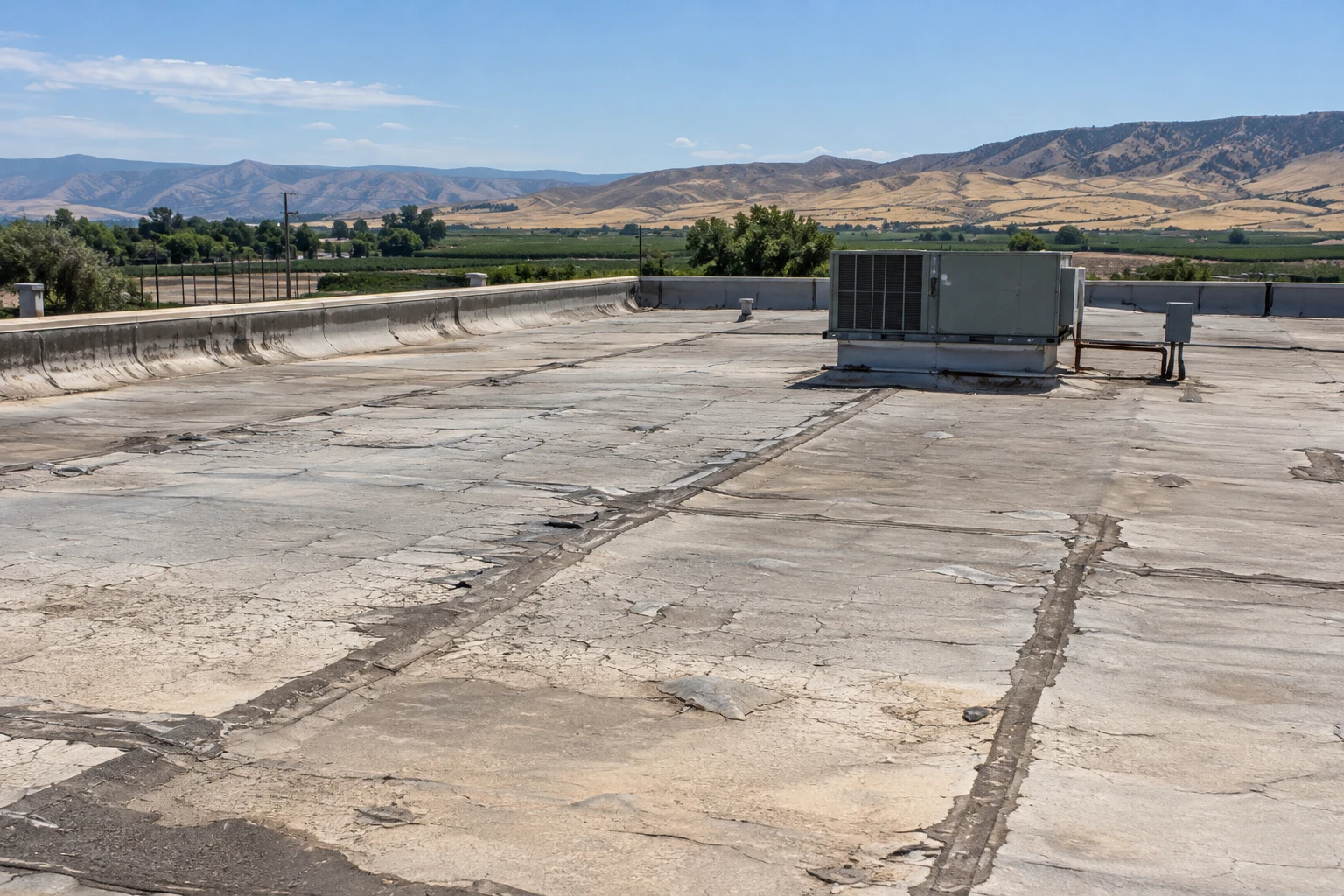
A dark membrane on a 100 F day can run far hotter than the air, then lose that heat in a few hours after sunset. Each cycle stretches and relaxes the seams, the flashing laps and the sealant at penetrations. Over a few summers the movement opens a hairline gap, and the next thunderstorm or snowmelt uses it.
On a first walk we press on seams with a probe, look for shrunken flashing that has pulled away from a curb, and check for blistering where trapped moisture expands in the sun. The record of 113 F in Yakima on June 29, 2021 is a reminder of how far the range can go. Surface cracking and chalking tell us how much life remains, and the condition decides between repair and a heat and UV damage repair scope or a coating. Shade the rooftop equipment access and keep people off the surface until the evening.
Keep School and Campus Roofs on the Calendar
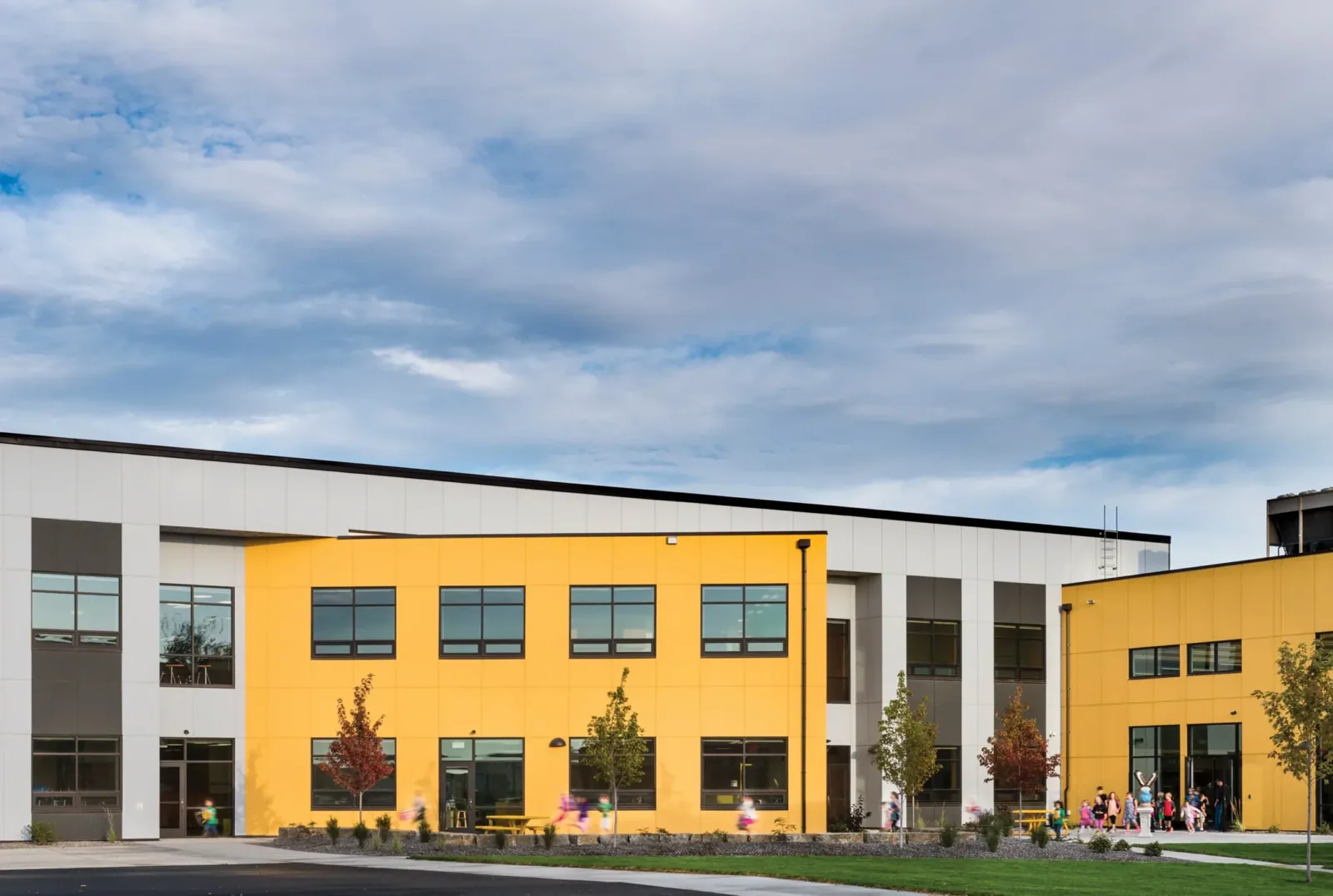
Heritage University has its main campus in Toppenish, and the Toppenish School District has offices there. Educational buildings share a scheduling problem: the best roofing weather lines up with summer break, and every district and campus wants the same crews at the same time. The owner who requests a condition report in the winter has the whole spring to budget and bid.
Roof work near classrooms also has noise, dust and fume limits. We keep adhesive and hot-work areas away from air intakes, close the day's tie-ins before dismissal and stage materials where students do not pass. For a campus with several buildings, a written roof inspection that ranks each roof by condition lets the facility team spend a limited budget on the building closest to failure. The same ranking suits school roofing across a district.
Protect Clinic Space From the Ceiling Down
Astria Health operates in Yakima, Sunnyside and Toppenish, and about 1,200 people work for it. A medical building cannot treat a roof leak as an ordinary maintenance item, because moisture above a ceiling can reach exam rooms, supply storage and sensitive equipment. The first call from a clinic manager is about which rooms are below the wet area and whether those rooms can be moved for a day.
We schedule roof repairs on medical buildings in sections, isolate the work area with temporary protection at the deck, and avoid any sequence that opens a large area during a forecast. Dust and odor stay out of corridors, which sets where we place hoists and how we remove debris. A medical office roof with a long run of rooftop air handlers needs the curbs checked first, since penetrations are where moisture most often finds a way in.
Judge the Older Downtown Buildings by Their Details
Toppenish and Wapato share reservation ground, and the Northern Pacific Railway reached Toppenish in 1883, with the city founded on that line in 1884. What that history means for a particular building is something only a hands-on look can answer, because the age of the town says nothing about the age of any one roof.
We look at the number of layers, the condition of the edge metal, the way parapets are capped and whether previous patches hold. A multi-layer low-slope roof often carries moisture trapped between layers, and an infrared scan after sunset shows it as a warm patch on a cooling surface. If the layers are sound, a recover can avoid tear-off cost; if they are not, a full replacement is the cleaner route. We put both in writing with the cost drivers and the disruption each one brings, and we flag any structural question for an engineer before work starts.
Prepare for Winter Load Before the First Snow
Winter snow in Yakima comes mostly in December and January, and design load follows the parcel. Engineering is required above 70 psf, so a building near that threshold deserves a look at its framing and drains before the first storm, not during it.
School, university and medical buildings all tend to have roof geometries where drifts pile against parapets and rooftop units. Keep drains clear of leaves, confirm scuppers are open and tell dispatch where snow gathers. Where clearing is needed, the work is done with plastic tools and a cushion of snow stays on the sheet, because steel cuts flat membrane. Our snow and ice damage response starts with the load sequence, then the membrane.
Commercial Roofing Questions
A seam on our Toppenish roof opened during a hot week. Can it be repaired in summer heat?
Yes, and early morning is the best window. We clean the seam, test the membrane for contamination, and apply a patch or a new weld once the surface cools below the point where adhesives skin over too fast. Hot-air welded membranes need clean, dry edges, so we avoid midday. If the same seam opens again within a season, we look for movement in the deck or a flashing that is pulling it open, and then fix that underlying cause rather than patching the symptom.
We manage several buildings in Toppenish and nearby Wapato. How should we rank roof work?
Start with a written condition report on each roof that grades the membrane, flashing, drainage and insulation moisture, and then rank the buildings by what a failure would interrupt. A clinic or classroom outranks a storage building even when the storage roof looks worse. We group repairs by zone, so a crew mobilizes once for neighboring buildings, which lowers the cost per roof. The report becomes your capital plan and your record for budget requests.
What does a coating do for an aging roof here?
A liquid-applied coating can seal a sound but weathered roof, reflect sun and slow the heat cycle that cracks seams. It works only on a roof whose insulation is dry and whose membrane is firmly adhered, so we scan for moisture first. Silicone and acrylic systems behave differently in ponding water and in cold, and we choose accordingly. A coating is no substitute for drying out a wet roof; if the scan shows saturation, the wet section comes out.
Who do we call for a leak at night over a medical space?
Call the first-hour line at any hour, including weekends and holidays. Give the building address, the rooms below the leak and any equipment at risk. We stage a temporary dry-in first, usually a membrane patch or tarp tied to solid blocking, and then schedule the permanent repair for a time that works with clinic hours. Move supplies and equipment out of the drip zone while you wait, and keep a bucket and plastic ready to catch what comes through.