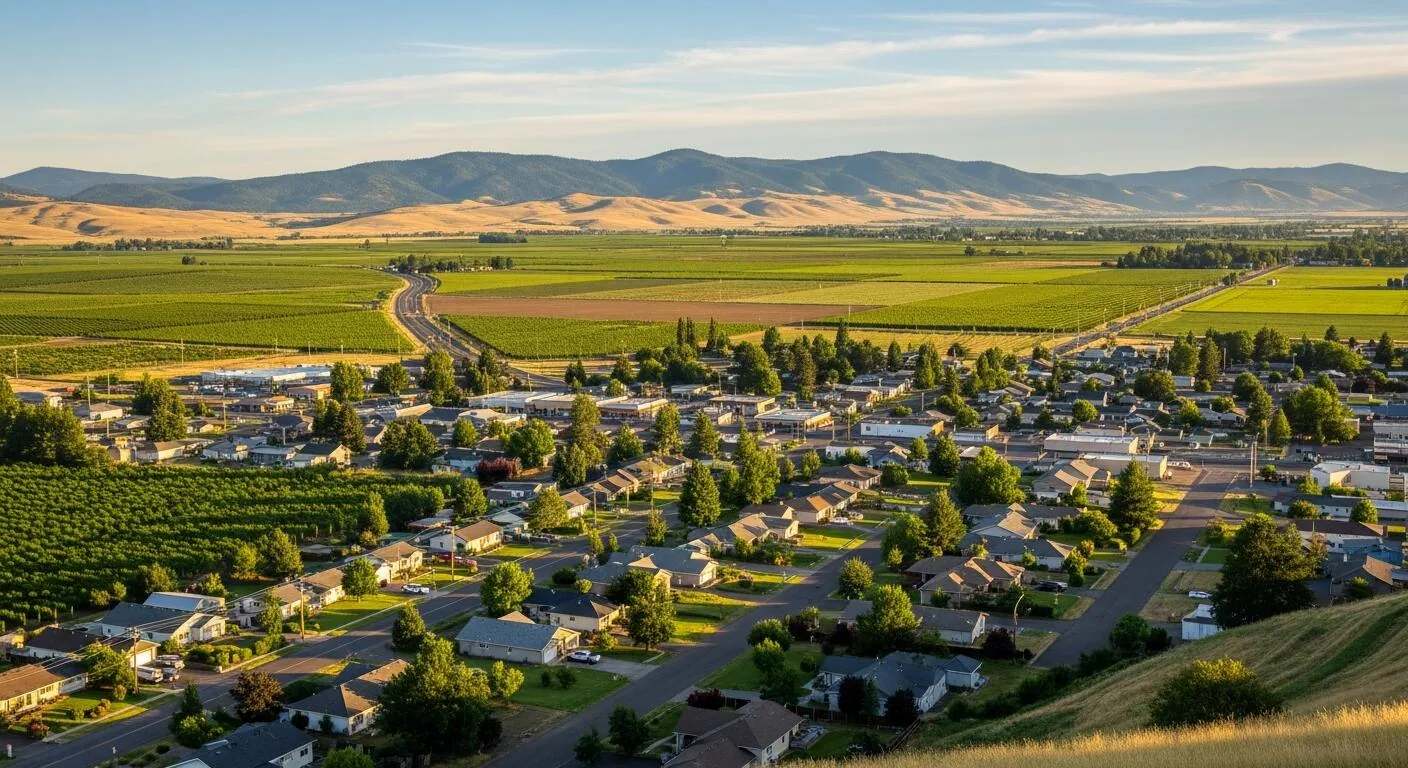
The forecast for the valley says heavy snow arrives Thursday night, and an operations director with sites in Yakima, Union Gap and Sunnyside asks which roofs to check first. Dispatch asks for the list. A roof program across many buildings is the answer to that question before anyone has to ask it: one inventory, one set of design loads, one triage order, one phone number. In Yakima, WA the sites are spread along Interstate 82 and U.S. 97, and a storm that is a nuisance at one address can be a roof failure at another. The program makes the order of response a decision made in advance.
Put Every Site Under One Inventory and One Calendar
A program begins with a single list of buildings, each with its roof sections, systems, ages, warranties and access notes. The list ties to a calendar that sets inspection visits, maintenance windows and planned projects across all sites. Instead of a separate relationship for each address, there is one schedule.
The shared calendar also spots conflicts. If two sites have projects planned in the same month, we can stagger them so crews and budget are not stretched. The inventory is built from the same field method used in roof asset management, so every roof is measured the same way and the numbers can be compared across the portfolio.
Access is part of the inventory. Each site entry lists the ladder or hatch location, the gate hours, the person who opens the building and the hazards a crew should know about. On a night when snow is building at four addresses, nobody has time to hunt for a key.
Rank the Sites for Storm Response Before the Storm
When weather hits, sites do not all deserve the same attention. We rank them by consequence and exposure. A cold storage building or a clinic ranks higher than an empty warehouse. A roof with a low design snow load and a history of ponding ranks higher than one with ample reserve. The ranking goes on a one-page list that dispatch holds.
The list is ordered by who gets the first call after a storm, which site gets the first crew and which sites can be checked by phone and photograph. The late-November 2019 windstorm reached both Yakima and Sunnyside, and a program owner with sites in both places would have wanted the order set already.
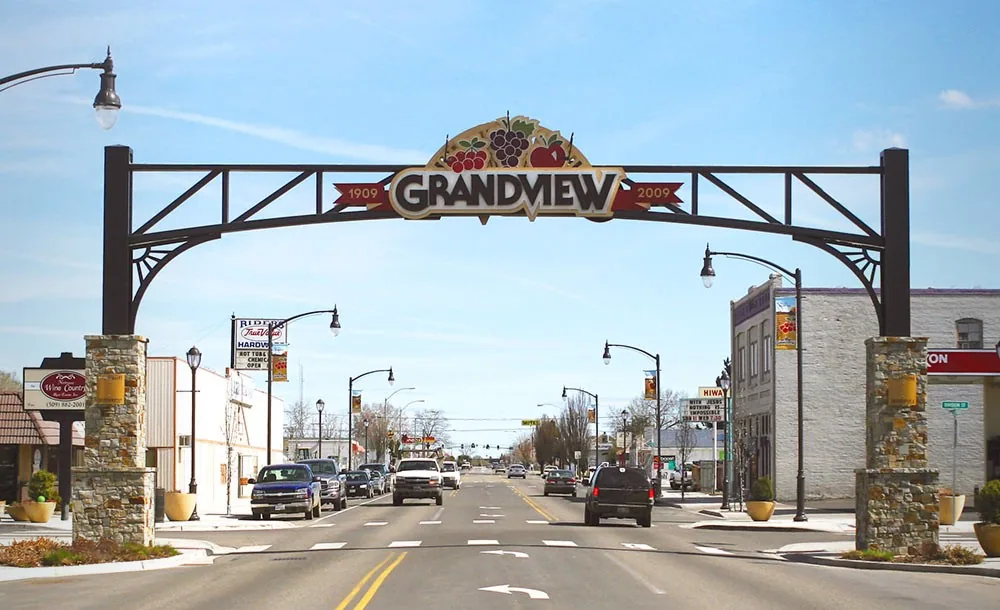
Drive time is part of the ranking. Interstate 82 and U.S. 97 connect the sites, but snow and ice slow both, and a crew heading to a Grandview cold storage building leaves a different gap in coverage than one heading across town. We plan crew placement so the highest-priority sites are reached first and the lower ones are covered by photographs and phone check-ins until a crew is free.
Handle Different Building Types Inside the Same Program
Few portfolios are uniform. A health system might hold clinics in Yakima, Sunnyside and Toppenish, where Astria Health runs facilities with about 1,200 employees across the three towns. A food company might hold processing and cold storage buildings in Grandview and warehouses in Selah. A retailer might hold stores in Union Gap near Valley Mall.
We build one program with different tracks inside it. Healthcare sites get quiet-hours rules and infection-control notes. Cold storage sites get vapor and moisture checks. Retail sites get tenant-notice procedures. The rules sit in the record, so a crew arriving at any site knows what applies there, and nothing depends on one person remembering.
Set One Standard for Repairs, Materials and Reports
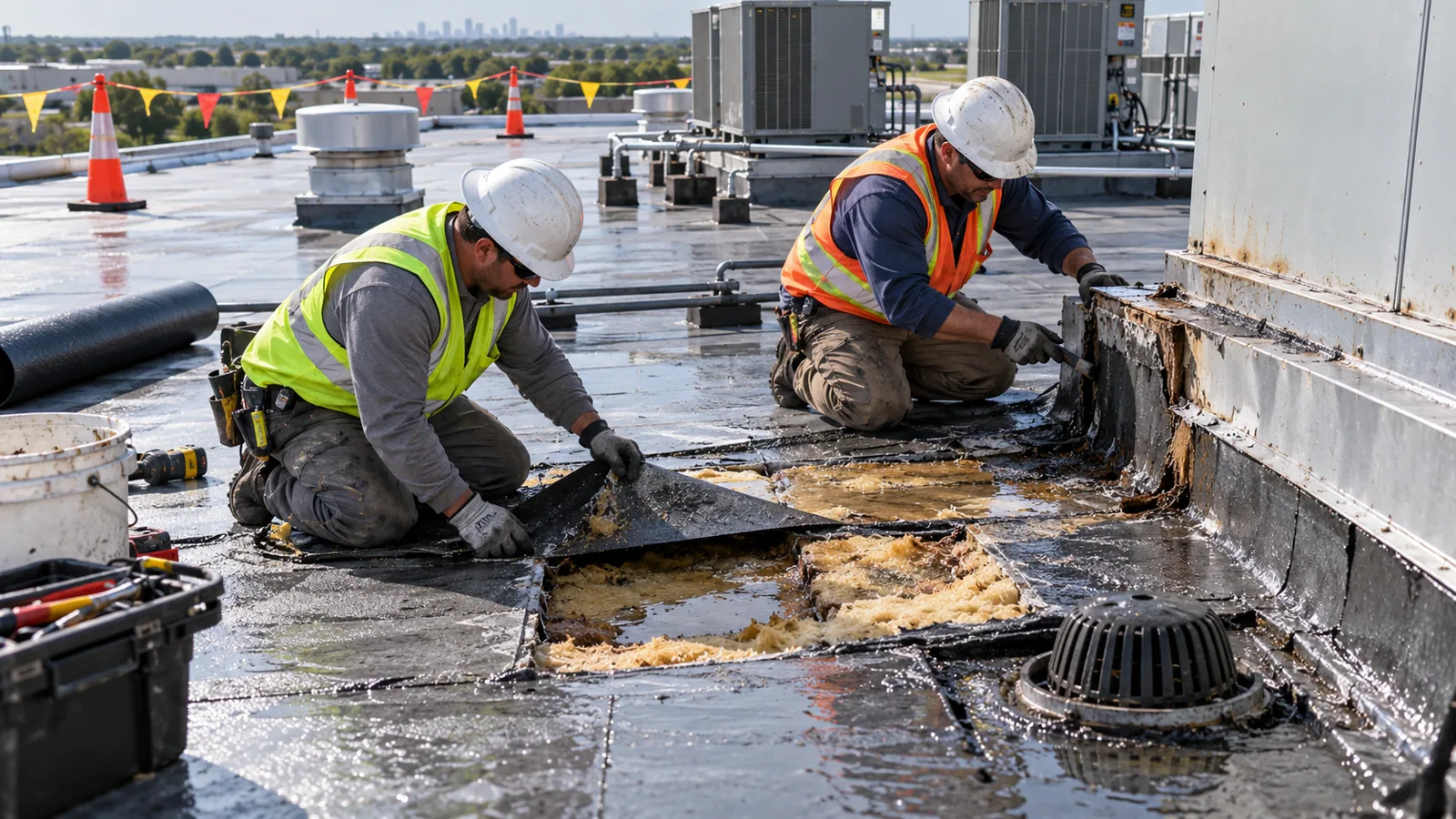
A program works better when repairs follow a standard. We define which materials go on which roof systems, what a repair record must contain and how photographs are tagged. A leak at one site gets the same documentation as a leak at another, and a manager reading five reports can compare them without translation.
Reports come in a fixed format with a summary table first. The table lists each site, its current condition rating, open items and the next scheduled visit. A busy director can read it in minutes and drill into any site that needs attention. The maintenance visits feed the same table.
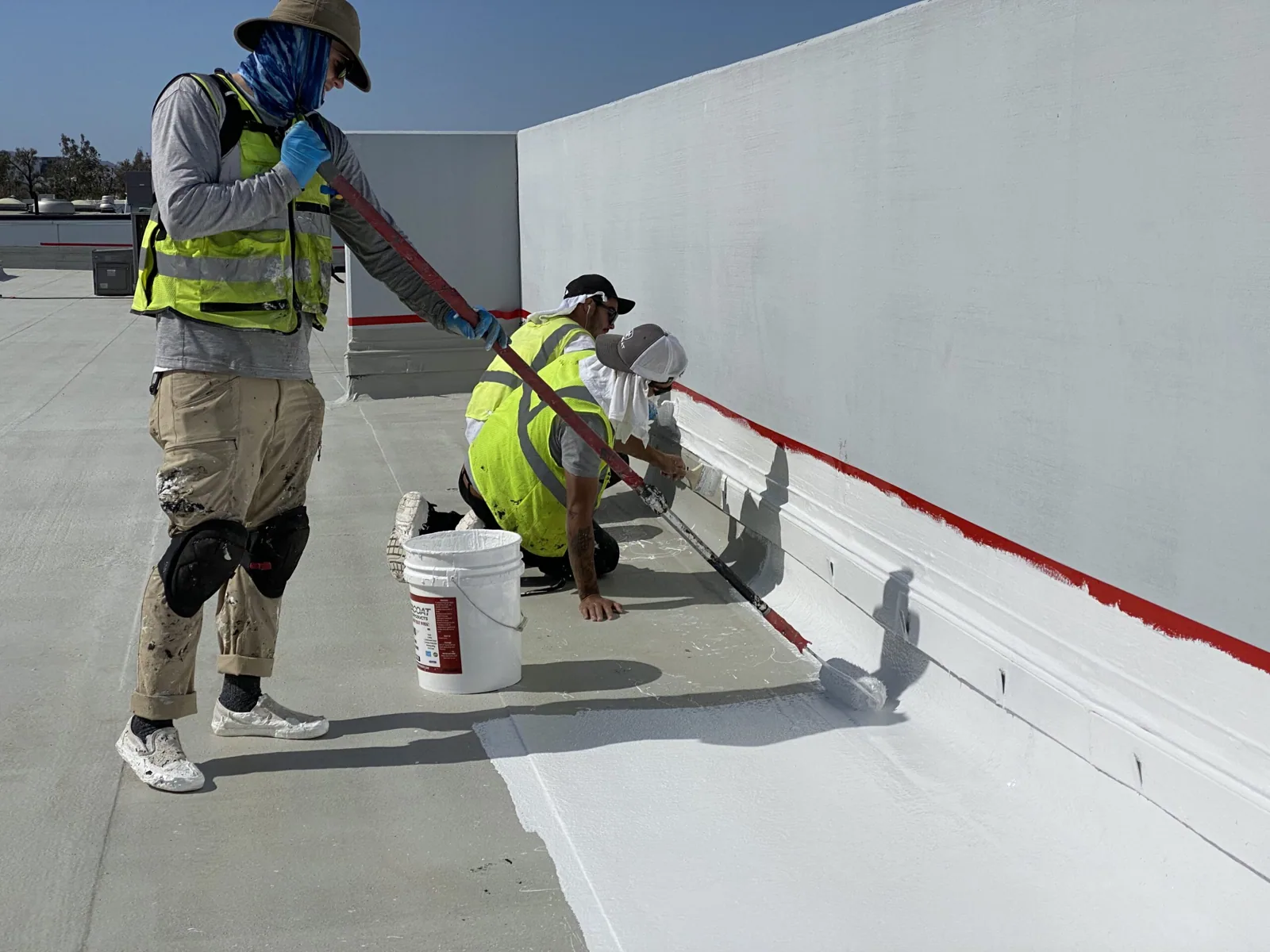
Pricing for repeat work is stable inside a program. Because the same details recur, such as pipe boots, curb flashing and drain repairs, we set standard scopes for them and quote them quickly. That saves approval time during a storm, when waiting a day for a bid is not an option.
Watch Warranty Dates and Capital Needs Across the Whole List
With many roofs, the calendar of warranty expirations and replacement years becomes a map of the next several budgets. We track both in the program record and flag roofs that are approaching the end of a warranty term, which is the best time for a survey. Our warranty management work and the capital planning process draw from the same data.
Spreading replacements evenly across years avoids a spike in a single budget cycle. If several roofs reach the end of life together, we propose a phased plan and explain the trade between cost and risk. Property teams and retail and restaurant chains use that view to hold spending steady.
Reserve planning improves with scale. When the program shows five roofs entering their last years within a window, the owner can start setting money aside, ask for a coating on those that qualify and replace the worst first. The plan changes yearly as the condition data comes in.
Keep One Contact and One Callback Log
The program has a named lead on our side and a named lead on yours. Calls for any site go through the same path, and every call, visit and repair lands in a single callback log. If a site reports a leak, the log shows its last three events at a glance. Escalation is clear: who calls whom when snow builds on a roof, when a gust lifts an edge, or when a tenant reports a stain.
Owners can add a site at any time. A new acquisition gets a baseline survey, joins the calendar and enters the triage list. When a site is sold, its record is exported to the buyer or archived, so the history leaves with the property.
Commercial Roofing Questions
How many buildings are needed before a program makes sense?
A handful of buildings is enough to benefit from a shared schedule and record. The value grows with the count, because the inventory, triage list and reports are built once and used for each site. We scale the program to your list.
Can sites outside Yakima be included in the same program?
Sites along the valley, in towns such as Grandview, Sunnyside and Toppenish, are within the usual service area, and we confirm distances when we scope the program. The ranking and the schedule account for drive time, since a crew needs longer to reach a distant site.
What happens when two sites have storm damage at once?
Sites that protect people, product or critical operations go first, as the triage list directs, and the rest follow by exposure. We dry in the highest-priority openings and schedule permanent repairs by the plan. Every site gets a written record of what was done.
Do you work with our existing facilities staff?
Yes. The program assigns tasks to each side: your staff handles first checks, drain clearing where safe and calls to us, and we handle roof access, repair and reporting. The split is written in the program so nobody is surprised.
How is the program priced?
Site count, roof area and visit frequency set the price, so we quote after the first inventory. Projects found along the way are priced separately, with options. The program fee covers the structure, reporting and response.