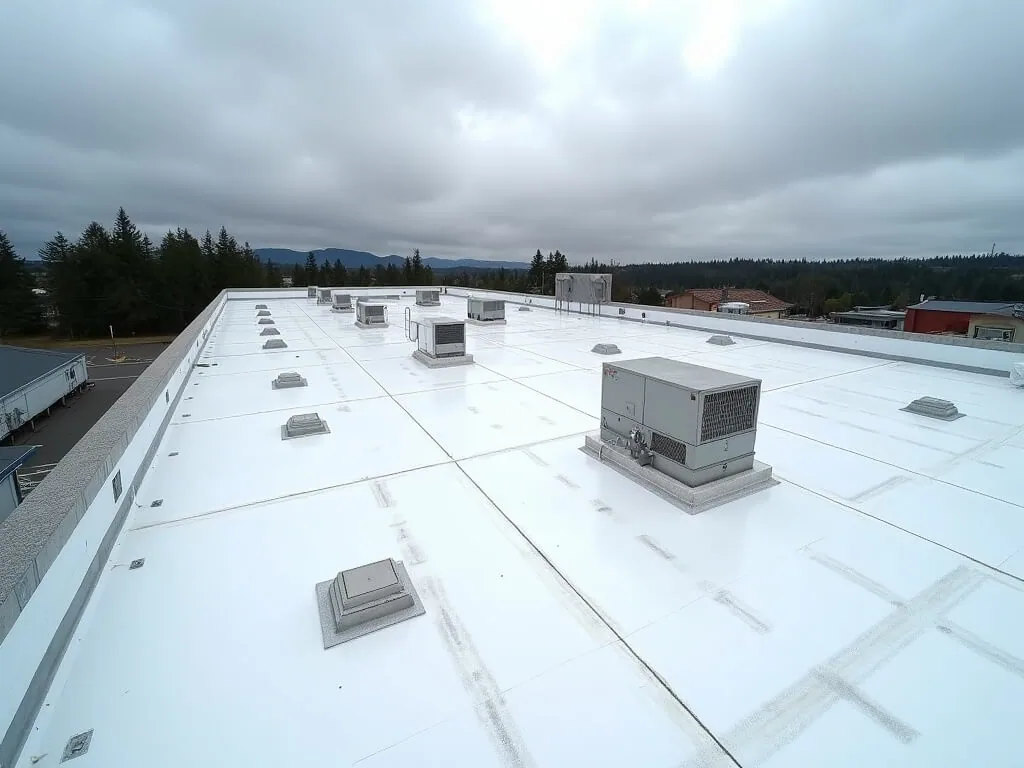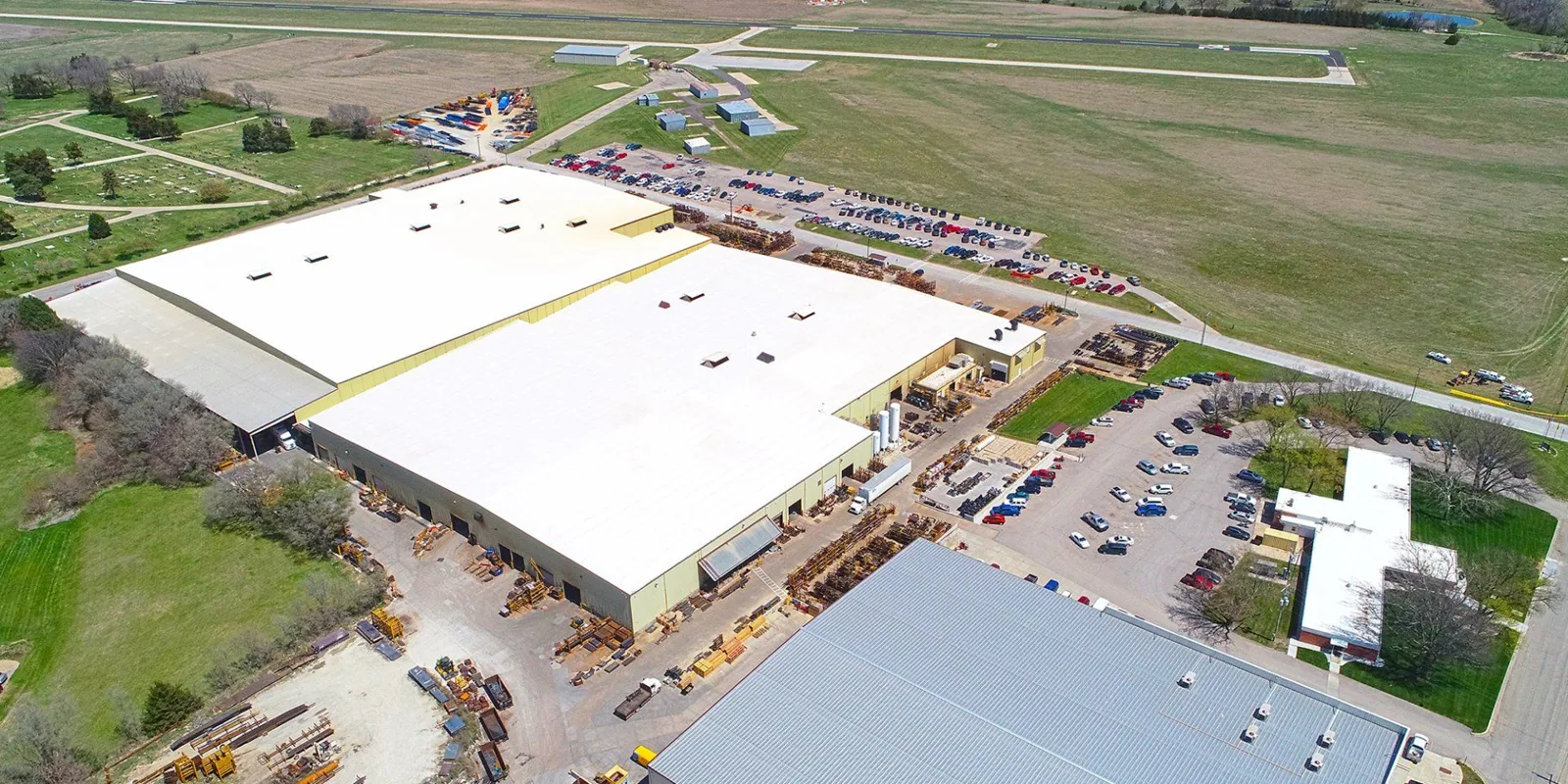
A probe slides a quarter inch into a seam on a February morning, and the person holding it reports the result by radio before dispatch has finished its first question: which roof, and what is under it? Sika Sarnafil is a roofing manufacturer best known for thermoplastic membranes, especially PVC sheets welded with hot air, along with liquid-applied flashing and waterproofing resins. In Yakima, WA, where a roof goes from minus 25 F on record to 113 F on June 29, 2021, a welded membrane lives or dies on its seams.
We install, repair and maintain thermoplastic roofs and their liquid-applied details. With the roof label or paperwork, the roof age, the permit's design snow load and the places where leaks have appeared in hand, we will probe the seams, check the flashings and tell you where the roof stands.
Test the Weld, Not the Surface
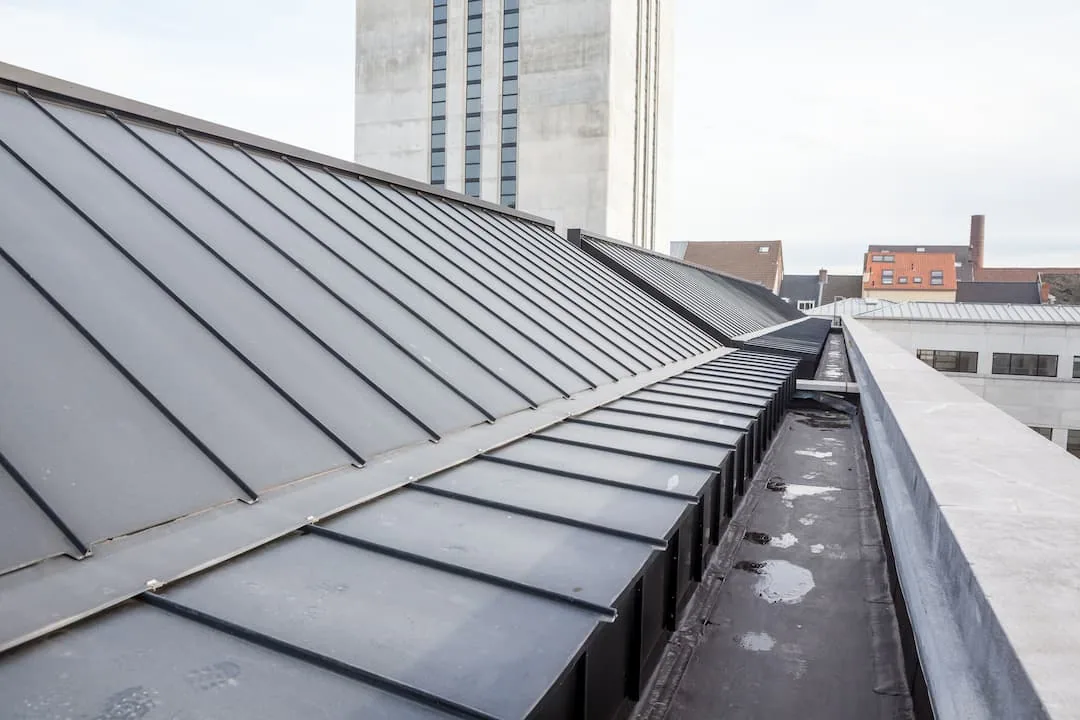
A welded thermoplastic roof can look perfect from the ground and still hold a failing seam. The sheet is fused at the laps by hot-air welders, and a weld that was cold, dirty or rushed holds for a few seasons and then lets go. We probe the full length of each lap with a blunt tool, mark the gaps, and cut test strips to see whether the two layers have truly fused.
On a new roof, the same test happens at the end of each day. On an older roof, the probe finds the weak runs before they open. A repair means cleaning the surface, setting a patch with rounded corners and welding it, followed by a probe to confirm. Rounded corners matter because a square corner concentrates stress and lifts first. Weld temperature and speed are set against the day's air temperature and the sheet's surface condition, and a test weld is pulled apart before the crew starts a run. A weld that tears the sheet instead of peeling at the seam is the result we want. Older sheets may refuse a weld because the surface has weathered, and a PVC roof that does not accept a test weld is a candidate for coating or recover.
Rebuild Flashings With the Right Resin or Sheet
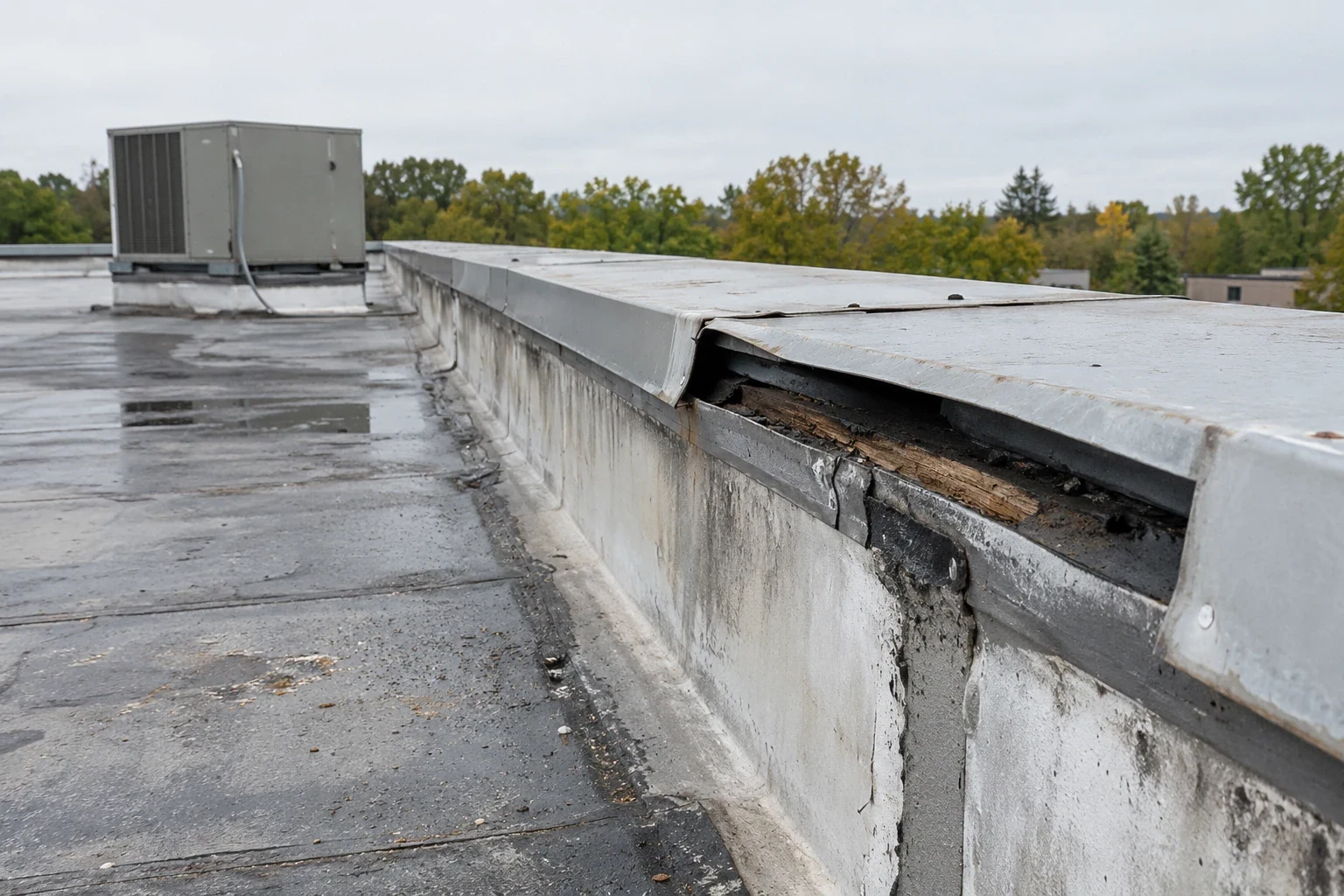
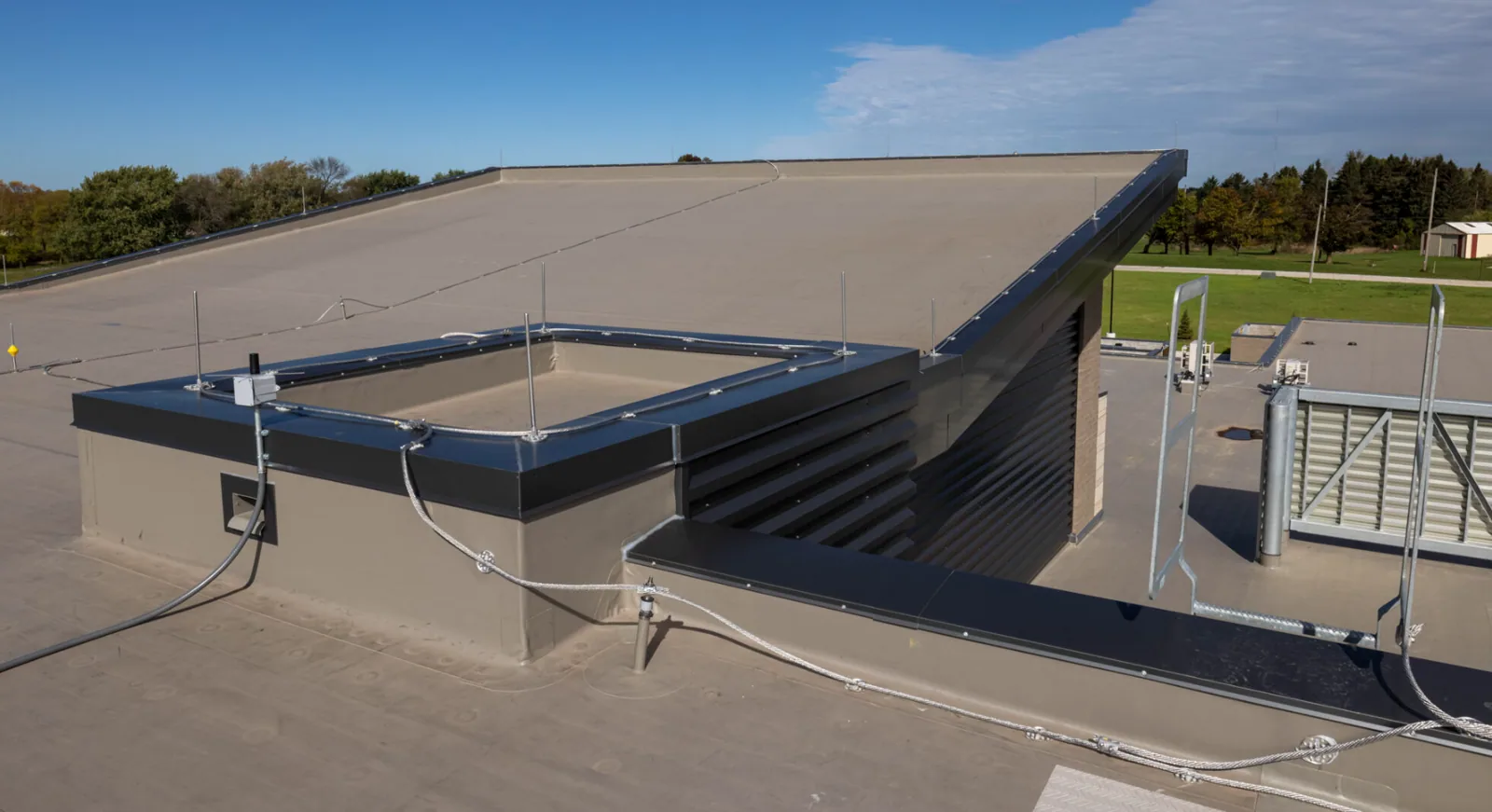
Flashings are where thermoplastic roofs fail first. Pipes, curbs, drains and parapet walls all need a flashing that can move with the roof. Preformed boots and welded corners work for standard shapes. Odd shapes call for liquid-applied flashing, a resin that cures into a flexible, joint-free detail around pipes, brackets and cluttered corners.
We use each where it fits. A welded flashing is stronger on a plain curb. A liquid-applied resin handles a cluster of conduits that no preformed boot could cover. The surface is cleaned, primed and reinforced with fabric, and the thickness is checked as it goes on. Resin needs a dry day and a surface above the dew point, so we check both before mixing. Too thin a film pinholes, and too thick a film cures unevenly, which is why the crew measures the coverage per detail and writes it down for the callback log. Our flashing failure repairs start by relieving the strain that pulled the old detail apart.
Drain the Low Spots Before They Test the Sheet
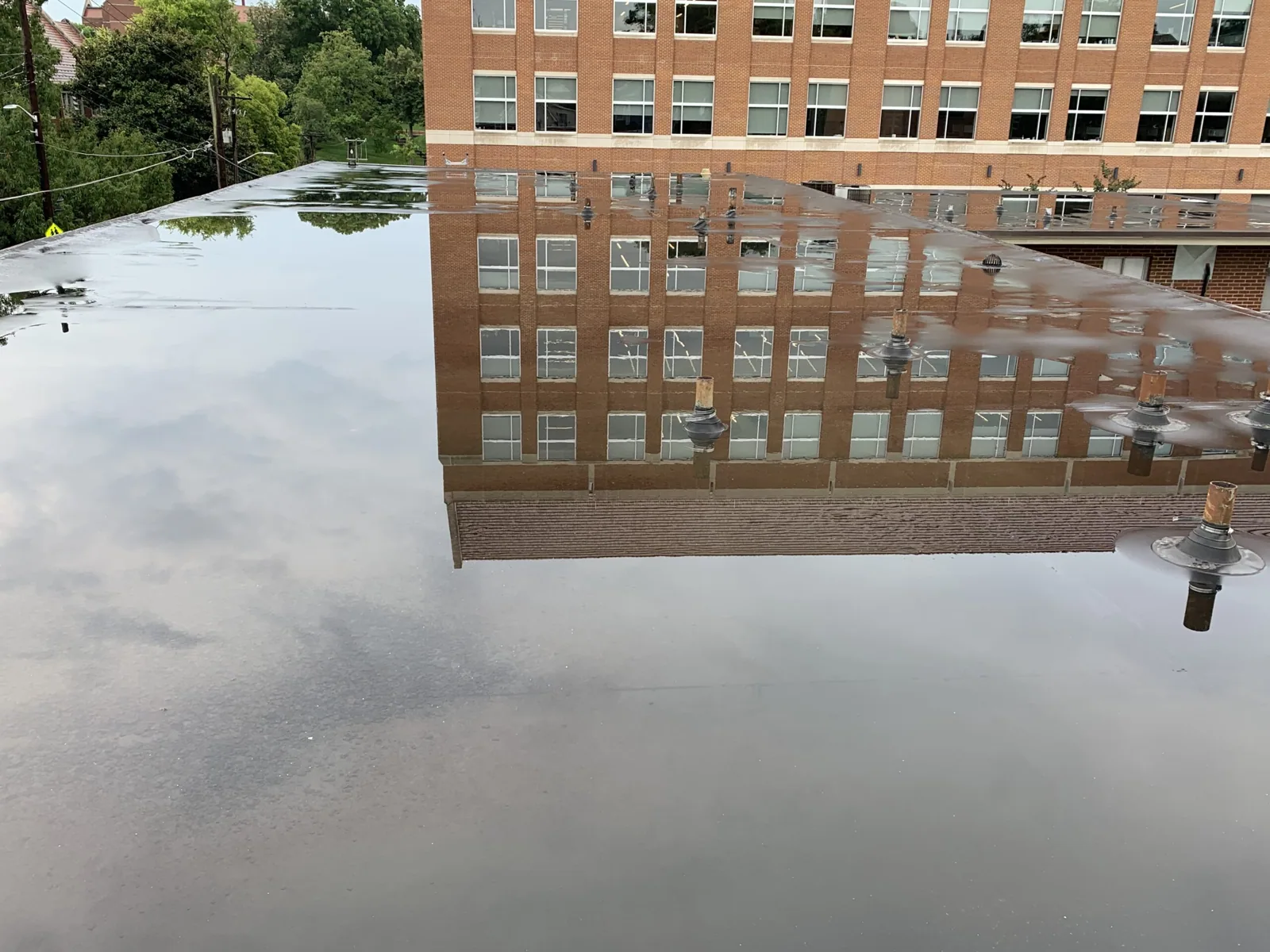
Thermoplastic sheets tolerate standing water better than many roofs, which is part of their appeal, but a puddle still adds weight and collects dirt. In Yakima, snowmelt lingers in low bays, and design snow loads change from parcel to parcel. A bay that has deflected under a past load holds water, and the water adds more load.
We measure the slope with a level, mark the ponds and recommend a fix: tapered insulation, a new drain or a sump. If a deck is sagging, the structure is addressed first. For roofs where water lingers, our ponding water repair plan covers both the deck and the membrane, so the fix does not hide the cause.
Keep Winter Work Safe and the Sheet Intact
Frosted thermoplastic is slippery, and a steel shovel cuts it. Frost makes the sheet slick, so the crew wears traction aids and clears only with plastic tools, leaving a cushion of snow.
Uplift is strongest at the perimeter, which the county's design wind speed of 110 reflects. After a gale, we check the perimeter first, since uplift is highest there. Edge metal, termination bars and perimeter welds get the first look, followed by the drains and any rooftop equipment that could have shifted in the wind. A loose panel on a unit can rip a flashing, and a termination bar that has pulled away from a wall gives water a way behind the sheet. We photograph what we find and send the set the same day. A property in Toppenish and one near Union Gap share the same checks, though the permit load for each is set by its own parcel.
Compare Thermoplastic Systems Across Makers
Several manufacturers make thermoplastic roofing, and the differences lie in sheet thickness, reinforcement, weld width and the accessories that go with them. We compare by what the building needs: chemical resistance for a food plant, a heavy-duty surface for a roof with traffic, a reflective surface for a retail box. Makers such as Duro-Last, which prefabricates sheets, and Versico offer related choices.
The comparison is written down, with the exposure list, the weight check against the snow load and the maintenance plan for each option. Hospitals, schools and food plants can favor welded sheets because the install is quiet and low in odor, and a hospital roof adds infection-control steps on top.
Take a photograph of the seam probe result at several points along a run, with a coin or tape measure for scale. A dated set of those pictures lets a later visit show whether a weld gap is stable or still growing.
Commercial Roofing Questions
How do I know whether the seams on my thermoplastic roof are still sound?
They need a physical test. We probe every lap with a blunt tool, cut sample strips on retrofit jobs and look for dull, gapped or lifted edges. A seam can look continuous and still be unfused beneath. Photograph any ripples near laps and send them to us, and we will plan a probe walk.
What is liquid-applied flashing and when is it better than a welded boot?
It is a resin that cures into a flexible waterproof layer. It suits irregular shapes, such as clusters of conduits, brackets and corners that no preformed part fits. A welded boot is stronger on simple pipes and curbs. We use whichever suits the detail, and we record the material at each location.
Can an old thermoplastic roof be coated instead of replaced?
Often yes, if the sheet is dry, adhered and free of widespread splits. A coating adds a reflective surface and seals small defects. It cannot fix saturated insulation or open seams. We run a moisture scan and test adhesion, then recommend a coating only for the sections that qualify.
Why does a thermoplastic sheet sometimes shrink at the edges?
Plasticizer loss over time makes the sheet stiffer and smaller. The shrinkage pulls on flashings and terminations, and a taut flashing splits in the cold. We release the tension, add relief material at corners and re-secure terminations. Severe shrinkage is a sign the sheet is nearing the end of its life.
What should I record after each roof repair?
The date, the location, the cause, the material and the person who did it. Add photos and a roof sketch. Over a few years, the pattern shows where the roof is failing and helps you decide when to repair and when to replace. We provide the record after each visit.