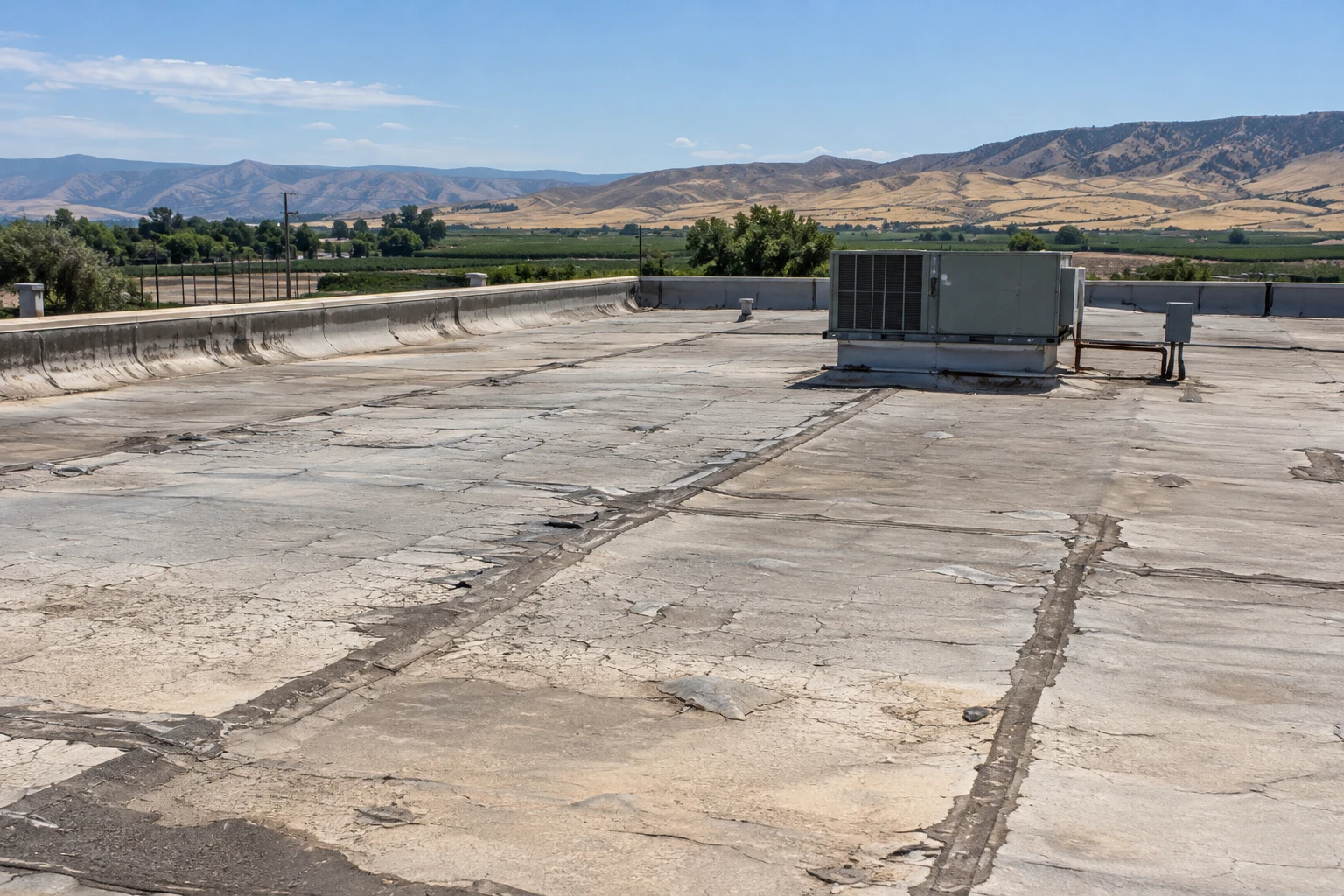
The record in Yakima, WA is 113 F, set on June 29, 2021, and a facility director in Ahtanum who calls on a day anywhere near that number is rarely reporting a leak. The report is a roof that feels soft underfoot, a coated surface that has gone chalky, or a flashing that sags away from a vent. Dispatch asks where the roof is softest and which rooms below it run warmest. Ahtanum is a census-designated place covering 9.7 square miles with 4,046 residents in 2020, set at about 1,227 feet elevation, and the Ahtanum Ridge nearby divides the Upper Valley around Yakima from the Lower Valley. Roofs here live through the same heat, cold and wind as the rest of the valley, so the buildings need the same careful checks.
Check the Soft Spots After a Hot Week
Membrane surfaces run hotter than the air, and Yakima's hot season brings roughly forty afternoons past 90 F and a handful past 100 F. A roof that feels spongy underfoot may have waterlogged insulation below, a failed adhesive bond or a membrane that has softened and stretched. These are different problems, and they have different repairs.
We probe soft areas with a moisture meter and, where it helps, an infrared scan at dusk, when saturated insulation holds its heat longer than the dry roof around it. If the problem is a lifted membrane, we re-adhere or add mechanical attachment. If the problem is saturated insulation, that section is cut out and replaced. The goal is to find the true cause before spending money on a surface patch. A sun-baked roof gets the checks of heat and UV damage repair, and you should keep foot traffic on the soft area to a minimum until we have been up there.
Inspect Metal Panels Where Movement Concentrates
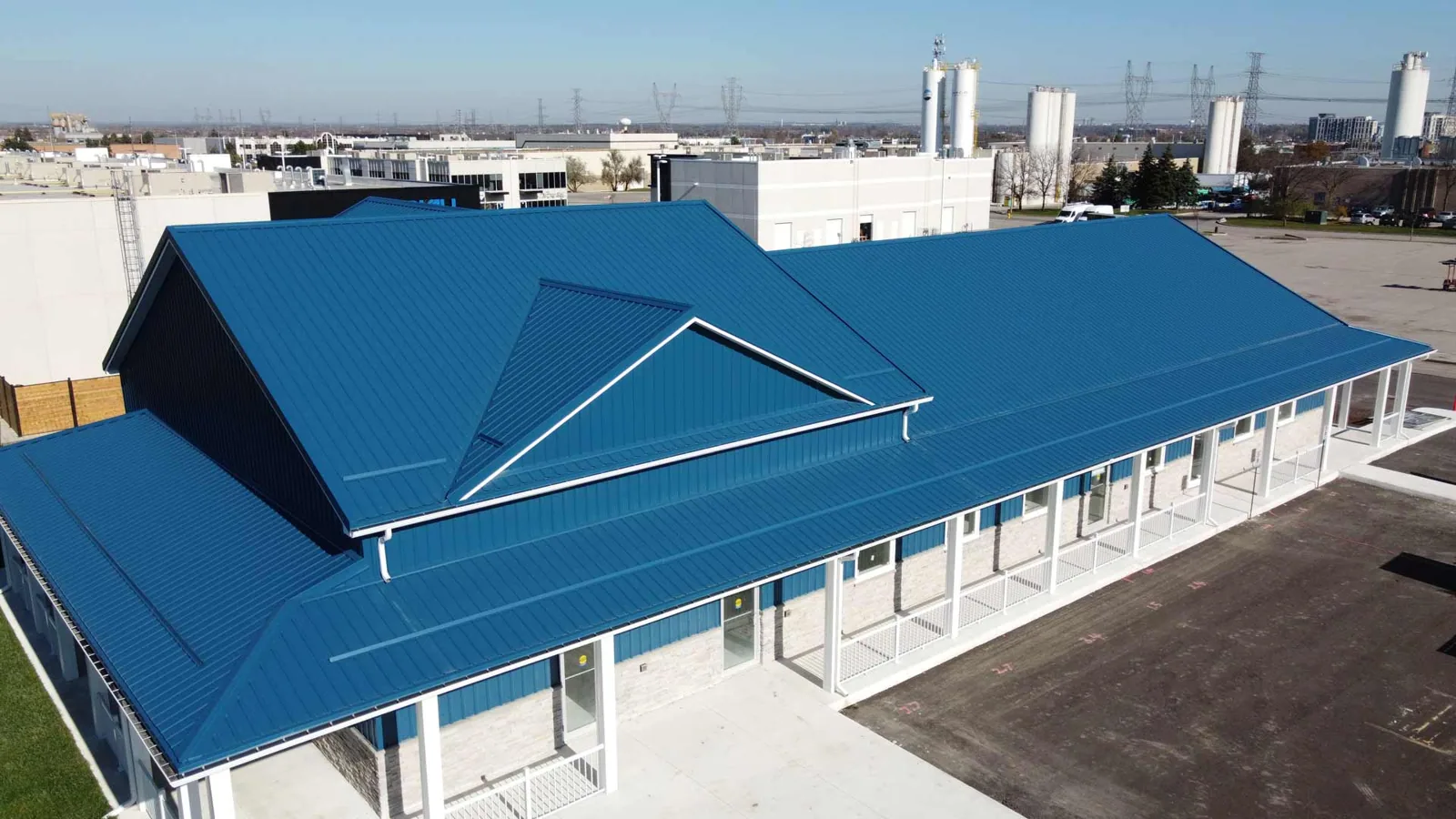
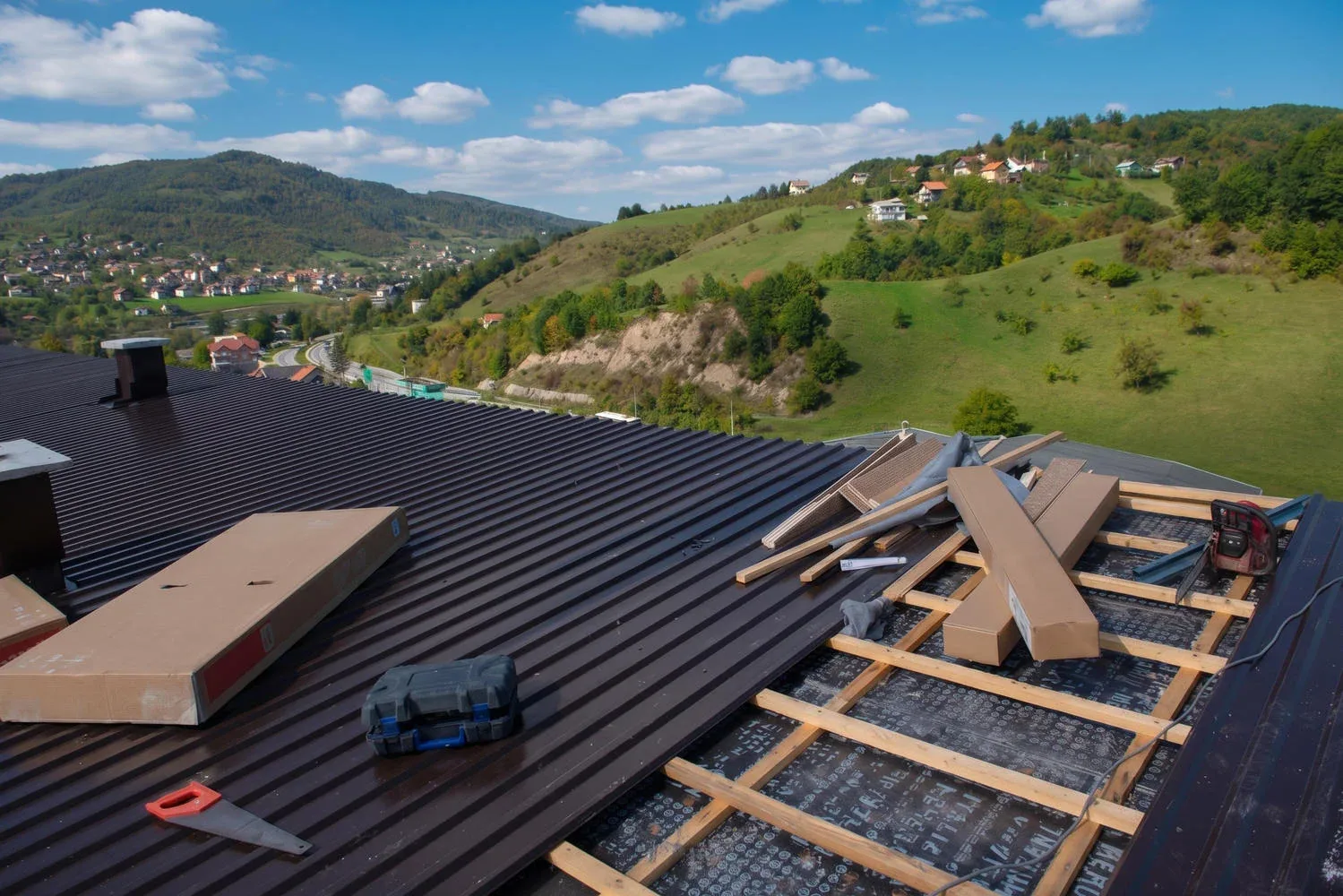
A metal roof expands and contracts with the daily swing more than most membranes do, and the movement concentrates at the clips, end laps, ridge caps and penetrations. Over time, fasteners back out, sealant dries and panel edges chatter in the wind. The roof still looks fine from the ground, which is why a close inspection pays.
On a first visit to a metal-roofed building we check the fasteners along each panel, look for rust streaks at laps, test sealant at penetrations and inspect the gutters and downspouts for sag. A standing seam metal roof needs a different review from an exposed-fastener panel roof, because the first hides its fasteners under the seam and relies on clip movement, and the second needs regular fastener and sealant attention. Where a metal roof has outlived its coating, a retrofit or a new coating system can restore it without full tear-off.
Tie Down the Edges Before November Wind Arrives
Yakima's record gust of 69 mph came in May 1985, the county designs to a wind speed of 110, and valley wind has not eased since. None of those numbers tells you how your own roof's edge will behave, but the perimeter metal is where gusts start working.
In October we like to walk the perimeter, look at coping joints, press on edge metal and check that termination bars are tight. If cleats are loose or fasteners have backed out, we reset them before the first big gale. After any windstorm, keep staff away from the edge and report anything that has shifted. A gust-lifted edge settles back into place and looks fine, but it has already loosened the attachment, and a repair now is a few hours of work where a later repair is a tear-off. Our wind damage repair work follows this order.
Request the Design Load Before the Snow Arrives
Snow load follows the parcel, and engineering is required above 70 psf. Because the number is set parcel by parcel, only the permit or the original drawings gives the load for your building, and it determines how we plan clearing, drift protection and roof additions.
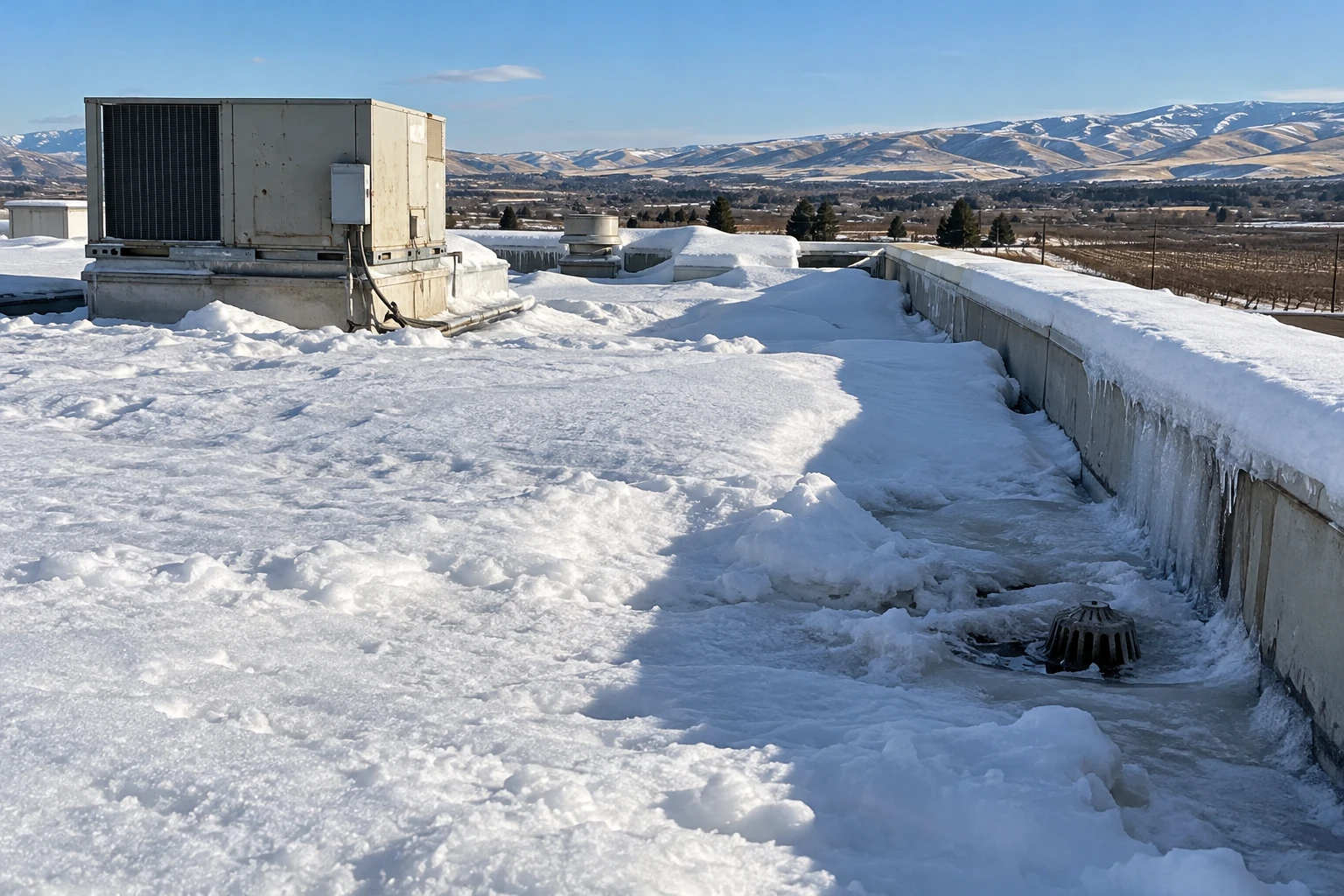
Yakima's snow, about 21.6 inches a year and mostly December and January, brings main risks drifts at taller walls and mechanical equipment, clogged drains that trap meltwater, and added weight from rooftop equipment installed after the original design. We check the roof framing for deflection where we can, watch for new interior cracks and clear snow with plastic tools, leaving a protective layer, so steel blades stay off the roof. A snow and ice damage inspection after the thaw checks the membrane before spring rain does.
Plan Repairs and Replacement Across the Seasons
A building owner in Ahtanum, or a manager responsible for several buildings in the Upper Valley, benefits from a rolling plan. The October walk catches edge and flashing issues, the January call handles snow, and summer is the season for membranes, coatings and replacements. Booking the work in the right season keeps cost down because crews spend less time waiting out weather.
For owners who work with neighbors in Gleed, Summitview or Union Gap, shared scheduling can bring a crew to several buildings in one trip. An ongoing preventive maintenance plan keeps a log of each visit, the repairs made and the condition of each roof area. That log is the best tool when an insurer asks about the state of the roof before a storm, and it gives you a defensible history when you budget for the next replacement.
A dated photograph of the roof taken from the ground each season, from the same corner, costs nothing and shows slow changes such as sagging gutters, shifted trim and moss or dust buildup. We use those pictures to focus the first walk.
Commercial Roofing Questions
Our metal roof makes loud popping sounds on hot afternoons. Is that damage?
Usually it is panels sliding on their clips as they expand, which is normal in moderation. It becomes a concern when the sound comes with rust streaks, loose fasteners or sealant that has cracked. We check clip condition, end laps and fastener backout, and we look for any panel that has shifted out of line. If the noise is new, tell us when it started and which panels make it, since that narrows where we look first.
Our Ahtanum roof gets a visit once a year. Is that enough?
Twice a year suits this valley better, once in early fall before the wind and snow, and once in spring after the thaw. Add a visit after any significant storm. Each visit should produce photographs and a short list of items ranked by urgency. A roof in good shape needs little more than that, and the log becomes valuable documentation if you ever need to support an insurance claim.
Can we add rooftop equipment without hurting the roof?
Yes, if it is planned. New curbs and supports need the right flashing, the structure must carry the added weight with the snow load on top, and the membrane under the equipment needs walk protection. We coordinate with your mechanical contractor so the curb is flashed properly before the unit is set. Send the unit weight and location early, and we will confirm the roof can take it.
What documentation helps if we file a claim after a storm?
Dated photographs of the damage, a written description of when the storm hit, and any maintenance records from before the event. We photograph and measure the damage, document the roof's condition, and prepare a report you can give your insurer. Keep receipts for emergency measures, such as tarps, since they are often reimbursable. Avoid making permanent repairs before the insurer has seen the damage unless water is entering the building.