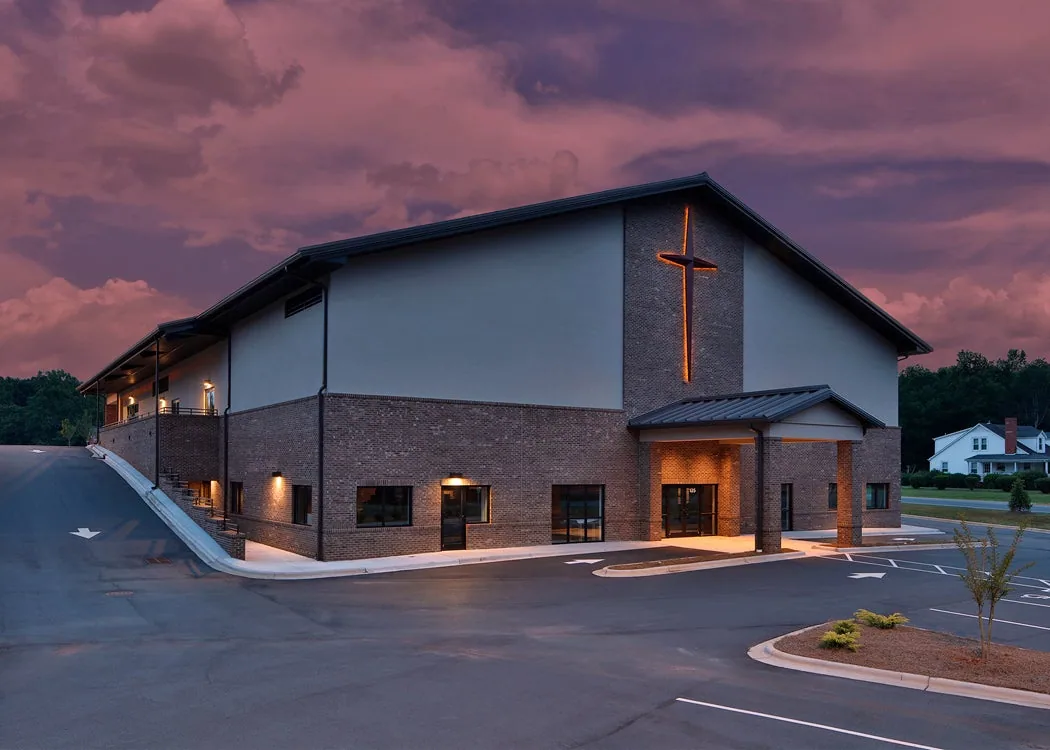
A deacon opens the building at seven on a January Sunday, sees a damp ring on the sanctuary ceiling and calls dispatch before the first family arrives. The first question we ask is whether the stain is new or has grown since last week, and whether the room can be used safely at ten. A sanctuary roof in this valley carries drifts against its tall walls for weeks after a December storm. Move chairs away from the stain, keep volunteers off the roof and leave it to us.
Send the building address, the sanctuary and hall layout and the dates that cannot move. We sequence the first visit from that list.
Read the Tall Roof Before You Read the Stain
A sanctuary often carries a steep ridge, a steeple or tower and a wide span with few interior supports. Snow slides from the steep slopes onto lower roofs and entry porches, and it drifts against the steeple base and the transept walls. Design snow loads in the county are set by parcel, between 20 psf and well over 200 psf, and an engineer is required above 70 psf. Cold roofs hold snow and then release it in a rush on the first warm day. We look at ridge lines, valleys and the junction where a hall roof meets a sanctuary wall, since those spots collect the water that follows.
Gutters and downspouts decide where meltwater goes. A gutter packed with needles and ice overflows over an entry door, and the overflow freezes on the steps. We clear them by hand, check the pitch and fasten loose runs. A frozen downspout that discharges onto a walk is a slip hazard before it is a roof problem, so it goes on the same visit.
Keep Volunteers Off the Roof
Congregations are quick to help one another, and a snow day tempts a work party. Please do not send it up. A steep, icy slope is a fall risk for anyone, and steel tools cut membrane and strip granules from shingles and coated metal.
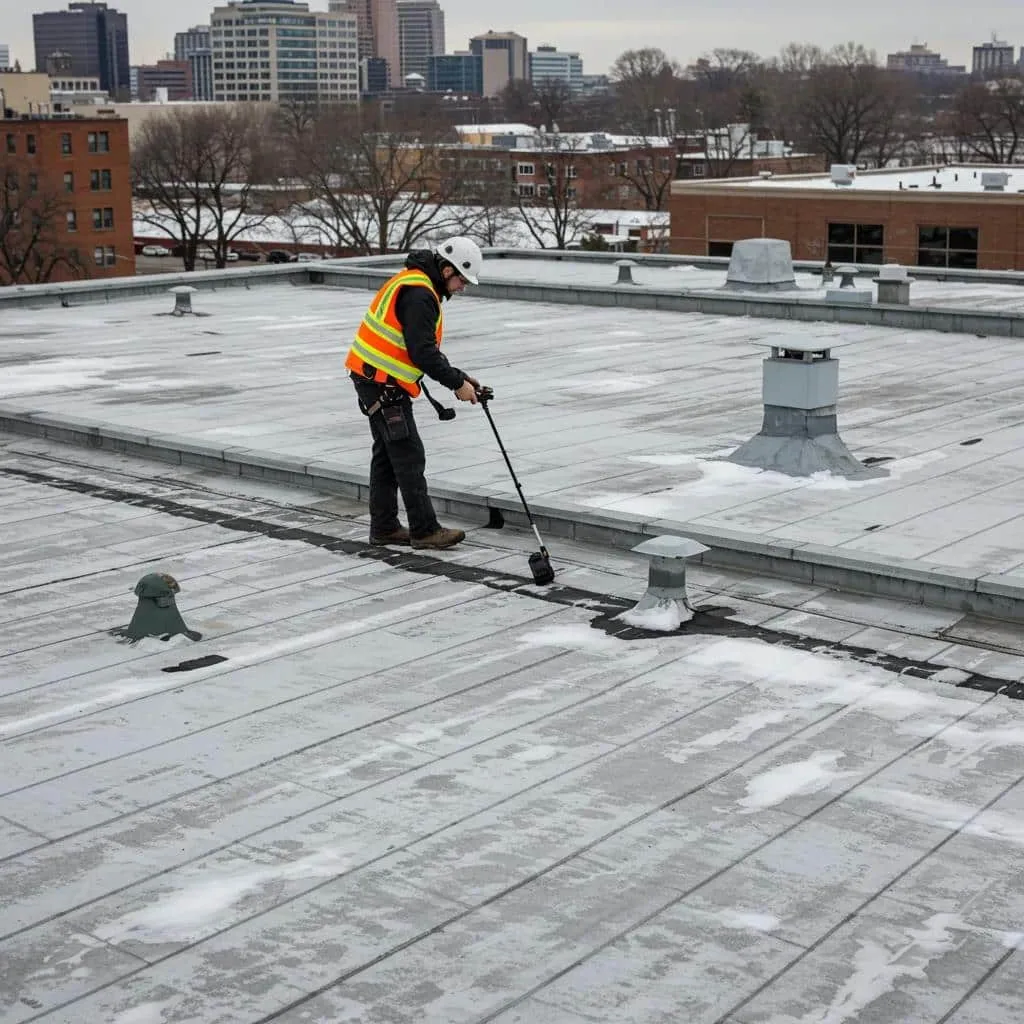
If a hall roof carries a heavy pile, call us. We clear it with plastic tools, leave a protective layer and watch the ceiling for deflection. Stuck doors, new cracks in the plaster and a creaking sound under load mean the room below should be emptied until the crew has looked.
Volunteers can help in safe ways. They can keep a log of stains with dates and photos, move seating and records away from wet areas, clear walkways below the roof and hold the ladder-free perimeter. That log is useful to us, because a stain that grows after each storm points to a specific detail. We read it on the first visit.
Inspect Steeples, Skylights and Clerestories
A church roof has details that ordinary commercial buildings do not. Steeple bases, belfry louvers and chimney stacks all penetrate the roof. Clerestory windows and skylights add glazing joints. Stained glass and old plaster fear water more than most finishes do.
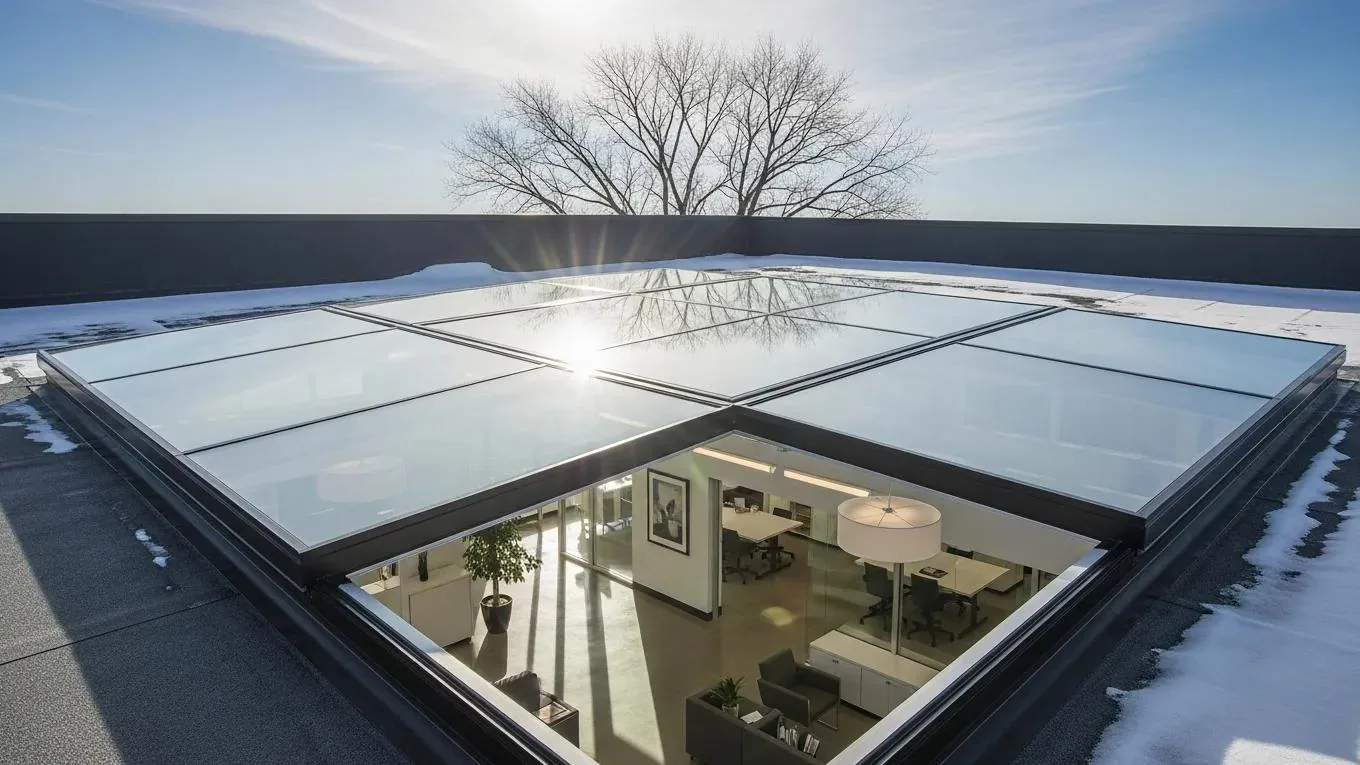
We check the flashing at each of those points on the first visit and test glazing joints with water. A skylight and penetration flashing repair often cures a stain that looked like a field leak. Where a steeple base shows rust or open seams, we describe the repair in plain terms and price it separately so the council can plan it.
Bells and louvers need a look too. A belfry louver admits wind-driven snow, and the sill below it is rarely flashed like a roof. We check the sill, the fasteners and the first course of roofing under it. If the tower floor shows water marks, the cure is usually flashing and not another coat of paint.
Plan Repairs Around the Valley's Heat
Summer afternoons reach 90 F about 40 times and pass 100 F a handful of times, and 113 F is the record. Dark roofs soak that heat, and large daily swings work every flashing and metal joint. Summer is the best season for roof work in one respect: the valley is dry, with only about 8 inches of precipitation a year.
We schedule loud work for weekdays, avoid service hours and wedding or funeral dates, and start early so the building cools before evening events. The bid lists the blackout dates we received, and the council can adjust the plan before it signs.
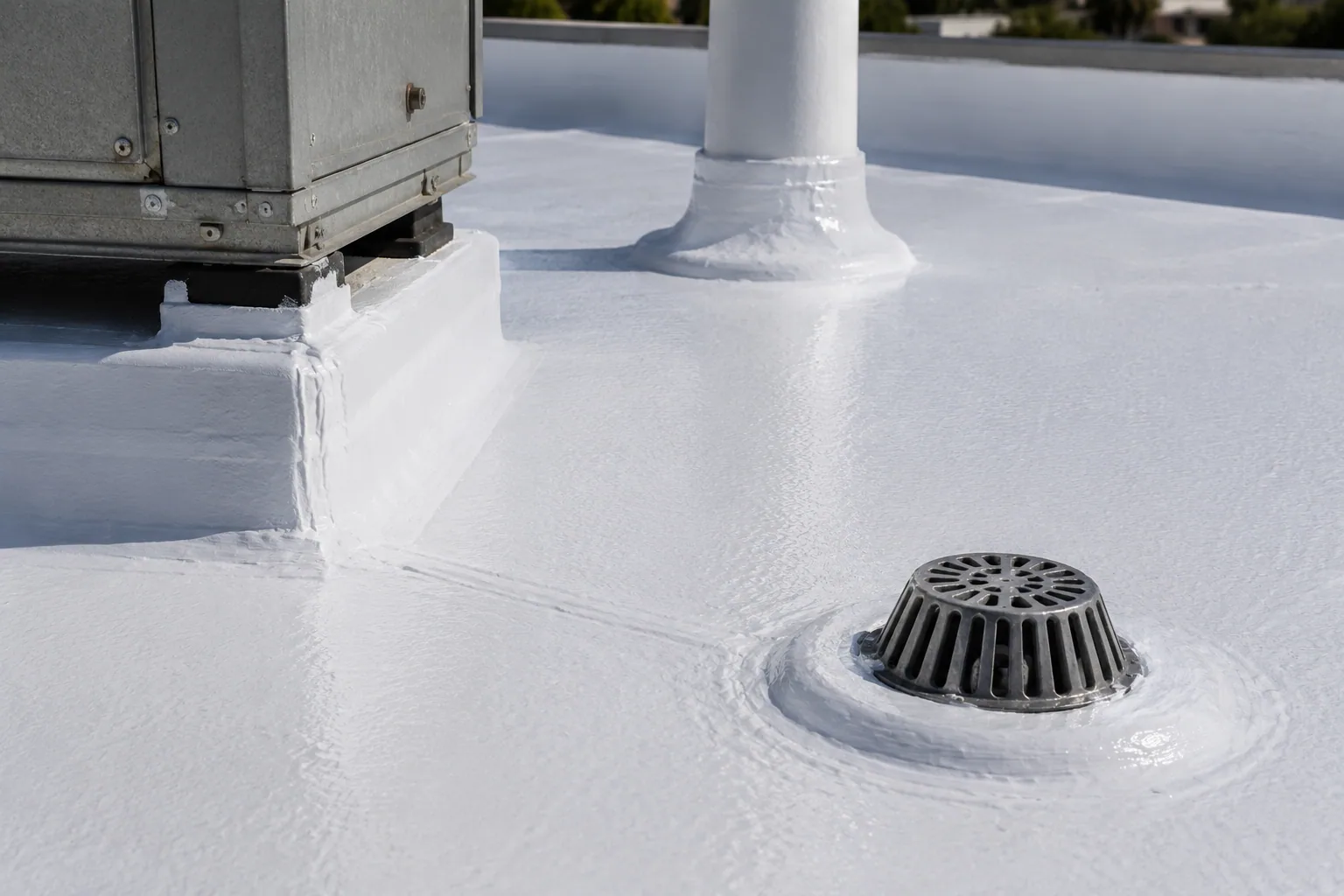
Fellowship halls and kitchens add rooftop exhaust and air handling, and those curbs age faster than the sanctuary roof. We check them in summer when they run longest and note any that need new flashing before the first freeze.
Spend the Budget Where It Counts
Many congregations raise roof money in stages, and the roof plan can follow the stages. A commercial roof repair at a failed detail can hold for years, a recover may suit a flat hall roof with dry insulation, and a replacement fits a roof with spread moisture. New insulation on a replaced roof follows the energy code Washington adopted on March 15, 2024. A roof condition report with photos helps a council present the case to the congregation or a lender.
Insurance and grant paperwork may ask for dated photos and moisture readings. We build both from the first visit, so a congregation applying for a preservation grant or filing a claim has the evidence in hand.
Memorial gifts and capital campaigns can fund roof work. A short written scope with photos, cost drivers and a phased schedule helps a council explain the project to donors and keeps the gift tied to a clear result.
Match the Plan to the Setting
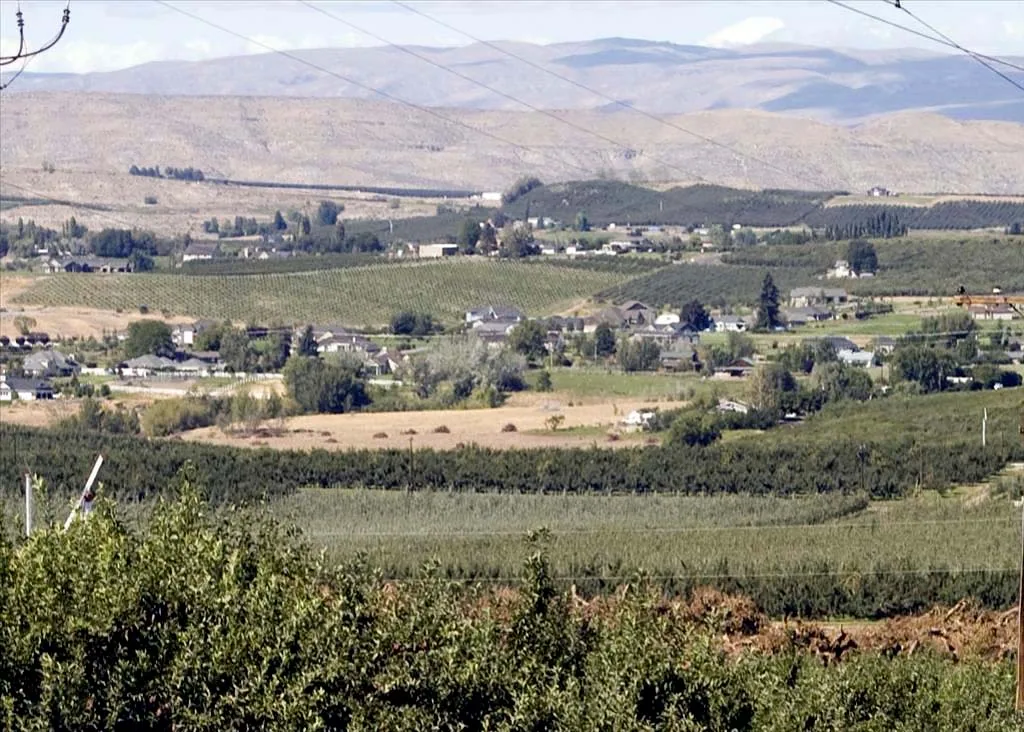
A church in downtown Yakima and one in Selah each need their own staging plan. A school next door runs a different calendar, and a senior living building shares many care rules. The first visit records what the building actually has, and the plan follows.
A spring check each year, with seams probed, drains flushed and photos retaken, keeps the file current. A baseline from a clean year makes every later leak report easier to read.
If the building hosts a school, a food pantry or a weekday program, tell us. Weekday occupants change the hours when loud work is acceptable, and a congregation that knows the schedule in advance rarely objects to it.
Commercial Roofing Questions
A stain appeared before Sunday service. Is the sanctuary safe?
Usually the room is safe if the ceiling is dry, the stain is small and nothing sags. Move seating away from the area, keep people out from under any sagging plaster and photograph the stain. If a door sticks or a crack opens, clear the room and call.
Can volunteers clear snow from the hall roof?
Please do not. Steel shovels cut membrane, and a snow-covered roof is a fall risk. Call us and the clearing is done with plastic tools, a protective layer stays on and the ceiling is checked for deflection.
How do you protect stained glass and plaster?
We test glazing joints with water, fix the flashing first and protect interior finishes with drop cloths and plastic sheeting inside the room. Moisture readings show whether plaster has been wet.
Can the work be phased to match our fundraising?
Yes. We separate urgent repairs from scheduled work and price each. The council can fund the hall roof one year and the sanctuary the next, as long as the leaks are stopped first.
Which dates should we send you?
Services, weddings, funerals, holidays and any event that needs a quiet building. We write them into the bid as blackout dates and plan loud work around them.