A drip lands on a conference table two days after the first January thaw, and the facility director asks whether the skylight is the culprit. Dispatch asks a different question first: what is the skylight sitting on? A curb that is tall enough, sound enough and flashed correctly will outlast the glazing. A curb that is low, cracked or sealed with caulk alone will leak in the first freeze-thaw and again in the first hot week. In Yakima, WA the swing from minus 25 F records to 113 F extremes, along with 21.6 inches of snow a year, tests every opening in a roof. Penetrations are where the field of the membrane stops and the details begin.
Raise the Curb Above the Snow Line
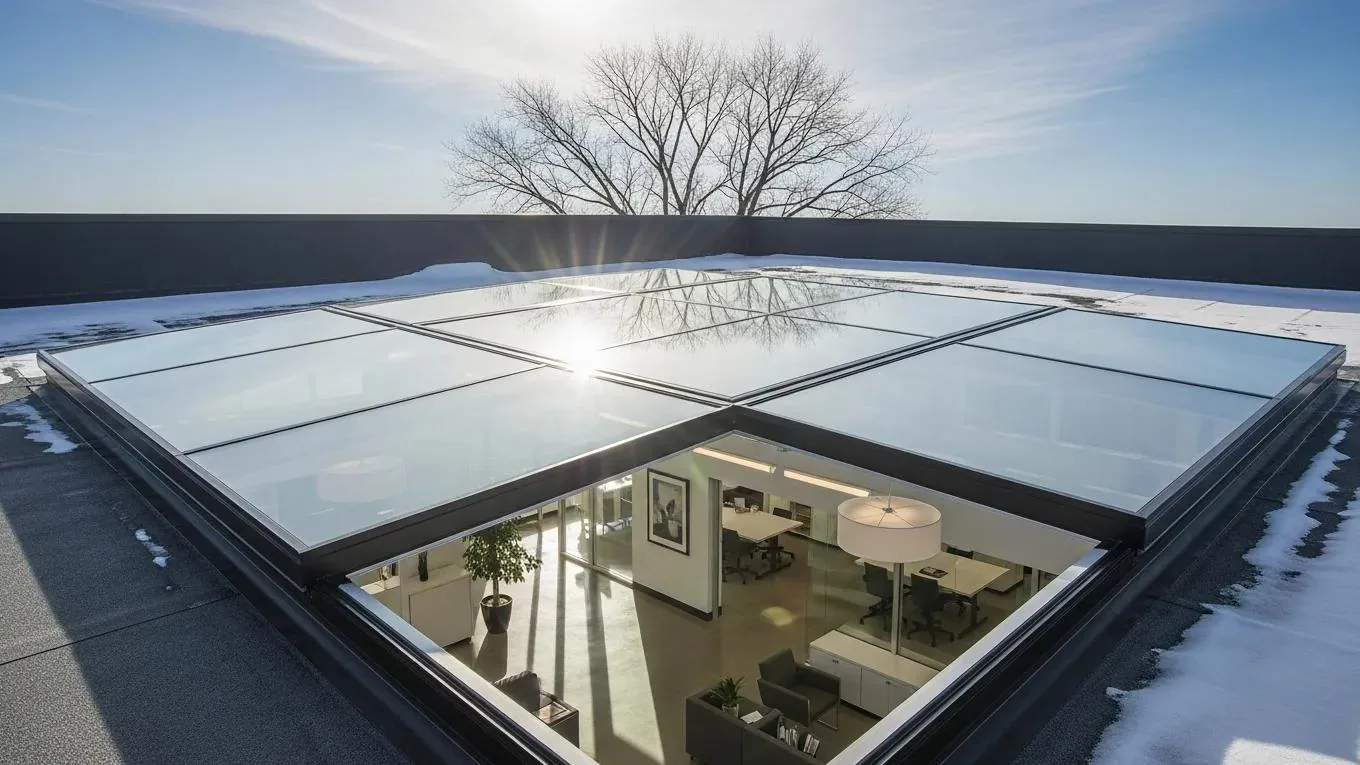
A skylight curb should stand high enough above the roof surface to keep melting snow and ponded water from reaching the joint. In a market where drift piles gather against anything that rises from a roof, a low curb is a standing invitation. We measure the curb height against the finished roof, including insulation thickness and any tapered build-up, and we recommend a taller curb when the clearance is marginal.
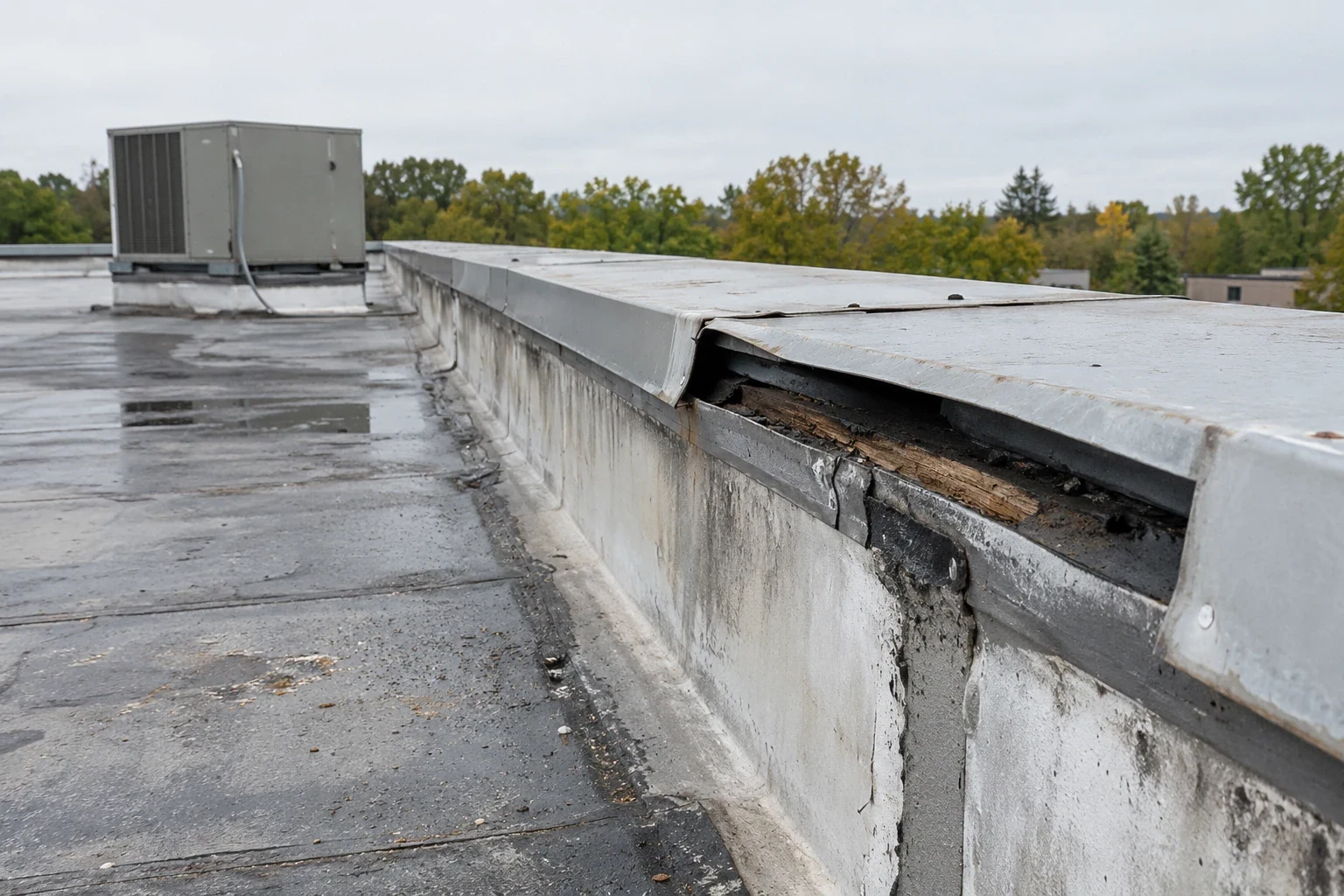
Curb construction matters too. A wood curb that has absorbed moisture softens and holds fasteners poorly. A metal or insulated prefabricated curb holds its shape and is easier to flash. If a curb needs replacement, the crew cuts the opening to the correct size, installs the new curb on a solid deck, and ties it into the roof system with a reinforced flashing.
Flash Each Curb Corner Like It Will Be Tested
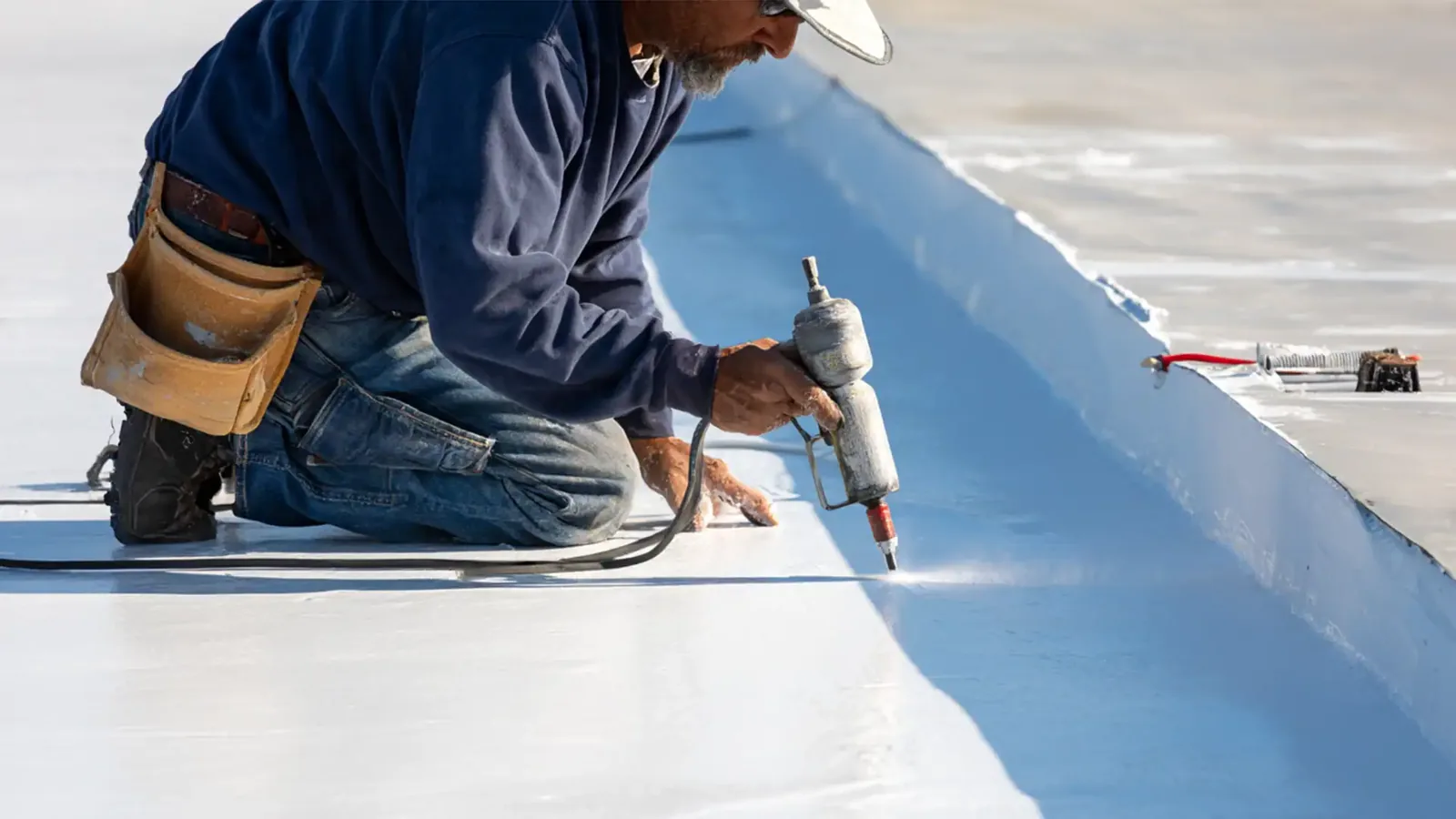
Corners are where flashing fails. The membrane must turn the corner without stretching or bridging, and the seam must be sealed on both sides. We form the flashing from the same material as the roof where we can, using prefabricated corners or fabric-reinforced liquid flashing for systems that call for it. The base flashing runs up the curb face and is terminated under counterflashing or a metal cap.
Fasteners at the top edge are sealed and protected from water. We press every seam by hand and probe the terminations, because a seam that looks closed may open under pressure. Our flashing failure repair work uses the same discipline on older roofs where the original flashing has cracked, pulled from the curb or opened at the corners.
Replace Glazing That Has Stopped Doing Its Job
Skylights age too. Acrylic domes yellow and crack, polycarbonate panels craze, and the gaskets that seal them to the frame harden over time. A cracked dome admits water that runs down the interior well and appears to be a roof leak. We inspect the glazing, the frame and the gasket before we touch the flashing, so we repair the right component.
When a unit is at the end of its life, replacement with a new unit on the existing curb is the usual path. Some owners choose to close the opening altogether and roof over it, which removes a long-term leak risk and reduces heat gain. For an office building in downtown Yakima or a showroom in Union Gap, the daylight benefit has to be weighed against the upkeep of every unit.
Seal Pipes, Vents and Conduit With Details That Move
Every pipe, vent stack, conduit and gas line that passes through the roof is a penetration. The classic failure is a rubber boot cracked by sun exposure. Yakima sees about 40 afternoons at or above 90 F and about 6 at or above 100 F, so UV and heat damage age boots faster than the roof field around them. We replace brittle boots with flashings made of materials rated for the weather, and we use clamp rings or welded collars where the system allows.
Conduit and small pipes get pitch pockets or prefabricated boots. We avoid caulk-only repairs because sealant cannot follow movement over many seasons. For clusters of small penetrations, a cluster flashing built from reinforced membrane keeps the number of seams low. The leak repair crew often finds a failed boot is the cause behind a ceiling stain that looked like a roof-wide problem.
Coordinate With the Trades Who Add Penetrations
New penetrations often arrive after the roof is installed, when a mechanical contractor adds a vent or an electrician runs a conduit. If those trades cut holes without a roofer, the flashing is often improvised. We set a simple rule: anyone who needs a new opening calls us first, and we flash it properly. That protects the roof and keeps records current.
For larger work, such as new units, we handle the curb and the flashing together with the equipment curbs and supports detail. A hospital or a processing plant of the kind found in Selah brings in many service contractors, and a standing arrangement with them prevents untracked holes.
Plan for Snow Drifts Around Every Opening
A skylight or a vent stack acts like a small parapet. Snow piles against the upwind side, and the weight and meltwater pool there. After the February 2019 storm that led to a South Third Avenue building being red-tagged, officials reminded owners that shoveling flat membrane roofs can cause leaks. Steel blades cut flashing as easily as membrane, so we clear around penetrations with plastic tools and leave a protective layer in place. Crews that clear the roof for your team should know where every curb and vent sits, so we mark them on the roof plan and give the plan to whoever handles winter response. Marked locations let a worker stay off a vent stack hidden under a drift, and they let our inspector find the same spots after the thaw.
Commercial Roofing Questions
Our skylight leaks only in winter. Does that point to the curb or the glass?
A winter-only leak usually means meltwater or ice is reaching a joint that stays dry the rest of the year, which points to a low curb, an open flashing seam or a failed gasket. We check the interior well for staining pattern, inspect the curb height, and test the seams. The glass itself is the least likely cause unless it is visibly cracked.
Can you add a new rooftop vent without voiding the roof warranty?
Penetrations made by an unauthorized party can raise questions with a manufacturer's warranty, which is why new openings should be flashed to the roof system's published details. We install new penetrations to those details and document them. Check your warranty terms for any notice requirement before the work.
How do you flash around a pipe that moves with the equipment?
We use a flexible boot or a pipe support that allows movement without stressing the seal, and we leave the flashing free to flex. A rigid collar on a moving pipe cracks within a season. Where vibration is constant, we recommend isolating the pipe from the roof with a support that carries its weight.
Is it cheaper to remove a skylight than to maintain it?
Removal eliminates a leak path and the cost of future glazing replacement, but it also removes daylight and may affect lighting costs. We price both options so you can compare the capital cost and the annual maintenance. Closed-in openings are roofed to match the surrounding system and insulated to the same value.
What does a typical curb replacement involve?
The crew cuts back the membrane around the curb, removes the old curb and any wet insulation, sets a new curb on sound deck, and builds the flashing from the deck up. The work takes a day or two for a single opening, depending on access and weather, and we schedule it for a dry window.